

econintersect.com
  • 토토사이트
    • 카지노사이트
    • 도박사이트
    • 룰렛 사이트
    • 라이브카지노
    • 바카라사이트
    • 안전카지노
  • 경제
  • 파이낸스
  • 정치
  • 투자
No Result
View All Result
  • 토토사이트
    • 카지노사이트
    • 도박사이트
    • 룰렛 사이트
    • 라이브카지노
    • 바카라사이트
    • 안전카지노
  • 경제
  • 파이낸스
  • 정치
  • 투자
No Result
View All Result
econintersect.com
No Result
View All Result
Home Uncategorized

The Brecession Blunder

admin by admin
9월 6, 2021
in Uncategorized
0
0
SHARES
0
VIEWS

from Lakshman Achuthan, Co-Founder and Chief Operations Officer of ECRI

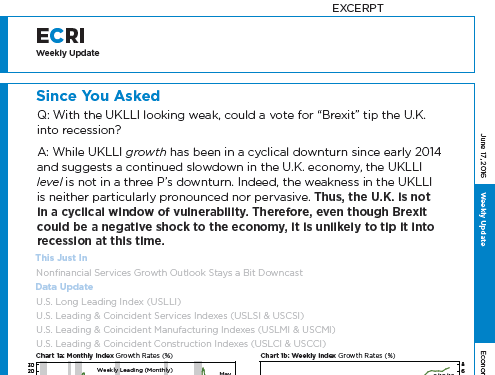
Days before the Brexit vote – responding to client questions amid widespread fears about the economic threat to the U.K. – we said that, “even though Brexit could be a negative shock to the economy, it is unlikely to tip it into recession at this time.

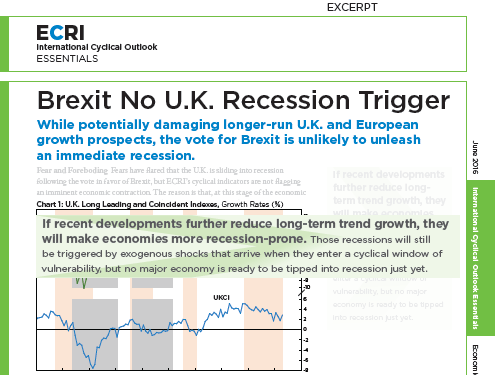
Right after the Brexit vote, we followed up with a detailed analysis, justifying our conclusion that, “[w]hile potentially damaging longer-run U.K. and European growth prospects, the vote for Brexit is unlikely to unleash an immediate recession.” Of course, we were practically alone in our view.
At the time, there was a virtual consensus that a Brexit vote would trigger a recession. Only now, with evidence mounting that such a recession hasn’t materialized, is there puzzlement about the “Brecession blunder” – how could so many economists have been so wrong.

Part of the explanation is that most analysts’ expectations were heavily influenced by their widely shared view that Brexit would trigger an economic catastrophe – for which they used the term “recession” as a singularly inappropriate shorthand. Because most economists think a recession results from any serious negative shock – such as the Brexit vote – it was natural for them to forecast a recession. But that isn’t how recessions work.

In fact, recessions are “triggered by exogenous shocks that arrive when [economies] enter a cyclical window of vulnerability.” What we understood at ECRI that most economists didn’t is that the U.K. wasn’t in such a recessionary window of vulnerability at the time.

Therefore, we expected the U.K. economy to be resilient to the shock of the Brexit vote, and avoid an immediate recession, which is precisely what has happened.

Previous Post

Uncertainties In The Economic Outlook

Next Post

More Non-UK-born Mums Than Ever

Related Posts

Scammers Steal $300K Using Fake Blur Airdrop Websites
Uncategorized

FBI Warns Investors Of Crypto-Stealing Play-to-Earn Games

by admin
Maersk Almost Completing Russia Exit After The Sale Of Logistics Sites
Uncategorized

Maersk Almost Completing Russia Exit After The Sale Of Logistics Sites

by admin
Why Is ‘Staking’ At The Center Of Crypto’s Latest Regulation Scuffle
Uncategorized

Why Is ‘Staking’ At The Center Of Crypto’s Latest Regulation Scuffle

by admin
Mexico's Pemex Dismantled Resources Worth $342M From Two Top Fields
Uncategorized

Mexico’s Pemex Dismantled Resources Worth $342M From Two Top Fields

by admin
Oil Giant Schlumberger Rebrands Itself As SLB For Low-Carbon Future
Uncategorized

Oil Giant Schlumberger Rebrands Itself As SLB For Low-Carbon Future

by admin
Next Post

Health Care Costs Are Falling .....

답글 남기기 응답 취소

이메일 주소는 공개되지 않습니다. 필수 필드는 *로 표시됩니다

Browse by Category

  • Business
  • Econ Intersect News
  • Economics
  • Finance
  • Politics
  • Uncategorized

Browse by Tags

adoption altcoins bank banking banks Binance Bitcoin Bitcoin market blockchain BTC BTC price business China crypto crypto adoption cryptocurrency crypto exchange crypto market crypto regulation decentralized finance DeFi Elon Musk ETH Ethereum Europe Federal Reserve finance FTX inflation investment market analysis Metaverse NFT nonfungible tokens oil market price analysis recession regulation Russia stock market technology Tesla the UK the US Twitter

Categories

  • Business
  • Econ Intersect News
  • Economics
  • Finance
  • Politics
  • Uncategorized

© Copyright 2024 EconIntersect

No Result
View All Result
  • 토토사이트
    • 카지노사이트
    • 도박사이트
    • 룰렛 사이트
    • 라이브카지노
    • 바카라사이트
    • 안전카지노
  • 경제
  • 파이낸스
  • 정치
  • 투자

© Copyright 2024 EconIntersect