


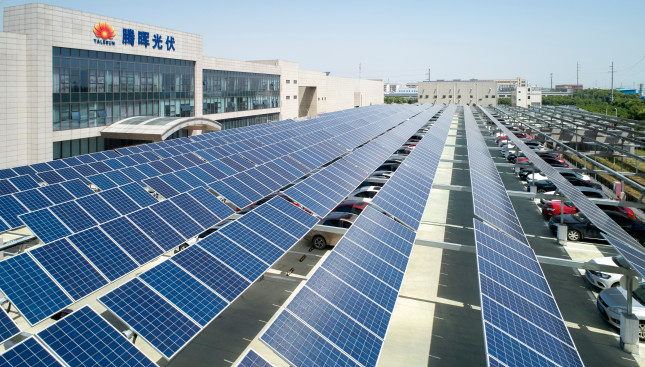
More than a thousand shipments of solar energy components worth hundreds of millions of dollars have heaped up at U.S. ports since June under a new law blocking imports from China’s Xinjiang region over concerns about slave labor, according to industry sources and federal customs officials.
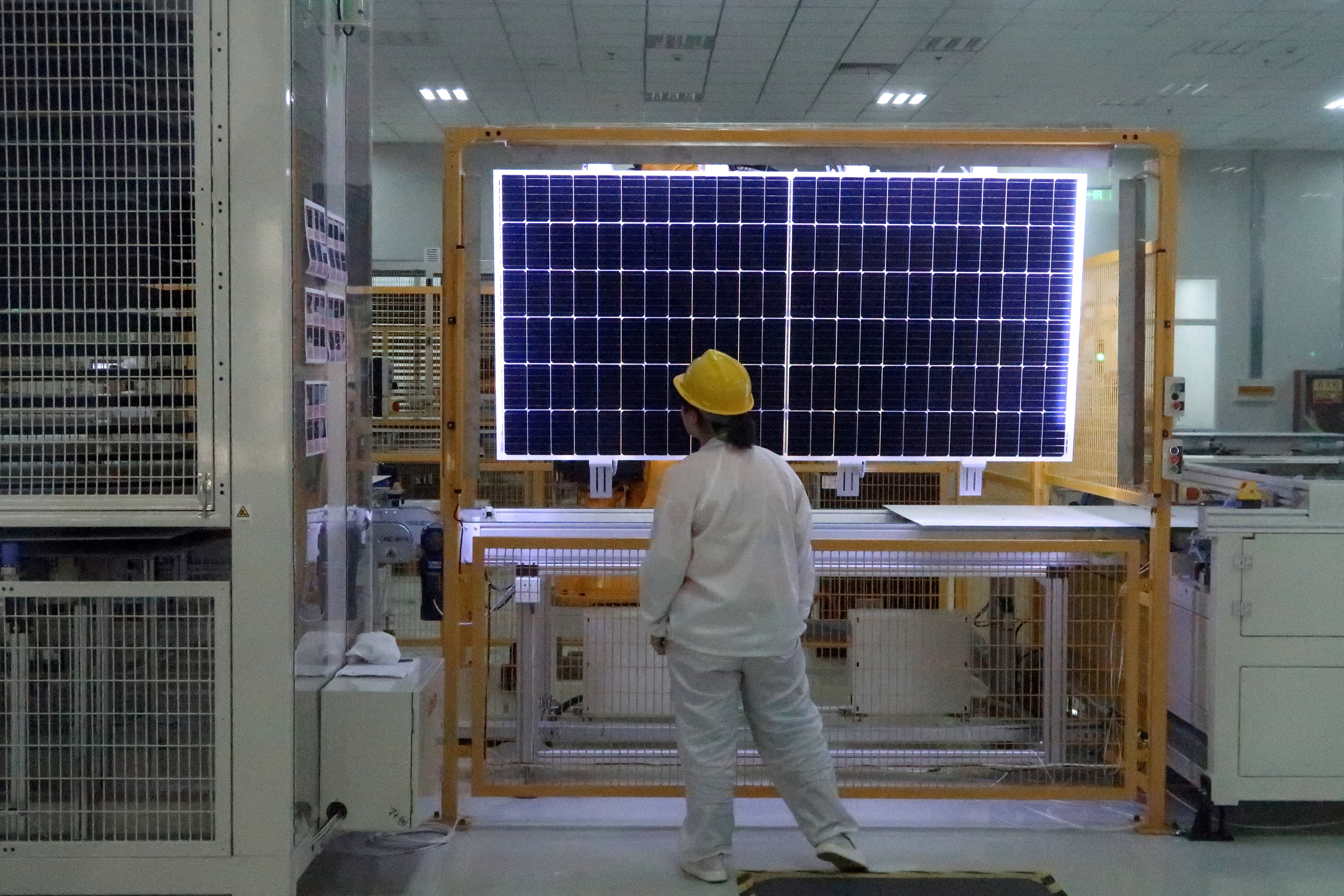
The extent of seizures, which has not yet been reported, indicates how a policy aimed at piling pressure on Beijing over its Uyghur detention camps in Xinjiang risks weakening the Biden administration’s efforts to decarbonize the U.S. power sector to combat climate change.
U.S. Customs and Border Protection has detained 1,053 shipments of solar energy equipment between June 21, when the Uyghur Forced Labor Protection Act took effect, and Oct. 25, it told Reuters in response to a public records request, adding none of the shipments have yet been let out.
The agency would not disclose the manufacturers or verify details about the number of solar equipment in the shipments, referring to federal law that preserves confidential trade secrets.
Three industry sources familiar with the matter, however, told Reuters the seized products include panels and polysilicon cells likely consisting of up to 1 gigawatt of capacity and primarily manufactured by three Chinese manufacturers – Trina Solar Co Ltd (688599.SS), Longi Green Energy Technology Co Ltd (601012.SS), and JinkoSolar Holding Co (JKS.N).
Combined, Trina, Longi, and Jinko typically form up to a third of U.S. panel supplies. But the firms have stopped new shipments to the United States over concerns more cargoes will also be seized, the industry sources said.
The sources requested not to be identified because they were not allowed to speak publicly on the matter.
China negates abuses in Xinjiang. Beijing initially negated the existence of any detention camps, but then later disclosed it had established “vocational training centers” required to inhibit what it said was separatism, terrorism, and religious radicalism in Xinjiang.
Chinese foreign ministry spokesperson Zhao Lijian told a regular news briefing on Friday that allegations about the use of forced labor in Xinjiang were “the lie of the century fabricated by a small group of anti-China individuals” and would curb the global response to climate change. He said:
“The U.S. side should immediately stop the unreasonable suppression of China’s photovoltaic enterprises and release the seized solar panel components as fast as possible.”
In an email, Jinko said it is working with CBP on documentation confirming its supplies are not associated with forced labor and is “confident the shipments will be admitted.”
Trina and Longi would not reply to requests for comment.
The bottleneck is a challenge to U.S. solar development at a time the Biden administration is planning to decarbonize the U.S. economy and enforce the Inflation Reduction Act (IRA), a new law that recommends clean energy technologies to fight climate change.
Solar installations in the United States were reduced by 23% in the third quarter, and close to 23 gigawatts of solar projects are suspended, mainly because of an inability to acquire panels, according to the American Clean Power Association trade group.
ACP insisted the Biden administration update the vetting process for imports. It said in an official statement:
“After more than four months of solar panels being reviewed under UFLPA, none have been rejected and instead they remain stuck in limbo with no end in sight.”
The UFLPA essentially assumes that all goods from Xinjiang are manufactured with forced labor and requires producers to produce sourcing documentation of imported equipment back to the raw material to show otherwise before imports can be released.
CBP did not comment on the length of the seizures or say when they might be cleared or rejected. “Ultimately, it is contingent upon how quickly an importer is able to submit sufficient documentation,” CBP spokesperson Rhonda Lawson said.

Trina, Longi, and Jinko source most of their polysilicon from U.S. and European suppliers such as Germany’s Wacker Chemie and Hemlock Semiconductor, a Michigan-based joint venture between Shin-Etsu Handotai Co Ltd and Corning Inc, the industry sources said.
A Wacker spokesperson did not comment on the U.S. seizures but said the company sources quartzite from suppliers in France, Norway, and Spain.
Spokesperson Christof Bachmair said:
“Our procurement strategy gives us every reason to be confident that the products used in our supply chain are made in a manner that respects human rights.”
Hemlock said in a statement that it obtains all metallurgical-grade silicon from suppliers using quartz mined in South and North America.
Buy Bitcoin NowCBP has previously said that it had seized nearly 1,700 shipments worth $516.3 million under UFLPA through September but has never before outlined the number of those shipments that contained solar equipment. The EU has also suggested a ban on products from Xinjiang but has not imposed one.


