


This preliminary draft has been revised and published here.
At the end of every month, NOAA issues an update to their Early Outlook for the following month which was issued on the Third Thursday of the Month. Usually, the changes are minor but that is not the case this month. NOAA seems to be very confident for the first half of August so we have a forecast for the full month of August that is heavily weighted towards how the first half of the month will impact the average for the month. As we suspected, flooding will remain an issue in some areas and drought will have somewhat of a recurrence.

Some housekeeping: On July 20, 2019 we published Part I of our analysis of the NOAA and JAMSTEC Three- to Four- Season Outlook and that can be accessed here. In that report, the August Early Outlook was issued. This article presents the NOAA update of their Early Outlook for August. Remember, if you leave this page to go to links or if you have clicked to enlarge a graphic, in order to get back you need to hit the return arrow usually located on the left of your URL box on the upper left of the screen. Also, most of the small graphics are designed to become full size when you click on them. If that does not work, an alternative way to view the larger graphics is to right click and then hit “view image”. That should usually work.
Please share this article – Go to the very top of the page, right-hand side for social media buttons. Also, feel free to send this article to anyone you feel will benefit from it. For those who are interested in the short-term situation, we refer you to our Severe Weather Report which is republished nightly and you can find the latest version by consulting the Directory by clicking here and then clicking on the latest version of the Severe Weather Report which will be near the top of the Directory.
Now let us address the NOAA Update of the July, 2019 Forecast.
A note about terminology; the deviations from climatology/normal are color coded but also labeled “A” for more than (above) normal and “B” for less than (below) normal. The area designated EC means Equal Chances of being more or less than normal. In the Short Term forecasts, NOAA has switched from using EC to N for Normal. For most purposes, EC and N can be considered to mean about the same thing. “N” implies a bit more certainty that the variation from Normal/Climatology will be small compared to “EC”.
First, we will compare the NOAA Early Outlook for August, 2019 with the newly issued update.
Early Outlook Temperature

Updated Temperature Outlook

Early Outlook Precipitation

Updated Precipitation

| July 18, 2019 Forecast for August | July 31, 2019 Forecast for August | |
| Temperature |
|
|
| Precipitation |
|
|
Here is the discussion released today:
30-DAY OUTLOOK DISCUSSION FOR AUGUST 2019
The updated monthly temperature and precipitation outlooks for August 2019 are based on the latest dynamical model guidance, WPC temperature and precipitation forecasts during the first week of the month, the CPC 6-10/8-14 day temperature and precipitation outlooks, Weeks 3-4 CFS and ECMWF model forecasts, and influences from current soil moisture conditions. The Madden-Julian Oscillation (MJO) is forecast to remain incoherent during the next couple of weeks. Therefore, the MJO is unlikely to affect the mid-latitude circulation pattern or modulate tropical cyclone development across the East Pacific and Atlantic basins through early August.
The GFS and ECMWF model solutions remain consistent that a strong 500-hPa blocking ridge at the high latitudes of the Northern Hemisphere retrogrades west and becomes anchored over the Davis Strait at the beginning of August. Downstream of an amplifying 500-hPa ridge over Alaska, an amplified upper-level trough is likely to persist over central and eastern North America during early to mid-August. Since below-normal temperatures are likely to accompany this high amplitude trough during the first two weeks of the month, the coverage of increased chances for below normal temperatures was expanded to include more of the Great Plains and Corn Belt. Enhanced odds for below normal temperatures forecast across the central Great Plains is also consistent with the likelihood for enhanced rainfall during August. Cold air advection is not expected to spread south into the southern Great Plains early in the month. Enhanced odds for above normal temperatures are forecast for this region with the highest odds across south Texas and the lower Rio Grande Valley. Above normal temperatures are also favored for the Gulf Coast, Florida, parts of the Northeast, and the Desert Southwest which is consistent with temperature tools throughout much of the month and long-term trends . Probabilities for above normal temperatures were increased across the Pacific Northwest and Alaska based in part on anomalous warmth early in the month. Also, sea surface temperatures remain much above normal surrounding Alaska.
An amplifying upper-level trough, a nearly stationary surface front, and anomalous low-level moisture support heavy rainfall from the central Rockies east to the central Great Plains and Ozarks region through early August. Multiple daily runs of the CFS model have featured increased probabilities for above normal precipitation in this same region for August. The highest probabilities for above normal precipitation are focused across the lower Missouri River Valley where heavy rainfall (locally more than 5 inches) is forecast during the first week of the month. Anomalous northerly flow is expected to persist across the Great Lakes and eastern Corn Belt through early August when little to no rainfall is forecast. This relatively dry start to the month elevates the odds for below normal precipitation for these areas. Model solutions are in good agreement that monsoon rainfall is at least slightly enhanced across parts of the Desert Southwest north to the Great Basin. Ridging aloft is likely to result in little to no rainfall from the middle Rio Grande north to central Texas during early August. Based on this dry start to the month and consistent dry signal among the daily CFS model runs, enhanced odds for below normal precipitation are forecast for parts of Texas. An amplified upper-level ridge during early to mid-August increases chances for below normal precipitation across the Alaska Panhandle and southeast mainland Alaska, while the CFS model maintains enhanced odds for above normal precipitation across western and northern mainland Alaska.
Visual Consistency Testing.
It is useful to see how the full month forecast fits with the set of shorter forecasts that we have. These will continue to update in this article. It is important to remember that of the short term forecasts we generally have about 25 days of the subsequent month to look at when we do this at the end of the month as we are doing now so we do not have the last three days of the month represented by short-term forecasts.
First Temperature
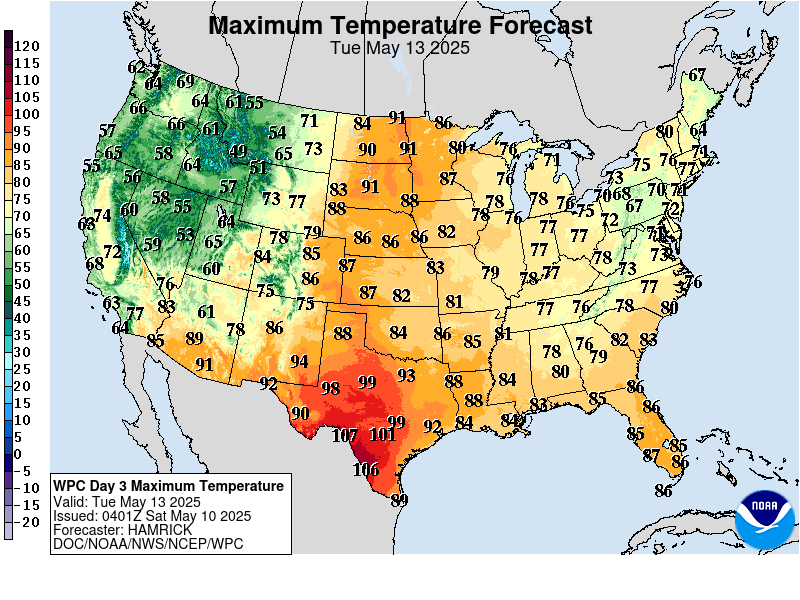 | 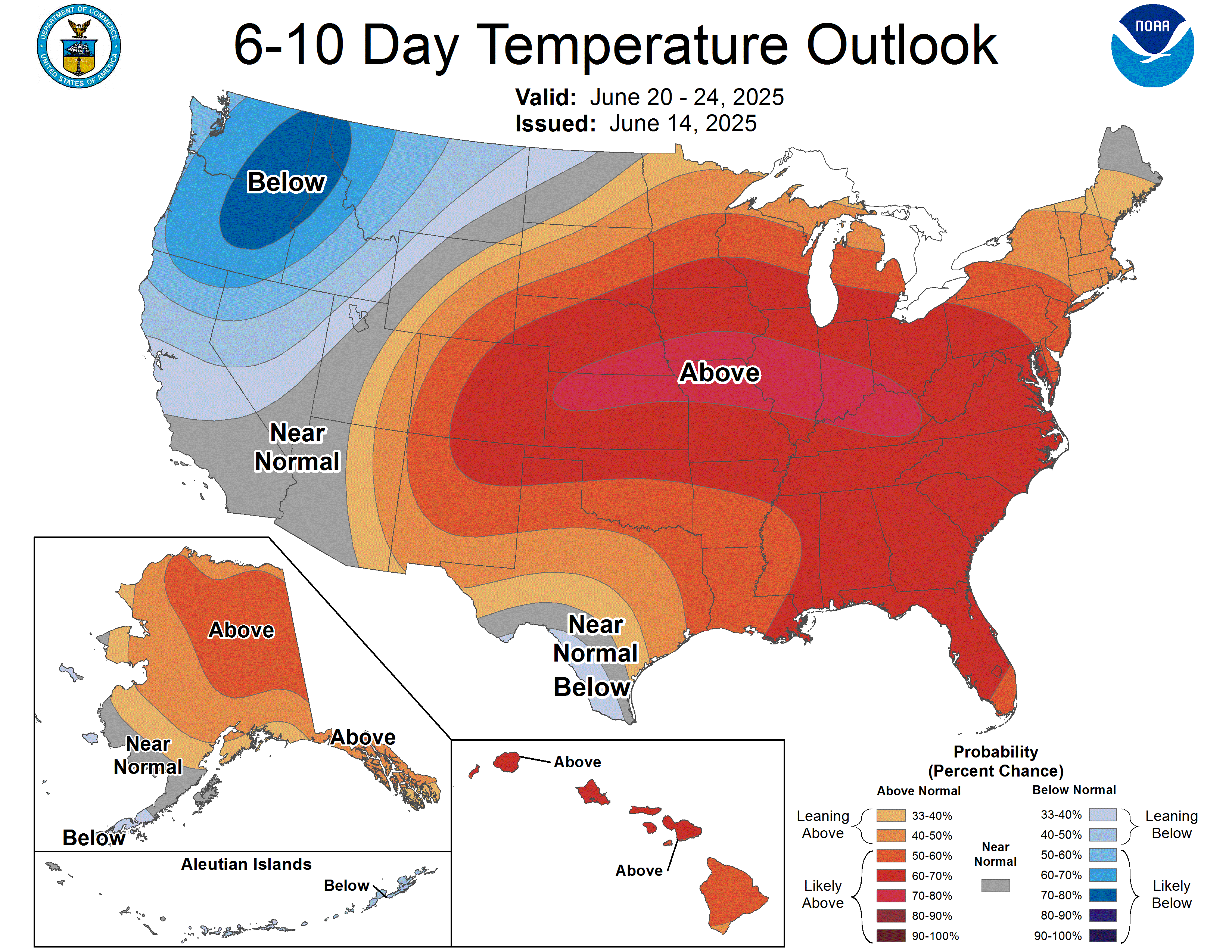 | 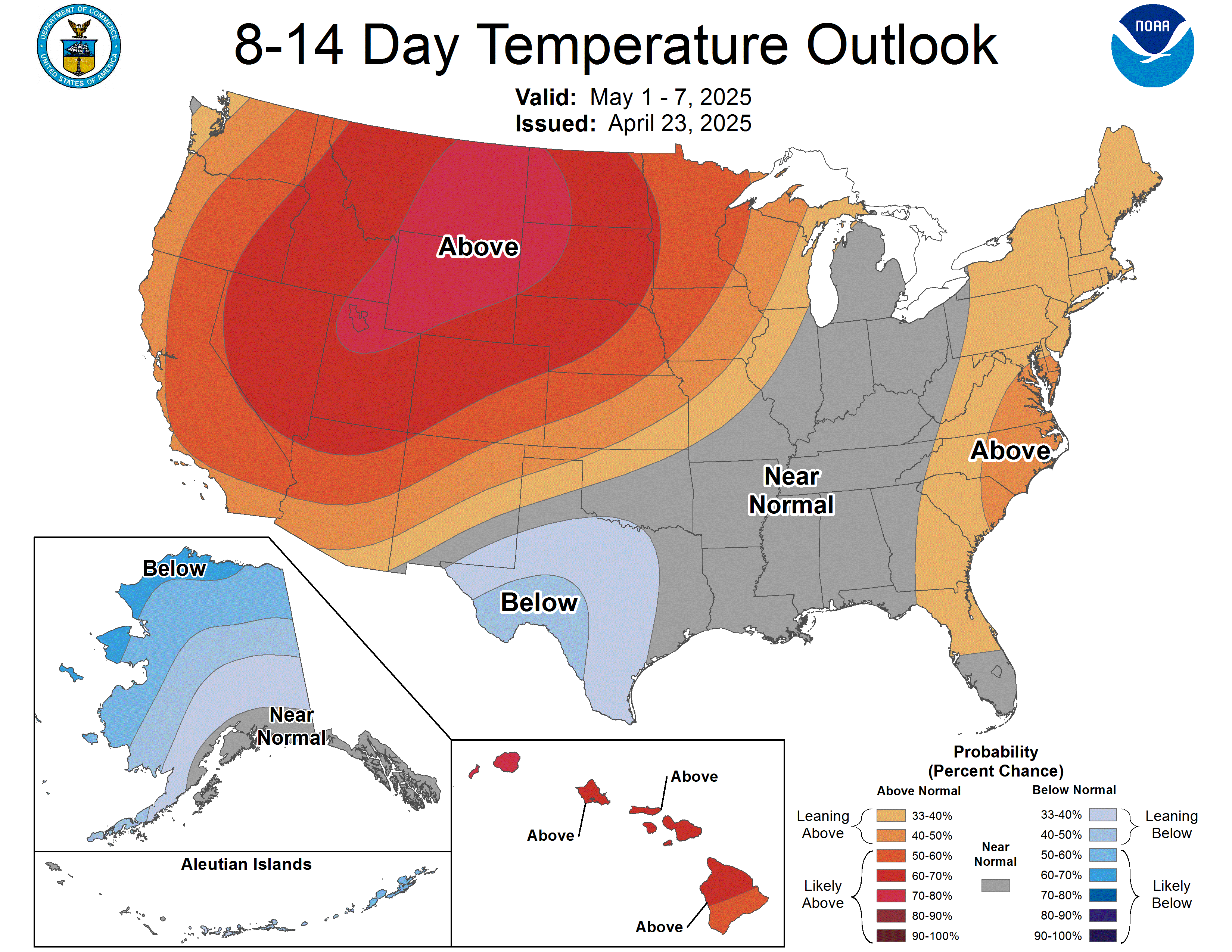 | 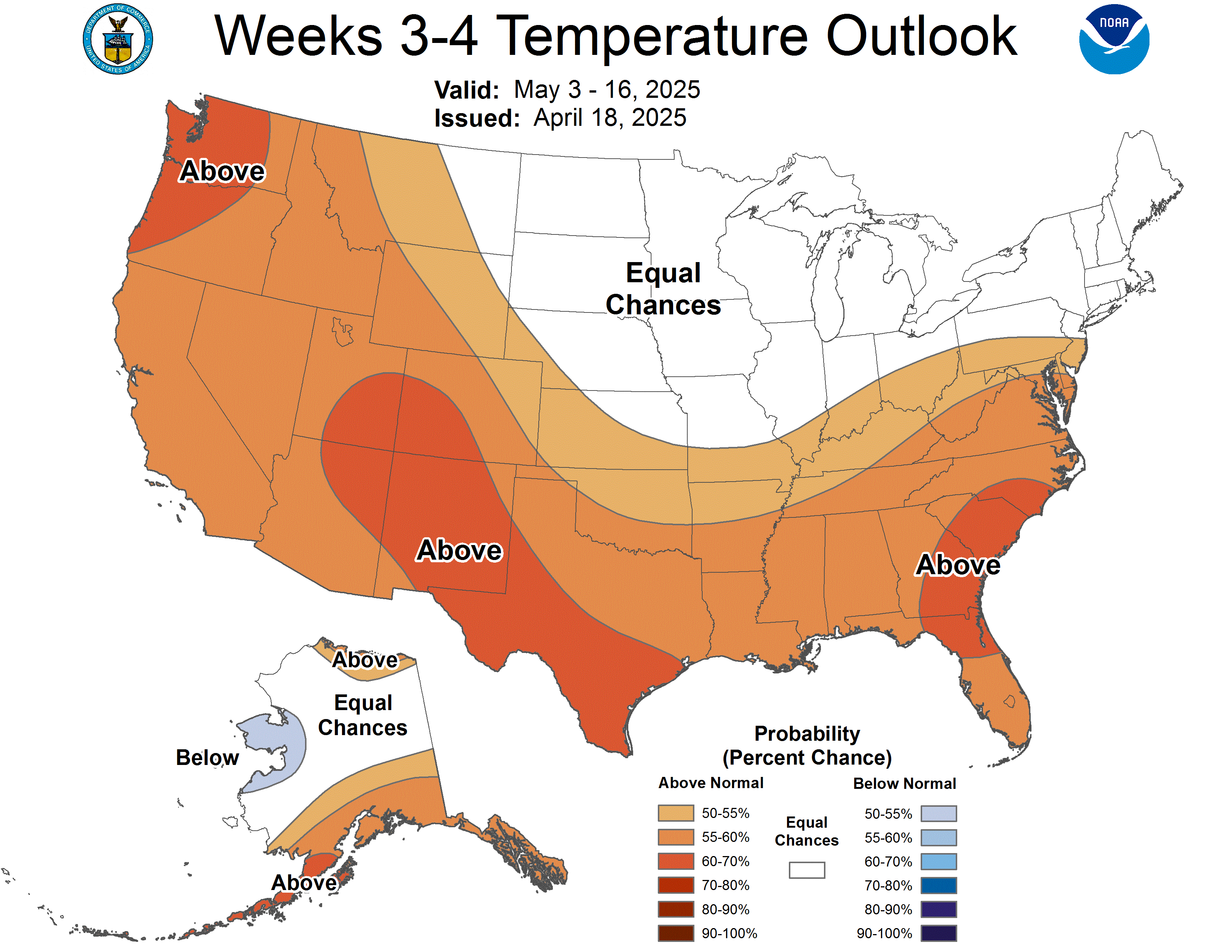 |
| The new monthly forecast is to the right. Does it appear to be reflective of the four parts of the month for which we have forecasts? |
| The Week 3 – 4 forecast was not updated recently so we will need to update the commentary when the update is issued on Friday August 2, 2019. | |
And Precipitation
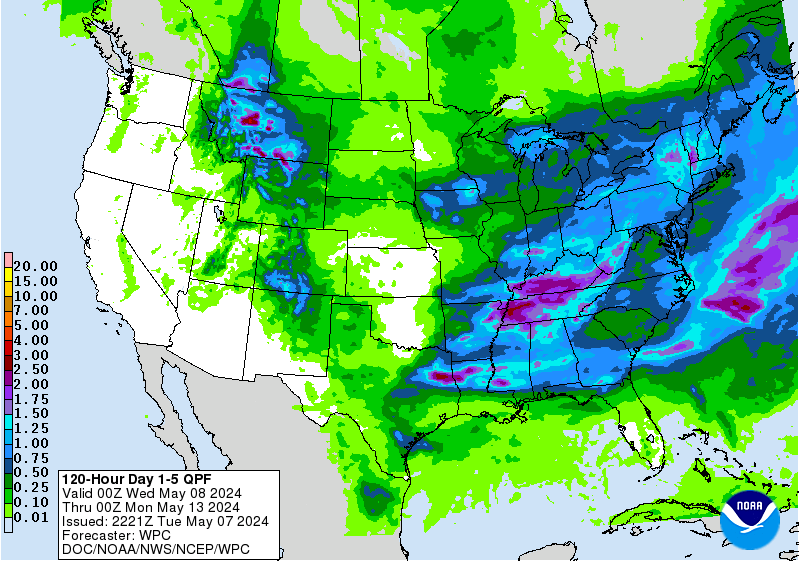 | 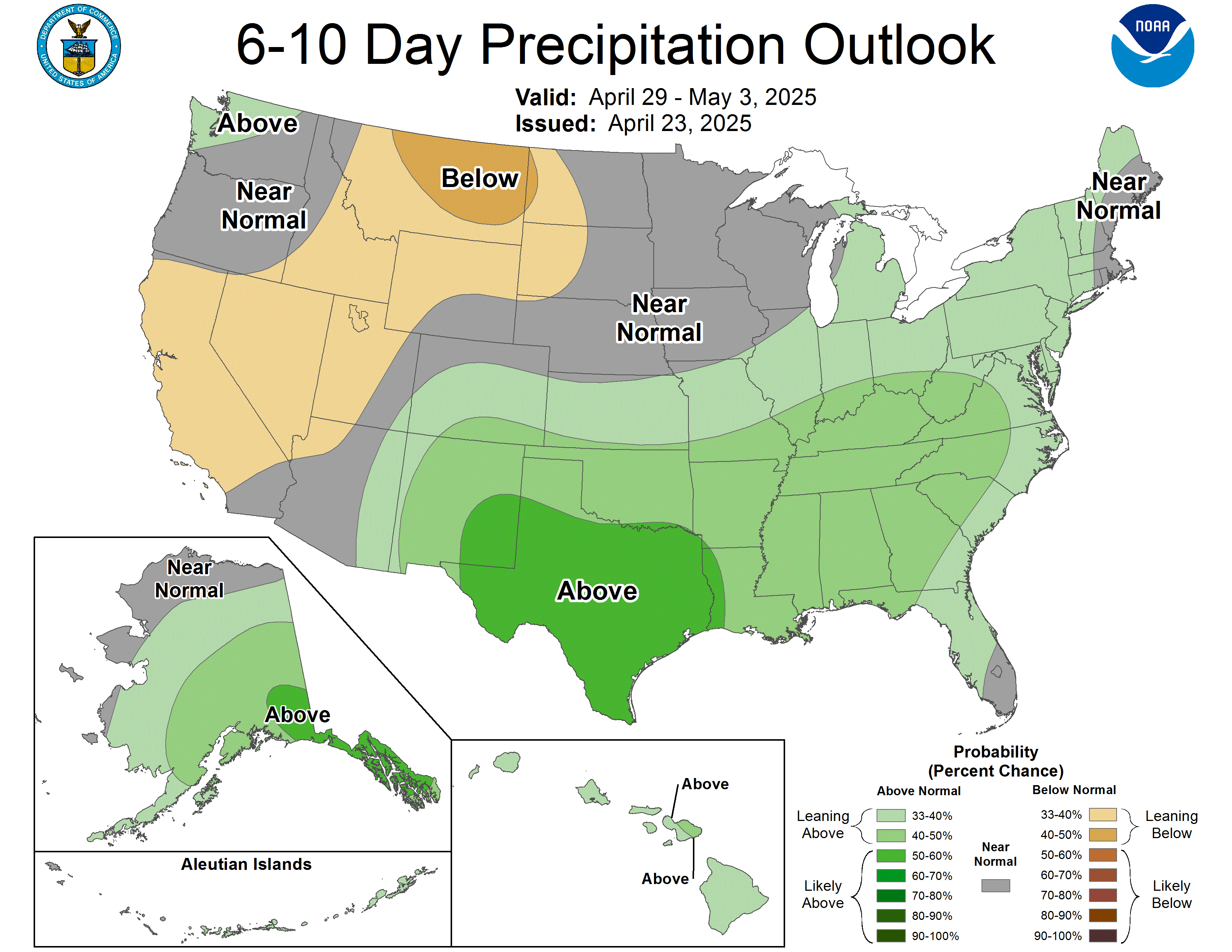 | 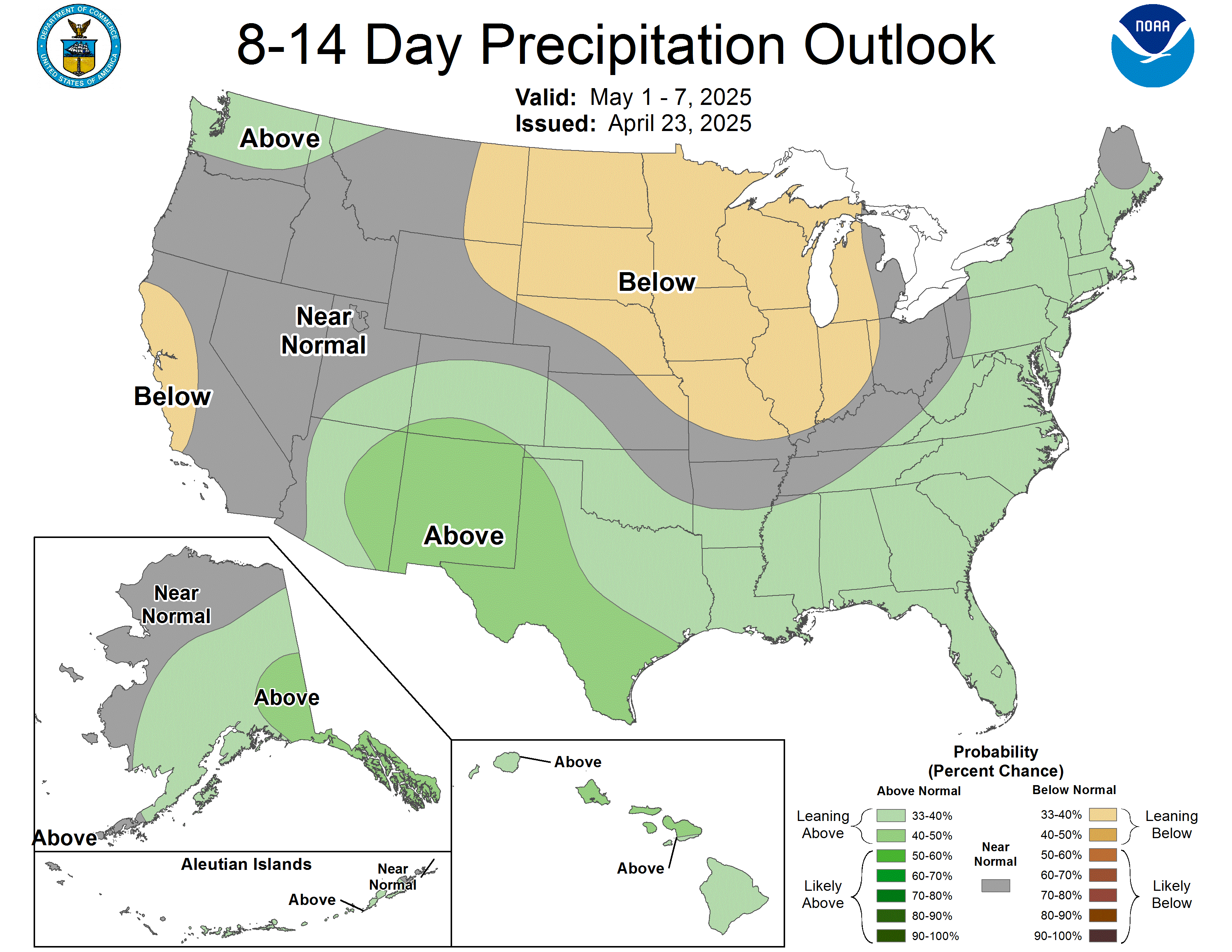 | 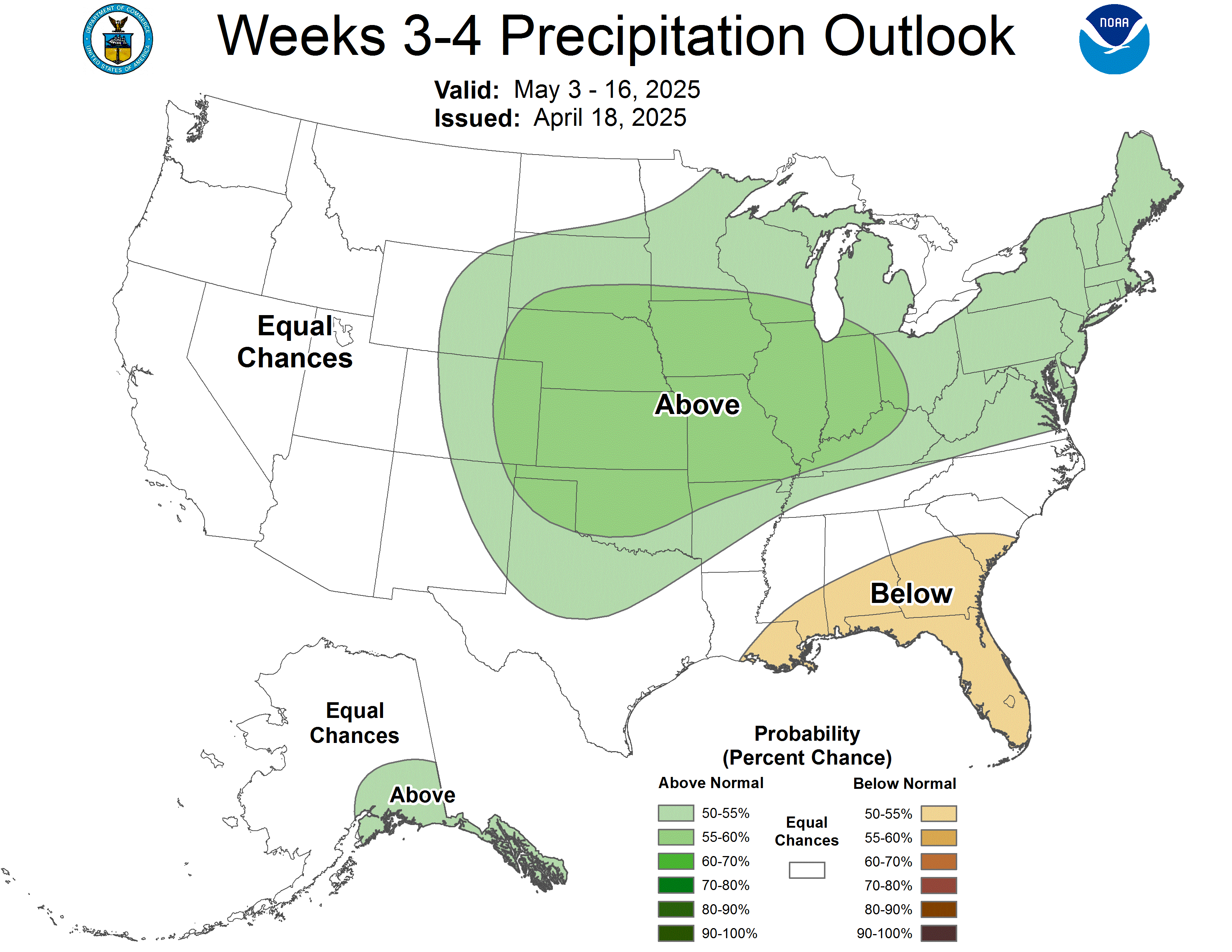 |
The new monthly forecast is to the right. Does it appear to be reflective of the four parts of the month for which we have forecasts? |
| The Week 3 – 4 forecast was not updated recently so we will need to update the commentary when the update is issued on Friday August 2, 2019. | |
Sometimes it is useful to compare the three-month outlook to the forecast for the first of the three months. It shows how much the pattern changes over the three-month period.

One can mentally subtract the First-Month Outlook from the Three-month Outlook and create the Outlook for the last two months in the three-month period.
And with respect to drought, this was also issued on July 31, 2019.

Looking back on July to relate the forecast for August to the actuals in July.
First Temperature

And then Precipitation

We then show the new forecast and the prior month actuals (less one day) side by side.
| Prior Month (usually missing one day) | Forecast for current Month | |
| Temperature |
|
|
| Precipitation |
|
|
Summary
The purpose of this article was to present the updated Outlook for August, 2019 and compare it with the Early Outlook. It is not to critique the updated Outlook for August based on our opinions. We have assessed the extent to which the monthly outlook seems to fit with the other forecasts provided by NOAA. We do not have an August forecast by JAMSTEC as they only provide three-month forecasts. In reality, all forecasts are obsolete when issued as the situation changes day by day or six hours by six hours i.e. each new model run. In our other articles, we continually examine the current forecasts from NOAA including the Day 1- 5, 6-10, 8-14 and Week 3 and 4. So we are continually looking at approximately 25 days into the future.
On August 8, 2019, IRI/CBC will issue their ENSO forecast and we will present that and critique it. It is an ongoing process and we attempt to provide our readers with the best current assessment of the next approximately 25 days (except when we cover the Four-Season Analysis or medium-frequency cycles such as ENSO), so our analysis is pretty much ongoing. We also publish a Live Severe Weather Article which updates in real time to reflect NOAA Weather Headlines. All of our reports including past versions of these reports can be located via the Directory/Archive which can be accessed here.


