Written by Sig Silber
This Article has been updated. You can access the updated article at: What Now After Puerto Rico? – 20Sep2017
Updated 3:00 PM EDT Sept 20, 2017: LATEST FROM NHC as of 2PM EDT: “On the forecast track, the center of Maria will move away from the northwestern coast of Puerto Rico this afternoon. The center will then pass offshore of the northeastern coast of the Dominican Republic tonight and Thursday and then move near the Turks and Caicos Islands and southeastern Bahamas Thursday night and Friday. Maximum sustained winds are near 115 mph (185 km/h) with higher gusts. Maria is a category 3 hurricane on the Saffir-Simpson Hurricane Wind Scale.”

Please share this article – Go to very top of page, right hand side for social media buttons.
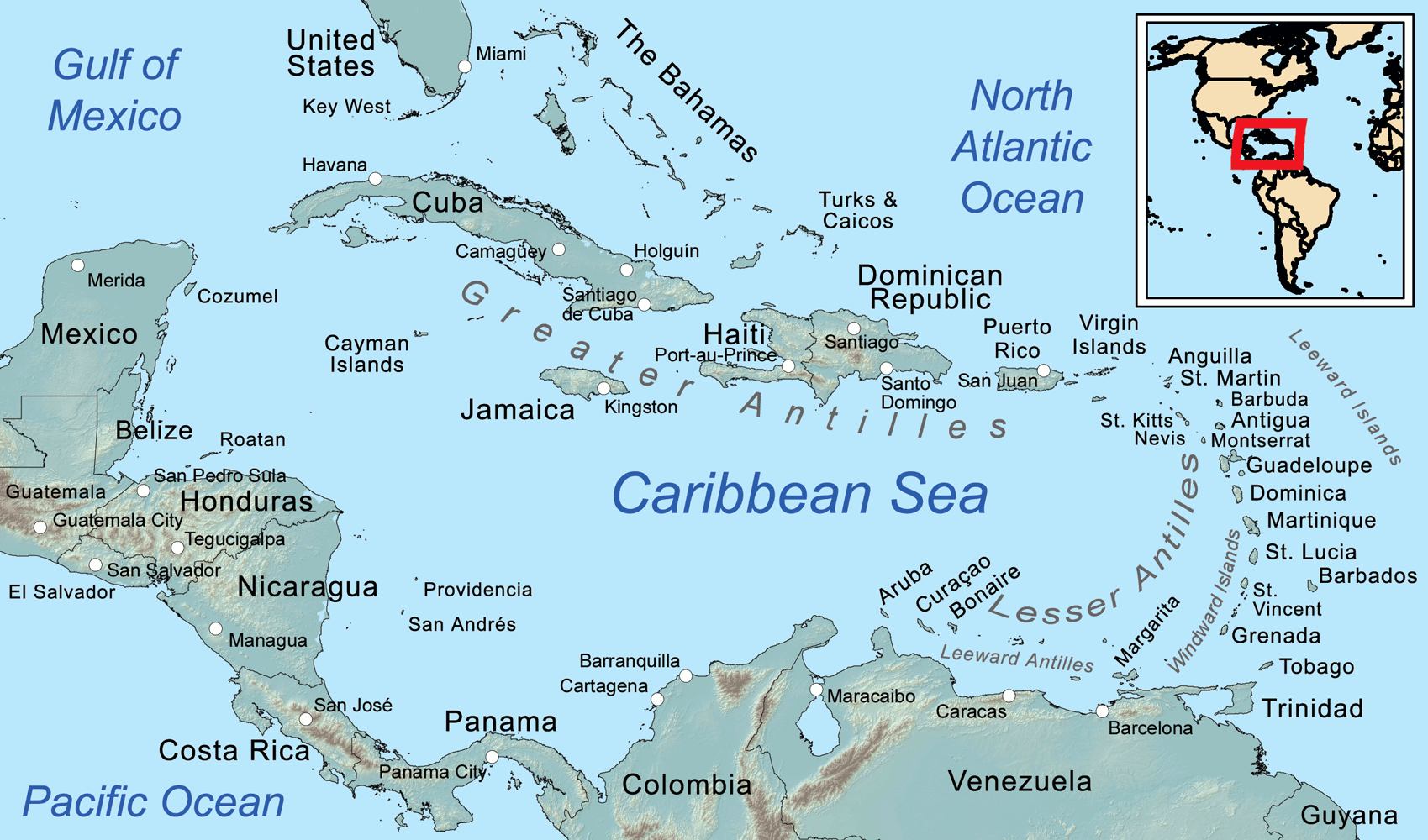
This is an active period in the tropics so we are starting with the overview of the situation in both the Pacific and the Atlantic. Those potentially impacted by any of these storms should consult their local sources of information. The Public Advisories and other information that is available from the NOAA National Hurricane Center can be found here. Information from the Weather Prediction Center can be found here.
First the Atlantic

More Detail
And now the Pacific.

We start our Report with Hurricane Maria. The”M” Designation means a very powerful storm: Category 3 or higher.


And the Discussion (We did not do the 11 AM NHC Update because there was not radar coverage while the storm was over Puerto Rico. We will update with the 5PM EDT NHC Update. You can access the 11AM NHC Update Here).
Hurricane Maria Discussion Number 16 NWS National Hurricane Center Miami FL 1100 PM AST Tue Sep 19 2017
Since the previous advisory, WSR-88D radar data from San Juan Puerto Rico has shown the development of concentric eyewalls and a double-wind maximum. This has led to an increase in the size of the 50- and 64-kt wind radii. An earlier Air Force Reserve reconnaissance aircraft measured a peak flight-level wind of 157 kt and a few SFMR winds of 149-152 kt in the small inner eyewall between 2200 and 0000 UTC this evening. Based on these data, the initial wind speed was increased to 150 kt. The minimum pressure estimated from earlier dropsonde data is 909 mb, which is the tenth lowest minimum pressure recorded in an Atlantic basin hurricane. Since the outer eyewall has become better defined and the winds are increasing within the outer eyewall, it is likely that Maria’s intensification will finally cease. However, Maria is expected to remain an extremely dangerous category 5 hurricane until landfall in Puerto Rico early Wednesday. The passage of the core over Puerto Rico should cause some weakening, but Maria is likely to remain a major hurricane for several more days. Increasing shear and cooler waters over the western Atlantic in the wake of hurricanes Irma and Jose will likely lead to additional weakening late in the period.
Maria is moving between west-northwest and northwest at about 9 kt. A weak ridge over the western Atlantic is expected to steer the hurricane on this general heading over the next couple of days. This track will bring the center of Maria over Puerto Rico and just north of the eastern Dominican Republic over the next day or so. After that time, a break in the ridge should cause Maria to turn north-northwestward, then northward by late in the week. The track guidance is tightly clustered through 72 hours, yielding fairly high confidence in the track forecast through that time. There is some increase in the spread of the models at days 4 and 5, with the GFS and HWRF farther west and faster, while the ECMWF is along the eastern edge of the guidance and slow. For now, the NHC track forecast is between the various consensus models at 96 and 120 h.
KEY MESSAGES:
1. Maria’s core will pass near or over St. Croix within the next few hours and will approach the southeastern coast of Puerto Rico early Wednesday, bringing life-threatening wind, storm surge, and rainfall impacts to portions of those islands. Everyone in these areas should follow advice from local officials to avoid life-threatening flooding from storm surge and rainfall.
2. Wind speeds atop and on the windward sides of hills and mountains and on high-rise buildings could be much stronger than the near-surface winds indicated in this advisory.
3. A Hurricane Warning is also in effect for the remainder of the Virgin Islands and the northern coast of the Dominican Republic, where Maria is expected to bring dangerous wind, storm surge, and heavy rainfall.
4. A Hurricane Watch is in effect for the southeastern Bahamas and the Turks and Caicos, where Maria could bring hurricane conditions on Thursday.
FORECAST POSITIONS AND MAX WINDS
INIT 20/0300Z 17.3N 64.7W 150 KT 175 MPH
12H 20/1200Z 18.0N 65.8W 145 KT 165 MPH
24H 21/0000Z 18.9N 67.3W 125 KT 145 MPH
36H 21/1200Z 19.9N 68.6W 120 KT 140 MPH
48H 22/0000Z 20.9N 69.7W 115 KT 130 MPH
72H 23/0000Z 23.3N 71.4W 110 KT 125 MPH
96H 24/0000Z 26.2N 72.2W 105 KT 120 MPH
120H 25/0000Z 29.5N 72.5W 90 KT 105 MPH
BULLETIN: Hurricane Maria Advisory Number 16 NWS National Hurricane Center Miami FL 1100 PM AST Tue Sep 19 2017
…EYE OF POTENTIALLY CATASTROPHIC CATEGORY 5 HURRICANE MARIA NEARING ST. CROIX…
…CORE EXPECTED TO REACH SOUTHEASTERN PUERTO RICO WEDNESDAY MORNING…
SUMMARY OF 1100 PM AST…0300 UTC…INFORMATION
———————————————–
LOCATION…17.3N 64.7W
ABOUT 30 MI…45 KM SSE OF ST. CROIX
ABOUT 120 MI…190 KM SE OF SAN JUAN PUERTO RICO
MAXIMUM SUSTAINED WINDS…175 MPH…280 KM/H
PRESENT MOVEMENT…WNW OR 300 DEGREES AT 10 MPH…17 KM/H
MINIMUM CENTRAL PRESSURE…909 MB…26.85 INCHES
WATCHES AND WARNINGS
——————–
CHANGES WITH THIS ADVISORY:
None
SUMMARY OF WATCHES AND WARNINGS IN EFFECT:
A Hurricane Warning is in effect for…
* U.S. Virgin Islands
* British Virgin Islands
* Puerto Rico, Culebra, and Vieques
* Dominican Republic from Cabo Engano to Puerto Plata
A Tropical Storm Warning is in effect for…
* Saba and St. Eustatius
* St. Maarten
* Guadeloupe
* Dominican Republic west of Puerto Plata to the northern border of the Dominican Republic and Haiti
* Dominican Republic west of Cabo Engano to Punta Palenque
A Hurricane Watch is in effect for…
* Saba and St. Eustatius
* St. Maarten
* St. Martin and St. Barthelemy
* Dominican Republic from Isla Saona to Cabo Engano
* Turks and Caicos Islands and the Southeastern Bahamas
Here is the current Track Map for Jose.


Jose Discussion (We will update this discussion after the 5PM EDT NHC Release. You can access the 11AM NHC Update Here)
Tropical Storm Jose Discussion Number 59 NWS National Hurricane Center Miami FL 1100 PM EDT Tue Sep 19 2017
An Air Force plane once again investigated Jose tonight, and although the central pressure remained low, near 973 mb, the surface winds were gradually decreasing and do not support hurricane strength. This is also consistent with the latest Dvorak T-numbers which indicated weakening. On this basis, the initial intensity has been lowered to 60 kt. Although the shear is not too high, Jose is moving over cool waters. This should result in additional weakening and Jose is likely to become a post-tropical cyclone in about 48 hours.
Fixes from a reconnaissance plane and satellite indicate that Jose is moving toward the northeast or 040 degrees at 8 kt. Currently, Jose in embedded within the mid-latitude southwesterly flow, but most of the global models forecast the development of a ridge to the north in two days. This new pattern should block the motion of the storm and Jose should begin to meander. The NHC forecast is very similar to the previous one and follows the ECMWF model and the HFIP corrected consensus model HCCA. It also uses the input from NOAA Ocean Prediction Center.
KEY MESSAGES:
1. While the center of Jose is forecast to remain offshore of the U.S. east coast, the large cyclone is expected to cause some direct impacts in portions of New England, and a tropical storm warning is in effect for Cape Cod, Block Island, Martha’s Vineyard, and Nantucket. Any deviation to the left of the NHC forecast track would increase the likelihood and magnitude of impacts along the coast from Long Island to southern New England.
2. Minor to moderate coastal flooding is possible from Delaware to southern New England during the next several days. Please see products issued by local National Weather Service forecast offices.
3. Swells generated by Jose are affecting Bermuda, the Bahamas, and much of the U.S. east coast. These swells are likely to cause dangerous surf and rip current conditions for the next several days in these areas.
4. Jose will produce total rainfall accumulations of 1 to 3 inches are expected over eastern Rhode Island and southeast Massachusetts. 2 to 4 inches are expected in Nantucket and Cape Cod, and 3 to 5 inches in Martha’s Vineyard. This rainfall could cause isolated flash flooding.
FORECAST POSITIONS AND MAX WINDS
INIT 20/0300Z 37.9N 70.8W 60 KT 70 MPH
12H 20/1200Z 38.8N 69.9W 55 KT 65 MPH
24H 21/0000Z 39.6N 68.5W 50 KT 60 MPH
36H 21/1200Z 39.7N 67.7W 50 KT 60 MPH
48H 22/0000Z 39.5N 67.7W 45 KT 50 MPH…POST-TROPICAL
72H 23/0000Z 38.7N 69.0W 40 KT 45 MPH…POST-TROPICAL
96H 24/0000Z 38.5N 70.0W 35 KT 40 MPH…POST-TROPICAL
120H 25/0000Z 38.5N 70.5W 30 KT 35 MPH…POST-TROPICAL
TROPICAL STORM JOSE FORECAST/ADVISORY NUMBER 59 NWS NATIONAL HURRICANE CENTER MIAMI FL 0300 UTC WED SEP 20 2017
CHANGES IN WATCHES AND WARNINGS WITH THIS ADVISORY…
NONE.
SUMMARY OF WATCHES AND WARNINGS IN EFFECT…
A TROPICAL STORM WARNING IS IN EFFECT FOR…
* WOODS HOLE TO SAGAMORE BEACH… INCLUDING CAPE COD
* BLOCK ISLAND
* MARTHA’S VINEYARD
* NANTUCKET
A TROPICAL STORM WATCH IS IN EFFECT FOR…
* THE COAST OF LONG ISLAND FROM FIRE ISLAND INLET TO PORT JEFFERSON
General Weather Situation
We believe that it is easier to understand what is going on with individual storms if they are put into the context of the overall weather situation.
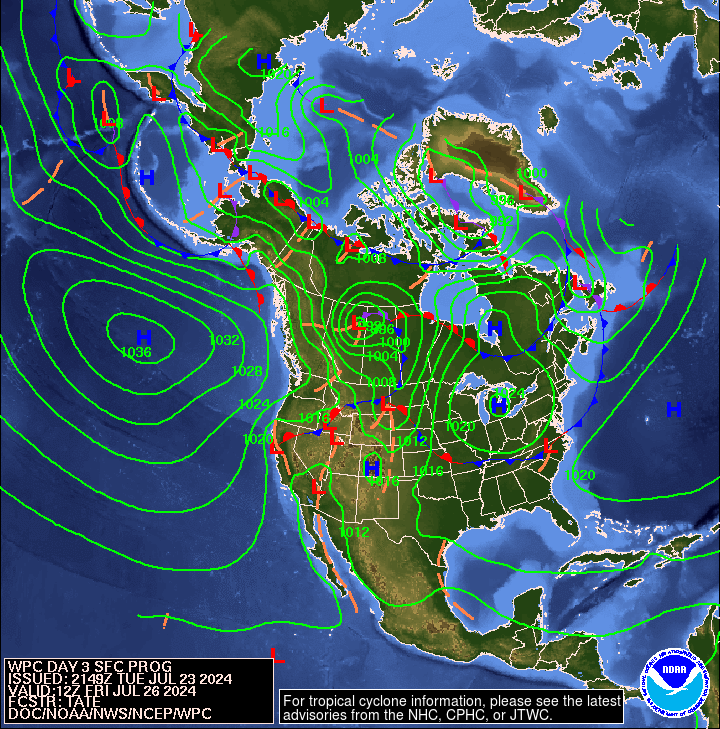
Some of the graphics below show the two storms of most interest. Other graphics will be more relevant for Jose as it moves north and comes into view.


Additional Graphics
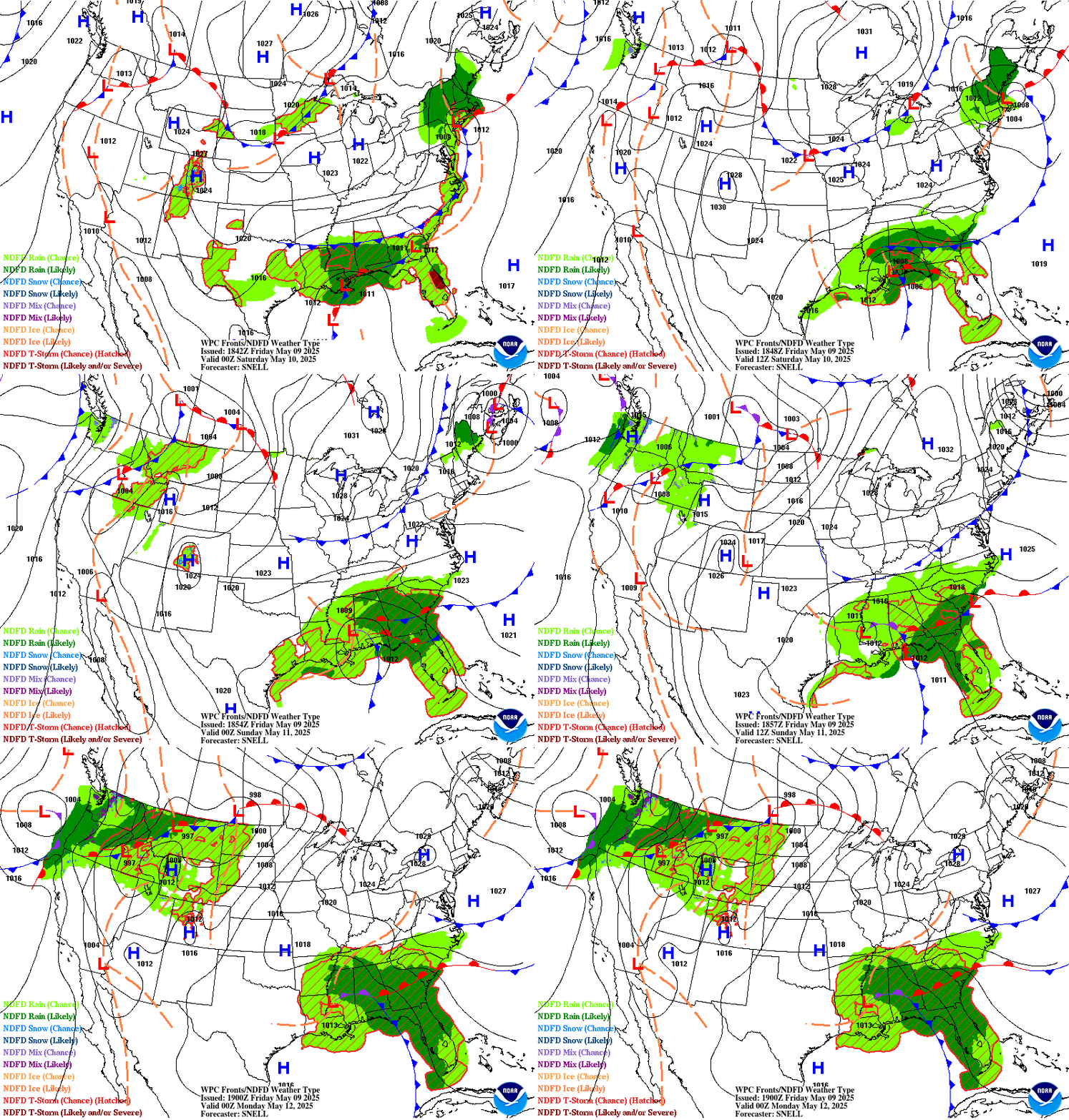
This is a national animation of weather fronts and precipitation forecasts with four 6-hour projections of the conditions that will apply covering the next 24 hours and a second day of two 12-hour projections the second of which is the forecast for 48 hours out and to the extent it applies for 12 hours, this animation is intended to provide coverage out to 60 hours. This graphic is now very relevant as one can see four perhaps five storms in this graphic. .