


 The Chicago Business Barometer which recently has spent more time in contraction than expansion, strongly improved and remained in expansion. This survey came in below well above expectations.
Analyst Opinion of Chicago PMI
The results of this survey continue to agree with district Federal Reserve manufacturing surveys – and aligns with the overall trend of the ISM manufacturing survey.
From Bloomberg / Econoday, the market expected the index between 50.7 to 54.0 (consensus 57.0) versus the actual at 54.6. A number below 50 indicates contraction. Jamie Satchithanantham, economist at MNI Indicators stated,
The Chicago Business Barometer ended 2016 in a much healthier position than a year ago when it slipped into contraction. This is largely owed to stronger outturns in the second half of the year and is testament to the resilience of the US economy. Most respondents to our survey remain upbeat about the fate of their business as we head into 2017, buoyed by fresh hope of better things to come under the new administration. Hopefully, 2017 can build on the momentum generated in the latter stages of 2016.
The MNI Chicago Business Barometer fell 3.0 points to 54.6 in December from 57.6 in November, led by declines in both New Orders and Order Backlogs.
After a disappointing start to the fourth quarter, the latest results suggest economic conditions have improved somewhat, with the Barometer averaging 54.3 in Q4, the highest in two years.
The December decline was led by a slowdown in New Orders, which fell 6.7 points to 56.5, giving up most of the November gain that had left it running at the fastest pace since June. Production also subtracted from the Barometer, ending 2016 at the lowest level since October, while Order Backlogs moved back into contraction. Employment held firm, remaining below 50 for the second month in a row, while Supplier Deliveries was the only component to gain ground in December.
The Inventories Indicator moved back into contraction, sitting below the break-even mark for the eighth time this year, with some firms reluctant to add to their stock levels as we approach the end of the year.

z chicago pmi.png
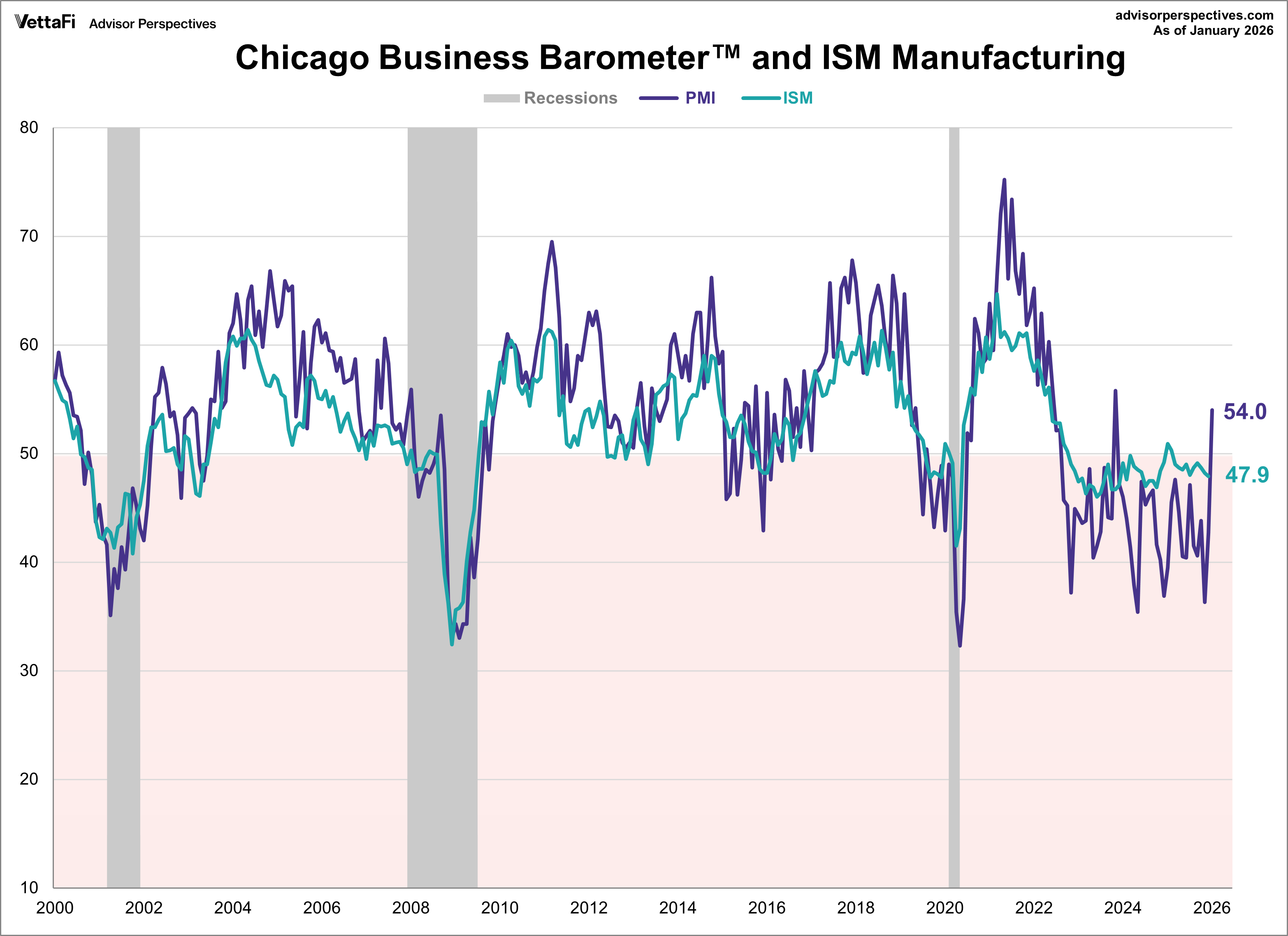
The Chicago ISM is important as it is a window into the national ISM reports which will be issued shortly. When you compare the graph below of the ISM Manufacturing Index against the Chicago PMI (graph above) – there is a general correlation in trends, but not necessarily correlation in values.
source and read the full report: Chicago PMI
include(“/home/aleta/public_html/files/ad_openx.htm”); ?>


