


from The Conversation
— this post authored by Vittorio Bufacchi, University College Cork
When will things go back to normal? That’s what everyone seems to be asking, which is understandable given the pain and sacrifice many endured over the past 18 months.

Please share this article – Go to very top of page, right hand side, for social media buttons.
But should things go back to normal? Some would reasonably argue that “normal” is a failed economic model responsible for producing unacceptable levels of inequality that have dented the social and moral fabric of our society.
As old and new challenges confront us, there are a handful of philosophers who can guide us though the next stage of the pandemic and beyond, some of whom I cover in my recent book on the philosophical lessons of lockdown. Here are seven of them whose ideas can help us build a better world by tackling inequality, reversing privatisation and strengthening democracy.
Brian Barry
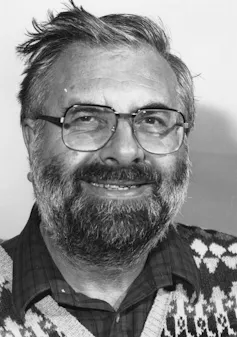
After the pandemic, be more Brian Barry.
A disproportionate number of the 3.4 million people worldwide who have died from COVID-19 were also the victims of inequality. After the pandemic, building a more just society, where equality is a precondition of freedom, must be our priority. Brian Barry is a good place to start.
In Why Social Justice Matters (2005), he takes issue with the way equality of opportunity is understood today, in which personal responsibility is seen as the most basic and essential of all individual virtues. But Barry argues that the modern mantra of personal responsibility and meritocracy is a myth – an ideology used to punish the more disadvantaged members of society.
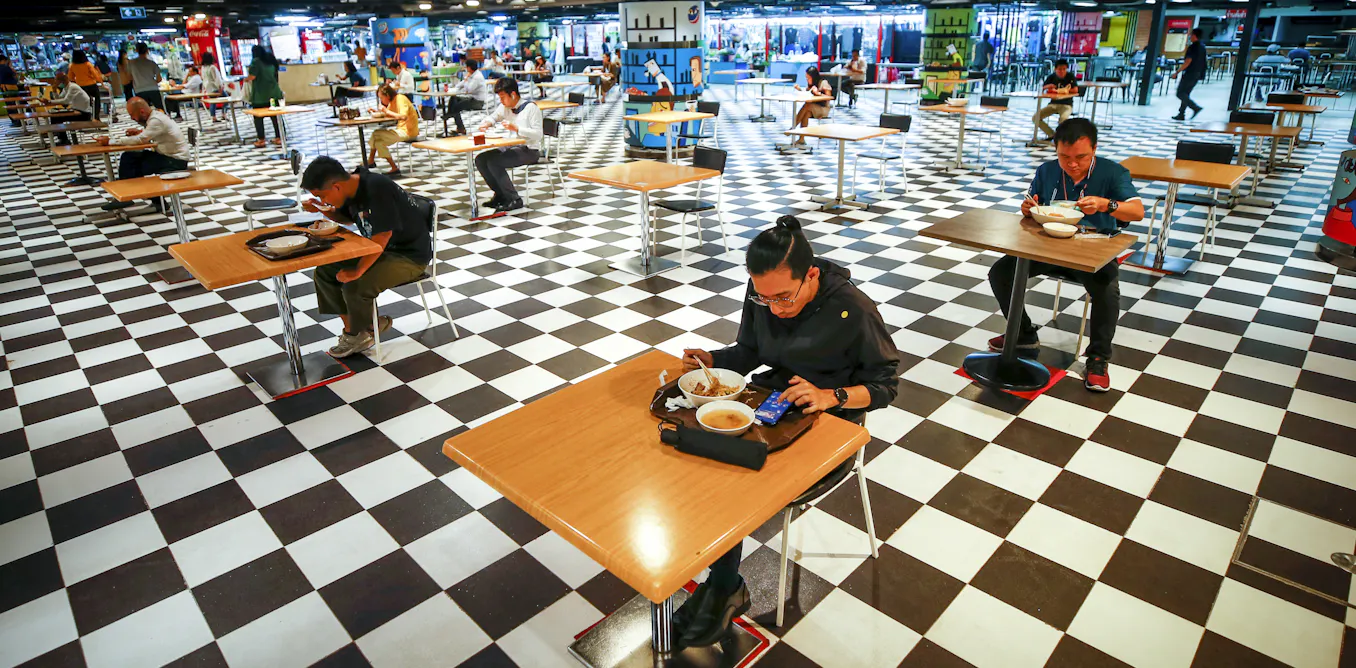
The new normal could be better than before. Diego Azubel/EPA
In our current world, people are seen as responsible for their poverty, their misery, their lack of resources. If they succumb to COVID, that is also seen as their fault. For Barry, there can only be equality of opportunity if there is equality of access to resources, which is what we need to work towards in a post-COVID world.
Thomas Scanlon
COVID-19 has exposed the structural injustice underpinning our society, which manifests in galloping social and economic inequalities and relentless exploitation. During the pandemic the very rich have become even richer and more powerful, while the poor are living more precariously.
We are running the risk of turning our democracies into plutocracies – governments by the wealthy. The multiple harms of inequality are analysed by Thomas Scanlon, one of the most influential living moral philosophers, in his book Why Does Inequality Matter? (2017).
John Rawls
Rebuilding society on more just foundations will require a radical rethink of the role of the state in society. During the pandemic, people have looked to their governments for salvation, and COVID-19 is a reminder that a strong case can be made for the need to organise politics around public institutions. Never before have key institutions like an extensive, nationalized, public health service been more appreciated, and needed.
The way forward is to have more state, not less. COVID-19 has confirmation that we ought to organize our social and political affairs around the political philosophy of John Rawls, who argued that a just society demands that resources are redistributed across society.
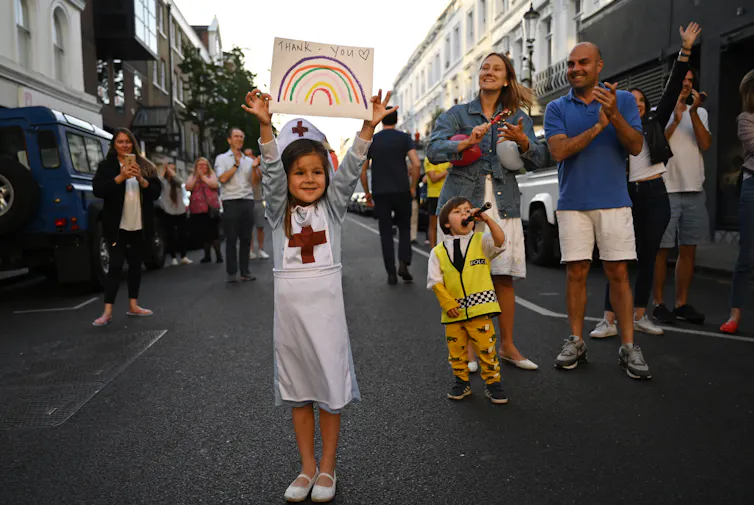
The pandemic has demonstrated how important national health systems are. Neil Hall/EPA
Chiara Cordelli
Over the past 40 years, we have seen important state functions ceaselessly being handed over to the private sphere, with devastating consequences. The time has come to reverse this trend. In liberal democracies around the world, the private sphere has encroached on the public sphere, undermining the foundations of democracy, so much so that, today, private industries are doing the jobs that historically were done by public institutions.
It is not just the case of government ministers handing out contracts to private firms with whom they have personal connections (in the UK one-fifth of all government COVID contracts require investigation for possible corruption, according to campaign group Transparency International UK). There is also the fact that the public sphere and its institutions has been increasingly privatized.
As Chiara Cordelli highlights in her book, The Privatised State (2020), many government functions today, from the management of prisons and welfare offices to warfare and financial regulation, are outsourced to private entities. Even education and healthcare are funded in part through private philanthropy rather than taxation. In the post-COVID world, constitutional limits on privatisation should be a priority.
Martin O’Neill and Shepley Orr
Unfair distributions of income, or dangerously unequal accumulations of wealth, can and ought to be rectified by taxation. Inequality is one of the reasons why COVID-19 has been so devastating in India and other parts of the world.
Taxation remains one of the most effective tools to reverse this growing, social malignancy, and for engendering social justice. The pivotal role of taxation in the modern polity cannot be overstated, as Martin O’Neill and Shepley Orr remind us in their edited volume Taxation: Philosophical Perspectives (2018).
Maria Baghramian
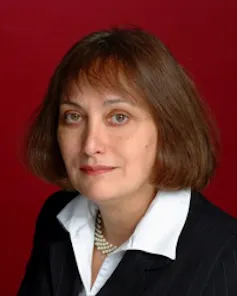
Want to know which experts to trust? Ask expert on experts. Maria Baghramian, CC BY
Throughout this pandemic, scientific experts were at the forefront of our battle against COVID-19, and the life-saving importance of research became evident to everyone. In the future, we will need more experts. We have also learned to distinguish between truth and post-truth, and how deadly the latter can be during times of crisis: just ask the hundreds of thousands of people who died from COVID-19 in the US, Brazil, India and the UK, only because their governments did not take expert advice seriously.
But from lockdowns to mask-wearing to international travel, experts don’t always agree on COVID (or anything else). Maria Baghramian, a philosopher at University College Dublin, is a world authority on making sense of when experts disagree. She is project leader of PERITIA, a project investigating public trust in expertise, and has written extensively and persuasively on the overlapping questions of relativism, trust, and experts.
Indulging in nostalgic reminiscences about the “good old days” pre-COVID may not be wise. There are many lessons we must learn from the present crisis, and we could do worse than to listen to the philosophers who have been imagining better, fairer, healthier worlds since long before the pandemic began.
Vittorio Bufacchi, Senior Lecturer, Department of Philosophy, University College Cork
This article is republished from The Conversation under a Creative Commons license. Read the original article.


