


Written by Sig Silber
There is no Part I this week. Tonight we have added here some key aspects that would have been in Part I and are presenting the full Part II report. For more details on the weather outlook, see last night’s report: August 19, 2021: Part I, NOAA Four-Season Forecast – Uncertainty About La Nina.

Please share this article – Go to the very top of the page, right-hand side, for social media buttons. Please feel free to send this article to anyone who you think might benefit from reading it.
| In an attempt to keep the size of this article manageable, we have decided to publish it in two parts. In Part I, we will update the current situation, look at recent history and to some extent the forecast. In Part II we will focus on the economic impacts and regional reports, energy, and place special emphasis on the crop reports. |
Climate Update
Since we are integrating parts of Part I into Part II this week because we just published the Seasonal Outlook we are including the drought Report in this article.
Drought Map

One week change map

Below is the drought forecast for the remainder of August and the next three months.

Here is the discussion that accompanies that drought forecast. There is a short version and a long version. The short version is easier to follow and here it is.
Latest Seasonal Assessment – Widespread severe (D2) to exceptional (D4) drought continues across much of the West, Northern Great Plains, and Upper Mississippi Valley. Drought intensified for parts of California, the Pacific Northwest, Northern Rockies, and Northern Great Plains since mid-July, due to above-normal temperatures and lack of sufficient rainfall. Drought is expected to persist for nearly all of the western and north-central U.S. through the end of November, but an increasingly wet climatology later in the fall season favors improvement for the coastal Pacific Northwest. Drought is forecast to expand across the Central Great Plains, based on short-term precipitation deficits, low soil moisture, and favored above-normal temperatures and below-normal precipitation at most forecast time scales. A robust North American Monsoon resulted in drought relief across the Southwest this summer and additional small improvements could occur during the remainder of August and into September. However, broad-scale persistence is the most likely outcome since long-term drought impacts are likely to continue beyond November and a drying climatology begins later in the outlook period. A majority of the eastern and south-central U.S. is forecast to remain drought-free since 90-day precipitation has averaged above-normal. The one exception is northern New England where 6 to 12 month precipitation deficits are very large.
Drought is likely to end for any lingering areas across southern Puerto Rico. Removal is also forecast for ongoing drought across Alaska. Conversely, drought persistence is favored for Hawaii through the end of November.
Crop Progress Reports
When we have a NASS Executive Briefing, and we do not this week, one way to look at this report is that it adds another more recent week of information. This report is issued every week and the Executive Briefings are every couple of months and provide a lot of historical information.
 |
 |
 |
 |
 |
| Crop | Crop Progress | Crop Condition |
| Corn | Percent Dough and Dented OK to good | Better last year. Mostly due to the Dakotas and Minnesota having poor conditions. |
| Soybeans | Blooming and Setting Pods just OK. | Not so great. Mostly due to the Dakotas and Minnesota.. |
| Cotton | Squaring and Setting Bolls and Bolls Opening a bit slow | Very good |
| Winter Wheat | Harvested good | NA |
| Spring Wheat | Harvested very good* | Very poor in all states where Spring Wheat is grown |
| Sorghum | Headed good, Coloring a bit slow | OK |
| Rice | Headed and Harvested OK | OK |
| Oats | Harvested good* | NA but we know from last week that it is very poor. |
| Barley | Harvested good* | Very poor North Dakota, Washington State, Montana, and Minnesota. |
| Peanuts | Pegging OK | OK |
| Sugar Beets | NA | NA |
| Sunflowers | NA | NA |
| Pasture and Range | Somewhat Poor |
*Some of the harvested may be in preparation for replanting. This is speculation on our part based on the reports we provided in recent weeks and the continued drought along the northern tier.
Additional Information can be found here. Pretty much it is the same information as shown in the above tables but at the end there is some information on the methodology used.
Executive Briefings and other Reports
I thought this was interesting.


Intermediate-Term Weather Forecast
Showing from left to right, Days 1- 5, 6 – 10, 8 – 14, and Weeks 3 – 4 You can click on these maps to have them enlarge. Also, the discussions that go with these forecast maps can be found here (first two weeks) and here (Weeks 3 and 4).
First Temperature
|
|
|
|
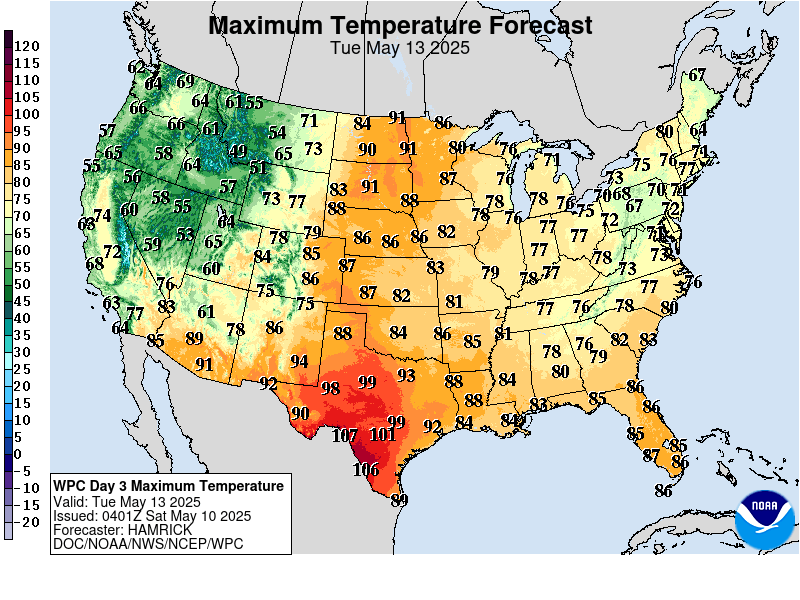
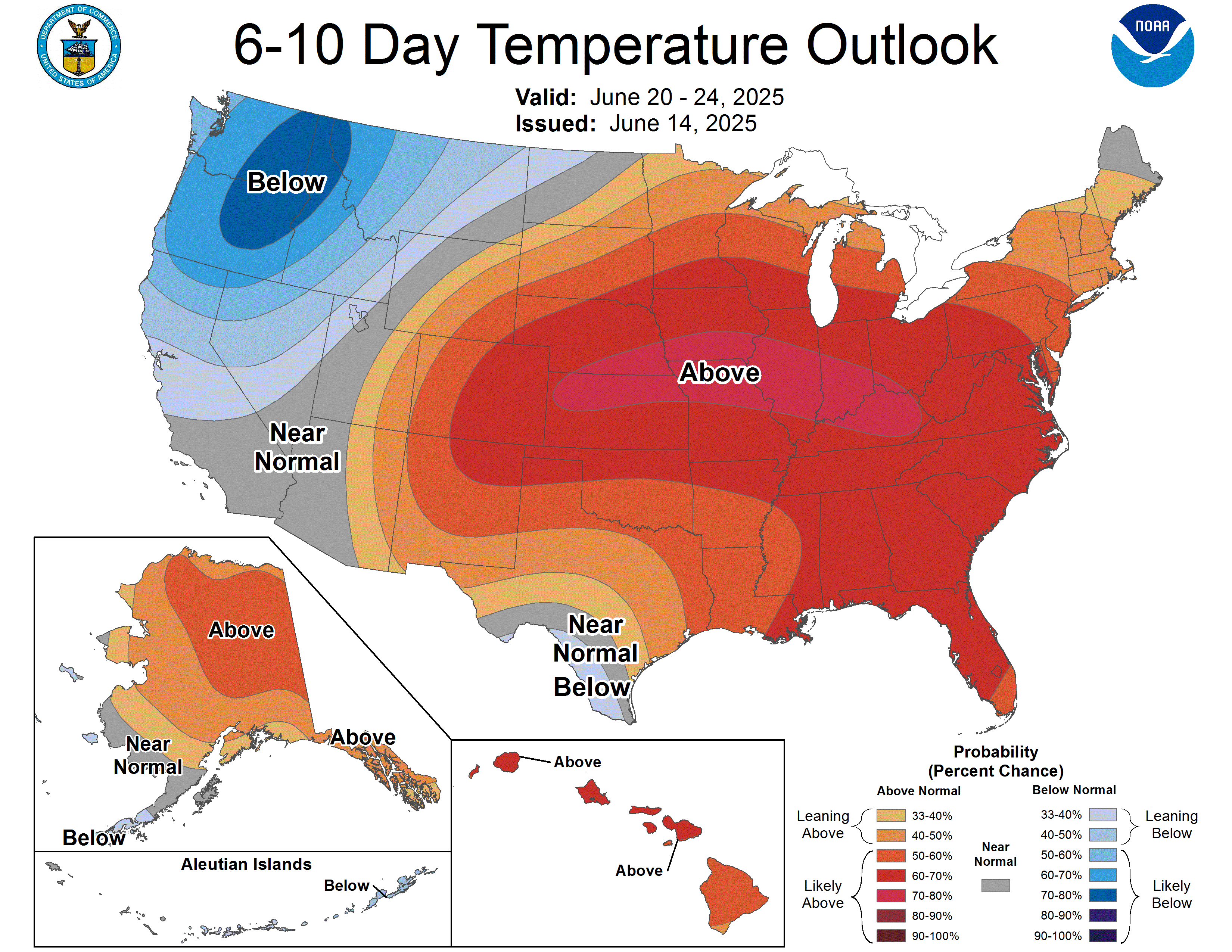
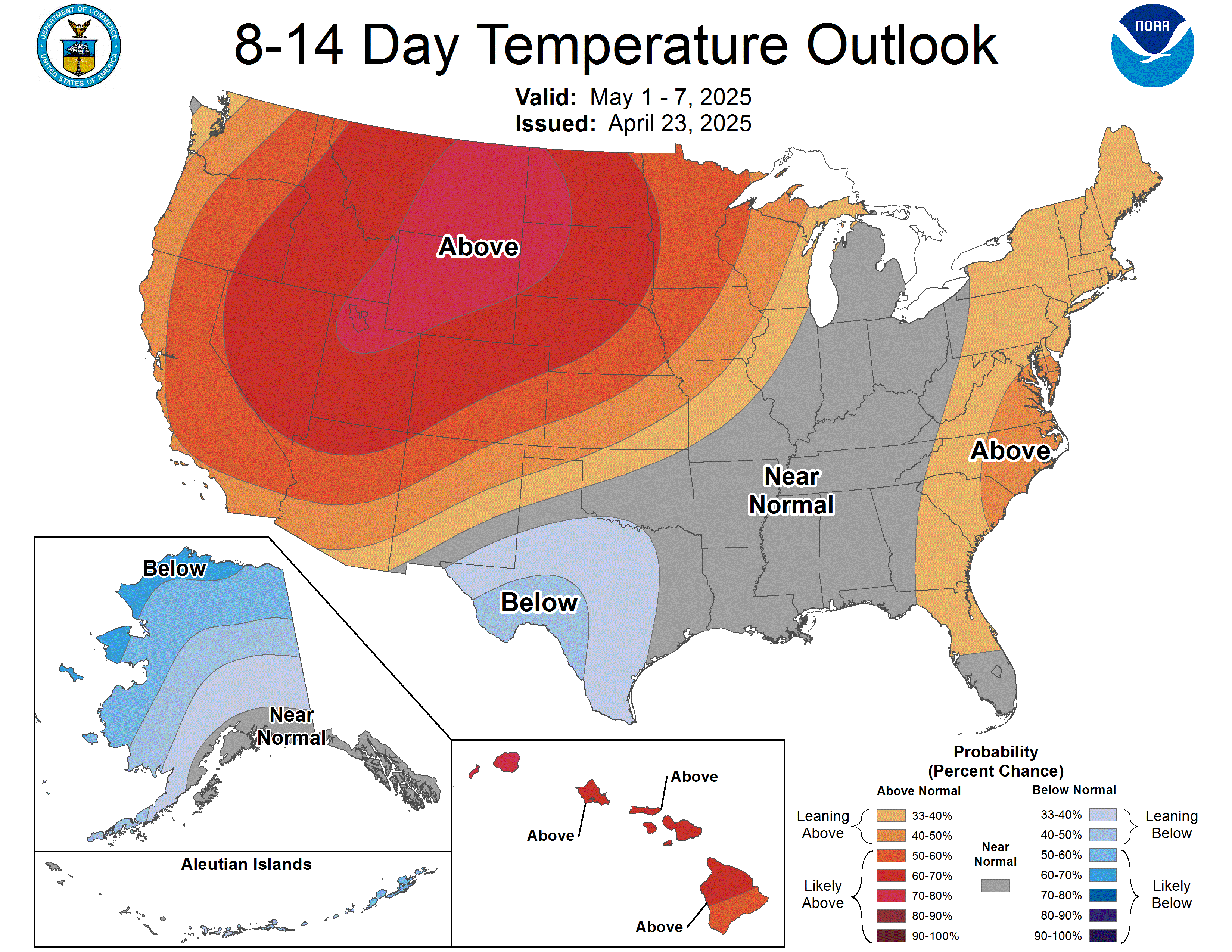
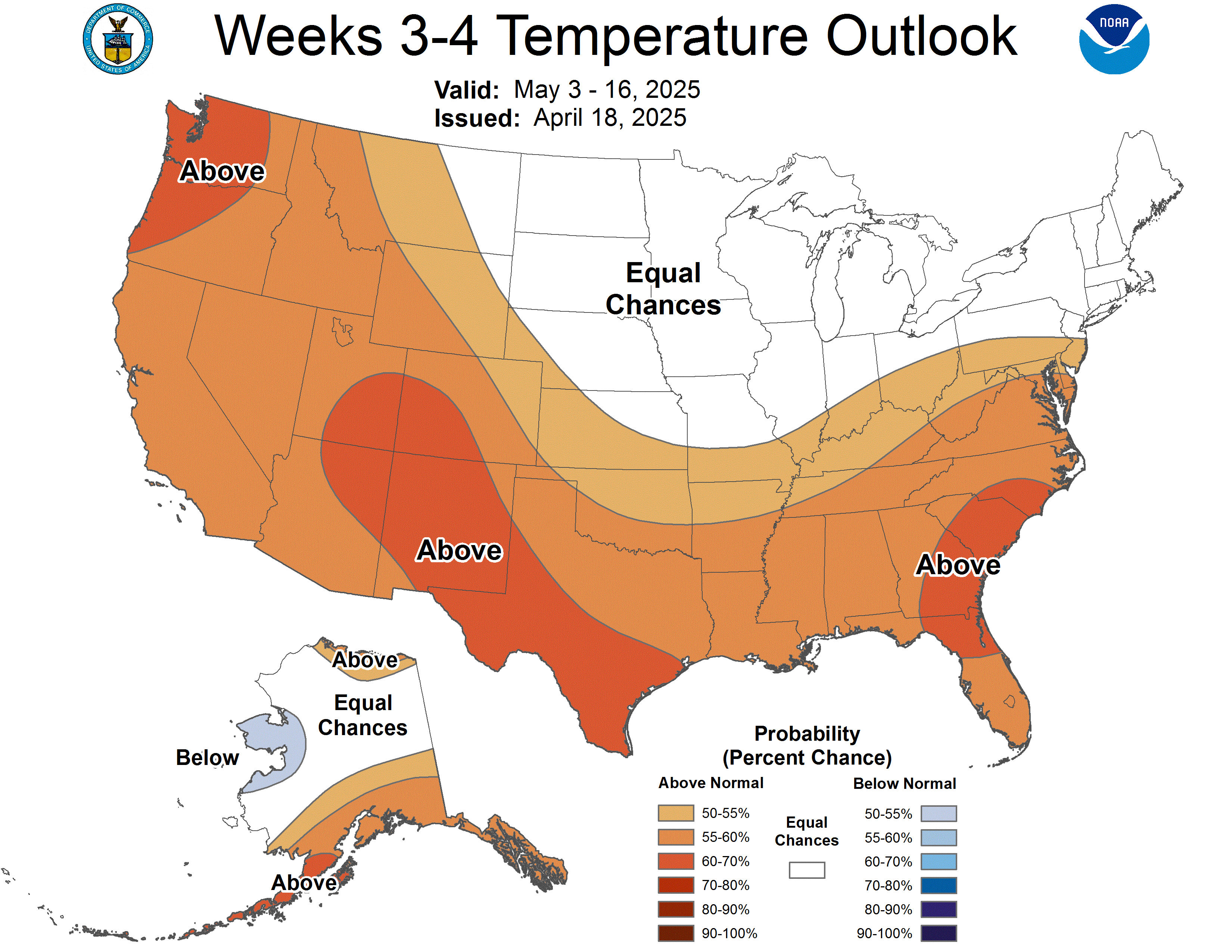
And then Precipitation
|
|
|
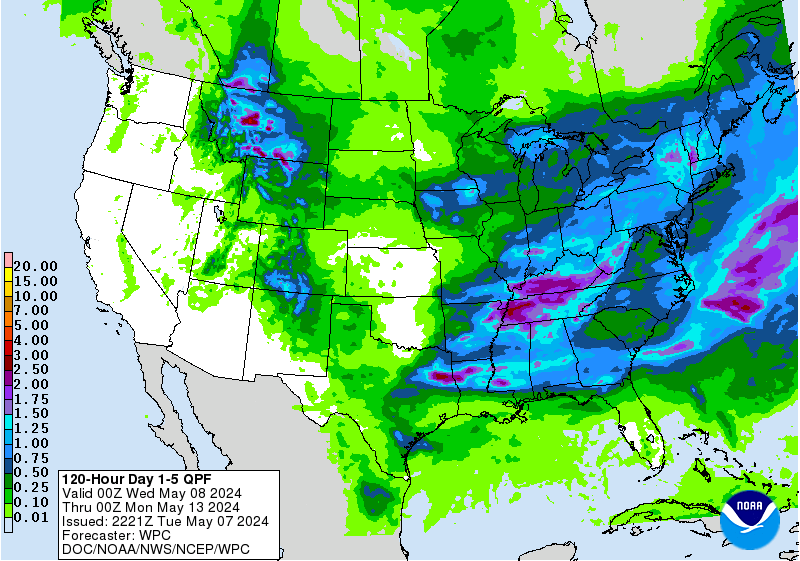
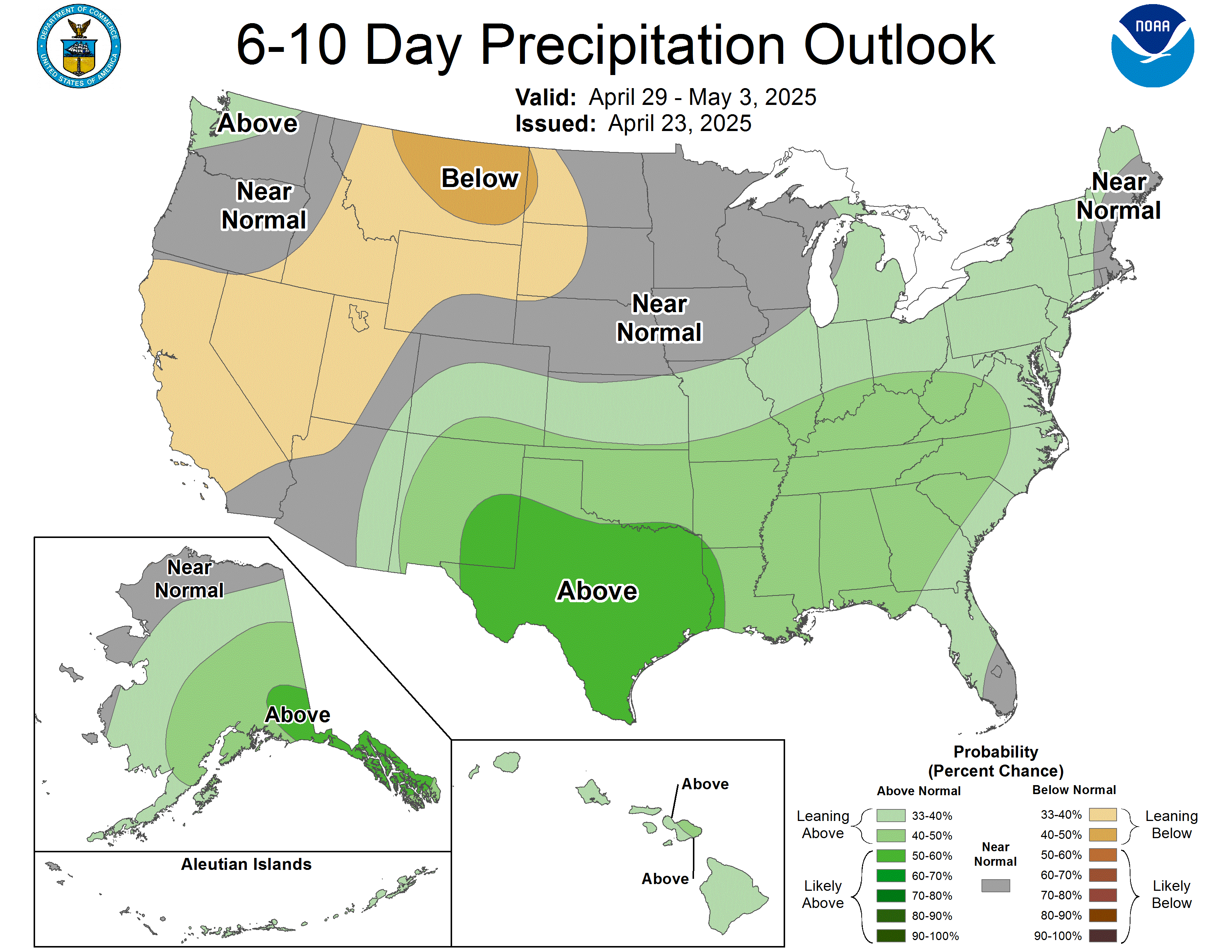
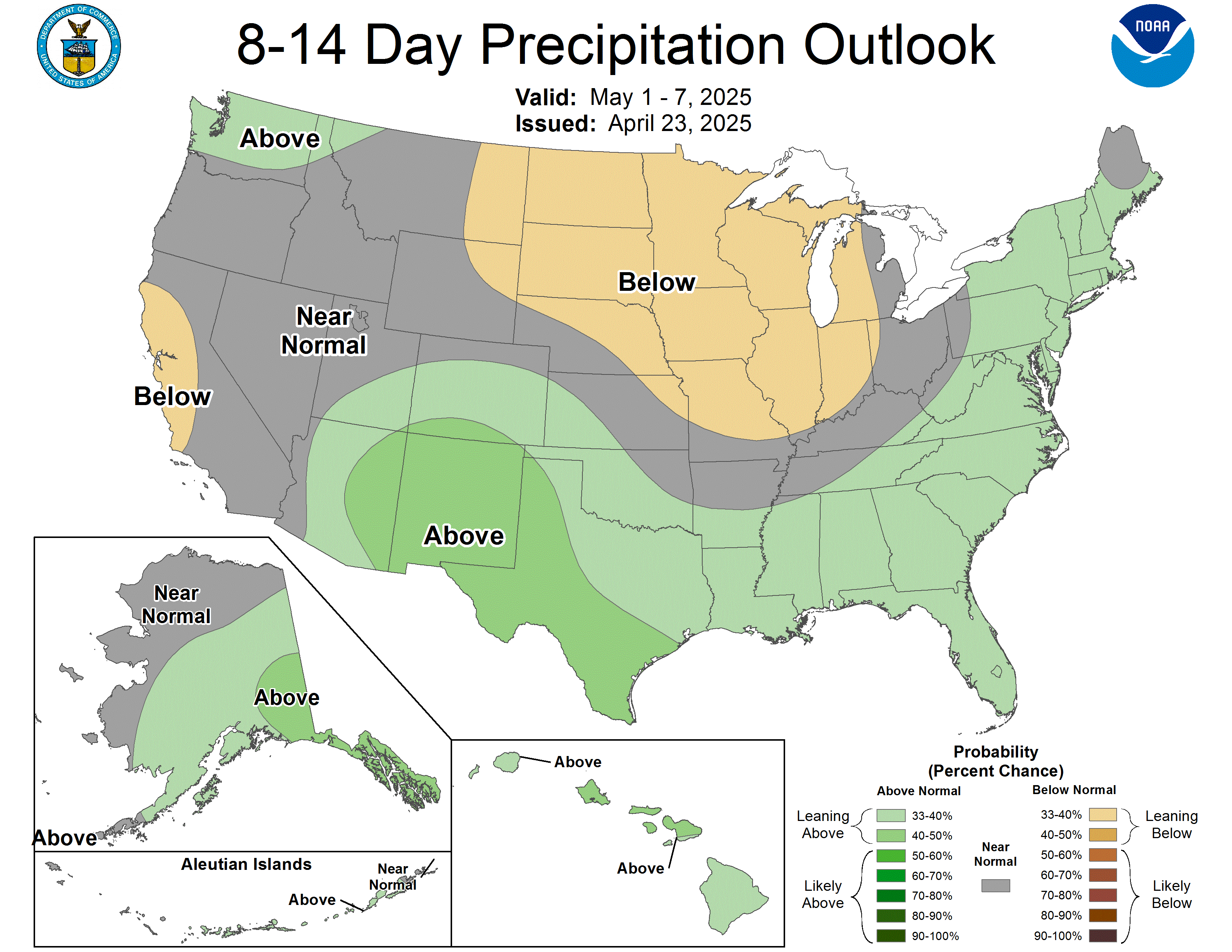
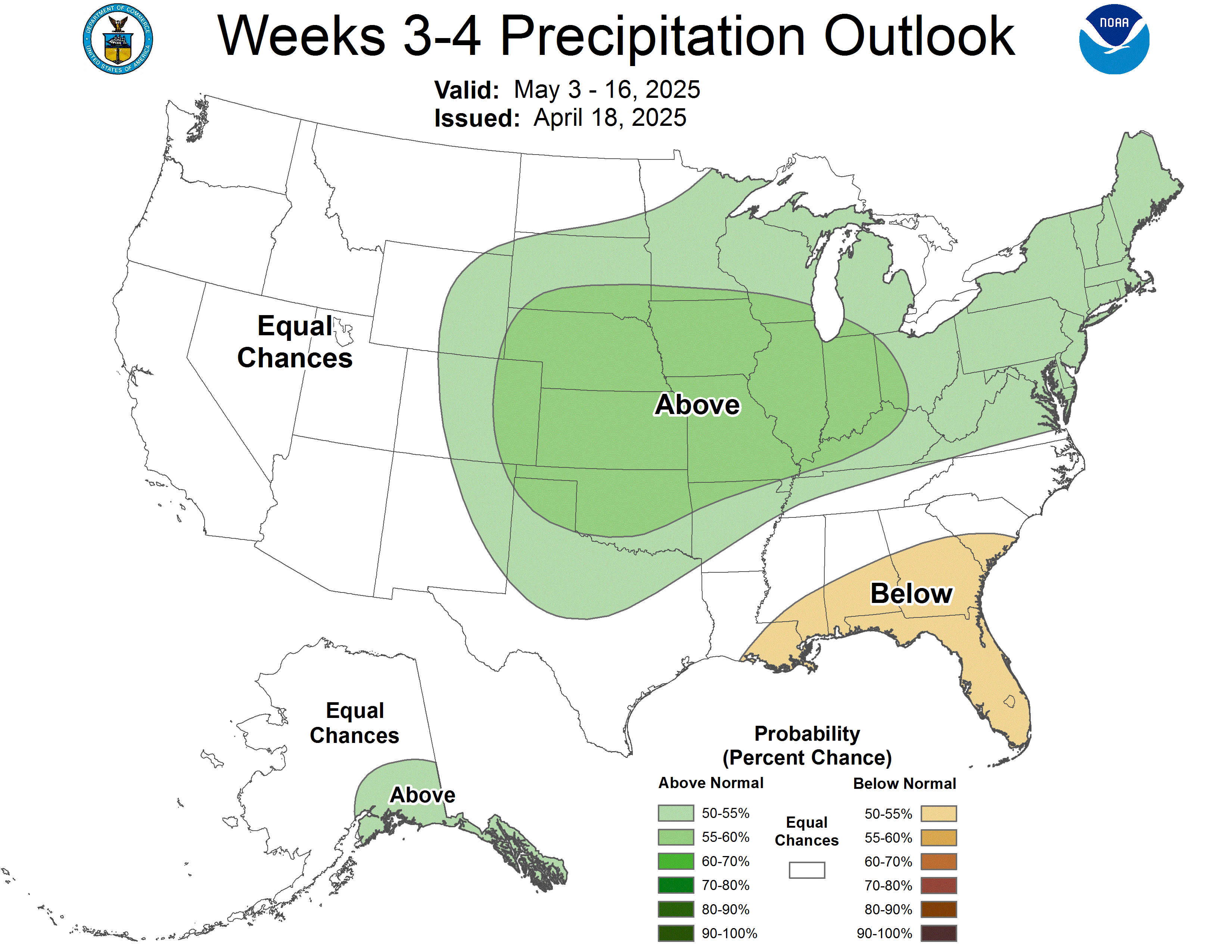
The Week 3-4 Discussion is always interesting so we include it in the article. Similar discussions for the 6 -10 Day and 8 – 14 Day Forecasts are available here.
Week 3-4 Forecast Discussion Valid Sat Sep 04 2021-Fri Sep 17 2021
ENSO-neutral conditions are currently present across the tropical Pacific Ocean. Equatorial sea surface temperatures (SSTs) are near to below average across most of the Pacific Ocean with low level easterly wind anomalies observed over the east-central equatorial Pacific Ocean and upper level westerly wind anomalies across the western and eastern equatorial Pacific Ocean. The RMM indices depict an active MJO eastward propagation across the Western Hemisphere during late July and early August. Dynamical model MJO index forecasts favor the MJO to decrease in amplitude as it propagates east over the Indian Ocean.The MJO is likely to continue influencing anomalous global tropical rainfall and modulating tropical cyclone development through Week-1. The Week 3-4 temperature and precipitation outlooks are based primarily on dynamical guidance including the GEFS, CFS, Canadian, ECMWF, JMA, the Subseasonal Experiment (SubX) multi-model ensemble (MME) of experimental and operational ensemble prediction systems, with additional considerations for MJO, ENSO-neutral, decadal climate trends, and soil moisture conditions, as well as the predicted evolution of the pattern from Week-2 forecasts.
A fair amount of variability exists among the dynamical models regarding the anomalous 500-hPa height pattern over the Week 3-4 period. A trough and associated negative 500-hPa height anomalies are forecast over the eastern CONUS. Most dynamical models feature near to above normal 500-hPa height anomalies over Hawaii.
Above normal temperatures are forecast across most of the northern and eastern CONUS, southern Mainland Alaska and the Aleutians as well as the Alaska Panhandle, as a result of slightly positive mid-level height anomalies and decadal trends. Equal chances of above and below normal temperatures are also predicted for southern areas of the Southwest Monsoon region, with the prediction of continued precipitation for the region. Below normal temperatures are likely for the southern Lower Mississippi Valley, associated with both currently unusually high soil moisture conditions and a potential for tropical storm activity during the period.
Below normal precipitation is likely for much of the Pacific Northwest region, southern Mainland Alaska and the Aleutians as well as the Alaska Panhandle, as indicated by blends of precipitation tools and the SubX MME consensus precipitation forecast. An active monsoon and above normal precipitation is predicted for parts of the Southwest region by a consensus of dynamical model forecasts. A predicted trough over the eastern CONUS increases odds for above normal precipitation for much of the Gulf Coast and Southeast regions. Above normal precipitation is predicted for parts of the Northern Plains and Upper Mississippi Valley region, as indicated by blended precipitation forecast tools and the SubX MME precipitation tool.
The SubX MME indicates increased probabilities of below normal precipitation for all of the Hawaiian Islands in the Week 3-4 period. Model forecasts indicate greater uncertainty for the temperatures outlook for Hawaii during the Week 3-4 period, so equal chances of above and below normal temperatures are predicted.
Sustainable Agriculture. (This will be covered in Part II but we do not have a video for this week)
Energy News

Reservoir Status. We usual cover this in Part I but this is a concise summary for a lot of reservoirs. I am not going to cover the California Reservoirs this week but we will next week.


International (We usually put this in Part I but it fits in either part since it covers weather and crop conditions). There is actually a lot of information here.

Science Feature (This will be covered in Part II when we have one but we do not have one tonight)
Environmental News (This will be covered in Part II when we have a report but we do not have one tonight)
Major Sources of Information Used in this Weekly Report. We will not be using them all each week but the reader is welcome to refer to these resources.
|


Sequence of drought occurrence and impacts for commonly accepted drought types. All droughts originate from a deficiency of precipitation or meteorological drought but other types of drought and impacts cascade from this deficiency. (Source and more information: NDMC)
Source: National Drought Mitigation Center, University of Nebraska-Lincoln
.


