


Written by Sig Silber
Tonight we have not one but two NASS Executive Briefings: one on crops and the other on cattle. We also have some interesting information on crop pricing and the costs of farming. We have two energy reports plus an energy video and a farming sustainability video. We cover all our regular topics including the Crop Progress Report and the intermediate-term weather forecast. We have a couple of regional reports. There is something for everyone in our article tonight.

Please share this article – Go to the very top of the page, right-hand side, for social media buttons. Please feel free to send this article to anyone who you think might benefit from reading it.

Agriculture Prices

Executive Briefing


Executive Briefing Cattle.


Here is a summary from a different part of NASS but I believe it is the same data.

Regional Conditions
First we discuss a region with huge problems.


Here is a region that basically has no problems
Apalachicola-Chattahoochee-Flint (ACF) July 2021 Drought and Water Monthly Webinar
That essentially has no problems with the climate or weather.


We might as well show the situation for the California Reservoirs here.

And it is always useful to look at the last seven days. I have stopped showing the Snow Water Equivalent as there is essentially now no snowpack of any significance. So rainfall is what counts now.

I think we have all gotten sick at looking at the water year to date which by now does not change unless there was a Noah’s Ark event. So I am not showing it.
Let’s look at the current drought situation.


Here we look at four time periods: one week, one month, six months, and a full year.

Drought Discussion (The Regional links are live and will take you to the drought map for that Region)
This Week’s Drought Summary
A robust Southwestern monsoon circulation delivered drought-easing rainfall but sparked localized flash flooding across large sections of the Four Corners States, as well as the southern Great Basin, but critically dry conditions persisted across northern California and the Northwest. In the driest areas, wildfires – some sparked by lightning – dotted the landscape, with containment of some blazes hampered by high temperatures, low humidity levels, erratic winds, and abundant fuels. Farther east, another round of blistering heat across the northern Plains further stressed rangeland, pastures, and a variety of summer crops. The central and southern Plains also experienced some hot weather, although agricultural impacts were tempered by mostly adequate soil moisture reserves. Meanwhile, mostly dry weather covered the Midwest, continuing a trend that had developed in mid-July. Short-term dryness was not yet a concern in the previously well-watered lower Midwest. However, reproductive corn and soybeans in drier areas of the upper Midwest were subjected to increasing levels of stress, especially as temperatures began to rise. Elsewhere, Southeastern rain – which maintained abundant moisture reserves for pastures and summer crops – primarily fell from the Mississippi Delta to the southern Atlantic Coast.
Northeast
Wet weather continued to dent Northeastern drought, except in parts of West Virginia (and environs) and northern New England. Another week of frequent showers in non-drought areas of the Northeast pushed month-to-date (July 1-27) rainfall totals to a foot or more in some locations, including Worcester, Massachusetts (13.54 inches, or 399% of normal). Worcester’s previous wettest July occurred in 1938, when 11.41 inches fell. Farther north, however, July 1-27 rainfall in Caribou, Maine, totaled 2.77 inches (74% of normal). Lingering drought impacts in northern New England included low streamflow and groundwater shortages. Farther south, short-term dryness led to the introduction of some abnormal dryness (D0) and moderate drought (D1) in West Virginia and portions of neighboring states. In Elkins, West Virginia, July 1-27 rainfall totaled 2.24 inches, just 43% of normal.
Southeast
The last remaining patch of abnormal dryness (D0) in southern Florida was eradicated by ongoing showery weather. Neither dryness nor drought was present in Alabama and Georgia. Farther north however, dryness (D0) and moderate drought (D1) expanded across parts of western and central Virginia. By July 25, the U.S. Department of Agriculture reported that Virginia’s topsoil moisture was 60% very short to short, an increase of 23 percentage points from the previous week. On the same date, pastures were rated 38% in very poor to poor condition in Virginia, along with 43% in North Carolina. Some drier areas in the Carolinas received beneficial rain, however, resulting in reductions in the coverage of abnormal dryness (D0).
South
Arkansas, Louisiana, and Mississippi remained free of dryness and drought, while only small patches of abnormal dryness (D0) and moderate drought (D1) were noted in Oklahoma, Texas, and Tennessee. Most Southern crops continued to fare well amid plentiful rainfall and relatively mild temperatures. On July 25, three-quarters (75%) of the nation’s peanuts were rated in good to excellent condition, according to the U.S. Department of Agriculture, along with 73% of the rice and 61% of the cotton.
Midwest
Mostly dry weather developed across the Midwest in mid-July and has persisted for nearly 2 weeks. However, dryness was not yet a concern across the lower Midwest, where the U.S. Department of Agriculture noted (on July 25) that topsoil was rated 15% or less very short to short in Missouri, Illinois, Indiana, Ohio, and Michigan. In fact, Michigan was one of the few states in the region – along with northern Wisconsin – to receive widespread heavy showers in recent days. In stark contrast, drought continued to worsen across parts of the upper Midwest, accompanied by building heat. By July 25, topsoil moisture was rated 81% very short to short in Minnesota, along with 53% in Iowa and 46% in Nebraska. Iowa’s number markedly increased from last week’s 33% very short to short. Drought expansion highlights included additional extreme drought (D3) coverage in Minnesota and an increase in severe drought (D2) coverage in Iowa. At least one-fifth of Minnesota’s major summer crops – 21% of the corn and 20% of the soybeans – were rated in very poor to poor condition on July 25. Minnesota also led the Midwest on that date with 66% of its pastures rated very poor to poor.
High Plains
Drought’s footprint remained rather limited across Kansas, eastern Colorado, and southern Nebraska. Farther north and west, however, worsening drought impacts were observed across much of Wyoming and the Dakotas. According to the U.S. Department of Agriculture, topsoil moisture on July 25 was rated 87% very short to short in North Dakota, along with 82% in South Dakota and 79% in Wyoming. Rangeland and pastures were rated at least 60% very poor to poor in Wyoming and the Dakotas, led by North Dakota at 85%. On July 25, North Dakota was the national leader in oats rated very poor to poor (56%), along with soybeans (41%) and corn (39%). South Dakota led the nation, among major production states, in sorghum rated very poor to poor (31%). Nationally, the U.S. spring wheat crop was rated just 9% good to excellent and 66% very poor to poor on July 25, the lowest overall condition at this time of year since July 25, 1988, when the crop was categorized as 4% good to excellent and 72% very poor to poor. Harvest was underway for drought-ravaged crops on the High Plains; 3% of the spring wheat had been cut by July 25. Periodic extreme heat on the northern Plains has greatly aggravated drought impacts. During the most recent heat wave, high temperatures in South Dakota on July 27 soared to 108°F in Pierre and 107°F in Rapid City. In the latter location, that represented the highest temperature since August 29, 2012.
West
Further expansion of moderate to exceptional drought (D1 to D4) was introduced in parts of California and the Northwest, as agricultural, wildfire, and water-supply impacts continued to mount. Oregon’s third-largest wildfire in modern history, the Bootleg Fire, has burned more than 410,000 acres of timber and brush, but was more than 50% contained. California’s largest active blaze, the Dixie Fire, has scorched nearly 220,000 acres only about 15 miles northeast of the town of Paradise, which was devastated by the Camp Fire in 2018. Washington continued to lead the country in several drought-related agricultural categories, according to the U.S. Department of Agriculture, including topsoil moisture rated very short to short (99% on July 25), as well as very poor to poor ratings for rangeland and pastures (97%) and spring wheat (88%). In addition to Washington, at least two-thirds of the rangeland and pastures were rated very poor to poor on July 25 in Montana (91%), Arizona (82%), Oregon (80%), and Utah (69%). Montana rivaled Washington for agricultural drought severity, with topsoil moisture rated 97% very short to short and a nation-leading 70% of its barley rated very poor to poor. Farther south, however, an active monsoon circulation delivered drought relief in the form of diurnal showers and thunderstorms, some heavy. Up to one category of improvement was introduced in parts of Arizona, New Mexico, southwestern Colorado, and southern sections of Utah and Nevada. In Arizona, Tucson received more rain in 6 days (4.20 inches fell from July 20-25) than during all of 2020, when annual precipitation of 4.17 inches was the lowest on record. Despite the positive effect of monsoonal showers on surface conditions (e.g. improved vegetation health, topsoil moisture, and streamflow), serious long-term, underlying drought persisted, with obvious impacts on groundwater and reservoirs. The surface elevation of Lake Mead, on the Colorado River behind Hoover Dam, fell to a new record low – 1,067.59 feet above sea level – on July 23. In Utah, the surface elevation of the Great Salt Lake fell below 4,191.4 feet in late July, breaking the previous record low set in 1963.
Caribbean
In Puerto Rico, abundant showers across interior locations led to the removal of two small patches of dryness (D0), but the drought depiction was unchanged in coastal areas.
Alternating weather conditions occurred across the U.S. Virgin Islands (USVI) during this USDM week (07/21/21-07/27/21). A low-level trough/tropical wave brought showers early in the week, with another tropical wave and a Tropical Upper Tropospheric Trough (TUTT) causing more rain later in the week. Drier and more stable airmasses preceded and followed these systems, along with a Saharan Air Layer, which inhibited showers.
Radar-based estimates of rainfall (QPE) for the 7 days ending at 12z on Tuesday showed widely-varying precipitation amounts, ranging from less than half an inch (over eastern St. Croix) to locally 2 inches or more on all three islands. Satellite-based (IMERG) estimates of 7-day precipitation revealed a large area of 2+ inches of rain that extended from St. John and St. Thomas northward for several hundred miles, with St. Croix having from half an inch to 2 inches in places.
Seven-day rain gauge totals ranged from 1.15 inches to 2.54 inches on St. John, 0.98 to 1.63 inches on St. Thomas, and 0.33 inch to 1.73 inches on St. Croix. The rain improved Standardized Precipitation Index (SPI) values on St. Croix and St. John, but groundwater levels still remain historically low. The groundwater level at the USGS Grade School 3 well on St. Thomas rose in the last few days but was still well below where it was back in December 2020. Groundwater levels on St. John and St. Croix continued to decline, although the rate of decline has slowed in recent days. There was no change in the USDM status this week, with St. Croix continuing at D2-SL, St. John continuing at D1-L, and St. Thomas continuing at D0-L.
Pacific
Parts of interior Alaska received substantial rain, while showers mostly bypassed some locations. As a result, moderate drought (D1) was expanded slightly westward into central Alaska, but some dryness (D0) was eradicated in the east-central portion of the state. Interior Alaska’s largest active wildfire, the Munson Creek Fire, has burned more than 54,000 acres of vegetation.
In Hawaii, there were no changes to the drought depiction, despite an increase in the intensity of showers across windward locations, in part due to moisture associated with the remnants of eastern Pacific Tropical Storm Guillermo. In Hawaiian areas where rainfall has increased, low streamflow values were being monitored to gauge the impact of the shower activity.
The weather features across the U.S.-Affiliated Pacific Islands (USAPI) during this USDM week (07/21/21-07/27/21) included an expansive monsoon flow across western Micronesia. Tropical Storm Nepartak (11W) formed north of the Marianas at mid-week and helped intensify a monsoon trough west and north of the Marianas. The convergent monsoon flow drenched the Marianas with several inches of rain. Weekly totals ranged from 2.50 inches in the south at Guam to over 5 inches at Rota (5.77 inches) and the Saipan IAP (6.12), with over 8 inches estimated from satellite over the far northern Marianas. Over eastern Micronesia, the trade-wind pattern fell apart, with only weak circulations, disturbances, and surface troughs bringing areas of rain. South of the equator, easterly winds brought a few showers to American Samoa, but the weather for the week was mostly dominated by dry high pressure.
Satellite-based estimates of 7-day precipitation (QPE) are available from two products: one using mainly infrared (IR) sensors (NESDIS GOES-R AHI) and the other incorporating microwave sensors (GPM IMERG). These QPE products showed a huge arch of 4+ inches of rain that stretched in the shape of a U from the northern Chinese coast, to the Marianas, then northeastward, associated with the monsoon trough and TS Nepartak. A patchy band of 1+ inches stretched eastward across Palau, the Federated States of Micronesia (FSM), and the southern Marshall Islands (RMI). The satellite QPE detected only a few tenths of an inch of rain over American Samoa.
As noted earlier, it was a wet week in the Marianas, with rainfall totals consistently over 2 inches (one inch is the weekly minimum needed to meet most water needs in the Marianas), so D-Nothing continued. Further south, the monsoon rains delivered weekly precipitation totals (based on rain gauge amounts received for the week) over 2 inches to Woleai (3.41 inches) and Yap (2.56), but under 2 inches to Ulithi (1.20 inches with 3 days missing). In Palau, Airai recorded 1.71 inches and the Koror COOP station 0.94 inch. Rain earlier in the month resulted in July month-to-date totals at these stations that were above the monthly minimum needed to meet most water needs. Kosrae (3.28 inches) and Nukuoro (3.94 inches) were wet (above the weekly minimum) while the rest of the FSM stations were dry, with values ranging from 0.23 inch at Lukunor to 1.83 inches at Kapingamarangi. Except for Lukunor, the month-to-date totals were above the monthly minimum at the FSM stations. D-Nothing continued at Palau and the FSM stations except for Fananu, which was not analyzed due to no data.
It was a dry week in American Samoa, with Pago Pago recording 0.37 inch and the automated stations at Siufaga Ridge (0.73 inch) and Toa Ridge (0.28 inch) below an inch (the automated stations had one day missing). But month-to-date totals were wet, so D-Nothing continued at Tutuila.
In the RMI, Kwajalein was wet (above the 2-inch weekly minimum) with 2.31 inches of rain for the week. But the rest of the stations were dry, with weekly rainfall totals ranging from 0.40 inch at Jaluit to 1.50 inches at Majuro. Ailinglaplap recorded 0.55 inch for the week and 2.43 inches so far this month. This week marked the fourth consecutive dry week, and July 2021 (based on data received so far in the month) marked the third consecutive dry month. Compared to historical full Julys, July 2021 was the driest July in the 37-year record, June-July 2021 was the driest such 2-month period, and May-July 2021 was the driest May-July. Jaluit reported 0.40 inch of rain for the week and 3.22 inches so far this month. This week marked the seventh consecutive dry week. Compared to historical full Julys, July 2021 ranked as the second driest July in 38 years of data, June-July 2021 was the fourth driest June-July, and May-July 2021 was the ninth driest such 3-month period. D0-S continued at Ailinglaplap and Jaluit. At the other RMI stations, either July-to-date has been wet (Kwajalein and Mili), or previous weeks have been wet, so D-Nothing continued. Of concern is the declining reservoir level at Majuro; as of July 26, about 27 million gallons were in the reservoir, which is below the threshold for concern of 28.8 million gallons. The drought status at Utirik could not be analyzed due to lack of data.
Looking Ahead
Cooler air will overspread the northern Plains and upper Midwest, though many drought-affected areas will remain in need of moisture. Large sections of the central and southern Plains will also remain mostly dry, accompanied by some of the hottest weather of the summer. Farther east, periodic showers and thunderstorms will affect the Great Lakes and Northeastern States. Meanwhile, hot, humid weather will linger into the weekend across the South, where an approaching cold front will generate showers and thunderstorms. Elsewhere, the Southwestern monsoon circulation will remain active, with beneficial showers dampening interior sections of the western United States as far north as Wyoming and southern Idaho.
The NWS 6- to 10-day outlook for August 3 – 7 calls for the likelihood of above-normal temperatures in Alaska, southern Florida and from the Pacific Coast to the northern Plains and upper Midwest, while cooler-than-normal conditions will cover much of the southeastern half of the country. Meanwhile, near- or below-normal rainfall across most of the United States should contrast with wetter-than-normal weather in a few areas, including western Alaska, the southern Atlantic region, the southern Plains, and the Northwest.
Soil Conditions
 |
 |
 |
 |

The result of the drought is very dry soil conditions in some areas. There is also some very wet areas.
| Last Week | This Week |
 |  |
Drought Outlook
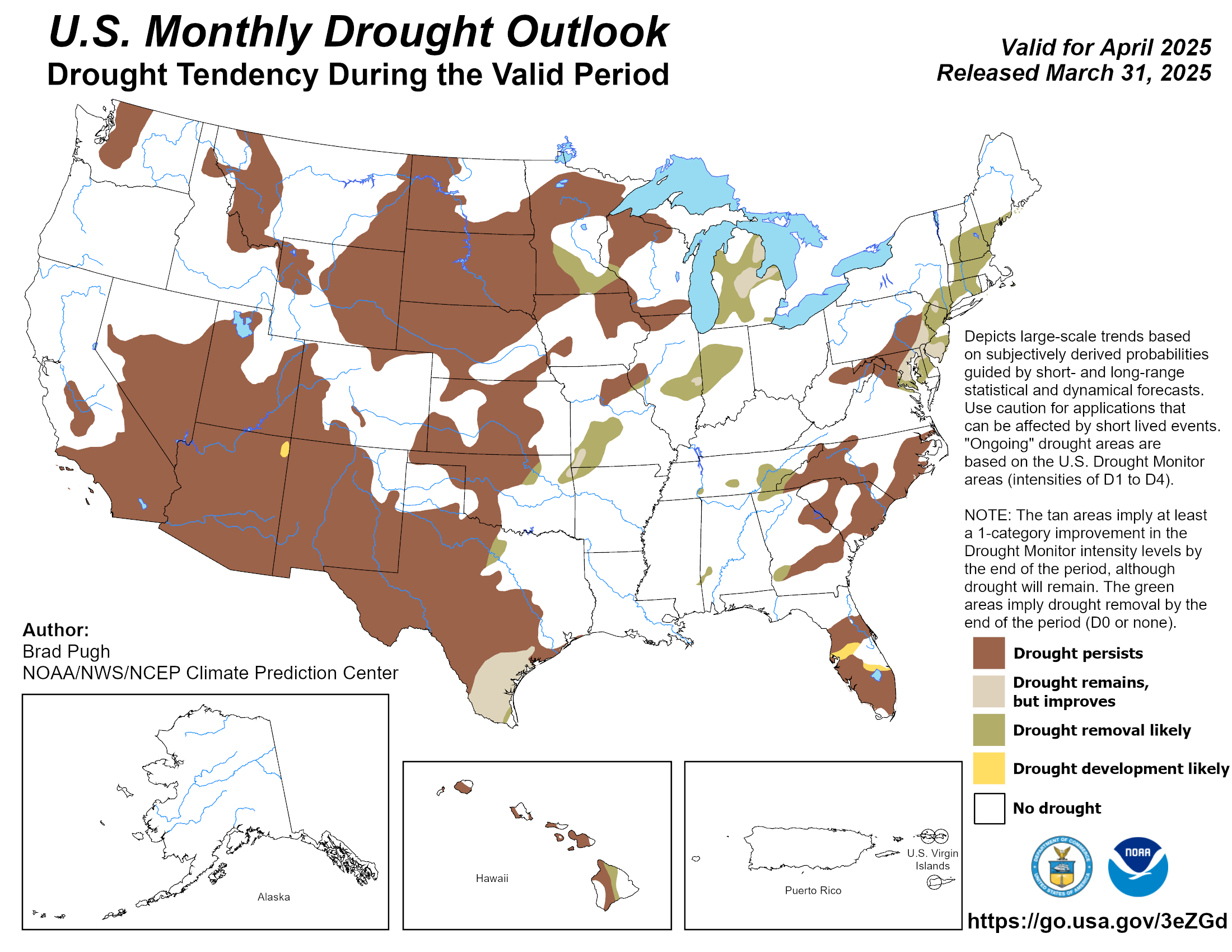
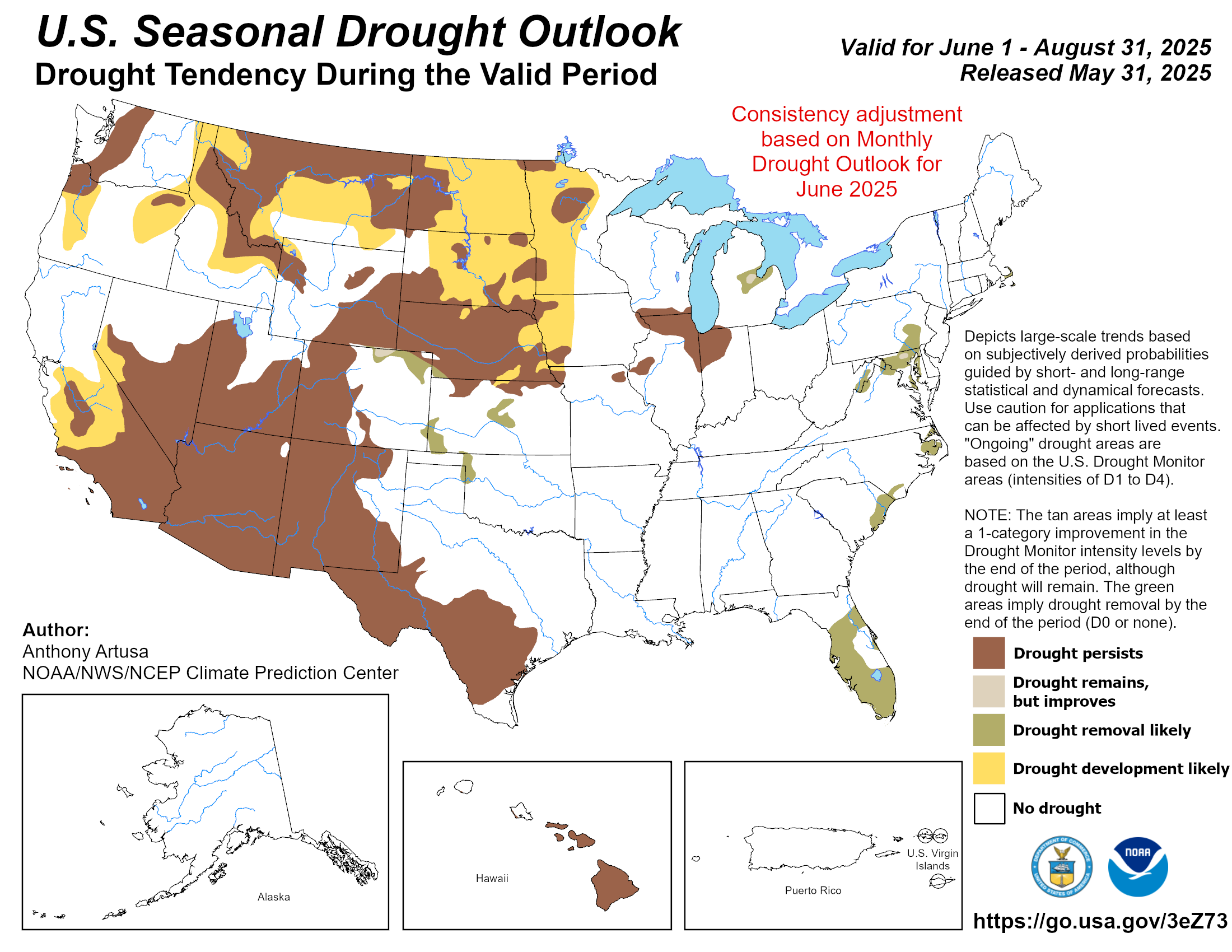

Since we are entering fire season it is time to be showing the wildland fire potential outlook. These will update automatically shortly after the month changes which is very soon.


Crop Progress Reports
When we have a NASS Executive Briefing one way to look at this report is that it adds another more recent week of information. This report is issued every week and the Executive Briefings are every couple of months and provide a lot of historical information.
 |
 |
 |
 |
 |
| Crop | Crop Progress | Crop Condition |
| Corn | Percent Silking and Dough OK | Better last year. Mostly due to the Dakotas and Minnesota having poor conditions. |
| Soybeans | Blooming and Setting Pods good. | Not so great. Mostly due to the Dakotas and Minnesota.. |
| Cotton | Squaring and Setting Bolls a bit slow | Very good |
| Winter Wheat | Harvested ok | NA |
| Spring Wheat | Headed and Harvested ok | Very poor in all states where Spring Wheat is grown |
| Sorghum | Headed and Coloring OK | Very good |
| Rice | Headed a bit slow | OK |
| Oats | Harvested ok | Poor compared to last year in the Dakotas, Texas and Minnesota. |
| Barley | Headed and Harvested OK | Very poor North Dakota, Washington State, Montana, and Minnesota. |
| Peanuts | Pegging OK | OK |
| Sugar Beets | NA | NA |
| Sunflowers | MA | NA |
| Pasture and Range | Somewhat Poor |
Additional Information can be found here. Pretty much it is the same information as shown in the above tables but at the end there is some information on the methodology used.

NASS Reports The NASS Reports can be found here.
We provided the price index for June at the beginning of this article. NASS also released information on productions costs. The full report can be accessed here.

Here is the summary


Intermediate-Term Weather Forecast
Showing from left to right, Days 1- 5, 6 – 10, 8 – 14, and Weeks 3 – 4 You can click on these maps to have them enlarge. Also, the discussions that go with these forecast maps can be found here (first two weeks) and here (Weeks 3 and 4).
First Temperature
|
|
|
|
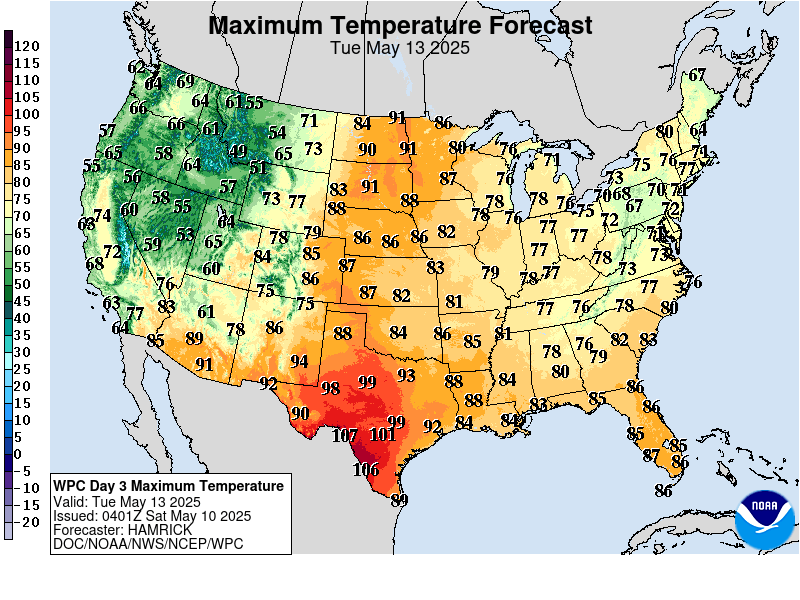
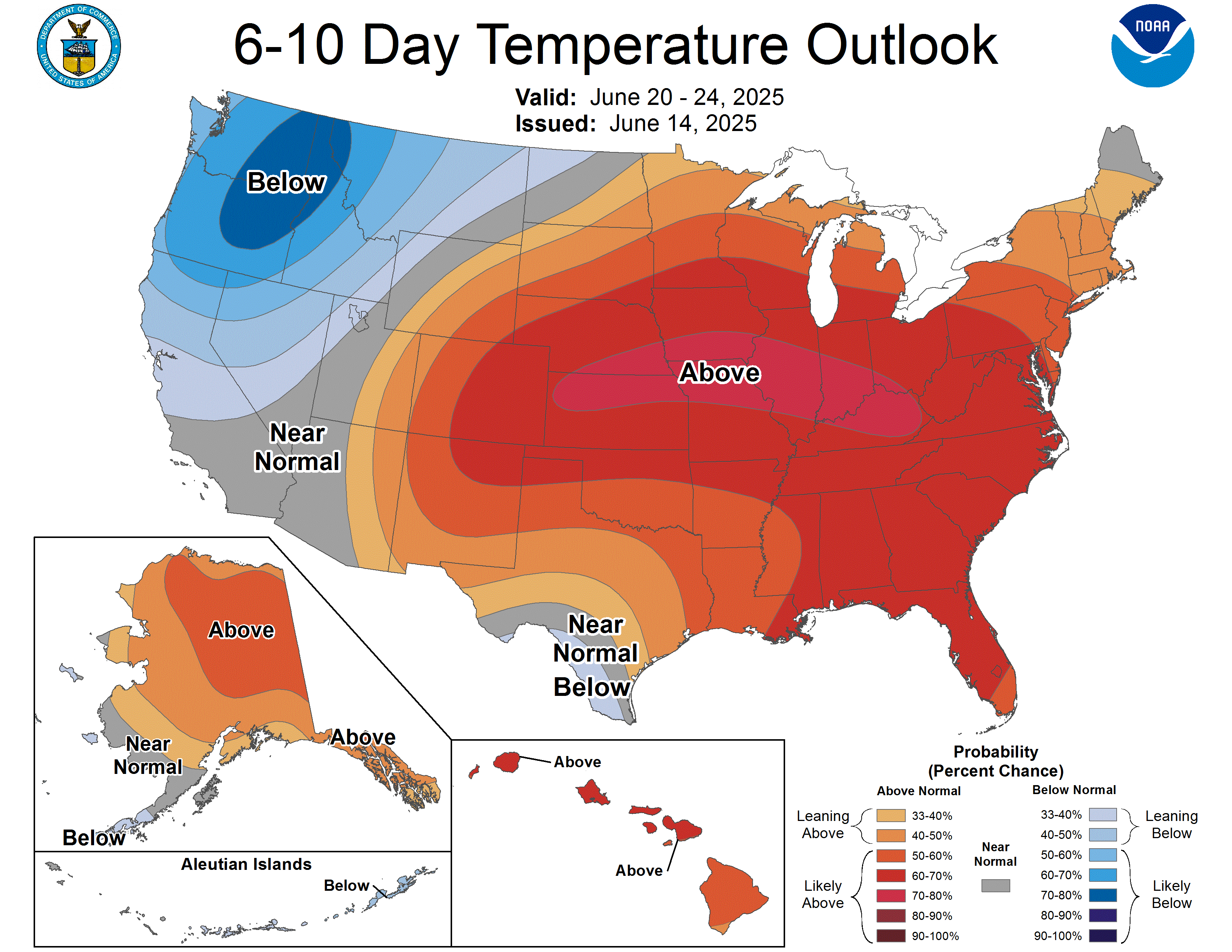
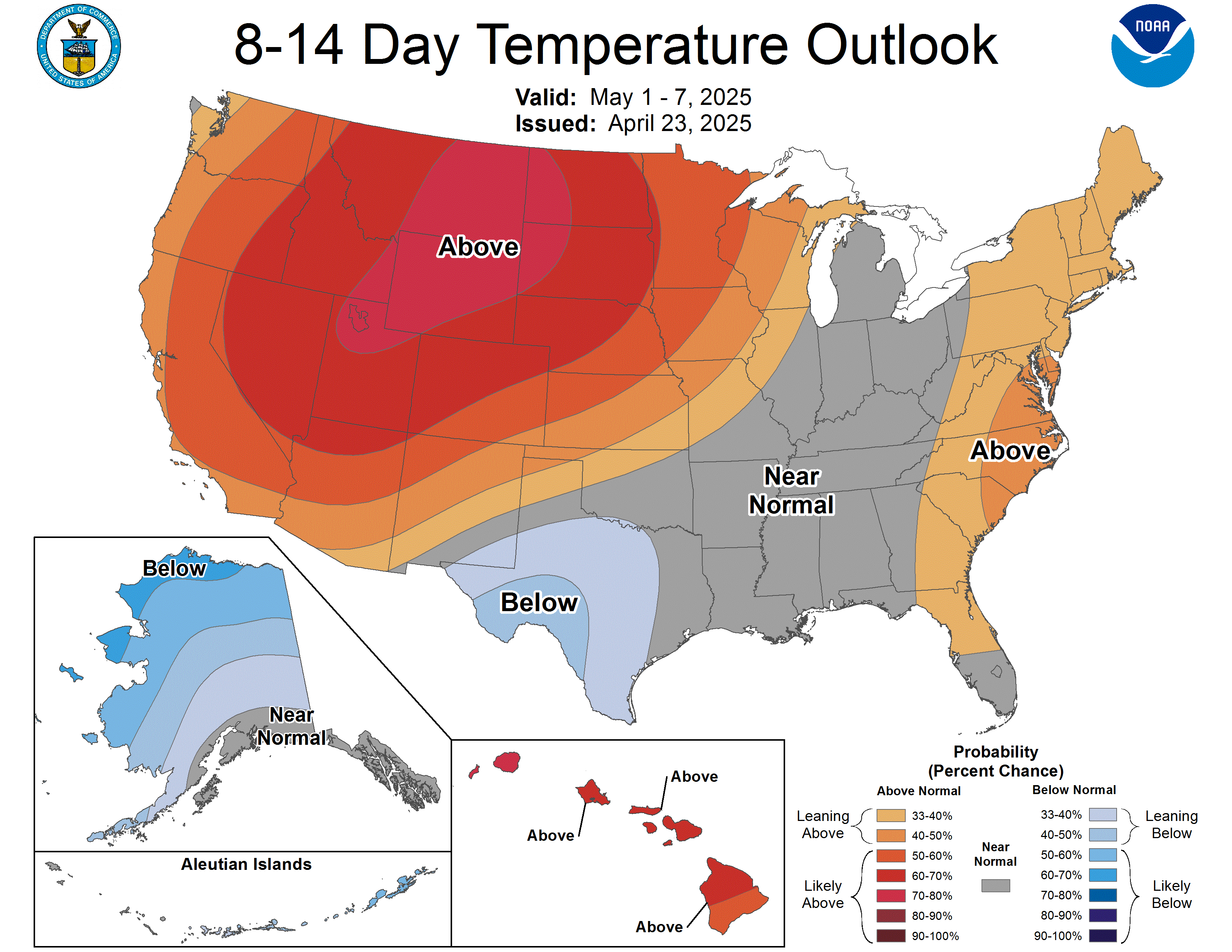
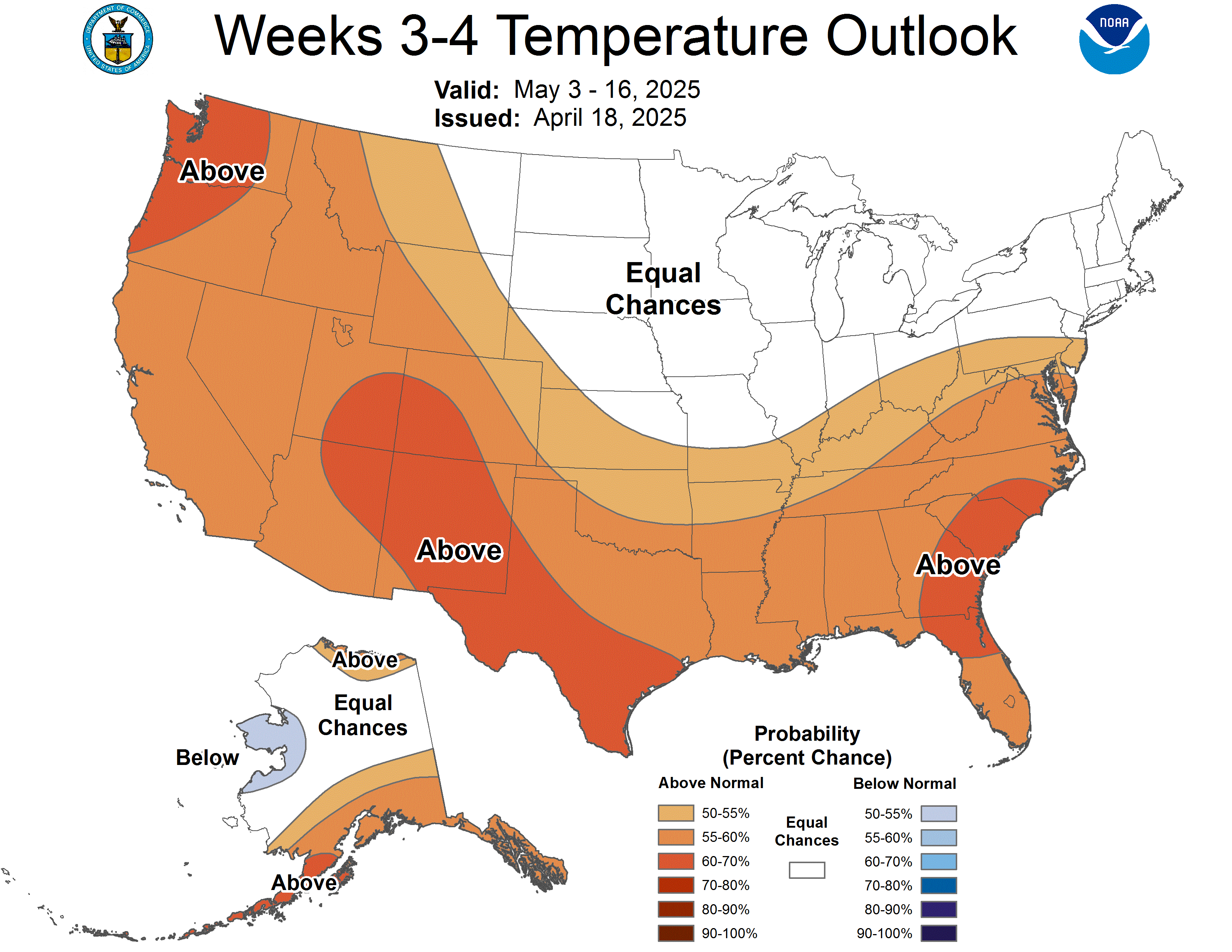
And then Precipitation
|
|
|
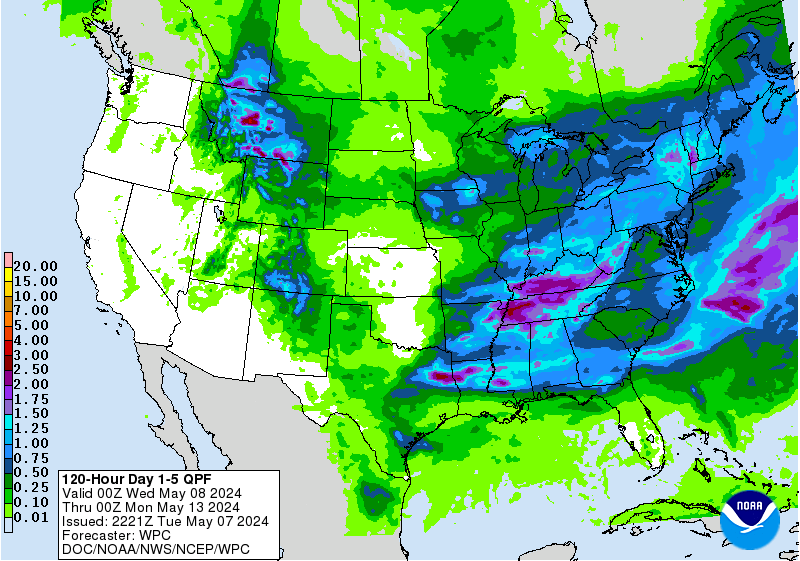
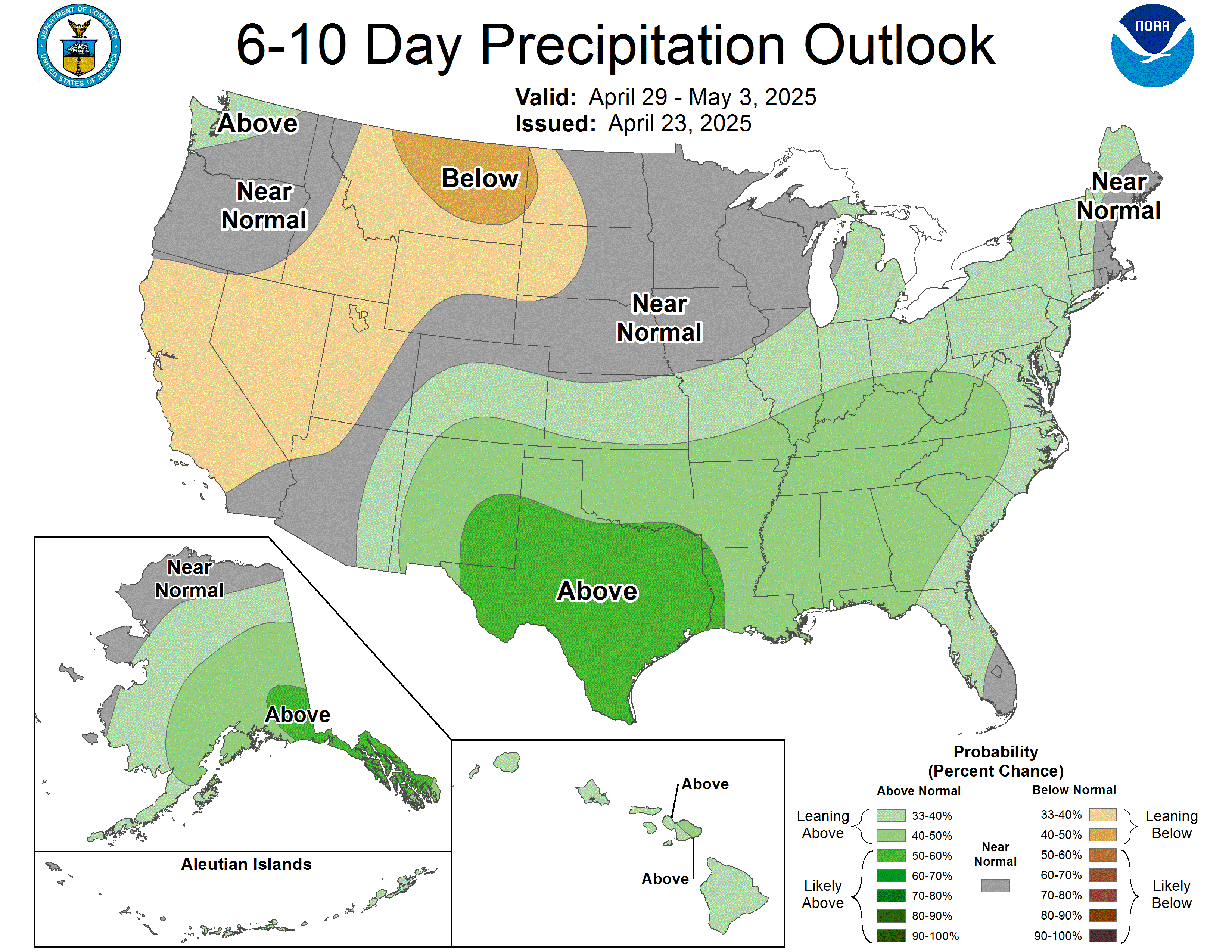
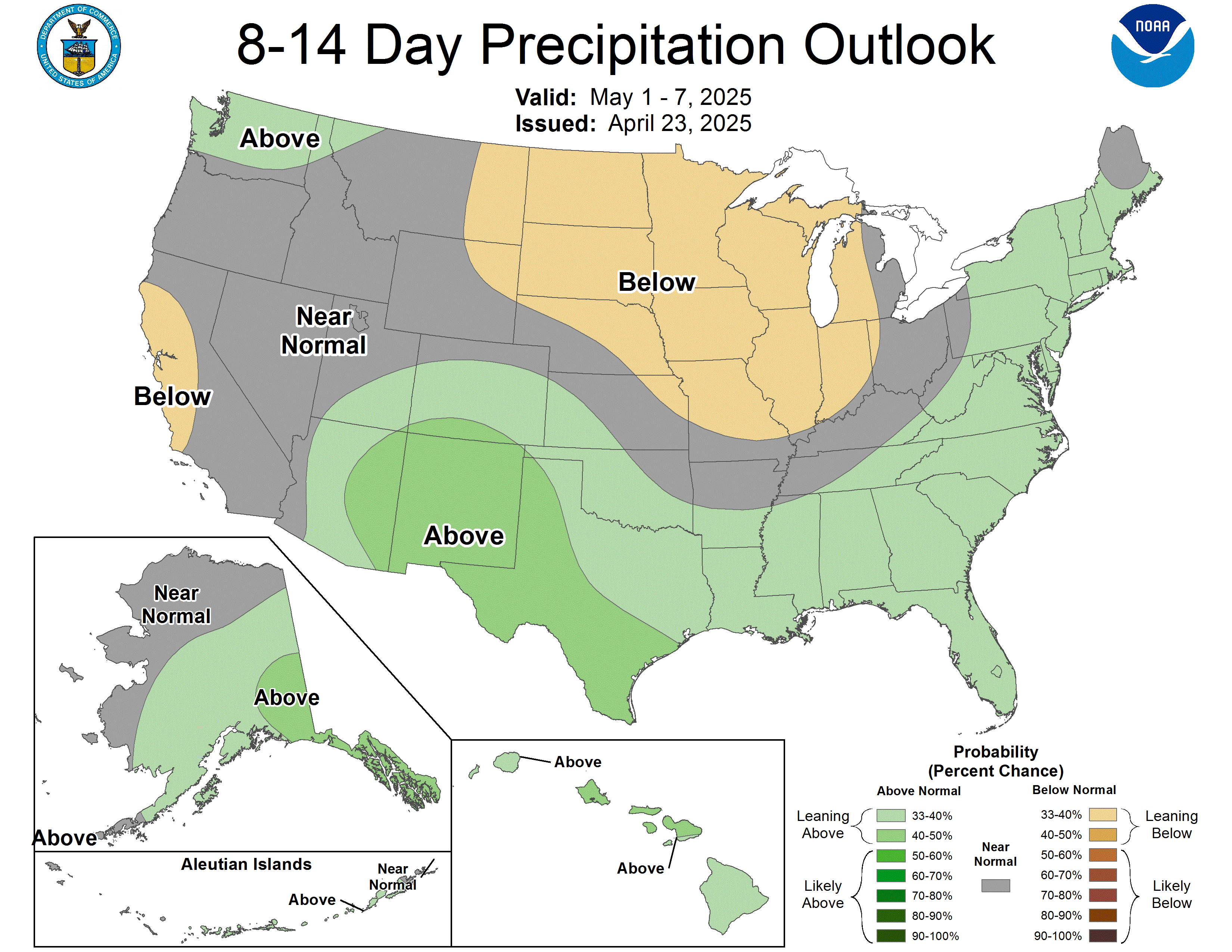
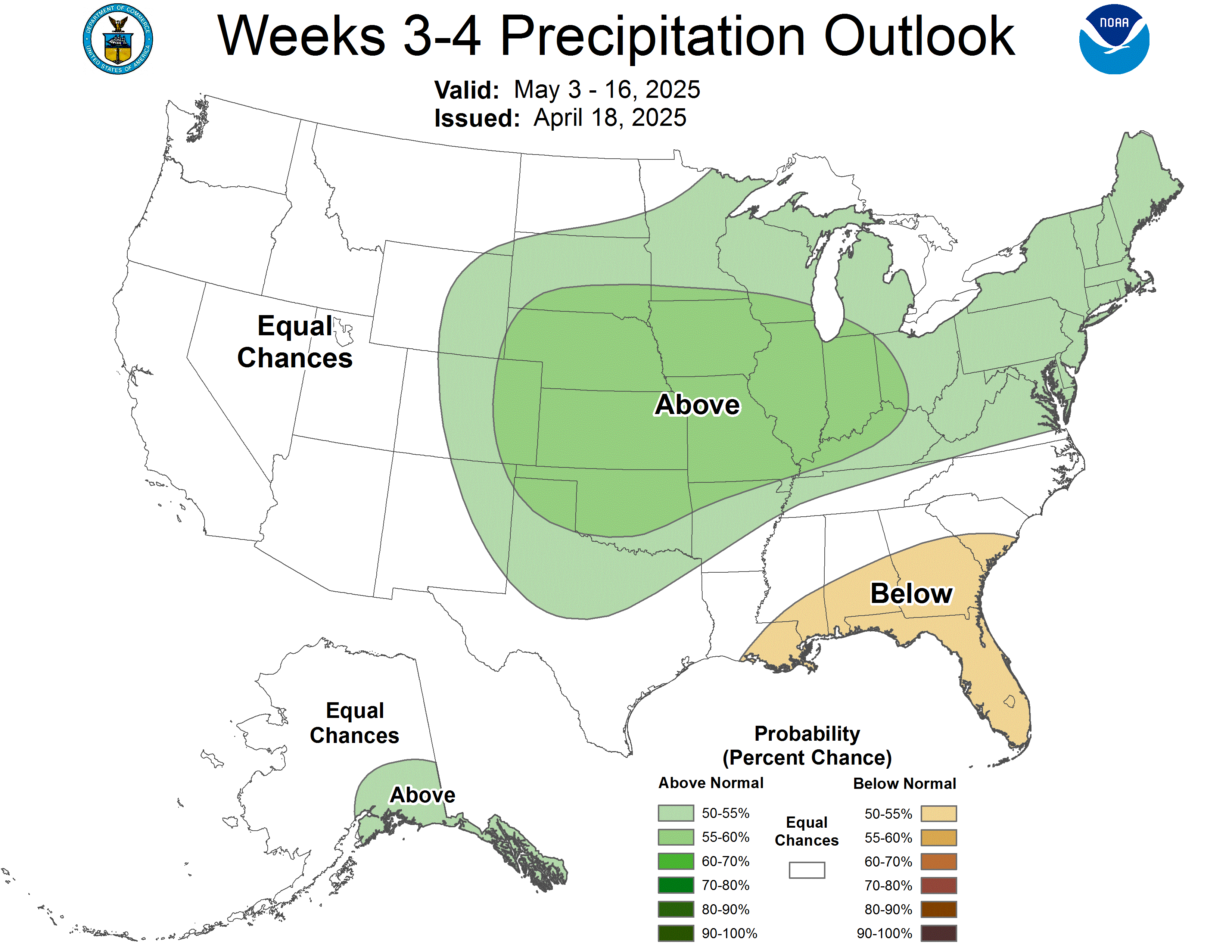
The Week 3-4 Discussion is always interesting so we include it in the article. Similar discussions for the 6 -10 Day and 8 – 14 Day Forecasts are available here.
Week 3-4 Forecast Discussion Valid Sat Aug 14 2021-Fri Aug 27 2021
ENSO-neutral conditions continue to persist with near average sea surface temperatures (SST) observed across the tropical Pacific. Early in the week, the Madden Julian Oscillation (MJO) featured a fast moving Kelvin wave that propagated quickly across the tropical Pacific. Despite this activity, forecasted RMM indices indicate an inactive signal by the start of the week 3-4 period. The temperature and precipitation forecasts for the Week 3-4 period are based primarily on dynamical model guidance. Long-term trends were also a factor as well as the evolution of the Week-2 forecast.
Several of the dynamical models (CFS, GEFS, JMA, and the SubX multi-model ensemble) are in reasonable agreement with respect to the 14-day average of forecasted 500-hPa circulation patterns over CONUS, with less agreement over Alaska. A blend of guidance tools, however, predicts troughing to the west of Alaska and a ridge to the south, as well as troughing in the Southwest and Southern Plains. The models do agree on ridges placed to the west and east of CONUS, although there are variations on the exact placement and amplitude. ECMWF favors bridging the heights across CONUS while CFS keeps them separate with near normal height anomalies. In the aggregate, positive height anomalies are centered over the North Pacific Ocean and the Northeast.
As a result of the aforementioned ridging and decadal trends, the temperature forecast tilts toward above normal probabilities for much of the northern and central plains, upper Mississippi Valley, Great Lakes, and Northeast. Above average temperatures are also forecast for California, Nevada, and Oregon, although the probabilities for those regions are low. The highest probabilities for above average temperatures are forecast over the Upper Great Lakes, however due to model disagreement, a low probability threshold is indicated there. Below normal temperatures are favored along much of the Southern Plains, Lower Mississippi Valley, Tennessee Valley, and Southeast. In these regions, models robustly agree on the below average temperatures with the exception of Florida. Highest probabilities for below average temperatures hug the Gulf Coast. Despite robust model agreement, attribution of this below average signal is not evident in large scale teleconnections such as ENSO, MJO, or decadal trends. Forecaster experience, as well as persistence and recent skillful verification, point toward soil moisture and below normal SSTs as the most likely explanation for the signal in this region.
The precipitation forecast for the Week 3-4 forecast period also reflects the predicted ridging and decadal trends as well as agreement between statistical and dynamical model guidance. Enhanced probabilities for dry conditions dominate the Plains, from Texas to North Dakota. Enhanced monsoon precipitation is favored in the Southwest with highest probabilities across Arizona. Above average precipitation is forecast for the Southeast and surrounding regions. Guidance did not indicate a strong signal for tropical cyclone activity in the Gulf or Atlantic, as such the enhanced precipitation signal may be associated with the troughing over the Southeast and Southern Plains. Other areas such as the Ohio Valley, Northeast, and Northwest showed more disagreement among dynamical and statistical models, or low probabilities, as such, equal chances are indicated for those regions.
Other than a slight tilt toward above average temperatures along the North Slope and the South Coast, Aleutians and Panhandle of Alaska, much of the state is forecast to be equal chances. Dry conditions are favored in the Aleutians, South Coast, and Alaskan Panhandle with above average precipitation anticipated for the North Slope and eastern portions of the Interior Basin in Alaska.
Near-normal sea surface temperatures have recently been observed in the region surrounding Hawaii. Dynamical model guidance from the SubX suite favors a slight tilt toward above normal temperature probabilities across the majority of the islands with equal chances for the island of Hawaii. Dynamical model guidance also indicates a slight tilt toward below normal precipitation across the region.
Sustainable Agriculture.
This is an intersting video focused on a small farm (1.5 acres) I think. I am not sure why this farmer does not have a larger farm. It seems like a profitable operation so why is it constrained to a small area. It covers a lot of ground and the farm owner talks fast so one has to focus. Some of what is shown is pretty amazing.
Energy News
For those who like videos [I do not attest to the total accuracty of this presentation but it is useful]. The full article can be found here.
Also related is an article we published some time ago.
EROEI: A Useful Measure Or A Distraction?
We received the monthly Natural Gas report.
The July Natural Gas Monthly, with data through May 2021, has been released. you can access the full report here.
- In May 2021, dry natural gas production increased year over year for the month, after 12 consecutive months of year-over-year decreases. The preliminary level for dry natural gas production in May 2021 was 2,864 billion cubic feet (Bcf), or 92.4 billion cubic feet per day (Bcf/d). This level was 4.6 Bcf/d (5.2%) higher than the May 2020 level of 87.8 Bcf/d. Both gross withdrawals and marketed production also increased from May 2020:
- Gross withdrawals: 3,500 Bcf for the month, or 112.9 Bcf/d
- Up 6.1% compared with 106.4 Bcf/d in May 2020
- Highest for the month since we began tracking them in 1980
- Marketed production: 3,109 Bcf for the month, or 100.3 Bcf/d
- Up 6.0% compared with 94.6 Bcf/d in May 2020.
- Highest for the month since we began tracking it in 1973
- Estimated natural gas consumption in May 2021 was 2,100 Bcf, or 67.7 Bcf/d. This level was 0.9 Bcf/d (1.4%) higher than the May 2020 level of 66.8 Bcf/d. Natural gas consumption was the second highest for the month since we began using the current definitions for consuming sectors in 2001.
- The year-over-year average daily rate of consumption of dry natural gas in May 2021 increased in two of the four consuming sectors and decreased in the other two. Deliveries of natural gas by consuming sector in May 2021 were as follows:
- Residential deliveries: 216 Bcf for the month, or 7.0 Bcf/d
- Down 8.1% compared with 7.6 Bcf/d in May 2020
- Commercial deliveries: 181 Bcf for the month, or 5.8 Bcf/d
- Up 12.4% compared with 5.2 Bcf/d in May 2020
- Industrial deliveries: 661 Bcf for the month, or 21.3 Bcf/d
- Up 5.8% compared with 20.2 Bcf/d in May 2020
- Electric power deliveries: 816 Bcf for the month, or 26.3 Bcf/d
- Down 2.2% compared with 26.9 Bcf/d in May 2020
- Net natural gas imports (imports minus exports) were -370 Bcf, or -11.9 Bcf/d, in May 2021, making the United States a net natural gas exporter. The average daily rate of net imports was the lowest for any month since we began tracking imports and exports in 1973, as the United States exported 2.8 times more natural gas than it imported in May 2021. The average daily rate of natural gas exports was the highest for the month since we began tracking monthly exports in 1973. Liquefied natural gas (LNG) exports in May 2021 were up 73.1% compared with May 2020. The average daily rate of LNG exports was also the highest for the month since we began tracking LNG in 1997. In May 2021, the United States exported 10.2 Bcf/d of LNG to 31 countries. Natural gas imports and exports in May 2021 were as follows:
- Total imports: 205 Bcf for the month, or 6.6 Bcf/d
- Up 9.6% compared with 6.0 Bcf/d in May 2020
- Total exports: 575 Bcf for the month, or 18.5 Bcf/d
- Up 45.6% compared with 12.7 Bcf/d in May 2020
We also received
On July 27, 2021, we released our primary report on recent and historical energy statistics, the Monthly Energy Review (MER). Preliminary estimates for April 2021 indicate the following:
U.S. primary energy consumption totaled 7.5 quadrillion British thermal units, a 15% increase from April 2020. Petroleum accounted for 38% of primary energy consumption, natural gas for 31%, renewable energy for 14%, coal for 9%, and nuclear electric power for 8%.
Compared with April 2020, U.S. petroleum consumption increased 33%, coal consumption increased 28%, natural gas consumption was virtually unchanged, and nuclear electric power consumption decreased 4%.
Compared with April 2020, total U.S. renewable energy consumption increased 14%. Solar power consumption increased 28%, wind power consumption increased 22%, biomass consumption increased 20%, geothermal energy consumption decreased 7%, and conventional hydroelectric power consumption decreased 13%.
International

Science Feature
No Science Feature this week
Environmental News
Nothing to report this week but the Energy News is of course related.
Major Sources of Information Used in this Weekly Report. We will not be using them all each week but the reader is welcome to refer to these resources.
|


Sequence of drought occurrence and impacts for commonly accepted drought types. All droughts originate from a deficiency of precipitation or meteorological drought but other types of drought and impacts cascade from this deficiency. (Source and more information: NDMC)
Source: National Drought Mitigation Center, University of Nebraska-Lincoln


