


Written by Sig Silber
U.S. Crop production continues to look good in terms of moving through the stages of growth but the crop quality is not good, especially in certain states. The expanding drought may be taking a toll on yield, but we will not know for sure until the next USDA Executive Briefing around July 8. We have focused on the Western Drought this week with two excellent presentations (a webinar video and later in the article another video related to ag sustainability. We provide the link to the National Academies of Sciences Report recommending the study of reflecting sunlight. (to moderate, eliminate or reverse warming). There is also some information on the energy markets.

We provided all our usual information including the crop progress report and an intermediate-term weather forecast which is promising for the Southern Tier of CONUS. I do not wish to minimize drought but many people get irrational when there is a drought and are simply unable to think about it in a rational manner.
Please share this article – Go to the very top of the page, right-hand side, for social media buttons. Please feel free to send this article to anyone who you think might benefit from reading it.
There was an important Southwest Webinar. I provide three slides that supposedly summarize what was presented. But the summaries can not do justice to this very good webinar so I urged people to watch it and it is not that long. But here is the official summary.


But there has been an update to that report. I will show some of the slides and one can access the full report here.


Reflecting Sunlight
We could put this in the Science Section but it is just too important to have it be there. We have reported on the Academy of Sciences Study that recommended further research into reflecting sunlight. I thought we provided a link to that report but it is possible that we provided a link to the draft of the report. At any rate people should read the report and the link was sent to me a few days ago so I will provide it. It is best to get it while it is free.


To get the report you have to click here. It may take a few clicks to get to the one that gives you the free PDF download. A shorter way is to click here. The longer way will provide a way to download sections of the report from the table ot contents.
There have been a lot of downloads and the first link provided lets you access the statistics on that. I have no idea how many have bought the document. It may become a collectors item. I only say that because of the free downloads and the very controversial nature of this report.
We have covered this topic since 2015. It is pretty clear to me that it would work. That is what makes it controversial. It only addresses one part of Climate Change namely the temperature. I does not reduce Carbon Dioxide levels or address ocean acidification. It is presented as a last ditch strategy but some may like it right now. There are many complications involved none of which are technical in nature. The document will indicate that there are technical issues. I leave it to readers to decide if the technical issues are significant. But the governance issues are very complicated.
I am not going to say anything more but repeat myself that this study should be read.
Regional Conditions

Reservoir Conditions
We might as well show the situation for the California Reservoirs here.

Here is what the SNOTEL data is telling us about Spring runoff. I am just showing the basin view.

And it is always useful to look at the last seven days.

I think we have all gotten sick at looking at the water year to date which by now does not change unless there was a Noah’s Ark event. So I am not showing it.

Let’s look at the current drought situation.


Here we look at four time periods: one week, one month, six months, and a full year.

Drought Discussion (The Regional links are live and will take you to the drought map for that Region)
This Week’s Drought Summary
This week, Claudette, the third named tropical cyclone of the 2021 Atlantic Hurricane Season, made landfall in the central Gulf Coast and moved across the southeast United States. Results from Claudette’s rainfall included widespread improvement to drought conditions in North Carolina and South Carolina, as well as improved conditions in northern Florida and southern Georgia. Severe thunderstorms, including an EF3 tornado that hit western suburbs of Chicago, affected parts of northern Illinois, northern Indiana, northern Ohio, and southern Michigan on Sunday. While they caused widespread damage from wind and hail, the storms also delivered beneficial rainfall to areas suffering from moderate, severe, and extreme drought. Meanwhile, relatively dry weeks in both the Northeast and the West caused drought conditions to worsen, for the most part, in both regions.
Northeast
Some rainfall occurred this week in northern Maine, Vermont, across New York, and in parts of Pennsylvania and West Virginia, but otherwise it was a dry week in the region. East of the Hudson River, temperatures were generally a bit warmer than normal, while mostly cooler than normal conditions prevailed west of the Hudson. Severe drought (D2) developed in central Maine, where soil moisture and streamflow decreased and short-term precipitation deficits grew. Surrounding the severe drought in Maine, moderate drought (D1) also increased its aerial grip on the state. In New Hampshire, where moderate drought covers the northern half of the state, some utilities are enacting mandatory usage restrictions on outdoor watering.
Southeast
Claudette deposited widespread rainfall this week across much of the Southeast, particularly in Alabama and the Florida Panhandle. Temperatures across the region were generally near normal for the week. Due to the rain this week and other recent rains, short-term precipitation deficits had become small enough for severe drought to be eradicated in South Carolina, and for moderate drought coverage to shrink in central and eastern North Carolina and South Carolina. In south-central Virginia, which was much drier this week, moderate drought expanded slightly.
South
Across the South, in areas not affected by Claudette, rain was relatively scarce. Temperatures were generally near normal in the eastern part of the region, while the Texas Panhandle and northwest Oklahoma were warmer than normal. Moderate drought developed near Woodward, Oklahoma, and slightly expanded in the northwest Texas Panhandle. Moderate and severe drought continued in southwest Oklahoma, and conditions ranging from abnormal dryness to exceptional drought (D4) continued along the Texas/Mexico border.
Midwest
Scattered thunderstorms, some of them severe, occurred over parts of the weekend, causing hail, wind, and a few tornadoes (including the significant one in the Chicagoland area), while also delivering beneficial rainfall. Areas that saw less rainfall from these storms, however, continued to dry out. This resulted in both widespread degradation and improvements to the drought and abnormal dryness situation this week. Notably, extreme (D3) and severe drought coverage decreased in northern Illinois and southern Lower Michigan, due to improved conditions after the storms. Moderate drought shifted in coverage in the St. Louis area after thunderstorms delivered beneficial rainfall to the western part of the area, while St. Louis City and adjacent northern St. Louis County were drier. Severe drought expanded across parts of northern Iowa, southern Minnesota, and northwest Minnesota, due to worsening precipitation deficits and vegetation conditions.
High Plains
Rainfall was paltry in areas of ongoing drought and abnormal dryness in the High Plains region. The dry weather combined with warmer than normal temperatures in much of Nebraska, Kansas, and western South Dakota to lead to widespread worsening of drought and abnormal dryness in these areas. Extreme drought developed along the Missouri River in northern Nebraska and southern South Dakota, and severe and moderate drought expanded around this. Widespread extreme and exceptional drought still covered North Dakota, where adverse effects to crops and pastures from drought is widespread. In eastern Wyoming, short-term dryness and hot weather led to expansions of moderate, severe, and extreme drought as well.
West
The drought situation in the western United States continued to worsen after another mostly hot and dry week. A few areas of drought in south-central and southeast New Mexico saw some slight improvement due to effects from several rain and thunderstorm events in the last month. Unfortunately, widespread severe or worse drought continued in New Mexico, and conditions remained the same or worsened elsewhere. Increases in moderate, severe, extreme (and in a few cases, exceptional) drought coverage occurred in Colorado, Wyoming, Utah, and Montana. Severe drought also expanded in western Idaho. Wildfires and increasing wildfire danger, water restrictions, and damage to agriculture are very common across the West region.
Caribbean
No changes were made in Puerto Rico this week, either. A few areas of moderate drought remained.
Across the USVI, all three locations remained in some type of drought. St. Thomas had the most rain this week with rainfall totals at 1.03 inches at the Cyril E King airport and between 1.06-1.28 inches at the different CoCoRaHS stations. The month-to-date at the airport was at 160.7% of normal and the year-to-date was 78.9% of normal. The SPI value for the 6-month period (-0.67) was the only timescale to depict abnormally dry conditions. The other timescales indicated drought free conditions. For this week, long-term moderate drought persisted across St. Thomas; however, if wet conditions continue and there are no reports on drought impacts, an improvement to long-term abnormally dry conditions might be considered next week.
Long-term moderate drought continued to affect St. John this week. Weekly rainfall totals were 0.93 – 1.20 inches, depending on the CoCoRaHS station. The month-to-date rainfall totals were 2.94 – 3.10 inches. SPI values for Windswept beach at the 6-month (-1.13) and 12-month (-0.57) period were indicative of abnormally dry to moderate drought.
St. Croix had the least rainfall this week and continued to be in a short- to long-term severe drought. The Henry Rohlsen airport had 0.27 inch of rain this week, while rainfall totals for the week at the different CoCoRaHS stations were between 0.37-0.57 inches. The month-to-date rainfall total at the airport was at 84.7% of normal and the year-to-date was 59.9% of normal. SPI values last week at the 3 (-0.71), 6 (-1.21), 9 (-1.19), and 12 (-1.01) were indicative of abnormally dry to moderate drought.
Pacific
No changes were made in Alaska this week, and the northern reaches remain in abnormal dryness.
On Maui, moderate drought expanded due to mounting precipitation deficits and low streamflow. Struggling vegetation in the central valley region led to an increase in severe drought. On Hawaii, moderate drought expanded to near Honokaa and Paauilo due to short-term precipitation deficits; a fire was also reported in this area. Around South Point, moderate drought developed in areas where vegetation was struggling. Severe drought expanded near Waimea where vegetation also was struggling.
The weather features across the U.S.-Affiliated Pacific Islands (USAPI) during this USDM week (06/16/21-06/22/21) included trade-wind convergence associated with an Inter-Tropical Convergence Zone (ITCZ) over central to eastern Micronesia, surface troughs scattered across the region but especially in western Micronesia, and a few tropical disturbances. One of the disturbances over Pohnpei State moved northwest toward the Marianas. This disturbance developed into Tropical Depression 06W and brought widespread rain across the Marianas when it passed near Guam as the week ended. Convergent monsoonal flow at the surface over western Micronesia coupled with divergent flow aloft late in the week. South of the equator, a high pressure ridge dominated the weather across American Samoa for most of the week.
Satellite-based estimates of 7-day precipitation (QPE) are available from two products: one using mainly infrared (IR) sensors (NESDIS GOES-R AHI) and the other incorporating microwave sensors (GPM IMERG). These QPE products showed a band of 2+ inches of rain across central to eastern Micronesia, associated with the ITCZ, and extending northwest across the southern Marianas along the track of TD 06W. Patches of 1+ inches of rain were evident over parts of western Micronesia and in the Samoan region.
Drought free conditions prevailed across Palau. Palau’s weekly rainfall total was 2.56 inches, which was slightly over the weekly threshold of 2 inches to meet most water needs.
Across the Marianas, Guam had a total of 3.61 inches of rain, with most of the rainfall falling on June 22 due to a tropical depression that passed south of the island. The daily rainfall of 2.59 inches that fell on June 22 set a new daily record, surpassing the previous record set in 2004 by 0.19 inch. With rainfall totals over the 1-inch to meet most water needs, drought free conditions continued across Guam.
Rota had a little over half an inch of rain for the week, while Saipan IAP had only 0.40 inch of rain and Saipan NPS had 1.59 inches. Although it has been a bit dry for Rota and parts of Saipan, drought free conditions continued this week for these locations.
Most locations across the FSM had a wet week. Pohnpei, Kosrae, and Nukuoro had the most rain, with rainfall totals surpassing 8 inches. Pingelap had over 5 inches of rain this week. Chuuk, Lukunoch, and Woleai had over 2 inches of rain. All these locations continued to be drought free.
Kapingamarangi had 1.41 inches of rain and a month-to-date rainfall total of 6.96 inches. The last few months have been extremely wet for Kapingamarangi, with precipitation totals surpassing 15 inches the last two months. Due to the very wet conditions and the lack of reports on any lingering drought impacts, drought free conditions were introduced this week for Kapingamarangi.
Meanwhile, Yap had only 0.10 inch of rain this week, marking the second consecutive week with little rain. However, drought free conditions were unchanged this week. Fananu and Ulithi had no data at the time of analysis, so they were set to missing.
Across the Marshall Islands, Kwajalein, Majuro, and Mili had over 2 inches of rain, securing another week of drought free conditions. Mili had the most rainfall at 6.16 inches. Ailinglaplap and Jaluit had a little less than 2 inches, however, drought was not a concern at the moment. Wotje was the only location to receive less than half an inch of rain for the week, marking the second consecutive week with little to no rain. However, abnormally dry conditions persisted as local reports stated that vegetation is green.
This was a dry week for much of American Samoa. Pago Pago had only 0.32 inch of rain, Siufaga Ridge had 0.19 inch, and Toa Ridge had 0.22 inch of rain. Drought free conditions remained since these locations surpassed their monthly threshold of 4 inches to meet most water needs.
Looking Ahead
As of the afternoon of Wednesday, June 23, the National Weather Service Weather Prediction Center is forecasting widespread rain, some possibly heavy, to occur over the next five days from southeast New Mexico to the western Great Lakes. The largest totals, ranging from 2 inches to as much as 5 inches of rain, are forecast to fall from central Missouri to northern Illinois and southern Michigan. The northern edge of the area where the heaviest rains are predicted to fall is suffering from drought, and the precipitation could be beneficial if that occurs. For the next six to 10 days, the National Weather Service Climate Prediction Center’s forecast favors warmer than normal temperatures extending from the Pacific Coast to the northern Great Plains, as well as in the Northeast, while an area of cooler than normal temperatures is favored in between, stretching from near the Arizona/New Mexico border to Iowa to central Florida. In Alaska, above normal precipitation and near or below normal temperatures are favored in the west, while drier than normal weather and warmer than normal temperatures are favored in the eastern part of Alaska. The eight to 14 day outlook for the Lower 48 and for Alaska paints a similar picture, though the eight to 14 day outlook features a higher probability for above normal precipitation in the central Great Plains.
Soil Conditions
The result of the drought is very dry soil conditions in some areas. There is also some very wet areas.

 |
 |
 |
 |
Drought Outlook
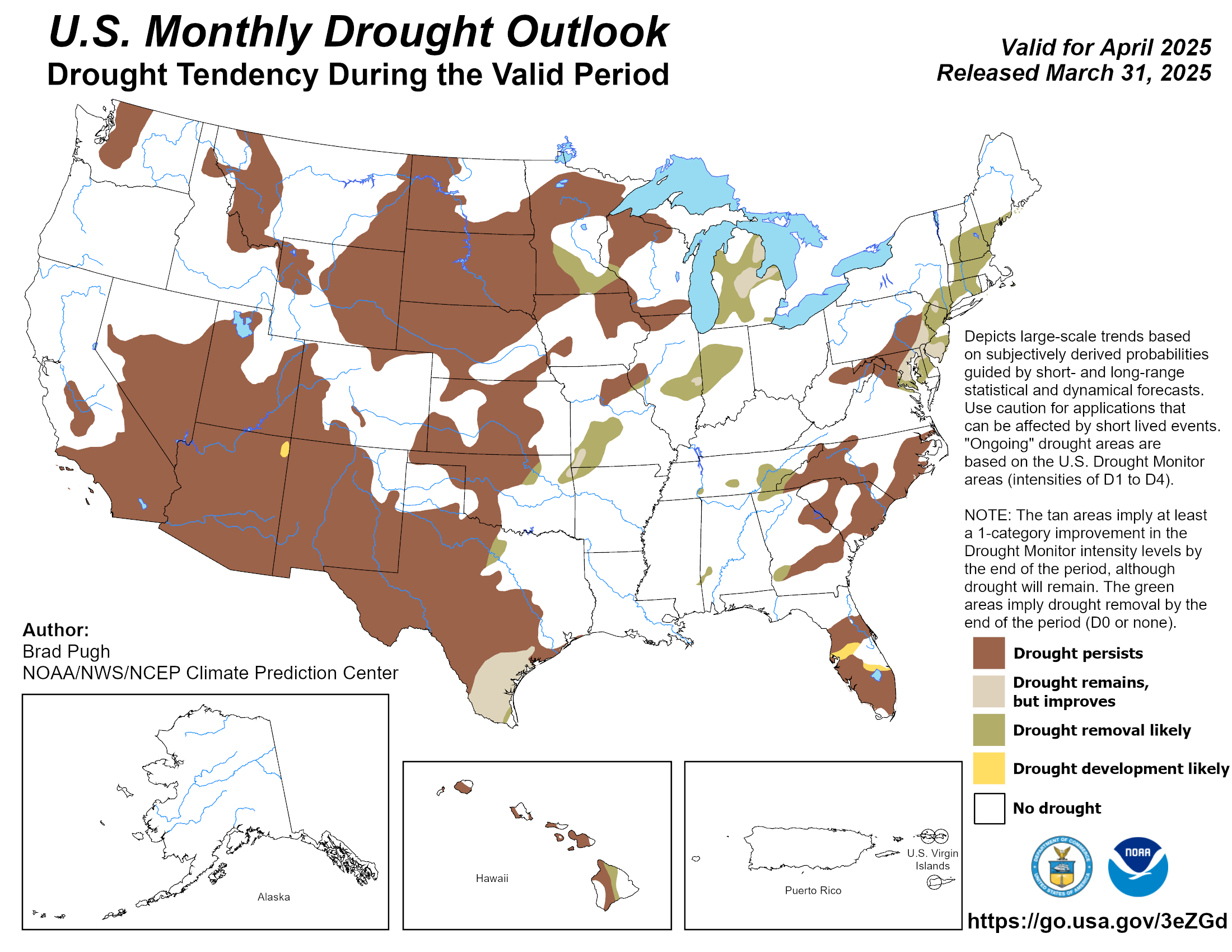
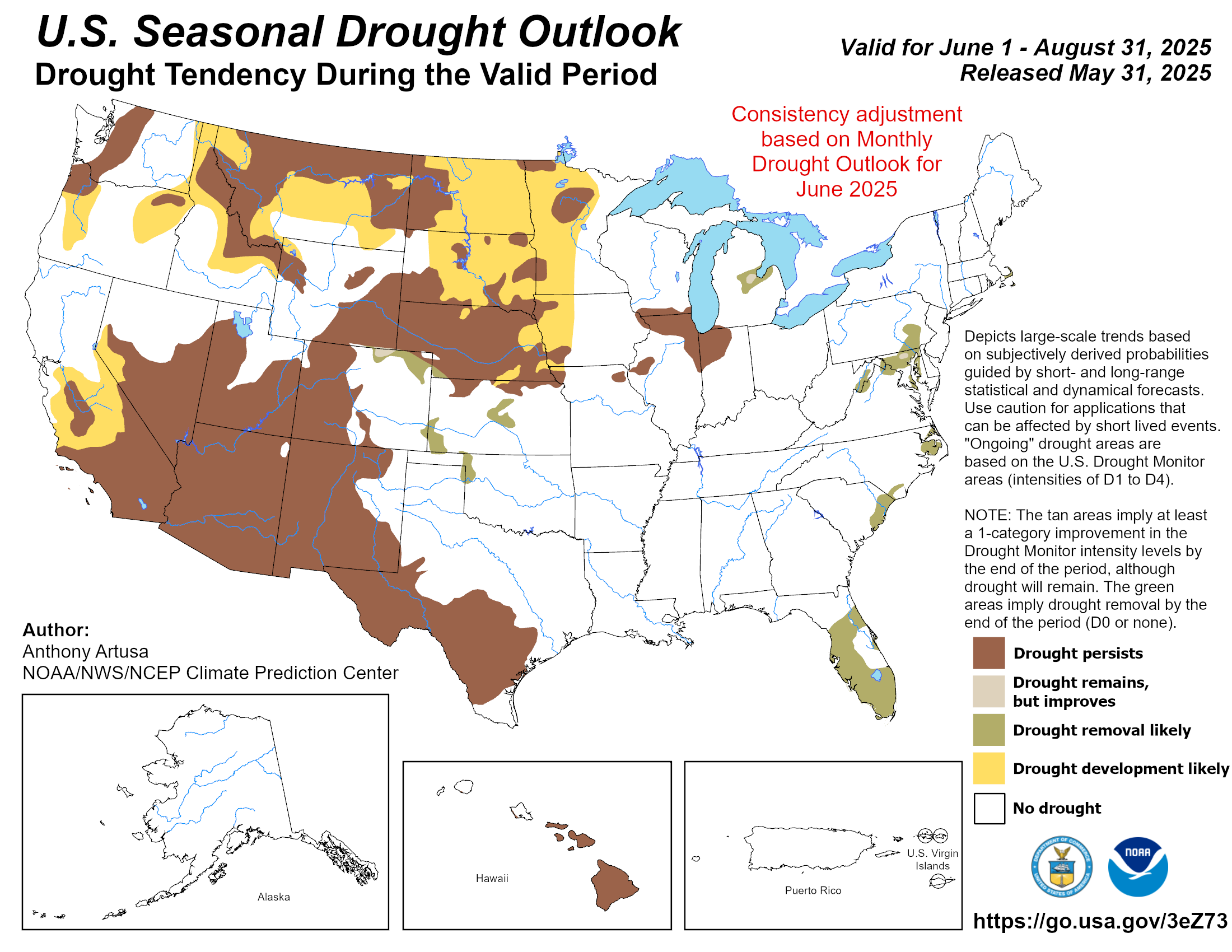

Since we are entering fire season it is time to be showing the wildland fire potential outlook. These will update automatically shortly after the month changes.


Crop Progress Reports
 |
 |
 |
 |
 |
| Crop | Crop Progress | Crop Condition |
| Corn | NA | Better last year. |
| Soybeans | Planted and Emerged looking very good. Blooming too soon to tell. | Not so great. |
| Cotton | Planted, Squaring and setting bolls OK | OK |
| Winter Wheat | Headed OK Harvested slow | Slightly poor |
| Spring Wheat | Headed OK | Very poor |
| Sorghum | Planted and Headed fine | Quite good |
| Rice | Headed too soon to tell | OK |
| Oats | Headed Good | Poor compared to last year. |
| Barley | Headed OK | Very poor compared to last year |
| Peanuts | Planted and Pegging fine | Fine |
| Sugar Beets | NA | NA |
| Sunflowers | Planted very good | NA |
| Pasture and Range | Poor |
Additional Information can be found here. Pretty much it is the same information as shown in the above tables but at the end there is some information on the methodology used.
NASS Reports


Agriculture Sustainability Videos
Introduction
Basic Principles.
I may have shown this one before. But most would not have clicked on it. So I am showing it now which may be the second time I am not sure. It is 24 minutes long.
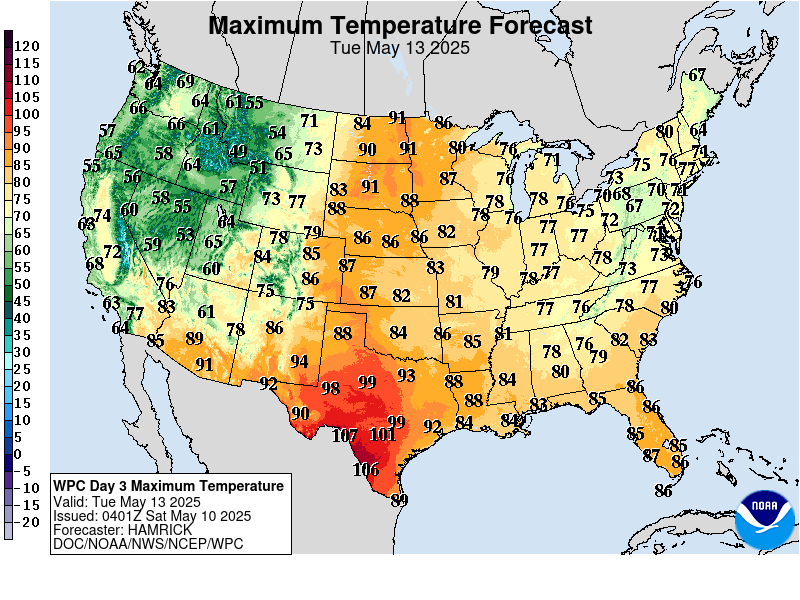
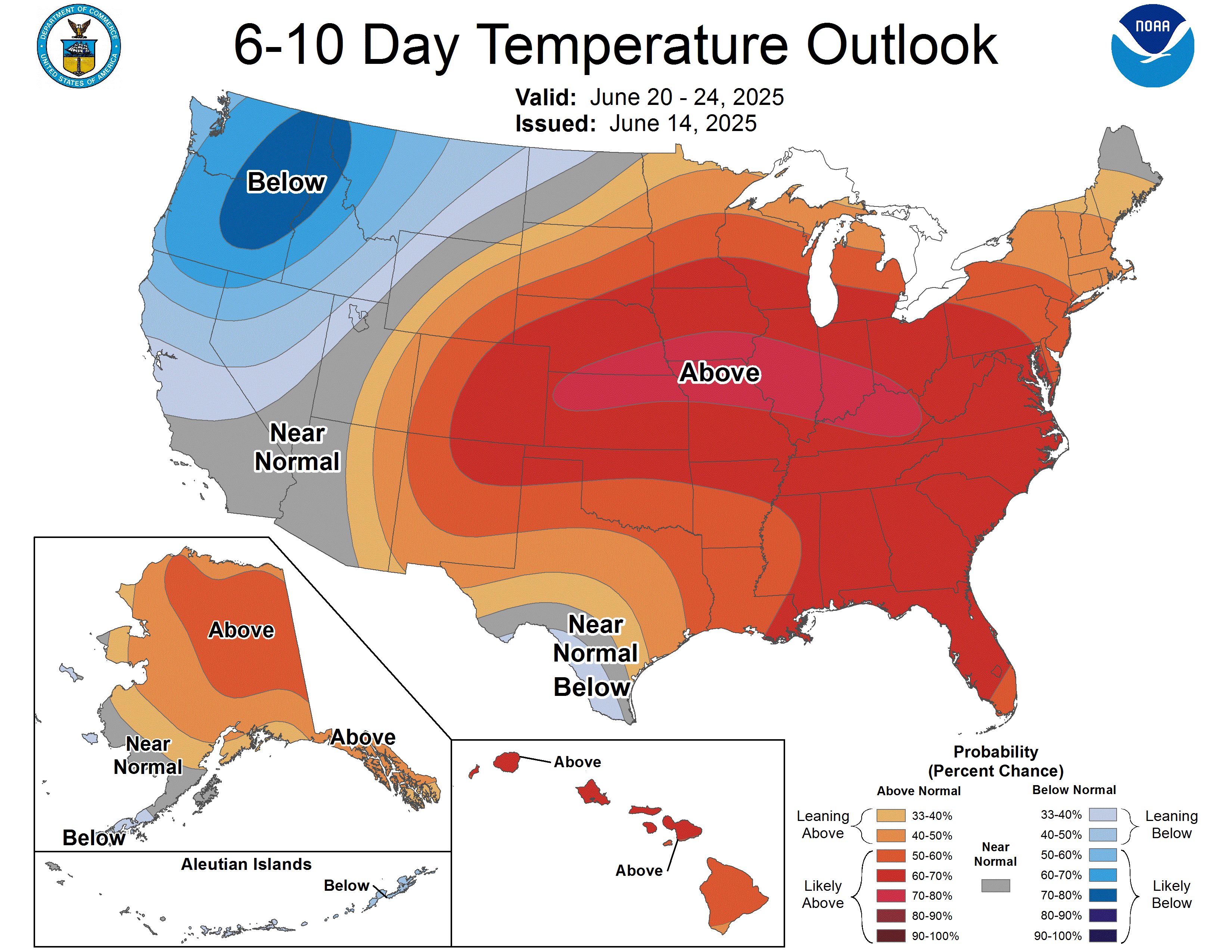
Intermediate-Term Weather Forecast
Showing from left to right, Days 1- 5, 6 – 10, 8 – 14, and Weeks 3 – 4 You can click on these maps to have them enlarge. Also, the discussions that go with these forecast maps can be found here (first two weeks) and here (Weeks 3 and 4).
First Temperature
|
|
|
|
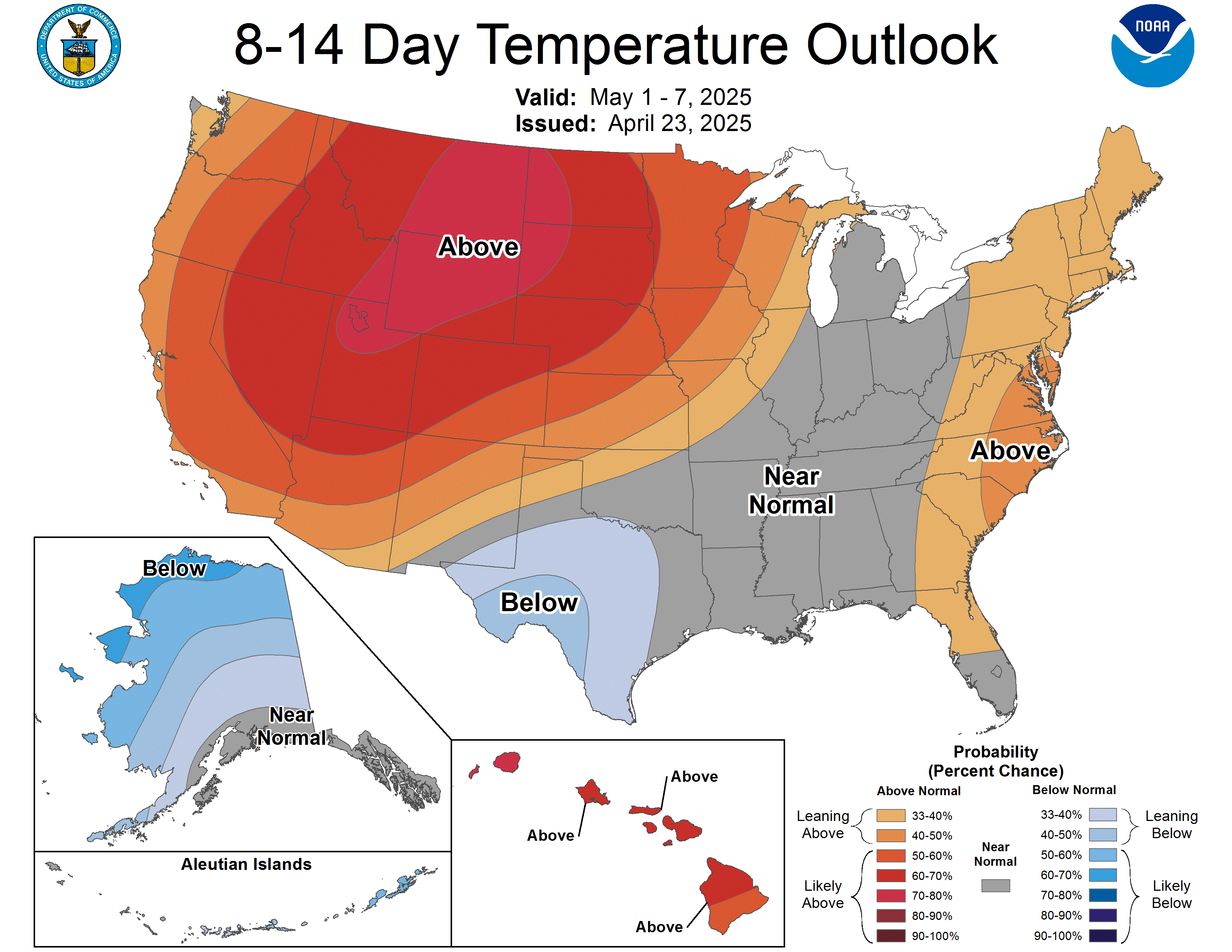
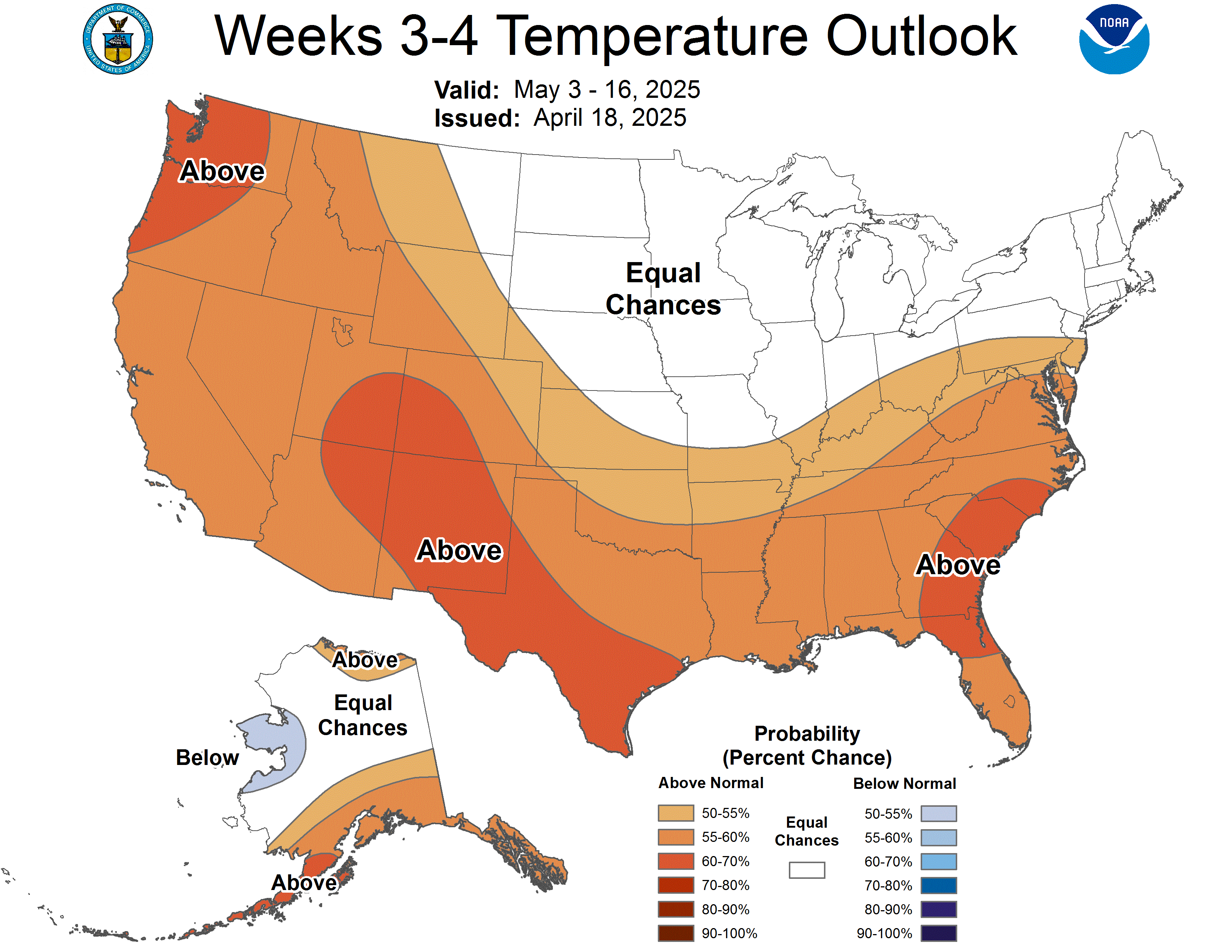
And then Precipitation
|
|
|
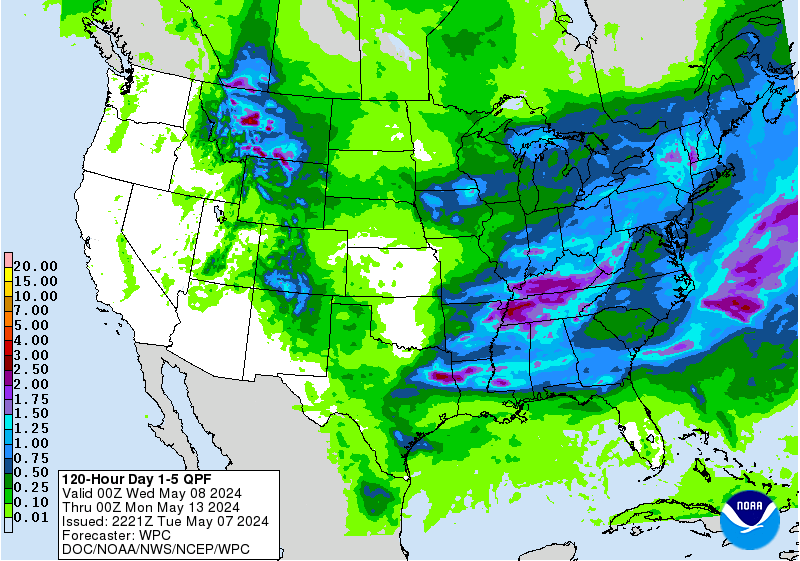
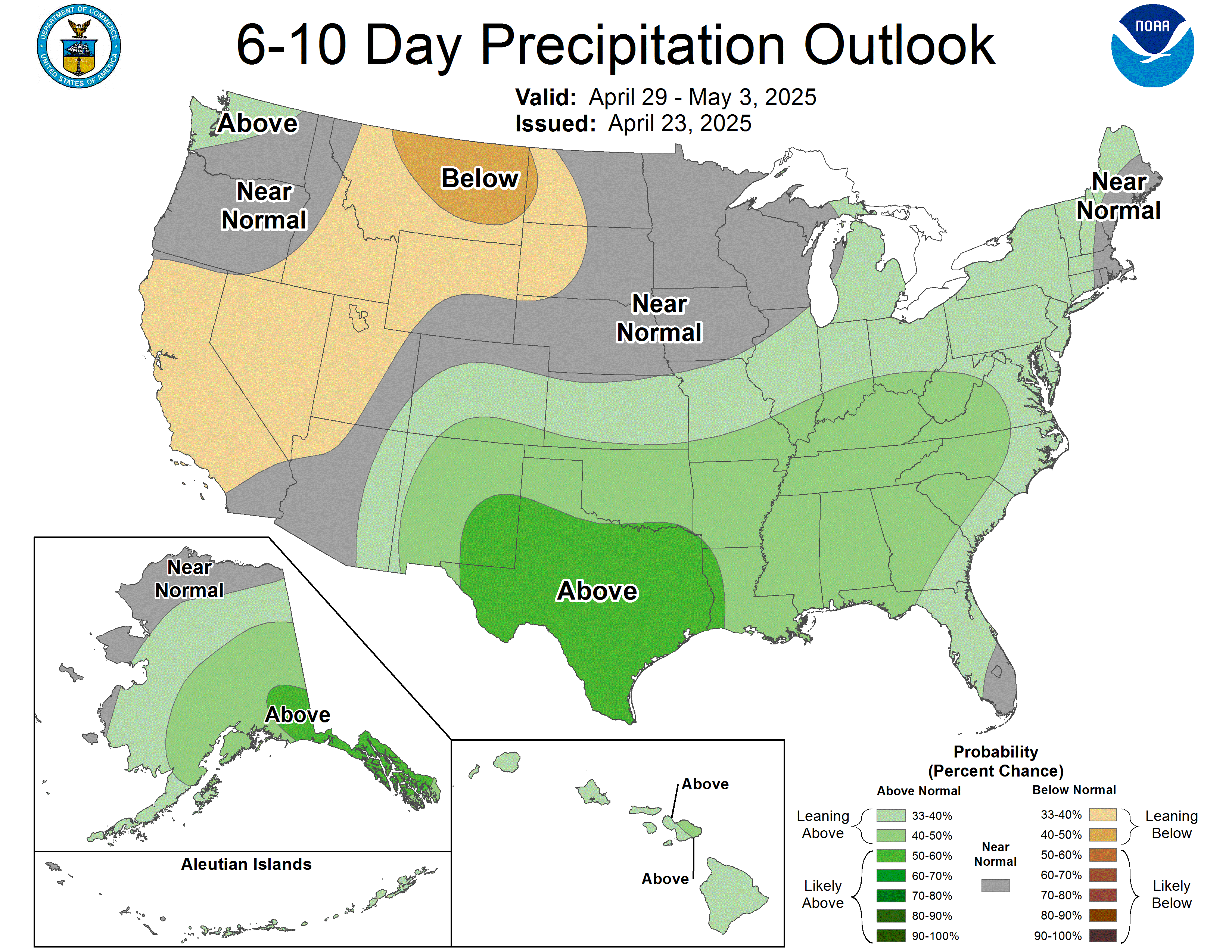
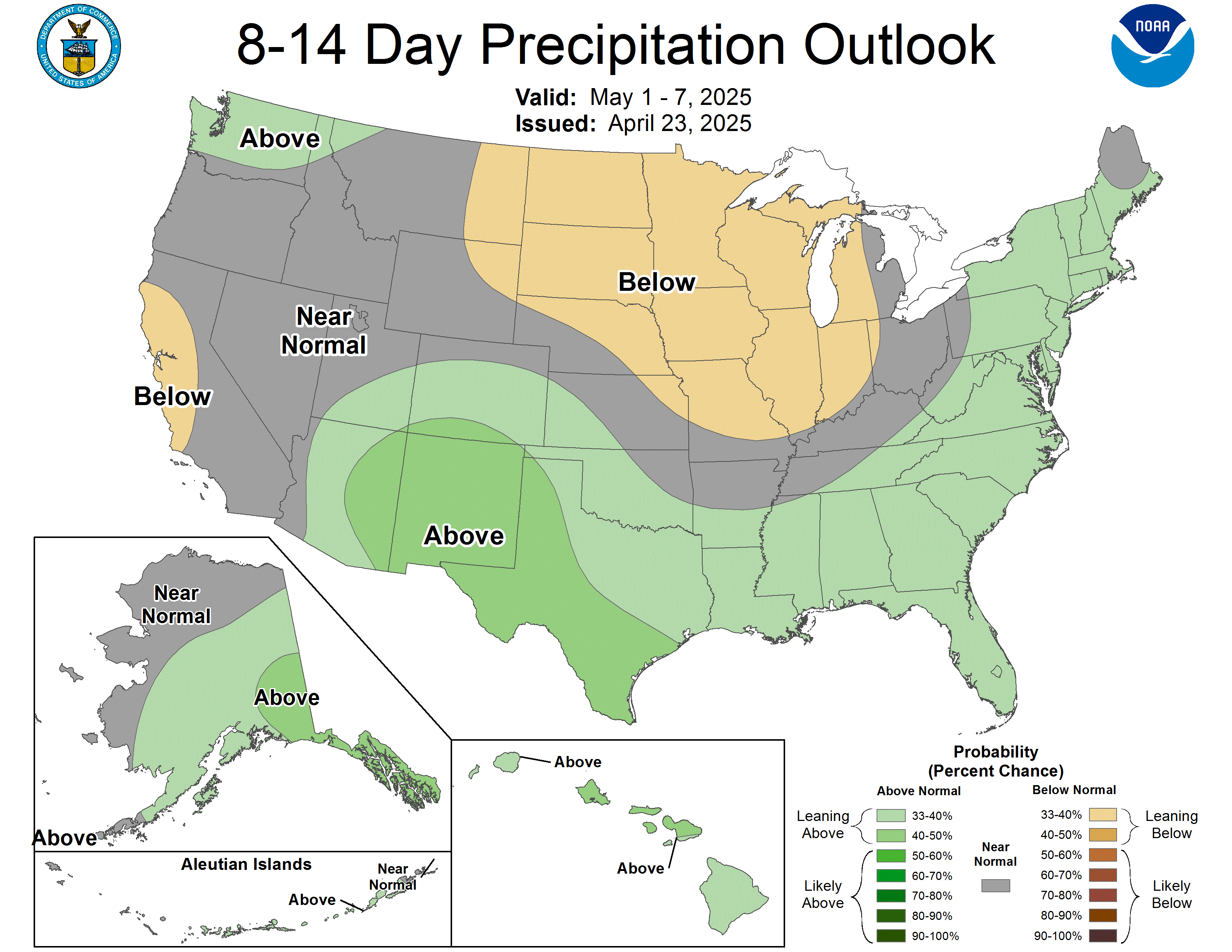
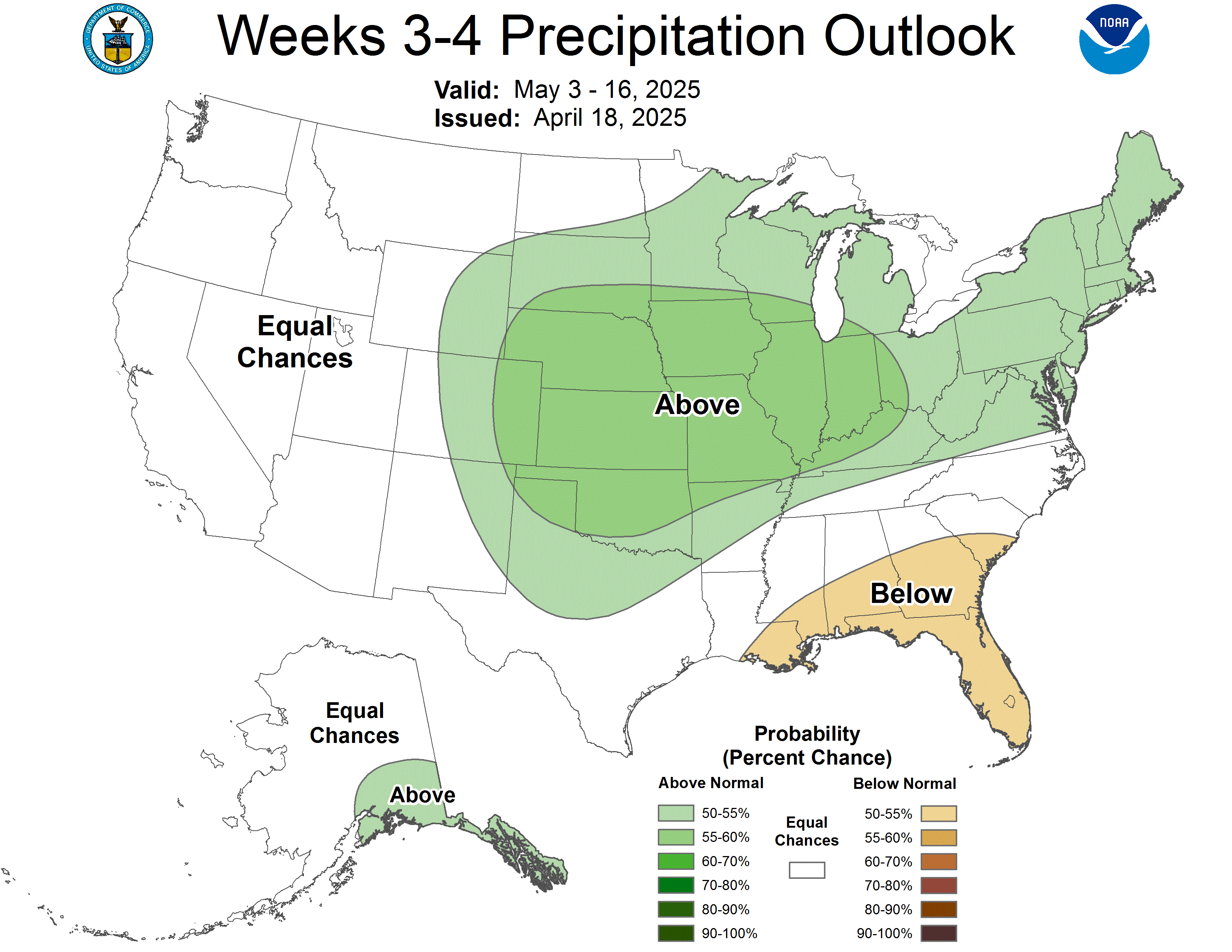
The Week 3-4 Discussion is always interesting so we include it in the article. Similar discussions for the 6 -10 Day and 8 – 14 Day Forecasts are available here.
ENSO-neutral conditions remain across the tropical Pacific. As indicated by RMM indices, a weak convective signal associated with the Madden Julian Oscillation (MJO) is present over the Western Hemisphere. However, dynamical model guidance only indicates eastward propagation for the next week before uncertainty increases. Today’s Week 3-4 temperature and precipitation forecasts rely on dynamical model guidance with considerations for decadal trends, current soil moisture conditions, and evolution of the circulation pattern from week 2 forecasts.
There is reasonable agreement among forecast guidance on the predicted large-scale 500-hPa circulation pattern for week 3-4. The dynamical models (CFS, GEFS, ECWMF, JMA, and the SubX multi-model ensemble) consistently forecast ridging and positive 500-hPa height anomalies over the Aleutian Islands and over the Northern Rockies and Northern Plains. There are differences among model solutions on the location of the centers of positive height anomalies across the northern tier of the CONUS. The ECMWF and CFS place the positive 500-hPa anomalies over the Northwest, while the GEFS and JMA center positive anomalies further east. Differences among model solutions are also seen over the Gulf of Alaska where solutions range from negative 500-hPa height anomalies (GEFS and CFS) to positive height anomalies (ECMWF).
The Week 3-4 temperature outlook indicates a continuation of likely above normal temperatures from week 2 forecasts for much of the West and across the northern half of the CONUS, consistent with the predicted ridging and positive 500-hPa height anomalies, and further supported in the West and Northeast by decadal trends. The highest probabilities are forecast over the Northern Rockies, as indicated by the autoblend of temperature forecasts and where model agreement is greatest. Below normal temperature probabilities are increased for much of the Southern Plains and Southeast, as indicated by the autoblend of dynamical model forecasts and further supported by high soil moisture in much of the region. Over Alaska, equal chances of above and below normal temperatures are forecast for much of the state, due to conflicting signals in the model guidance. Above normal temperature probabilities are increased for the Aleutian Islands and southwestern Mainland Alaska, under positive 500-hPa height anomalies, and for northeastern Mainland Alaska, as indicated by the autoblend and ECMWF temperature forecasts.
Positive 500-hPa height anomalies over the northern CONUS result in enhanced probabilities of below normal precipitation over the Pacific Northwest extending into the Northern Plains and western Great Lakes region. Elevated probabilities for above normal precipitation are forecast for Texas and much of the Southeast, where dynamical models are consistent and moisture is predicted to flow northward from the Gulf of Mexico. Most models, such as the GEFS, JMA, and the SubX MME, predict northward moisture flow into the Southwest and enhanced probabilities of above normal precipitation. Equal chances are indicated for the East Coast and most of Alaska due to high model uncertainty. Below normal precipitation is favored for southeastern Mainland Alaska and the Alaska Panhandle under primarily positive 500-hPa height anomalies in model forecasts, such as the ECMWF.
Dynamical model guidance from the SubX MME indicates increased above normal temperature probabilities across the Hawaiian Islands. The SubX MME increased chances of above normal precipitation for Hawaii.
Energy News
The monthly issue of the EIA Short Term Energy Outlook was Issued on June 8, 2021. But the Monthly Energy Review was issued on June 24, 2021 I do not know what to do with these reports since
A. They are very delayed with respect to information and
B. They are very long.
So I have selected about five graphics that are somewhat interesting and readers are invited to read the full report what can be accessed here.
I think most if not all of the graphics I selected are from the earlier report.


International

Science Feature
No Science Feature this week
Environmental News
Nothing to report this week but the Energy News is of course related.
Major Sources of Information Used in this Weekly Report. We will not be using them all each week but the reader is welcome to refer to these resources.
|


