


Written by Sig Silber
At the end of every month, NOAA issues an update to their Early Outlook for the following month which was issued as usual on the Third Thursday of January. Today, just ten days later, NOAA has issued their Updated Outlook for February. There are some very significant changes especially with regards to temperature. The changes to February raise questions about the three-month forecast. Canada needs a permit to build a pipeline for synthetic crude but they do not need a permit to send us some frigid air. If intentional, that is actually a treaty violation but I think this may have to do with the Sudden Stratospheric Warming event and its interaction with the MJO.

Some housekeeping: On January 22, 2021, we published Part I of our analysis of the NOAA and JAMSTEC Three- to Four- Season Outlook and that can be accessed here. In that report, the February 2021 Early Outlook was issued. This article presents the NOAA update of their Early temperature and precipitation Outlooks for February and the most recent Drought Forecast update for the month of February.
Please share this article – Go to the very top of the page, right-hand side for social media buttons. Also, feel free to send this article to anyone you feel will benefit from it. You can find the latest version of all our weather articles by consulting the Directory by clicking here and then clicking on the latest version of the article which is of interest to you.
I am trying to understand the reason for the major change in the forecast. The updated forecast is always different from the Early Look but this month it is a really significant change.
First a few comments on a possible La Nina Modoki. First we look at the Equator from the surface down to 450 meters. We are looking for temperature anomalies i.e. deviations from normal. We expect the surface to be warmer and it to be colder at depth. What counts is the deviation from normal.
| A month ago | Currently |
 |
|

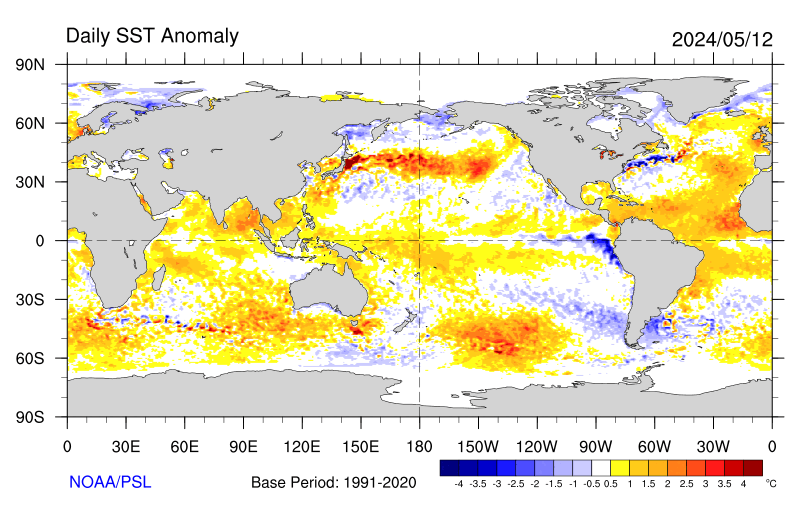
Here is a different view of the surface and I have not frozen this graphic so it will continue to update daily in this article.
Now, we will compare the NOAA Early Outlook for February, 2021 with the newly issued update.
Early Outlook Temperature

Updated Temperature Forecast

Early Outlook Precipitation

Updated Precipitation Forecast

Here is the discussion released with the forecast.
30-DAY OUTLOOK DISCUSSION FOR FEBRUARY 2021
The updated temperature and precipitation outlooks for February 2021 are based on the WPC temperature and precipitation forecasts during the first week of February, the CPC 8-14 day and Week 3-4 outlooks, and the latest monthly forecasts from the CFS model. Below average sea surface temperatures (SSTs) across the equatorial central Pacific along with a strong coupling with the atmosphere represent La Niña conditions. The amplitude of the Madden-Julian Oscillation (MJO) increased during late January, as it shifted eastward to the West Pacific. A continued eastward propagation of the MJO would favor anomalously cold temperatures across parts of the central and eastern U.S. during February. In addition, residual effects related to the recent Sudden Stratospheric Warming (SSW) may help to reinforce this MJO cold signal.
Major revisions were needed to the updated February temperature outlook, due to higher forecast confidence in a colder pattern for the CONUS. The large coverage with enhanced probabilities of below normal temperatures is due to a high amplitude longwave pattern favorable for anomalous cold during early to mid-February. The week-2 ensemble means remain consistent and in excellent agreement, depicting a high amplitude 500-hPa ridge extending from the North Pacific poleward over Alaska with a full-latitude trough centered over the Rockies. This amplified longwave pattern favors intrusions of Arctic Air shifting south from Canada into the western and north-central CONUS. The largest probabilities (more than 60 percent) of below normal temperatures are forecast from the Northern Great Plains to the Upper Mississippi Valley where anomalous cold is most likely to persist for multiple weeks. MJO composites would favor an expansion of the anomalous cold to the east, but equal chances (EC) of below, near, or above normal temperatures are forecast for much of the East Coast since temperatures are likely to average near to slightly above normal during the first ten days of the month. Due to large positive temperature anomalies early in the month, above normal temperatures are slightly favored for northern New England. Increased probabilities of above normal temperatures are forecast for parts of the Southeast based on model guidance from weeks 2 through 4. Despite anomalous cold early in the month, EC is forecast for much of the Southwest due to signs of a moderation in temperatures later in the month, typical influences from La Niña, and decadal trends. The updated February temperature outlook for the CONUS is generally consistent with a combined La Niña and negative Arctic Oscillation composite.
Above normal precipitation remains favored for a majority of the central and eastern CONUS which is likely to be downstream of an amplified 500-hPa trough axis through at least mid-February. Probabilities of above normal precipitation are increased from the Ohio and Tennessee Valleys east to the mid-Atlantic due to the expectation of a thermal gradient and persistent storm track. A relatively dry (less than 0.25 inch) first week of February and mean 500-hPa ridging through much of the month elevate probabilities of below normal precipitation for Florida along with parts of the Gulf Coast. This wet/dry dipole from the Ohio Valley to Florida is consistent with La Niña, but high latitude blocking may shift the storm track at times closer to the Gulf Coast.
A consistent wet signal among daily CFS model runs supports an increased chance of above normal precipitation from the Great Lakes and Upper Mississippi Valley west to the Northern and Central Rockies. Expected periods of upslope flow elevate probabilities of above normal precipitation for the Northern High Plains. The updated precipitation outlook is drier for the Pacific Northwest due to the highly amplified ridge upstream and the absence of predicted atmospheric river activity after the beginning of the month. Below normal precipitation remains favored for California along with parts of the Southwest and Rio Grande Valley based on a consistent dry signal among model guidance at multiple time scales during February.
Only minor changes were needed for the updated Alaska temperature and precipitation outlooks. Due to the amplified 500-hPa ridging early in the month and likelihood of Arctic Air shifting more southward over the CONUS, a relatively warmer February outlook is anticipated. However, the location of the 500-hPa ridge axis early in the month and model consensus continue to support increased chances of below normal temperatures for southeast Mainland Alaska and the Alaska Panhandle. Elevated probabilities of below normal precipitation forecast for these areas of Alaska are consistent with below normal temperatures being favored. Daily CFS model runs are consistent with increased chances of above normal precipitation across western Mainland Alaska.
| January 21, 2021 Forecast for February 2021 | January 31, 2021, Forecast for February 2021 | |
| Temperature |
|
|
| Precipitation |
|
|


Visual Consistency Testing.
It is useful to see how the full-month forecast fits with the set of partial-month forecasts that we have. These will continue to update in this article. It is important to remember that with the partial-month forecasts, we generally have about 25 days of the subsequent month to look at when we do this at the end of the month as we are doing now. It depends on what day of the week the month ends. So this month, which ended on a Sunday, we have short-term forecasts that cover 26 of the 28 days in February so we are in very good shape to see if the whole is equal to the sum of the parts.
First Temperature
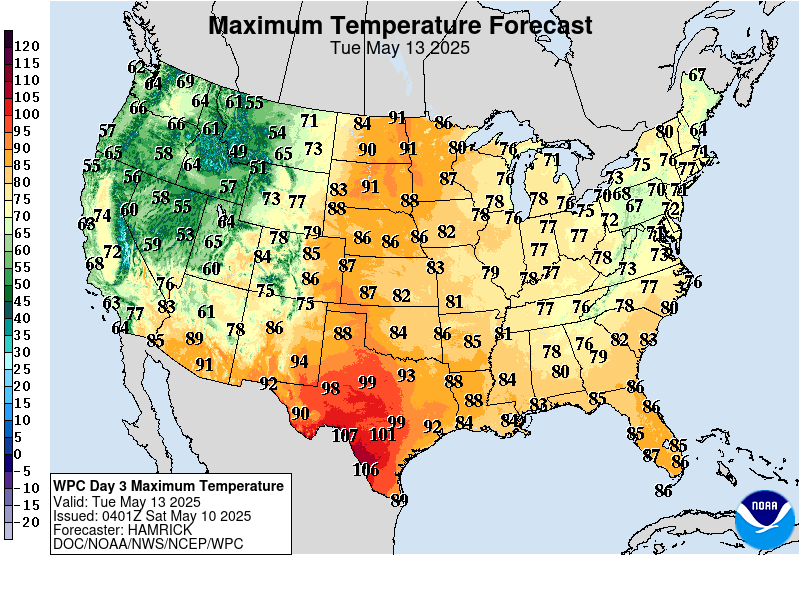 | 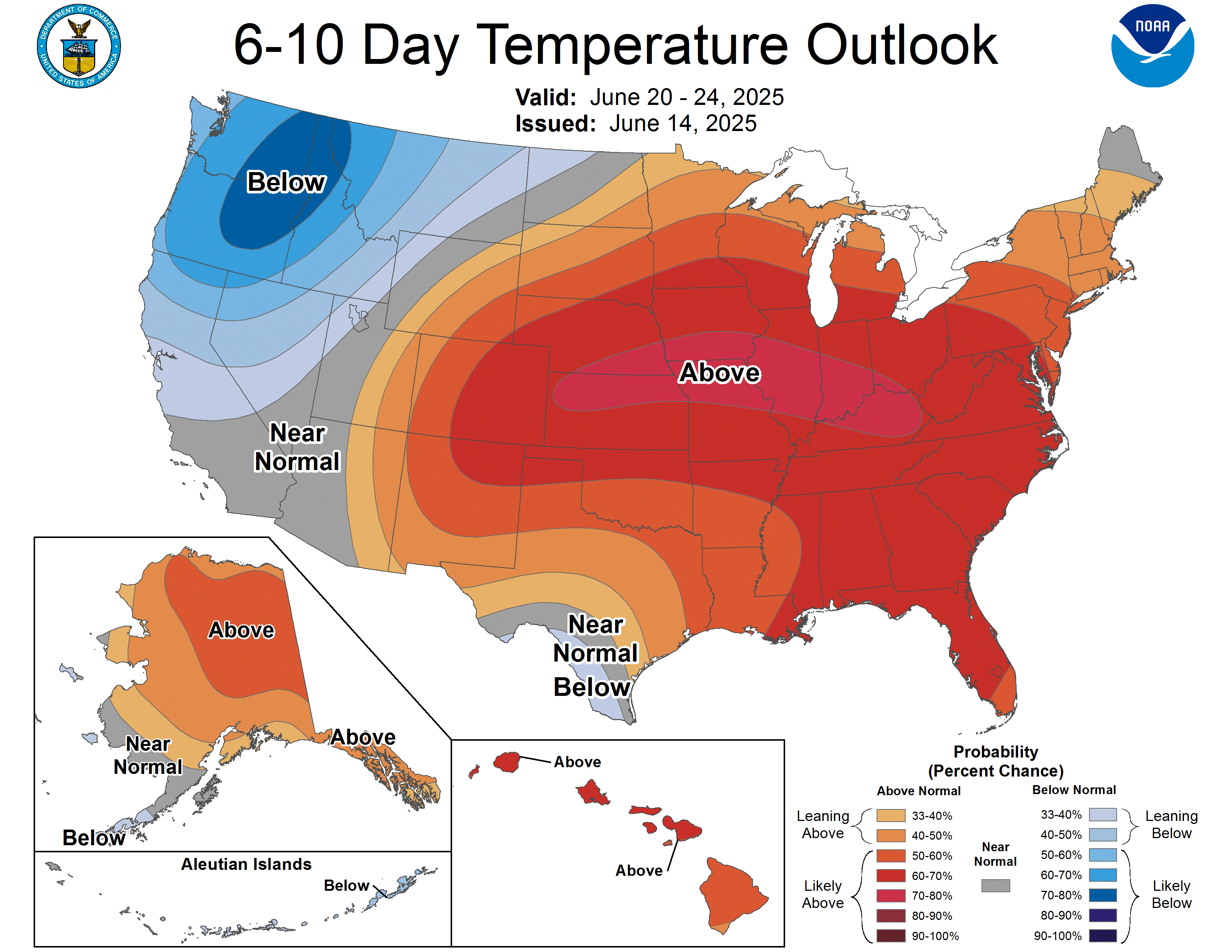 | 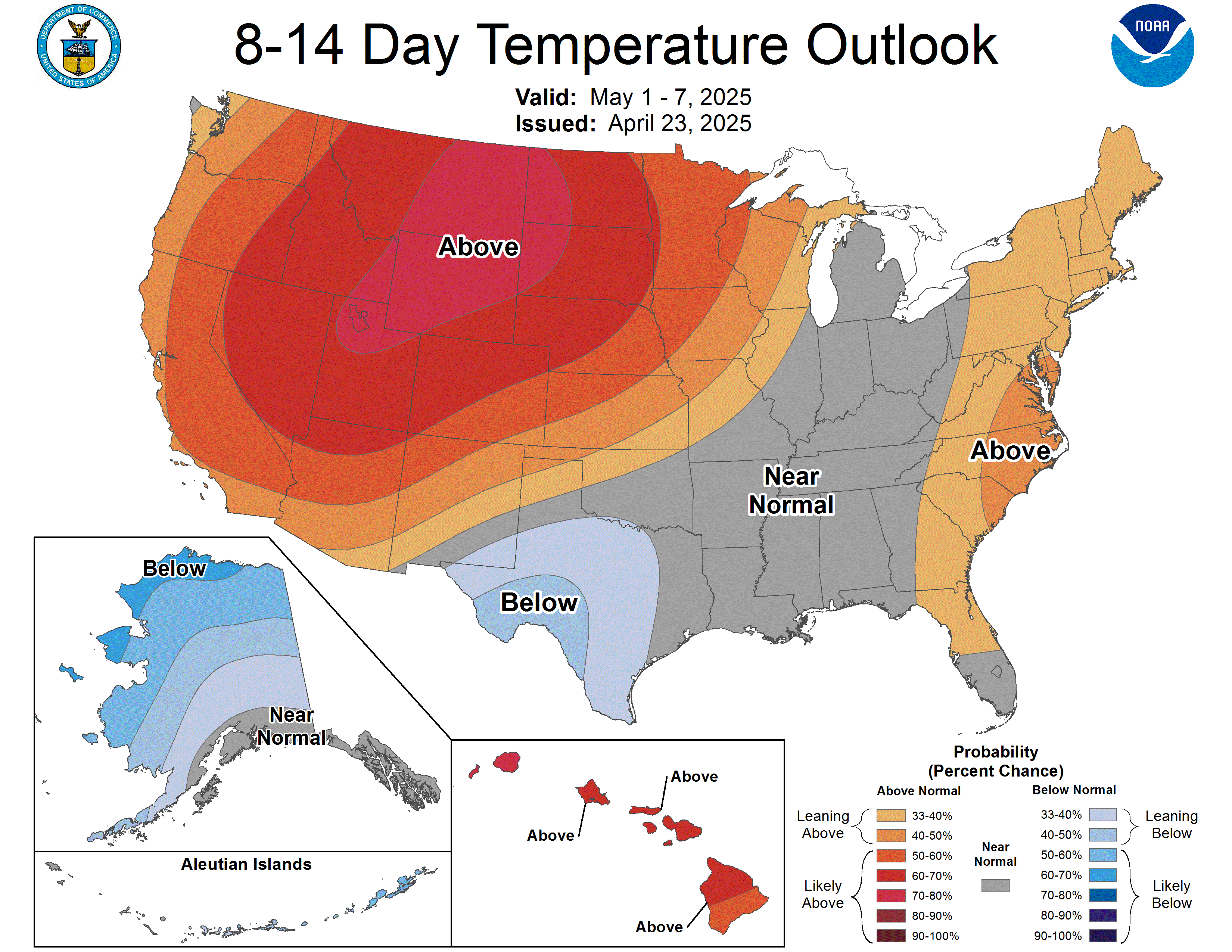 | 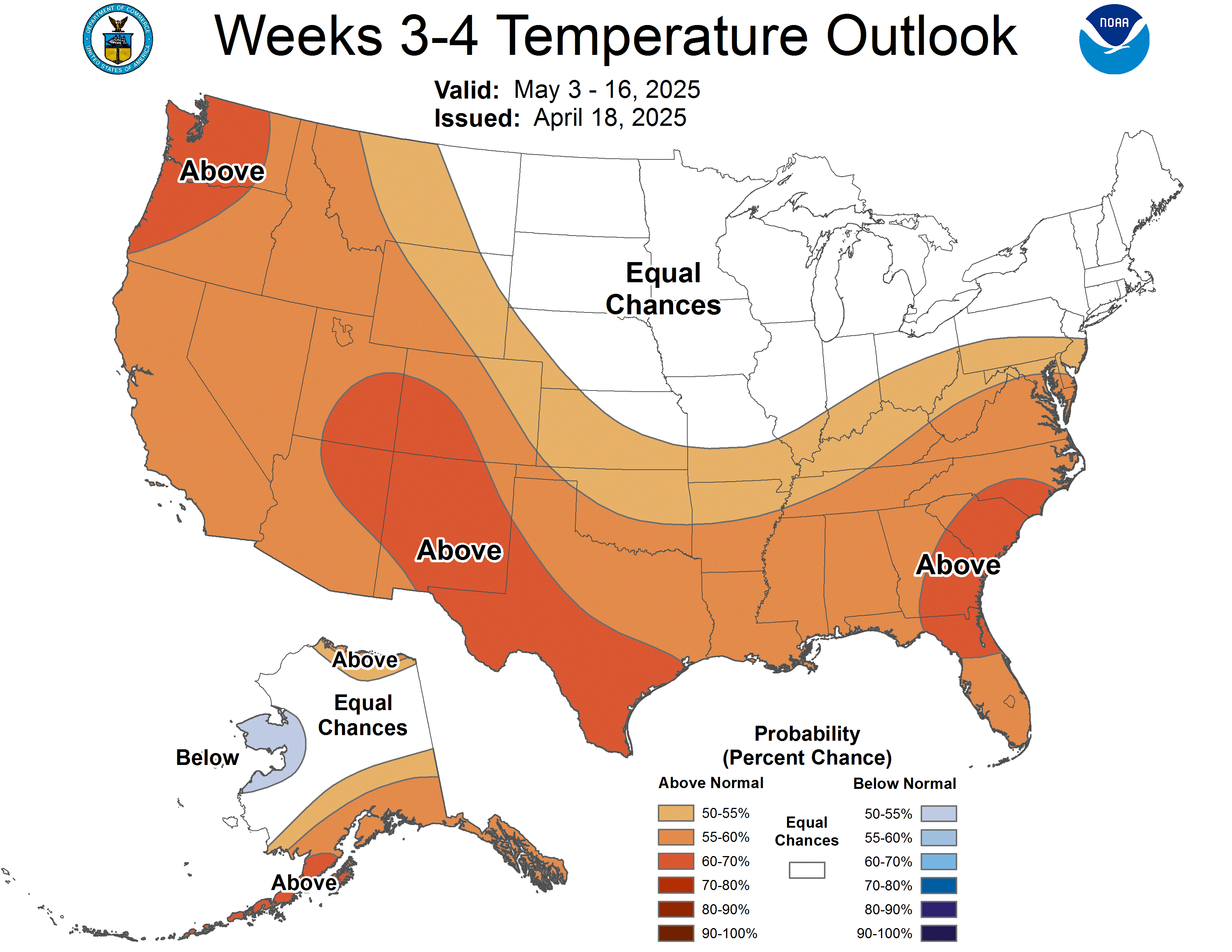 |
| The new monthly forecast is to the right. Does it appear to be reflective of the four parts of the month for which we have forecasts? → |
| ↑ ← The forecast for the month fits well with the three short-tem forecasts. | |
And Precipitation
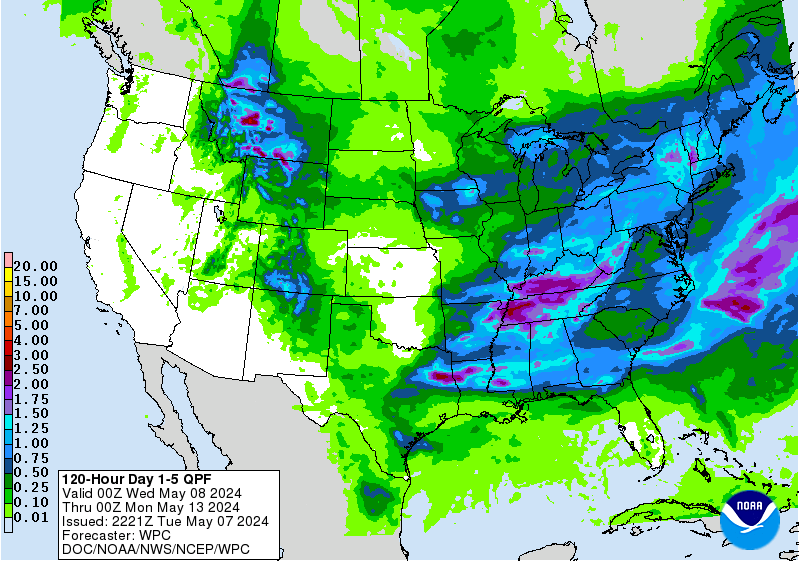 | 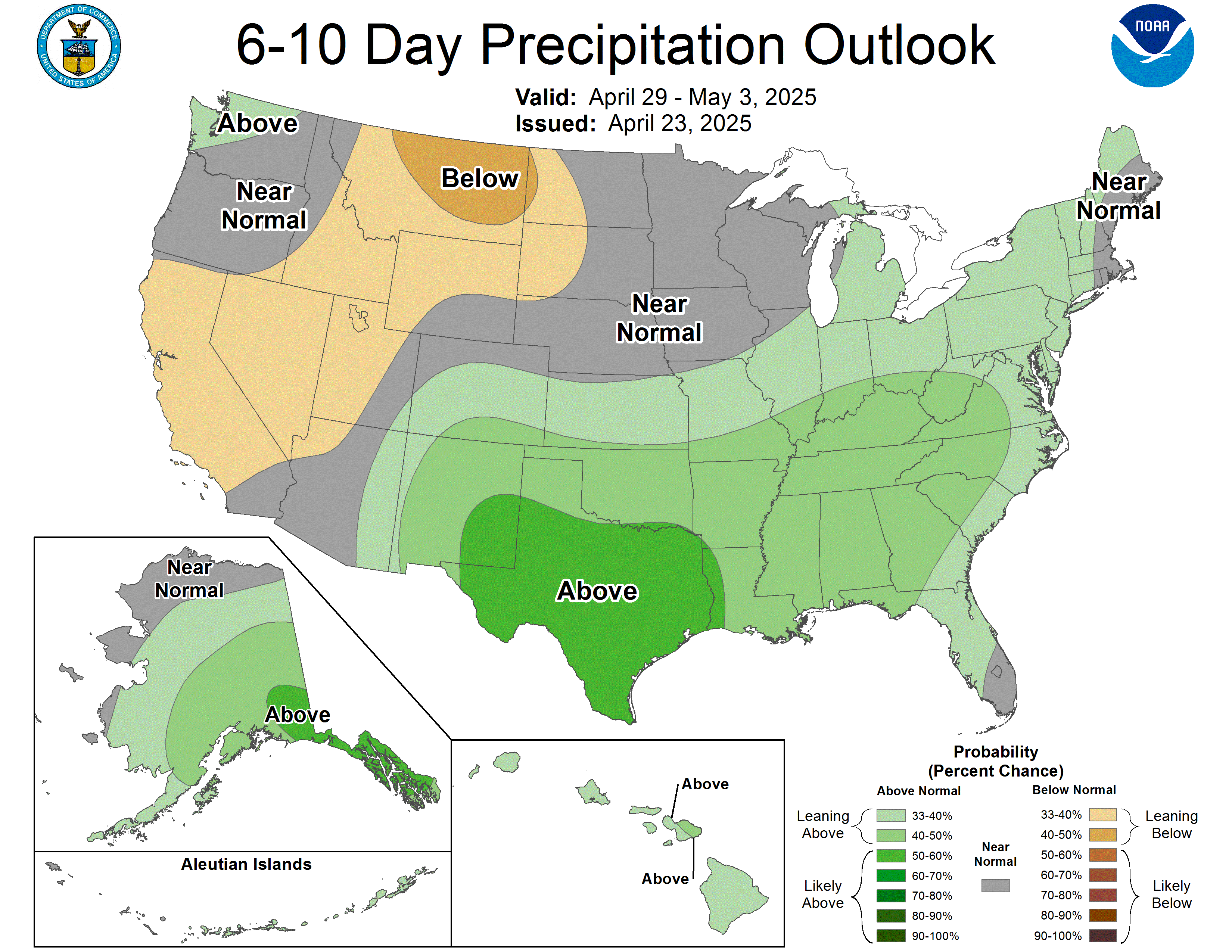 | 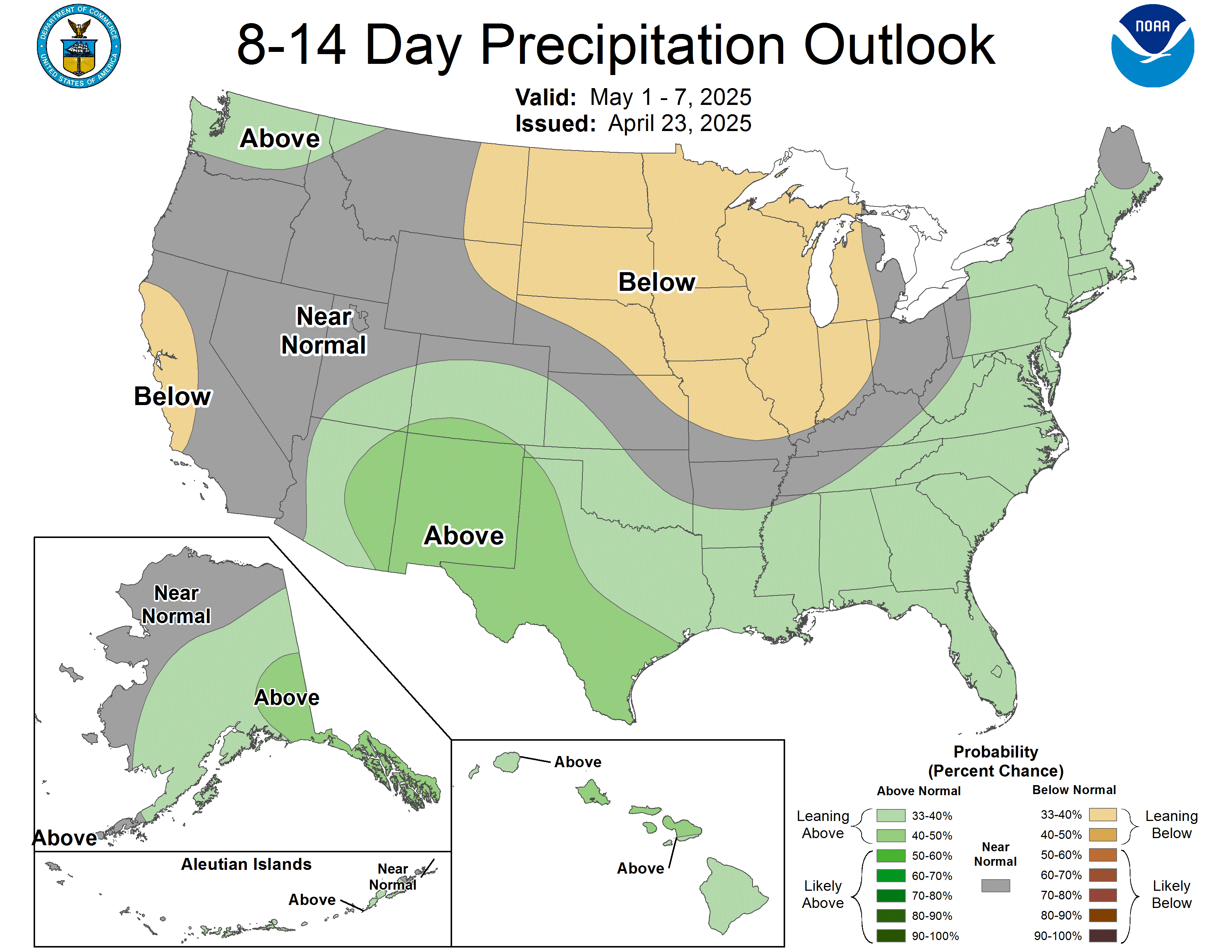 | 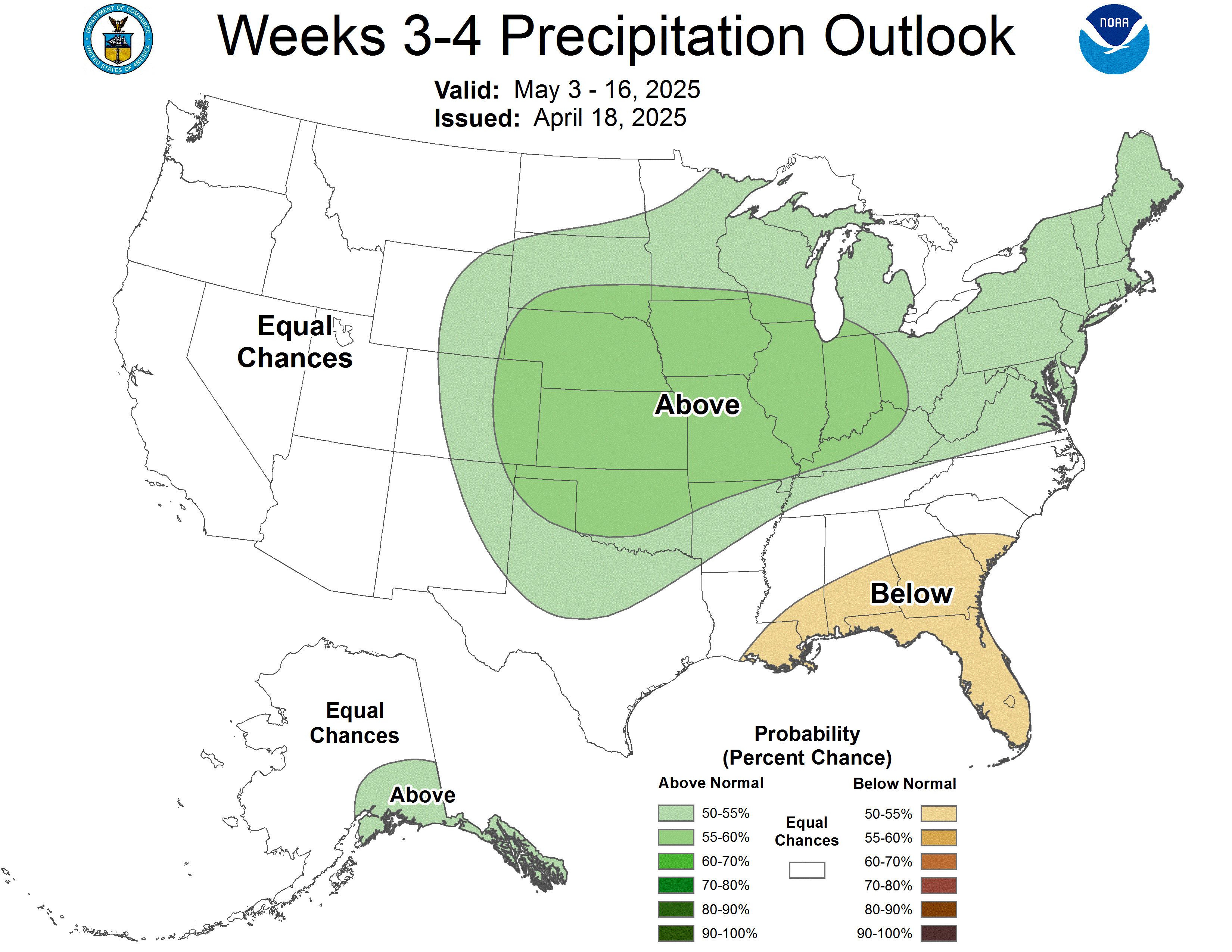 |
The new monthly forecast is to the right. Does it appear to be reflective of the four parts of the month for which we have forecasts? → |
| ↑ ←The forecast for the month fits well with the three short-tem forecasts. The one obvious descrepancy is New England which would appear to be EC rather than wet for the mont. The national map actually shows that but the EC area shown might turn out ot be a bit larger. | |
Sometimes it is useful to compare the three-month outlook to the forecast for the first of the three months. It shows how much the pattern changes over the three-month period.

One can mentally subtract the First-Month Outlook from the Three-month Outlook and create the Outlook for the last two months in the three-month period.
And with respect to drought, this was also issued on January 31, 2021

Latest Monthly Assessment – The moderate La Niña event is expected to continue through the Northern Hemisphere winter 2020-2021 (a 95% chance during January-March), with a potential transition to ENSO-neutral during the Spring 2021 (55% chance during April-June). Typical U.S. La Niña winter impacts include: above-normal temperatures and below-normal precipitation across the southern tier of States, below-normal temperatures and above-normal precipitation in the Northwest, below-normal temperatures in southeastern Alaska and the northern Rockies and Plains, and above-normal precipitation in the Ohio Valley and Hawaii. However, other atmospheric phenomena (which can be difficult to predict) can influence impacts from La Niña. As of Jan. 26, 2021, drought (D1-D4) across the contiguous U.S. slightly declined during the past month, standing at 46% versus 49% on Dec. 29, 2020. The worst drought conditions (D3-D4) continued across the Southwest, with extreme to exceptional drought enveloping most of Nevada, Utah, Arizona, Colorado, and New Mexico. During the past 30-days, subnormal precipitation and near to above-normal temperatures covered most of the Southwest, northern Plains, upper Midwest, Northeast, central Gulf Coast area, and Florida. In contrast, surplus precipitation fell on the Pacific Northwest, most of the southern and central Plains, western Corn Belt, Tennessee Valley, and from northwest Florida northeastward into southeastern Virginia. Much of the drought improvement over the past month occurred in the southern Plains and Pacific Northwest. 30-day temperatures averaged slightly below normal in the central and southern Rockies and southern High Plains. However, in late January, a change in the weather pattern brought stormy and colder weather to California and the Southwest, helping to boost the dismal SNOTEL Water Year to Date (WYTD) basin precipitation and snowfall totals, although much more was needed to get close to normal.
The updated monthly outlook favored a large area for above average precipitation probabilities, stretching from the northern and central Rockies eastward to the mid-Atlantic Coast, and southward into the Tennessee and lower Mississippi Valleys and southern Appalachians. Somewhat higher odds were located in the northern High Plains, Tennessee and Ohio Valleys, and mid-Atlantic. Above-normal precipitation was also favored in western Alaska. In contrast, subnormal precipitation was likely along the Far West Coast and extreme southern sections of the Southwest, in the southern Plains, and along the central and eastern Gulf and southern Atlantic Coasts. The updated Feb2021 temperature map was quite different from the initial mid-January release, with odds favoring a large area of subnormal readings in most of the West, northern half of the Plains, Midwest, and southeastern Alaska. Above-normal temperatures were limited to western and northern Alaska, southern Texas, and Florida. Although above-normal precipitation is favored for the northern and central parts of the Rockies and Plains and upper Midwest, February climatology is quite dry and some of the drought was long-term. With recent dry and mild weather in many portions of the aforementioned areas, the expected near- to above-normal precipitation was most-likely not enough to make large-scale improvements during the cold season. Some localized, small-scale improvements are possible in these areas, but overall, most of the drought will persist until warmer conditions in the spring thaw the ground and allow any snow to percolate into the soil. Exceptions to this included the small D1 areas in the central Corn Belt and Tennessee Valley where normal and forecast precipitation are higher, and recent precipitation has fallen there. In California, although the updated Feb2021 precipitation outlook favored below-normal precipitation, very heavy rains inundated central coastal sections, with heavy snows blanketing the Sierra Nevada in late January. Another potent storm is forecast to hit northern California in early February, thus some SHORT-TERM improvement was depicted for those two events in February; however, the rest of the month, climatologically one of the wettest for the state, is expected to be drier, as was the FMA2021 SDO, so these February improvements may only be fleeting when compared to the overall wet season (Nov-Apr). Development is possible where D0 currently existed on the Jan. 26 USDM, the forecasts indicated good odds for subnormal precipitation and above-normal temperatures, and the past 30-days were drier than normal (e.g. southern Texas, central Gulf Coast, much of Florida, and coastal Georgia and South Carolina).
No drought is indicated or expected to develop across Alaska for February while conditions are frigid and the ground frozen. Drought persistence is likely for Puerto Rico as they enter the dry season. Across Hawaii, drought improvement is likely due to expected La Niña impacts (above-normal late winter and early spring rains) during the wet season (late winter ino early spring), along with dynamical model forecasts for surplus rains.
Looking back on January 2021 to relate the forecast for February to the actuals in January
First January 2021 Temperature (30 out of 31 days).

And then January Precipitation (30 out of 31 days).

We then show the new forecast and the prior month actuals (less one day) side by side.
| Prior Month (usually missing one day) | Forecast for current Month | |
| Temperature |
|
|
| Precipitation |
|
|

Conclusion
The purpose of this article was to present the updated Outlook for February, 2021 and compare it with the Early Outlook. It is not to critique the updated Outlook for February based on our opinions but we point out possible inconsistencies if we find them and we have. We have assessed the extent to which the monthly outlook seems to fit with the other forecasts provided by NOAA. In reality, all forecasts are obsolete when issued as the situation changes day by day or six hours by six hours i.e. each new model run. In our other articles, we continually examine the current forecasts from NOAA including Day 1- 5, 6-10, 8-14, and Week 3 and 4. So we are continually looking at approximately 25 days into the future.
On February 11, 2021, IRI/CBC will issue their ENSO forecast and we will present that and critique it. What they present on February 11 is likely to begin to impact the forecasts for the next three months and should shed some light on Spring. It is an ongoing process and we attempt to provide our readers with the best current assessment of the next approximately 25 days (except when we cover the Four-Season Analysis or medium-frequency cycles such as ENSO in which cases we are looking further out than 25 days), so our analysis is pretty much ongoing. We also publish a “LIVE” Weather Article which updates in real-time to reflect NOAA Weather Headlines and for those interested provides detailed information down to current warnings in place. All of our reports including past versions of these reports can be located via the Directory/Archive which can be accessed here.


