


Written by Sig Silber
HEADLINES (Updated 4:35 pm and 5:26 pm EDT) –
– As Marco continues to weaken, Laura to expected to strengthen in the Gulf of Mexico and pose a significant threat to the Gulf Coast by midweek
– Raging wildfires continue in the West, increased risk for more dry thunderstorms and additional fires through early week
– Late season heat wave in the Midwest, showers and severe storms storms to develop over the Great Lakes and Northeast

This article provides continuous updates for a variety of Weather and Weather-Related Threats as well as a general weather forecast. These are “Live” maps that continually update. Please pay attention to the Mesoscale Events maps — Mesoscale Events are potentially life-threatening situations.
Please share this article – Go to the very top of the page, right-hand side for social media buttons. Also, feel free to send this email to anyone you feel will benefit from it.
For those interested in longer-term forecasts, we just published the new NOAA Seasonal Outlook and it can be accessed here.
Addressing the question of can two hurricanes arrive at the same time and remain separate.
 |  |
As you can see they are not scheduled to arrive at the same time which is why the National Hurricane Center is not predicting any significant interaction between the two storms. But the first storm should stir up the waters and thus make the water temperature cooler and impede the development of the second storm. I do notice some changes in the track of the first storm that could be an indication of some interaction but there are many other possible explanations.
Readers can scan through this article or jump to where they want to go via the links to the right. To get back to the Directory, hit the back arrow at the top of the URL bar on your screen. But in many cases, one of my Editors has graciously inserted a Return to Directory link to click so that is even easier. This is so high tech that I hardly believe it. |
|
CONUS Focal Points
Short Range Focal Points
Short Range Forecast Discussion NWS Weather Prediction Center College Park MD – 352 PM EDT Mon Aug 24 2020
Valid 00Z Tue Aug 25 2020 – 00Z Thu Aug 27 2020
…As Marco continues to weaken, Laura to expected to strengthen in the Gulf of Mexico and pose a significant threat to the Gulf Coast by midweek…
…Raging wildfires continue in the West, increased risk for more dry thunderstorms and additional fires through early week…
…Late season heat wave in the Midwest, showers and severe storms storms to develop over the Great Lakes and Northeast…
Marco, which has been downgraded to a tropical depression, is expected to continue weakening as it moves east across southern Louisiana overnight and on Tuesday. However, gusty winds, heavy rainfall and lingering coastal flooding are expected along portions of the Gulf Coast through this evening. Meanwhile, Laura is forecast to intensify as it tracks northeast across the Gulf of Mexico. There is an increasing risk of dangerous storm surge, wind, and rainfall impacts from the upper Texas coast through the north-central Gulf Coast beginning on Wednesday. Interests in these areas should continue to monitor the progress of Laura and follow the advice of local officials.
Supported in part by a pair of weak frontal boundaries, isolated to scattered thunderstorms are expected through midweek from the Pacific Northwest and Northern California to northern Rockies. Unfortunately, many of the these storms are expected to be fast moving and are not forecast to produce significant rainfall amounts. This along, with frequent lightning strikes may only worsen the ongoing wildfire situation in the West.
Persistent heat will also be a concern in the West, with temperatures remaining above normal through midweek. Excessive Heat Warnings, for dangerously hot conditions, remain in effect along the southern Colorado River Basin and across much of southern Arizona – where temperatures are expected to soar well above 100 degrees once again Tuesday.
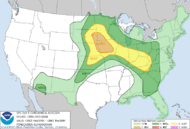
Well-above normal temperatures are also expected to continue across the northern Plains eastward across the Upper Midwest into the Northeast on Tuesday. Strong to severe storms are forecast to develop ahead of cold front pushing east from eastern Canada into the Northeast. The Storm Prediction Center is highlighting the potential these storms to produce severe winds, with scattered wind damage probable for portions of the Mid-Atlantic states.
We try to keep this up to date but if is not you can find the updated version here.
When you click on this image it takes you to the SPC Fire Warning Page and you get a set of maps for Days 1, 2, 3 – 8, etc. You can then click on those for more detailed information. The map is a bit blurry as I tried to make it a bit larger than the map provided by NOAA but should be able to see where the current wildfire risks are. But if you click on this map, you will get to see three maps that show the risk for different time periods.
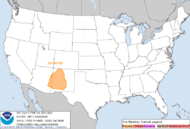
Thunderstorm Risk
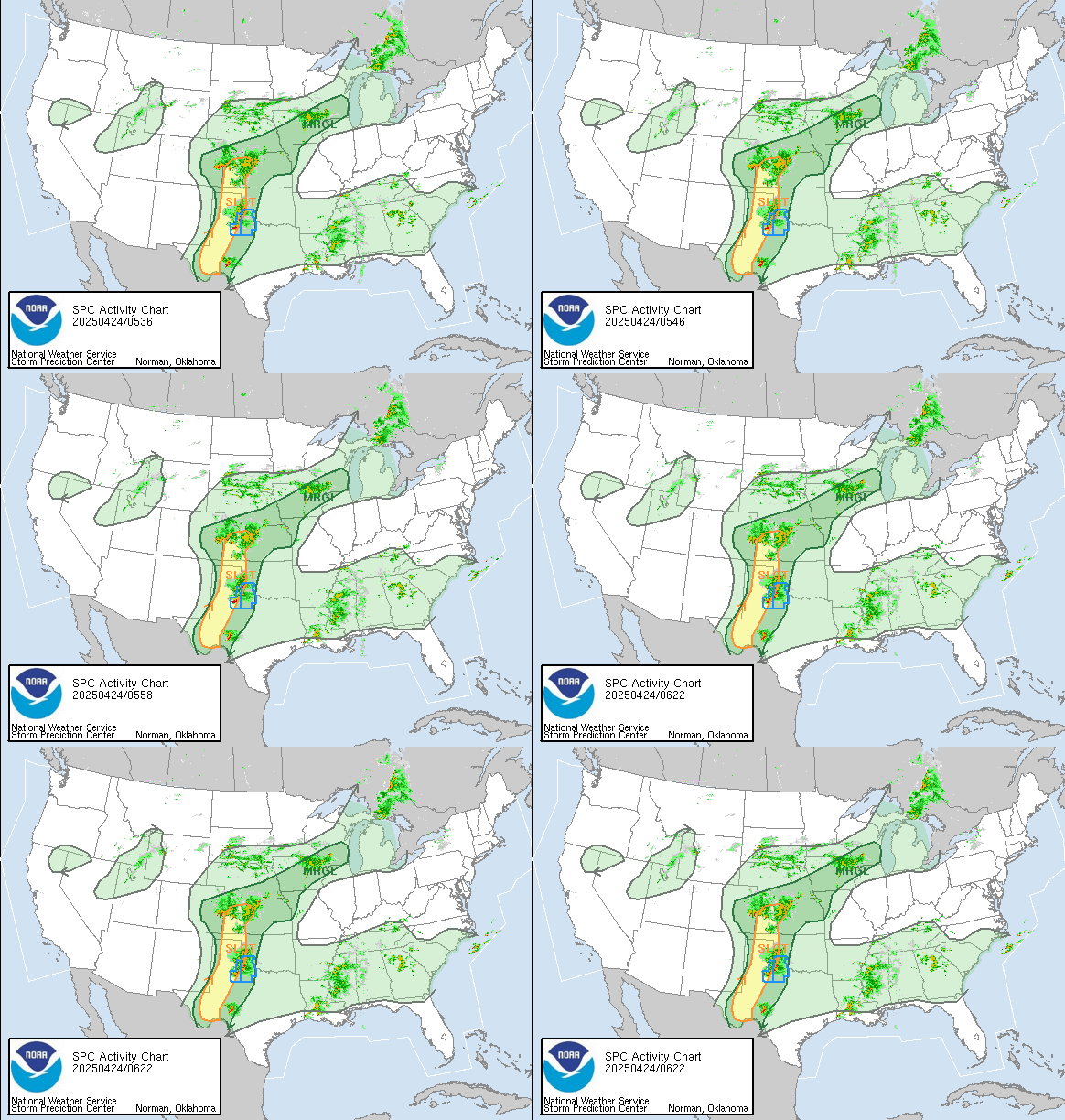
This should play out something like shown in this 60 Hour Forecast Animation
Here is a national animation of weather fronts and precipitation forecasts with four 6-hour projections of the conditions that will apply covering the next 24 hours and a second day of two 12-hour projections the second of which is the forecast for 48 hours out and to the extent it applies for 12 hours, this animation is intended to provide coverage out to 60 hours. Beyond 60 hours, additional maps are available at links provided below. The explanation for the coding used in these maps, i.e. the full legend, can be found here although it includes some symbols that are no longer shown in the graphic because they are implemented by color-coding.
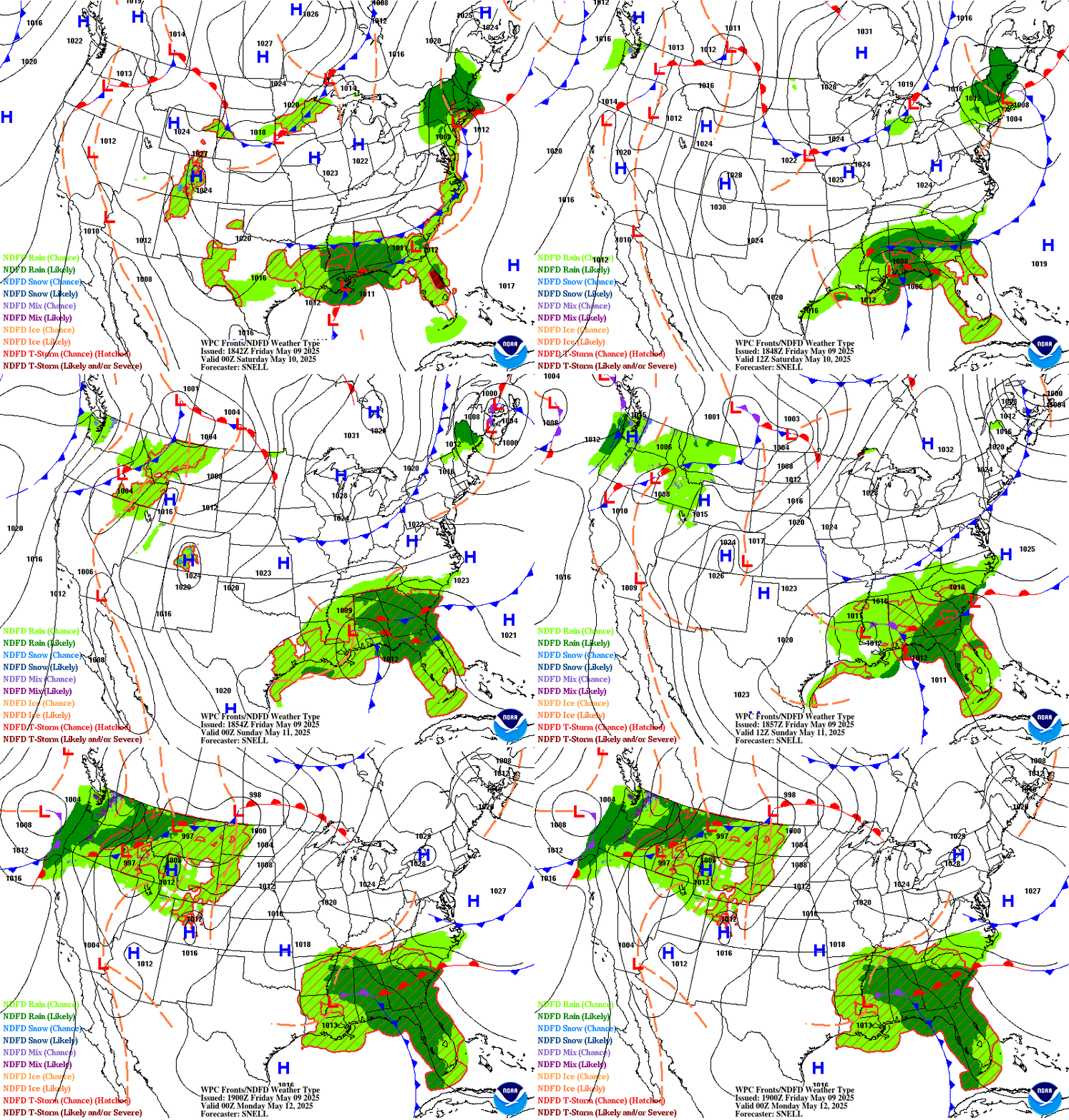
The two maps below break it down by day and may be easier to read.
Now, the Day One and Two CONUS Forecasts: These Maps Update Daily.
Day One CONUS Forecast | Day Two CONUS Forecast |
|
|
These graphics update and can be clicked on to enlarge. You can see where the weather will be | |
 | |


During the winter much of our weather originates in the Pacific. That is why we pay attention to the near-term history of storms arriving.
Temperature
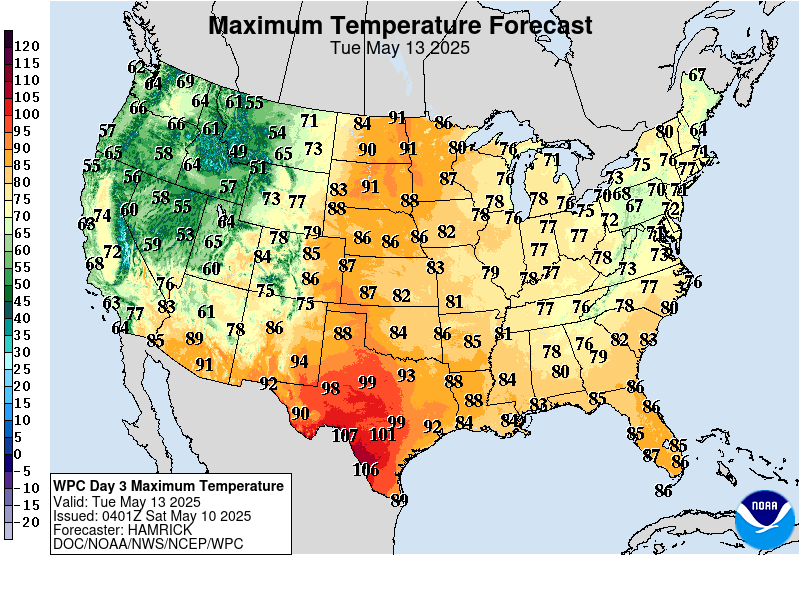
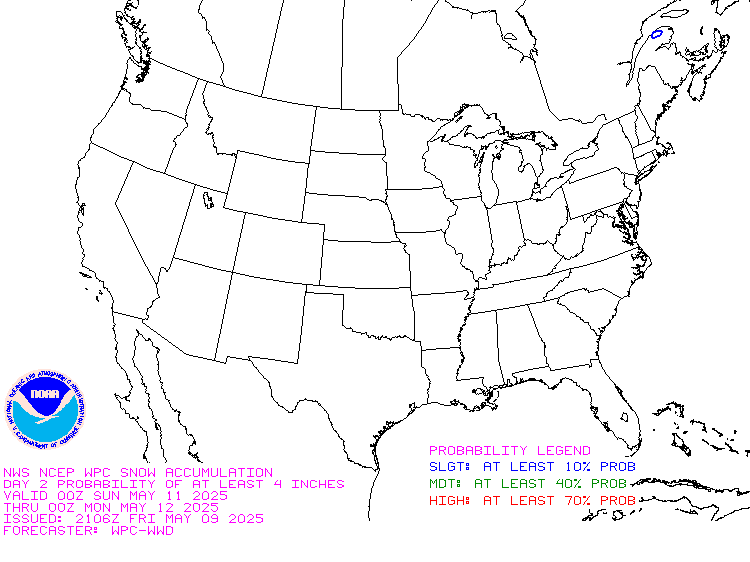
A version that shows a 20 hour animation and some other views can be found here OR SIMPLY CLICK ON THE IMAGE.

– Return to Directory
Day 3 – 7 Hazards
Hazards:
– Heavy rain across portions of the Lower/Middle Mississippi Valley, the Central/Southern Appalachians, the Ohio/Tennessee Valley, the Mid-Atlantic, and the Southern Plains, Thu-Sat, Aug 27-Aug 29.
– Heavy rain across portions of the Middle Mississippi Valley, the Great Lakes, and the Ohio Valley, Sun-Mon, Aug 30-Aug 31.
– Flooding possible across portions of the Southeast, the Lower Mississippi Valley, and the Southern Plains.
–Excessive heat across portions of the Southern Plains, Thu-Fri, Aug 27-Aug 28.
Detailed Summary:
The main threat during the medium range period (Thursday, August 27 – Monday, August 31), will be the heavy rainfall associated with what will then be Tropical Depression Laura. The current National Hurricane Center track has Laura making landfall somewhere along the central Gulf coast as a Hurricane on Thursday before moving northward through the Lower Mississippi Valley. It is then forecast to weaken into a Tropical Depression as it passes through the Middle Mississippi Valley on Friday and eventually into a Post-Tropical Cyclone as it turns East and approaches the Mid-Atlantic on Saturday. All-the-while producing heavy rainfall on the order of 2-5 inches along the way. Some isolated areas, particularly near the Louisiana Gulf coast, may see up to 6 inches. Storm force wind gusts are likely to be felt across parts of the central Gulf coast nearest the location where Laura makes landfall. There is no wind threat area for the Gulf coast at this time due to a lack of confidence in sustained winds reaching ‘high wind’ criteria. This, along with the exact track of the storm is subject to change. You can find more information about Hurricane Laura at the National Hurricane Center’s website: www.nhc.ncep.noaa.gov.
The persistent upper-level high pressure over the southern tier states will lead to continued above normal temperatures and heat indices over 110 degrees across parts of southern Texas on Thursday and Friday. Therefore, an excessive heat hazard has been placed over that area for the 27th and 28th.
For Alaska, a potent low pressure system is expected to track along the Aleutian islands and into the Bering Sea through the medium range period. This system may produce gale force winds over the Bering Sea and Gulf of Alaska. There may be a chance for heavy rainfall along the Alaskan Panhandle at the end of the medium range (Monday, August 31), but model guidance isn’t confident enough for a hazard area to be placed there at this time.
(This is updated only during the week) Note the first list is weather highlights, this list is hazards. Not sure there is that much of a difference but they come from two different parts of NOAA. The Day 3 – 7 Hazards List does not update on weekends. But it is still useful as it remains valid for the period of time it covers. Of course, all forecasts are subject to change. Later we show a map of the hazards. Perhaps we should show them together.
Click here for the latest complete Day 3 -7 Hazards forecast which updates only on weekdays. It includes the full discussion which I do not update in this article but only present the highlights.
– Return to Directory
Ski Snow Reports
We will resume more detailed coverage when the summer is over. During the summer we might add some drought information in this section.

New Seasonal Outlook Issued August 20, 2020


– Return to Directory
Tropical Events
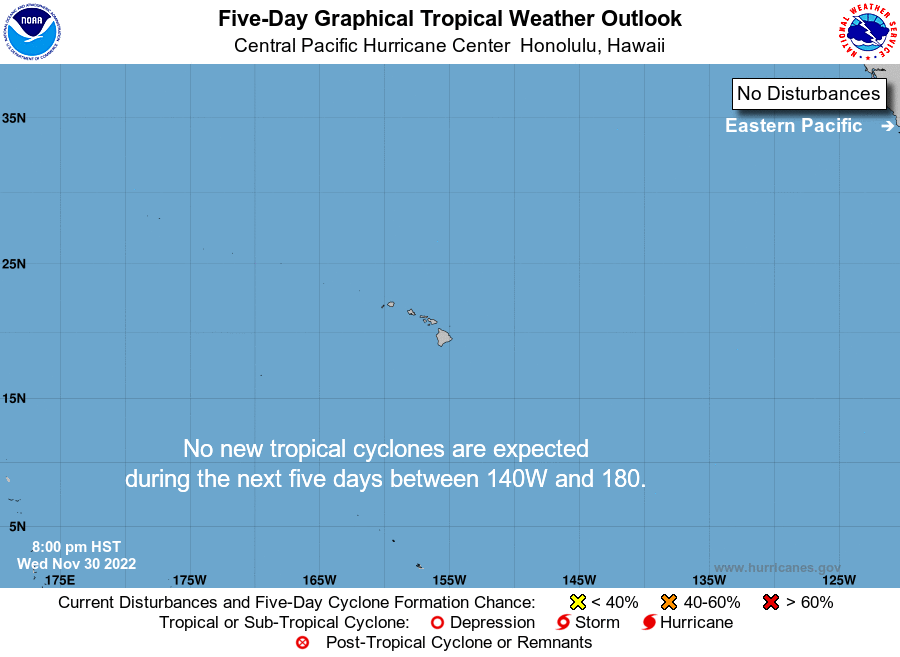
This is now beyond the time of the year we pay special attention to Tropical Events other than the Western Pacific.
So I am replacing the large with three small maps but you can click on them to get larger versions. Even though they are small maps you should be able to tell if there is activity and If I see activity I will make the map where there is activity full size.
| the Central Pacific. | the Eastern Pacific | the Atlantic and the Gulf of Mexico |
 |  |  |
Atlantic and Gulf of Mexico


Eastern Pacific

Updates on individual named storms can be obtained here.
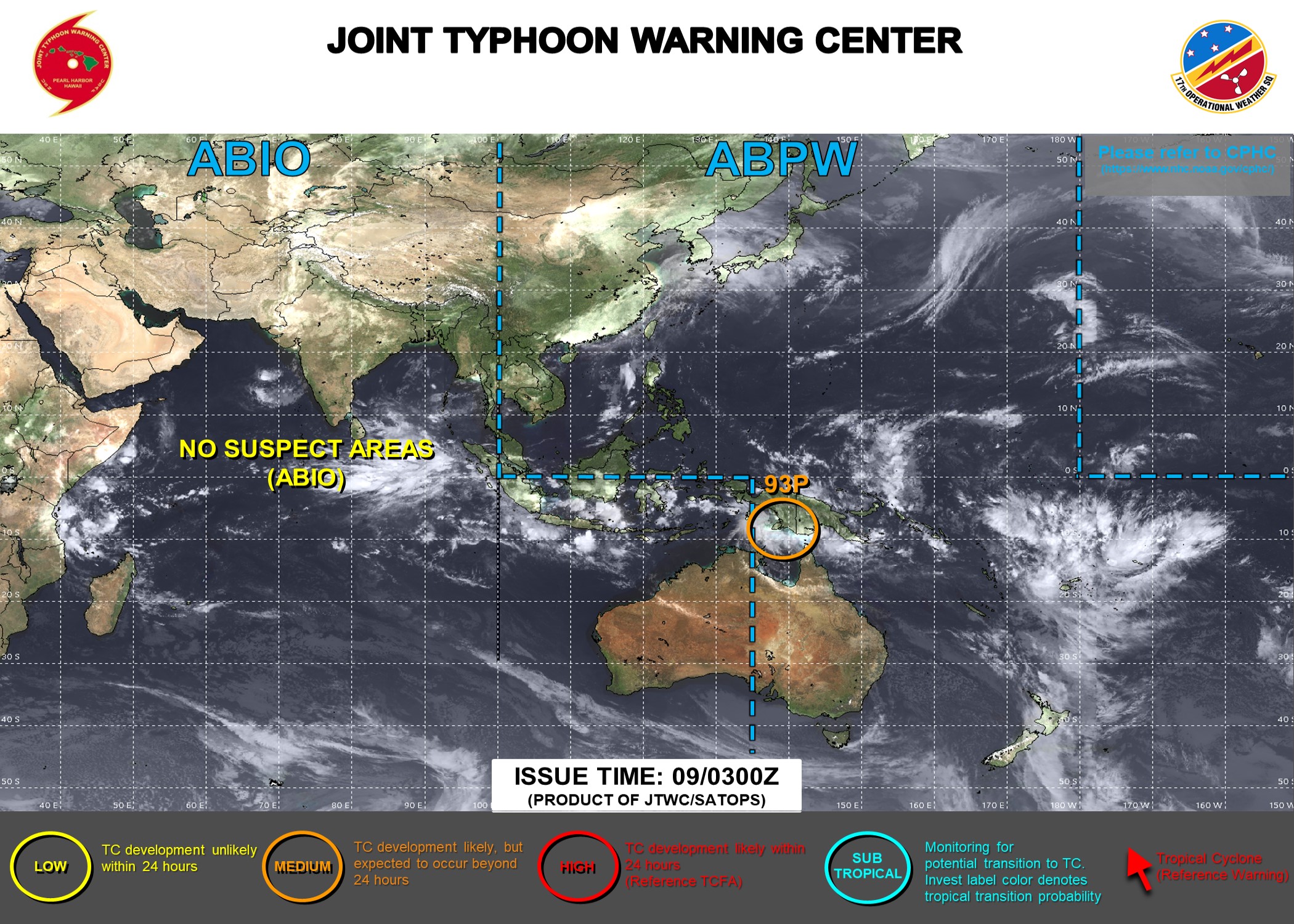
And the Western Pacific

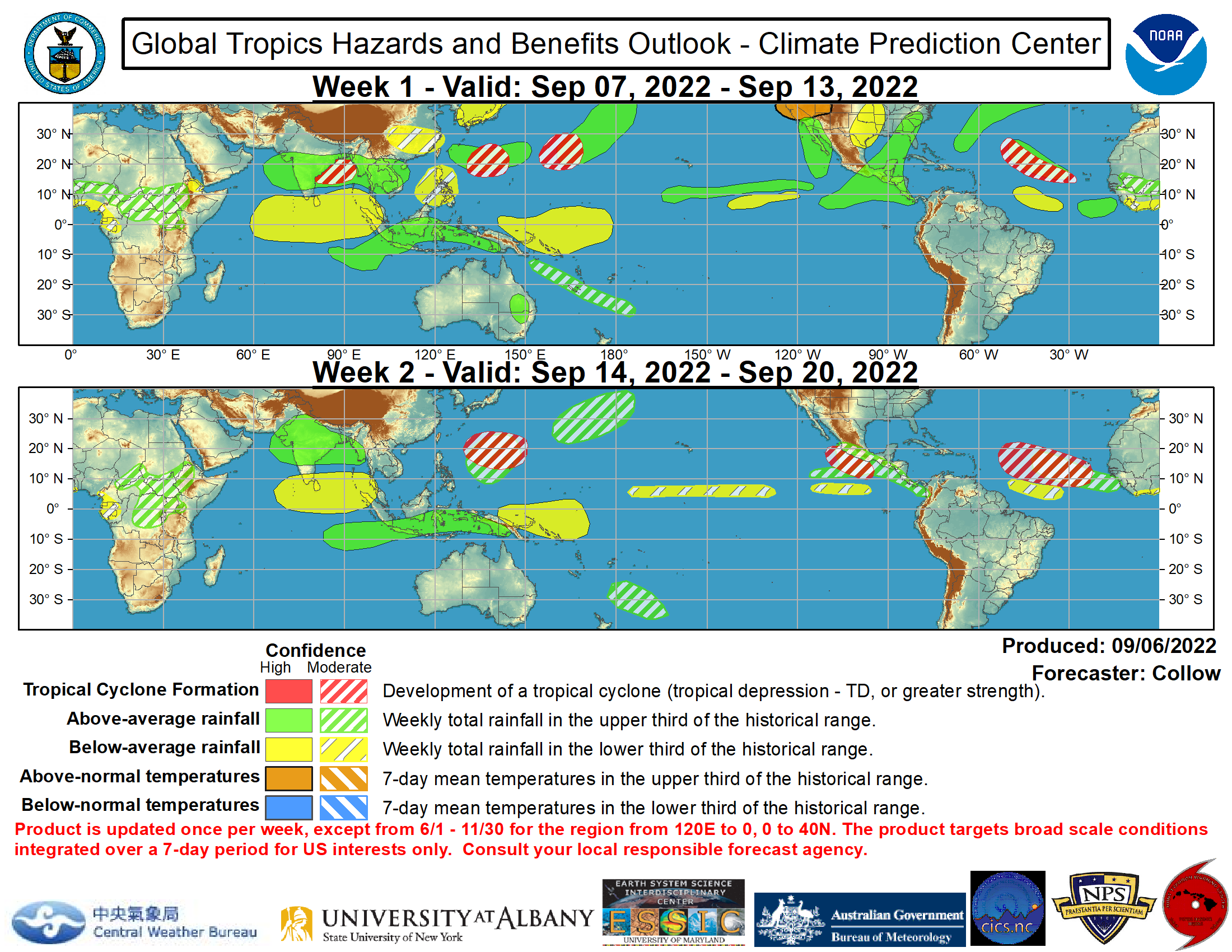
Week Tropical Forecast
– Return to Directory
Intermediate-Term Weather Forecast
And shifting to the Alaska and CONUS Intermediate-Term Weather Forecast showing from left to right, Days 1- 5, 6 – 10, 8 – 14 and Weeks 3 – 4 You can click on these maps to have them enlarge, there are larger versions in the Addendum (More Weather the link is shown at the end of this section, and there are larger versions of these maps in the Addendum. Also, the discussions that go with these forecast maps can be found here (first two weeks) and here (Weeks 3 and 4).
First Temperature
|
|
|
|
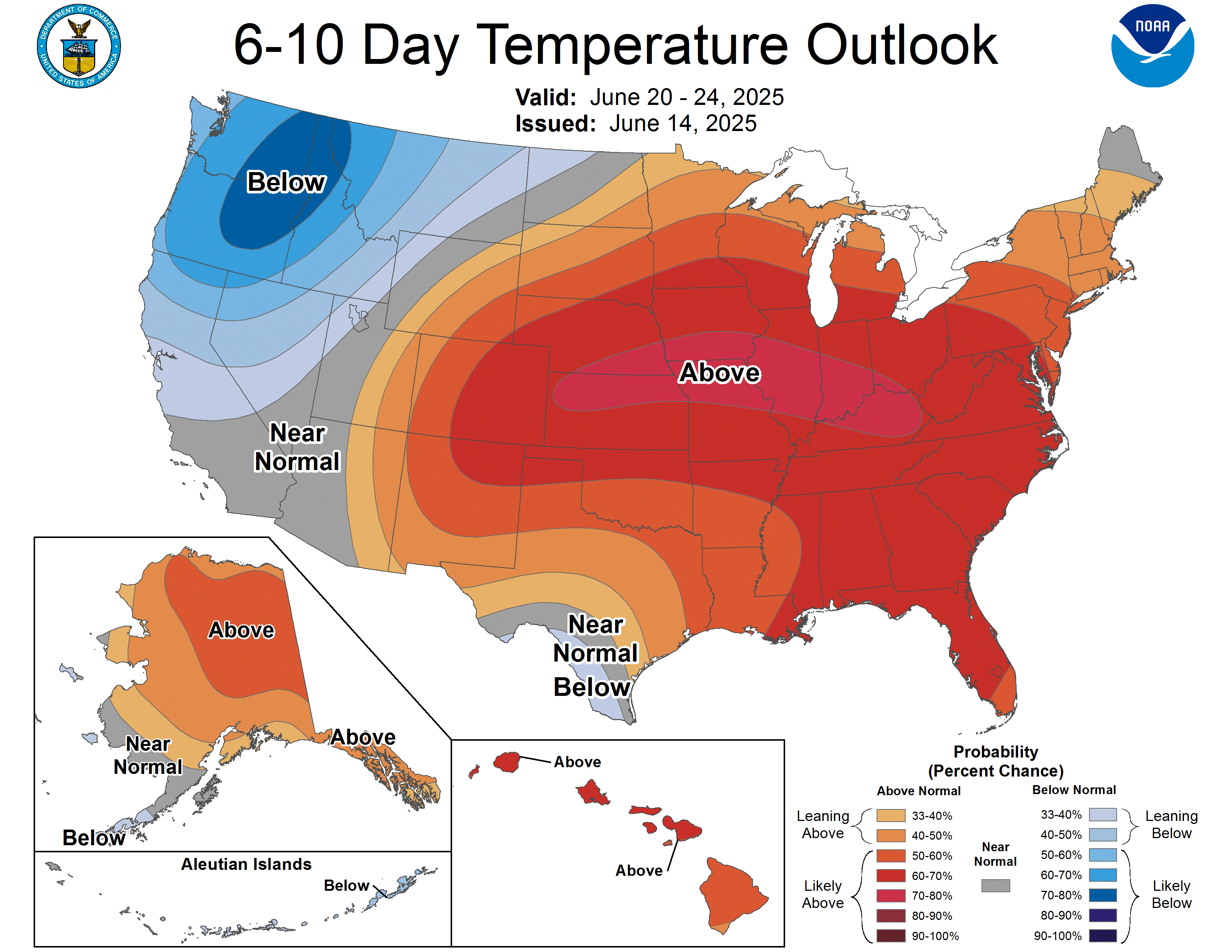
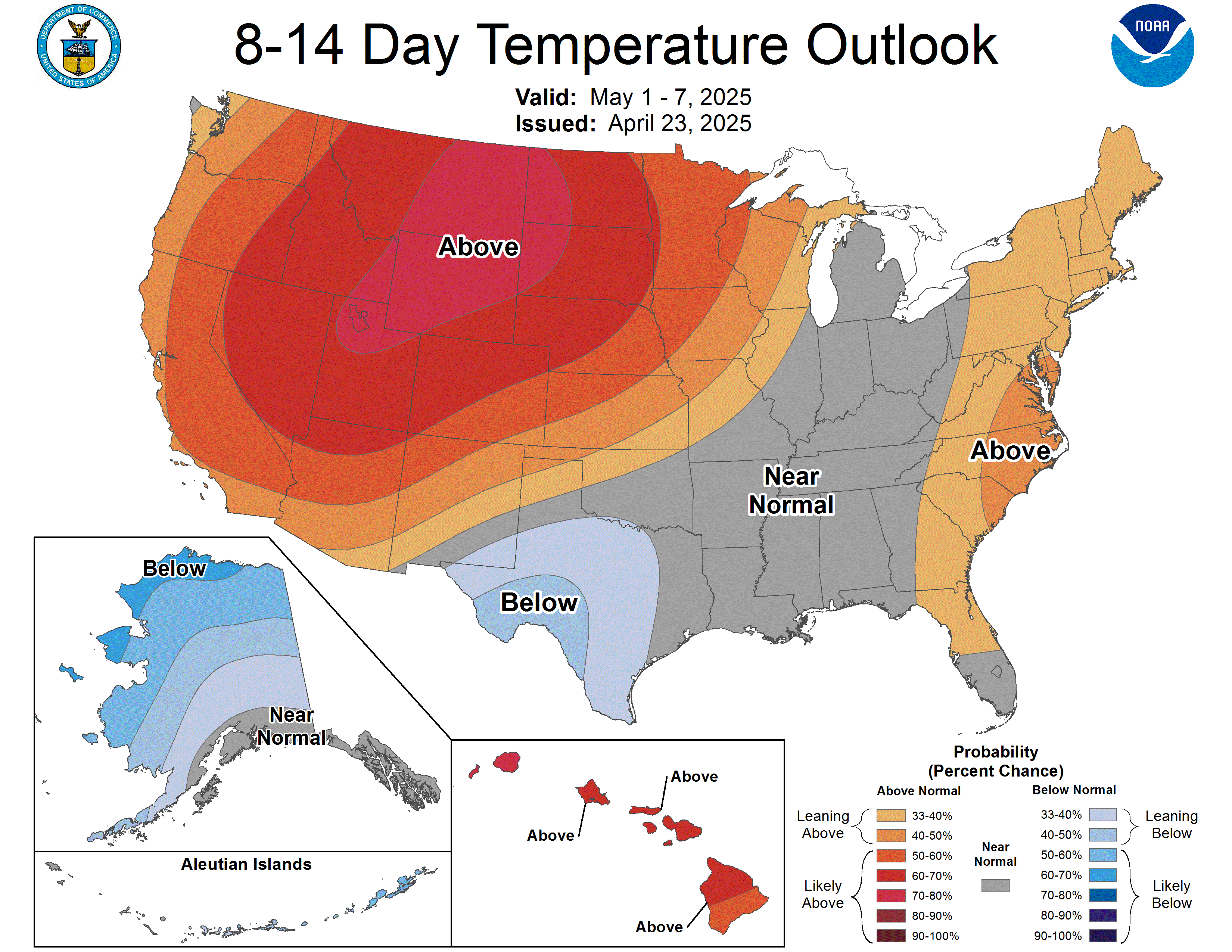
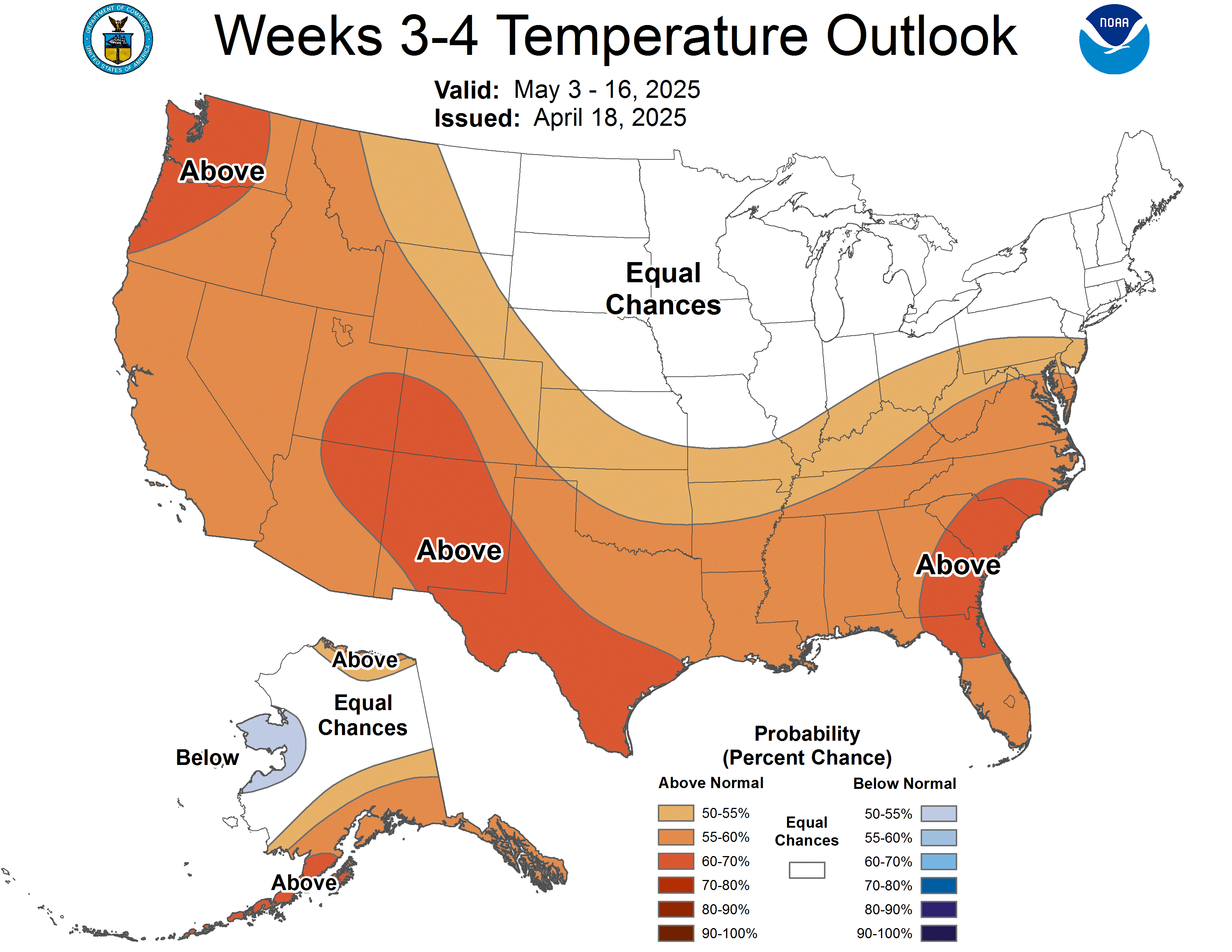
And then Precipitation
|
|
|
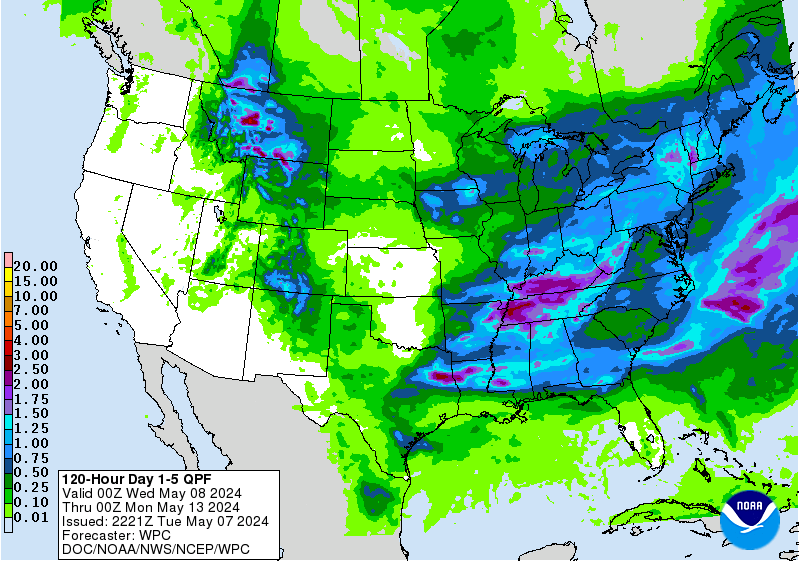
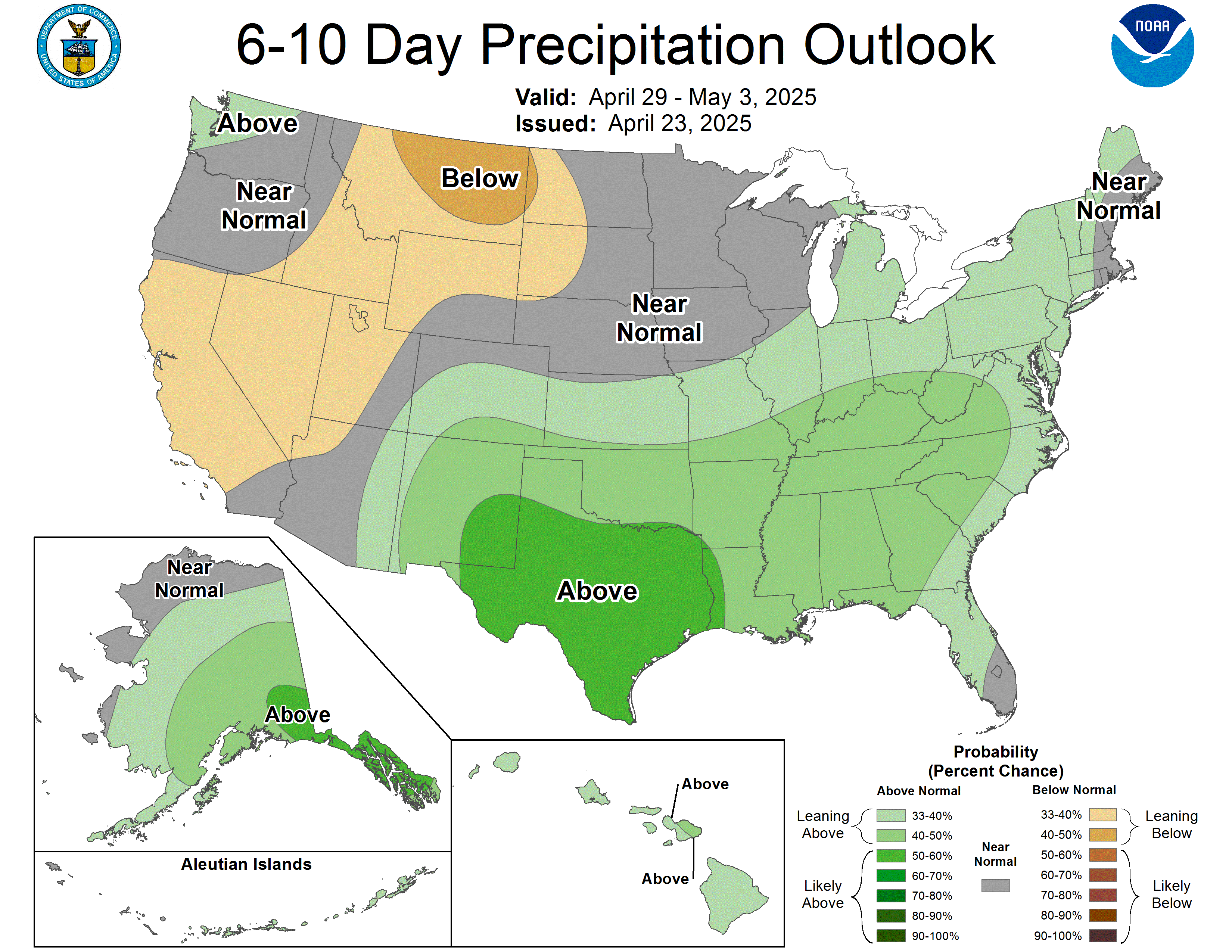
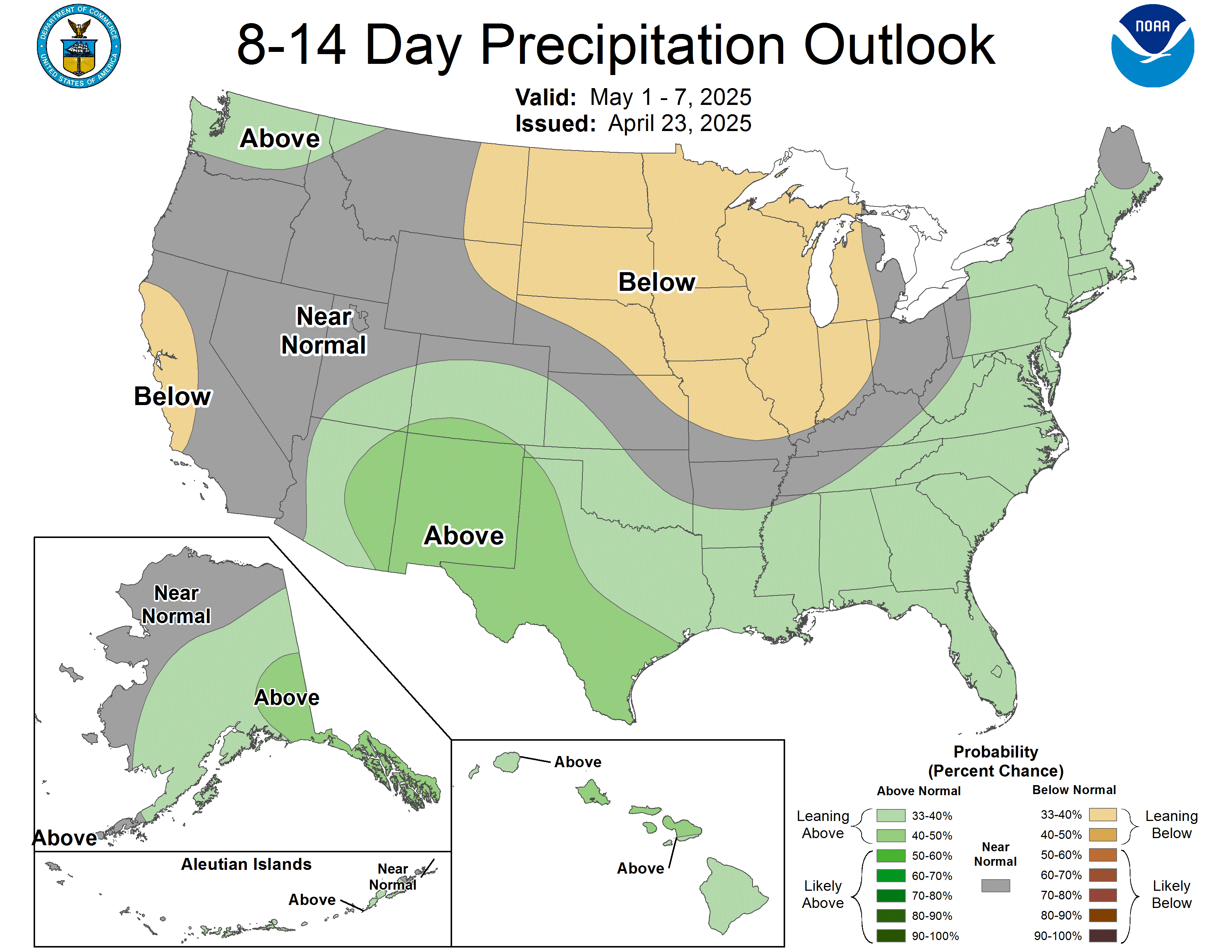
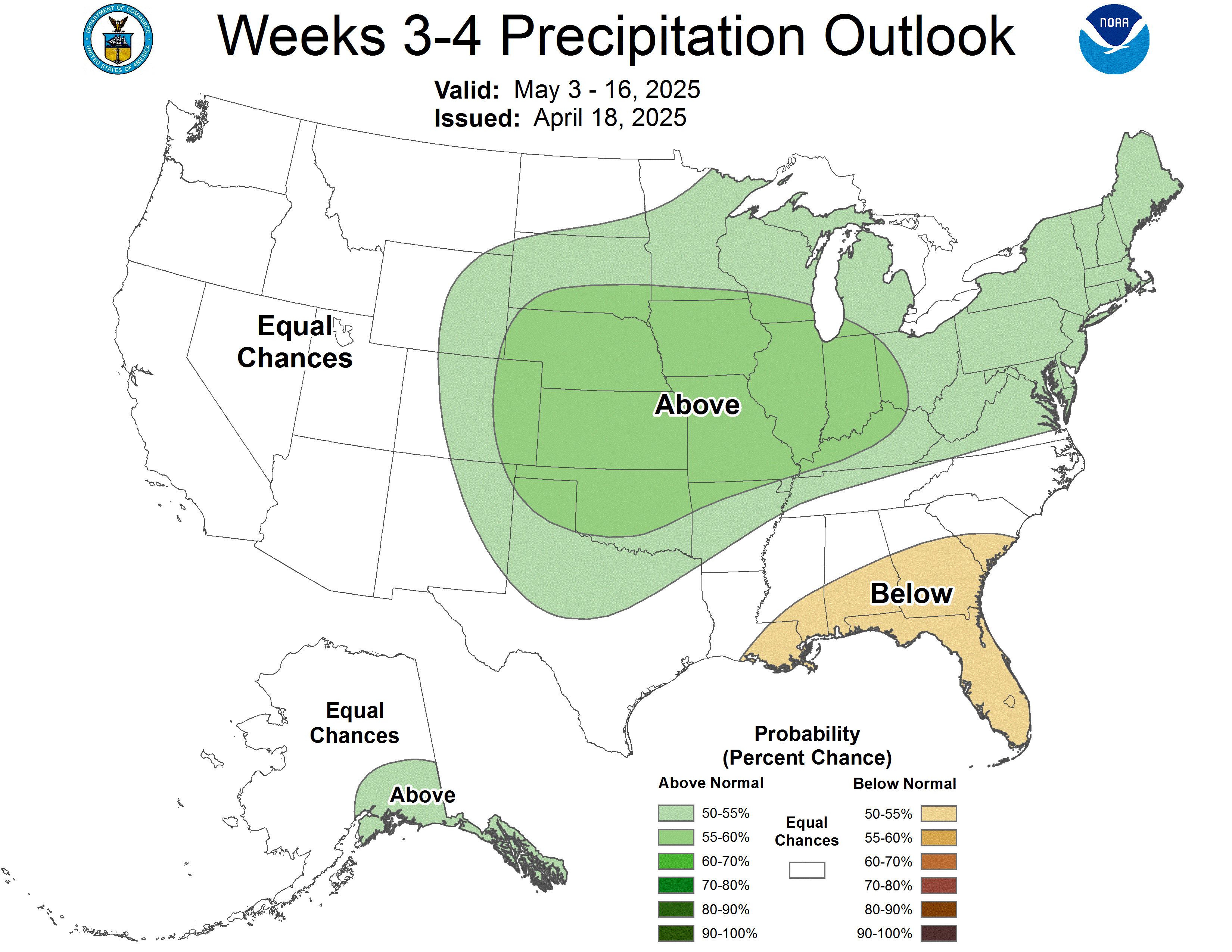
For those interested in more detail, there are additional weather maps and information in the MORE WEATHER Addendum. The link to the Addendum is here. |
– Return to Directory
Mesoscale Events
The following map shows where mesoscale events are occurring or forecast. If you do not see any areas highlight on this map than there are no mesoscale events taking place or forecast. A mesoscale event is a very serious situation for a very small area and detailed information is provided for these events when they occur or are forecast. If a mesoscale event is shown, click on the map and more detail on the event will be shown.
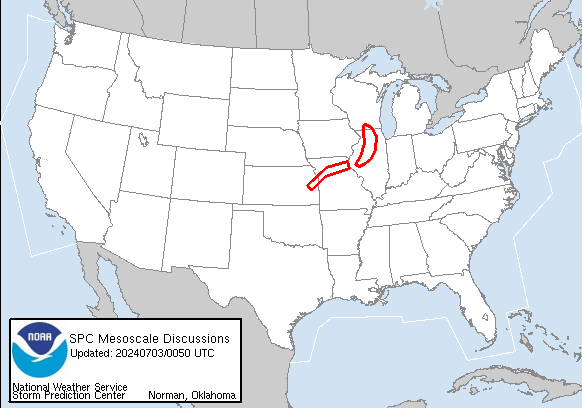
Two different parts of the NWS issue this map and they are not always in agreement although they are pretty close. They (Norman Oklahoma and College Park Maryland) issue the alerts when they realize the need, so it is best to look on both maps and click one or both if you see areas highlighted.
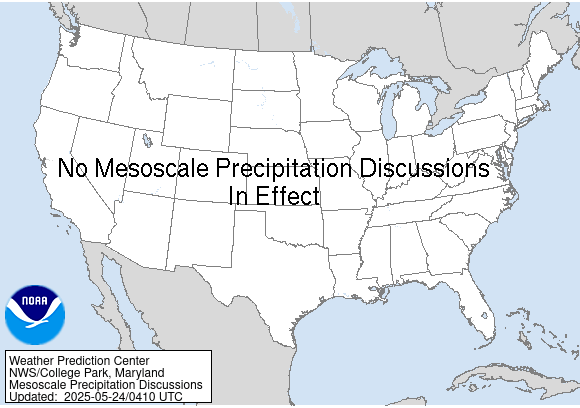
This next map showing where “Headlines” have been issued for convection (and an animation of the recent movement of storms) should update and you should be able to click on to get additional details but if it does not update when you click on it, click here.
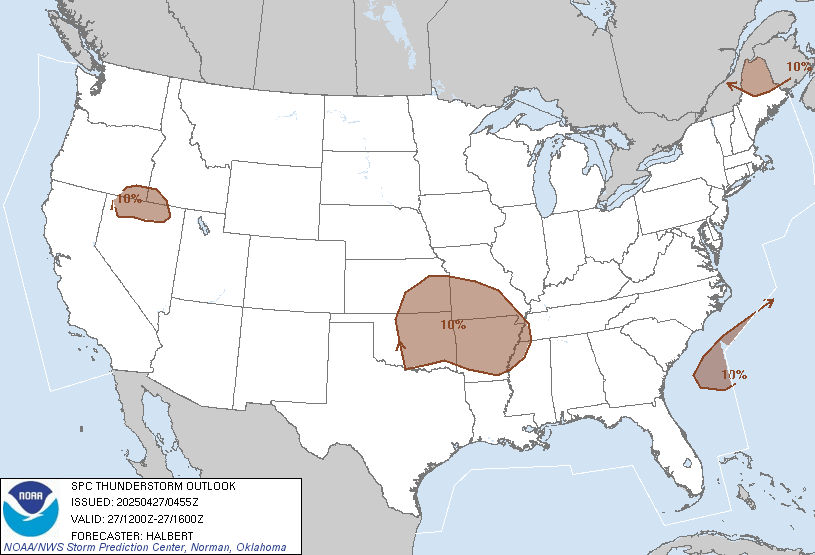
There is a slight difference between convection and thunderstorms. The below map shows where “Headlines” have been issued for Thunderstorms. You should be able to click on the map to get additional details but if it does not update, you can click here.
The map below shows the current wildfire risk which becomes more significant as we move into Summer. When you click on this image it takes you to the SPC Fire Warning Page and you get a set of maps for Days 1, 2, 3 – 8, etc. You can then click on those for more detailed information. The map is a bit blurry as I tried to make it a bit larger than the map provided by NOAA but should be able to see where the current wildfire risks are. But if you click on this map, you will get to see three maps that show the risk for different time periods.
– Return to Directory
Now the Day 3 – 7 Hazards Outlook Maps
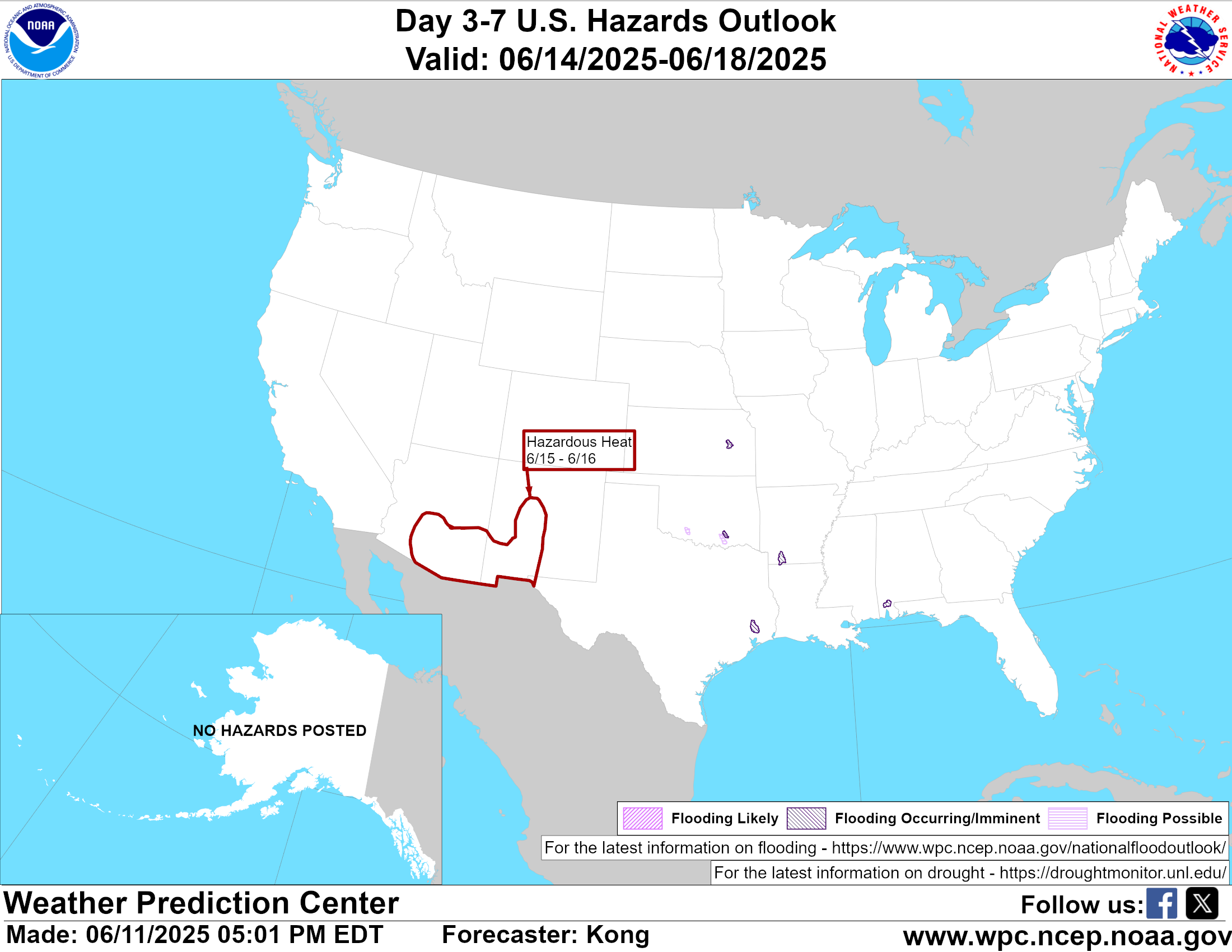
The orange and red outlined areas are what is most concerning of the forecasted Day 3 – 7 Hazards. This graphic does not update during the weekend. There is a discussion that goes with this graphic and you can access that discussion here.
The following is provided to help the reader relate the maps to how NWS will describe an area of the U.S.
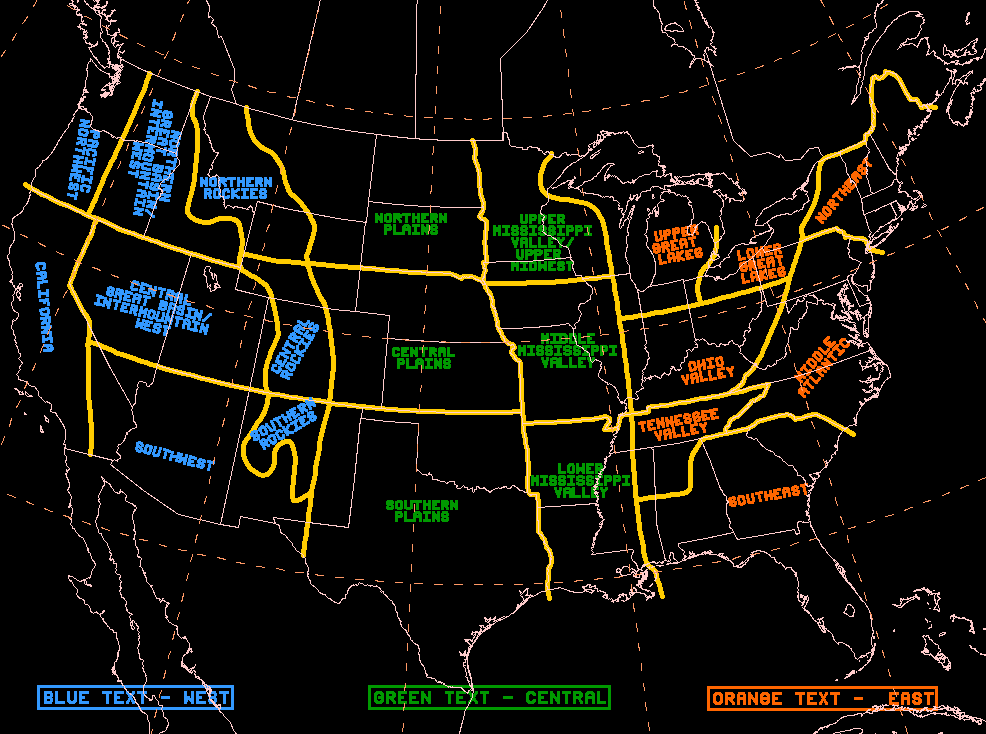
– Return to Directory
Now to our More Detailed Weather Report
This graphic is about Atmospheric Rivers i.e. thick concentrated movements of water moisture. More explanation on Atmospheric Rivers can be found by clicking here or if you want more theoretical information by clicking here. The idea is that we have now concluded that moisture often moves via narrow but deep channels in the atmosphere (especially when the source of the moisture is over water) rather than being very spread out. This raises the potential for extreme precipitation events.
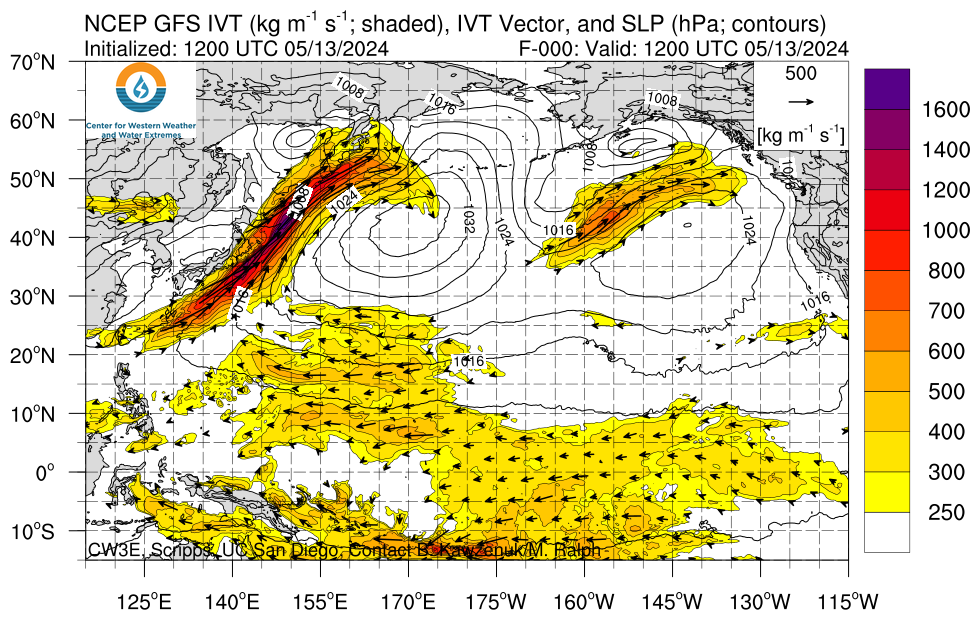
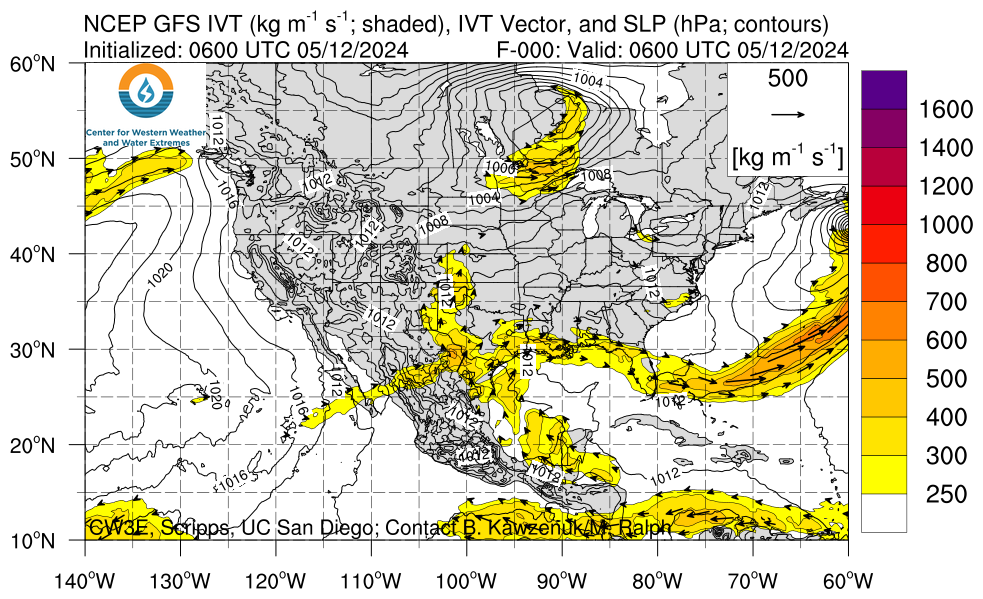
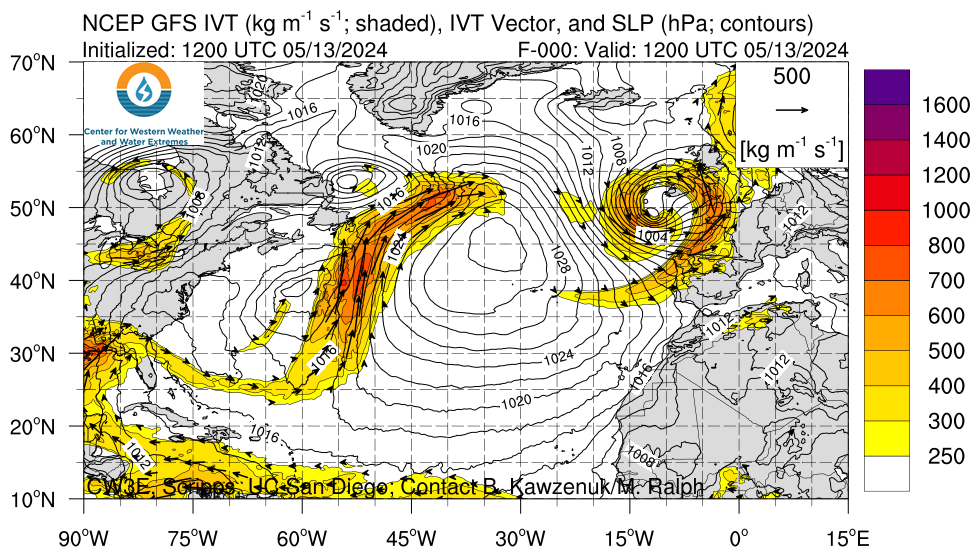
500 MB Mid-Atmosphere View
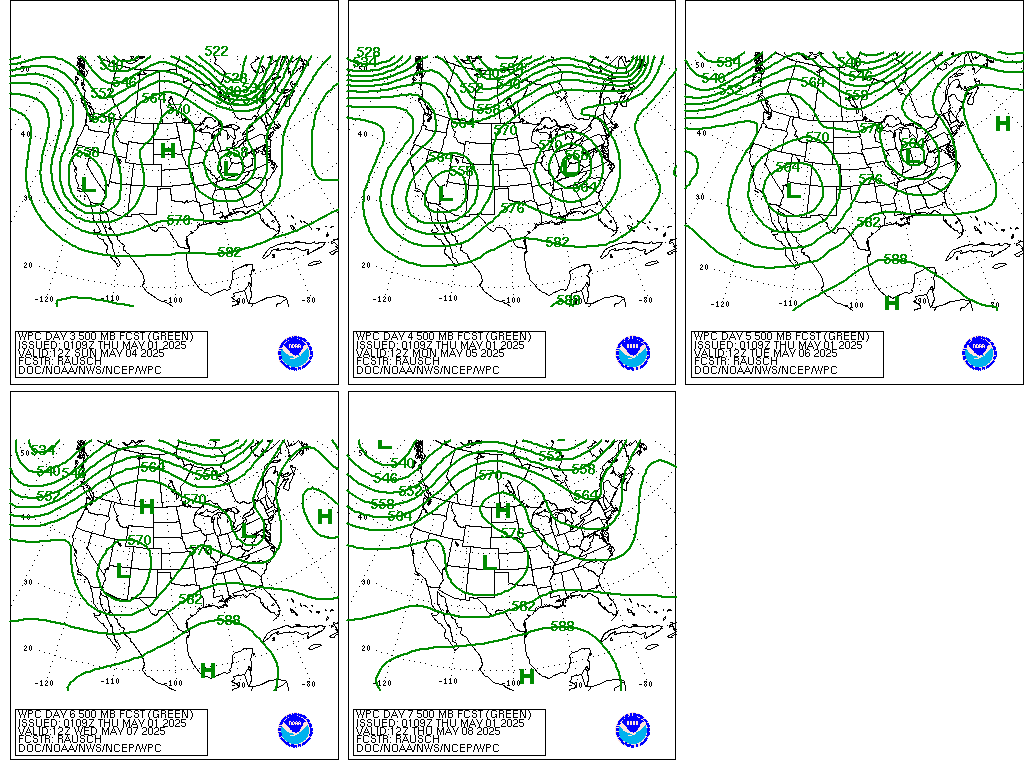
The map below is the mid-atmosphere 3-Day chart rather than the surface highs and lows and weather features. In some cases, it provides a clearer less confusing picture as it shows only the major pressure gradients. This graphic auto-updates so when you look at it you will see NOAA’s latest thinking. The speed at which these troughs and ridges travel across the nation will determine the timing of weather impacts. This graphic auto-updates I think every six hours and it changes a lot. Thinking about clockwise movements around High-Pressure Systems and counterclockwise movements around Low-Pressure Systems provides a lot of information.
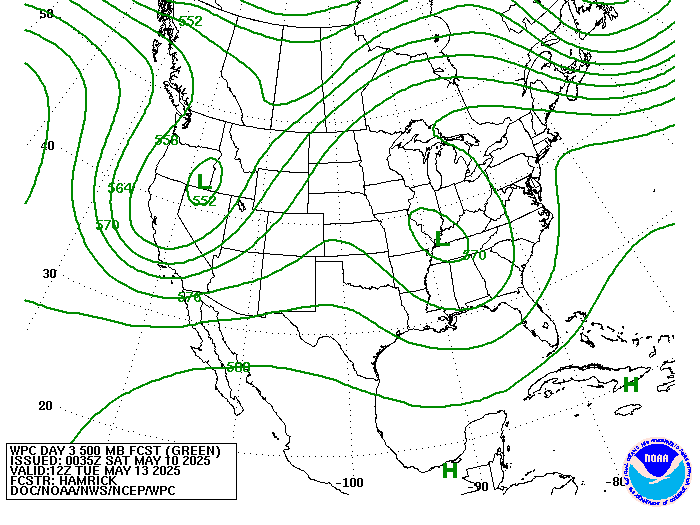
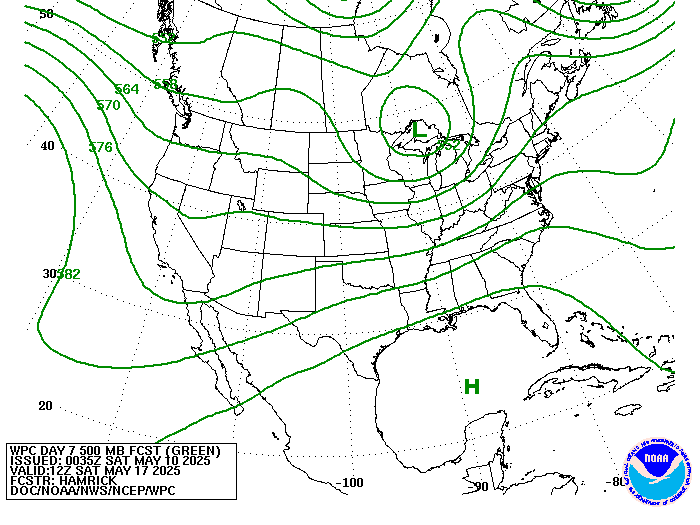
| Day 3 Above, 6 Below | Day 4 Above,7 Below | Day 5 Above. |
| 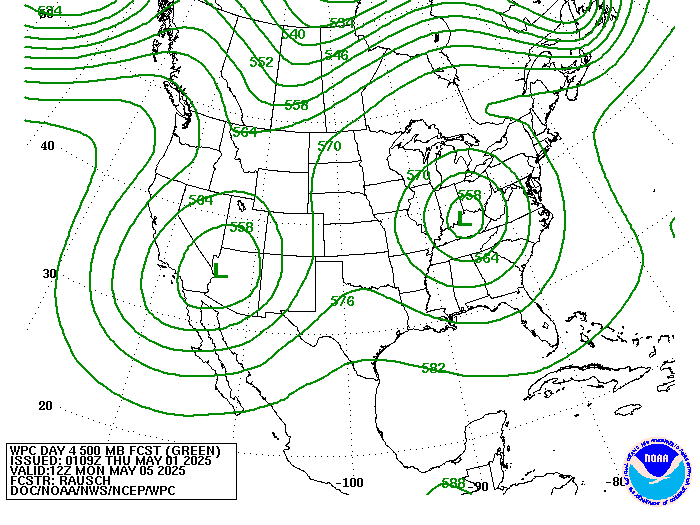 | 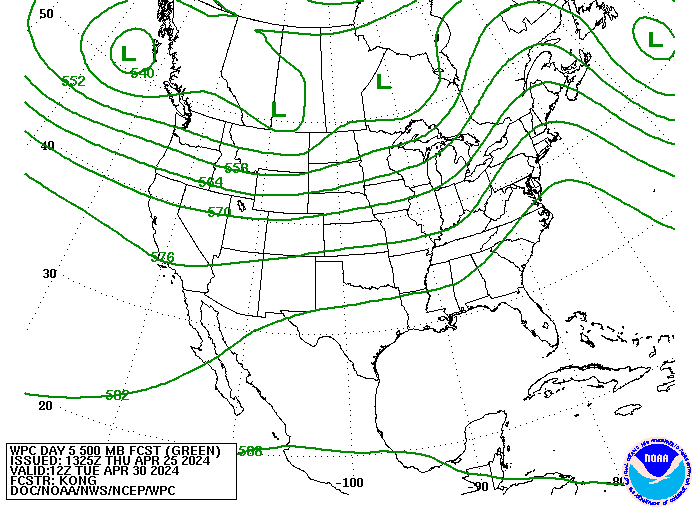 |
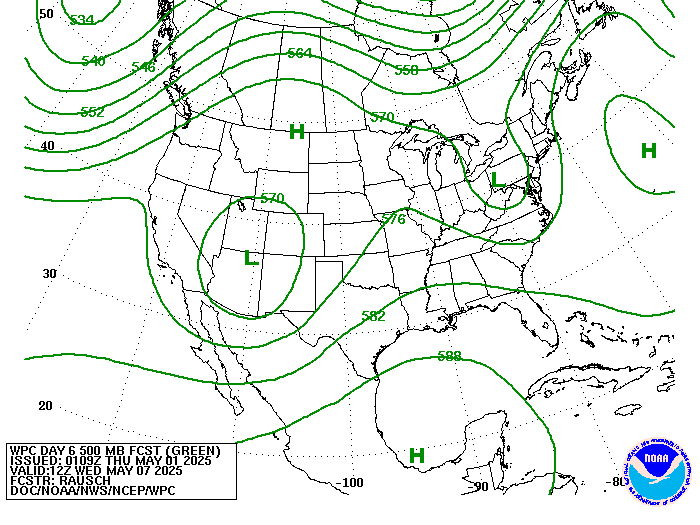 |  |  |
Here are the precipitation forecasts. First the cumulative for Days 1 – 3
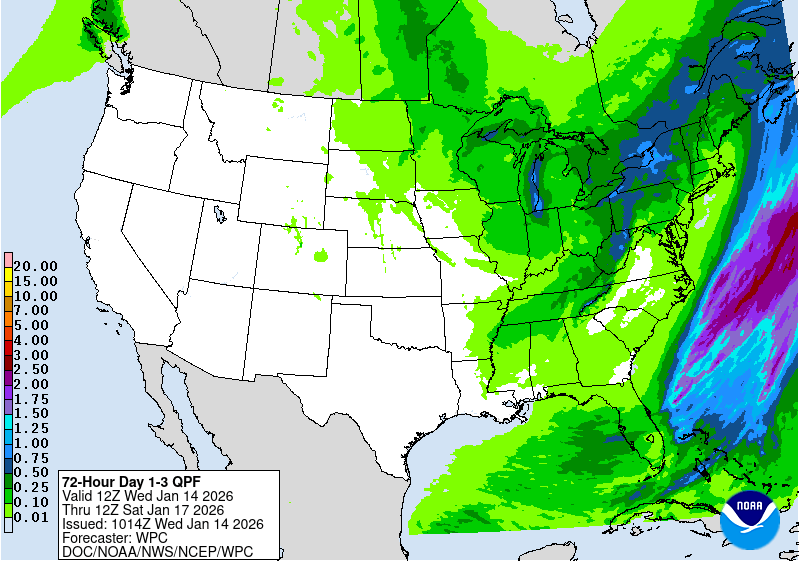
Then cumulative for Days 1 – 5
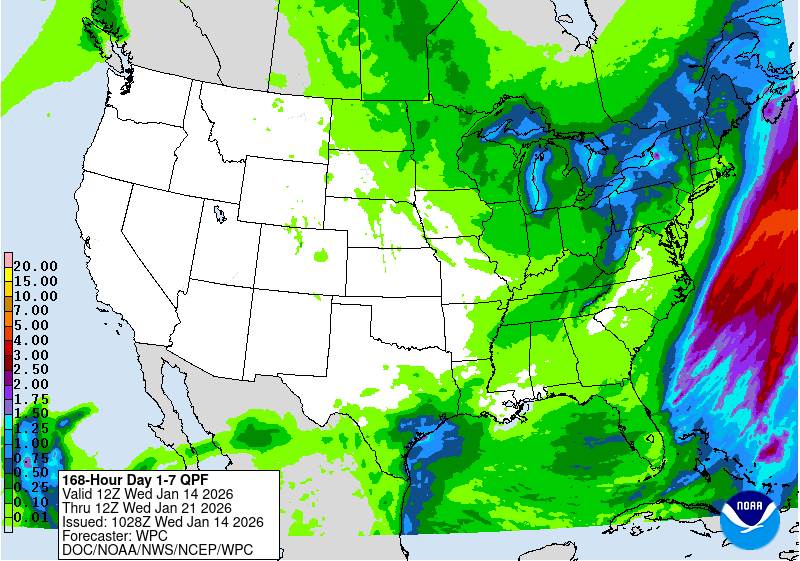
Then cumulative for Days 1 – 7
Now we look at the forecast for the Maximum Temperature three days out.
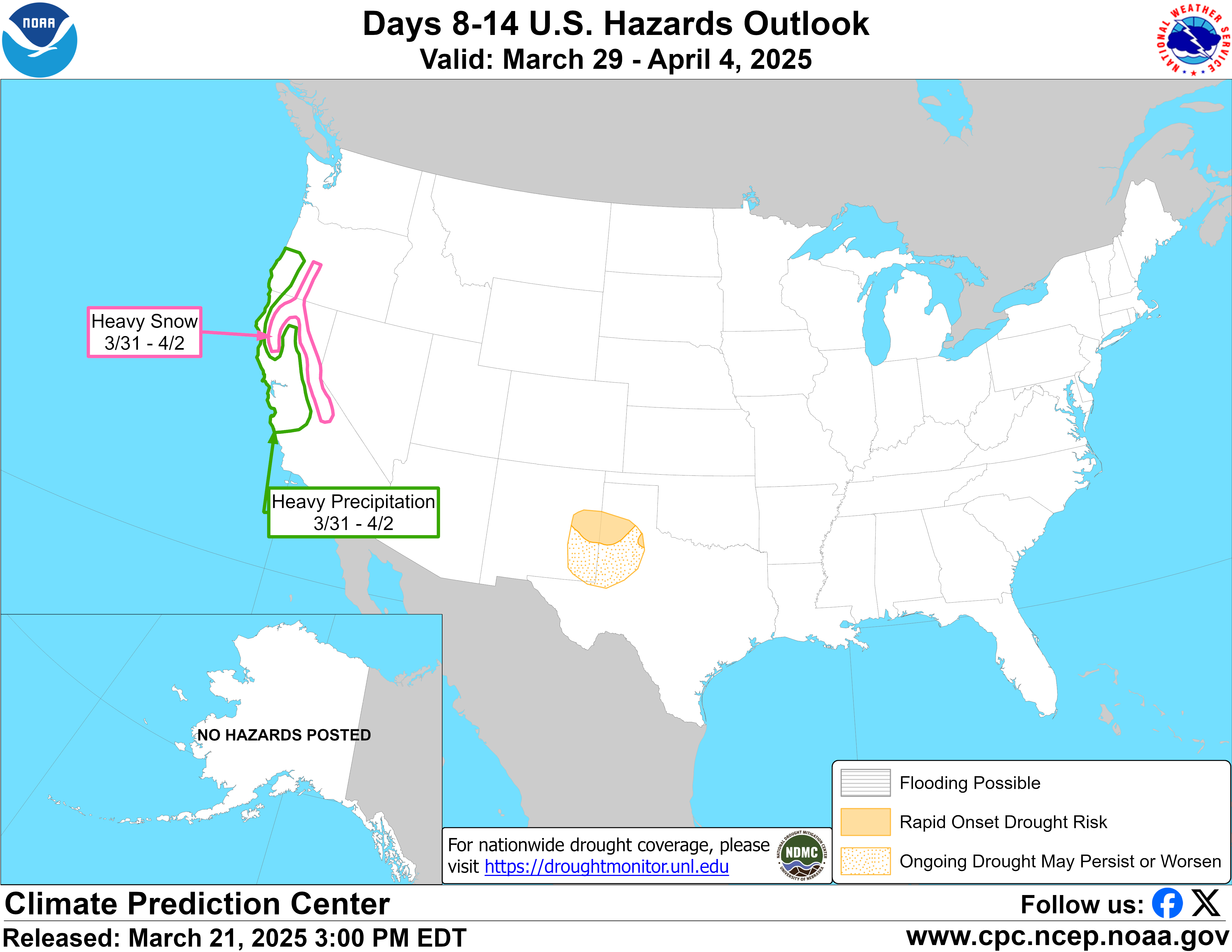
Looking ahead to next week.
– Return to Directory
Additional Tools to Obtain Watches and Warnings
| Current watches, warnings, and advisories issued by the agencies of the National Weather Service. Hazards should show up in the various maps but the below links will take you to all outstanding watches and warnings in each category which may include some categories not covered in the various maps or difficult to find. So if there is a category of interest, click on the appropriate link below. |
|
Below you will see a number of different maps that are updated in real-time, making this a “live” report. If a part of one or more of the maps shows an area that is highlighted, you can click on it and get the full current report. By having the reader click on these active situations rather than having GEI do so, you will not miss any events in which you might have an interest and which we had not noticed and the page will not get cluttered with warnings, etc that have since expired.
Our focus here is events that are likely to last in the range of six hours but there can be longer or shorter events that are addressed by the Storm Prediction Center which is the main source of the information in this article. Long-term major events like a Hurricane are more likely to be in a separate article. But that may not always be the case. Since in general, all the links on this page transfer you into the NOAA system, in order to get back into this article you need to either close the tab to which you were transferred or click back on the tab that has this article.
| Live Warning Maps which If Severe Weather is Shown can be Clicked on to get more detail about these events. If there is a current warning shown on the map, click on the map for additional information related to the event. | These maps are updated as risks are identified. |
| This is the current graphic showing any mesoscale discussions (MD’s) which are in effect over the contiguous United States. Please read the description of the purpose of our MD’s for further information. Details on all valid MD’s may be found on our Current Mesoscale Discussions page. |  |
| Convective Outlooks | |
|---|---|
| This is today’s forecast for organized severe thunderstorms over the contiguous United States. Please read the description of the risk categories for further information. You may find the latest Day 1 Outlook available as well as all Outlooks issued today online. | Today’s Outlook |
 | |
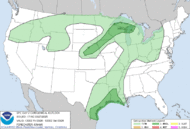
| This is tomorrow’s forecast for organized severe thunderstorms over the contiguous United States. Please read the description of the risk categories for further information. The latest Day 2 Outlook is available as well as all Outlooks that have been issued today. | Tomorrow’s Outlook |
 | |
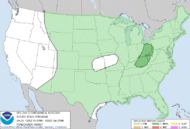
| This is the day after tomorrow’s (day 3) forecast for organized severe thunderstorms over the contiguous United States. Please read the description of the risk categories for further information. The latest Day 3 Outlook is available as well as all Outlooks that have been issued today. | Day 3 Outlook |
 | |
| This is the day 4-8 forecast for organized severe thunderstorms over the contiguous United States. The latest Day 4-8 Outlook is available as well as all Outlooks that have been issued today. Note: A severe weather area depicted in the Day 4-8 period indicates a 30% or higher probability for severe thunderstorms (e.g. a 30% chance that a severe thunderstorm will occur within 25 miles of any point). | Day 4-8 Outlook |
 | |
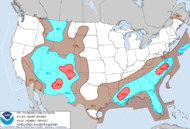
| The Thunderstorm Outlooks depict the probability of thunderstorms across the contiguous United States in 4 or 8 hour time periods. The probabilistic forecast directly expresses the best estimate of a thunderstorm occurring within 12 miles of a point. The three probabilistic forecast thresholds are 10, 40, and 70 percent. | Thunderstorm Outlook |
 | |
| Fire Weather Outlooks | |
| This is today’s forecast for organized wildfires over the contiguous United States. Please read the description of the risk categories for further information about this product. | Today’s Outlook |
| |
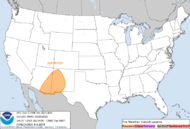
| This is tomorrow’s forecast for organized wildfires over the contiguous United States. Please read the description of the risk categories for further information about this product. | Tomorrow’s Outlook |
 | |
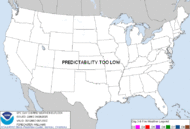
| This is day 3-8 forecast for organized wildfires over the contiguous United States. Please read the description of the risk categories for further information about this product. | Day 3-8 Outlook |
 | |


