


Written by Sig Silber
Updated at 7:30 p.m. EDT October 25 to reflect the newly issued Week 3 – 4 Forecast.
We got a little relief in the Southeast and East from post-tropical cyclone Nestor but less than was expected. The prospects for Soybeans may have improved a bit i.e. catching up a bit with norms for the rate of leaf dropping and harvesting. It is still not good but perhaps a bit less bad. Tonight we focus a lot on growing season results and forecasts for Europe but we also present the weather summaries for many areas around the World for the single month of September. Of course, we present all of our normal reports.

Please share this article – Go to the very top of the page, right-hand side, for social media buttons. Please feel free to send this article to anyone who you think might benefit from reading it.
Format: Each week our Thursday night article will cover the Drought Monitor Report issued by NOAA in conjunction with the University of Nebraska – Lincoln and a summary of U.S. crop conditions. It provides a link to the WEATHER: LIVE ALL WEEK Report (this will take two clicks since that report gets republished each week and so you click here to get to the Directory and then click again on the version of the WEATHER: LIVE ALL WEEK Report closest to the top of the list. Each week, this article will have a different special feature. Examples of special features might be: A. a more detailed look at crop progress (We provide forecasts for Europe) B. a review of the prior month’s weather. C. a review of the prior month’s International Weather. (We do that this week) D. Current conditions of rivers and reservoirs. E. Economic Impacts other than crop-related (storm impacts including flooding and drought impacts including wildfires) F. Other. |
 |
 |
 |
 |
 |
 |
 |
International Weather in September


And shifting to the Alaska and CONUS Weather Forecast
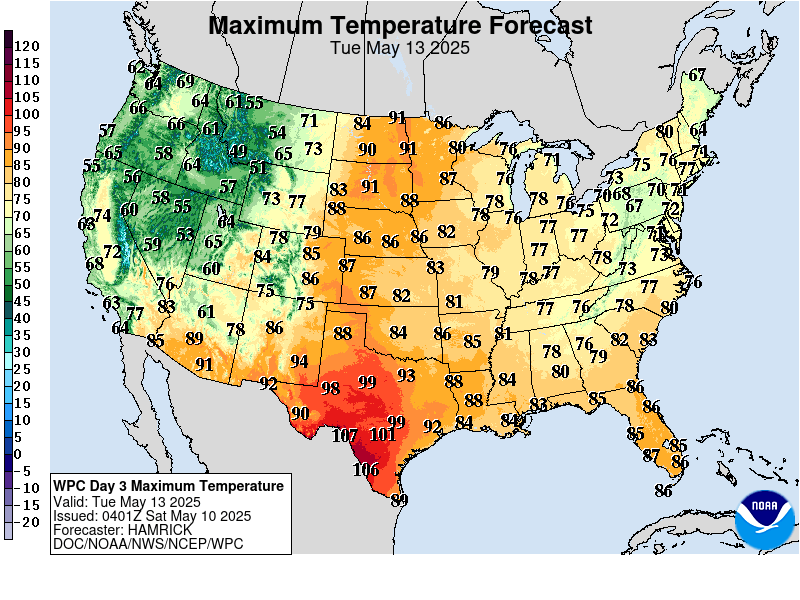
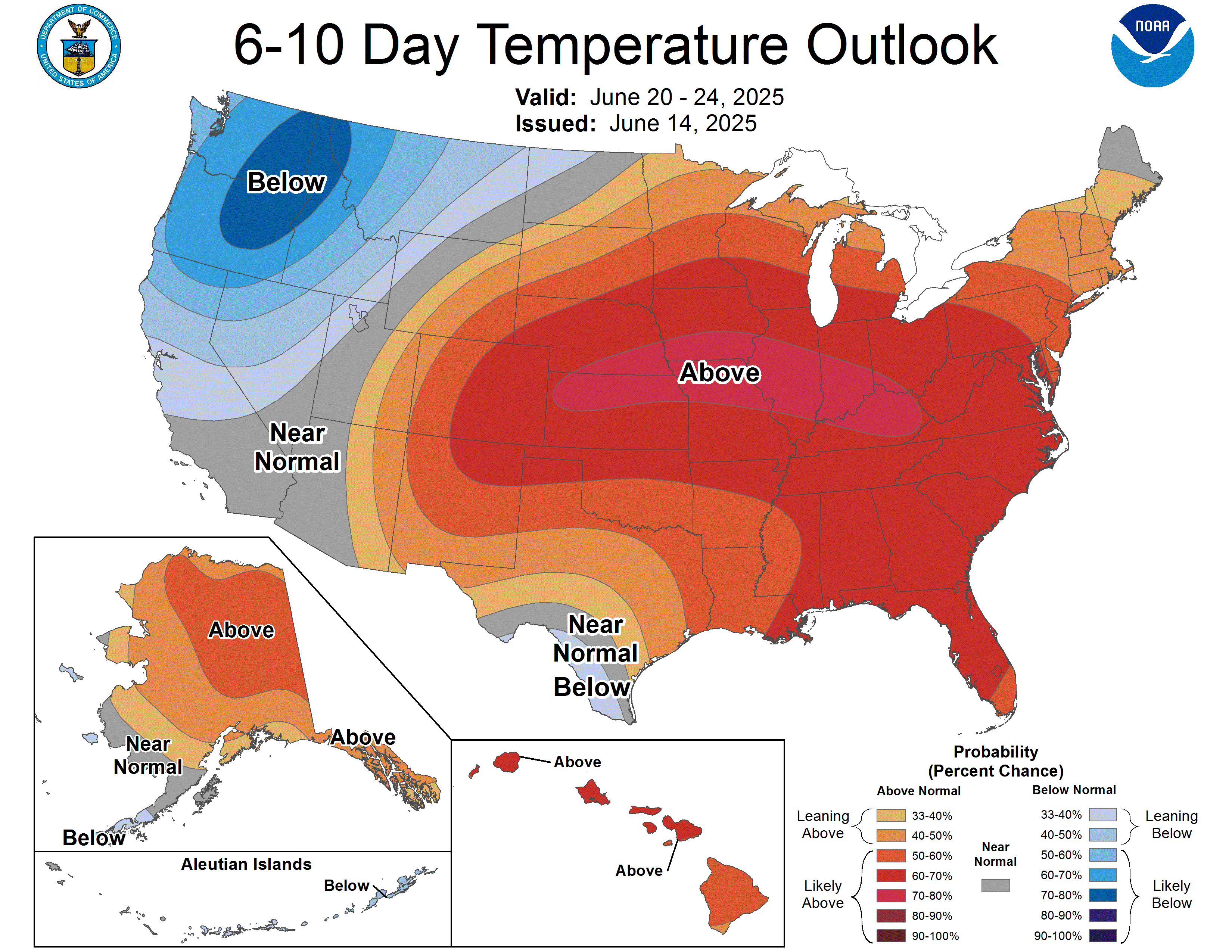
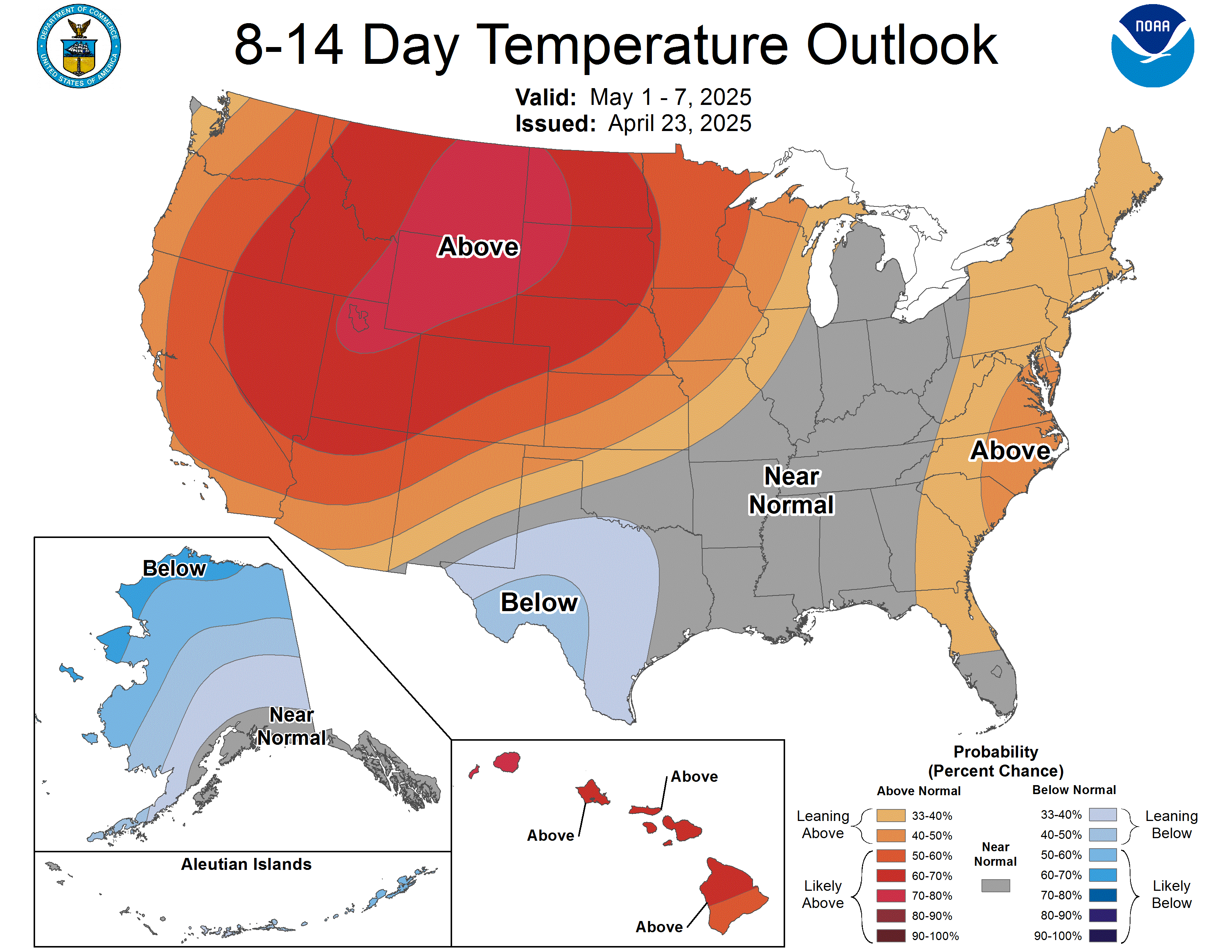
First Temperature
|
|
|
|
And then Precipitation
|
|
|
Concluding remarks
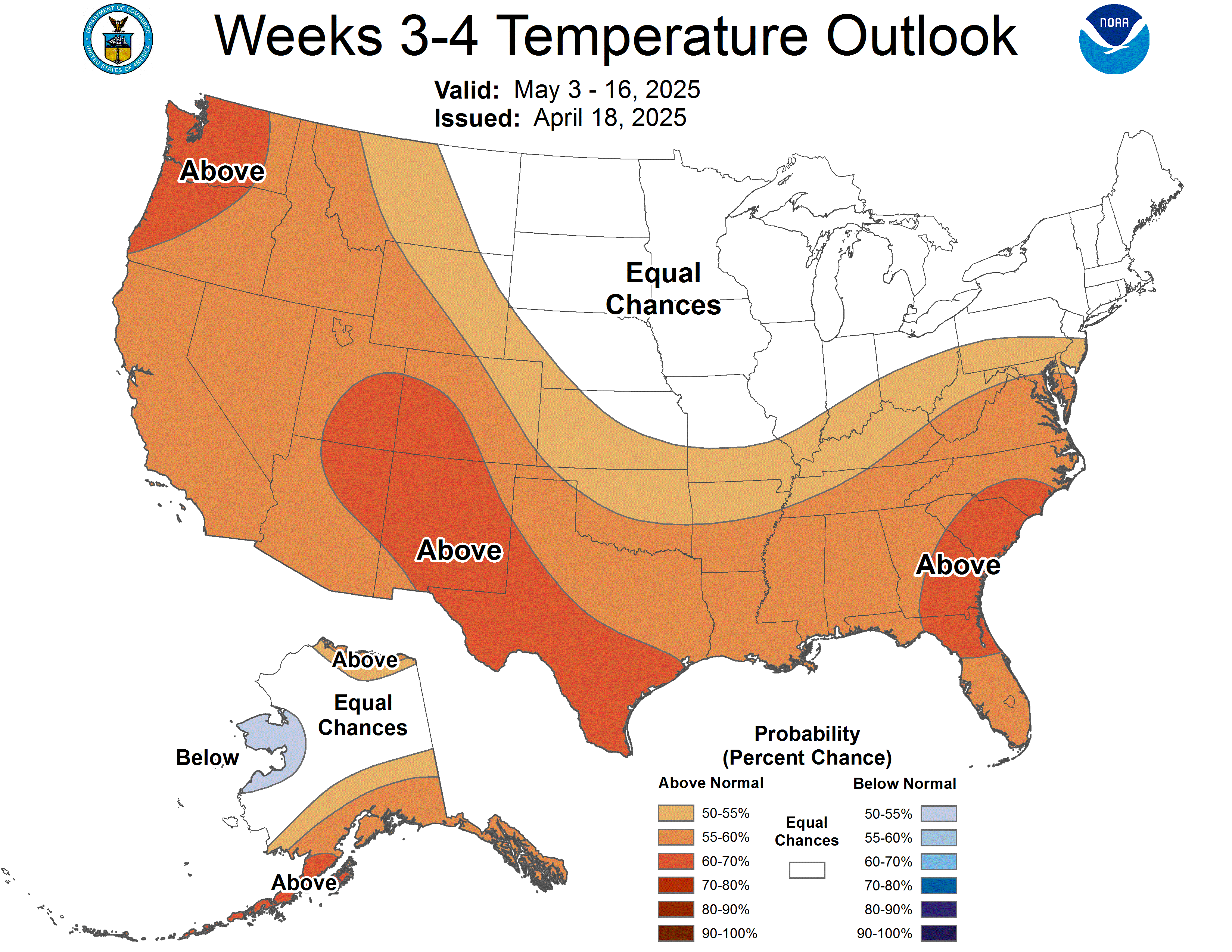
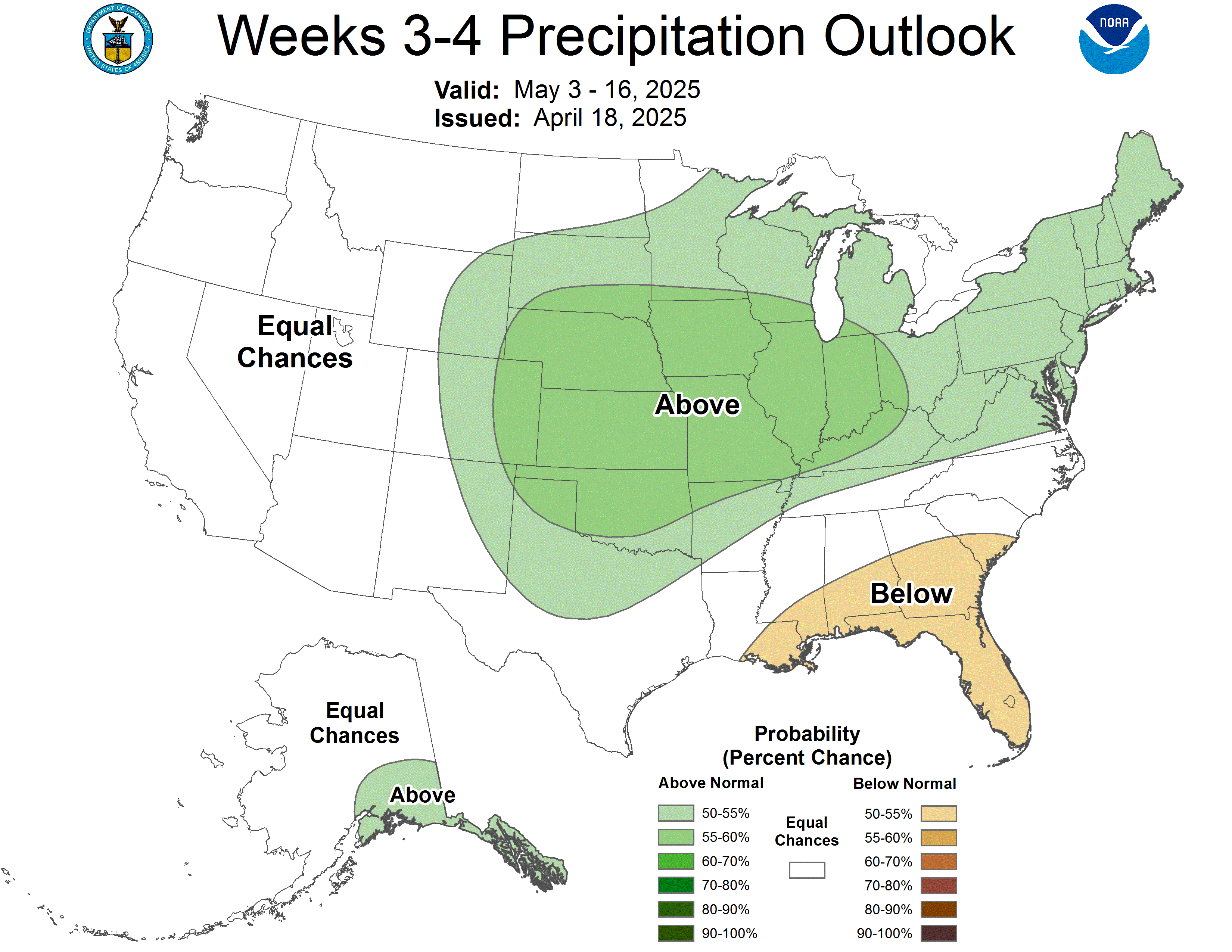
Here is the discussion that was released with the Week 3 – 4 Forecast
Week 3-4 Forecast Discussion Valid Sat Nov 09 2019-Fri Nov 22 2019
ENSO-neutral conditions continue across the tropical Pacific Ocean. The MJO is showing signs of increased coherence, with the enhanced convective phase transitioning to the Indian Ocean and dynamical model forecasts supporting continued eastward propagation over the Maritime Continent and West Pacific over the next two weeks. Uncertainty remains high, however, with a record strong positive Indian Ocean Dipole event continuing to favor enhanced convection over eastern Africa and the far western Indian Ocean that would destructively interfere with a Maritime Continent MJO event. Due to the uncertain evolution of the tropical pattern and the high variability in timing of any downstream impacts on the midlatitude circulation, MJO teleconnections were not a substantial contributor to the Week 3-4 outlook. Should the signal continue to evolve, however, the MJO may play an increasing role later in the Boreal Autumn season.
Similar to last week, the CFS, ECMWF, and JMA are in poor agreement during the outlook period. In the week prior to the Week 3-4 period, dynamical models favor ridging over Alaska and the western CONUS, and troughing over the Great Lakes region. This pattern supports a fairly widespread cold air outbreak across the central U.S. During Week 3-4, all three dynamical models maintain ridging over the North Pacific and the Pacific Northwest. The CFS and JMA lift the downstream trough poleward and eastward, allowing for substantial height rises across the East, while the ECMWF maintains below-normal heights across east-central Canada and the upper-Midwest. The CFS and ECMWF both show a fairly consistent evolution from the anticipated Week-2 pattern and are more consistent with each other, with the CFS depicting a substantial pattern change in the more uncertain Week-4 time frame. Based on these factors, the ECMWF solution was favored for this outlook more than the autoblend.
Above-normal temperatures are favored across Alaska, with the highest probabilities across the North Slope and western half of the state. Above-normal temperatures are also favored west of the Rockies and parts of the Southern Plains. Consistent with the idea that the cold air mass will linger into Week-3, below-normal temperatures are favored for the north-central U.S. The East presented a challenging forecast, but most tools favor above-normal temperatures, particularly for the South Atlantic. With the temperature outlook supporting the idea of a mean trough near the Ohio River Valley, above-median precipitation is favored from the central Gulf Coast northward to the southeastern Great Lakes region. Ridging over the North Pacific may limit the potential for moisture, which increases the odds for below-normal precipitation across the West. Below-normal precipitation is also favored for the northern Plains and upper-Midwest, where cold high pressure may persist during Week-3. Across Alaska, model guidance favors enhanced precipitation across the southern tier and panhandle region, as well as the North Slope.
Observed and predicted sea surface temperatures remain above-normal in the vicinity of Hawaii, supporting above-normal temperatures during the Week 3-4 Outlook period. Precipitation tools from the SubX (Subseasonal Experiment) models are mixed, but the operational CFS, ECMWF, and JMA favor above-median precipitation across Hawaii, which is consistent with a potential Pacific MJO event.

Current Drought Conditions
Now we take a look at Thursday’s U.S. Drought Monitor Report.
The U.S. Drought Monitor is a comprehensive way of understanding the drought situation for the U.S. It is issued every Thursday and reflects the conditions as of the prior Tuesday. Drought is defined as a moisture deficit bad enough to have social, environmental or economic effects. Thus, more factors than recent precipitation are considered and more information on how it is done is found at the end of this report.

U.S. Affiliated Pacific Islands and the U.S. Virgin Islands.

Below is the map for just CONUS.
 |
 |
| Last Week | This Week |
| |

Some might find this animation of twelve weeks of change useful;

The graphic below shows the one-week change in drought intensity. Yellow is bad. Green is good.
|

Now we show the week to week change information by region. The yellow is where the level of drought has been raised. The green is where the level of drought has been lowered.
 |
| Degradation in Colorado and to some extent farther east and north. |
 |
| Improvement in Kentucky and to the west a bit. |
 |
| General Improvement |
 |
| Mostly some improvement other than Oklahoma. |
 |
| General Improvement |
 |
| Degradation in the southern tier states and improvement in Washington State and Oregon |
Here is the Discussion that was issued with the Drought Report.
This Week’s Drought Summary
The discussion in the Looking Ahead section is a description of what the official national guidance from the National Weather Service (NWS) National Centers for Environmental Prediction is depicting for current areas of dryness and drought. The utilized NWS forecast products include the WPC 5-day QPF and 5-day Mean Temperature progs, the 6 – 10 Day Outlooks of Temperature and Precipitation Probability, and the 8 – 14 Day Outlooks of Temperature and Precipitation Probability – valid as of late Wednesday afternoon of the USDM release week. The NWS forecast Web page used for this section is http://www.cpc.ncep.noaa.gov/products/forecasts/.
This U.S. Drought Monitor (USDM) week began with a low pressure and frontal system draped across the Gulf and East Coasts. Tropical Storm Nestor and its remnants moved across the Southeast then up the East Coast at mid-week. Another front moved across the South and approached the East Coast as the week ended. This combination of synoptic systems dropped several inches of rain across the drought areas of eastern Texas and from the Mississippi River to the East Coast. Meanwhile, several Pacific frontal systems brought precipitation to the Pacific Northwest while the Southwest to southern High Plains continued dry. Drought and abnormal dryness contracted across parts of the Pacific Northwest and southern Plains, and much of the Southeast, Ohio Valley, and Mid-Atlantic to Northeast. Drought and abnormal dryness expanded in the Southwest and parts of the southern and central Plains, as well as northeast Puerto Rico.
Northeast
Abnormal dryness contracted in New England. Drought and abnormal dryness were reduced in New Jersey to West Virginia.
Southeast
Heavy rain, locally over 5 inches, contracted drought and abnormal dryness across much of the region. Unfortunately, it was too late for some areas. Reports have been received through the Drought Impact Reporter of dry ponds and creeks, dead pasture, dying trees, and dying cattle in Gordon County, Georgia, as a result of the drought.
South
Drought and abnormal dryness expanded across parts of Texas and Oklahoma where precipitation deficits continued to mount. But other parts of Texas, and parts of Arkansas, Louisiana, Mississippi, and Tennessee experienced a reduction of drought and abnormal dryness.
Midwest
Abnormal dryness in Michigan was erased by precipitation this week, while large areas of 1 to over 2 inches of rain reduced abnormal dryness and drought in southern parts of the region.
High Plains
One to locally over 2 inches of precipitation fell across the Dakotas, but southern parts of the region were dry. Abnormal dryness and drought expanded in Colorado, Kansas, and Wyoming, and abnormal dryness established a toehold in southwestern Nebraska.
West
The abnormally dry (D0) areas of western Washington and Oregon received 2 to locally over 5 inches of precipitation this week, which was enough to end the D0 in those areas. But abnormal dryness and drought expanded from New Mexico to Nevada, with D0 inching a little further into eastern California. In southwest Utah, St. George (as of October 17) reported 122 days without measurable precipitation. As noted by the National Weather Service, this breaks the previous record of 121 days set in 1930. The Colorado Climate Center notes that this is only the fourth time since the site started reporting data in the late 19th century that the streak of consecutive rain-free days has topped 100, and not since the 1970s has that happened – until now. The last time St. George reported measurable precipitation was June 17, 2019.
Alaska, Hawaii, and Puerto Rico
In Puerto Rico, low streams and below-normal precipitation for the last 7 days to 6 months resulted in the introduction of D0 in the northeastern part of the island. Meanwhile, a strip of D0-D1 continued along the southwest to south central coast. There was no change to the depiction in Alaska or Hawaii.
Pacific Islands
Several weak surface troughs influenced the USAPI domain north and south of the equator during the first half of the USDM drought week (10/16/19-10/22/19). Very warm sea surface temperatures and low wind shear over the USAPI domain led to the development of Typhoon Bualoi, which passed just north of Saipan late in the week as a Category-3-equivalent typhoon on the Saffir-Simpson Wind Scale. Nearly two weeks earlier, Supertyphoon Hagibis followed a similar track, also passing just north of Saipan. Despite both Bualoi and Hagibis being very strong, Hagibis was a much larger typhoon, and thus, was much windier and wetter for the Mariana Islands. These typhoons to the north of the region were dominating the low level circulation pattern with trade winds feeding into them from the east and (weak) monsoon winds were feeding in from the west. After a mostly wet week across American Samoa this week, weak high pressure and somewhat drier conditions moved into the region by week’s end.
Satellite-based estimates of 7-day precipitation (QPE) showed heavy rainfall amounts ranging from 2-6 inches (locally greater) from near Kwajalein in the northern Republic of the Marshall Islands (RMI) west-northwestward across the northern Federated States of Micronesia (FSM) and the Commonwealth of the Northern Mariana Islands (CNMI) from Saipan northward. Much of this rain accompanied the track of Typhoon Bualoi, which grazed Saipan as a Category-3-equivalent typhoon, before intensifying even further after departing the Marianas. In contrast, the western FSM received little rainfall this past week.
The International Airport in Palau reported 0.88-inch of rain (1-day missing) during the past drought week (Oct 16-22), which falls well short of the 2-inch weekly minimum needed to fulfill most water requirements in this area. According to the NWS Forecast Office in Palau, Koror’s year-to-date rainfall total stands at 96.32 inches, and the normal for this period is 120.19 inches. This places Koror’s rainfall total to date at 80.1 percent of normal.
In the western Federated States of Micronesia (FSM), Yap reported only 0.19-inch of rain this week, with 3 days missing. Last week’s rainfall accumulation was nearly double the 2-inch weekly minimum, which helps to offset the more recent dryness. Woleai did not report this week, so no analysis was rendered for this station. In the central portion of Micronesia, Chuuk Lagoon reported 0.53-inch (1 day missing), and Lukunor reported only 0.17-inch (1 day missing). During the past 12 weeks (dating back to August 6th), Lukunor has had 6 weeks where less than 1-inch of rain was received (half the weekly minimum threshold). However, during the past 12 months, 6 of those months had rainfall totals that exceeded the 8-inch minimum threshold, and all but one of the remaining months had greater than 4 inches of rain (May, 3.75 inches). This indicates that in terms of receiving adequate rainfall, Lukunor is struggling primarily in the shorter-term. Nukuoro and Kapingamarangi fared much better, receiving 3.76 and 3.51 inches of rain this week, respectively. This marks the second consecutive week in which Nukuoro received over 3.5 inches of rain. If this wet trend continues, the station’s D0 drought class will likely be removed. For the three stations in eastern Micronesia (FSM), the weekly rainfall totals were: Pohnpei (1.30 inches), Pingelap (1.00-inch), and Kosrae (3.32 inches), respectively. No changes were deemed necessary to the drought-free status of these stations this week, especially Pohnpei which received over a foot of rain (12.14 inches) last week.
The Northern Marianas (CNMI) and Guam have seen two powerful typhoons graze the island chain during the past two weeks, with the eyes of both typhoons passing just north of Saipan, over or very close to the uninhabited island of Anatahan. There are various rainfall observing sites currently reporting for Saipan: a manned gauge (1.86 inches this week, 2 days missing), airport ASOS (5.76 inches), and the NPS (2.61 inches, 1 day missing). The NPS climate station at the American Memorial Park in Garapan, Saipan has received 13.88 inches of rain so far this month, with 3.08 inches falling on October 22nd associated with the passing of Typhoon Bualoi. Rota reported 2.53 inches of rain this week, and Guam reported 1.29 inches. All of these rainfall observations exceeded the 1-inch per week minimum threshold to meet water needs.
The Republic of the Marshall Islands (RMI) also experienced a wet week. Rainfall amounts included Kwajalein (2.24 inches), Wotje (2.28 inches, 1 day missing), Mili (2.44 inches, 1 day missing), Jaluit (2.85 inches, 1 day missing), Ailinglapalap (2.95 inches, 1 day missing), and Majuro (4.54 inches). Reservoir storage in Majuro rose from 27.3 million gallons at the start of the drought week to 30.4 million gallons by the end of the week, which represents an increase of 11.1 percent. The maximum capacity of this reservoir is 36 million gallons. One station, Utirik, received inadequate rainfall during the most recent drought week (0.95-inch, 1 day missing). No changes were made to the drought designations this week in the RMI.
South of the equator in American Samoa, both Pago Pago and Siufaga Ridge (National Park Service) reported well over an inch of rain for the week, the newly-established minimum threshold for meeting water needs. Pago Pago reported 4.63 inches of rain (1 day missing) and Siufaga Ridge reported 2.86 inches (1 day missing). Toa Ridge (also NPS) is currently down for maintenance. Given the above rainfall totals, there was no reason to revise the current drought-free status of Tutuila.
Virgin Islands
According to the NWS Forecast Office in San Juan, Puerto Rico, the Cyril E. King Airport in St. Thomas reported 1.71 inches of rain this week and 2.30 inches since October 1st. Observed rainfall totals of 5.81 inches and 28.74 inches were reported at the King Airport since September 1st and January 1st, respectively. These values are 62.2 and 97.5 percent of normal, respectively. Data from the CoCoRaHS station at Anna’s Retreat (VI-ST-1) indicated 5.46 inches during the week, and 8.13 inches since the beginning of September. The Grade School-3 Well level fell slightly during the USDM week, from 6.50 to 6.90 feet below the land surface. For Charlotte Amalie, SPI values at 1(-0.16), 3(+0.81), 6(+0.08), 9(+0.04), and 12(-0.25) months continue to support drought-free conditions.
The Henry E. Rohlsen Airport in St. Croix reported 0.95-inch of rain this past week, and 0.97-inch so far in October. Observed rainfall amounts since September 1st and January 1st are 2.85 inches (34.0 percent of normal) and 19.33 inches (67.8 percent of normal), respectively. The CoCoRaHS station at Christiansted (VI-SC-8) indicated 0.50 inches of rain this past week, and a total of 6.86 inches since September 1st. Groundwater levels at the Adventure 28 well continued to be low this week (20.3 feet below the land surface), following a general decline that began in late 2018. For Christiansted, SPI values at 1(-0.82), 3(-0.38), 6(-0.13), 9(-0.82), and 12(-1.24) months continue to support D0(S) conditions.
According to data provided by a volunteer observer, Windswept Beach on St. John received 1.12 inches of rain this past USDM week. This raises the year-to-date total accumulation to 29.64 inches. The Susannaberg DPW 3 Well level rose from 11.90 to 11.50 feet below the land surface. SPI values at 1(+0.26), 3(+0.47), 6(+0.37), 9(-0.14), and 12(-0.75) months support drought-free conditions.
Looking Ahead
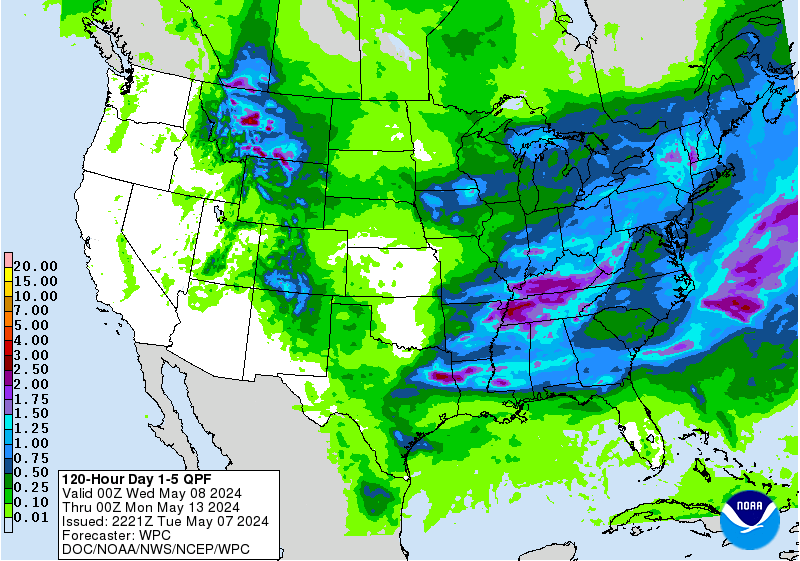
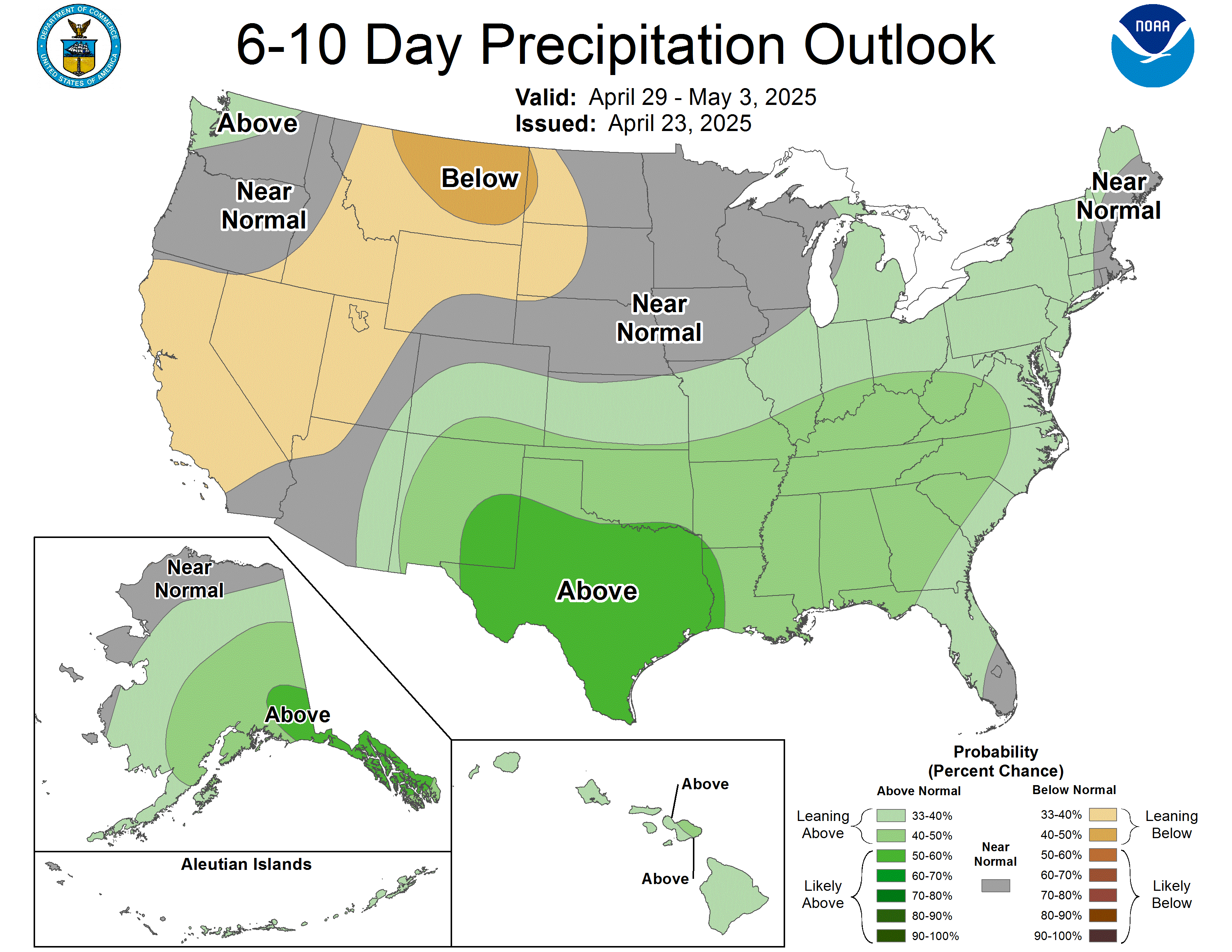
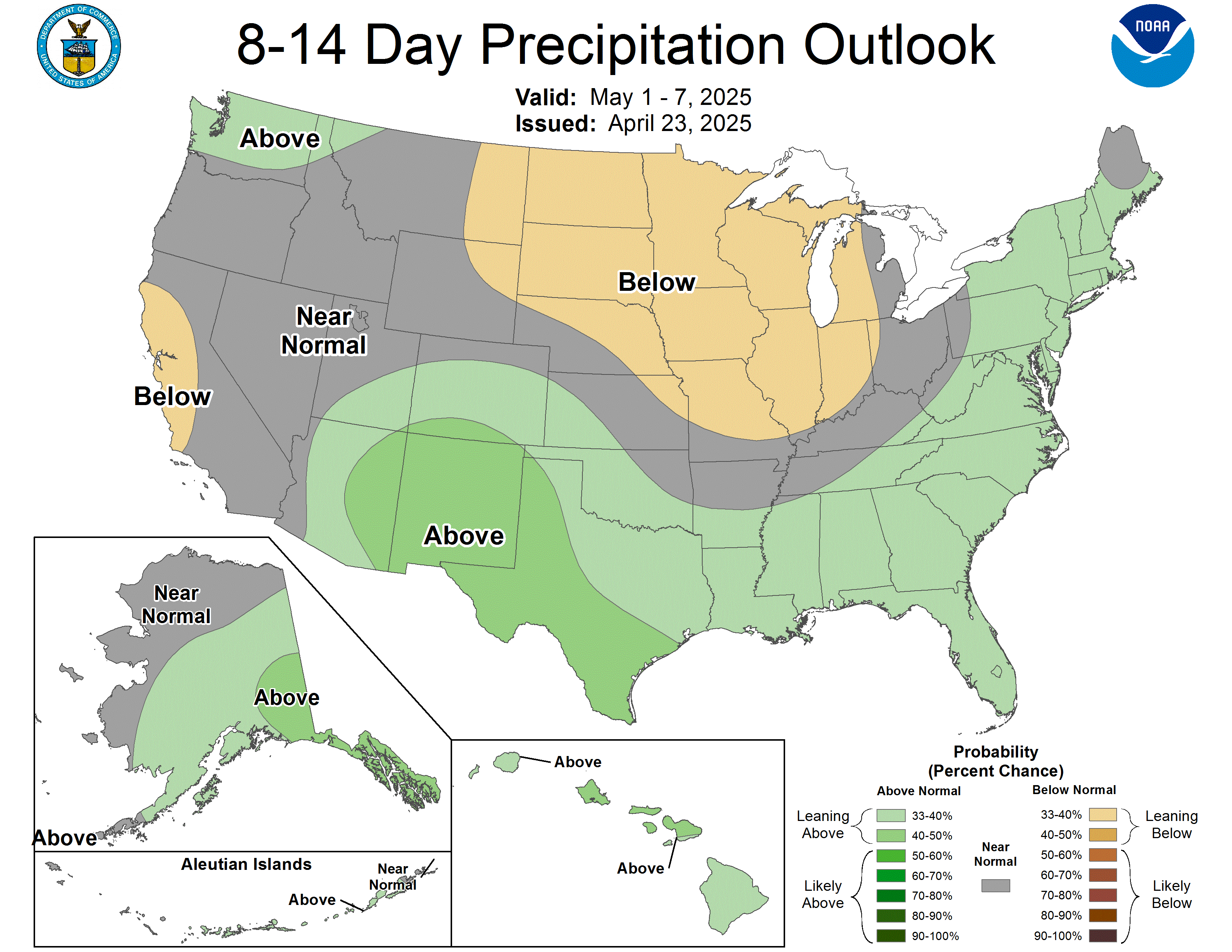
For October 24-29, another low pressure/frontal system will spread heavy precipitation across eastern Texas and Oklahoma, and the Lower Mississippi Valley to southern New England, with 2 or more inches expected across much of this area. Half an inch to 2 inches can be expected from this band to the East Coast, except parts of northern Florida to coastal South Carolina which likely will receive less than half an inch of rain. Up to an inch of precipitation is forecast along the Rocky Mountain Chain and in parts of the Washington coastal range. Otherwise, little to no precipitation is in the forecast for the rest of the West, the central to northern Plains, and western Great Lakes. Below-normal temperatures are predicted for the central contiguous U.S. (CONUS) and warmer-than-normal temperatures for the East and West coasts. For October 29-November 2, a huge trough in the upper atmosphere will continue to funnel cold air into the central part of the country, resulting in below-normal temperatures for most of the CONUS. Odds favor above-normal temperatures only along the East Coast and parts of northern California, as well as all of Alaska. Above-normal precipitation is favored across most of Alaska and across the CONUS mostly east of the Mississippi River, while below-normal precipitation is expected from the Rockies to the West Coast as well as the southern High Plains.
Some may find the below way of looking at things useful and I hope these graphics are not too small to read. I did not make them so you could click on them individually but you can click on the whole graphic and it may enlarge. But I think you get the picture. It has been a rapid onset and demise. When you read these graphics, remember that the older graphics are not the drought conditions that existed then but the change from then until now.

Let’s focus on the change between September 24, 2019 and October 22, 2019 i.e. one month.


Drought Forecasts
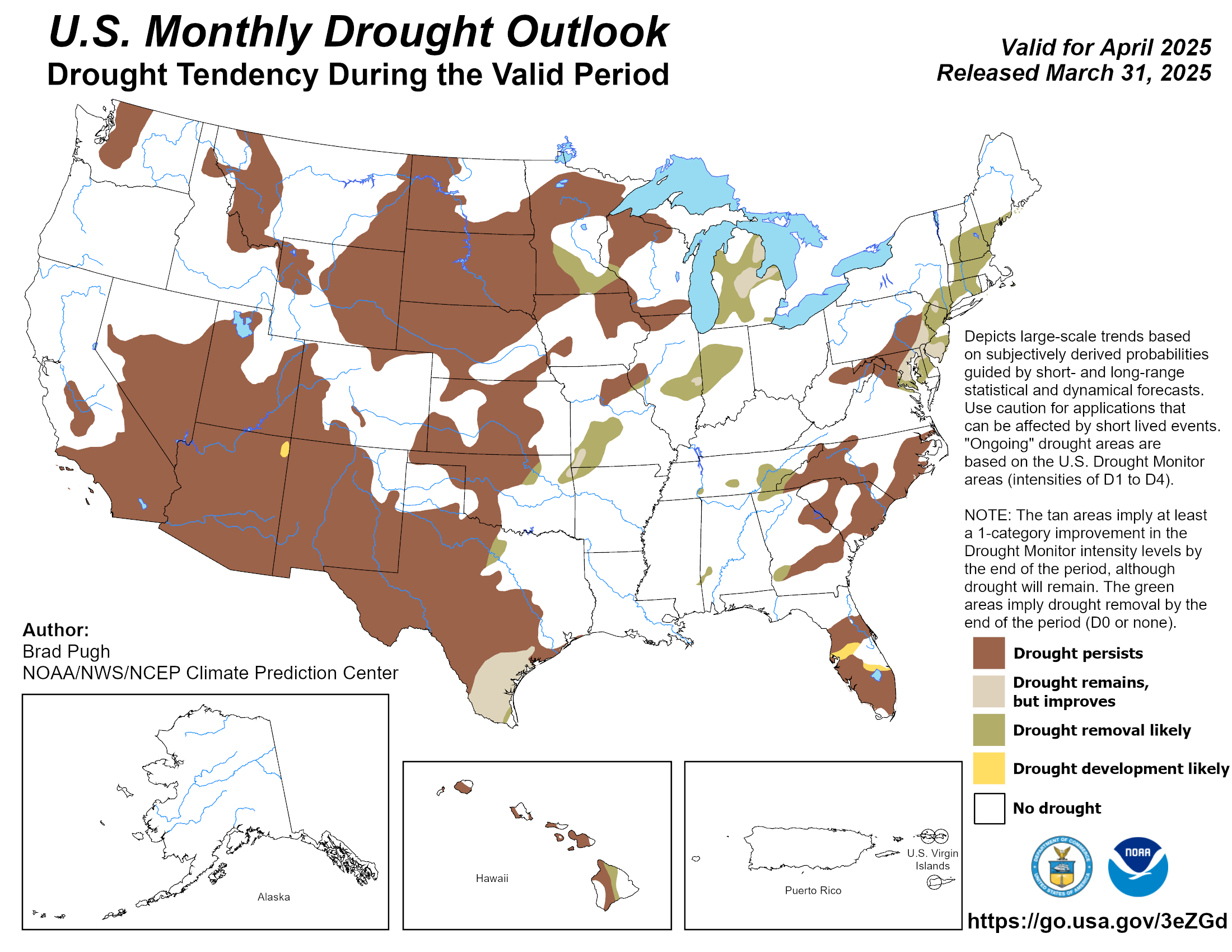
First, we show the forecast through January 2020 which was issued on October 17, 2019 (to be updated on November 21, 2019) and then the October forecast issued on September 30, 2019. These two forecasts are issued by the same agency but to obtain them you need to access two different links here and here.
Here is the Three-Month Forecast which was issued on October 17, 2019

Here is the Monthly Drought Outlook which was updated on September 30, 2019
Floods remain a concern but only in a limited area.

| Last Week | Current Week |
|
|

Let’s see if this animation works. It shows the pattern for August and September.

How has the reduction in flooding impacted Fieldwork Days?

Active Major Fires

Current Wildfire Risk

Click here to update. Red is high risk, blue is low risk. This graphic updates daily but you have to click on the link provided to get the updates More information can be found here.
This explains the model a bit.


Looking out another month.


Crop Progress
Recently, we looked at the individual crop progress reports graphically from this source and we have reviewed this Executive Summary Report which provides projections of the ultimate harvest. It is important to make the distinction between crop progress which we report in this section of our article weekly and forecasts of what the result for the crop will ultimately be and we review that information as the NASS forecasts are released. Once a month they issue a briefing document on the overall situation and they also release more targeted information from time to time.
Now, we will look at the season to date information summary. This is a crop progress report, not a forecast.

| Crop | Crop Progress | Crop Condition |
| Corn | Very slow (Mature) Very Slow Harvested | Very Bad |
| Soybeans | Slow (Dropping Leaves) Slow (Harvested) | Very Bad |
| Spring Wheat | Slow (Harvested) | NA |
| Winter Wheat | OK(Planted) OK(Emerged) | NA |
| Cotton | Good (Bolls Opening) Good (Harvested) | Good |
| Sorghum | Good (Mature) Good (Harvested) | Very Good |
| Rice | Good (Harvested) | NA |
| Barley | Slow (Harvested) | NA |
| Peanuts | Very Good(Harvested) | NA |
| Sugarbeets | Very Slow (Harvested) | NA |
| Sunflowers | Slow(Harvested) | NA |
We no longer have enough information on crop conditions to take the above table and show it the way we have been doing as a matrix.
The degree-day deficit graphic is also not available as the growing season winds down. The data is available but the nice graph was not in any of the usual sources that I use to prepare this article.
International

A map helps and is not always available and fortunately, it was available this week.

International Reports
We reported on the summer growing season for Europe and September weather in many parts of the World.
Major Sources of Information
In the box are shown the major resources we use. We will not be using them all each week but the reader is welcome to refer to these resources.
Major Sources of Information Used in this Weekly Report
|
Background Information


The sequence of drought occurrence and impacts for commonly accepted drought types. All droughts originate from a deficiency of precipitation or meteorological drought but other types of drought and impacts cascade from this deficiency. (Source: NDMC)
Source: National Drought Mitigation Center, University of Nebraska-Lincoln


