


Written by Sig Silber
Updated at 2 pm EDT Septermber 7, 2019 to add the Canadian Hurricane Centre Information and other updated information
Focal Points for this weekend. Hazards for Days 3 and 7 out to September 13 are shown in the body of the report. We still focus tonight on Hurricane Dorian. It might be the last day we do but perhaps we will so so tomorrow night also.
…Heavy rainfall and tropical storm force winds will come to an end across New England this morning as Dorian races northward into the Canadian Maritimes…
…Potentially record breaking heat continues this weekend for parts of the Deep South and Gulf Coast…
…Severe weather and flash flooding possible across parts of the north-central Plains into the Midwest…

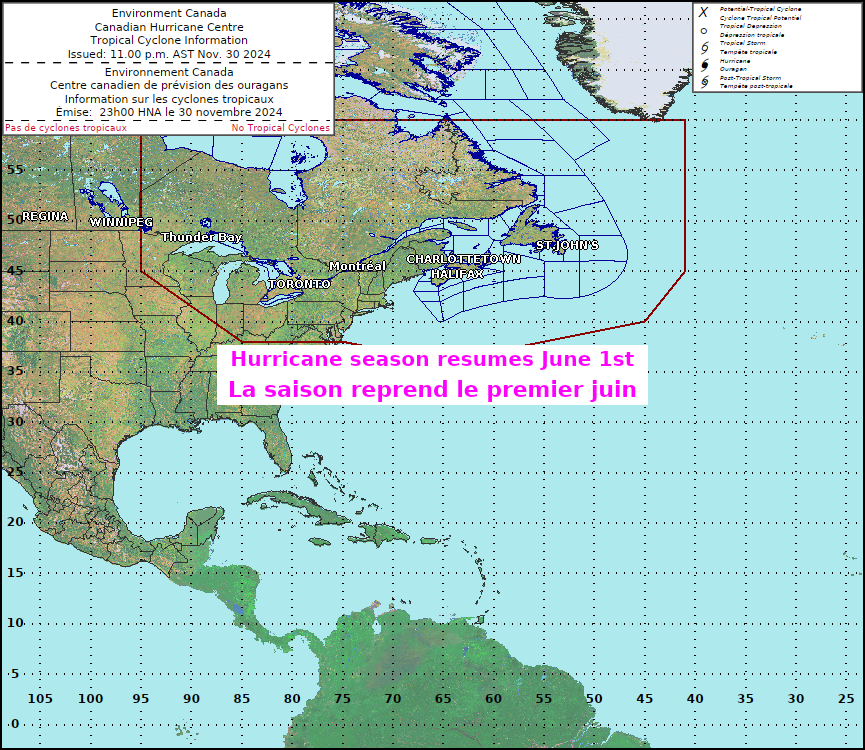
They are taking this storm very seriously in Canada.
FXCN31 CWHX 071200 Tropical cyclone technical information statement issued by the Canadian Hurricane Centre of Environment Canada at 8.32 AM ADT Saturday 07 September 2019.
The next statement will be issued by 3.00 PM ADT
1. Current position, strength, central pressure and motion
At 9.00 AM ADT, hurricane Dorian was located near latitude 40.7 N and longitude 66.4 W, about 269 nautical miles or 498 km south-southwest of Halifax (Shearwater). Maximum sustained winds are estimated at 80 knots (148 km/h) and central pressure at 961 MB. Dorian is moving northeast at 22 knots (41 km/h).
2. Forecast position, central pressure and strength
Date time lat lon MSLP Max wind
ADT MB kts kmh
Sep 07 9.00 AM 40.7N 66.4W 961 80 148
Sep 07 3.00 PM 42.2N 65.6W 960 80 148
Sep 08 3.00 AM 46.5N 61.9W 960 70 130
Sep 08 3.00 PM 50.3N 57.7W 962 65 120 post-tropical
Sep 09 3.00 AM 53.1N 52.0W 967 50 93 post-tropical
Sep 09 3.00 PM 55.3N 45.9W 975 40 74 post-tropical
3. Technical discussion
A. Analysis
The appearance of Dorian on satellite imagery has changed considerably with the convection now displaced to the northeast of the centre as the hurricane continues to encounter increasing shear. Some of the moisture is now drawn into to an advancing upper trough which extends from James Bay to Western Quebec into Northern New England. West of the centre of Dorian, buoy 44008 is reporting a wind gust of 68 knots which converted to a 1 minute mean gives a speed of 75KT. A buoy near Georges Bank is indicating wind speeds approaching hurricane force. The wind field continues to expand and gales are spreading well to the north of the centre and are now reaching Cape Sable Nova Scotia, where Baccaro Point recently reported a wind gust of 41 knots. The intial intensity is set at 80KT with a forward motion of northeast at 22 kts.
B. Prognostic
Dorian will continue to interact with the upper trough approaching from Southern Quebec. Although the system may start to gain extra-tropical characteristics prior to landfall, the centre is not expected to fully transition until this evening when it crosses Nova Scotia and moves into the Gulf of St. Lawrence. The track keeps the centre over relatively warm waters until this afternoon when it reaches the Northern West Scotian Slope.
The guidance remains well clustered with the track nearing Halifax this evening. The low will then curve into the Northern Gulf of St. Lawrence and then be ejected east in the brisk westerly upper flow northeast of Newfoundland.
C. Predicted wind radii (NM)
Time gales storms hurricane
NE SE SW NW NE SE SW NW NE SE SW NW
07/12Z 260 275 200 165 110 145 95 90 50 65 55 45
07/18Z 265 280 205 170 110 160 100 90 45 70 55 55
08/06Z 270 280 215 190 105 160 95 90 40 60 45 45
08/18Z 255 270 225 195 85 125 80 85 35 45 35 30
09/06Z 225 260 225 195 70 95 60 75 0 0 0 0
09/18Z 210 255 245 190 0 0 0 0 0 0 0 0
Also from the U.S NHC
A recent ASCAT-B overpass shows a large area of hurricane-force winds southwest and south of the center of Dorian, with many vectors of 80 kt or more. This area of wind is likely due to baroclinic effects during the ongoing extratropical transition. The initial intensity is being increased to 85 kt and the 12-h intensity to 75 kt, after which the forecast intensities are the same as in the previous advisory.
Looking out 3 to 7 Days (and this does not update during the weekend)
– Heavy rain across portions of the Great Lakes, the Upper Mississippi Valley, and the Northern Plains, Mon-Tue, Sep 9-Sep 10and Thu-Fri, Sep 12-Sep 13.
– Flooding occurring or imminent across portions of the Southeast and the Northern Plains.
– Much above normal temperatures across portions of the Lower Mississippi Valley, the Tennessee Valley, the Middle Mississippi Valley, the Southern Appalachians, the Southeast, the Southern Plains, and the Ohio Valley, Mon-Tue, Sep 9-Sep 10.
– Heavy rain across portions of the Alaska Panhandle and mainland Alaska, Thu-Fri, Sep 12-Sep 13.
This article provides continuous updates for a variety of Weather and Weather-Related Threats. Pay attention to how severe weather may impact where you live or travel. For a location of interest on any of these maps, click the map to see the details – perhaps a very detailed map and appropriate text information. These are “Live” maps and continually update. Please pay attention to the Mesoscale Events maps — Mesoscale Events are potentially life-threatening situations.
Please share this article – Go to the very top of the page, right-hand side for social media buttons. Also, feel free to send this email to anyone you feel will benefit from it.
Today is September 7, 2019. If you are reading this article later than this date, there may be a later version which you can access by clicking here and selecting the latest version of this article from the top of the Directory and clicking on that. This article is “Live” and the current day graphics will update continually as will the Day 2 graphics, the Day 3 Graphics, the Day 3 – 7 graphics and the week – 2 graphics. So the graphics always update but the latest version of the article has my updated commentary and updated NOAA discussions when we update those which may be daily or every two days depending on how fast conditions are changing. So if you have an older version, e.g. from an email you received yesterday, the graphics are always current but if you want to be sure you have the most current discussions, click here and then click again to go to the most recently published version. It is our goal to provide the most current information and discussion practical.
Hurricane Threat: but where will it eventually impact additional land? This Daily Mail article is very comprehensive.


![[Image of probabilities of 34-kt winds]](https://www.nhc.noaa.gov/storm_graphics/AT05/refresh/AL052019_wind_probs_34_F120+png/235351.png)


Here is a different look but it is a Google Product, not a NHC Product, so it is unofficial and may not always be totally accurate. The advantage of this product is you can zoom in to see the land areas that may be impacted. :
You can use the + and – to zoom in or out and you can scroll the map. I recommend that you first look at the bottom of the map for where you can click to see the full map meaning a large version of the map and then use the “+” to zoom in to areas along the track where you have an interest.
Now, the Day One and Two CONUS Forecasts: These Maps Update Daily.
Day One CONUS Forecast | Day Two CONUS Forecast |
|
|
These graphics update and can be clicked on to enlarge. You can see where the weather will be | |
 | |


This is the time of the year we pay special attention to Tropical Events
First looking at the Atlantic and the Gulf of Mexico

Here is another Atlantic Storm

Switching to the Eastern Pacific


And the Central Pacific.
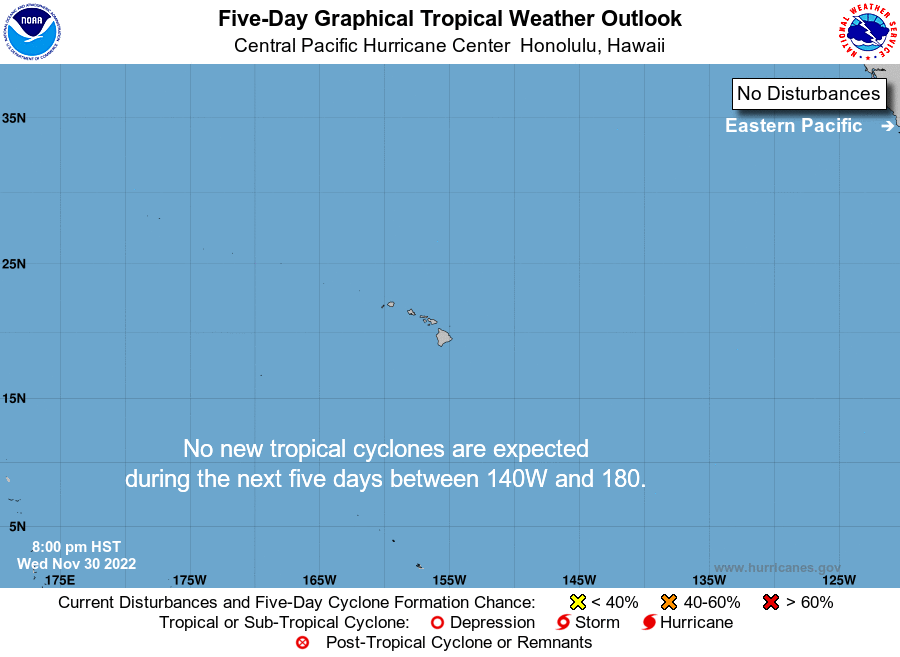

Updates on individual named storms can be obtained here.
And the Western Pacific
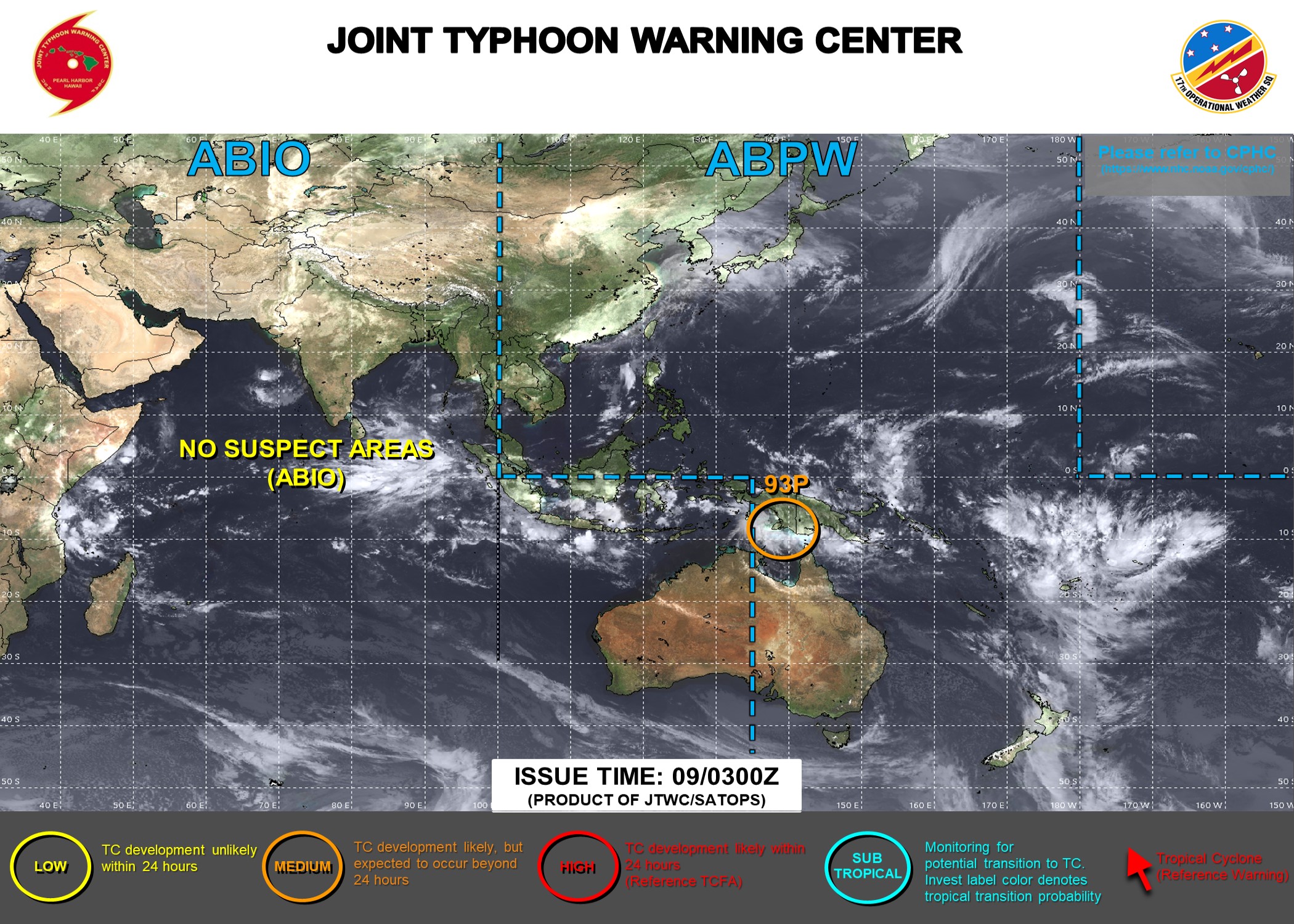


Here is the current daily Short-Term Forecast
 |
Click here for updates to this NWS/WPC Discussion.
Looking farther out. This report does not update during weekends.
|

Click here for updates of the Day 3 -7 Hazards forecast.
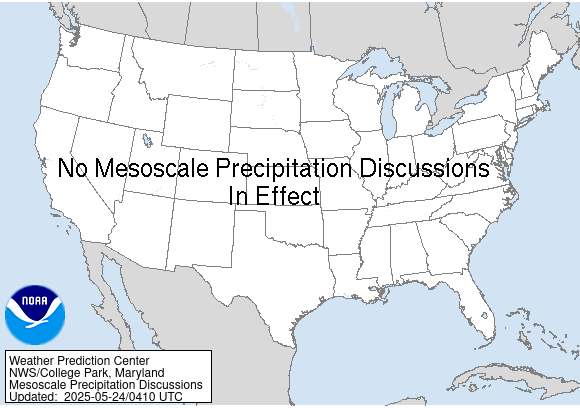
The following map shows where mesoscale events are occurring or forecast. If you do not see any areas highlight on this map than there are no mesoscale events taking place or forecast. A mesoscale event is a very serious situation for a very small area and detailed information is provided for these events when they occur or are forecast. If a mesoscale event is shown, click on the map and more detail on the event will be shown.
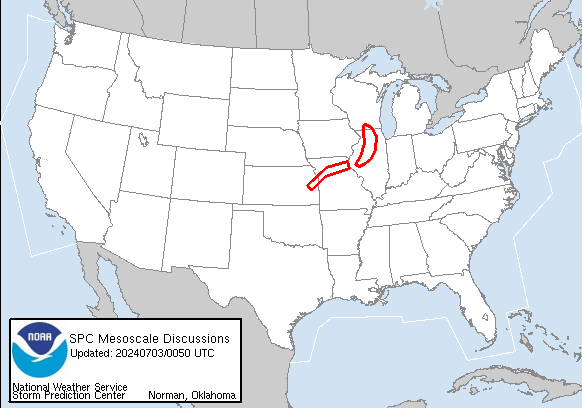
Two different part of the NWS issue this map and they are not always in agreement although they are pretty close. They (Norman Oklahoma and College Park Maryland) issue the alerts when they realize the need so it is best to look on both maps and click one or both if you see areas highlighted.
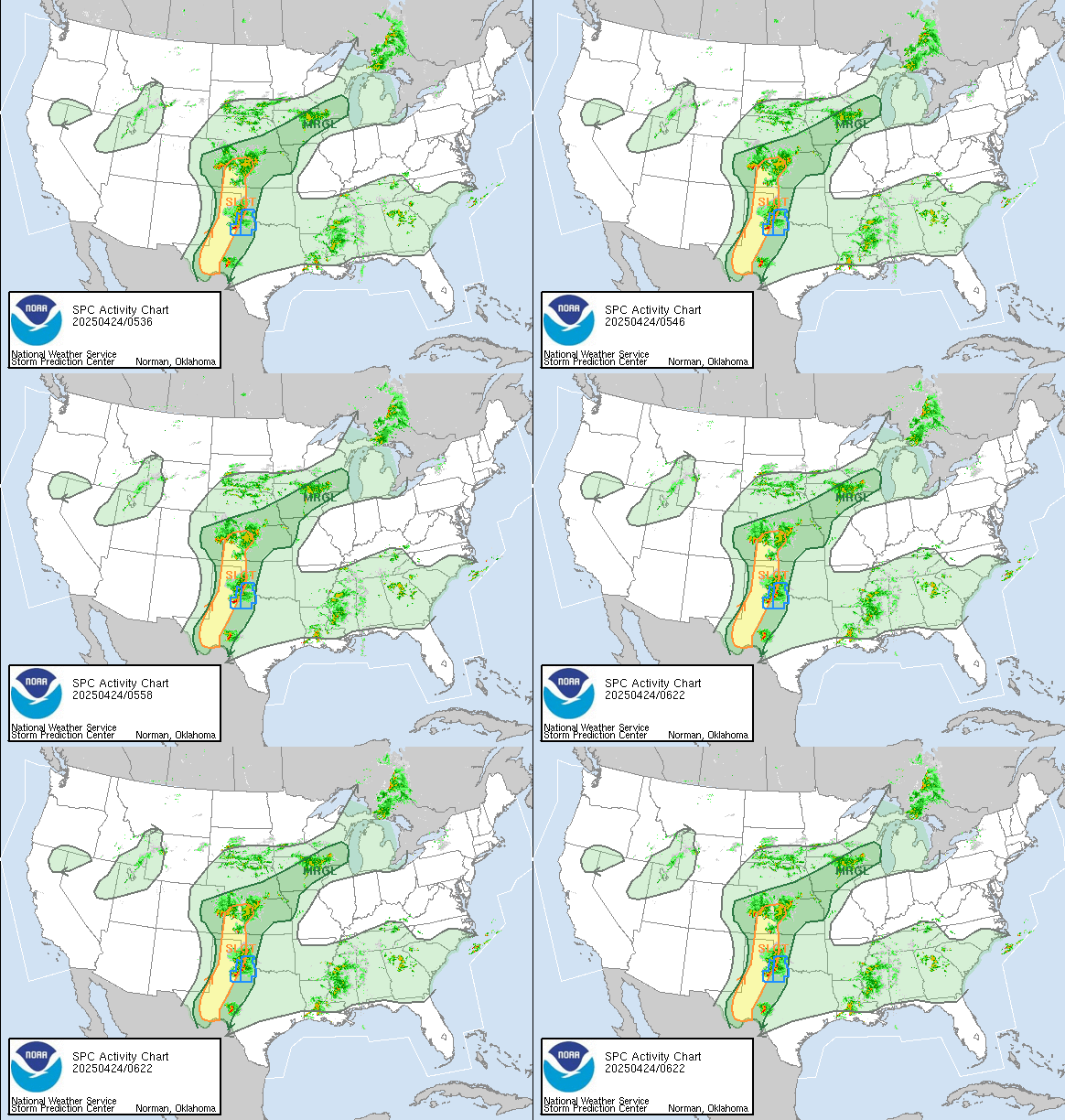
This next map showing where “Headlines” have been issued for convection (and an animation of the recent movement of storms) should update and you should be able to click on to get additional details but if it does not update when you click on it, click here.
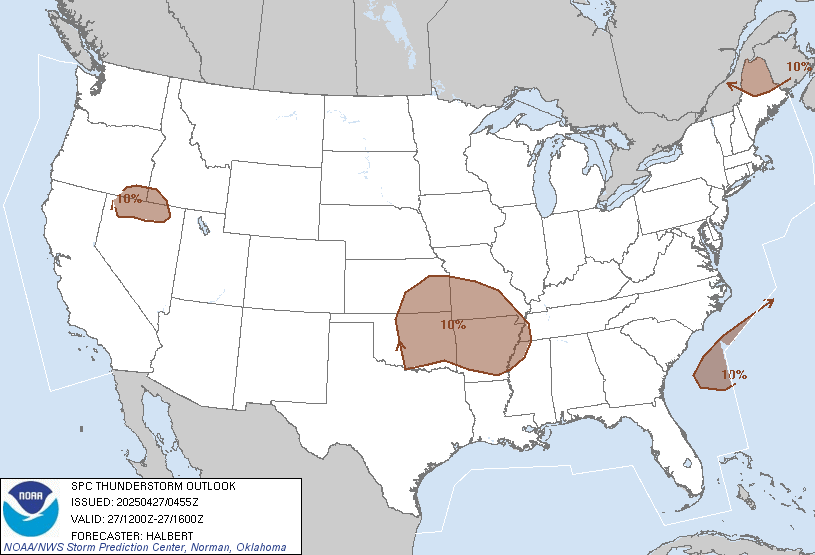
There is a slight difference between convection and thunderstorms. The below map shows where “Headlines” have been issued for Thunderstorms. You should be able to click on the map to get additional details but if it does not update, you can click here.
The map below shows the current wildfire risk which becomes more significant as we move into Summer. When you click on this image it takes you to the SPC Fire Warning Page and you get a set of maps for Days 1, 2, 3 – 8, etc. You can then click on those for more detailed information. The map is a bit blurry as I tried to make it a bit larger than the map provided by NOAA but should be able to see where the current wildfire risks are. But if you click on this map, you will get to see three maps that show the risk for different time periods.
Now the Day 3 – 7 Hazards Outlook
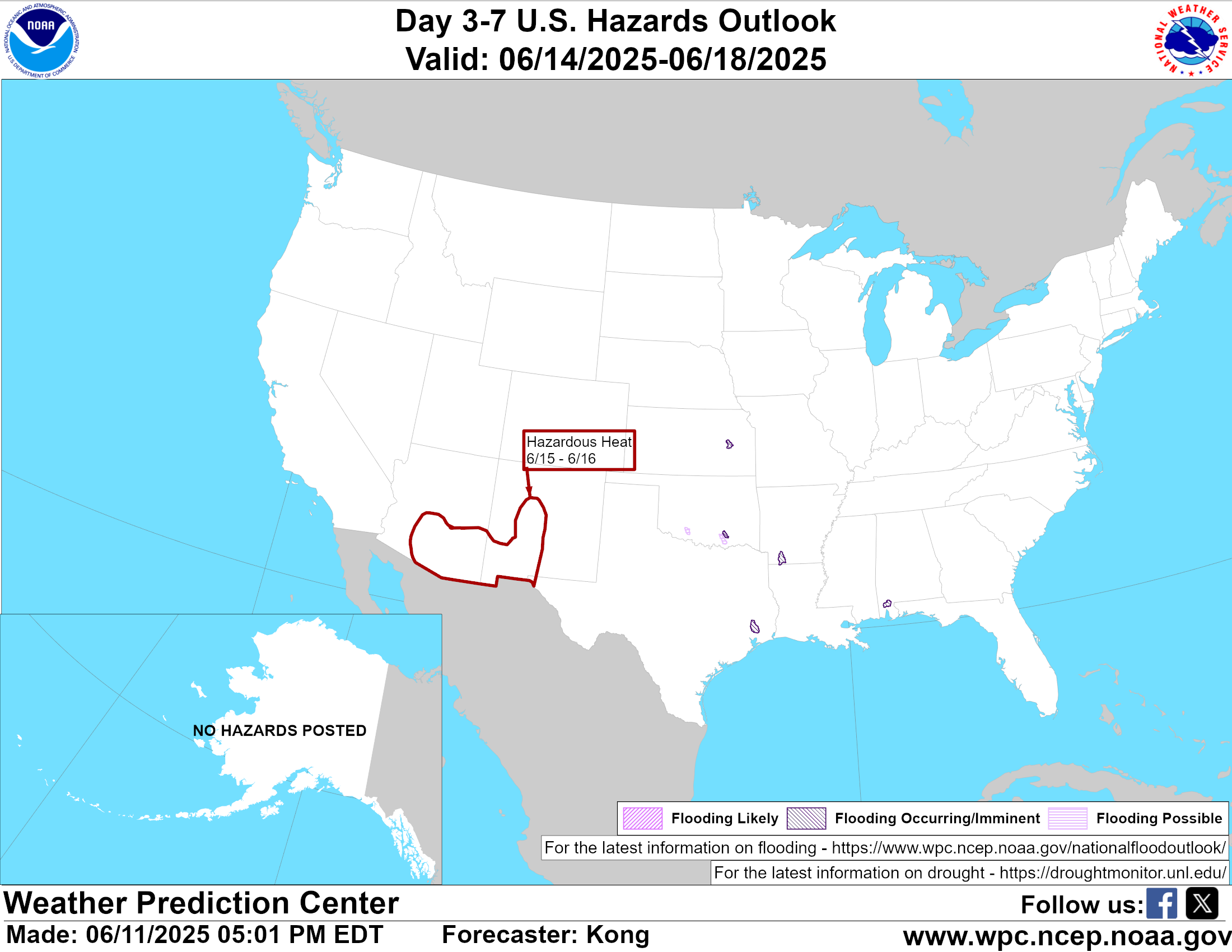
The orange and red outlined areas are what is of most concerning of the forecasted Day 3 – 7 Hazards. This graphic does not update during the weekend. There is a discussion that goes with this graphic and you can access that discussion here.
The following is provided to help the reader relate the maps to how NWS will describe an area of the U.S.
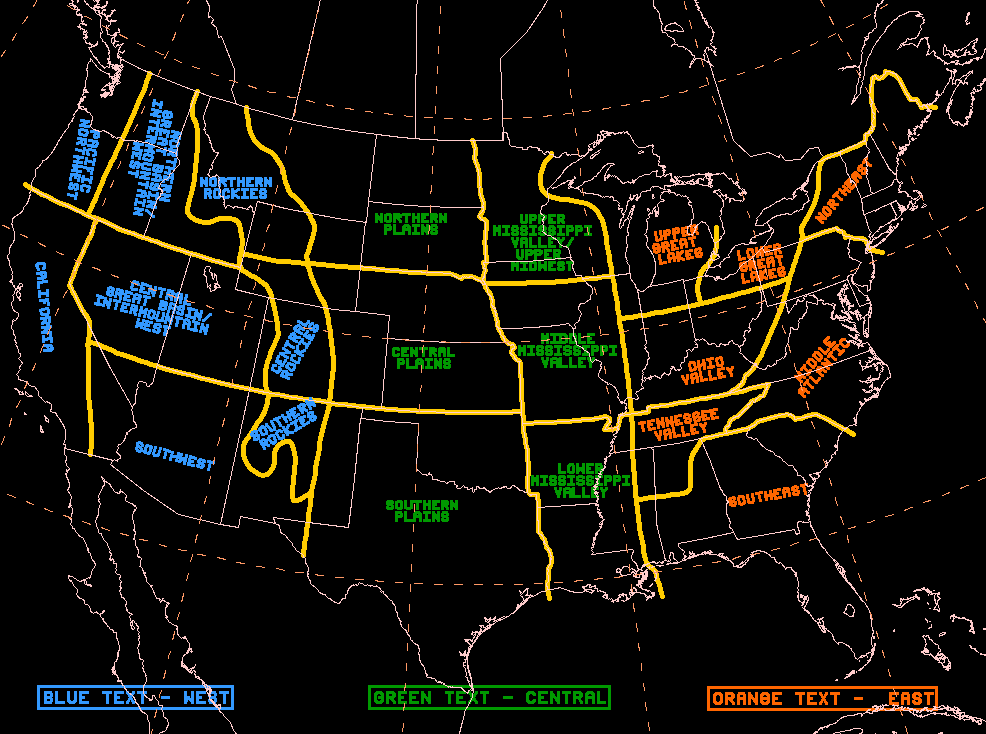
Now to our More Detailed Report
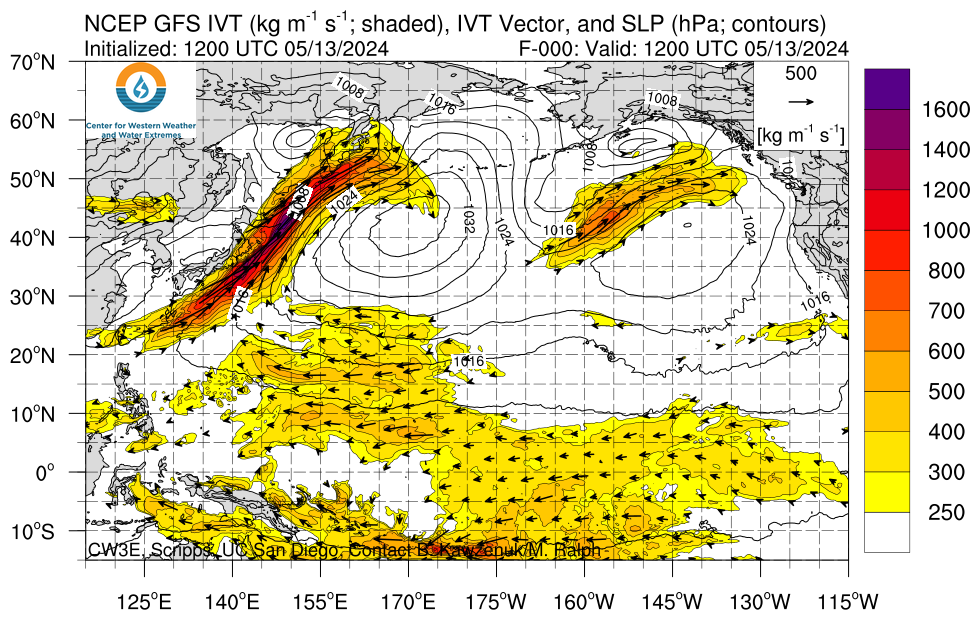
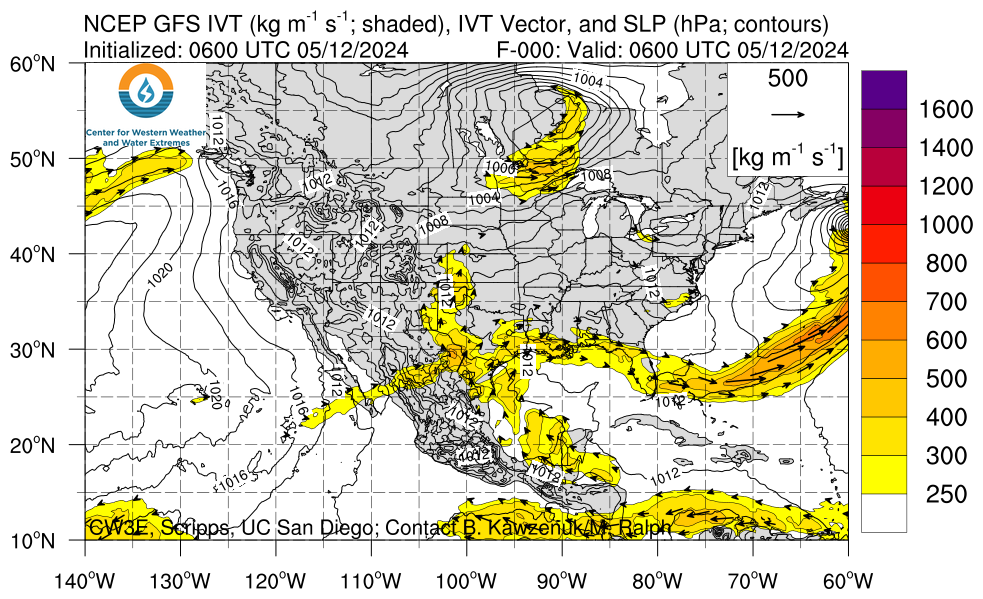
This graphic is about Atmospheric Rivers i.e. thick concentrated movements of water moisture. More explanation on Atmospheric Rivers can be found by clicking here or if you want more theoretical information by clicking here. The idea is that we have now concluded that moisture often moves via narrow but deep channels in the atmosphere (especially when the source of the moisture is over water) rather than being very spread out. This raises the potential for extreme precipitation events.
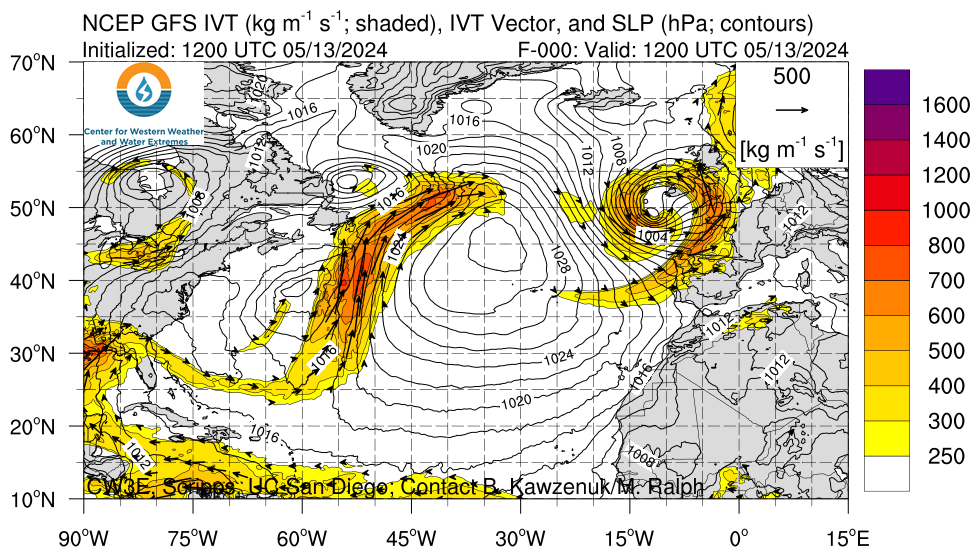
Here are two satellite images.
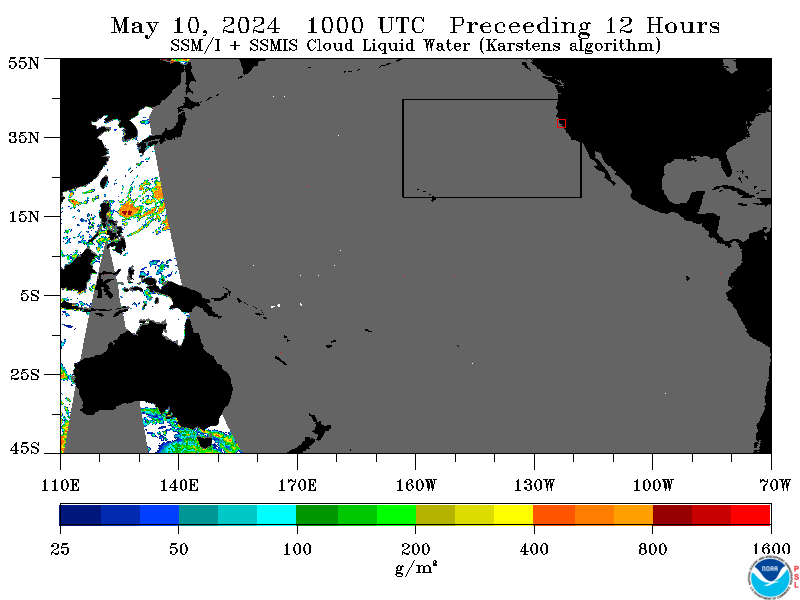
And the East Coast

Here is the web site where this set of images can be found.
500 MB Mid-Atmosphere View
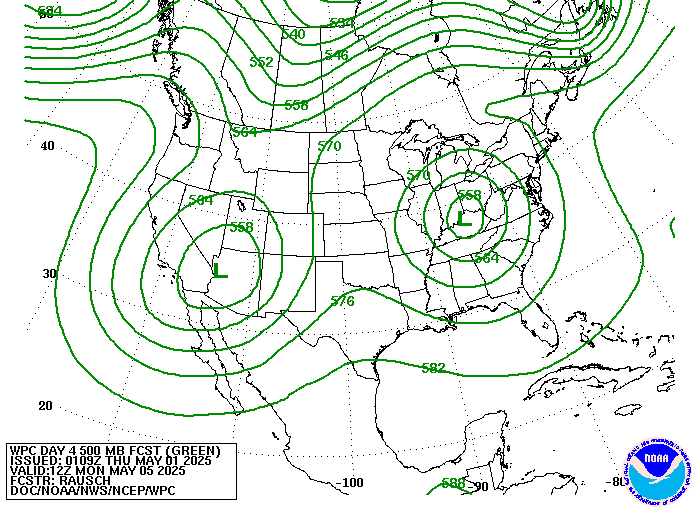
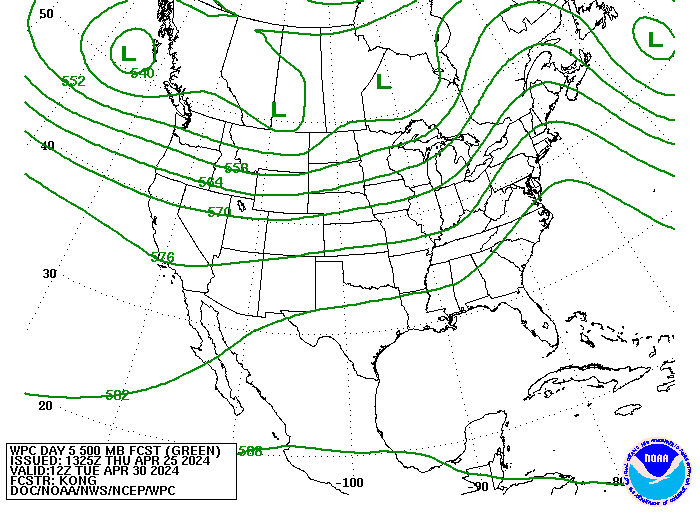
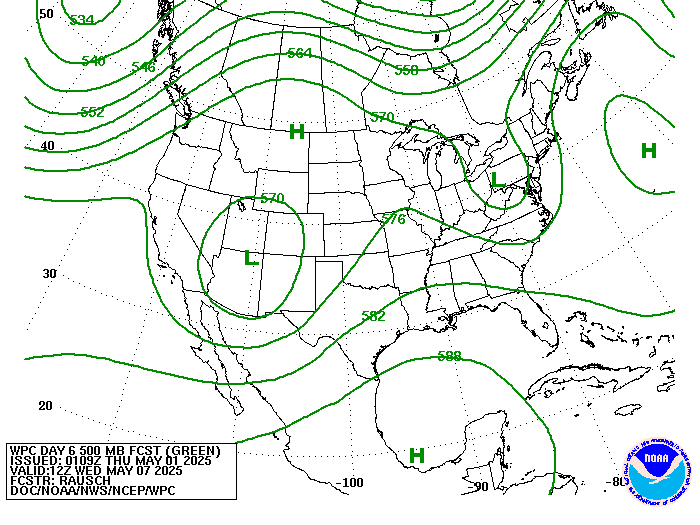
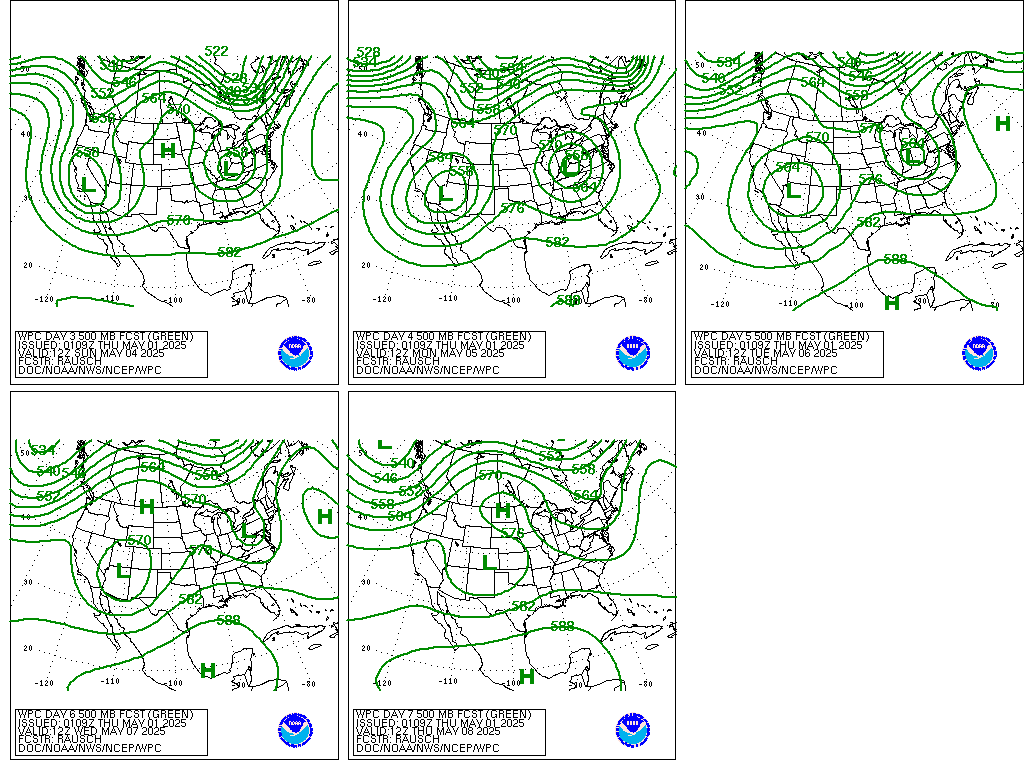
The map below is the mid-atmosphere 3–Day chart rather than the surface highs and lows and weather features. In some cases, it provides a clearer less confusing picture as it shows only the major pressure gradients. This graphic auto-updates so when you look at it you will see NOAA’s latest thinking. The speed at which these troughs and ridges travel across the nation will determine the timing of weather impacts. This graphic auto-updates I think every six hours and it changes a lot. Thinking about clockwise movements around High-Pressure Systems and counterclockwise movements around Low-Pressure Systems provides a lot of information.
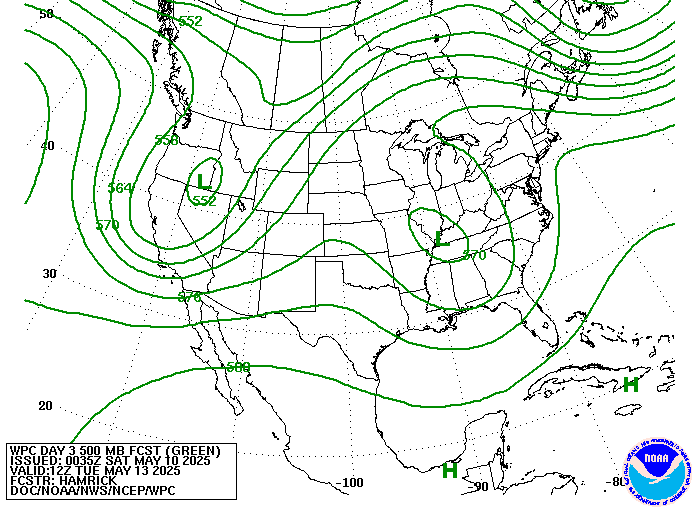
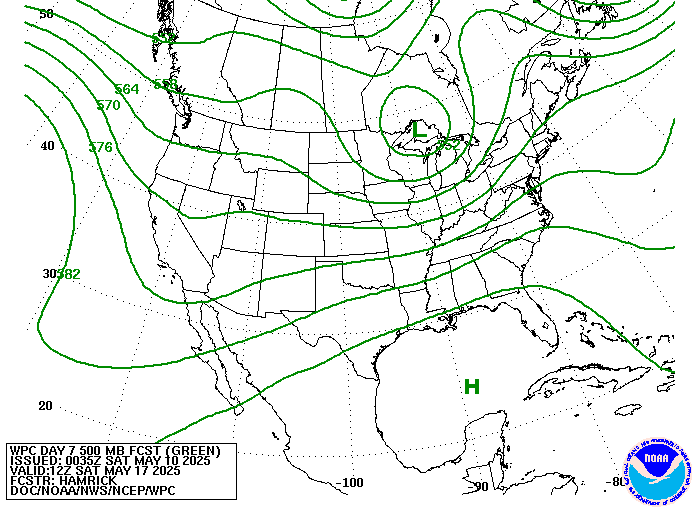
| Day 3 Above, 6 Below | Day 4 Above,7 Below | Day 5 Above. |
|  |  |
 |  |  |
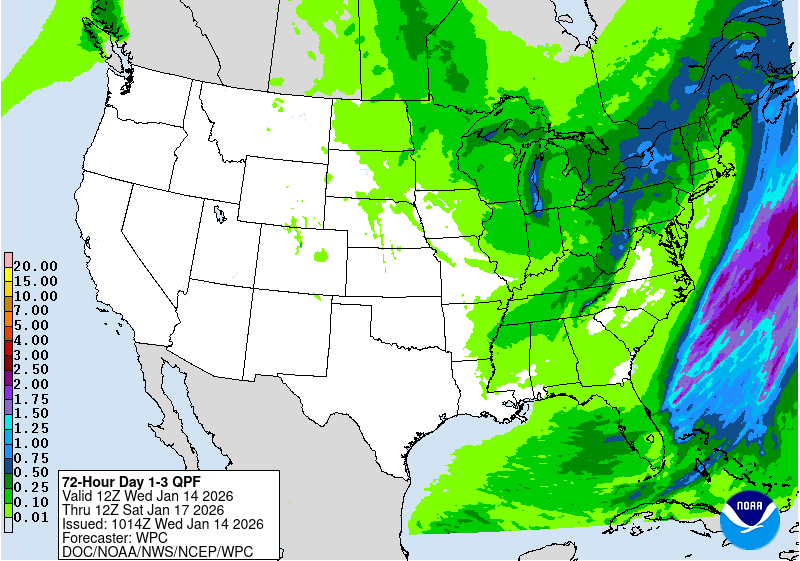
Here are the precipitation forecasts. First the cumulative for Days 1 – 3
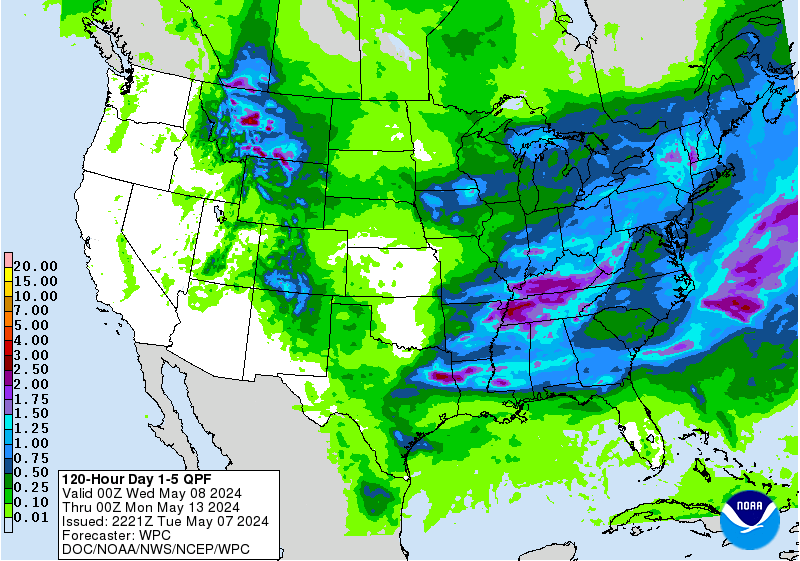
Then cumulative for Days 1 – 5
Then cumulative for Days 1 – 7
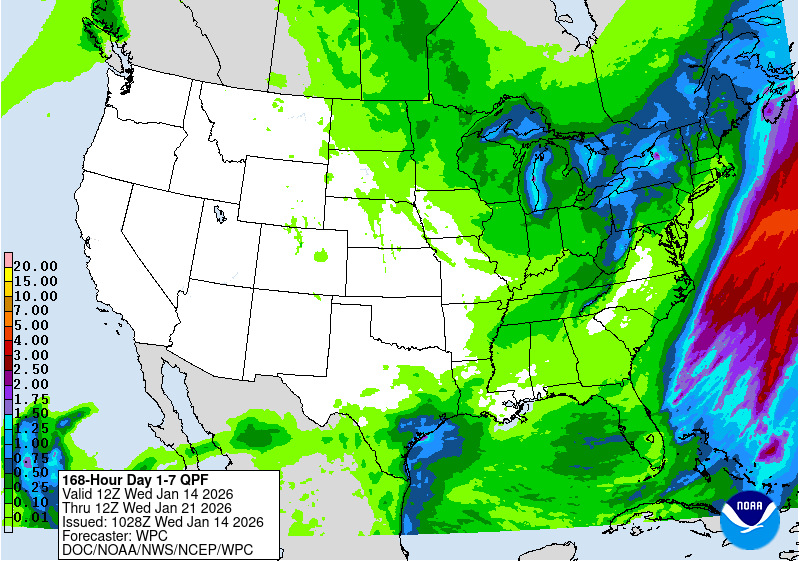
Remember the commentary is generally as of last Night unless updated which is indicated in the lede paragraph. The graphics auto-update so the commentary may not be up-to-date beyond the initial date of publication.
We have to start worrying about heat being a hazard.
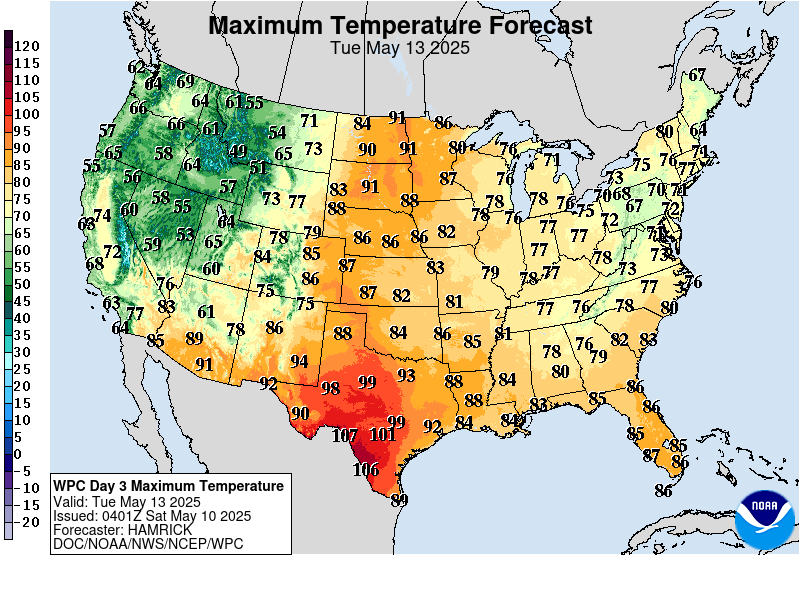
Looking ahead to next week.
| Current watches, warnings, and advisories issued by the agencies of the National Weather Service. Hazards should show up in the various maps but the below links will take you to all outstanding watches and warnings in each category which may include some categories not covered in the various maps or difficult to find. So if there is a category of interest, click on the appropriate link below. |
|
Below you will see a number of different maps which are updated in real-time, making this a “live” report. If a part of one or more of the maps shows an area that is highlighted, you can click on it and get the full current report. By having the reader click on these active situations rather than having GEI do so, you will not miss any events in which you might have an interest and which we had not noticed and the page will not get cluttered with warnings, etc that have since expired.
Our focus here are events that are likely to last in the range of six hours but there can be longer or shorter events that are addressed by the Storm Prediction Center which is the main source of the information in this article. Long-term major events like a Hurricane are more likely to be in a separate article. But that may not always be the case. Since in general, all the links on this page transfer you into the NOAA system, in order to get back into this article you need to either close the tab to which you were transferred or click back on the tab that has this article.
| Live Warning Maps which If Severe Weather is Shown can be Clicked on to get more detail about these events. If there is a current warning shown on the map, click on the map for additional information related to the event. | These maps are updated as risks are identified. |
| This is the current graphic showing any mesoscale discussions (MD’s) which are in effect over the contiguous United States. Please read the description of the purpose of our MD’s for further information. Details on all valid MD’s may be found on our Current Mesoscale Discussions page. |  |
| Convective Outlooks | |
|---|---|
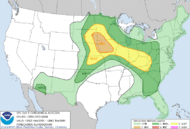
| This is today’s forecast for organized severe thunderstorms over the contiguous United States. Please read the description of the risk categories for further information. You may find the latest Day 1 Outlook available as well as all Outlooks issued today online. | Today’s Outlook |
 | |
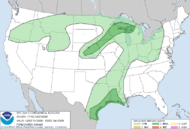
| This is tomorrow’s forecast for organized severe thunderstorms over the contiguous United States. Please read the description of the risk categories for further information. The latest Day 2 Outlook is available as well as all Outlooks that have been issued today. | Tomorrow’s Outlook |
 | |
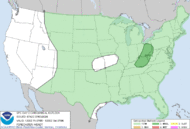
| This is the day after tomorrow’s (day 3) forecast for organized severe thunderstorms over the contiguous United States. Please read the description of the risk categories for further information. The latest Day 3 Outlook is available as well as all Outlooks that have been issued today. | Day 3 Outlook |
 | |
| This is the day 4-8 forecast for organized severe thunderstorms over the contiguous United States. The latest Day 4-8 Outlook is available as well as all Outlooks that have been issued today. Note: A severe weather area depicted in the Day 4-8 period indicates a 30% or higher probability for severe thunderstorms (e.g. a 30% chance that a severe thunderstorm will occur within 25 miles of any point). | Day 4-8 Outlook |
 | |
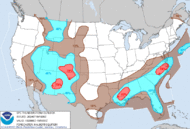
| The Thunderstorm Outlooks depict the probability of thunderstorm across the contiguous United States in 4 or 8 hour time periods. The probabilistic forecast directly expresses the best estimate of a thunderstorm occurring within 12 miles of a point. The three probabilistic forecast thresholds are 10, 40, and 70 percent. | Thunderstorm Outlook |
 | |
| Fire Weather Outlooks | |
| This is today’s forecast for organized wildfires over the contiguous United States. Please read the description of the risk categories for further information about this product. | Today’s Outlook |
| |
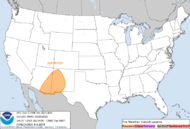
| This is tomorrow’s forecast for organized wildfires over the contiguous United States. Please read the description of the risk categories for further information about this product. | Tomorrow’s Outlook |
 | |
| This is day 3-8 forecast for organized wildfires over the contiguous United States. Please read the description of the risk categories for further information about this product. | Day 3-8 Outlook |
 | |


