


Written by Sig Silber
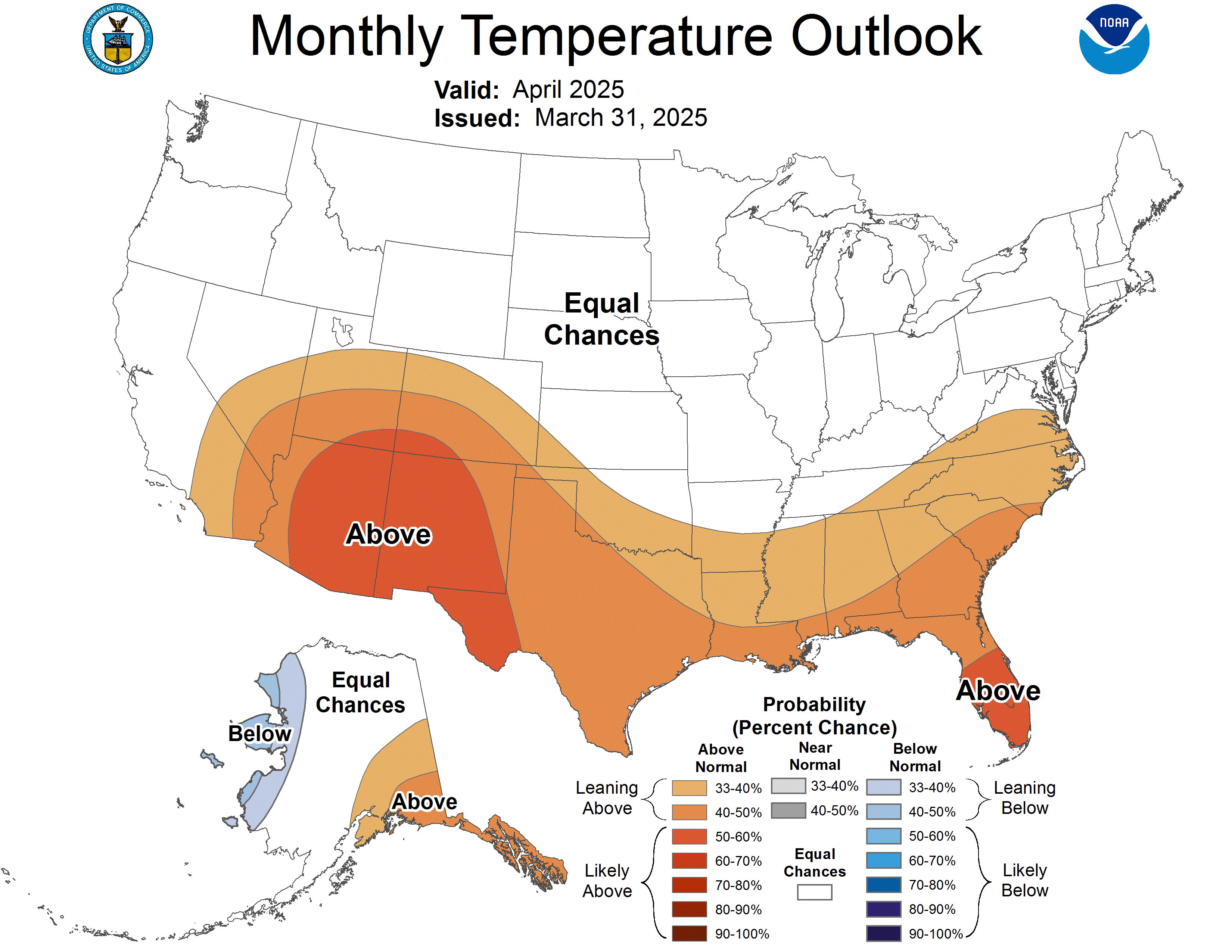
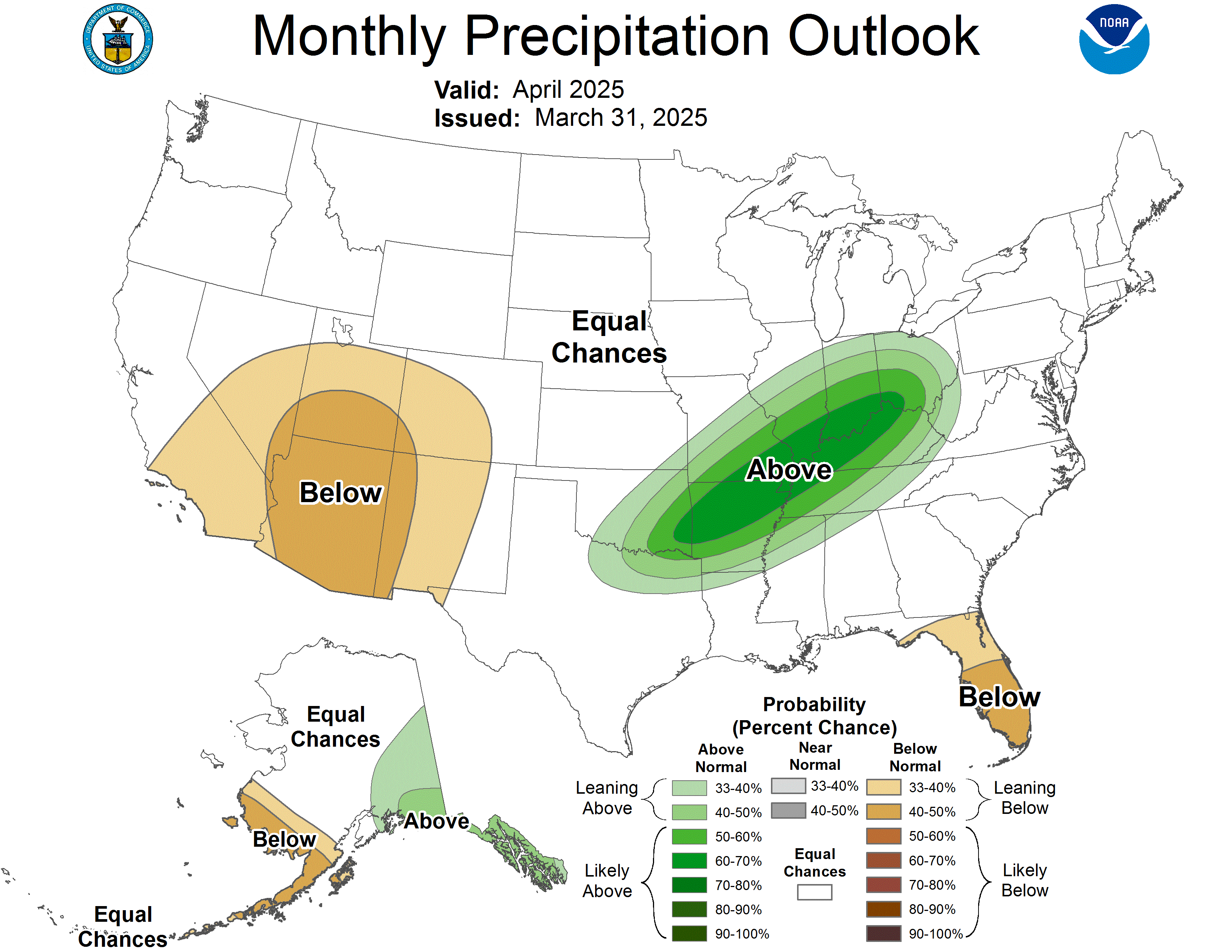
At the end of every month, NOAA issues an update to their Early Outlook for the following month which was issued on the Third Thursday of the Month. Usually, the changes are minor and that is pretty much the case this month which is a bit surprising given the End-of-Month Forecast Update is fifteen days from the Early Outlook. Nevertheless, the forecast has not changed very much. The forecast may not be the best news for the agriculture sector and we will discuss that on Thursday. There are flooding concerns possibly shifting a bit towards the Lower Mississippi River Valley.

Please share this article – Go to the very top of the page, right-hand side for social media buttons.
Although the general theme is mostly wet in the Southwest and Southen Plains with a warm Northwest and Southeast a cool center of CONUS in part of where it is wet, it is important for readers to look at the maps for the month and the maps that we have in the article for the first five days, Days 6 – 10, Days 8 – 14 and Week 3 – 4 as the pattern is expected to change somewhat during the month with the second half of the month having stronger anomalies which is unusual. Other than the full-month map, the other maps will auto-update so this article will remain useful throughout the month.
Now let us address the NOAA Update of the June, 2019 Forecast.
A note about terminology; the deviations from climatology/normal are color coded but also labeled “A” for more than (above) normal and “B” for less than (below) normal. The area designated EC means Equal Chances of being more or less than normal. In the Short Term forecasts, NOAA has switched from using EC to N for Normal. For most purposes, EC and N can be considered to mean about the same thing. “N” implies a bit more certainty that the variation from Normal/Climatology will be small compared to “EC”.
First, we will compare the NOAA Early Outlook for June, 2019 with the newly issued update.
Early Outlook Temperature

Updated Temperature Outlook
Early Outlook Precipitation

Updated Precipitation
| May 16, 2019 Forecast for June | May 31, 2019 Forecast for June | |
| Temperature |
|
|
| Precipitation |
|
|

Here is the discussion released today:
Prognostic Discussion for Monthly Outlook NWS Climate Prediction Center College Park MD 300 PM EDT Fri May 31 2019
30-DAY OUTLOOK DISCUSSION FOR JUNE 2019
For the month of June, El Nino is expected to continue, with a 70% chance that El Nino conditions continue through Northern Hemisphere summer. The Madden-Julian Oscillation (MJO) is highly amplified, with the convectively active phase over the eastern Indian Ocean. Linkages from the MJO to CONUS and Alaska impacts are generally weak during June, so canonical downstream impacts from an MJO are not a significant factor in the outlook. Recent heavy rains leading to very high soil moisture and flooding are likely to play a role in the evolution of temperatures over the central and southern Great Plains during June, while recent dryness is likely a factor further north.
The updated temperature outlook maintains high chances of above normal temperatures across Alaska. Contributing factors include above normal sea-surface temperatures near the coast, trends , and shorter-term predictions that have high confidence for warmer than normal conditions. Above normal temperatures are still favored from California to Washington, though the odds are slightly reduced due to a predicted colder than normal period during Week-2, sandwiched between periods predicted to be warmer than normal. Recent and predicted dryness favor above normal temperatures in the Northern Plains. A period of warmth is predicted to move across the northern tier of the CONUS, so the area where below normal temperatures are favored is shifted southward, and now aligns with the most likely area of above normal precipitation.
The highest odds of above normal precipitation are from the Rio Grande Valley into the central Great Plains, where predicted 7 day precipitation totals are greater than the threshold for below normal precipitation for the climate divisions in those regions. Probabilities have been increased from the mid-month outlook. Model guidance depicts below normal precipitation across the northern CONUS from the Great Plains to the Northeast, with the strongest signal centered over North Dakota. This signal is an addition from the initial outlook. Slight tilts toward drier than normal conditions in the Pacific Northwest and wetter than normal in southern Alaska were in the initial outlook, and reasoning remains unchanged.
Visual Consistency Testing.
It is useful to see how the month forecast fits with the set of shorter forecasts that we have. These will continue to update in this article. It is important to remember that of the short term forecasts we generally have about 25 days of the subsequent month to look at when we do this at the end of the month as we are doing now so we do not have the last week or so of the month represented by short-term forecasts.
First Temperature
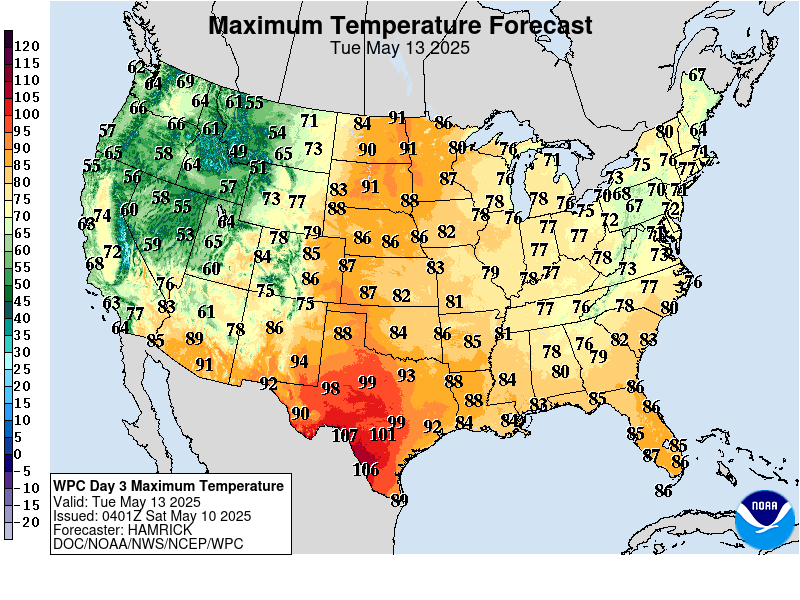 | 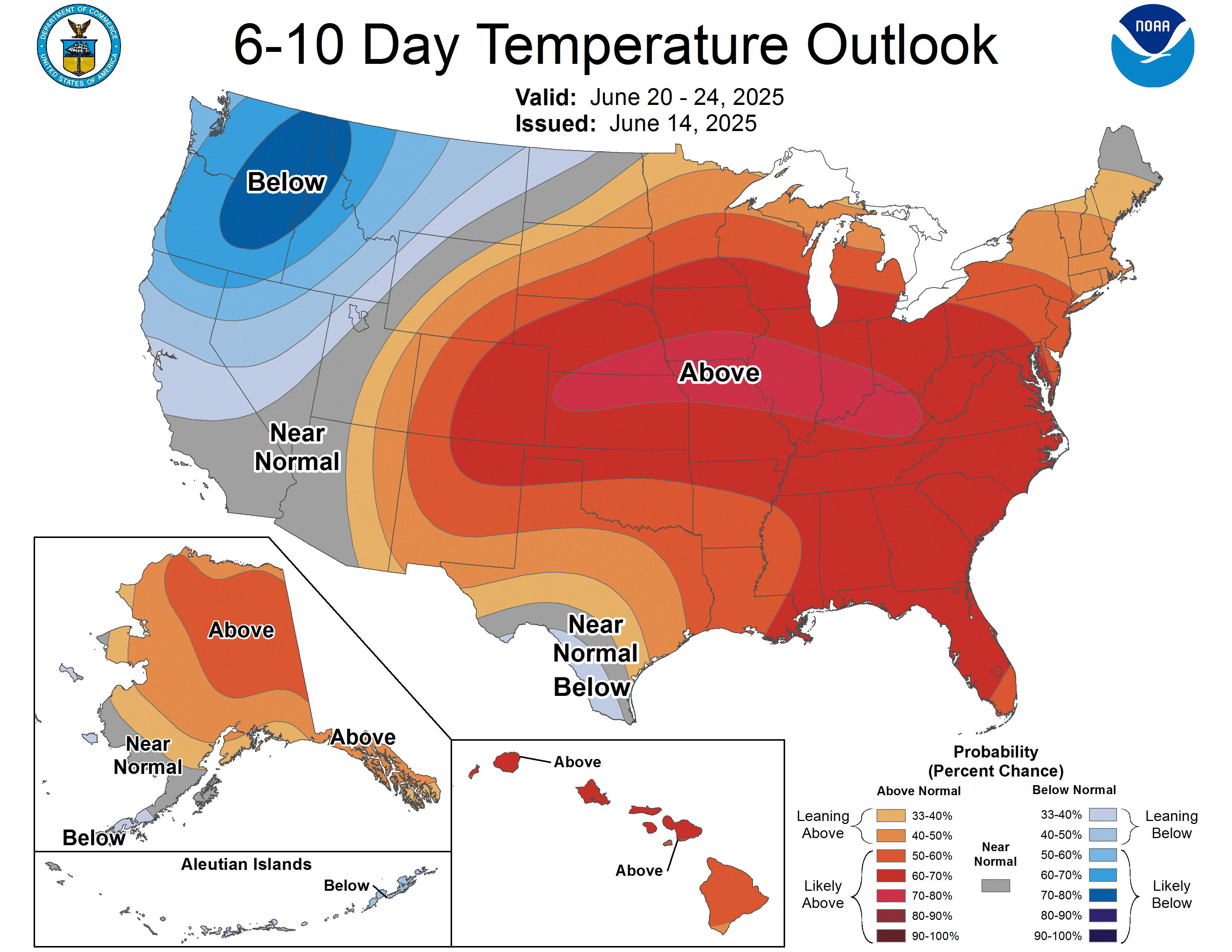 | 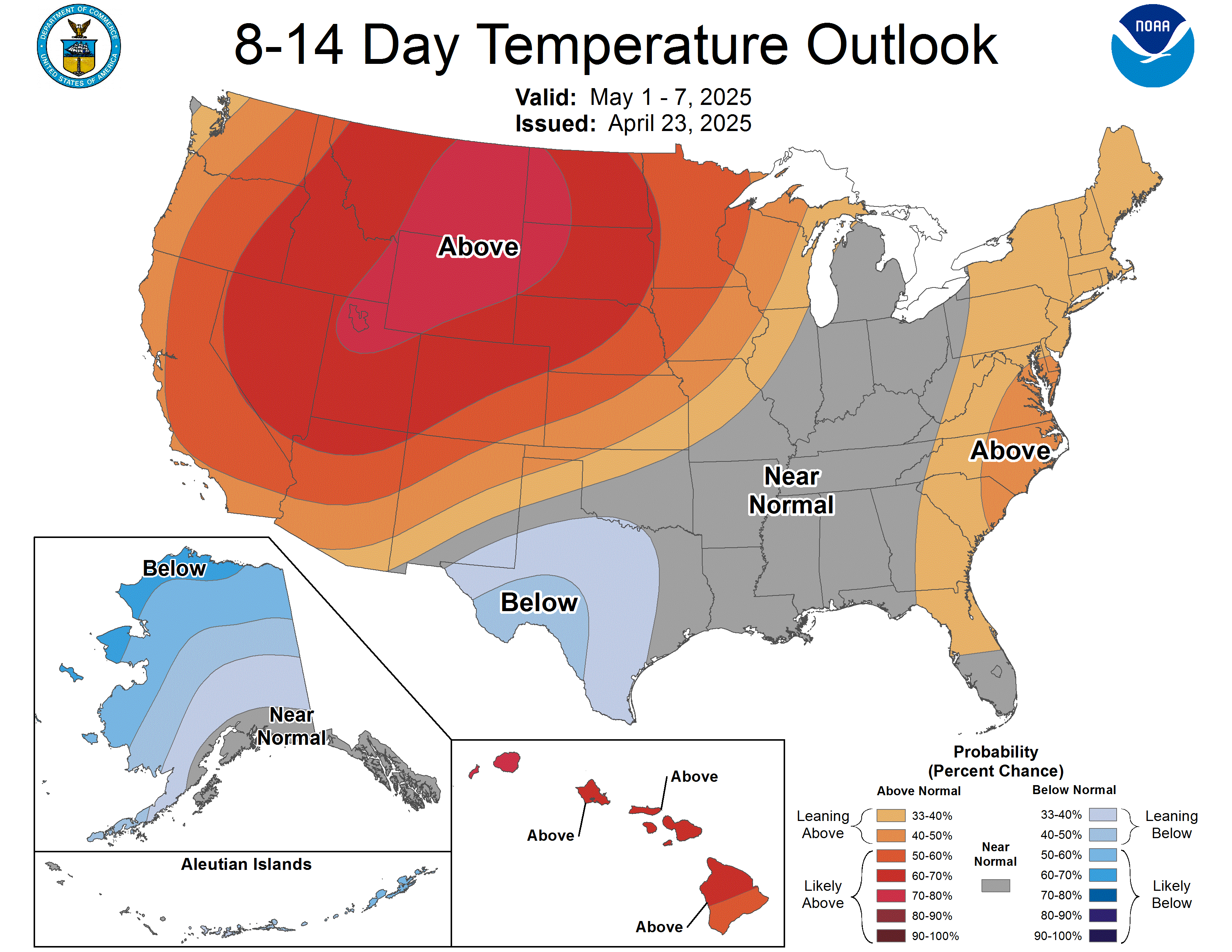 | 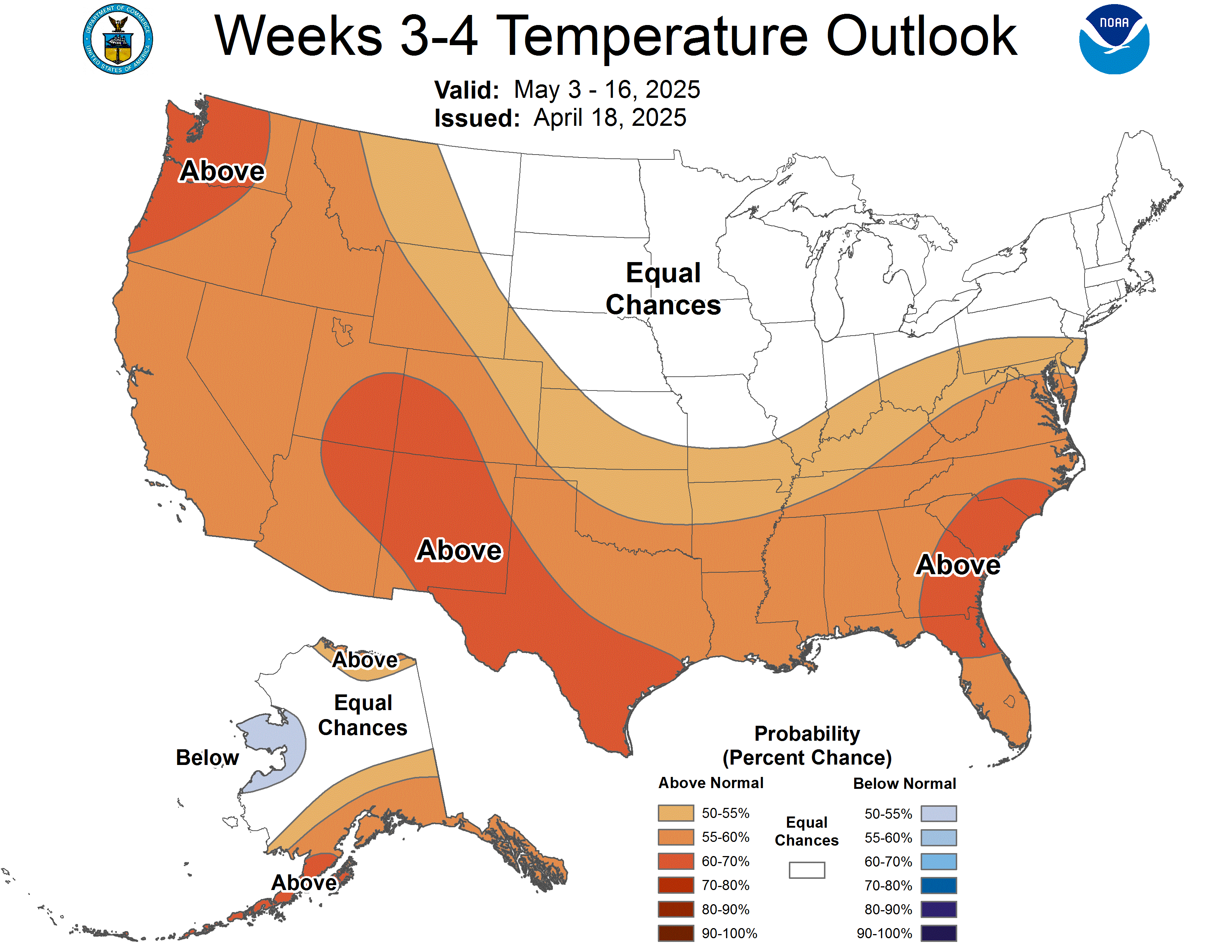 |
| The new monthly forecast is to the right. Does it appear to be reflective of the four parts of the month for which we have forecasts? → |
| ↑ ← The Week 3 – 4 forecast was updated today so we will not need to update the commentary when the update is issued. I do not see any major inconsistencies. | |
And Precipitation
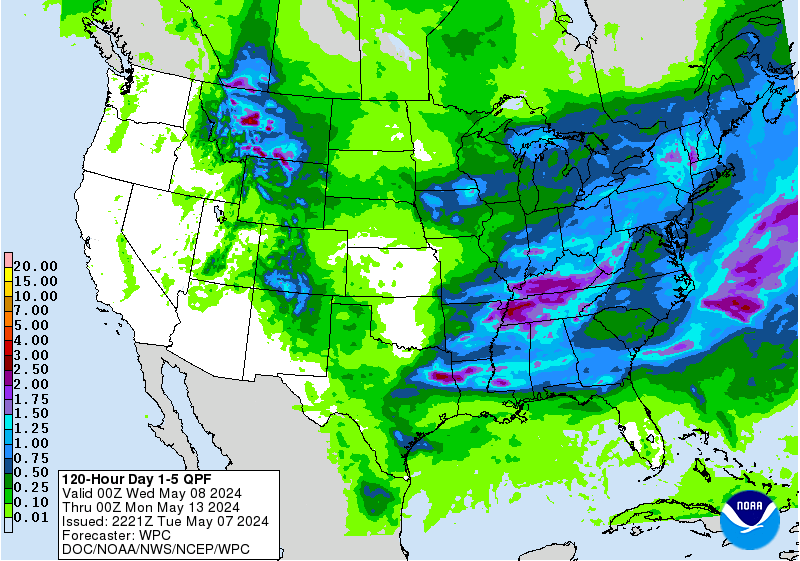 | 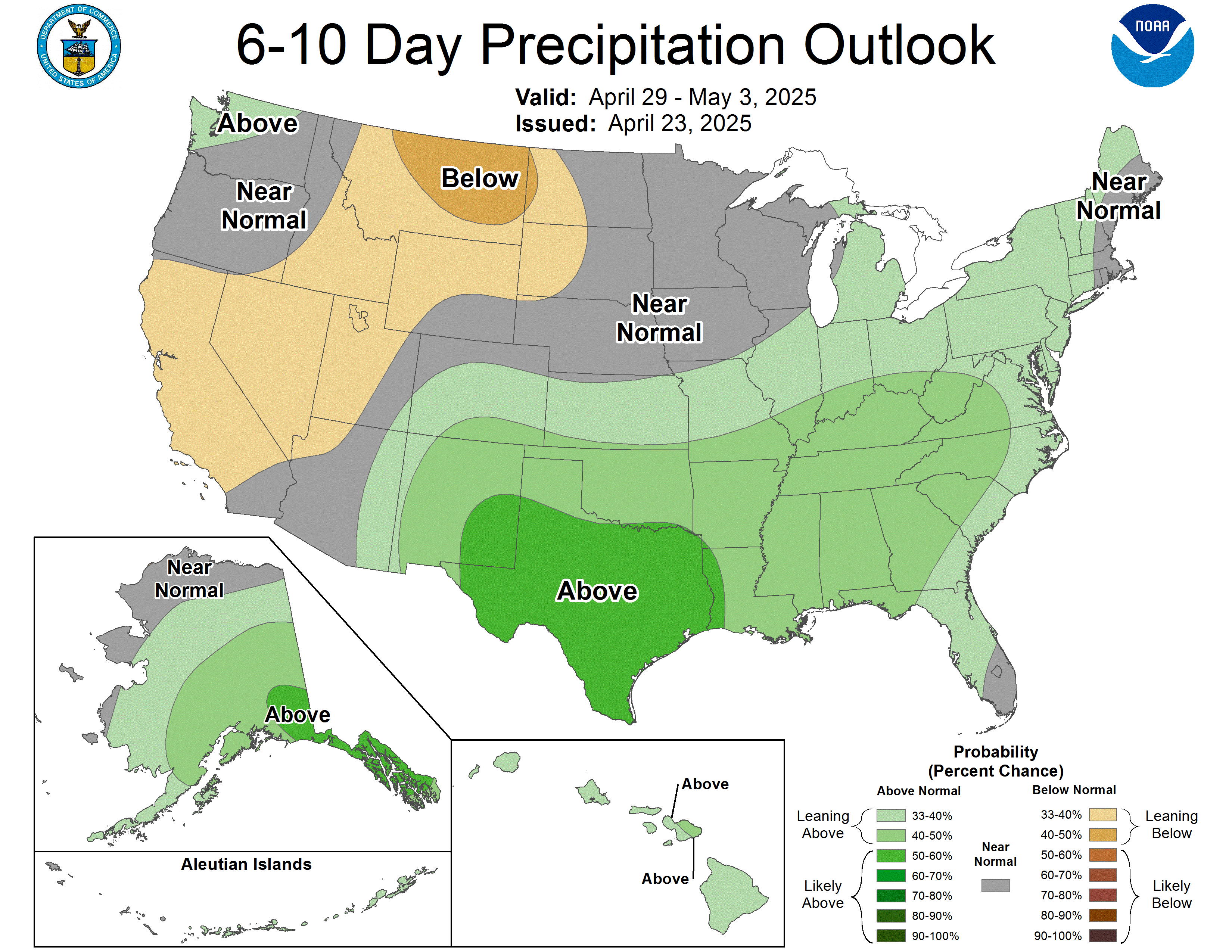 | 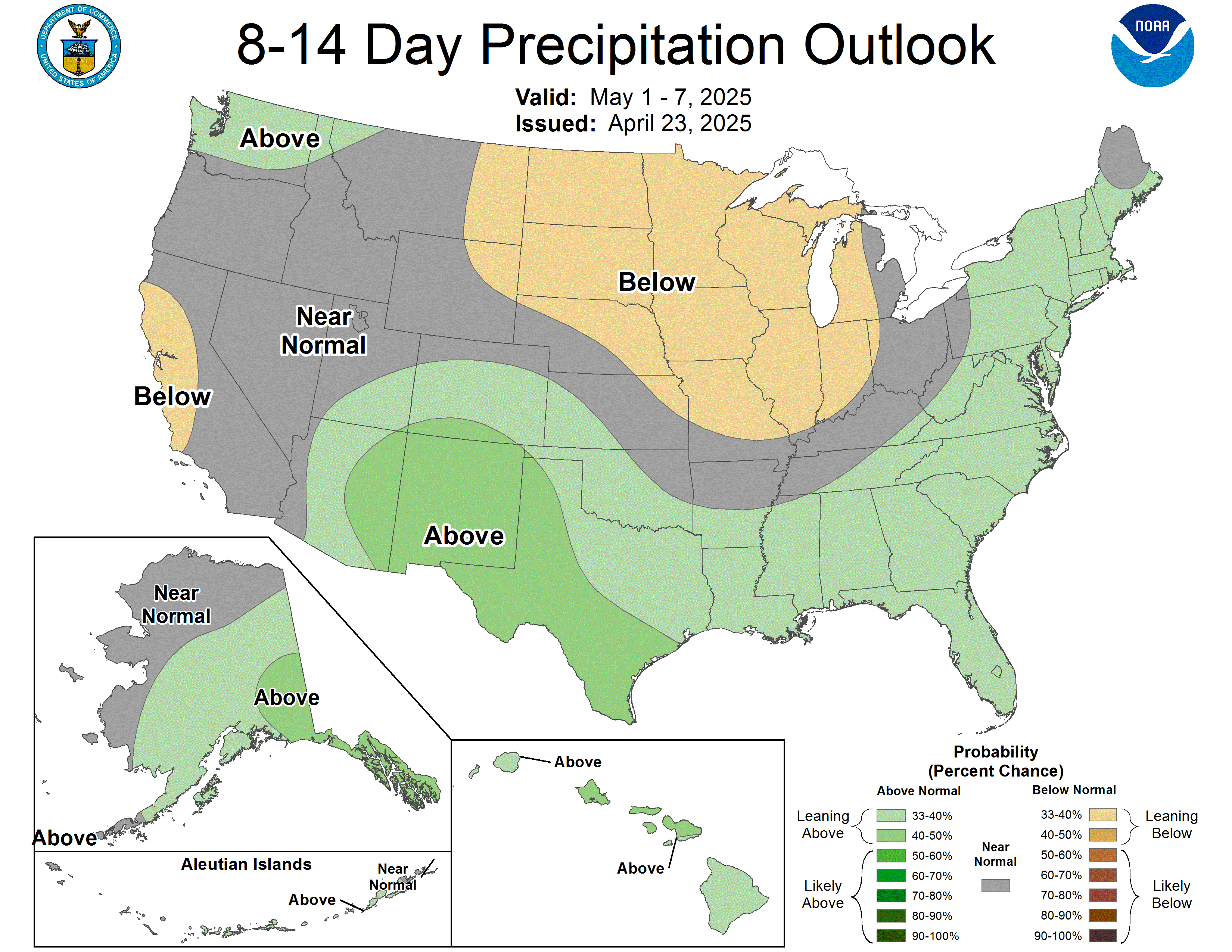 | 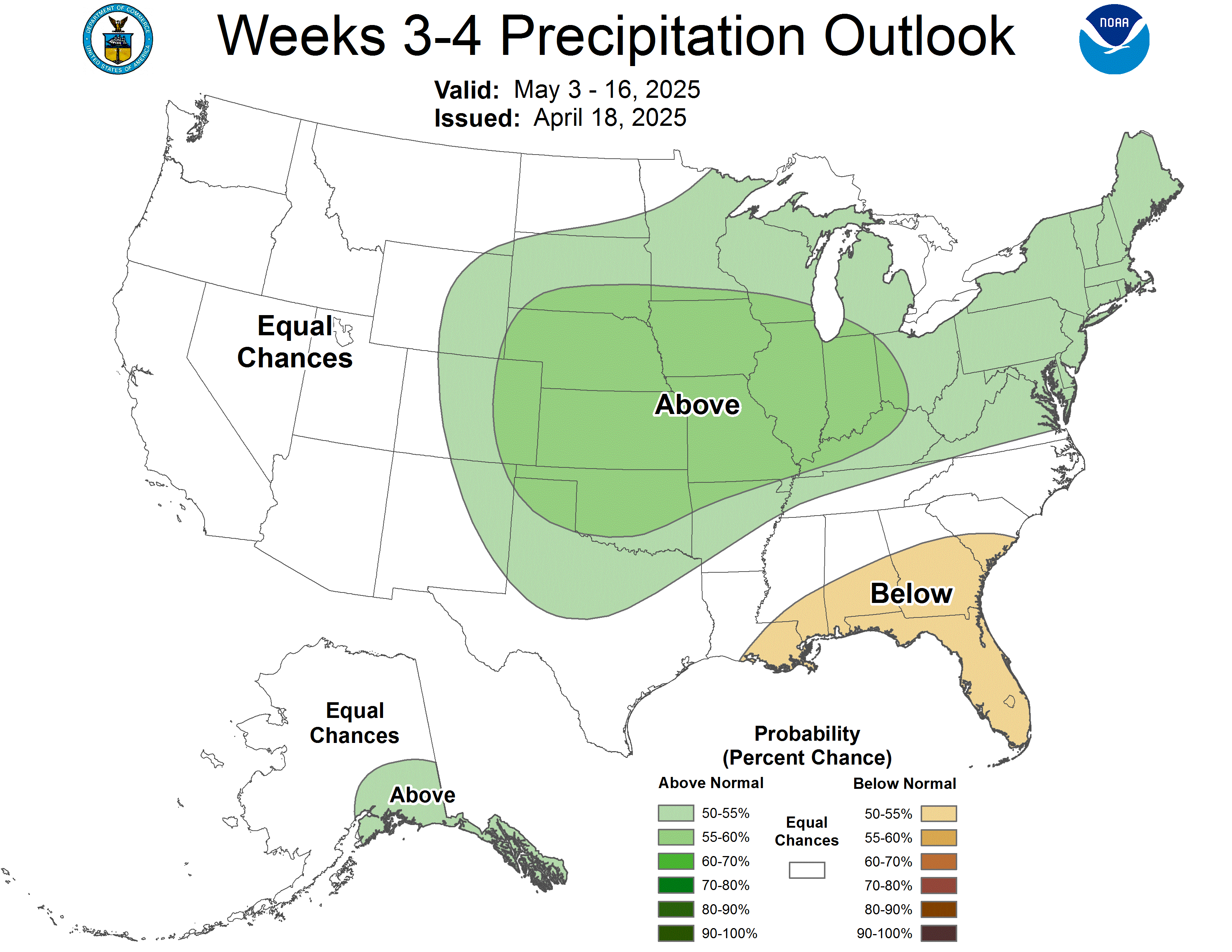 |
The new monthly forecast is to the right. Does it appear to be reflective of the four parts of the month for which we have forecasts? → |
| ↑ ←The Week 3 – 4 forecast was updated today so we will not need to update the commentary when the update is issued. The only potential inconsistency I see is with respect to Alaska. | |
Sometimes it is useful to compare the three-month outlook to the forecast for the first of the three months. It shows how much the pattern changes over the three-month period.
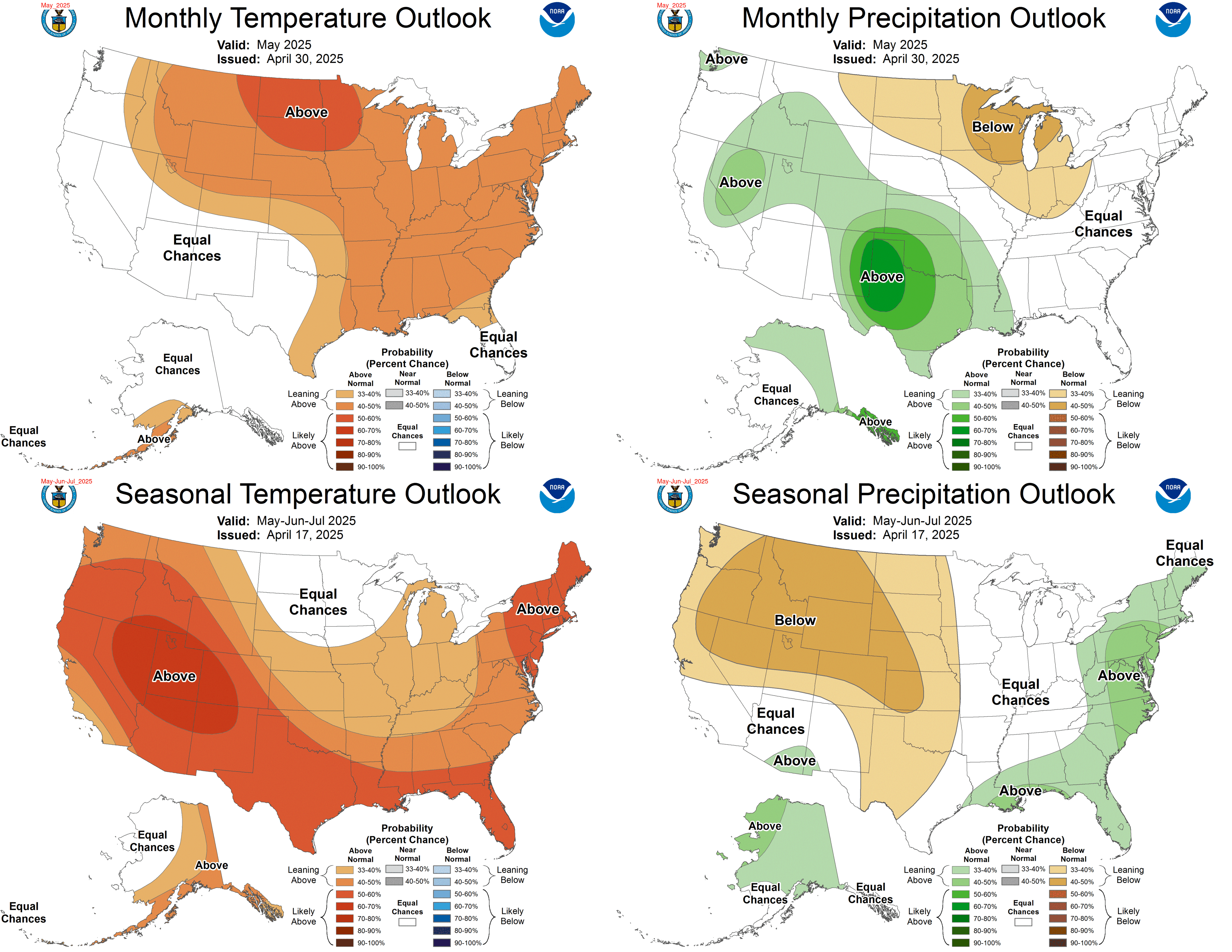
One can mentally subtract the First-Month Outlook from the Three-month Outlook and create the Outlook for the last two months in the three-month period.
And with respect to drought, this was also issued on May 31, 2019.

Looking back on May to relate the forecast for June to the actuals in May.
First Temperature

And then Precipitation

Summary
The purpose of this article was to present the updated Outlook for June 2019 and compare it with the Early Outlook. It is not to critique the updated Outlook for June based on our opinions. We have assessed the extent to which the monthly outlook seems to fit with the other forecasts provided by NOAA. We do not have a June forecast by JAMSTEC as they only provide three-month forecasts. In reality, all forecasts are obsolete when issued as the situation changes day by day or six hours by six hours i.e. each new model run. In our other articles, we continually examine the current forecasts from NOAA including the Day 1- 5, 6-10, 8-14 and Week 3 and 4. So we are continually looking at approximately 25 days into the future.
On June 13, 2019, IRI/CBC will issue their ENSO forecast and we will present that and critique it. It is an ongoing process and we attempt to provide our readers with the best current assessment of the next approximately 25 days (except when we cover the Four-Season Analysis or medium-frequency cycles such as ENSO), so our analysis is pretty much ongoing. We also publish a Live Severe Weather Article which updates in real time to reflect NOAA Weather Headlines. All of our reports including past versions of these reports can be located via the Directory/Archive which can be accessed here.
.


