


Written by Sig Silber
At the end of every month, NOAA issues an update to their Early Outlook for the following month which was issued on the Third Thursday of the Month. Usually, the changes are minor and that is the case this month which is a bit surprising given the End-of-Month Forecast Update is twelve days from the Early Outlook and the MJO forecast is now more intense. Nevertheless, the forecast has not changed very much. The forecast may not be the best news for the agriculture sector and we will discuss that on Thursday. There are also flooding concerns particularly for the Lower Mississippi River Valley.

Please share this article – Go to the very top of the page, right-hand side for social media buttons.
Although the general theme is mostly wet with warm coasts and a cool center of CONUS, it is important for readers to look at the maps for the month and the maps that we have in the article for the first five days, Days 6 – 10, Days 8 – 14 and Week 3 – 4 as the pattern is expected to change somewhat during the month. Other than the full-month map, the other maps will auto-update so this article will remain useful throughout the month.
Now let us address the NOAA Update of the May, 2019 Forecast.
A note about terminology; the deviations from climatology/normal are color coded but also labeled “A” for more than (above) normal and “B” for less than (below) normal. The area designated EC means Equal Chances of being more or less than normal. In the Short Term forecasts, NOAA has switched from using EC to N for Normal. For most purposes, EC and N can be considered to mean about the same thing. “N” implies a bit more certainty that the variation from Normal/Climatology will be small compared to “EC”.
First, we will compare the NOAA Early Outlook for May, 2019 with the newly issued update.
Early Outlook Temperature

Updated Temperature Outlook

Early Outlook Precipitation

Updated Precipitation

| April 18, 2019 Forecast for May | April 30, 2019 Forecast for May | |
| Temperature |
|
|
| Precipitation |
|
|
Here is the discussion released today:
30-DAY OUTLOOK DISCUSSION FOR MAY 2019
The May 2019 outlook is updated at the end of the month considering the latest forecast guidance for the month of May, including dynamical model forecasts for May average temperature and accumulated precipitation from the NCEP Climate Forecast System (CFS) and Global Ensemble Forecast System (GEFS), as well as shorter range forecasts for week 1 and 2 from the NCEP GEFS, ECMWF, and Canadian (ECCC) models, and guidance for weeks 3 and 4 from the CFS, ECMWF and JMA models as well as the Subseasonal Experiment (SubX), a suite of experimental and operational models, including the GEFS and ECCC models. The background climate state is similar to that during the release of the prior May outlook issued mid-April. El Nino conditions continue across the equatorial Pacific, and are forecast to persist, likely into boreal summer. Equatorial convection is enhanced near and just west of the International Date Line, and upper-level anticyclonic circulations are observed to the north and south of the equator. An MJO event developed recently, with enhanced convection progressing eastward from the Indian Ocean to the Maritime Continent in the last week. Dynamical models predict the progression of enhanced convection across the Western Pacific in the next couple of weeks, where it may alter the current El Nino influenced background state.
The temperature outlook indicates a larger area of enhanced probabilities of below normal than the previous May outlook for much of the central CONUS east of the Rockies. The area of likely below normal extends eastward to the western Great Lakes, across the northern tier, and from the southern Rockies to western Texas in the south. Enhanced probabilities of above normal temperatures continue in the outlook for much of the eastern CONUS, while likely below normal temperatures for the Northeast early in the month lead to reduced probabilities for May above average temperatures for the region. Dynamical model forecasts for increased probabilities of below normal temperatures over the central CONUS and above normal temperatures over the Southeast in week 2 appear to be influenced by an active MJO over the Western Pacific. Above normal temperatures continue to be most likely for Alaska and the northwest CONUS, under predicted ridging, with the highest probabilities over western and southern coastal areas of Alaska, where above average sea surface temperatures persist. Decadal trends and dynamical model forecasts indicate a slightly enhanced probability of above normal temperatures extending into parts of the Southwest, west of the Four Corners region.
The precipitation outlook indicates substantially enhanced probabilities of above normal from northeastern Texas into eastern Oklahoma and Kansas, as well as the states of Arkansas and Missouri, where heavy precipitation is predicted in dynamical model forecasts for the first week of May, and above normal precipitation is likely throughout the month. The precipitation outlook for above normal precipitation over much of the central CONUS and along the Gulf Coast for May appears consistent with the current El Nino base state as modified by MJO activity over the western Pacific. Dynamical model forecasts predict enhanced probabilities of above normal precipitation for May from parts of Central and Southern California eastward into the Central Rockies, and across the Central and Southern Plains to the Mississippi Valley ahead of troughing near the southwestern CONUS. The outlook indicates slightly enhanced probabilities of above normal precipitation extending eastward to the Appalachians and Florida, where dynamical model forecasts indicate below normal precipitation in the first couple days of May and during the second half of the month, but precipitation in model forecasts for week 2 increase the chances of above normal for total monthly accumulated precipitation. The outlook indicates equal chances of above and below normal precipitation for the Atlantic Coast from Georgia to Maine. Dynamical model forecasts for May from the CFS and GEFS continue to indicate enhanced probabilities of below normal precipitation for the southern Alaska Panhandle and for much of the Pacific Northwest, under a predicted mid-level ridge, while above normal precipitation is likely for much of western Alaska, ahead of a predicted trough over the Aleutians.
Visual Consistency Testing.
It is useful to see how the month forecast fits with the set of shorter forecasts that we have. These will continue to update in this article.
First Temperature
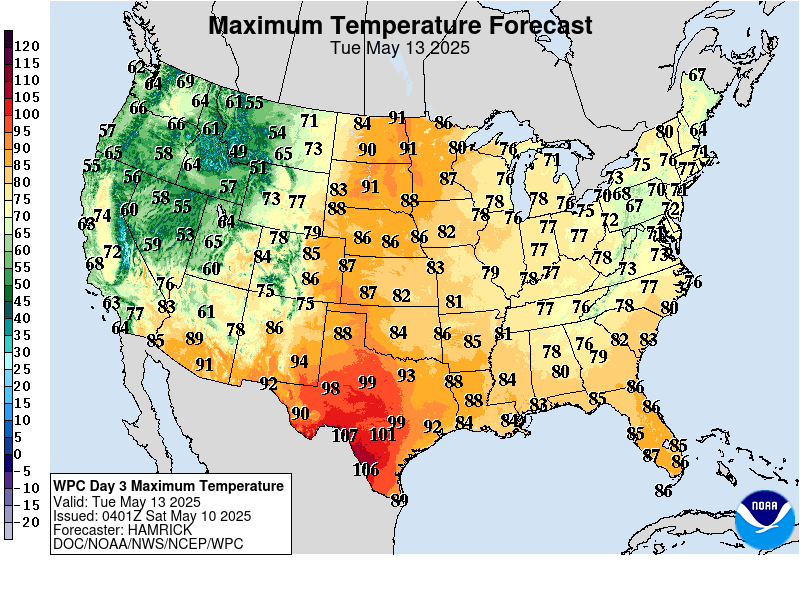 | 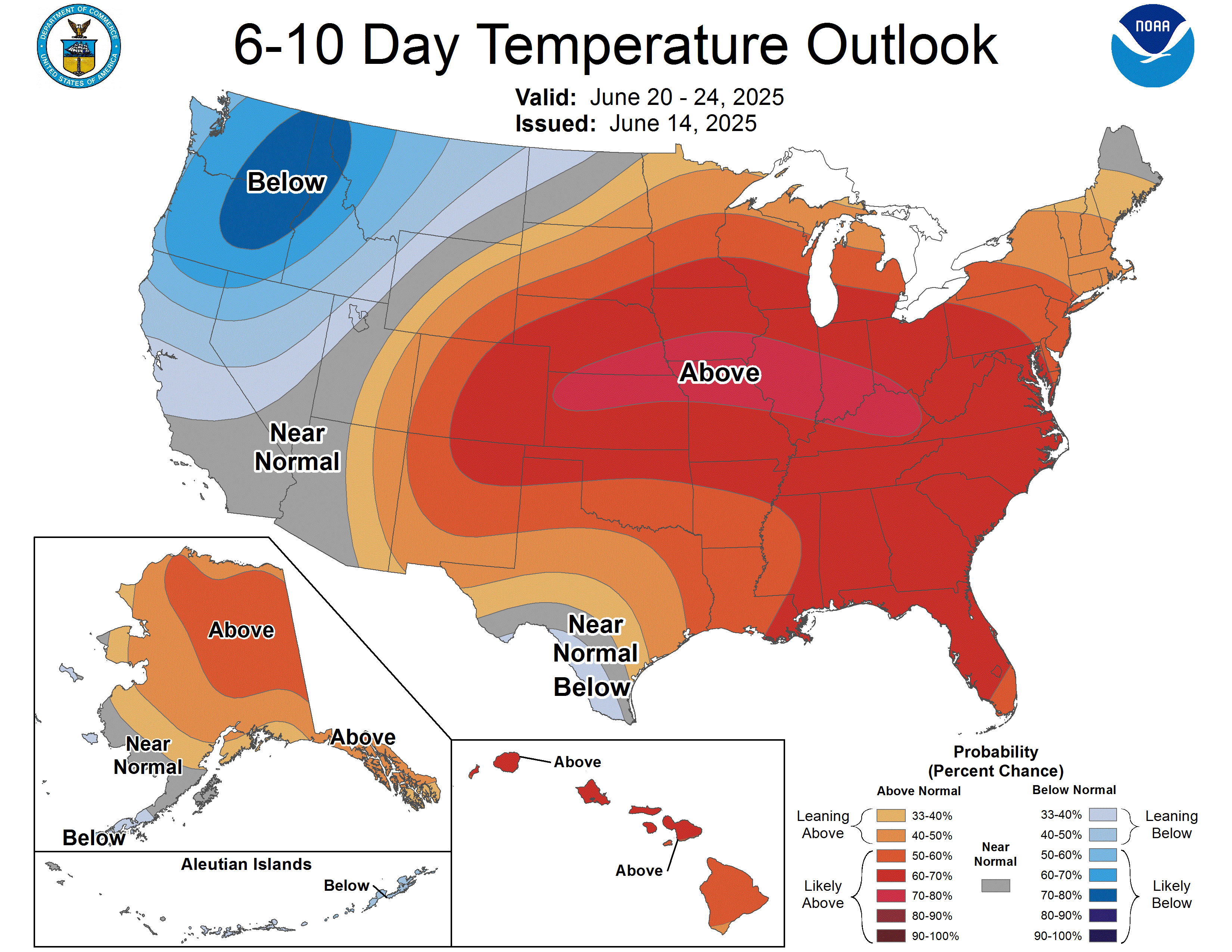 | 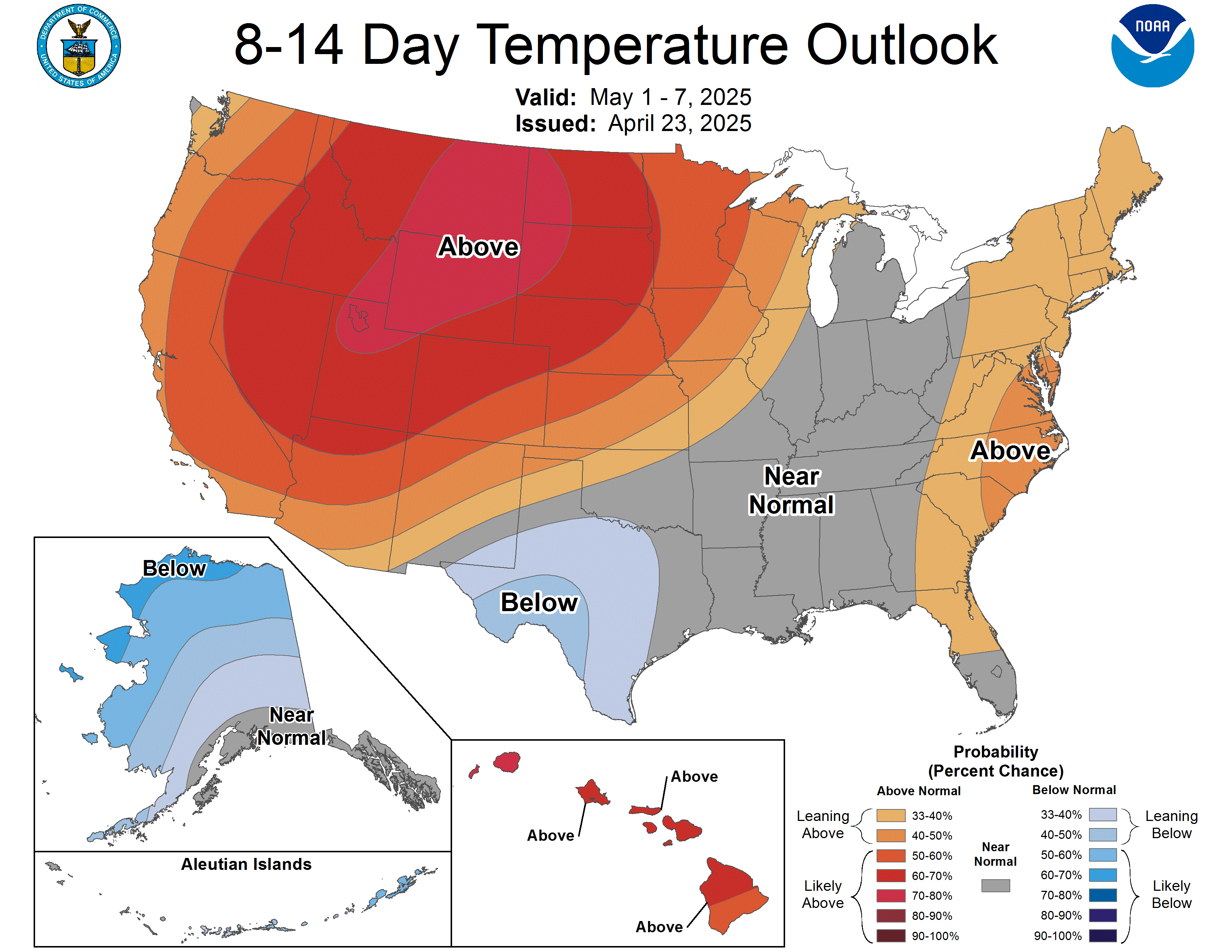 | 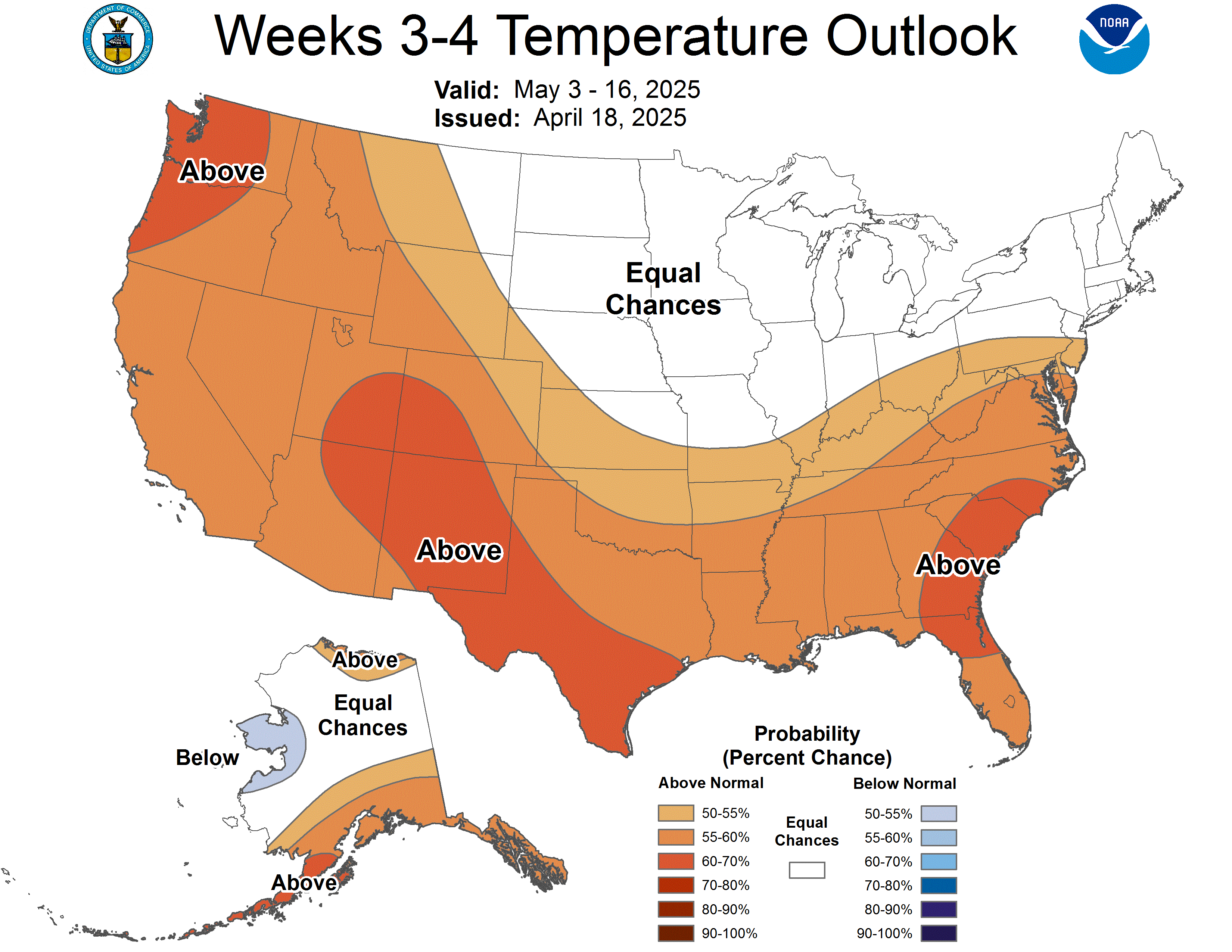 |
| The new monthly forecast is to the right. Does it appear to be reflective of the four parts of the month for which we have forecasts? → |
| ↑ ← The Week 3 – 4 forecast will be updated on May 3 so we may need to update the commentary when the update is issued but the new Week 3 – 4 forecast was probably considered by NOAA in preparing the forecast even though it has not yet been released to the public. | |
And Precipitation
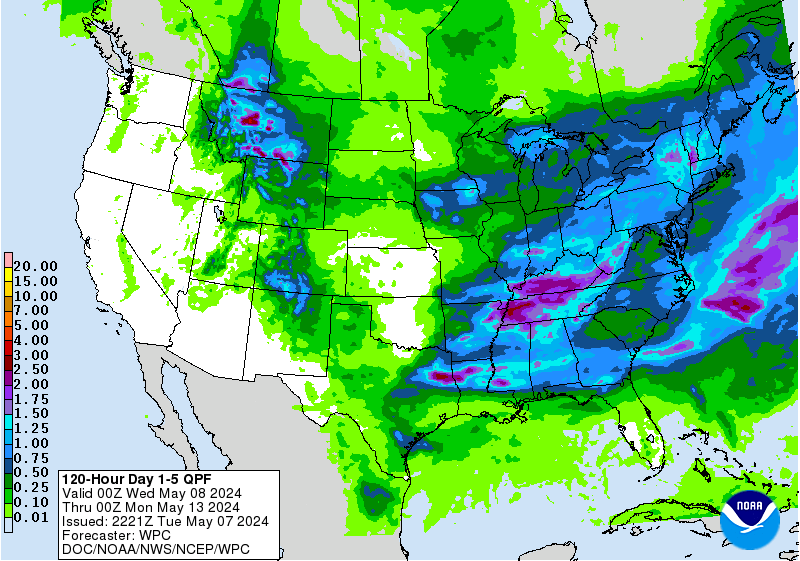 | 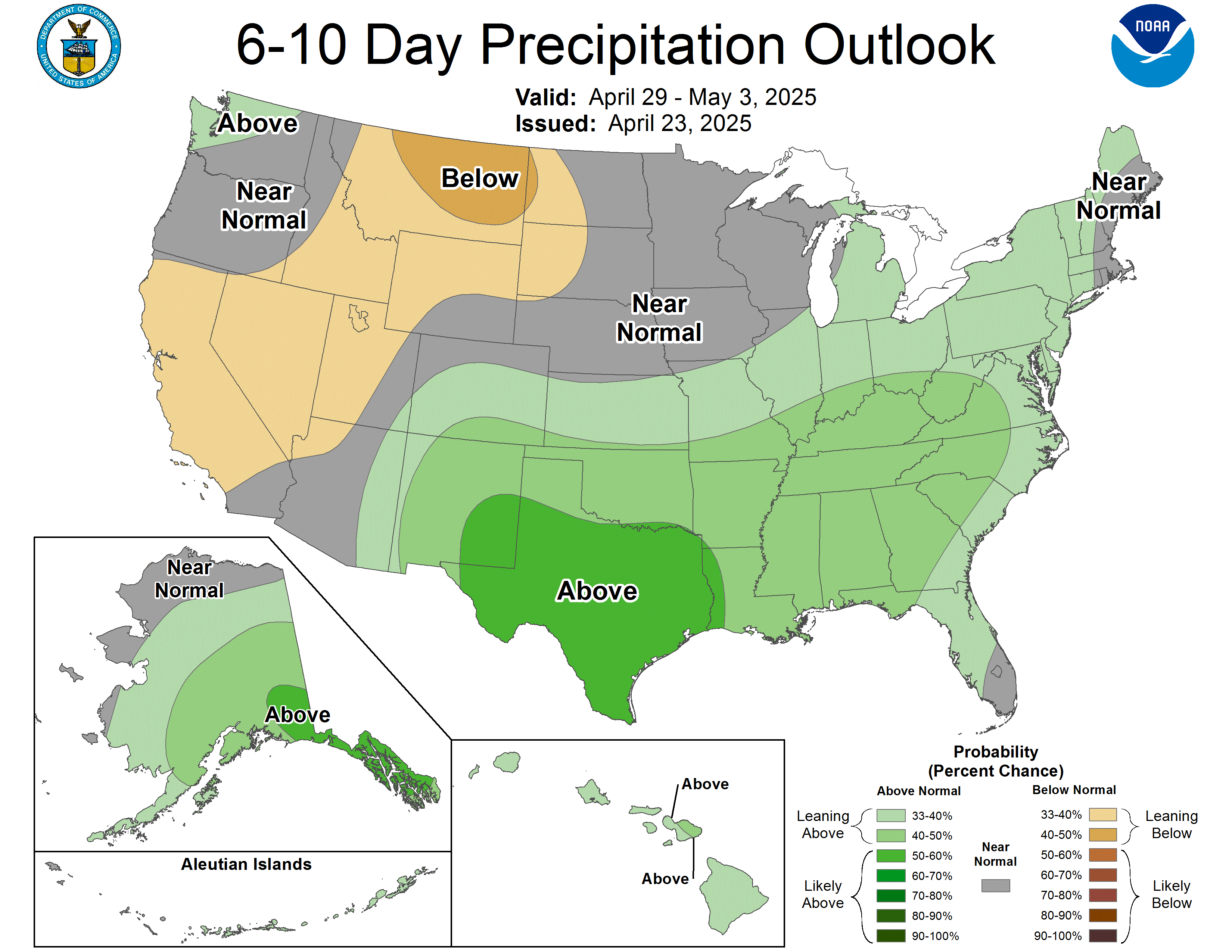 | 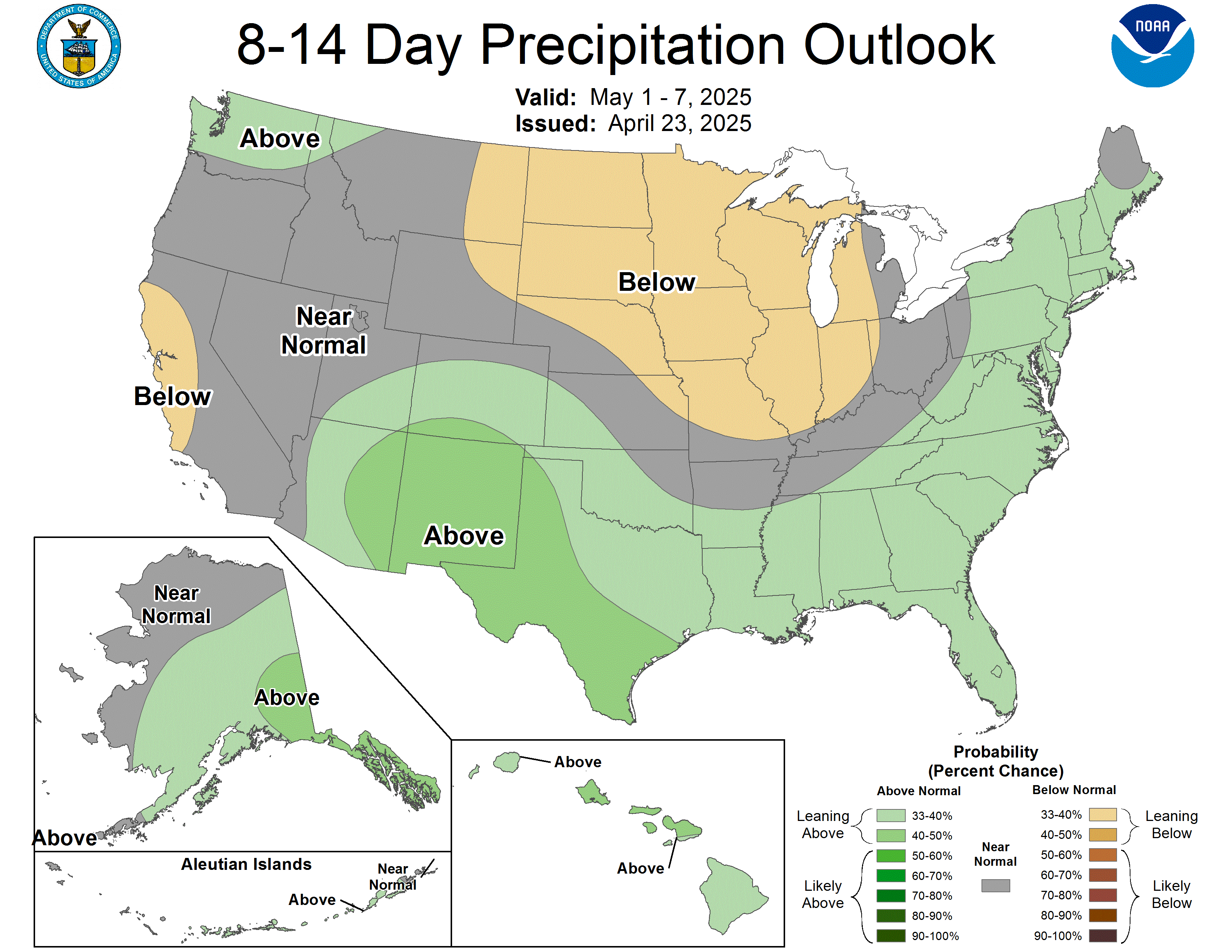 | 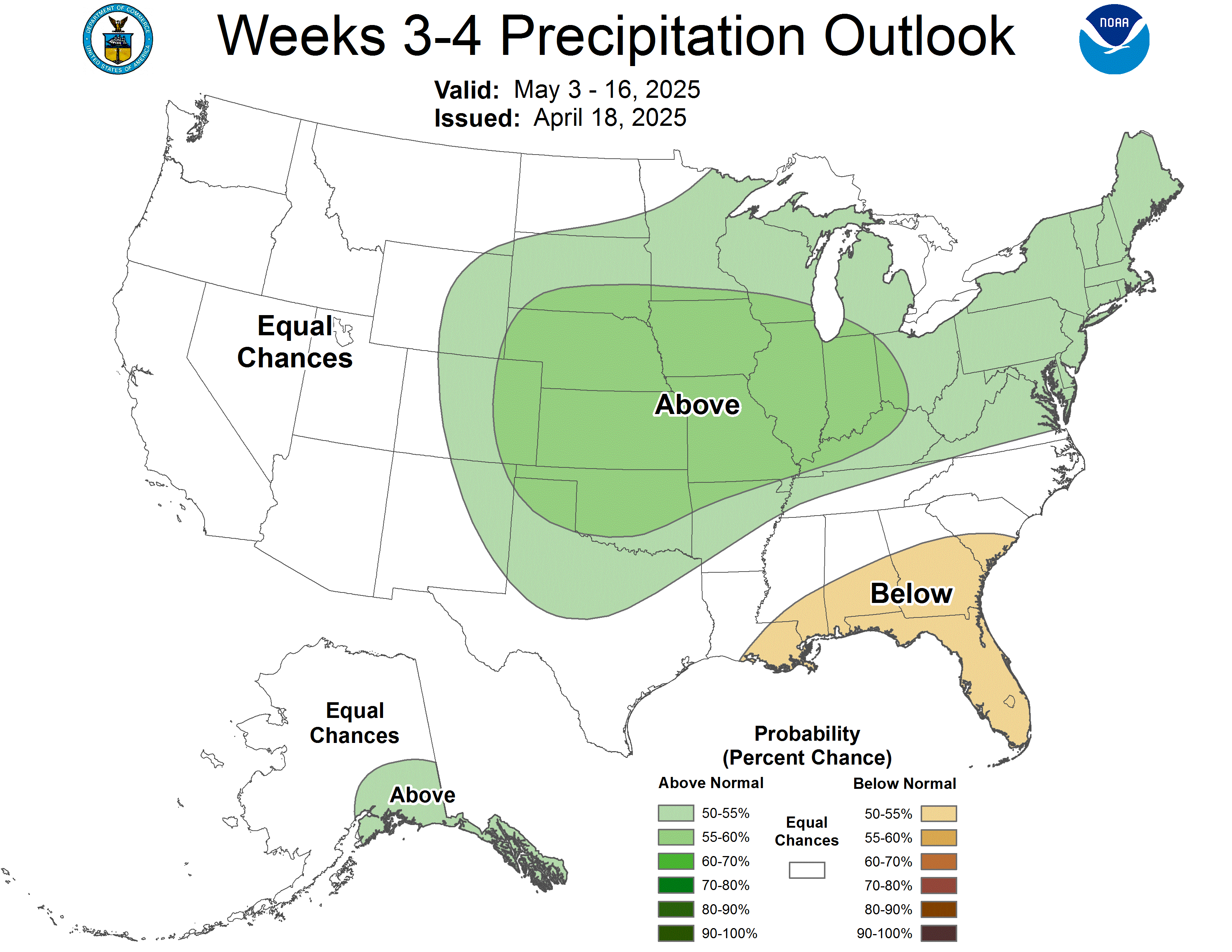 |
The new monthly forecast is to the right. Does it appear to be reflective of the four parts of the month for which we have forecasts? → | f | ↑ ←The Week 3 – 4 forecast will be updated on May 3 so we may need to update the commentary when the update is issued but the new Week 3 – 4 forecast was probably considered by NOAA in preparing the forecast even though it has not yet been released to the public. | |
Sometimes it is useful to compare the three-month outlook to the forecast for the first of the three months. It shows how much the pattern changes over the three-month period.

One can mentally subtract the First-Month Outlook from the Three-month Outlook and create the Outlook for the last two months in the three-month period.
And with respect to drought, this was also issued on April 30, 2019.

Looking back on April to relate the forecast for May to the actuals in April.
First Temperature

And then Precipitation

Summary
The purpose of this article was to present the updated Outlook for May, 2019 and compare it with the Early Outlook. It is not to critique the updated Outlook for May based on our opinions. We have assessed the extent to which the monthly outlook seems to fit with the other forecasts provided by NOAA. We do not have a May forecast by JAMSTEC as they only provide three-month forecasts. In reality, all forecasts are obsolete when issued as the situation changes day by day or six hours by six hours i.e. each new model run. In our other articles including the Weather Economic Impact article which will be published Thursday May 2, 2019), we continually examine the current forecasts from NOAA including the Day 1- 5, 6-10, 8-14 and Week 3 and 4. So we are continually looking at approximately 25 days into the future.
On May 9, 2019, IRI/CBC will issue their ENSO forecast and we will present that and critique it. It is an ongoing process and we attempt to provide our readers with the best current assessment of the next approximately 25 days (except when we cover the Four-Season Analysis or medium-frequency cycles such as ENSO), so our analysis is pretty much ongoing. We also publish a Live Severe Weather Article which updates in real time to reflect NOAA Weather Headlines. All of our reports includng past versions of these reports can be located via the Directory/Archive which can be accessed here.
.


