


Written by Sig Silber
Updated at 6 PM EDT April 12, 2019 to reflect the updated Week 3 – 4 Forecast which overall appears to be favorable re reduced flooding and reduced drought.
U.S. and World Agriculture: Plus an Expanded Weather Forecast Section
Although it may not seem like it everywhere, the overall circulation has changed to a Spring pattern. Agriculture, which has been negatively impacted by the weather in the U.S. being too cold and too wet, has begun to recover to some extent. This year’s Winter Wheat crop is much better than last year which was very seriously impacted by drought. Although it is very early, it seems that Spring Wheat and Barley are off to a slow start. Natural gas has been negatively impacted by a combination of oversupply and inadequate pipeline capacity. Not well reported but too much rain in the Middle East has created a Humanitarian Crisis. Weather has impacts.

Please share this article – Go to the very top of the page, right-hand side, for social media buttons.
| It is important to understand that the impact of weather on economic activity varies from one place to another. In this article, we try to provide a broad view of the impacts focusing mostly on the U.S. but also to a lesser extent on the Rest of the World. |
Major Sources of Information Used in this Weekly Report
|
1. Special Reports and Highlights.

Monthly Official ENSO Status
EL NIÑO/SOUTHERN OSCILLATION (ENSO) DIAGNOSTIC DISCUSSION issued by CLIMATE PREDICTION CENTER/NCEP/NWS and the International Research Institute for Climate and Society 11 April 2019
ENSO Alert System Status: El Niño Advisory
Synopsis: A weak El Nino is likely to continue through the Northern Hemisphere summer 2019 (65% chance) and possibly fall (50-55% chance).
El Niño continued during March 2019, as above-average sea surface temperatures (SSTs) persisted across the equatorial Pacific Ocean. The latest weekly values of the Niño3 and Niño4 indices were +0.8°C, while the Niño3.4 value was +0.9°C. The anomalous upper-ocean heat content (averaged across 180°-100°W) decreased during March but remained well above average , as the above-average temperatures at depth peaked in early March in association with a downwelling equatorial oceanic Kelvin wave. Enhanced equatorial convection was observed near the Date Line and in the western Pacific, while suppressed convection prevailed over western Indonesia. Low-level wind anomalies were westerly in the western Pacific Ocean during March. Meanwhile, upper-level winds were mostly near average. The equatorial and traditional Southern Oscillation Index values were negative [Editors Note: Misleading see below]. Overall, these features are consistent with a weak El Niño.
The majority of models in the IRI/CPC plume predict a Niño 3.4 index of +0.5°C or greater through the remainder of 2019. Most forecasters expect SST anomalies in the Niño 3.4 region to remain between +0.5°C and +1.0°C for at least the next several seasons, indicating a weak El Niño. However, because forecasts made during spring tend to be less accurate, the predicted chance that El Niño will persist through fall is currently 50-55%. In summary, a weak El Niño is likely to continue through the Northern Hemisphere summer 2019 (65% chance) and possibly fall (50-55% chance
This discussion is a consolidated effort of the National Oceanic and Atmospheric Administration (NOAA), NOAA’s National Weather Service, and their funded institutions. Oceanic and atmospheric conditions are updated weekly on the Climate Prediction Center web site (El Niño/La Niña Current Conditions and Expert Discussions). Forecasts are also updated monthly in the Forecast Forum of CPCs Climate Diagnostics Bulletin. Additional perspectives and analysis are also available in an ENSO blog. The next ENSO Diagnostics Discussion is scheduled for 9 May 2019.


State Ranking Reports for March, 2019

Now precipitation.

Lake Powell still in trouble but snowmelt is delayed this year.

Flooding.
Here is the current status of flooding.

More information can be found here.
2. Summary of Intermediate-Term Weather Forecast (helpful to predict drought and floods etc)
Here is the summary of the forecast for the next approximately twenty-five days. We provide this so that we can make our own assessment of the drought forecast. Here I provide the weather forecasts for different periods of time in which should allow the reader to assess the likelihood of this forecast working out as shown over the next three to four weeks. Since we publish this week on Thursday, we generally update the discussion for the Week 3 – 4 forecast when it is updated on Friday. This is important as the current Day 6 – 14 forecasts and the week-old week 3 – 4 forecast overlap to some extent.
Later we provide additional information relative to the weather forecast analysis but here is the summary.
First Temperature
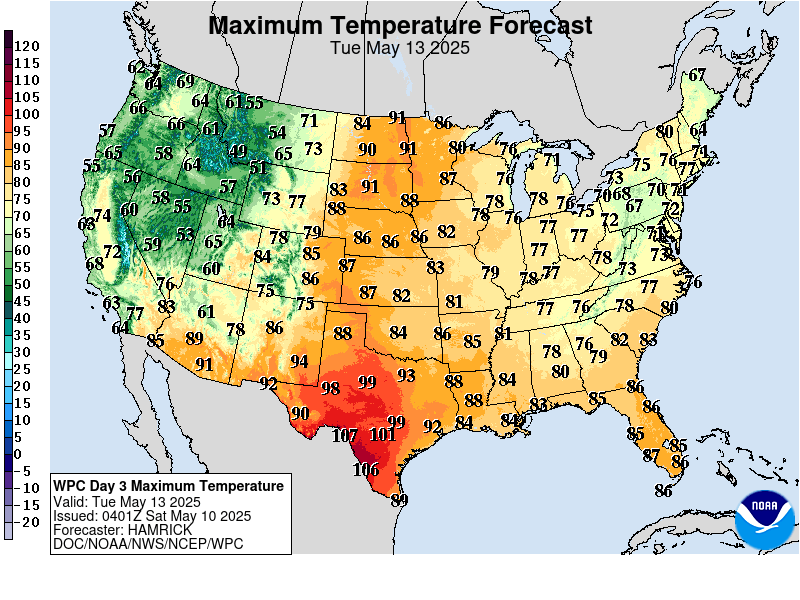 | 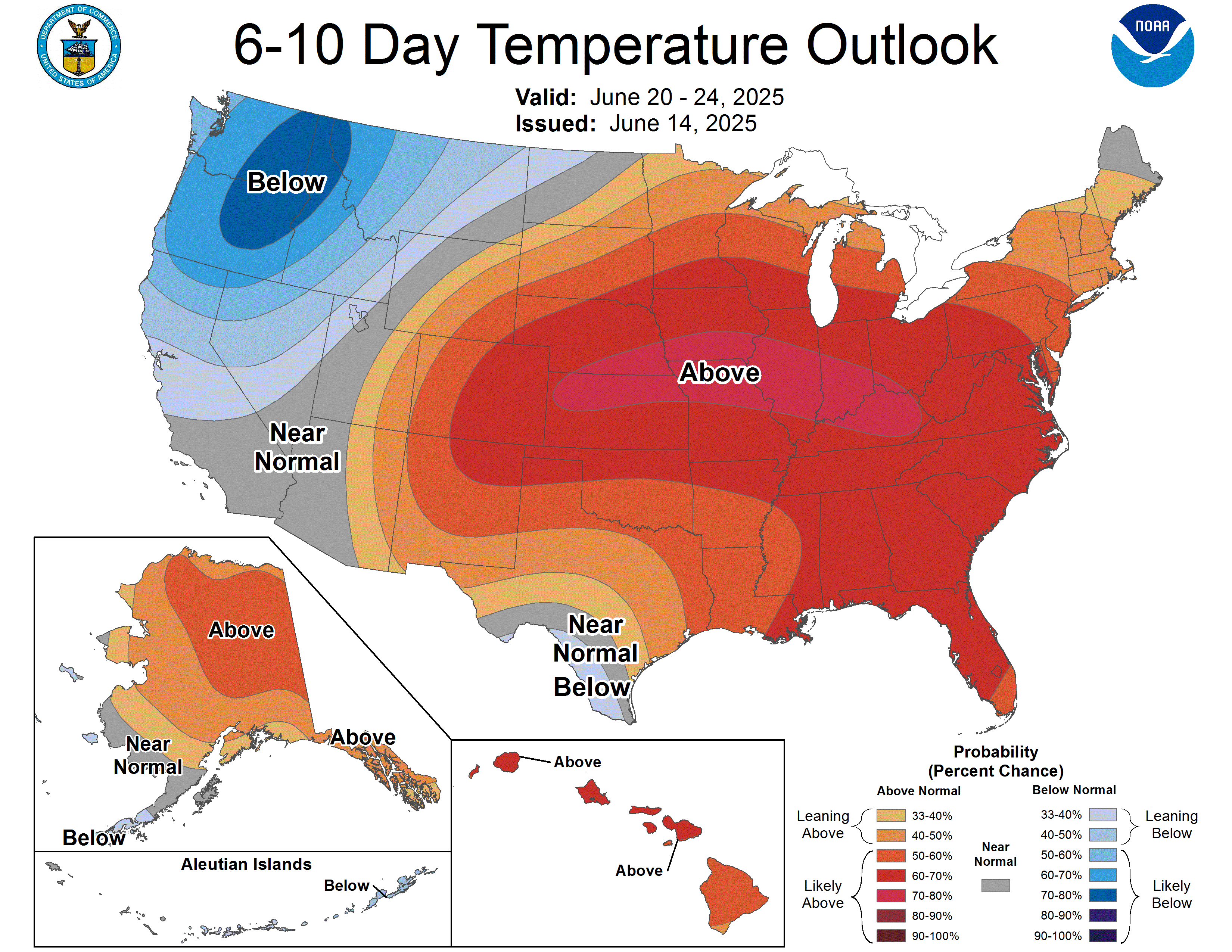 | 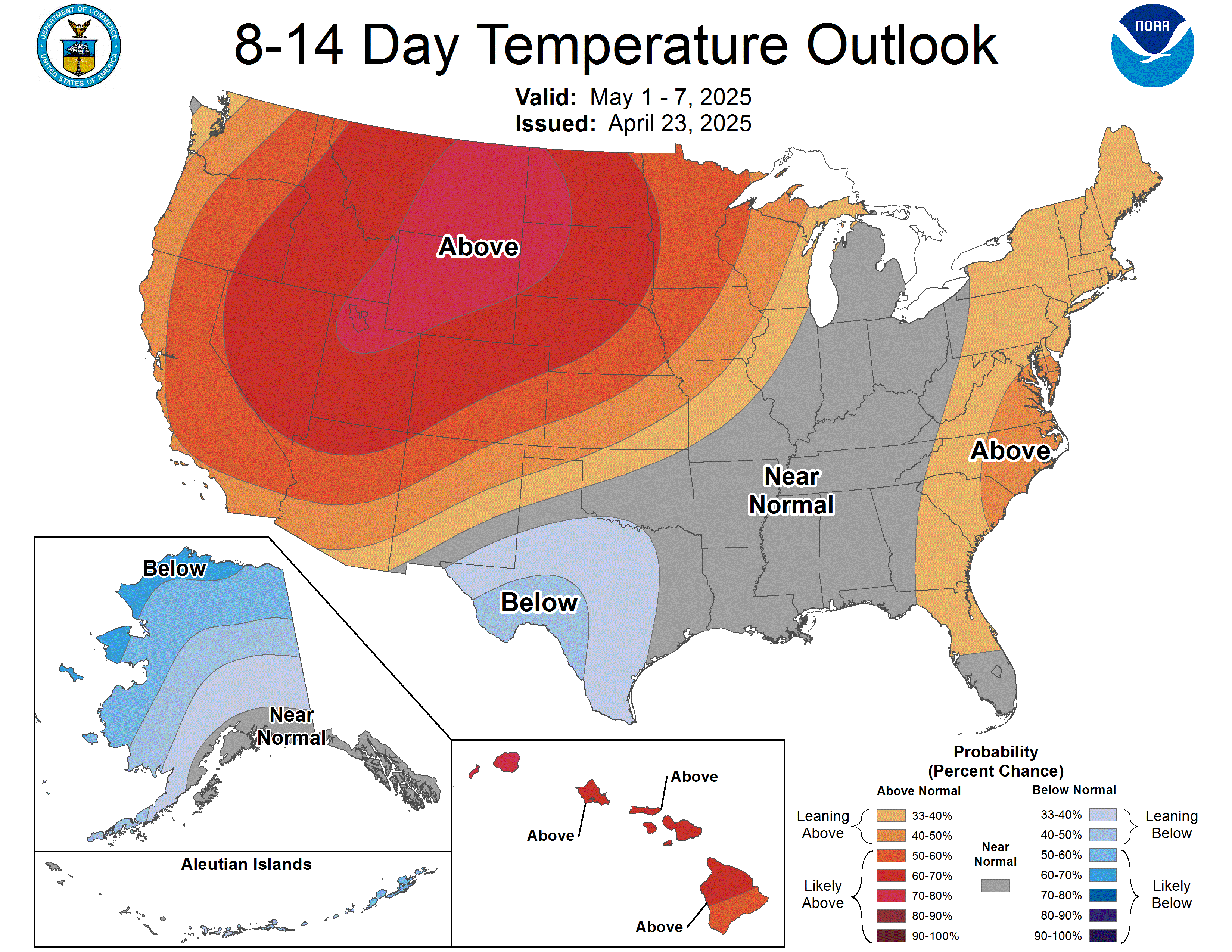 | 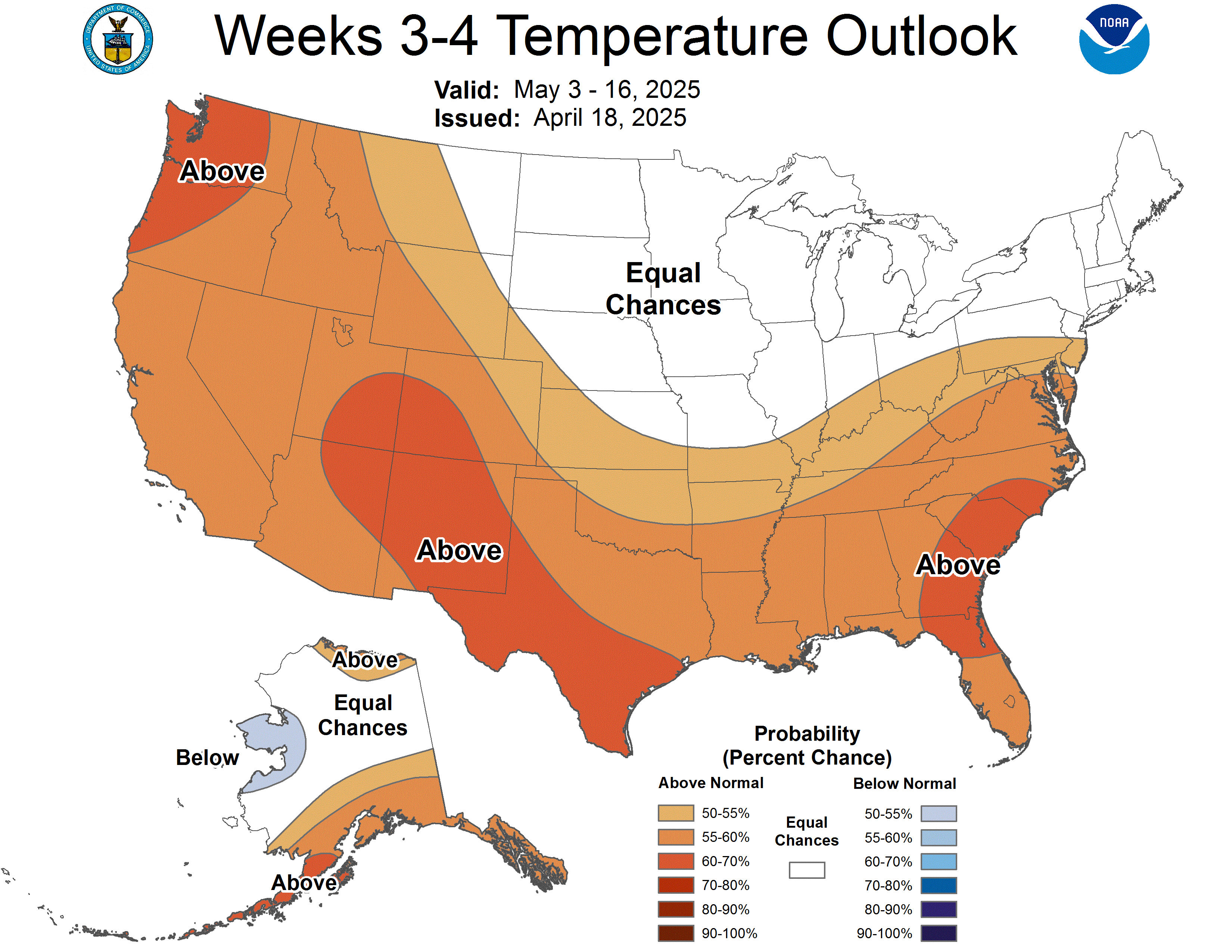 |
| This shows magnitude rather than the probability of being higher or lower than Normal and shows the middle day of the five day period. | The cool anomaly is moving to the east in Week – 2 | The Week 3 – 4 Forecast was updated on April 12, 2019 It is fairly good news re the current drought and also the current flooding. | |
And then Precipitation
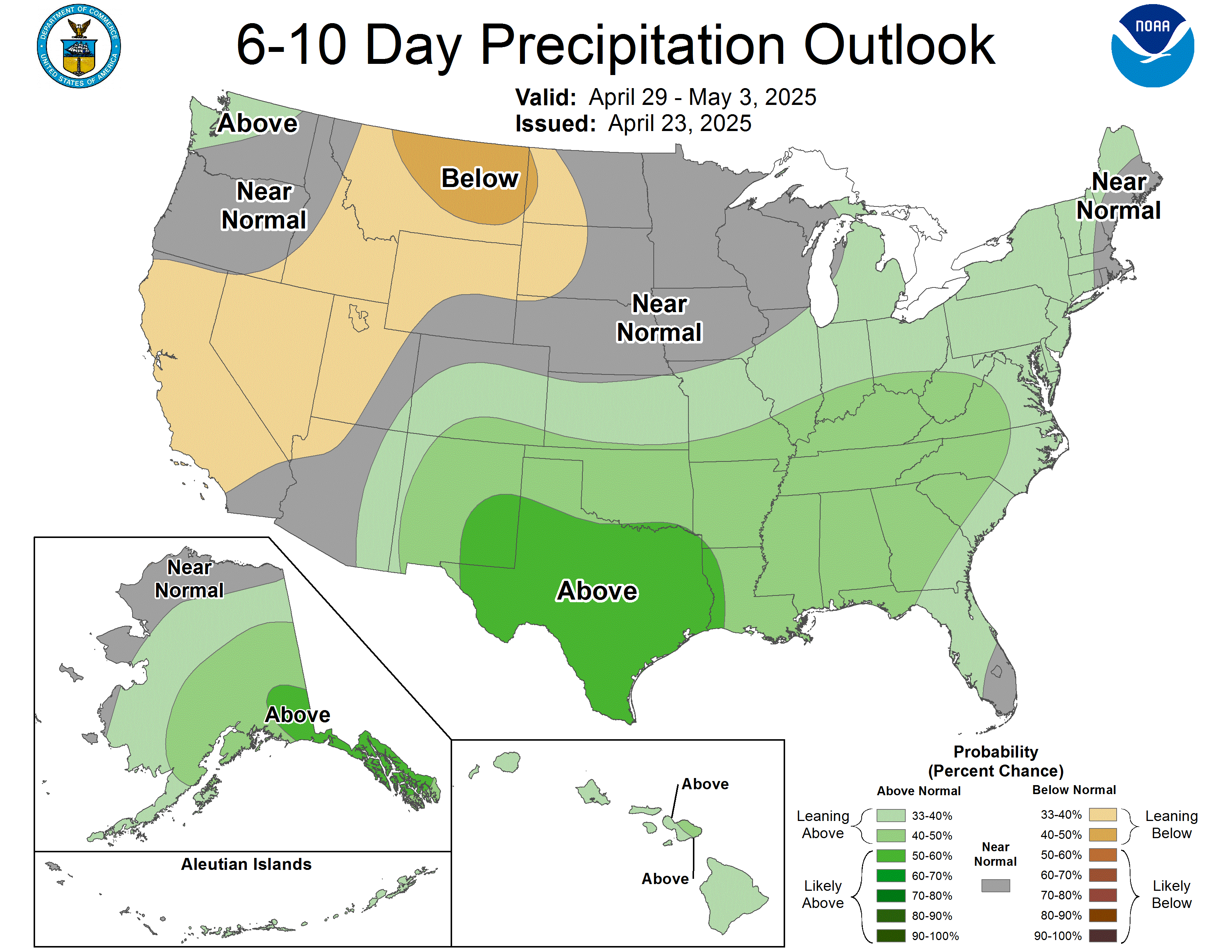 | 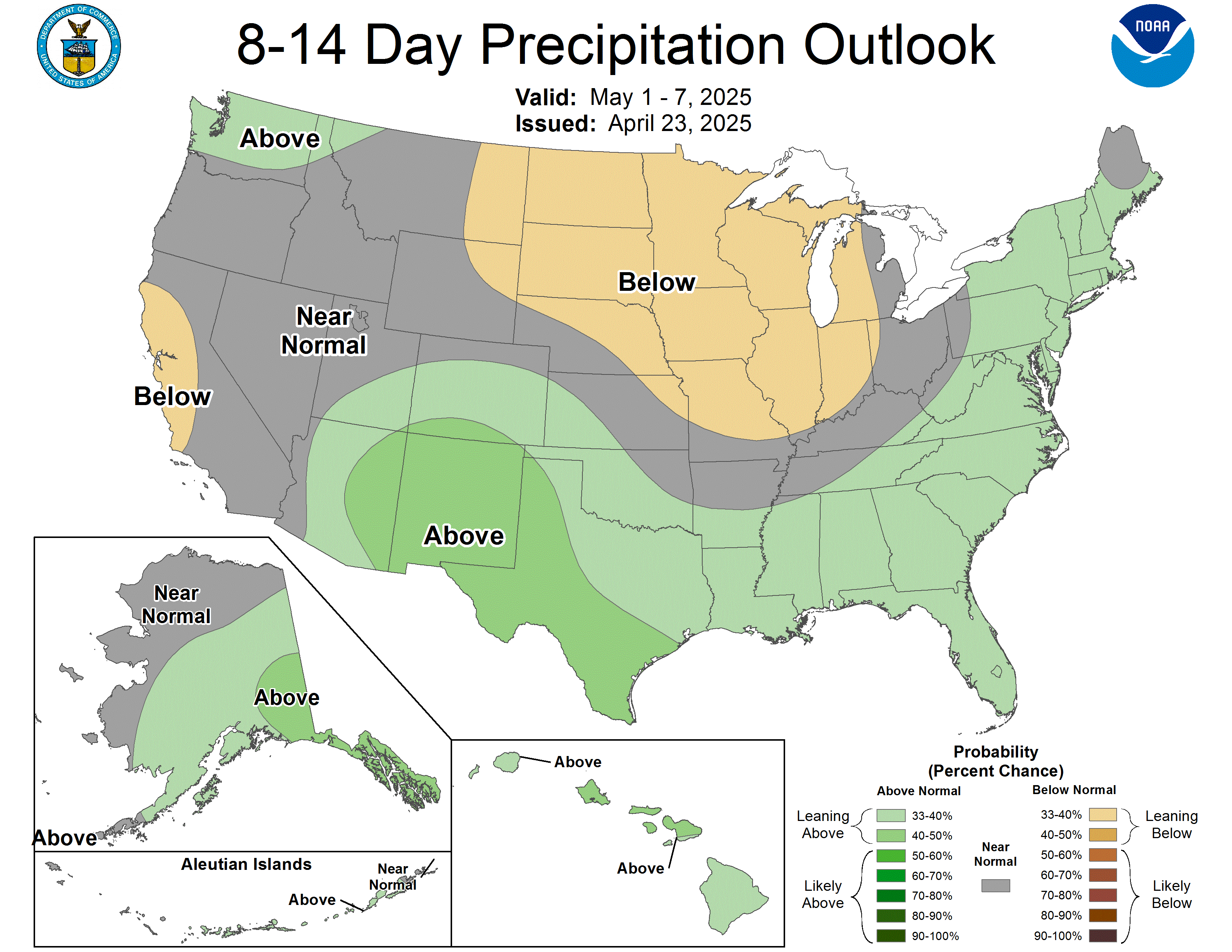 | 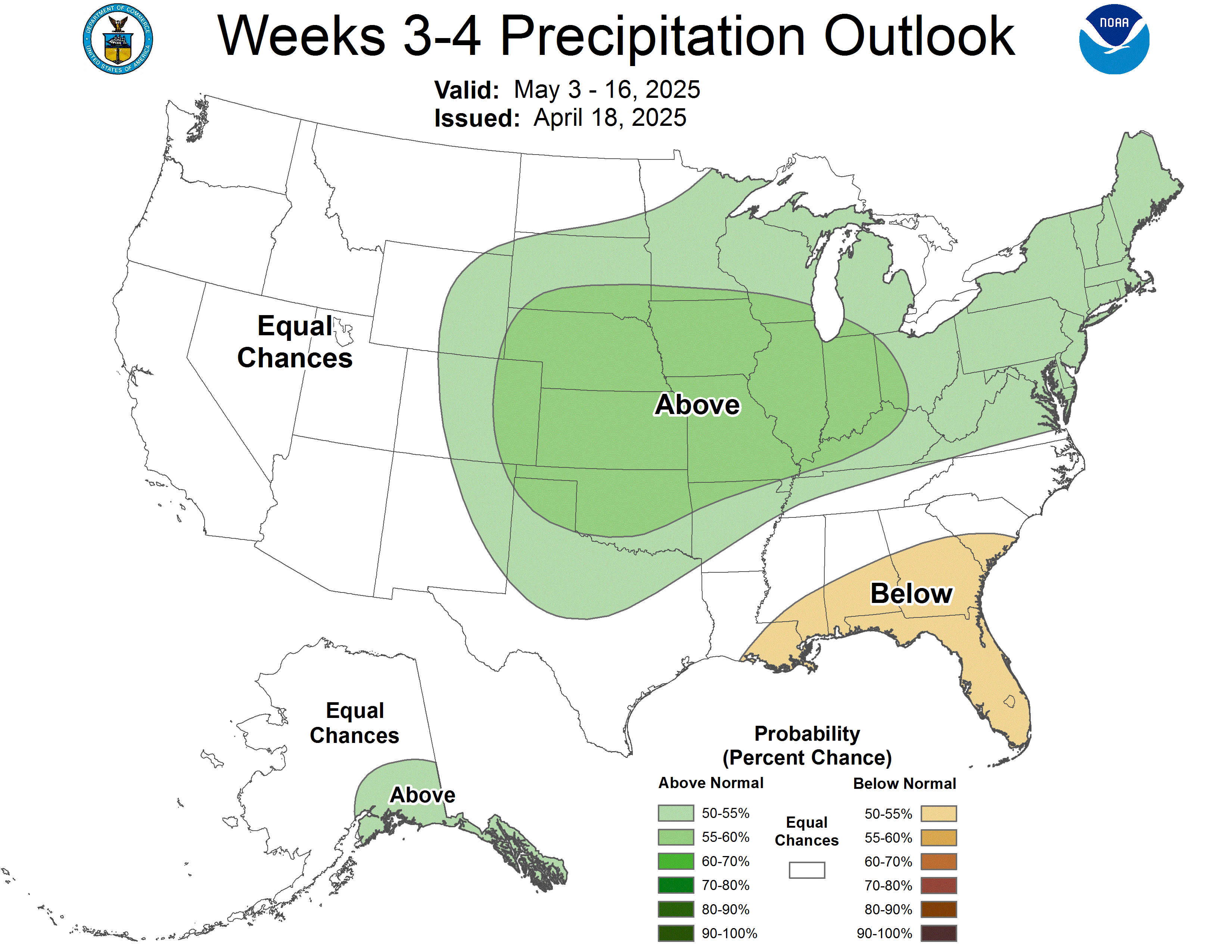 | |
| The five-day QPF is shown above. The units are different than the other maps i.e. in units of precipitation (inches) not probabilities of exceeding or being less than climatology. | Moderately wet. Becoming less wet in Week -2 but still wet. | The Week 3 – 4 Forecast was updated on April 12, 2019 It is good news for Oregon and Southern Texas.
| |
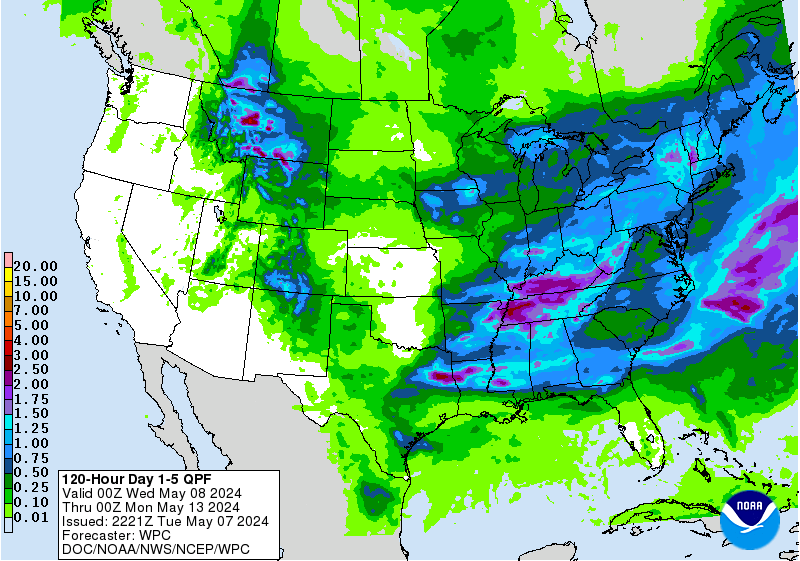
Additional Information on the forecast is provided later.
Here is the discussion that was released with the Week 3 – 4 Forecast: Notice that it kind of walks back the NOAA Advisory that we are in an El Nino.
Prognostic Discussion for Week 3-4 Temperature and Experimental Precipitation Outlooks NWS Climate Prediction Center College Park MD 300PM EDT Fri Apr 12 2019
Week 3-4 Forecast Discussion Valid Sat Apr 27 2019-Fri May 10 2019
The MJO has not been active since mid-March, but dynamical model MJO index forecasts depict the potential for an emerging convective signal over the Indian Ocean during the next two weeks, which would present destructive interference with the ongoing El Ni�o state. The latest guidance for Week-2 does not resemble canonical ENSO-driven climate anomalies, with troughing centered near the Great Lakes supporting below-normal temperature forecasts for much of the east-central U.S., and ridging over the Southwest which would promote above-normal temperatures and below-normal precipitation. The dynamical model guidance for Week 3-4 indicates the potential for a substantial pattern change from Week-2, with rising 500mb heights across the eastern U.S., and a breakdown of the ridging over the West. While the CFS and JMA depict a rapid pattern change from Week-2 to Week-3, the ECMWF is slower to remove the troughing and below-normal temperatures from the eastern U.S. during Week-3. These timing differences result in considerable spread in the forecast temperature and precipitation anomaly fields, especially early in the period. This outlook is based on a consolidation of the dynamical and statistical model guidance, which highlights areas of agreement among the tools, with adjustments made to depict a more consistent evolution from the forecasted Week-2 pattern.
Dynamical models continue to favor above-normal temperatures across much of Alaska, with the highest probabilities across the southwestern portion of the state. Sea ice is rapidly declining along the northwestern coastline, so while the dynamical models continue to depict near to below-normal temperatures along the north slope, this outlook leans more heavily on the long-term trends which are strongly positive across northern Alaska. Across the CONUS, below-normal temperatures are favored for parts of the California, the Great Basin, and the Desert Southwest, due in part to weakness in the predicted 500mb height field. A small area of higher probabilities for below-normal temperatures extends across northern California due to an enhanced precipitation signal. Below-normal temperatures are also favored across the Northeast due to the potential for a lingering trough early in the period. In contrast, building heights support enhanced chances for above-normal temperatures across much of the rest of the eastern half of the U.S., although equal chances for below- and above-normal temperatures are maintained along the Texas Gulf Coast due to a pattern supportive of return-flow from the Gulf of Mexico.
The most consistent precipitation signal in the guidance supports above-normal rainfall for the southern half of the Florida peninsula. Above-normal rainfall is also favored across northern California and the northern Intermountain West. A consensus of dynamical and statistical model guidance supports increased probabilities for below-normal precipitation extending from the mid-Mississippi Valley through the Northeast, while Gulf moisture may promote enhanced rainfall across parts of Texas. Onshore flow over eastern Alaska supports above-normal precipitation, with model guidance favoring below-normal precipitation to the west.
SST anomalies have been gradually increasing in the vicinity of Hawaii, and dynamical models, including the multi-model ensemble of the subseasonal experimental (SubX) suite, generally favor above-normal temperatures across Hawaii, particularly the southeastern islands. Consistent with El Nino conditions, most of the guidance favors below-normal precipitation, although several SubX models depict enhanced rainfall over the Big Island.
3. Present Drought Conditions
The U.S. Drought Monitor is a comprehensive way of understanding the drought situation for the U.S. It is issued every Thursday and reflects the conditions as of the prior Tuesday. Drought is defined as a moisture deficit bad enough to have social, environmental or economic effects. Thus, more factors than recent precipitation are considered and more information on how it is done is found at the end of this report.

Something new that I probably will not show each week. But it can be found here.

Below is the map for just CONUS and with statistics and below that map I have provided a cut-out of the statistics which I think you can click on to enlarge. When you click on graphics that I have set up to enlarge often with your mouse right click and then click on “view image” and that will work.
 |
 |
| Last Week | This Week |
| |

The graphic below shows the one-week change in drought intensity. Yellow is bad. Green is good.
|

Now we show the week to week change information by region. The yellow is where the drought has been upgraded. The green is where the level of drought has been downgraded.
 |
Minor deterioration in Wyoming. |
 |
| No Change |
 |
| A little deterioration here in Maryland and New York State. |
 |
You can see sort of a Northwest to Southeast divide related probably to the Gulf Coast. |
 |
| Some fairly minor changes here. |
 |
Oregon looking a lot better. Some disappointment that the Four Corners did not improve but that is a long-term situation and probably will not change much until the Monsoon happens or does not happen. |
I do not think it is useful right now to think in terms of a core drought area so I am not some of the graphics we have been showing that focused on the West and the Four Corners Area in particular
Some may still find this way of looking at things useful and I hope these graphics are not too small to read. I did not make them so you could click on them individually but you can click on the whole graphic and it may enlarge. But I think you get the picture. It has been a rapid onset and demise. When you read these graphics, remember that the older graphics are not the drought conditions that existed then but the change from then until now.

Some might find this animation of twelve weeks of change useful;

Here is the discussion which was issued with the Drought Monitor today.
This Week’s Drought Summary
After a dry March, a series of storms brought much needed precipitation to the Pacific Northwest, staving off further degradations in Washington and resulting in local flooding and broad drought improvements in Oregon. Elsewhere, the West remained largely status quo with the only degradation in drought conditions occurring in the Big Horn Mountains where snowpack has been well below normal all winter. The South and Southeast saw a mixture of improvements and degradations. Locally heavy rainfall brought improvements to parts of Texas, Louisiana, and the Carolinas while areas such as southeastern Alabama saw an expansion of moderate drought. Much of the remainder of the country remains largely free of drought and abnormal dryness.
Northeast
The Northeast saw the development of two abnormally dry regions, in western New York and northeast West Virginia. Western New York has experienced precipitation deficits over the last three months, resulting in low streamflow values. While the deficits in West Virginia have occurred over a shorter time scale, they are more pronounced with stations reporting precipitation totals over the last 30 days that fell within the top three driest in a nearly 200-year period of record.
Southeast
The Southeast experienced warmer than normal temperatures. While much of the region saw above normal precipitation, it generally was not enough to overcome deficits of 5 to 7 inches in southern Alabama and the Florida Panhandle that have been in place since the beginning of the year. Small reductions in abnormal dryness and/or moderate drought occurred in southeast North Carolina, northeast South Carolina, and in south Florida. Moderate drought conditions expanded in parts of southeast Alabama, southwest Georgia, and the Florida Panhandle where deficits have continued to grow and streamflow and soil moisture remain low.
South
Locally heavy rainfall, 4 to 8 inches, fell over parts of central and east Texas, southern Arkansas, Louisiana, and northern Mississippi. Abnormally dry conditions and moderate drought were improved in central and southern Louisiana, with dryness/drought persisting in areas where long-term precipitation and soil moisture deficits still exist. Likewise, Mississippi saw a reduction in abnormal dryness in the south-central portion of the state. Texas saw a mixture of improvements and degradations. Conditions generally improved in central and south Texas where severe drought was eliminated and moderate drought and abnormal dryness were reduced in response to the recent rainfall and improved soil moisture. Degradations generally occurred in the north Texas, which missed out on the surplus rainfall and where precipitation and soil moisture deficits continue to build.
Midwest
Cooler than normal temperatures prevailed across the Midwest last week with near normal precipitation falling across much of the region. The region remained free of drought or abnormal dryness.
High Plains
Precipitation across the High Plains was generally near normal over the last week, with the exception of northeast Nebraska and southeast South Dakota. Temperatures were warmer than normal in all but eastern North Dakota. Temperatures ranged from 3 degrees below normal in Grand Forks to 14 degrees above normal in the Nebraska Panhandle. No changes were made to the map this week and the area remains free of drought and abnormal dryness.
West
With the exception of Wyoming, conditions in the West improved or maintained status quo. A series of storms brought heavy rain and mountain snow to the Pacific Northwest resulting in the elimination of abnormal dryness in northern California and a one-category improvement over much of Oregon. While Washington also received beneficial rains, the amounts were not sufficient to put a dent in the long-term deficits and drought emergencies still exist in several river basins. Elsewhere, reductions in abnormal dryness also occurred in western Idaho, and in northern and east-central Nevada. Moderate drought conditions developed in the Big Horn Mountains of Wyoming where snowpack has been low all winter.
Alaska, Hawaii, and Puerto Rico
Moderate and severe drought continued in southeastern Alaska. This week, the impact designation was changed from “L” to “SL”, to indicate that the area is experiencing short-term impacts and seasonal shortages in precipitation in addition to those caused by long-term dryness. Reduced hydropower caused by low reservoir levels has necessitated the use of diesel generators, negatively affecting air quality in the region. In Hawaii, weekend rain on the windward side of the Big Island was of little benefit to the existing drought areas. Moderate drought conditions spread eastward into the Honokaa and Ookala areas and over the upper slopes of Mauna Kea. Ranchers in the area reported hauling water for cattle due to poor pasture conditions. Moderate drought also expanded near South Point. The leeward areas of Oahu continued to dry out, resulting in the expansion of moderate drought. Dry conditions have been a contributing factor to recent brush fires outside of Honolulu. Rainfall brought some relief to the abnormally dry areas in northwestern Puerto Rico, with the exception of Rincon, Aguada, and Anasco. Abnormal dryness also developed on the southwestern and south-central part of the island which are experiencing elevated fire conditions.
Pacific Islands
El Nino and post-El Nino-like dry conditions continued across parts of the USAPI during this USDM week (4/3/19-4/9/19). Inter-Tropical Convergence Zone (ITCZ) activity occurred across southern Micronesia in the form of a near-equatorial trough in the west, with a couple weak disturbances or circulations moving through it, and converging trade winds in the east. A dry trade wind regime blew drier subsiding air from the North Pacific subtropical ridge (the North Pacific High) across northern portions of Micronesia. The ITCZ convection extended south of the equator as the South Pacific Convergence Zone (SPCZ). The SPCZ was manifested as a surface trough near the Samoan Islands, but its influence was weak due to a competing surface ridge which built over the islands. The ITCZ and SPCZ activity was reflected on satellite-based estimates of 7-day precipitation (QPE) as a broken band of rainfall from southeast Micronesia (across the southern Marshall Islands, RMI) extending west-northwest to the Republic of Palau and Yap State. Areas of 2-plus inches of rain were in this band, with 4-plus inches around northern Palau, parts of Yap State, and from Kosrae State to the southern RMI. Little to no rainfall was indicated on the QPE north of this band. The precipitation band extended south of the RMI to about 10 degrees south, then fell apart toward the Samoan Islands. (Synoptic summary by Richard Heim.)
Dry conditions continued in the Mariana Islands during the first full week of April. Precipitation between April 3 and April 9 totaled only 0.46 inch on Guam, 0.34 inch on Rota, and 0.12 inch on Saipan. These amounts are all less than 50% of the 1-inch weekly minimums needed to meet basic water requirements on each island. Guam has been below the weekly minimum threshold for six consecutive weeks and fire danger continues to increase, according to the NWS Guam’s forecast discussion. With the lack of precipitation earlier this year and this week, Guam remains in severe drought (D2-S), Rota in moderate drought (D1-S), and Saipan in extreme drought (D3-S). Conditions will continue to be monitored closely for further drought intensification.
This week, Palau received 3.01 inches of precipitation, which is well above the 2-inch weekly minimum required to meet most water needs. However, the island remains in moderate drought (D1-S) due to the insufficient precipitation totals recorded in the previous two weeks (0.08 inch through March 26 and 0.74 inch through April 2) and in February (3.45 inches) and March (6.24 inches).
The 2-inch weekly minimums and 8-inch monthly minimums needed to meet basic water needs were exceeded during the majority of the past few months at Kosrae, Pingelap, and Pohnpei, leaving no concerns of drought and dryness on the islands. Kapingamarangi, Nukuoro, and Chuuk Lagoon have all received precipitation in excess of weekly and monthly minimums the majority of the last few months, but have experienced drier weather the last week (1.06 inches at Kapingamarangi, 0.54 inch at Nukuoro, and 1.61 inches with one day missing at Chuuk Lagoon). These three locations remain free of drought and dryness this week, but will be monitored in the coming weeks. Yap and Fananu have both received adequate precipitation recently with Yap picking up 2.09 inches so far in April and Fananu recording 2.13 inches of precipitation this week (with one day missing). These locations remain in moderate drought (D1-S), however, due to inadequate precipitation the previous two months. Woleai saw abundant precipitation last week (4.55 inches) and was close to the weekly minimum this week (1.63; one day missing), but abnormal dryness (D0-S) remains thanks to the insufficient precipitation in January, February, and March. Lukunor, however, was left free of drought and dryness after receiving 2.57 inches of rain this week, and exceeding the 8-inch monthly minimum in March by picking up 9.57 inches of precipitation.
Extremely dry conditions were found again in the northern two-thirds of the islands this week. Utirik and Wotje saw no rain this week and have both received less than an inch of rain in each of the last two months. Therefore, exceptional drought (D4-S) remains on Utirik while conditions were downgraded to exceptional drought (D4-S) on Wotje. Kwajalein received more rain this week (0.98 inch) compared to last (0.05), but still not enough to meet basic water needs. Kwajalein remains in severe drought (D2-S) with the insufficient precipitation the last three months. Majuro was downgraded to severe drought (D2-S) after not meeting the 2-inch weekly minimum for six of the last eight weeks, and after receiving less than 0.20 inch of rain for two weeks in a row (0.12 inch through April 2 and 0.15 inch through April 9). Additionally, the reservoir on Majuro lost water this week, leaving only 24.186 million gallons as of April 9. This is only 67.2 percent of capacity and is well below the critical 80 percent value. Ailinglapalap was designated as abnormally dry (D0-S) after receiving only 6.90 inches of rain March, and receiving 0.10 inch of rain or less for two weeks in a row (0.10 through April 2 and 0.08 inch through April 9). Despite a dry week last week (0.55 inch), abnormal dryness was removed from Jaluit this week after an ample 3.74 inches of rain fell between April 3 and April 9 following adequate precipitation in March (8.73 inches). Mili saw relatively dry conditions this week (0.81 inch), but has exceeded monthly precipitation minimums the last eight months, leaving no concerns of dryness or drought at this time.
Warm and somewhat dry conditions were observed this week. Pago Pago recorded record high temperatures of 90 degrees for April 8 and April 9 and less than two inches of rain were recorded for the second week in a row (1.66 inches this week with one day missing). However, monthly minimums were exceeded the last nine months so dryness and drought are still not a concern at this point.
Looking Ahead
By the time of this map’s release, a powerful storm will be impacting much of the U.S., bringing heavy rain and mountain snow to the West; blizzard conditions, flooding rain, and severe weather to the Plains and Midwest; and showers and thunderstorms to the South. Behind the storm, parts of the Southern High Plains in Texas and New Mexico will experience fire weather conditions as very dry air and high winds affect the region. As the storm progresses eastward, parts of the Northeast are expected to see rainfall by the end of the week. Another system moving towards the West Coast this weekend is expected to bring low elevation rain and mountain snow to the Pacific Northwest and Intermountain West over the coming week. If the forecast verifies, next week’s map could see additional improvements to drought areas in the Northwest and South.
Here is part of the explanation for the overall situation in the West. Looking at the information from the network of SNOTEL sites. These are mainly in remote locations often at high elevations. they report by telecommunications hence their name.
First the last seven days.

Then we look at the Water Year.

Then we look at how much snow there is to melt when it is warmer.

Wildfires are becoming more of a problem as we move into Spring.


4. Recent Weather
There is much less snow this week.

Here is the SWE (water content of the snow) version.

Last Seven Days
For reference purposes here is the precipitation information for the prior seven days. It is not the same as what is shown in the USDA Crop Report since the crop week covers the Sunday to Saturday period which corresponds to the crop reports. To avoid confusion, I have not included in this article the weather graphics that correspond to the crop week. But it is important to understand that the crop reports cut off on a Saturday, are reported on the following Tuesday, and the Drought Monitor is issued on Thursday so here are different lags for different sets of information presented.
Below is the current seven-day period and updates in this article automatically every day. It is a better tool for making forecasts.


Current Month to Date.

And then temperature

You can generate a wide variety of different graphics here.
5. Current Forecast for Precipitation and Drought.
First, we show the current month forecast. Sometimes we show them in more than one place in this report for the convenience of the reader.
And here is the April one-month drought forecast which was issued on March 31, 2019. It will be updated on April 30, 2019.

Here is the Seasonal Forecast through June 30 which was issued on March 21, 2019 with the full Seasonal Outlook. These two forecasts are issued by the same agency but to obtain them you need to access two different links here and here. The three-month Seasonal Drought Outlook will be updated on April 18, 2019.

We provided the summary approximately 25 Day Forecast earlier. Here is additional information that relates to this forecast.
First weather hazards
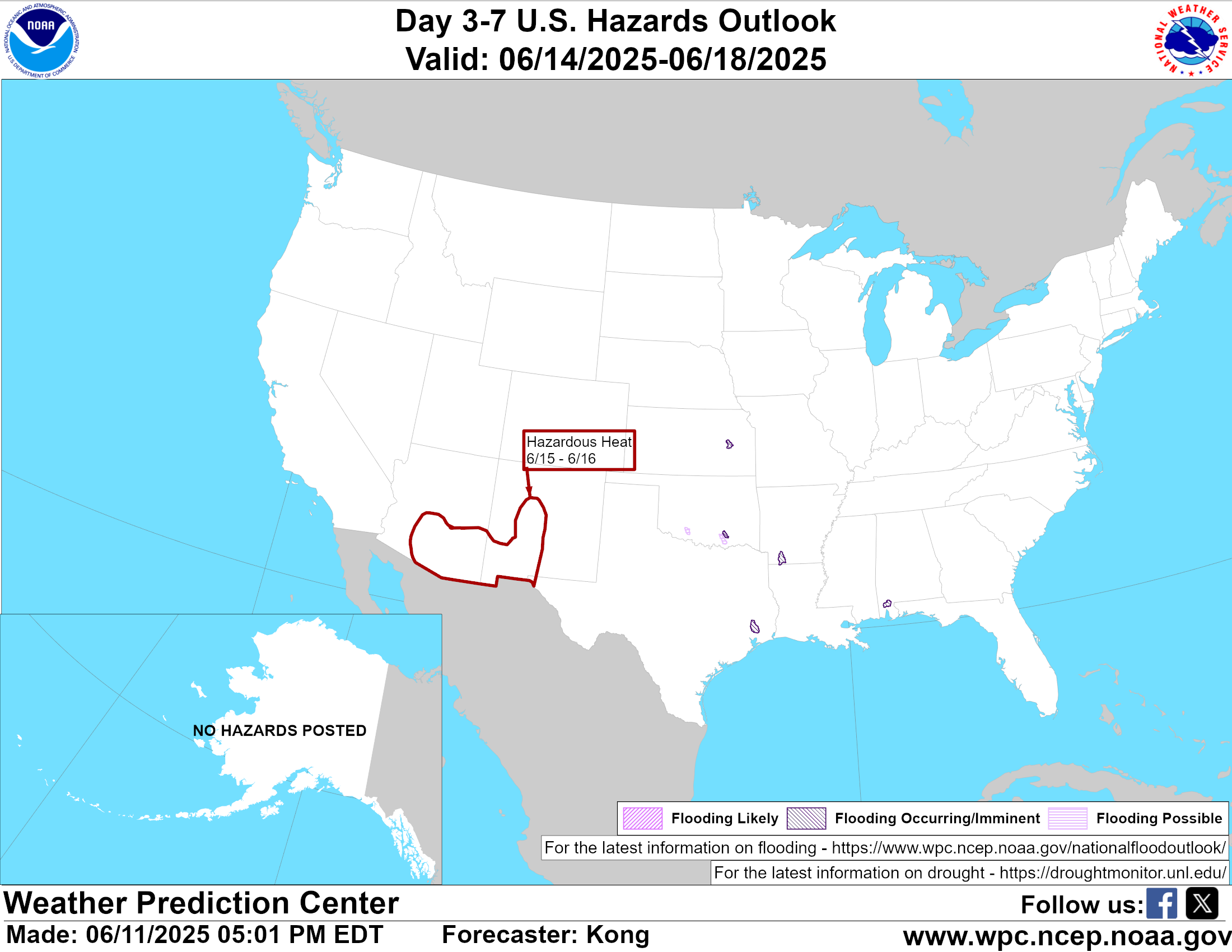
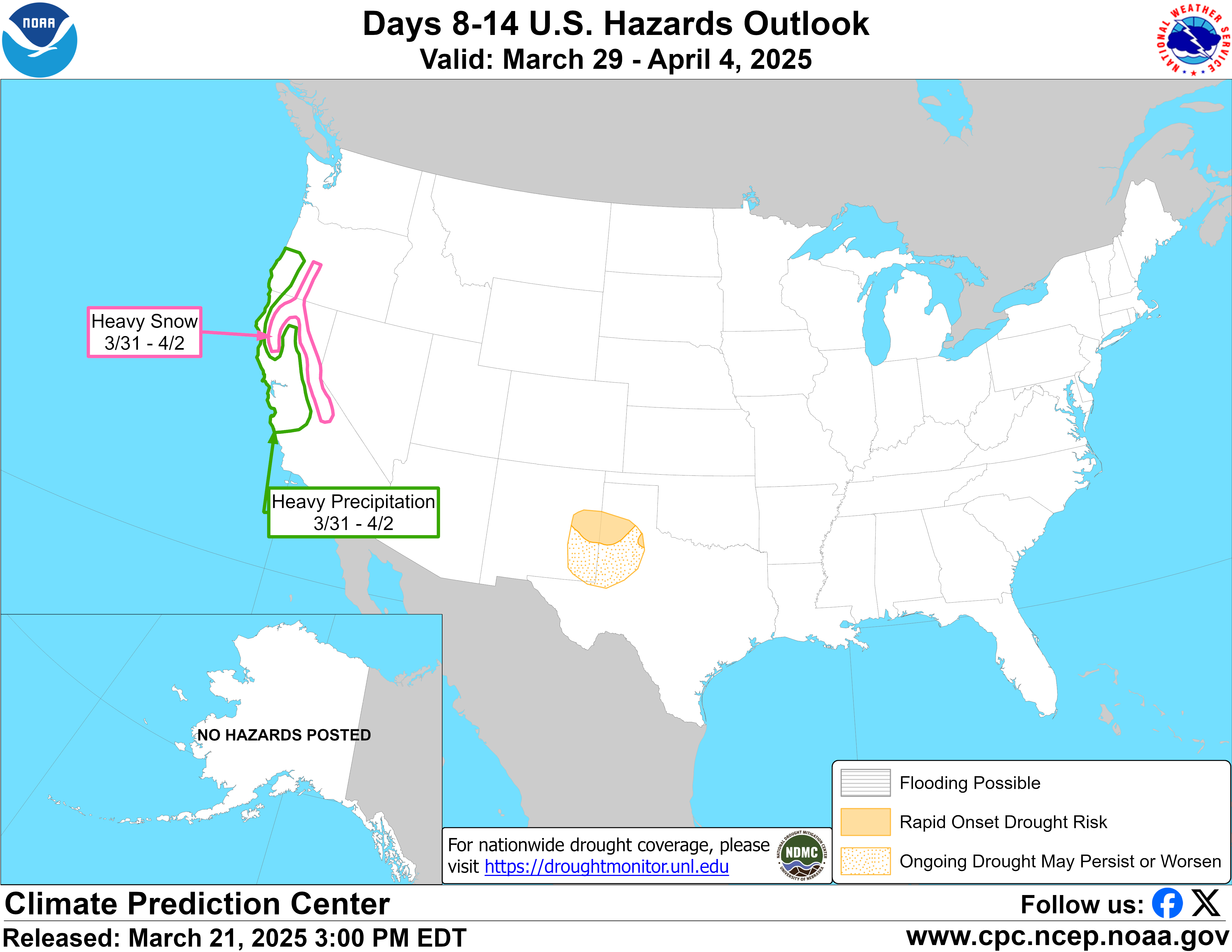
Additional information can be obtained here. We also now publish a Live Severe Weather article. The link to our Severe Weather Events article changes every Sunday night and the current version can always be found in the Directory which can be accessed here.
And we do not want to ignore floods.
Let’s see if this animation works.
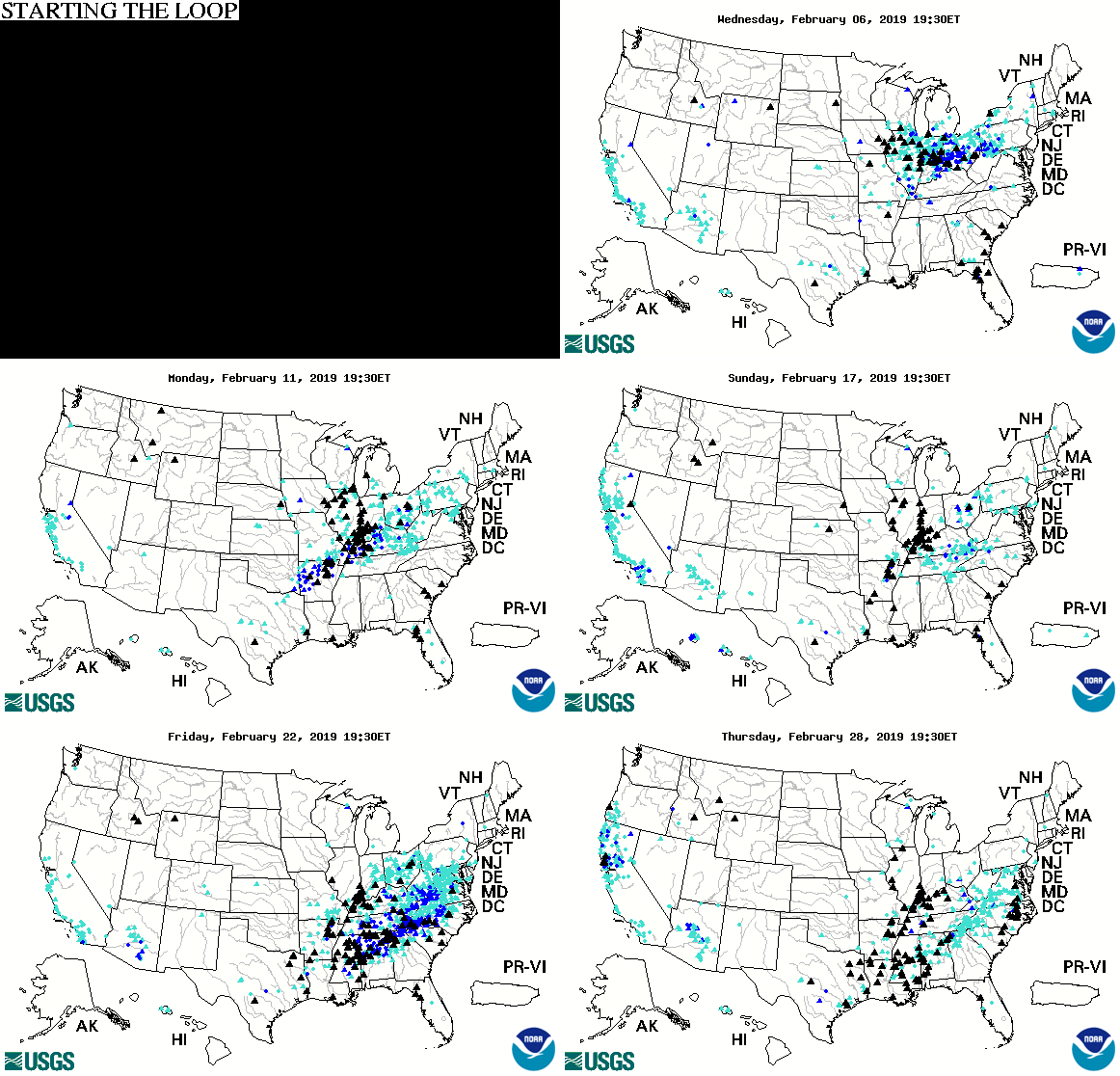
Here are additional useful graphics from my weekly report which update automatically. The forecast maps were shown in the Introduction.
First the Day 3 Mid-Atmosphere pattern.
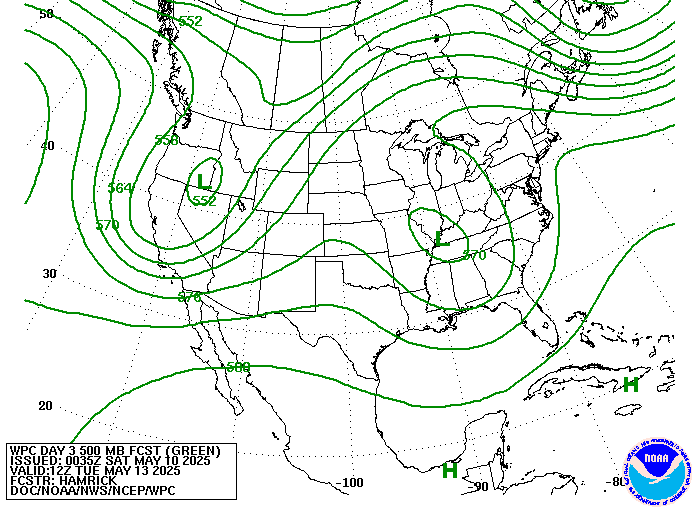
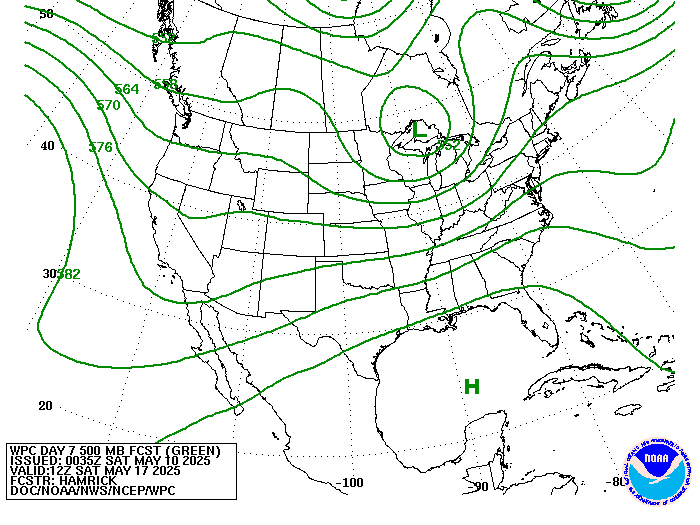
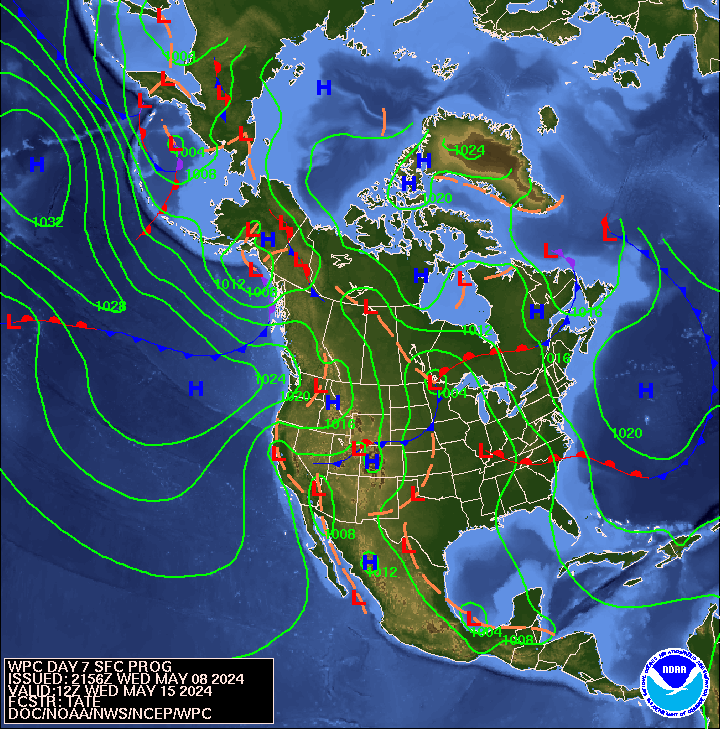
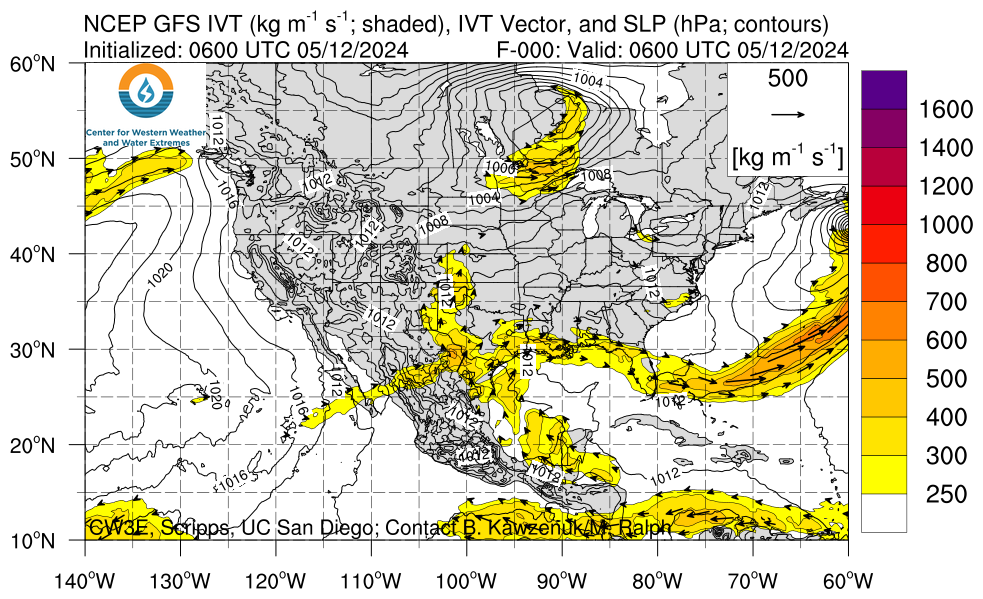
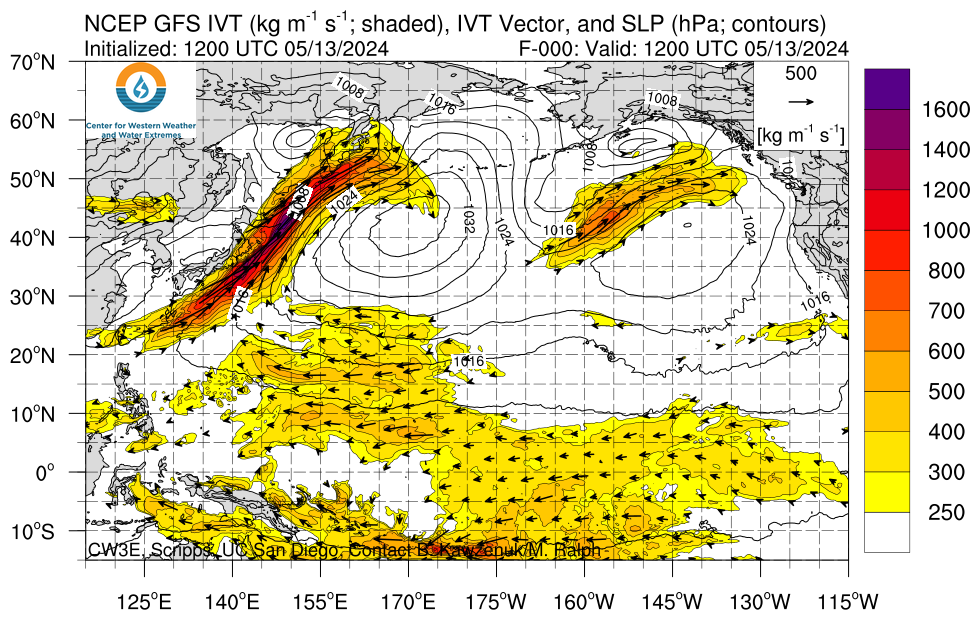
The below is of interest.
6. Soil Conditions and Crop Reports

| Topsoil | Subsoil |
 |  |
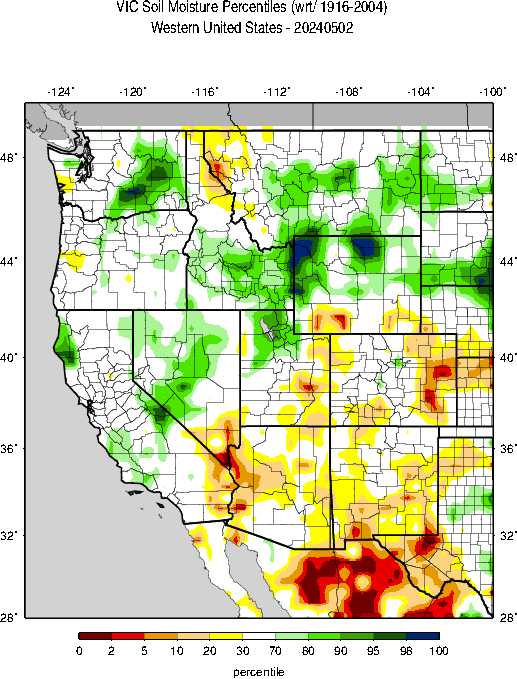
Soil Conditions
|

| And looking at the West. |
|


7. International


8. Background Information


The sequence of drought occurrence and impacts for commonly accepted drought types. All droughts originate from a deficiency of precipitation or meteorological drought but other types of drought and impacts cascade from this deficiency. (Source: NDMC)
Source: National Drought Mitigation Center, University of Nebraska-Lincoln


