


Written by Sig Silber
U.S. and World Agriculture: Plus an Expanded Weather Forecast Section
Updated at 7 PM EST March 8, 2019 to reflect the newly issued Week 3 – 4 Forecast which confirms that the series of Pacific Storms is coming to an end (and thus the improvement in the Drought) and also to call attention to slight risk of imminent Severe Weather in the Southeast
The intensity of the drought declined this past week. This trend may continue for a while. But there likely will be a break in the stream of Pacific Storms and the unusual cold conditions will normalize as Spring sets in. Thus we have to see how Spring develops to see how far the reduction of this drought can proceed,

Please share this article – Go to very top of page, right hand side, for social media buttons.
1. Special Reports, Summary Weather Forecast and Information on how this Report is Organized.
Severe Weather Possibility
Latest Watches, Warnings, and Advisories
| SPC Activity Chart |
 |
Full detail at our Severe Weather Report which can be accessed here.
First some highlights from last week.


Here is the forecast for the next two weeks.
Later we provide additional information relative to the weather forecast analysis but here is a summary.
First the Temperature Forecast .
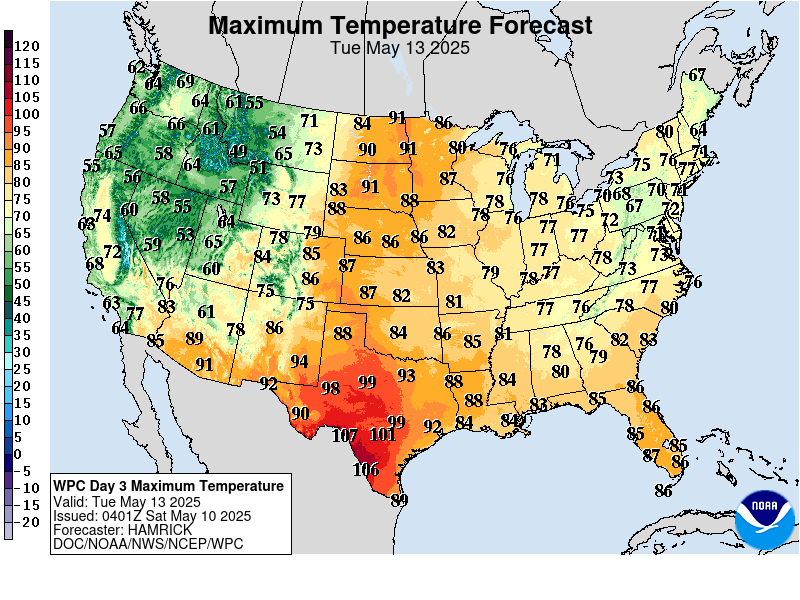 | 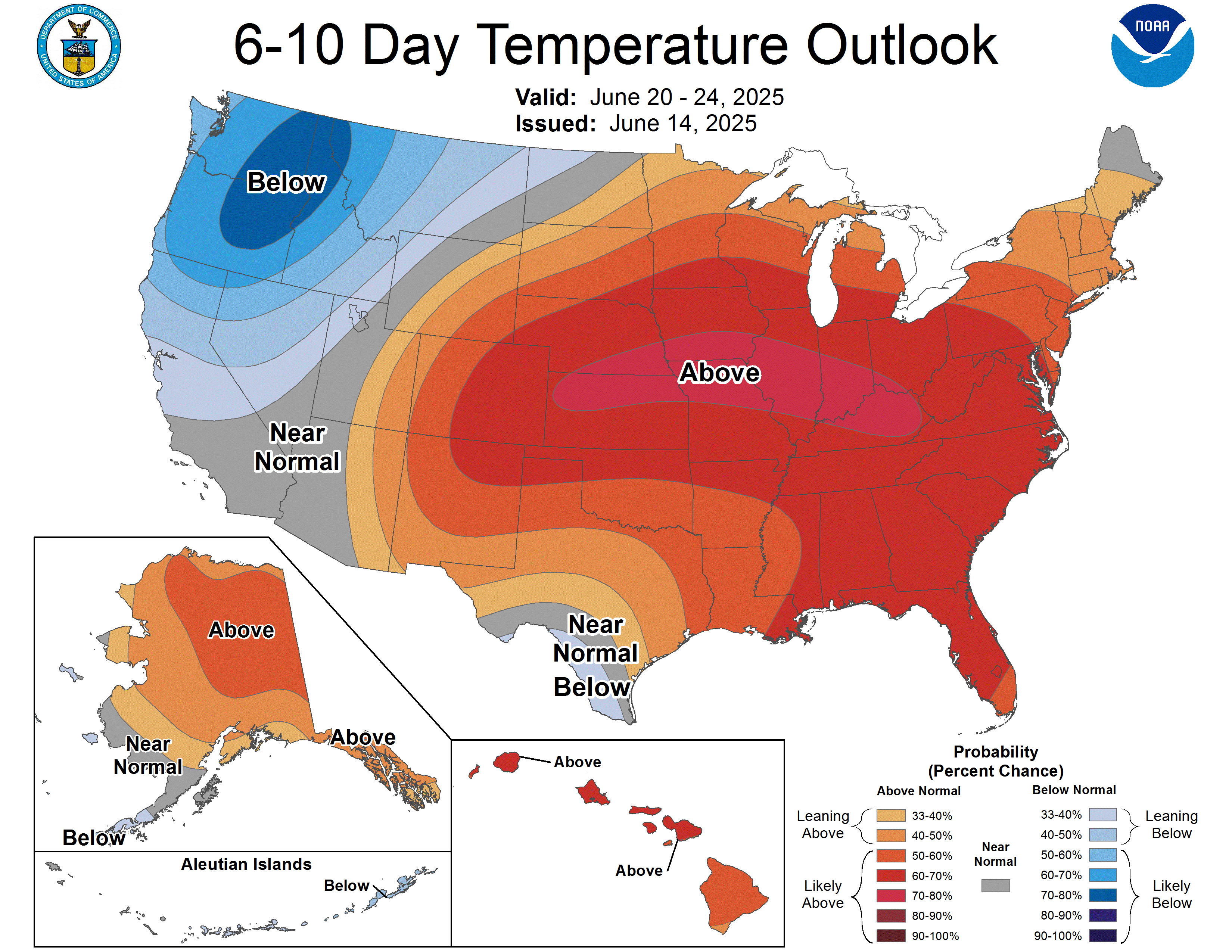 | 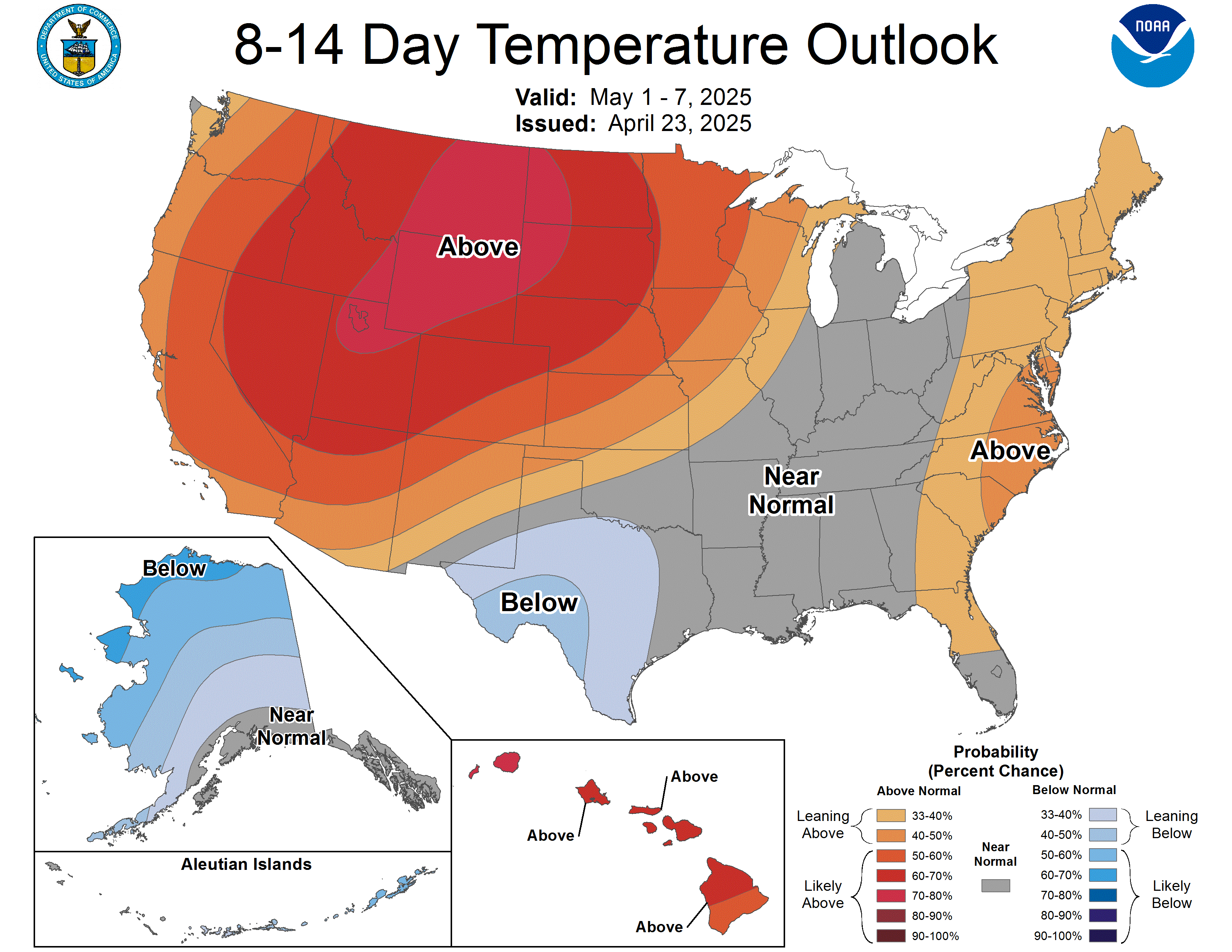 | 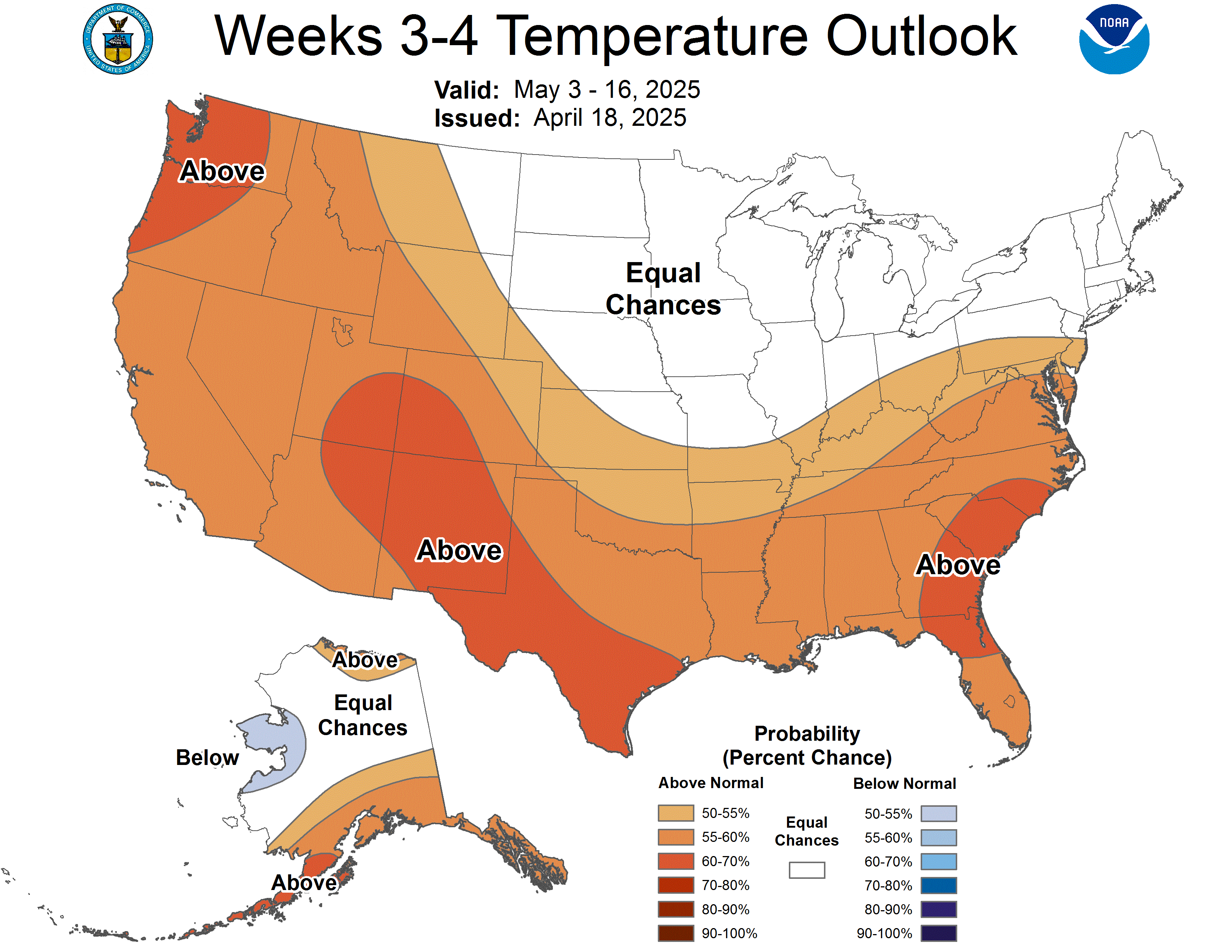 |
| This shows magnitude rather than probability of being higher or lower than Normal and shows the middle day of the five day period. | Looks like the Western Half of CONUS will be cool* in Week – 1 (Days 6 – 10). In Week – 2 (Days 8 – 14) the cool anomaly is slowing shifting east and south. * warmer or cooler than climatology | ↑ The Week 3 – 4 forecast was issued on March 8. As expected the West will be heating up but Texas will remain cool ← . | |
And then the Precipitation Forecast
| 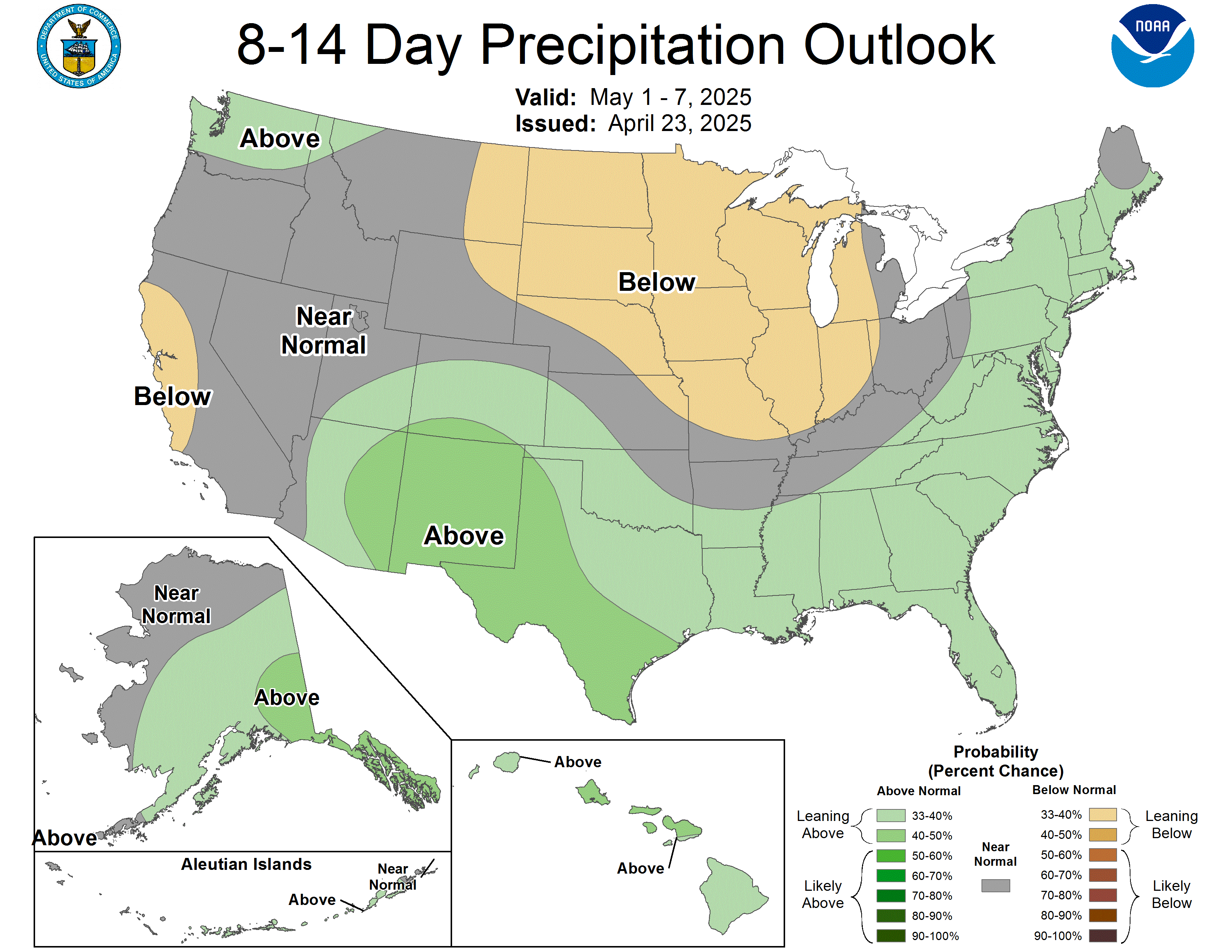 | 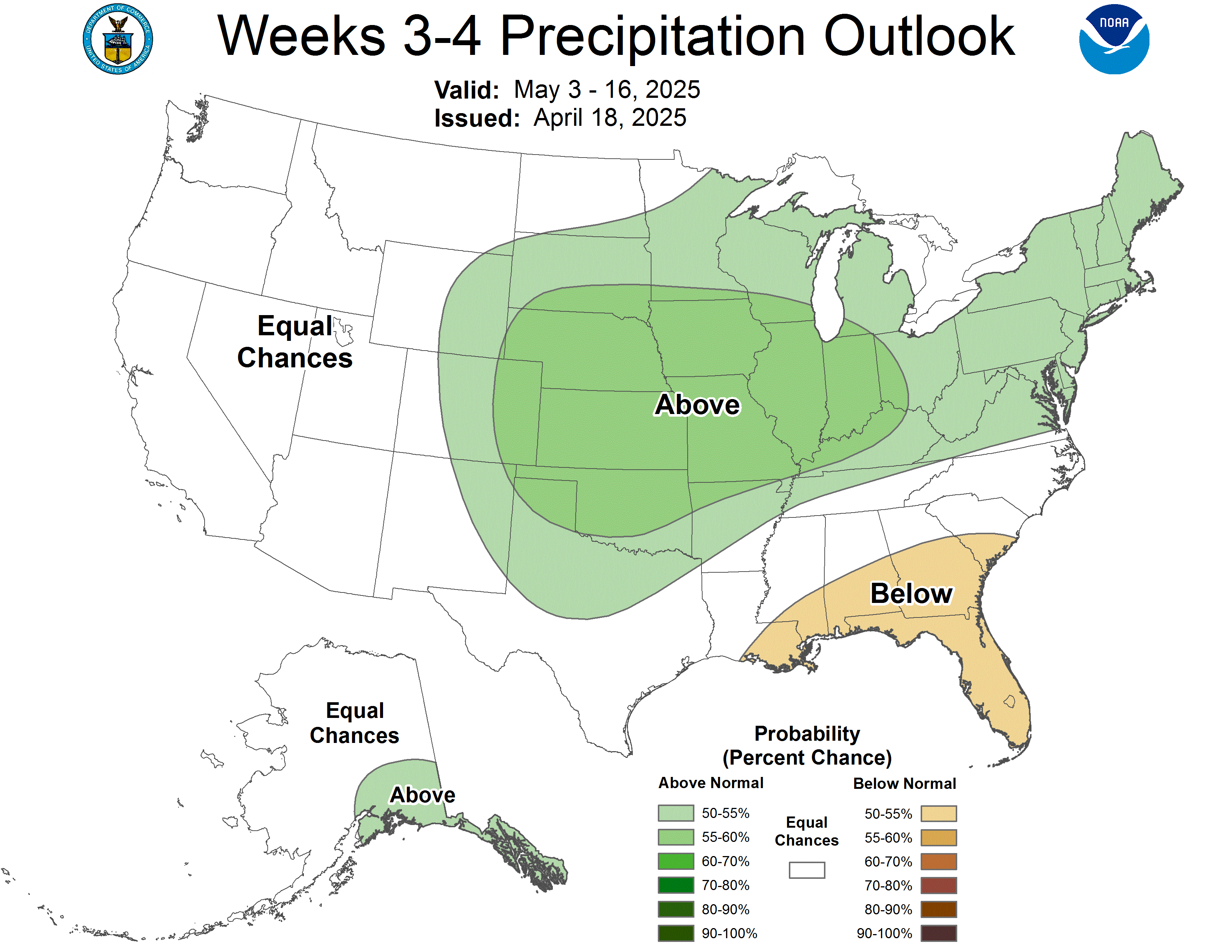 | |
| The five day QPF is shown above. The units are different than the other maps i.e. in units of precipitation (inches) not probabilities of exceeding or being less than climatology. | It starts wet but gradually dries out as the Pacific Storms stop arriving. | ↑ The Week 3 – 4 forecast was issued on March 8. As expected the series of Pacific storms are not forecast to be present in Weeks 3 – 4 ending for the moment further Western Drought improvement. ← | |
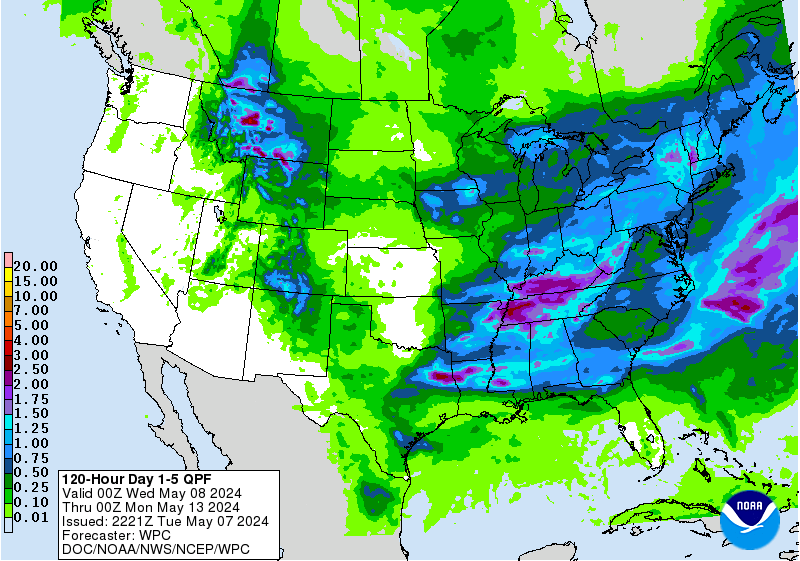
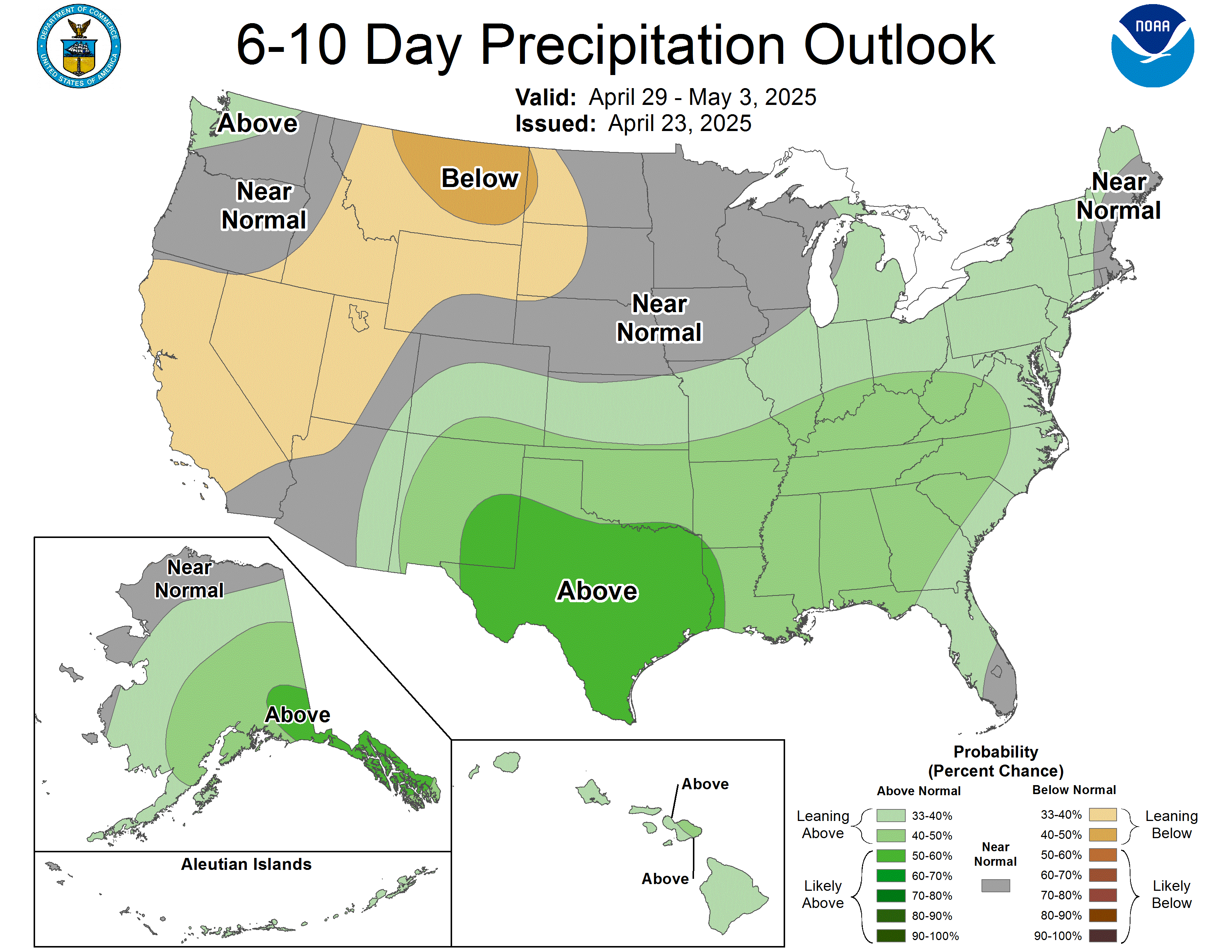
Additional Information on the forecast is provided later but here is the discussion released with the Week 3 – 4 Update.
Week 3-4 Forecast Discussion Valid Sat Mar 23 2019-Fri Apr 05 2019
El Nino conditions remain prevalent in the equatorial Pacific this week. SSTs are above normal and anomalous convection in that region has increased during the past week and is forecast to continue increasing over the next couple of weeks. Dynamical models have reverted to an El Nino-style height anomaly pattern in the Week 3-4 time frame, which is characterized by a Rossby wave train that extends in an arc from the anomalous equatorial convection in the central Pacific to the southeastern U.S. Accordingly, the GEFS and CFS forecast the PNA to trend positive over the Week 3-4 period.
The MJO is over the eastern Indian Ocean and forecast to weaken significantly during the next week or so. The ECMWF monthlies are now suggesting that the MJO will re-emerge over the Indian Ocean in about three weeks’ time, but this is a new development in the most recent cycle that would help reinforce the cold signal in today’s central CONUS Week 3-4 forecast.
This week’s forecast is largely the result of our blend of models, which includes the CFS, ECMWF, JMA and linear regression tools. Anomalous ridging centered near southeastern Alaska is predicted in both Weeks 3 and 4 by most of our dynamical guidance. This leads to a forecast that favors above average temperatures over the western U.S., including Alaska. Positive height anomalies just off the northeast coast of the U.S. are likely to lead to above normal temperatures throughout the eastern CONUS. Model guidance suggests that these anomalously warm temperatures are more likely during Week 4 than Week 3. A weak height pattern over the central CONUS lends itself to a low-probability forecast of below normal temperatures throughout the central Plains.
The precipitation forecast is derived from the same blend of models, but tilted towards the ECMWF in areas of model disagreement. Below median precipitation is most likely over northern Alaska and the northwestern CONUS during Weeks 3-4, with the highest probabilities during Week-4. Probabilities for above-median precipitation are elevated over the southern Alaskan coast, Gulf Coast, and eastern CONUS.
SSTs around Hawaii are slightly below normal right now. Most dynamical models suggest near to slightly below normal temperatures for Hawaii and slightly below median precipitation during both Weeks 3 and 4.
.Organization of this Report
This report is now organized as follows:
- Special Reports, Weather Forecast Summary and information on how this Report is organized. .
- Present Drought Conditions
- Last Week’s Weather
- Selected information from our Weekly Weather Column (the forecast maps auto-update) and combined with brief commentary from me provides a forecast which I attempt to interpret re the likely change in drought conditions. But we will not repeat the forecast summary shown in the introduction as having duplicate information increases the chances of errors during updating.
- Monthly Reports as they become available.
- Science theme if we have one.
- Economic Impacts of Weather other than on Agriculture. (it will take time to get that part of the report going.
- Reference Information.
Monthly Reports will include:
- Crop Report
- Analysis of the Prior Month’s Weather for the U.S..
- Analysis of the Prior Month’s Weather Internationally
- Current Status of Reservoirs and River Flow.
|
| Remember if you leave this page to go to links or if you have clicked to enlarge a graphic, in order to get back you need to hit the return arrow usually located on the left of your URL box on the upper left of the screen. Also most of the small graphics are designed to become full size when you click on them. If that does not work, an alternative way to view the larger graphics is to right click and then hit “view image”. That should always work. |
2. Present Drought Conditions
The U.S. Drought Monitor is a comprehensive way of understanding the drought situation for the U.S. It is issued every Thursday and reflects the conditions as of the prior Tuesday. Drought is defined as a moisture deficit bad enough to have social, environmental or economic effects. Thus, more factors than recent precipitation are considered and more information on how it is done is found at the end of this report.

Below is the same map but just CONUS and with statistics and below that map I have provided a cut-out of the statistics which I think you can click on to enlarge.
 |
 |
| Last Week | This Week |
| |

The graphic below shows the one-week change in drought intensity. Yellow is bad. Green is good.
 |
We are showing the change maps for the states that improved the most and deteriorated the most.
 |  |  |
 |  |  |
|  |

This pair of maps might make it easier to get a general idea of what is happening in the worst part of the drought area.
| Last Week | This Week |
 |  |
Here is one approach to thinking about this area.

This looks at evaporation

This map which covers the West may be useful also.

Here is part of the explanation for the overall situation in the West. Looking at the information from the network of SNOTEL sites. These are mainly in remote locations often at high elevations. they report by telecommunications hence their name.


Then we look at how much snow there is to melt when it is warmer.

Now we show the week to week change information by region. The yellow is where the drought has been upgraded. The green is where the level of drought has been downgraded.
 |
Better in Wyoming and Colorado |
 |
| No Change |
 |
| No Change |
 |
| Deterioration in Texas. Minor improvement in Louisiana and Mississippi. |
 |
| No Change |
 |
Changes in many states. For all of these states we provided individual maps earlier. Those maps will enlarge when clicked on this week. |
Some may find this way of looking at things useful and I hope these graphics are not too small to read. I did not make them so you could click on them individually but you can click on the whole graphic and it may enlarge. But I think you get the picture. It has been a rapid onset and hopefully it’s demise will also be fairly rapid. When you read these graphics remember that the older graphics are not the drought conditions that existed then but the change from then until now.

Some might find this animation of twelve weeks of change useful;

Here is the discussion which was issued with the Drought Monitor today.
This Week’s Drought Summary
Bitterly cold conditions settled over central portions of the nation, while stormy weather prevailed over parts of the eastern and western U.S. The Southeastern rain afforded localized relief from dryness, while a continuation of the west’s stormy weather pattern brought more drought relief to locales from the Pacific Coast into the Rockies. In contrast, short-term dryness intensified across the southcentral U.S., in particular central Texas.
Northeast
Colder-than-normal weather with rain and snow were reported across the region. There are currently no areas of Abnormal Dryness (D0) or drought in the Northeast.
Southeast
Widespread moderate to heavy rain was reported, with cooler-than-normal conditions (1-4°F below normal) in northern portions of the region contrasting with above-normal temperatures (5-10°F above normal) in the south. Interior portions of the Southeast remained free of drought, with 90-day precipitation averaging 150 to locally more than 200 percent of normal. The Abnormal Dryness (D0) along the South Carolina Coast and environs remained untouched despite locally more than an inch of rain; 60-day precipitation in this D0 area remained at or below 50 percent of normal. The D0 along the eastern coast of Florida experienced highly variable conditions, with 2 to 10 inches of rain eradicating Abnormal Dryness between Fort Lauderdale and West Palm Beach. The remainder of Florida’s D0 largely missed the rain, with significant precipitation departures (locally less than 50 percent of normal) noted over the past 180 days.
South
Cooler weather arrived, with heavy rain in eastern portions of the region in sharp contrast to increasingly dry conditions farther west. Rainfall in southern Louisiana’s Abnormal Dryness (D0) areas totaled 1 to 4 inches, easing or eliminating concerns over developing dryness; after discussions with local experts, the coastal D0 was removed. Pockets of dryness linger along the central Gulf Coast at varying time scales, and this region will need to be monitored closely over the upcoming weeks. Locally heavy showers (1-2 inches) in southern Texas also led to the reduction of D0 and Moderate Drought (D1). However, the story across the remainder of central and northern Texas was intensifying short-term dryness and drought. Over the past 60 days, large expanses of the state have received less than 50 percent of normal rainfall, with the expanded D1 areas reporting 10 percent of normal precipitation or less. However, there remains a sharply divergent signal at 90 days, with wet conditions (100-150 percent of normal) noted from San Antonio to Wichita Falls. This antecedent wetness has helped to forestall – for now – an even greater expansion of D0 and D1. However, if rain does not materialize soon across Texas, impacts of dryness and drought will rapidly develop as seasonably warmer weather arrives.
Midwest
The Midwest remained free of drought, with bitter cold (up to 20°F below normal) accompanying a deep snowpack in western and northern portions of the region.
High Plains
Most of the High Plains remained free of dryness and drought, with a moderate to deep snowpack coincident with temperatures averaging more than 20°F below normal. However, western portions of this region (notably, the mountains) continued to experience significant recovery from long-term Moderate (D1) to Severe (D2) Drought. During the 7-day monitoring period, precipitation totaled 1 to locally more than 3 inches (liquid equivalent) from the Park Range in northern Colorado to the San Juan Mountains in the south. Water-year precipitation has totaled 100 to 150 percent of normal, and mountain snow water equivalents (SWE) are in the 75th to the 100th percentile, indicative of favorable spring runoff prospects. The lingering drought remains most apparent in the longer term, with 24-month precipitation still averaging 50 to 75 percent of normal in the region’s D1 and D2 areas.
West
The ongoing recovery from long-term drought continued over much of the west, though dry conditions lingered over northern- and southern-most portions of the region.
In the Four Corners States, locally heavy precipitation (1-4 inches, locally more) in northern portions of the region afforded relief from Moderate to Extreme Drought (D1-D3) from the central Rockies into northern New Mexico. Water-year precipitation has totaled an impressive 110 to 225 percent of normal over most of the Four Corners, with below-normal precipitation confined to southwestern and northwestern New Mexico. Spring runoff prospects are likewise favorable, with mountain snow water equivalents (SWE) currently at or above the 70th percentile, save for subpar SWE in the Gila Mountains. The Four Corner’s drought is mostly apparent in the longer-term, with 24-month precipitation averaging 55 to 75 percent of normal in the region’s core drought areas.
Farther north, heavy rain and mountain snow continued to slam locations from the northern California Coast into the northcentral Rockies. Precipitation over the past 7 days totaled an impressive 2 to 10 inches (locally more) from San Francisco north into the southern Cascades and east to the Sierra Nevada. Outside of a few locales in the southern San Joaquin Valley and in the far north, almost all of California is now reporting precipitation surpluses for the water year. To further illustrate, California’s disappearing Moderate Drought (D1) was limited to small portions in the far north, while Abnormal Dryness (D0) was confined to relatively small sections in northern and southern portions of the state. The wet weather in the north has also afforded additional drought relief in southwestern Oregon, with water-year deficits nearly eradicated from Medford into the southwestern Harney Basin. Despite the overall wet weather pattern, the water year has featured sub-par precipitation (70-80 percent of normal) in the central and northern Cascade Range. Snowpacks are in good to excellent shape in the Sierra Nevada (80th-98th percentile), southern Cascades (60th-92nd percentile), and from the Great Basin into the northcentral Rockies (55th-100th percentile). Conversely, subpar snowpacks remained a concern in the northern Rockies (locally below the 20th percentile) and northern Cascades (10th-30th percentile).
Alaska, Hawaii, and Puerto Rico
Drought conditions remained unchanged in Alaska. While snowpacks remained unfavorably low in the south (on the Kenai Peninsula, where snow water equivalents are at or below the 10th percentile), this has been largely due to warmth; water-year precipitation is near to above normal in these same locales. In Hawaii, another week with locally heavy showers (an inch or more in windward locations) as well as assessment from the field supported an additional 1-category reduction in drought intensity on the islands. In Puerto Rico, precipitation deficits continued to mount, with 90-day rainfall less than 70 percent of normal in the region’s expanded Moderate Drought (D1) areas. Furthermore, information from local experts indicated a variety of impacts, including declining reservoir levels, vegetation stress, and an increase in grass fires.
Looking Ahead
A stormy weather pattern will continue over much of the nation. A series of fast-moving Pacific storms will bring significant precipitation to most of the contiguous U.S., save for parts of the Gulf Coast States, southern California, and from the northern High Plains into the upper Midwest. Fresh snowfall is likely from the Cascades and Sierra Nevada into the Rockies, while another round of moderate to heavy snow may also blanket locales from the central High Plains into the Great Lakes Region. Potentially moderate to heavy rain is also in the offing from the southern Plains into the lower Ohio Valley. The NWS 6- to 10-day outlook for March 12 – 16 calls for above-normal precipitation across the entire nation, except for drier-than-normal conditions from California into the northern Rockies. Colder-than-normal weather over the western half of the nation will contrast with above-normal temperatures east of the Mississippi.

Soil Conditions as of January 31, 2019
|

| And looking at the West. |
|

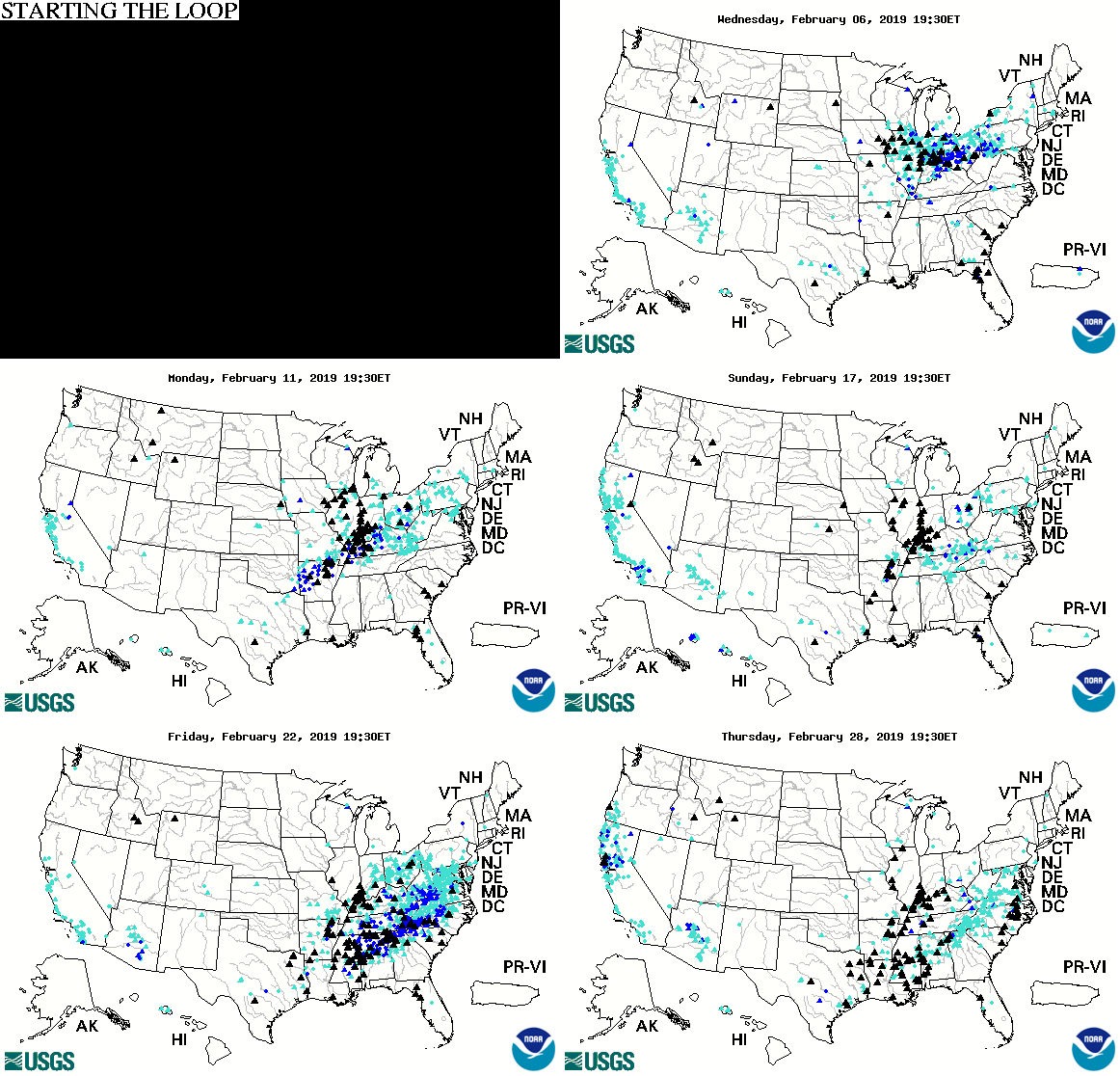
Wildfires are still possible. But the risk is not high right now.


Let’s see if this animation works.
3. Last Week’s Weather
Avoiding date confusion: The Agriculture Bulletin is issued on a Tuesday and overs a-seven day period that ends on Saturday and some others on Sunday – some graphics have Saturday as the end date and others Sunday. The Drought Monitor is issued on a Thursday and shows conditions as of Tuesday of that week. So we have two sets of weather maps. On set is synchronized with the Crop Bulletin Report and the others are updated daily so we may have two sets of maps that describe the prior week. In one case it is the crop week and in the other case it is the week before the article is read. So please do not be confused. Most of these maps show the days covered.
These graphics apply to the crop week. They are frozen and do not auto-update.


This is more current but less informative.
 This
This
Here is the SWE (water content of the snow) version.

Last Seven Days
For reference purposes here is the precipitation information for the prior seven days. It is not the same as what is shown in the USDA Crop Report show above since the crop week covers the Sunday to Saturday period which corresponds to the crop reports. The below is the current seven-day period and updates in this article automatically every day. It is a better tool for making forecasts.


Current Month to Date.

And then temperature

You can generate a wide variety of different graphics here.
4. Current Forecast for Precipitation and Drought.
First we show the Seasonal Forecast through May 31 which was issued on February 21, 2019 with the full Seasonal Outlook. These two forecasts are issued by the same agency but to obtain them you need to access two different links here and here. We either show the latest or both in this report. Sometimes we show them in more than one place in this report for the convenience of the reader.
The three-month Drought Outlook will be updated on March 21, 2019.

And here is the March one-month drought forecast which was issued on February 28, 2019. It will update on March 31, 2019.

And now the current precipitation forecasts so that we can make our own assessment of the drought forecast. Here I provide the weather forecasts for different periods of time in which should allow the reader to assess the likelihood of this forecast working out as shown over the next three to four weeks. Since we publish this week on Thursday, we generally update the discussion for the Week 3 – 4 forecast when it is updated on Friday. This is important as the current Day 6 – 14 forecasts and the week-old week 3 – 4 forecast overlap to some extent. But since this week, we are publishing on Friday, no update will be required.
First weather hazards
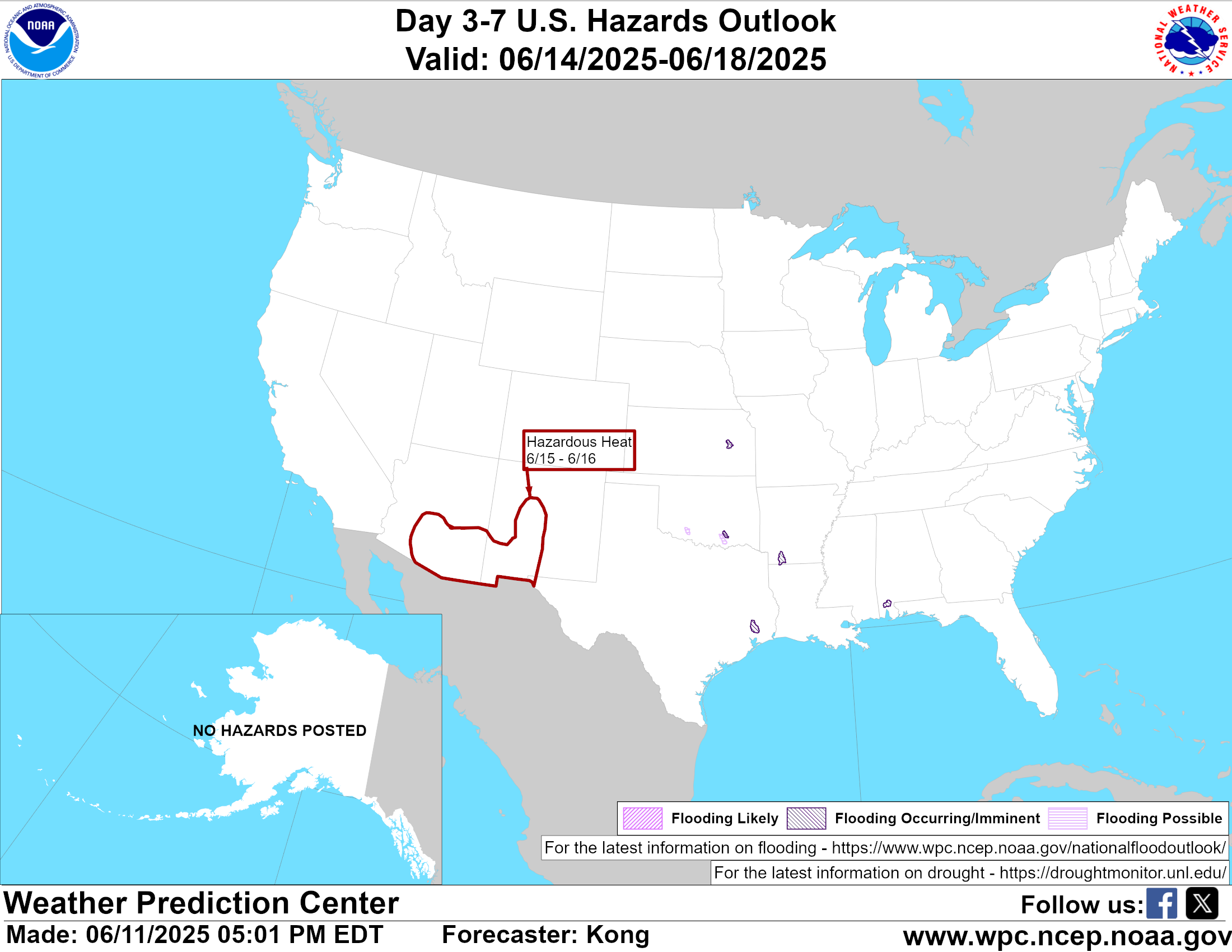
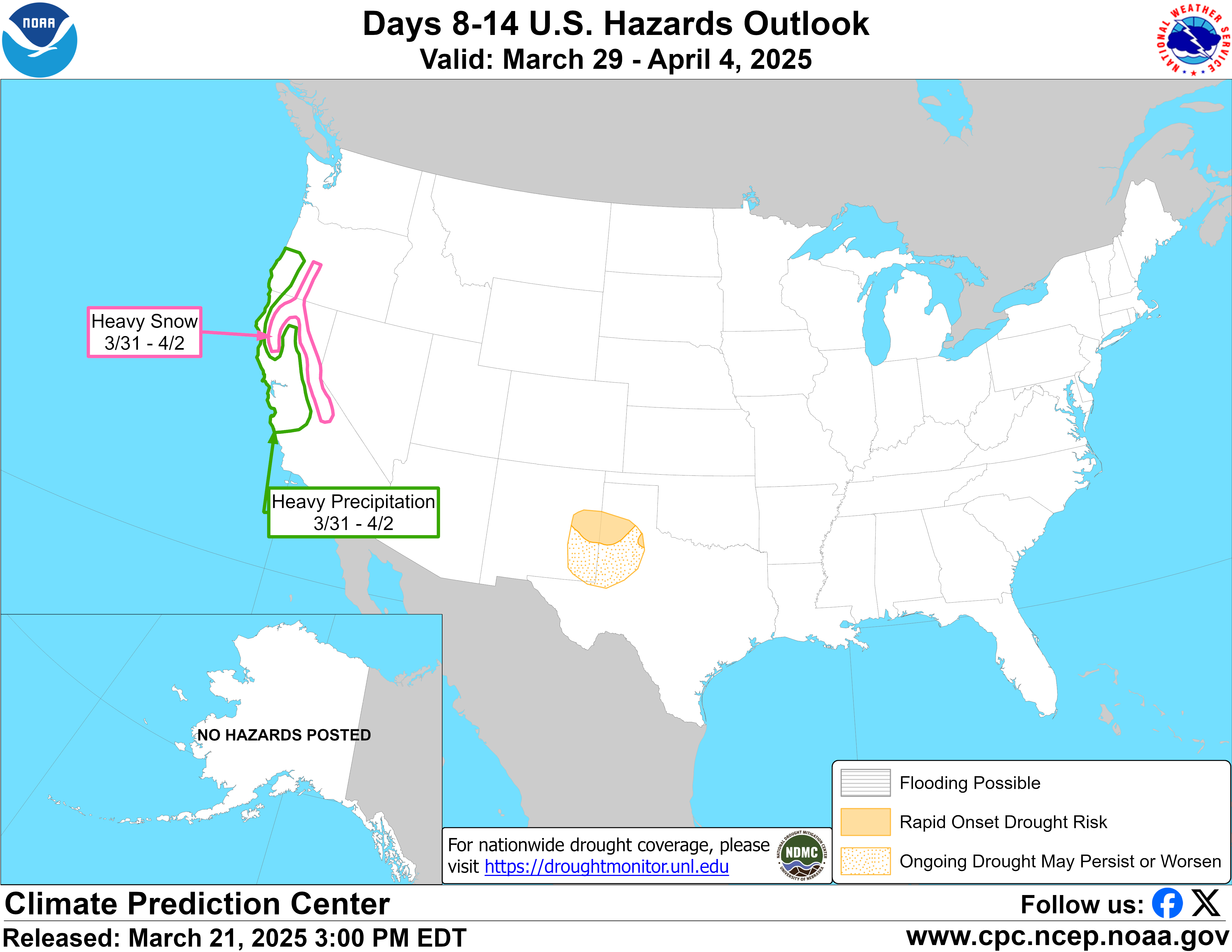
Additional information can be obtained here. We also now publish a Live Severe Weather article. The link to our Severe Weather Events article changes every Sunday night and the current version can always be found in the Directory which can be accessed here.
And we do not want to ignore floods. The updated map can be obtained here.

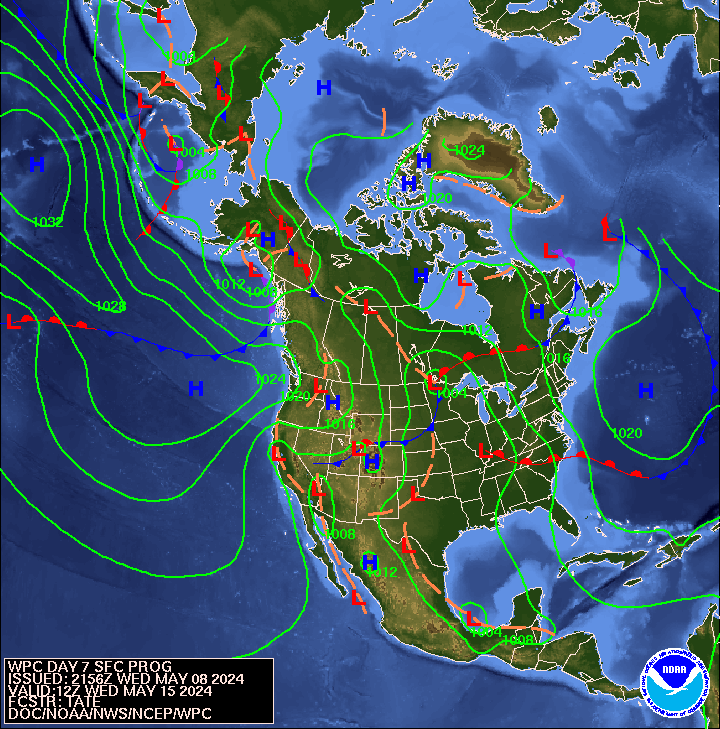
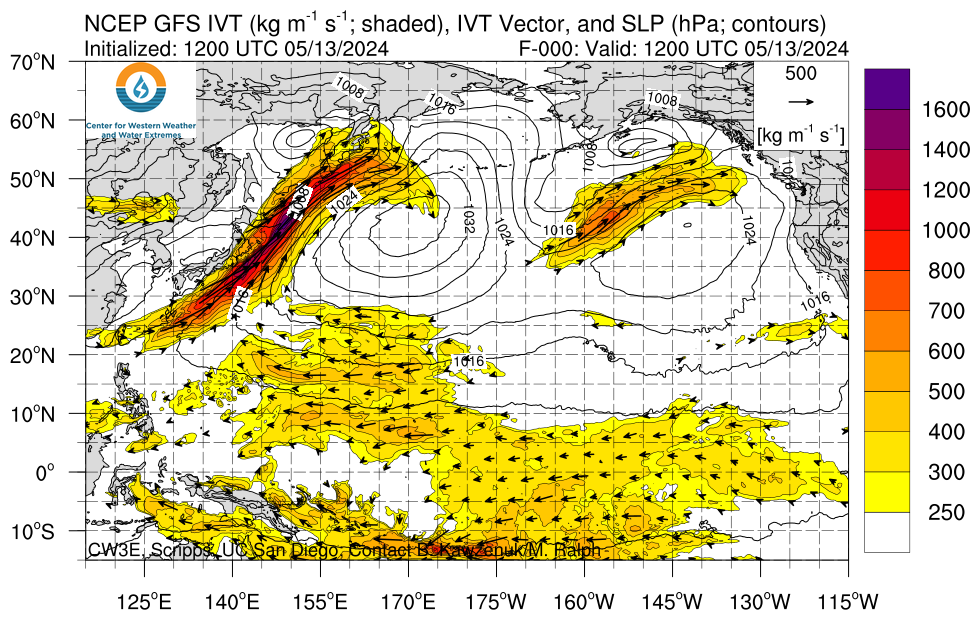
Here are additional useful graphics from my weekly report which update automatically. The forecast maps were shown in the Introduction.
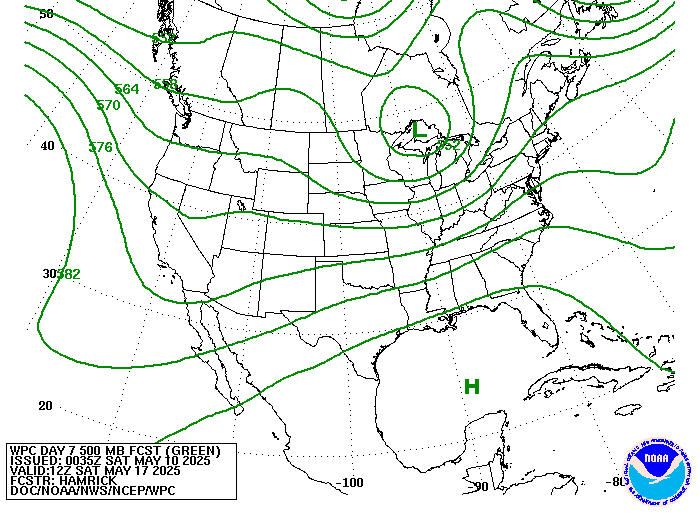
First the Day 3 Mid-Atmosphere pattern.
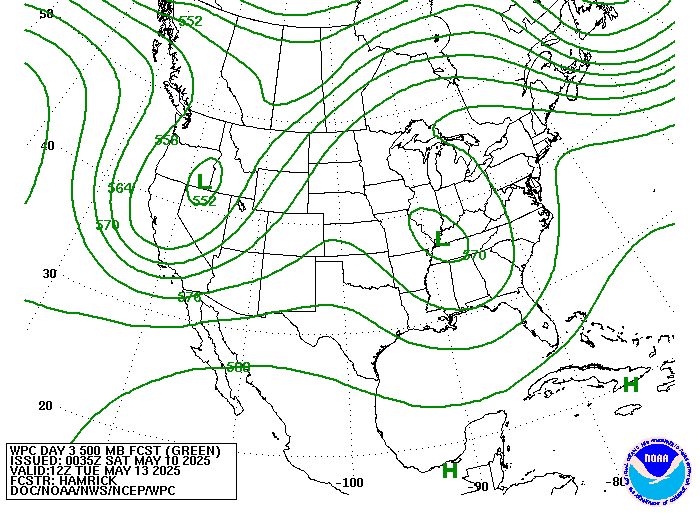
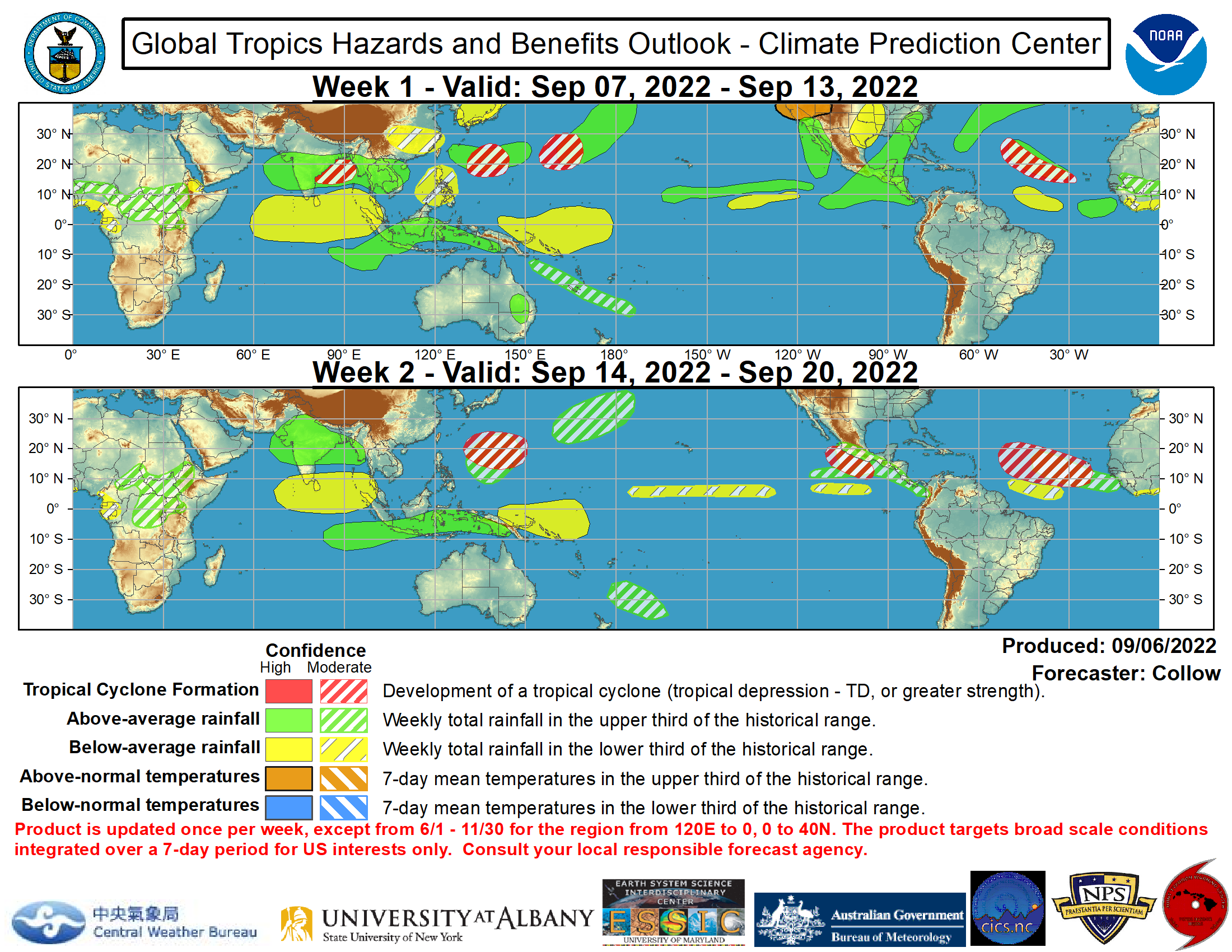
The below is of interest.


Sequence of drought occurrence and impacts for commonly accepted drought types. All droughts originate from a deficiency of precipitation or meteorological drought but other types of drought and impacts cascade from this deficiency. (Source: NDMC)
Source: National Drought Mitigation Center, University of Nebraska-Lincoln


