


Written by Sig Silber
Updated at 4:30 p.m. March 1, 2019 to incorporate the new Week 3 – 4 forecast which makes the Visual Consistency Testing more robust.
At the end of every month, NOAA issues an update to their Early Outlook for the following month which was issued on the Third Thursday of the Month. Usually the changes are minor but not so much this month even though it is only a week later. The changes are not unexpected but significant. We wil publish our usual “Weather Impacts on Economic Activity” Report tomorrow.

Please share this article – Go to very top of page, right hand side for social media buttons.
Although the general theme is a cooler and wetter, it is important for readers to look at the maps for the month and the maps that we have in the article for first five days, Days 6 – 10, Days 8 – 14 and Week 3 – 4 as the pattern is expect to change during the month. Other than the full -month map, the other maps will auto-update so this article will remain useful throughout the month.
Now let us address the NOAA Update of the March, 2019 Forecast.
A note about terminology; the deviations from climatology/normal are color coded but also labeled “A” for more than (above) normal and “B” for less than (below) normal. The area designated EC means Equal Chances of being more or less than normal. In the Short Term forecasts, NOAA has switched from using EC to N for Normal. I believe this was a recommendation of a Focus Group. I find those new graphics harder to read especially if printed in black and white. For most purposes, EC and N can be considered to mean about the same thing. “N” implies a bit more certainty that the variation from Normal/Climatology will be small compared to “EC”.
First we will compare the NOAA Early Outlook for March, 2019 with the newly issued update.
Early Outlook Temperature

Updated Temperature Outlook

Early Outlook Precipitation

Updated Precipitation

| February 21, 2019 Forecast for March | February 28, 2019 Forecast for March | |
| Temperature |
|
|
| Precipitation |
|
|

Here is the discussion released today:
30-DAY OUTLOOK DISCUSSION FOR MARCH 2019
THE CLIMATIC BACKGROUND STATE STILL FEATURES AN ON GOING EL NINO. THE MADDEN-JULIAN OSCILLATION IS LIKELY TO BE ACTIVE OVER THE INDIAN OCEAN DURING THE FIRST WEEK TO 10 DAYS, WHICH WOULD FAVOR A SWITCH TOWARD WARMER IN THE NORTHEAST LATER IN THE MONTH. THE POTENTIAL FOR A MID-MONTH PATTERN CHANGE IS INDICATED IN SOME MODELS, SO UNCERTAINTY IS HIGHER IN AREAS WHERE THE PATTERN CHANGE WOULD HAVE THE GREATEST IMPACTS.
FOR THE TEMPERATURE OUTLOOK, THE AXIS OF THE COLDEST AIR FORECAST EARLY MONTH IS PREDICTED TO BE SLIGHTLY FURTHER WEST THAN IN THE MID-MONTH OUTLOOK. THE HIGHEST PROBABILITIES FOR BELOW NORMAL TEMPERATURES NOW STRETCH FROM THE NORTHERN ROCKIES TO THE NORTHERN PLAINS AND SOUTHWARD TO THE CENTRAL PLAINS WHERE EARLY MONTH AND WEEK3/4 OUTLOOKS ALL TILT COLD. MODEL GUIDANCE HAS CHANGED TO A COLDER PATTERN OVER THE NORTHEAST DURING THE FIRST 10 DAYS OF THE MONTH, SO THE UPDATED OUTLOOK REFLECTS THAT CHANGE. LATER MONTH GUIDANCE HAS SOME MODERATION INDICATED FOR TEMPERATURES IN THOSE REGIONS, SO PROBABILITIES REMAIN LOW TO REFLECT THE UNCERTAINTY. ABOVE NORMAL TEMPERATURES ARE FAVORED FOR MOST OF ALASKA, ESPECIALLY THE WEST COAST WHERE ICE COVERAGE OVER THE NEAR-SHORE WATERS IS LOWER THAN NORMAL.
EARLY IN THE MONTH, AN ACTIVE PATTERN IS FORECAST FROM CENTRAL CALIFORNIA EAST TO THE THE GREAT BASIN AND CENTRAL ROCKIES. IF THE CURRENT 7-DAY QPF OUTLOOKS VERIFY, MANY AREAS ACROSS THE WEST WILL RECEIVE ENOUGH PRECIPITATION IN THE FIRST 7 DAYS OF THE MONTH TO COMPLETELY ELIMINATE POSSIBILITIES FOR BELOW NORMAL PRECIPITATION. THE CFS DEPICTS A PATTERN FLIP TO A DRYER PATTERN ACROSS THE WEST DURING THE LATTER HALF OF MARCH. A STRONG SIGNAL FOR ABOVE NORMAL PRECIPITATION REMAINS FROM THE SOUTHEAST TO THE MID-ALTANTIC AND SOUTHERN PORTIONS OF THE NORTHEAST, IMPLYING THE MEAN BAROCLINIC ZONE AND ACTIVE STORM TRACK IS SOUTH OF THE COLD AIR FOR AT LEAST THE FIRST 10 DAYS OF THE MONTH. WESTERN ALASKA SHOULD START OFF THE MONTH WET, WHILE THE ALASKA PANHANDLE IS LIKELY TO BE RELATIVELY DRY, WITH A MID-MONTH FLIP TOWARD A WETTER THAN NORMAL PATTERN INDICATED IN THE CFS AND JMA FOR WEEK3/4. THE FORECAST MORE HEAVILY REFLECTS THE EARLY MONTH GUIDANCE, BUT PROBABILITIES FOR BELOW NORMAL PRECIPITATION OVER THE ALASKA PANHANDLE REMAIN MODEST.
I have added the Week 3.4 Discussion released on March 1, 2019
Week 3-4 Forecast Discussion Valid Sat Mar 16 2019-Fri Mar 29 2019
EL Nino conditions currently are present across the equatorial Pacific Ocean. Equatorial sea surface temperatures (SSTs) are above average across most of the Pacific Ocean. The RMM MJO index indicates that the MJO propagated eastward across the Western Hemisphere and Africa into the Western Indian Ocean during the last two to three weeks. The GEFS forecast of the RMM index depicts the MJO signal to continue a fast eastward propagation during Week-1, but weakens over the Indian Ocean during Week-2 due to continued interactions with equatorial Rossby waves and interactions with the El Nino state. The Week 3-4 temperature and precipitation outlooks rely primarily on dynamical model forecasts from the NCEP CFS, the ECMWF, and the JMA operational ensemble prediction systems, as well as forecasts from the Subseasonal Experiment (SubX), a multi-model ensemble (MME) of experimental ensemble prediction systems. Consideration is also given to the possible evolution of the predicted circulation pattern for Week-2.
Dynamical model guidance from the various models is broadly consistent, depicting a trough over the Bering Sea into the North Pacific, and a ridge over mainland Alaska. Dynamical model ensembles from the CFS and ECMWF depict near or below normal 500-hPa height anomalies over western Alaska, the Aleutians, parts of the Southeast, the Lower Mississippi Valley, and the Southern Plains, while above normal 500-hPa height anomalies are forecast over eastern Alaska. the Alaska Panhandle, the northwestern CONUS, and the Northeast. The CFS, ECMWF, and JMA indicate near to above normal 500-hPa heights over Hawaii.
Positive 500-hPa height anomalies increase chances of above normal temperatures over western Washington, western Oregon, and the Northeast. Below normal temperatures are favored for the central CONUS, while above normal temperatures are forecast for the Florida Panhandle, consistent with the CFS, ECMWF and SubX forecasts. The dynamical models forecast above normal temperatures across the Alaska Peninsula, mainland Alaska, and the Alaska Panhandle.
The Week 3-4 precipitation outlook indicates increased probabilities of above median precipitation for parts of the Southern Plains and the Southeast, while below median precipitation is forecast over southern California, and parts of the Southwest and the Southern Rockies, consistent with the CFS, ECMWF and SubX forecasts. Below median precipitation is more likely for parts of the Northern Plains, the Upper and Middle Mississippi Valley, the Ohio Valley, and the Great Lakes area, supported by most of the dynamical model forecasts. Anomalous ridging leads to enhanced probabilities of below normal precipitation for western portions of mainland Alaska. Conversely, above normal precipitation is favored for the Alaska Panhandle and the Aleutians underneath moist southerly flow ahead of the trough forecast over the Bering Sea.
Sea surface temperature anomalies are currently weakly negative around Hawaii, and the bulk of dynamical model guidance, including the experimental SubX models, depict enhanced chances for above normal temperatures over the southeastern islands and below normal temperature over the northwestern islands. Dynamical model precipitation forecasts strongly favor below normal precipitation which is consistent with weak El Nino conditions.
Visual Consistency Testing.
It is useful to see how the month forecast fits with the set of shorter forecasts that we have. These will continue to update in this article.
First Temperature
 | 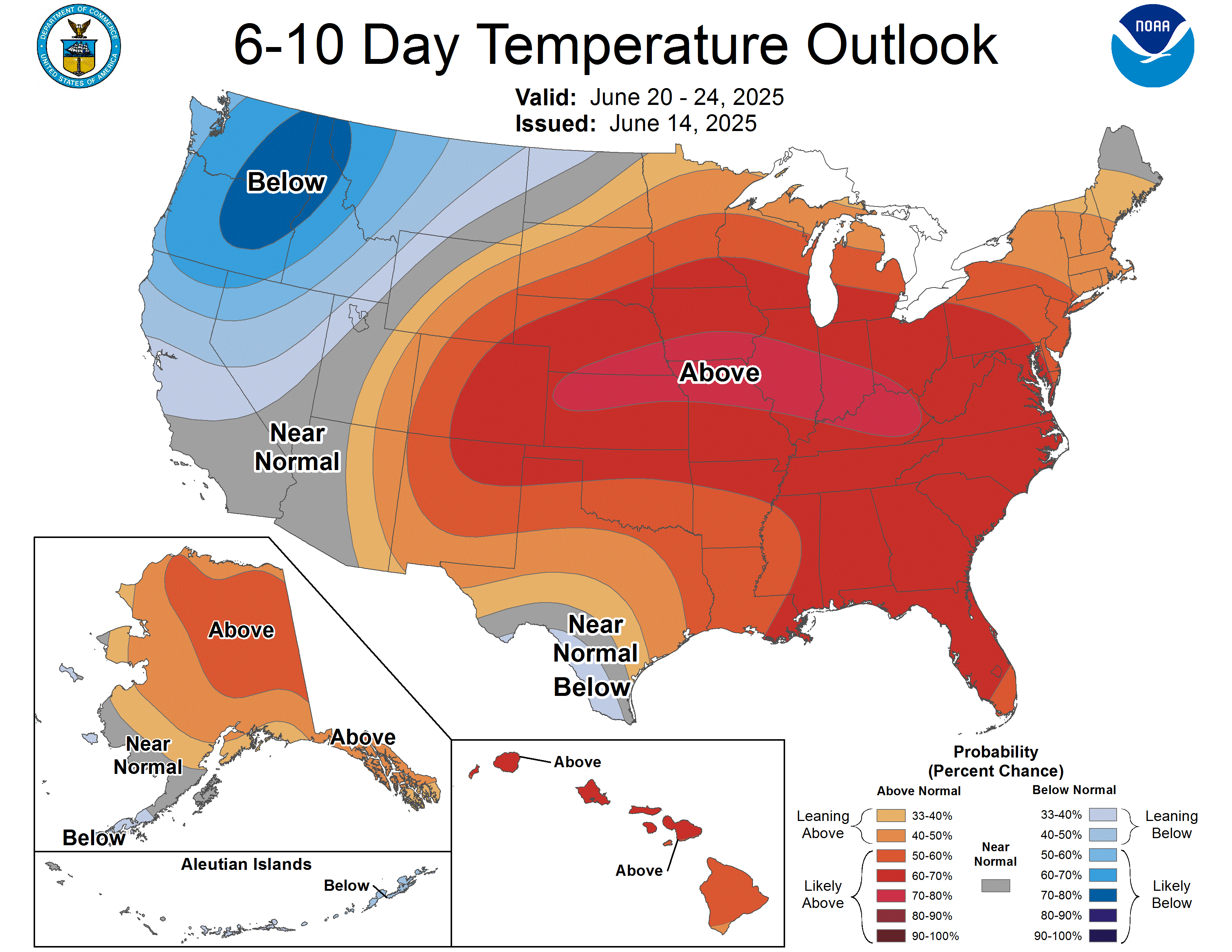 | 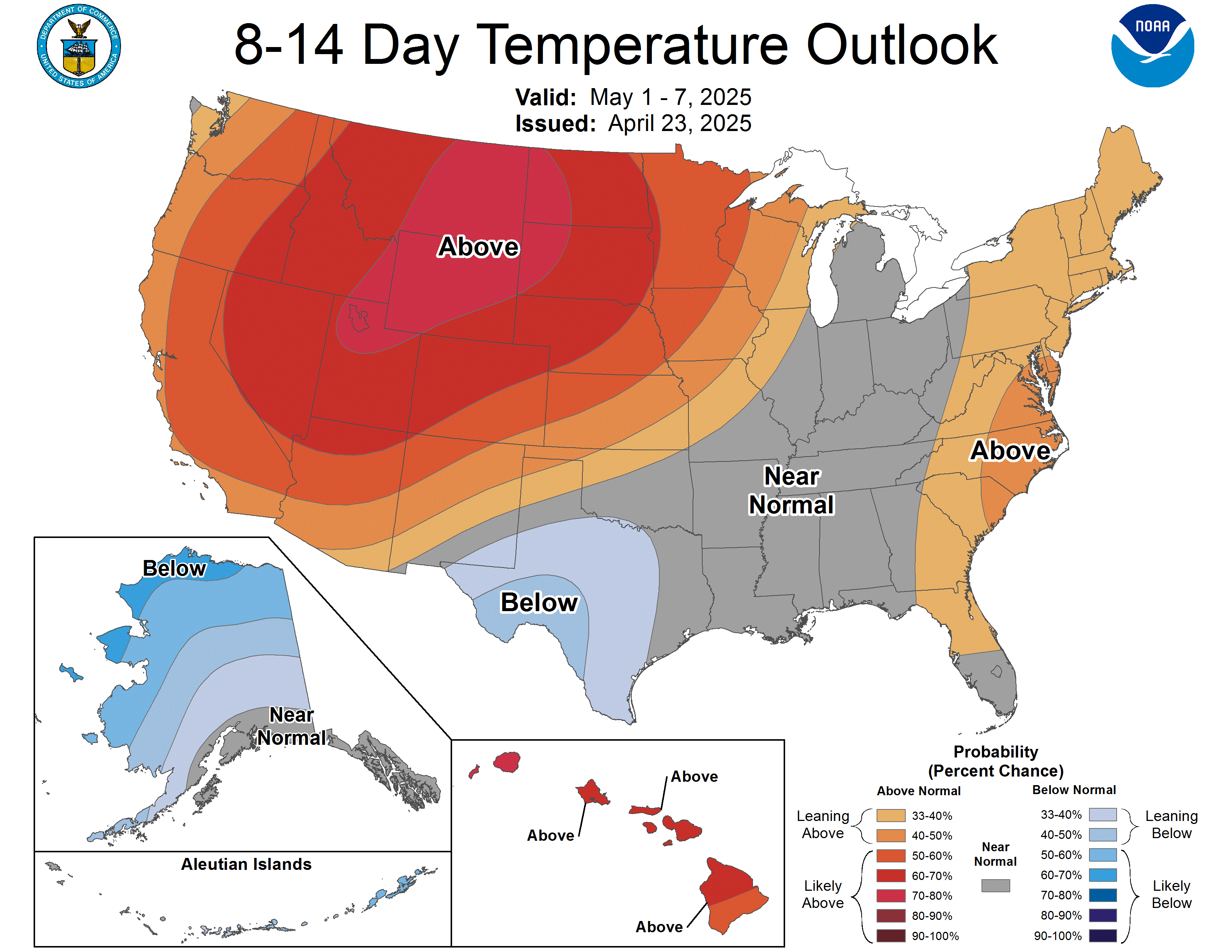 | 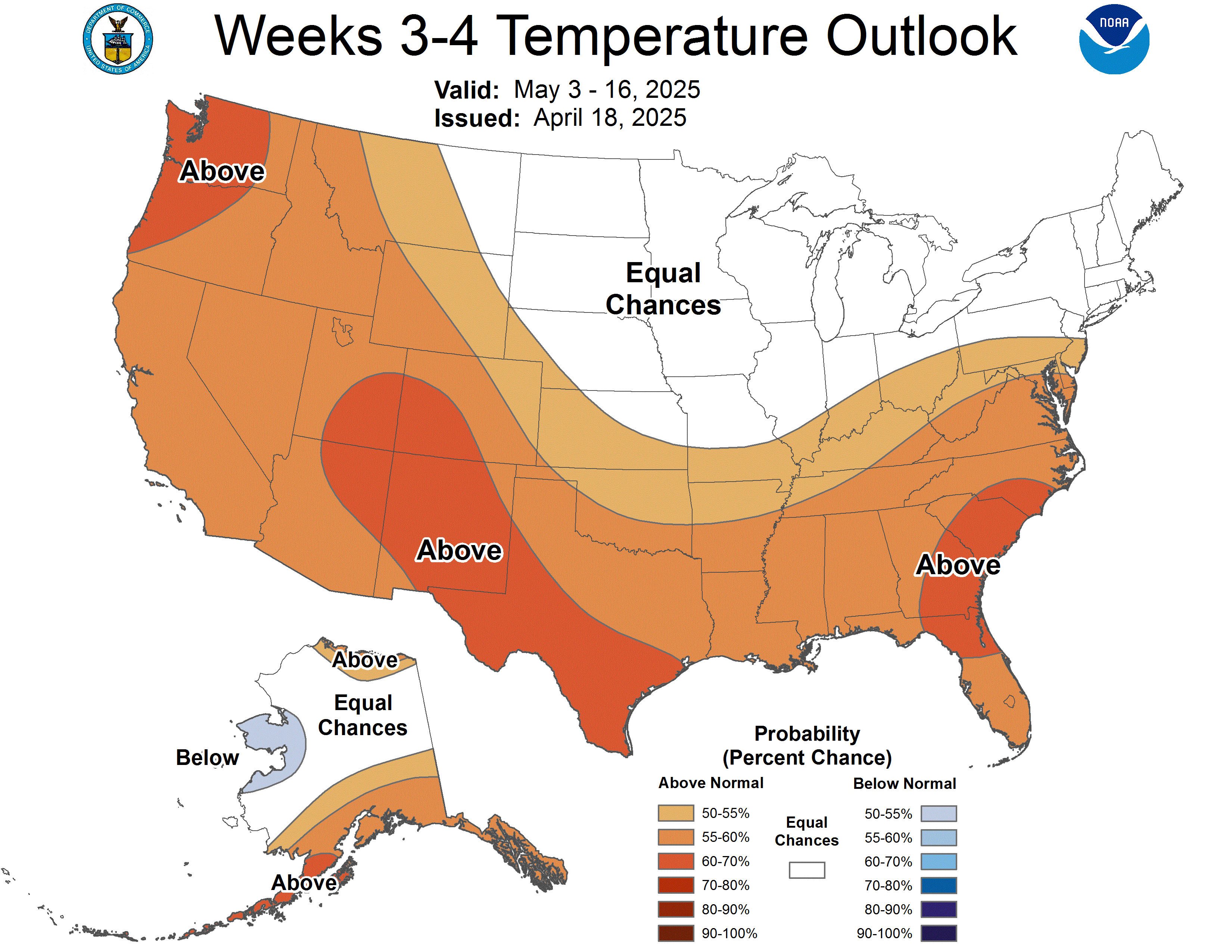 |
| The new monthly forecast is to the right. Does it appear to be reflective of the four parts of the month for which we have forecasts? → |
| ↑ ← The Week 3 – 4 forecast was updated on March 1. The March forecast looks good re the four parts we have which covers almost all of March. | |
And Precipitation
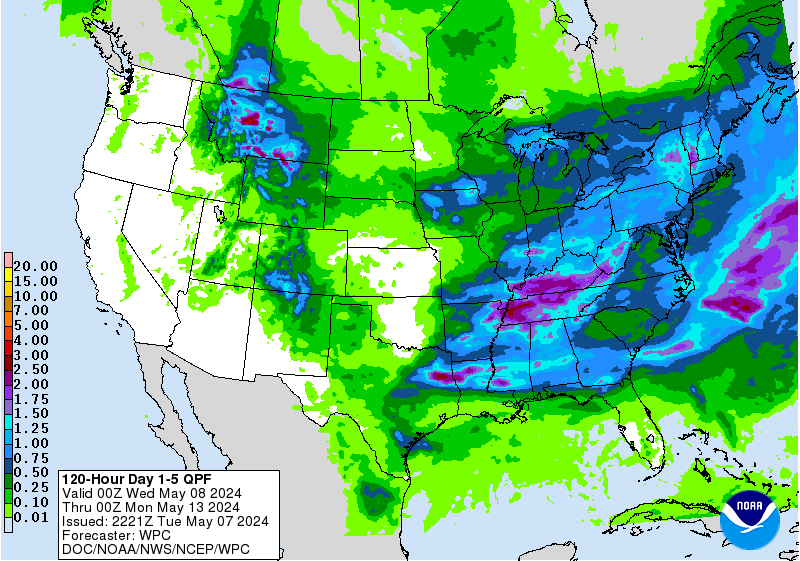 | 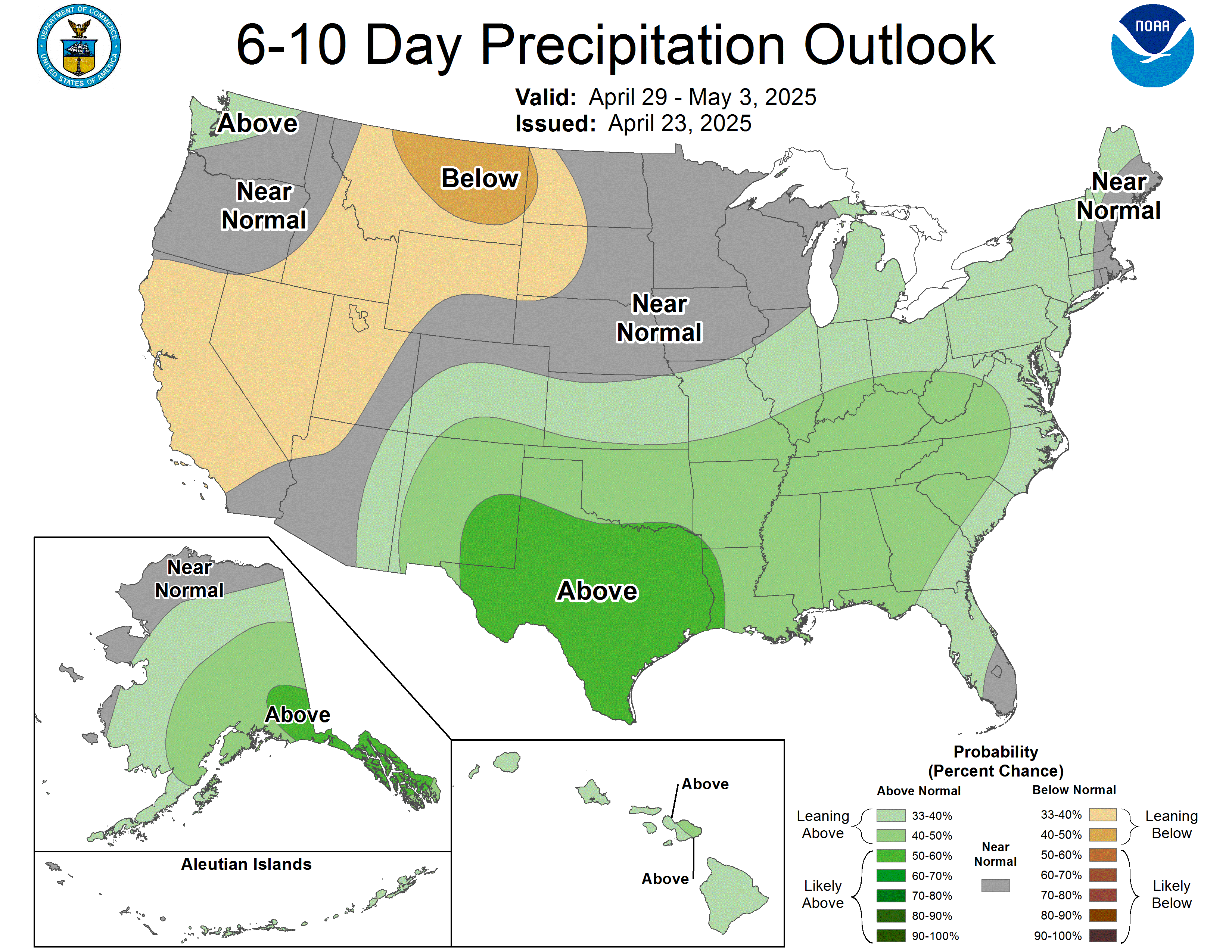 | 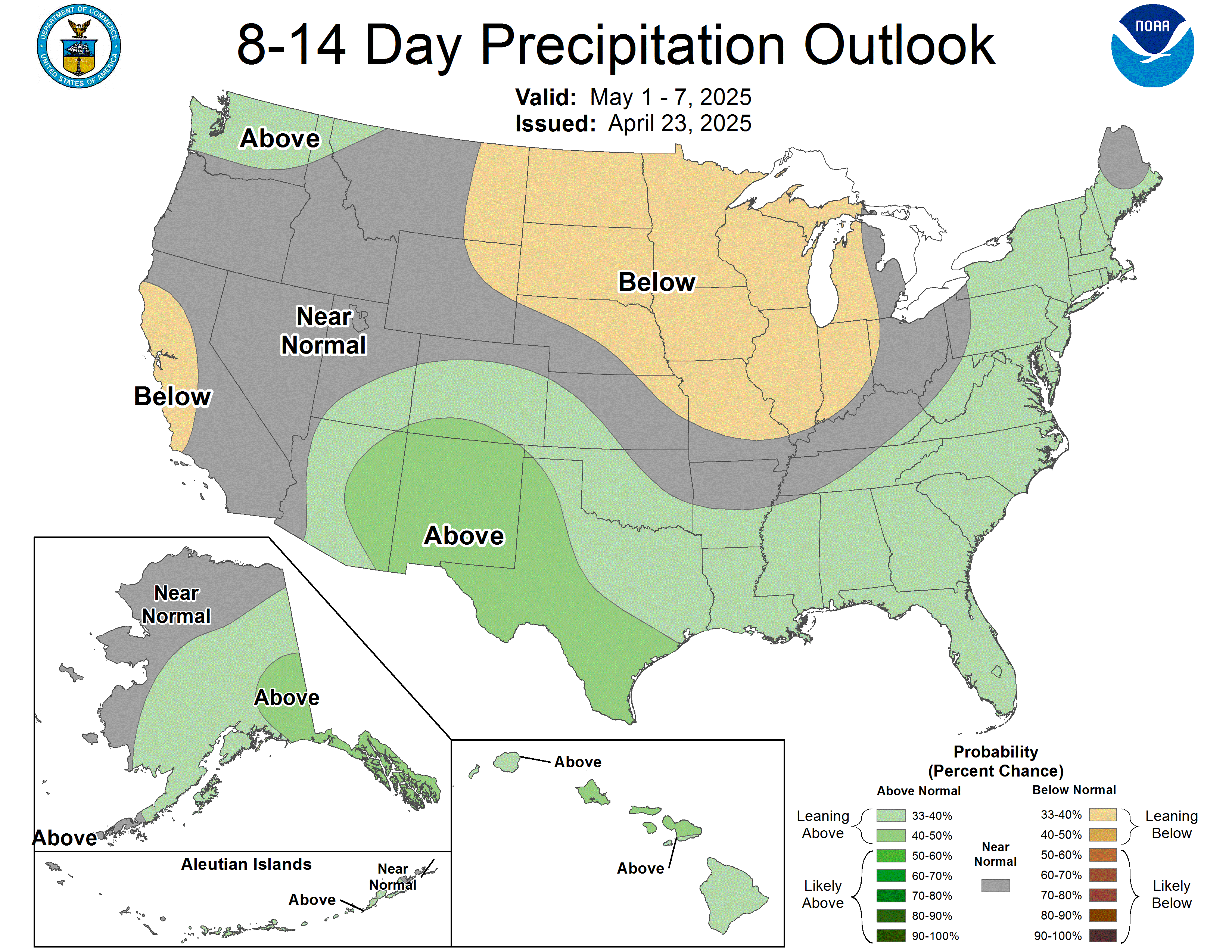 | 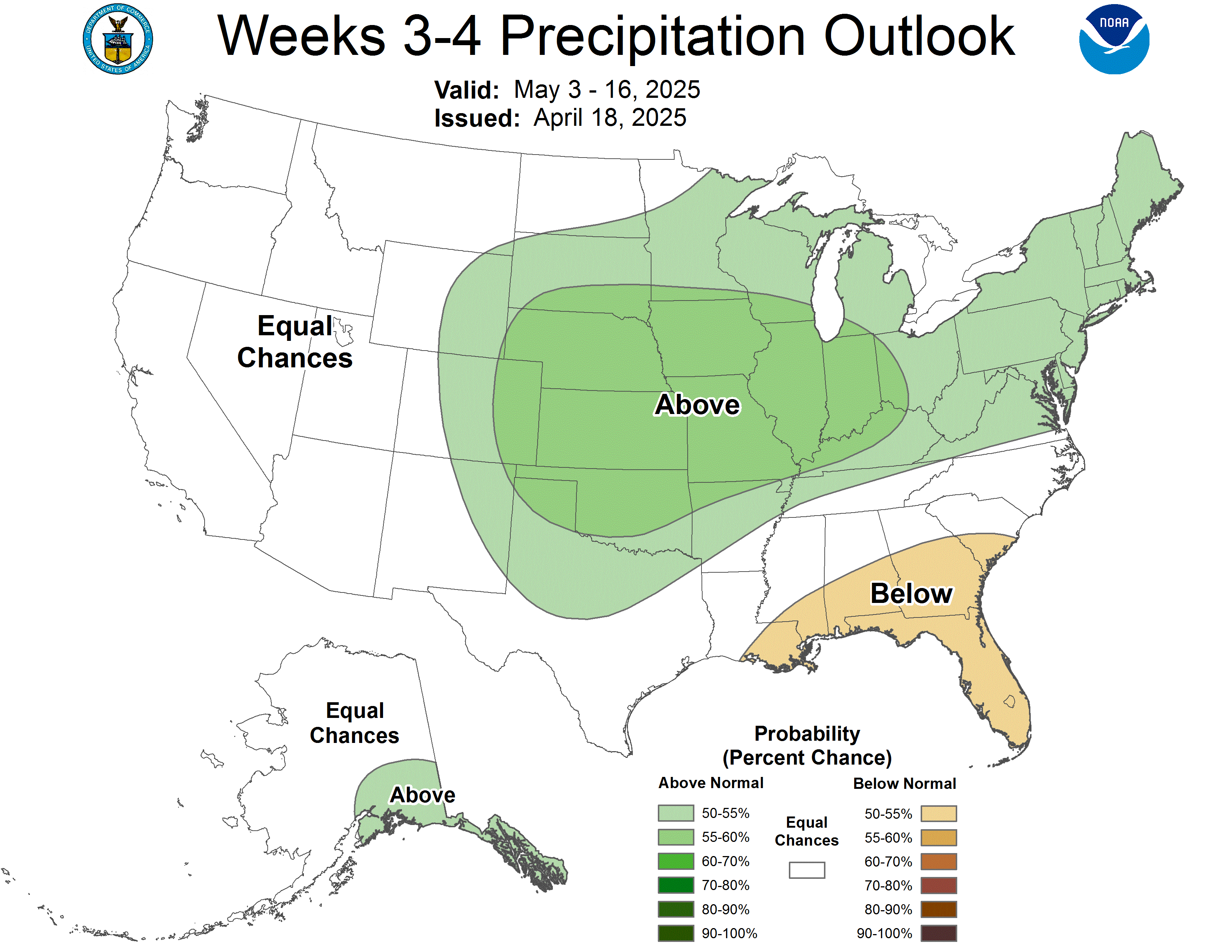 |
The new monthly forecast is to the right. Does it appear to be reflective of the four parts of the month for which we have forecasts? → | f | ↑ ←The Week 3 – 4 forecast was updated on March 1. It now appears that the full month forecast perhaps should show Texas a bit wetter.
| |
Sometimes it is useful to compare the three-month outlook to the forecast for the first of the three months. It shows how much the pattern changes over the three-month period.

One can mentally subtract the First-Month Outlook from the Three-month Outlook and create the Outlook for the last two months in the three-month period.
And with respect to drought, this was issued on February 28, 2019.

Looking back on February to relate the forecast for March to the actuals in February..
First Temperature

And then Precipitation

Summary
The purpose of this article was to present the updated Outlook for March, 2019 and compare it with the Early Outlook. It is not to critique the updated Outlook for March based on our opinions. We have assessed the extent to which the monthly outlook seems to fit with the other forecasts provided by NOAA. We do not have a March forecast by JAMSTEC as they only provide three-month forecasts. We do have forecasts for March from other meteorological agencies but the objective in this article was simply to present the new forecast. In reality these forecasts are obsolete when issued as the situation changes day by day or six hours by six hours i.e. each new model run. In our other articles including the Weather Economic Impact article which will be published tomorrow March 1, 2019), we continually examine the current forecasts from NOAA including the Day 1 – 5, 6 – 10, 8 – 14 and Week 3 and 4. So we are continually looking at approximately 25 days into the future.
On March 14, 2019, IRI/CBC will issue their ENSO forecast and on March 15 or 16 we will present that and critique it. It is an ongoing process and we attempt to provide our readers with the best current assessment of the next approximately 25 days (except when we cover the Four-Season Analysis or medium-frequency cycles such as ENSO), so our analysis is pretty much ongoing. We also publish a Live Severe Weather Article which updates in real time to reflect NOAA Weather Headlines. All of our reports including past versions of these reports can be located via the Directory/Archive which can be accessed here.


