


Written by Sig Silber
To avoid delays, we are publishing the new NOAA Seasonal Outlook forecast maps released on January 17, 2019 now but with only minimal discussion. A full discussion (including the possible complex transition to an El Nino) and comparison with the JAMSTEC version will be published next week. We have some concerns about the NOAA precipitation forecast. It may be too conservative. We plan to pay a lot of attention to that question as we prepare Part II of this Report.

Please share this article – Go to very top of page, right hand side for social media buttons.
Focus on the NOAA Update
A note about terminology; the deviations from climatology/normal are color coded but also labeled “A” for more than (above) normal and “B” for less than (below) normal. The area designated EC means Equal Chances of being more or less than normal. In my comments For the shorter-term maps NOAA uses “N” instead of “EC” as the believe they can be more definitive with respect to shorter timeframes. So the words “warm”, “cool”, “wet”, “dry” should be generally interpreted as being relative to climatology/normal for that location and time of year.
First we will take a look at the NOAA Early Outlook for February, 2019. It is called the Early Outlook because it will be updated at the end of January. Only the February Outlook will be updated at that time.
Temperature

Precipitation

We have nothing to compare these maps with as NOAA does not in their Update provide a forecast for each of the subsequent two months separate from their three-month forecast. Thus I do not have previously forecast maps for February from the previous NOAA Report to compare against. And the current month is not over so we can not really compare the forecast for next month against the actual for this month. It is probably best to just try to understand what NOAA is trying to convey about February which for Temperature is a warmer than climatology Alaska and close to half of CONUS i.e. the western half. To the east it is EC except for a large cool anomaly centered on the Mississippi River Valley. For precipitation, it is a wet Southern Alaska including the Panhandle and a dry anomaly that includes California and Nevada and parts of neighboring states. There is another dry anomaly centered on the intersection of the Ohio River and the Mississippi River. There is also a small wet anomaly covering parts of Montana and North Dakota.
Visual Consistency Testing.
It is useful to see how the month forecast fits with the set of shorter forecasts that we have. But since the Seasonal Outlook was issued on January 17, The first two of our short-term forecast maps fall in January when we went to press but we include them as they show the trend. They will also update each day and become more relevant. The three graphics on the first row update, the monthly forecast is fixed until we update it at the end of the month (in a separate article) when NOAA issues their end of month update. So for now the key graphic on the first row for temperature and also for precipitation is the Week 3 -4 forecast which covers the first half of February.
First Temperature
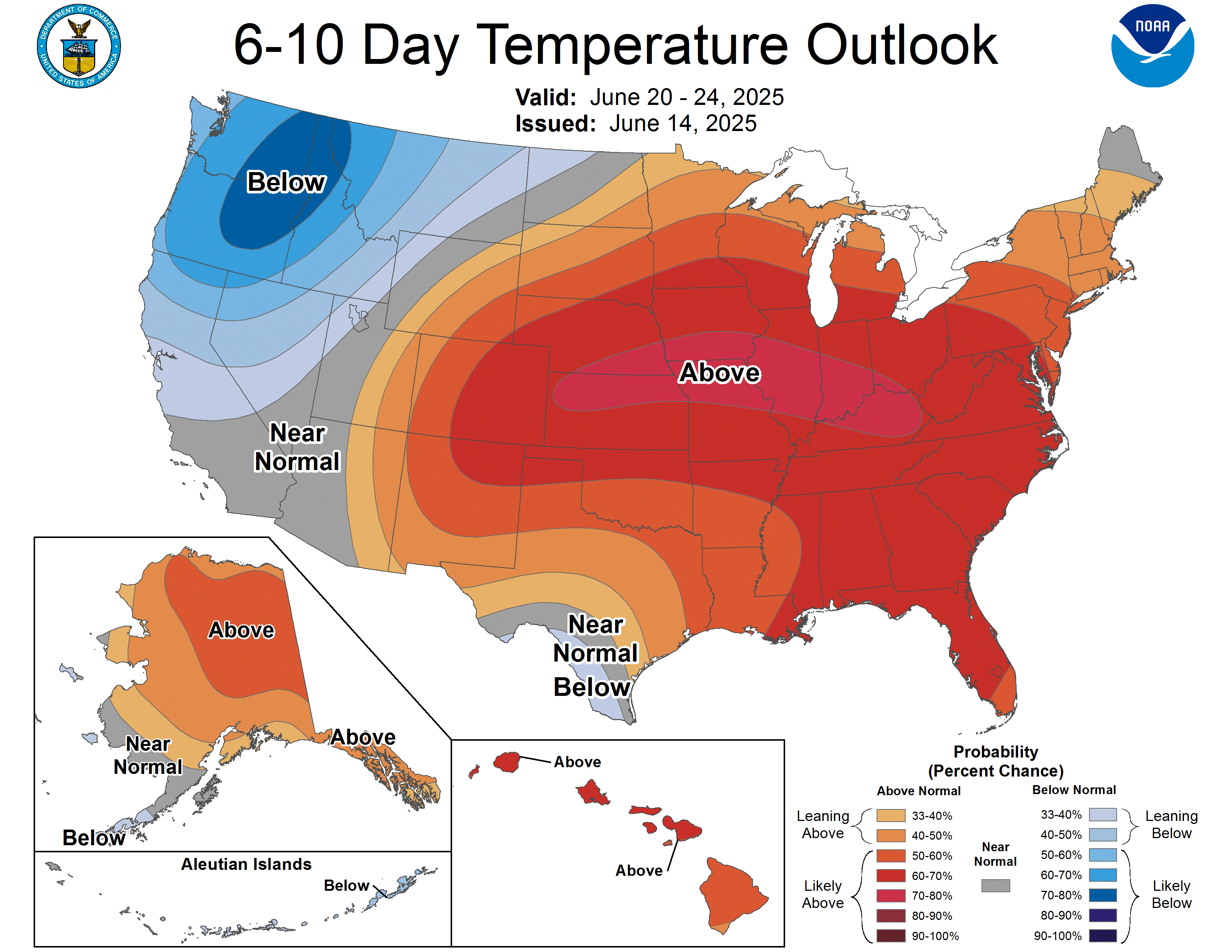 | 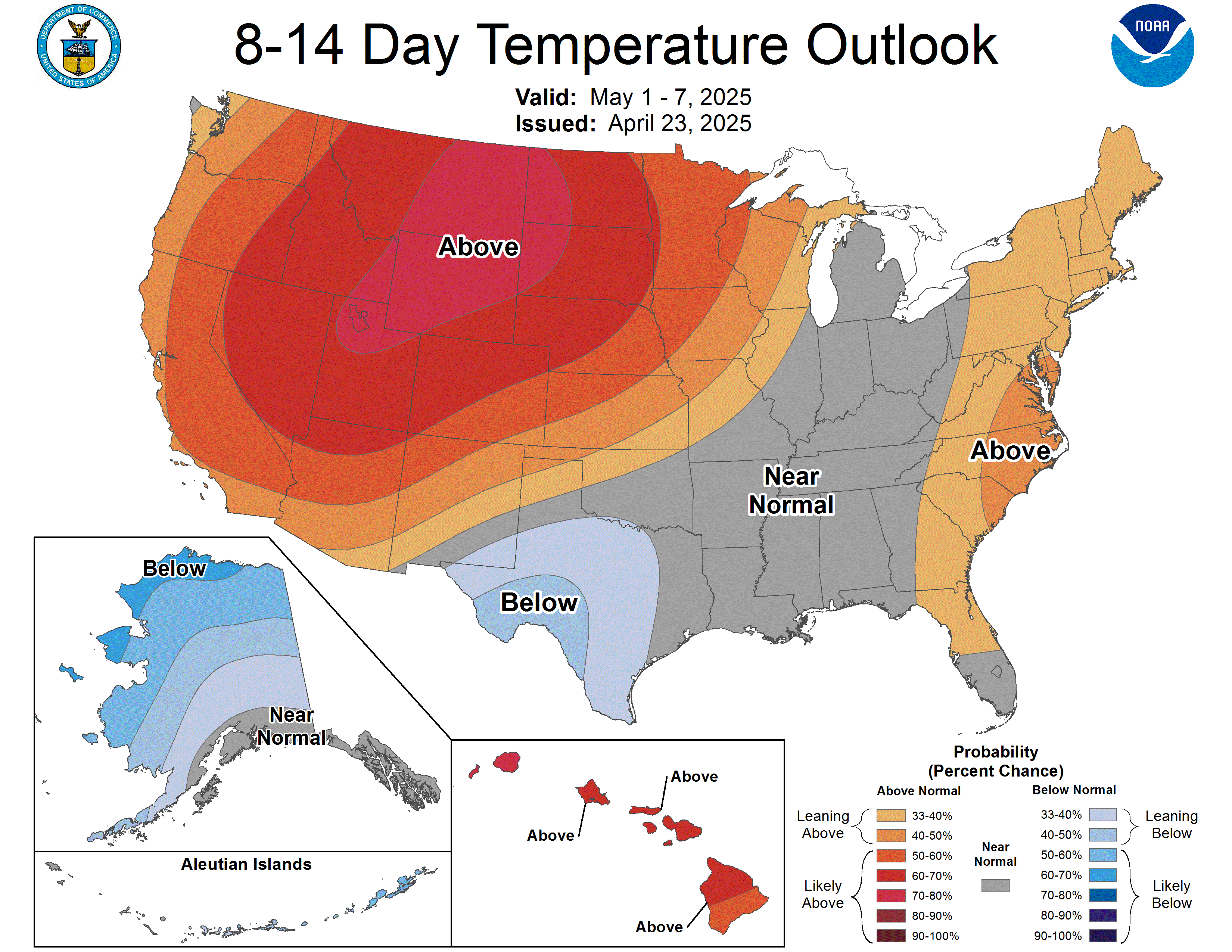 | 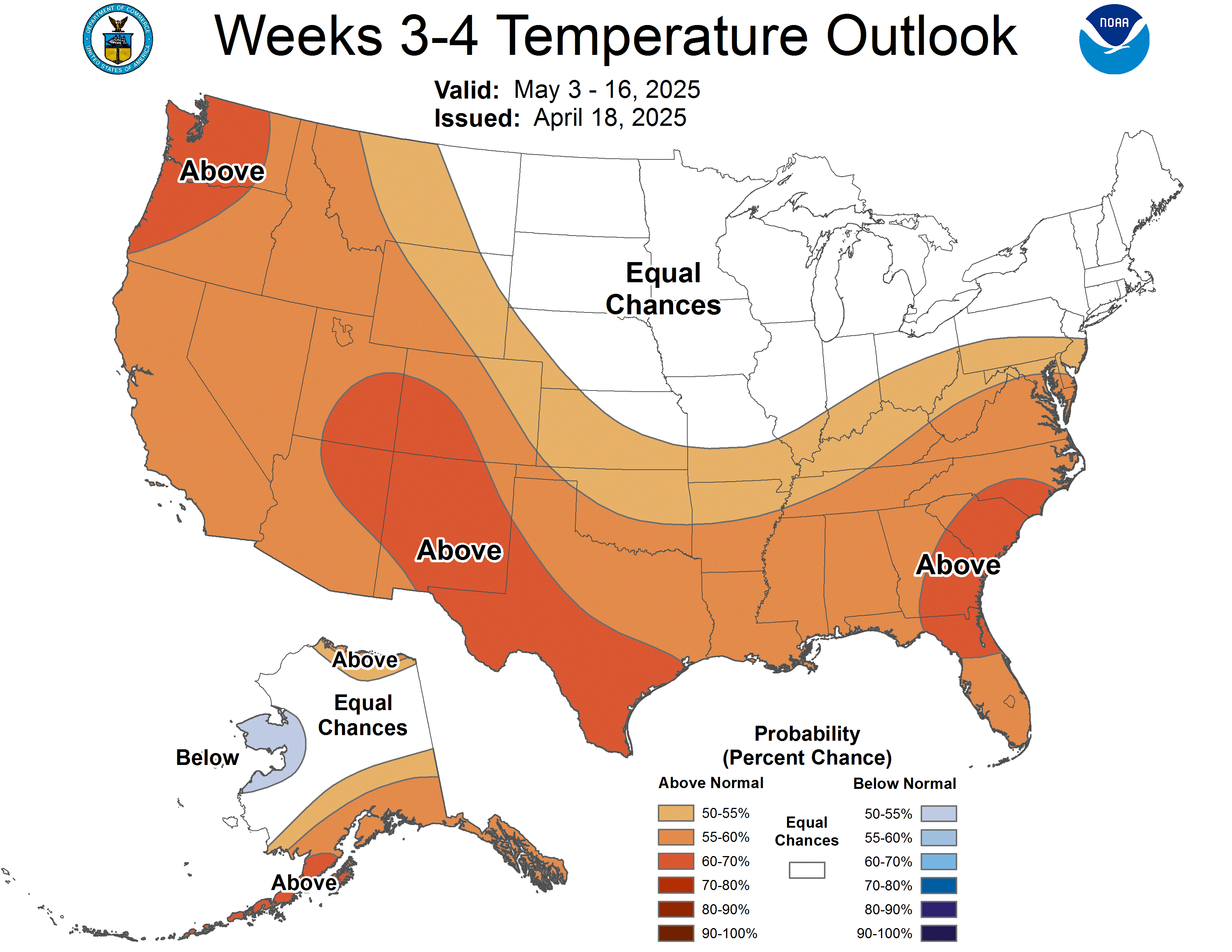 |
| The new monthly forecast is to the right. Does it appear to be reflective of the three parts of the month for which we have forecasts? → |
| ↑ ← The full month forecast seems to fit well with the Week 3 – 4 forecast. We do not have the last half of the month in the sequence of maps above. We will revisit this question at the end of January when the February forecast is updated. |
And then Precipitation
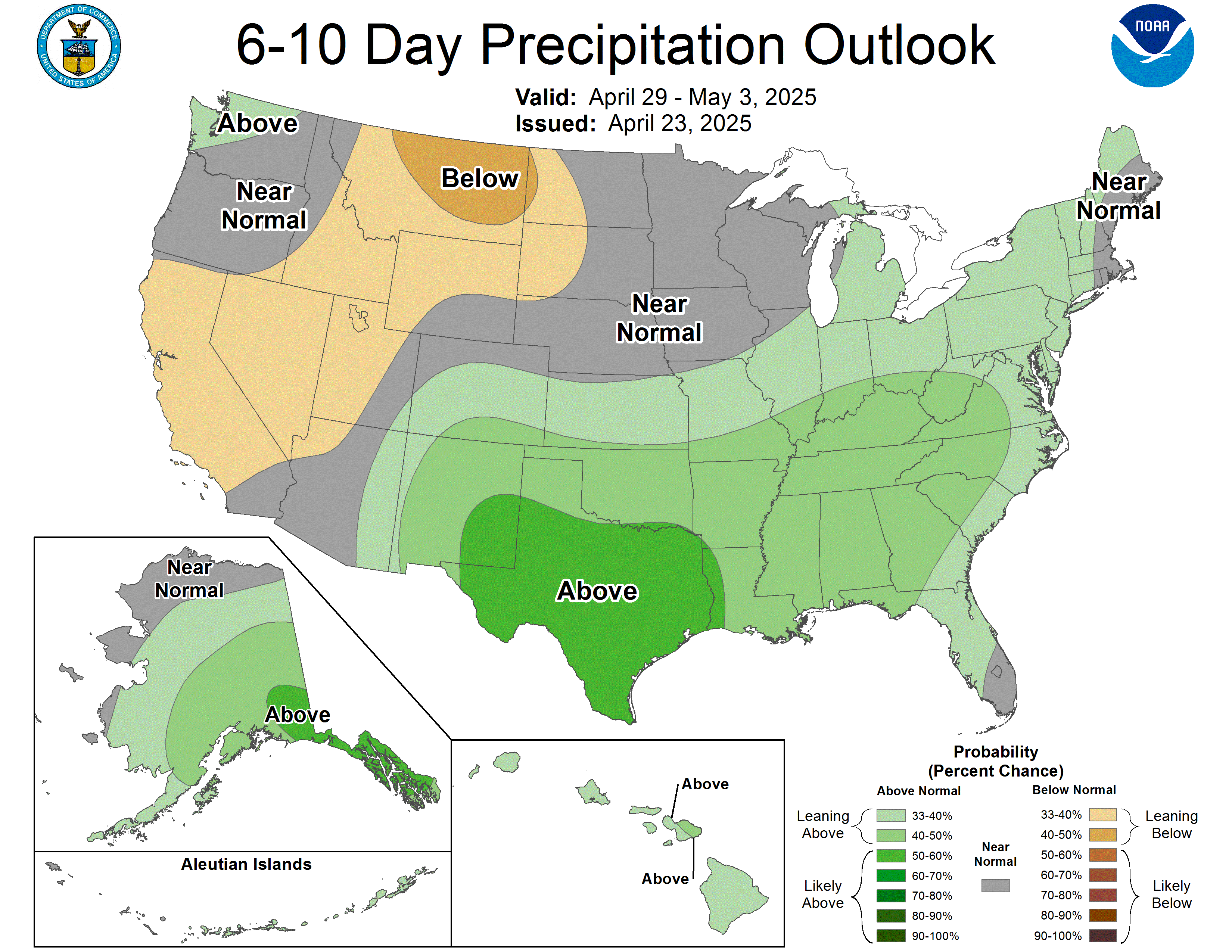 | 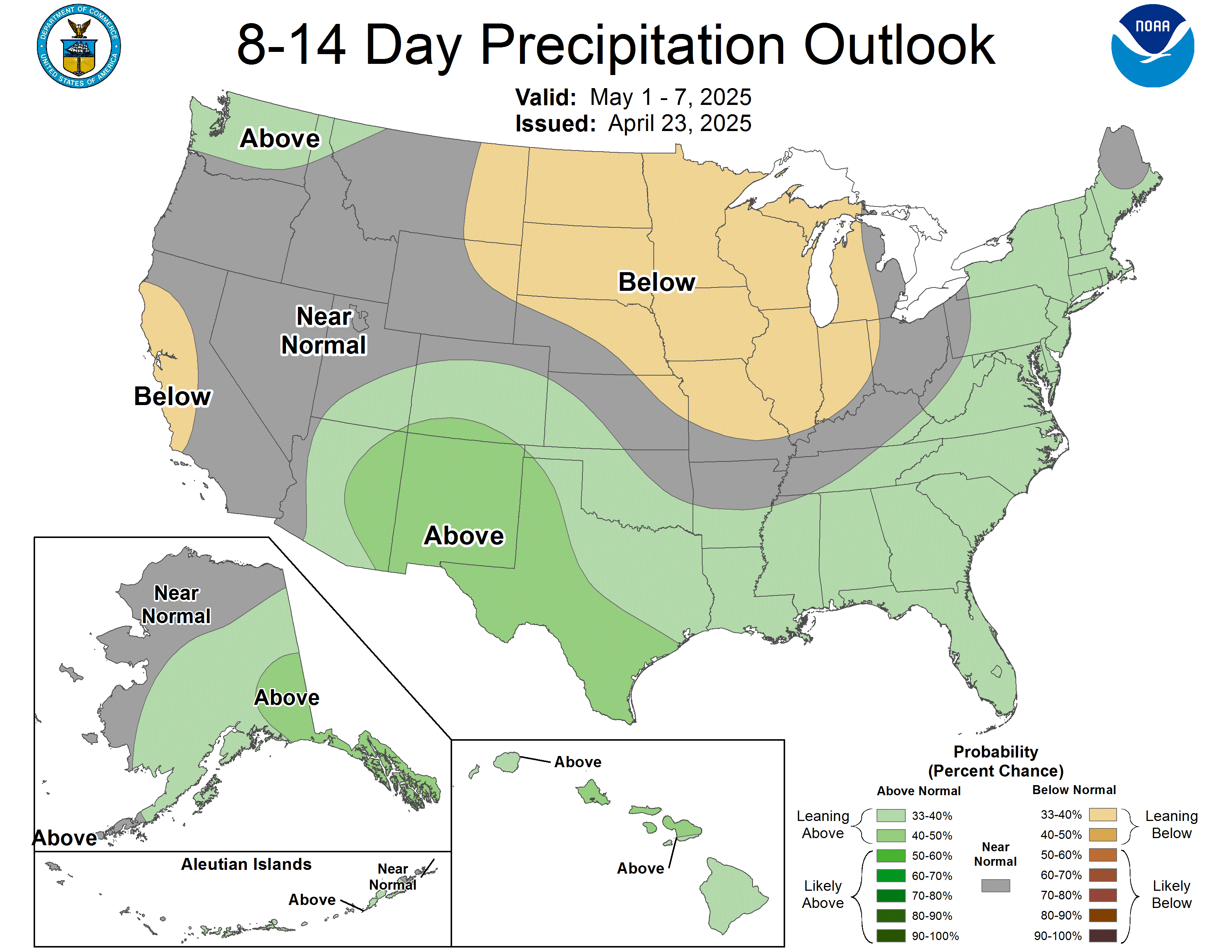 | 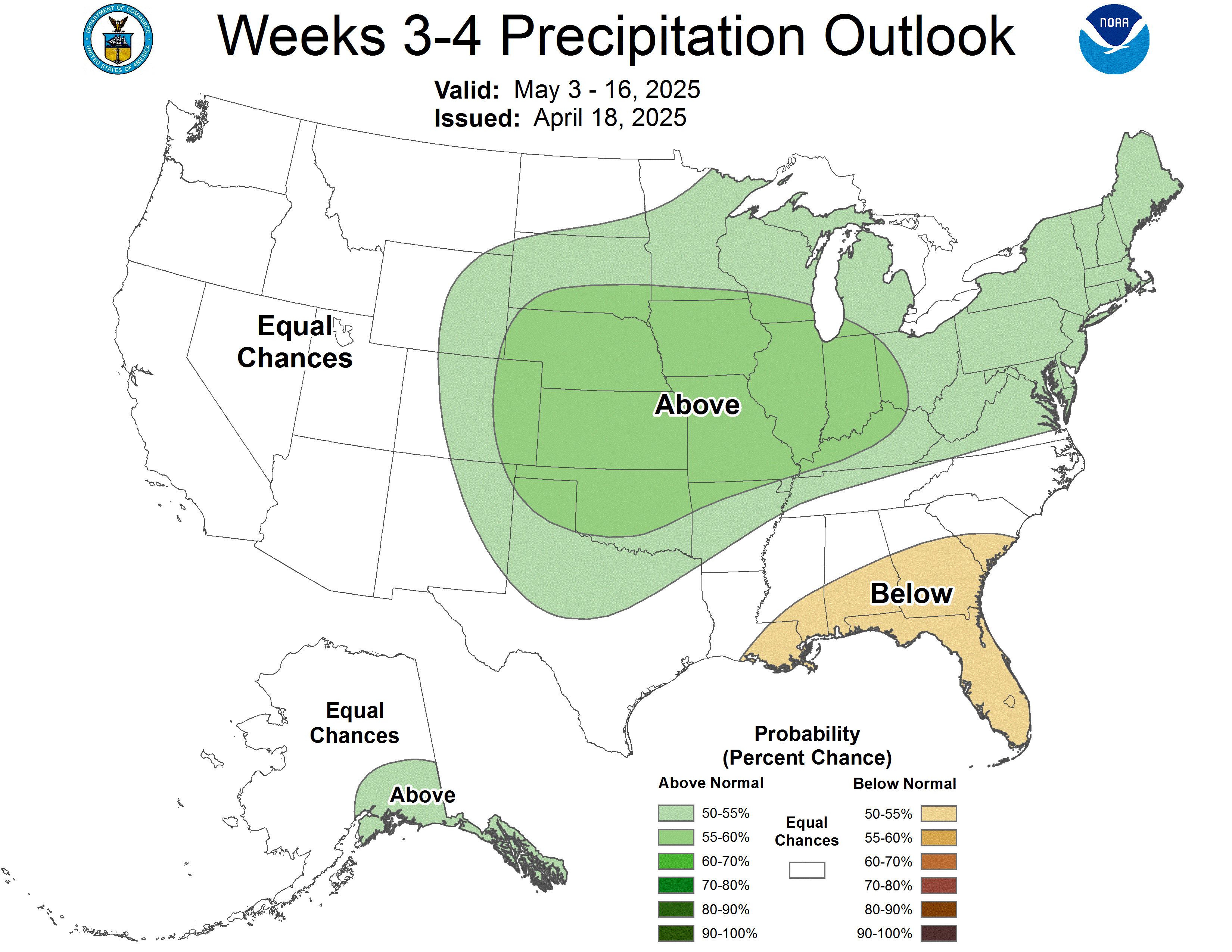 |
| The new monthly forecast is to the right. Does it appear to be reflective of the three parts of the month for which we have forecasts? → | | ↑ ← The full month forecast does not seem to fit reasonably well with the Week 3-4 Map. But we do not have the last half of the month in the sequence of maps above. We will revisit this question at the end of January when the February forecast is updated. |
Now we consider the three-month Outlook.
Notice that the three-month periods are abbreviated e.g. February/March/April is shown as FMA. You will see such abbreviations often in this report.
Prior Temperature Outlook for FMA 2019

New Temperature Outlook for FMA 2019

Prior Precipitation Outlook for FMA – 2019

New Precipitation Outlook for FMA, 2019

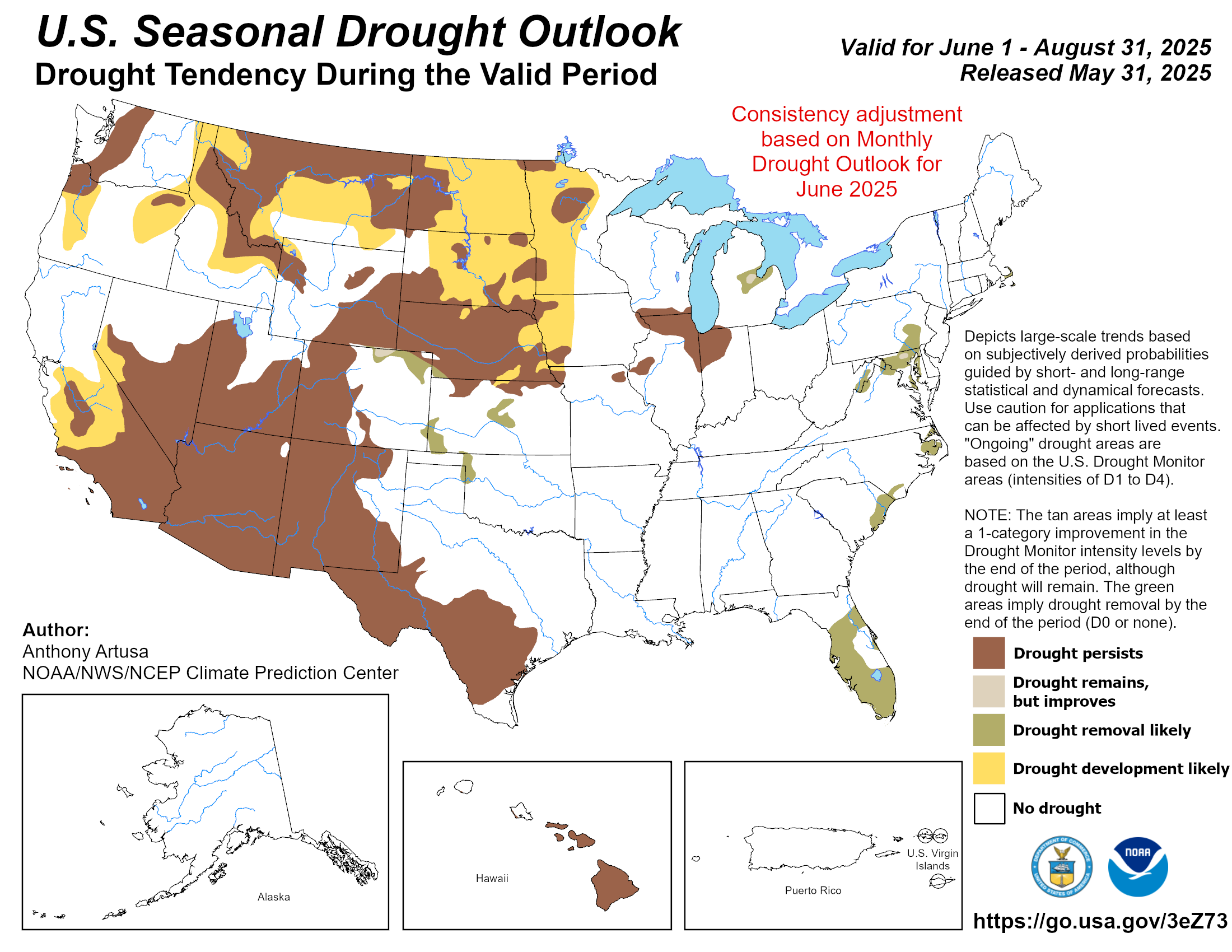
And here is the new Seasonal Drought Forecast.
Now let us focus on the long-term situation.
Prior 14 Month Temperature Outlook: FMA 2019 – JFM 2020

New 14 Month Temperature Outlook: MAM 2019 – FMA 2020

To compare maps from one release to another, one needs to remember that the new release drops one three-month period and adds a later one. So to make the comparisons one has to shift the new maps to the right one position and that makes the map on the right drop down to become the left-most map in the next level. I do not have a computer software tool for doing that for you so you have to do it mentally. When I do the comparison, I print the two sets of maps and put them side by side and number the same three-month maps 1, 2, 3,…..,11 in both sets of maps to make it easier for me to easily compare the same three-month period in the new with the previous forecast. One uses the same procedure to compare the precipitation maps. Based on this procedure, I conclude that:
Now Precipitation
Prior 14 Month Precipitation Outlook: FMA 2019 – FMA 2020

New 14 Month Precipitation Outlook: MAM 2019 – JFM 2020

If you want larger versions of each map (temperature and precipitation) you can find them here. And then each of those maps can be clicked on to further enlarge them.
Sometimes it is useful to compare the three-month outlook to the forecast for the first of the three months. It shows how much the pattern changes over the three-month period.

One can mentally subtract the First-Month Outlook from the Three-month Outlook and create the Outlook for the last two months in the three-month period.
This completes our Part I Report except for a comment on El Nino.
NOAA uses a lot of tools to predict the ENSO Cycle. Below is their proprietary model but it is not clear now much weight they place on the forecasts from this model.

It does predict a minimal El Nino contingent on the atmosphere responding to the warmer Eastern Pacific sea surface temperatures. But even if we do not get a real El Nino, the situation would be ENSO Neutral with a warm bias. Thus we wonder if the NOAA precipitation forecast is a bit too conservative.
We will analyze the NOAA information and compare it to the JAMSTEC forecast in Part II which will be published next week. At least that is our plan. However JAMSTEC has not yet published which is unusual and we can not compare the NOAA forecast to the JAMSTEC forecast until JAMSTEC publishes and we do not know when that will be


