


Written by Sig Silber
Updated at 4:20 PM EST November 9, 2018 to reflect the Week 3 – 4 Update
There has been a continuing slow reduction in the intensity of the drought but the next few weeks may reverse that a bit before El Nino arrives. Many crops have been harvested but the overall picture may not be as positive for the crops currently being cultivated compared to those which have been mostly harvested. Cold and wet is not always the best combination for crops.

Please share this article – Go to very top of page, right hand side, for social media buttons.
From our November 5, 2018 Weather and Climate Report which you can access here:
The pre-forecast analogs this week are associated with respect to McCabe Conditions D and C which are drought scenarios for all but the East Coast. The Atlantic rather than the Pacific is in charge. The analogs are consistent with the NOAA 6 – 14 Day forecast.
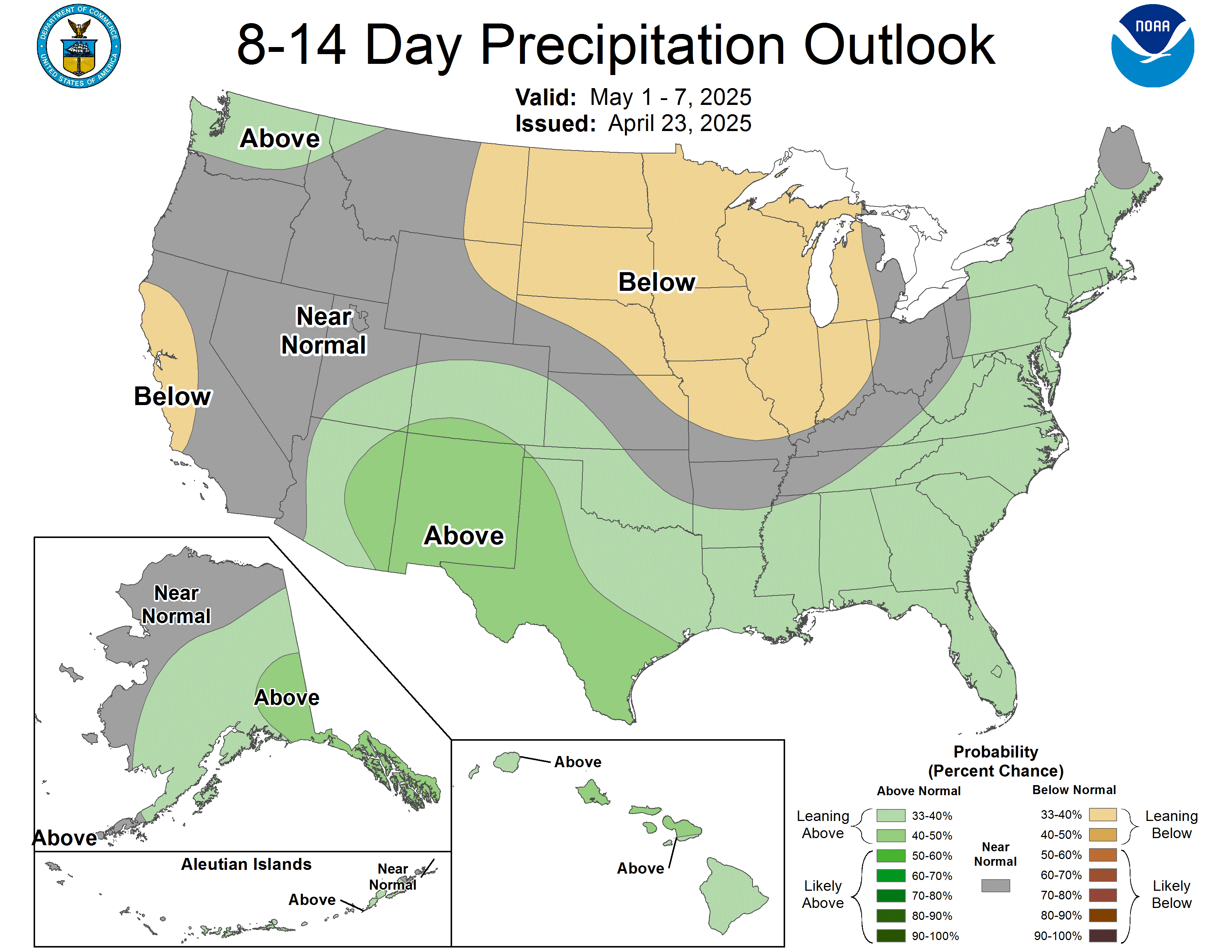
Take a look at the current 8 – 14 Day forecast.
- The U.S. Drought Monitor (full report can be accessed here)
- Selected parts of our Weekly Weather and Climate Report (Monday’s full report can be accessed here) which has forecasts for the next 25 days and which auto-updates
- Selections from the Tuesday USDA Weather and Crop Bulletin (full report can be accessed here). Other useful sources of information that I regularly utilize are the National Integrated Drought Information System (NIDIS) which can be accessed here and the USDA NRCS Weekly and Weather Climate Update which can be accessed here.
Remember if you leave this page to go to links or if you have clicked to enlarge a graphic, in order to get back you need to hit the return arrow usually located on the left of your URL box on the upper left of the screen. Also most of the small graphics are designed to become full size when you click on them. If that does not work, an alternative way to view the larger graphics is to right click and then hit “view image”. That should always work.
This report is now organized as follows:
- Present Drought Conditions
- Last Week’s Weather
- Information from our Weekly Weather Column (the forecast maps auto-update) and combined with brief commentary from me provides a forecast which I attempt to interpret re the likely change in drought conditions
- U.S. Crop Information
- International Crop Information and related weather
- Prior month’s weather and month-to-date weather excluding the prior week when I have that information. Drought is based on cumulative deficits.
- A science theme if we have one.
- Reference Information. (This includes a lot of information on reservoirs that we are not focusing on this week)
1. Present Drought Conditions
The U.S. Drought Monitor is a comprehensive way of understanding the drought situation for the U.S. It is issued every Thursday and reflects the conditions as of the prior Tuesday. Drought is defined as a moisture deficit bad enough to have social, environmental or economic effects. Thus, more factors than recent precipitation are considered and more information on how it is done is found at the end of this report.

Below is the same map but just CONUS and with statistics and below that map I have provided a cut-out of the statistics which I think you can click on to enlarge.
 |
 |
|
|

The graphic below shows the one-week change in drought intensity. Yellow is bad. Green is good.

This pair of maps might make it easier to get a general idea of what is happening in the worst part of the drought area.
| Last Week | This Week |
 |
|

This map which covers the West may be useful also.

This presents the current weeks data as a pie chart

But this graphic might also be useful

Now we show the week to week change information by region. The yellow is where the drought has been upgraded. The green is where the level of drought has been downgraded.
 |
| Mixed |
 |
| Slight Improvement |
 |
| Some Improvement in the Northeast |
 |
| Not much change |
 |
| Mixed |
 |
| A lot of changes in this area. Mostly positive. |
Some may find this way of looking at things useful and I hope these graphics are not too small to read. I did not make them so you could click on them individually but you can click on the whole graphic and it may enlarge. But I think you get the picture. It has been a rapid onset and hopefully it’s demise will also be fairly rapid. When you read these graphics remember that the older graphics are not the drought conditions that existed then but the change from then until now.

Some might find this animation of twelve weeks of change useful;

Here is the discussion which was issued with the Drought Monitor today.
This Week’s Drought Summary
This U.S. Drought Monitor week saw improvements on the map across portions of the Pacific Northwest as well as in the northern and central Rockies where scattered rain and mountain snow showers helped to boost snowpack levels and improve soil moisture content. In California and the western Great Basin, the dry pattern has continued from the summer months with no relief expected in the coming weeks in terms of precipitation. In northwestern California, the combination of long- and short-term precipitation deficits, agricultural impacts, and poor surface water flows led to further degradation of conditions. Conversely, in the desert region of southeastern California, areas of severe and extreme drought improved in response to well above-normal precipitation levels during the past 60 days in association with residual moisture from two tropical storm events that impacted the Southwest. Across the lower Midwest and Northeast, beneficial rains this week helped to reduce short-term precipitation deficits and improve soil moisture.
Northeast
On this week’s map, drought-related conditions improved in Upstate New York and northern Vermont in response to widespread rainfall (1.5-to-3 inches) that impacted the region late last week and into the weekend. In northern Maine, this week’s rainfall and improving streamflow conditions led to reduction in areas of Abnormally Dry (D0). Average temperatures for the week were near to slightly below normal in Upstate New York, New Hampshire, and large portions of Maine while temperatures hovered near normal to slightly above normal from Massachusetts to Maryland. According to the U.S. Geological Survey, streamflows across the entire region are running above normal.
Southeast
On this week’s map, only minor changes were made in areas of southeastern Georgia where precipitation deficits (past 30-to-90 days) and pockets of below-normal soil moisture led to expansion of areas of Moderate Drought (D1) in Camden and Screven counties. Elsewhere in southeastern Georgia, a narrow band of heavy rainfall led to removal of areas of Abnormally Dry (D0) in portions of Echols, Clinch, and Ware counties. Some isolated heavy rainfall accumulations (2-to-4 inches) were observed in the Outer Banks of North Carolina as well as in north Florida. Average temperatures across most of the region hovered near normal to slightly above normal, with the greatest positive anomalies observed along the coastal areas from Virginia to South Carolina.
South
On this week’s map, improvements were made in areas of Abnormally Dry (D0) in northwestern and southern Arkansas, southeastern Louisiana, northern Mississippi, and southern Tennessee where locally heavy rainfall accumulations (2-to-5 inches) were observed. In northeastern Oklahoma, areas of Abnormally Dry (D0) and Moderate Drought (D1) expanded slightly in response to short-term (30-to-90 day) precipitation deficits and reduced soil moisture levels. Elsewhere in the region, above-normal precipitation during the past 30-day period and improving soil moisture conditions led to improvements in areas of Abnormally Dry (D0), Moderate Drought (D1), and Severe Drought (D2) in the Trans Pecos region of western Texas. For the week, average temperatures were above normal across southern Arkansas, Louisiana, Mississippi, and eastern Texas while northern Arkansas, Oklahoma, and western Texas were below normal.
Midwest
Locally heavy rains impacted the southern portion of the region with the largest accumulations (4-to-6 inches) observed across the Ohio Valley. In Missouri, 2-to-4 inches of rain this week led to removal of the remaining area of Moderate Drought (D1) and reduction in areas of Abnormally Dry (D0) across the state. For the week, average temperatures hovered within a few degrees of normal across most of the region with the exception of areas in the Ohio Valley where temperatures were 3-to-6 degrees above normal. For the past 90-day period, precipitation has been above normal across a large portion of the region.
High Plains
On this week’s map, improvements were made in areas of Abnormally Dry (D0) and Moderate Drought (D1) in eastern Montana where precipitation during the past 60-day period has been above normal and soil moisture conditions have improved considerably. Elsewhere in the region, no changes were made on the map. In the Missouri River Basin system, above-average releases are expected to continue through November, according to the U.S Army Corps of Engineers. For the week, the region experienced near-to-below-normal temperatures with the largest negative anomalies (2-to-8 degrees below normal) in eastern Colorado and Wyoming.
West
On this week’s map, conditions degraded in areas across central and northern California, western Nevada, and southern Oregon where the warm and dry pattern has persisted. In northern-central California and southwestern Oregon, the combination of long-term precipitation deficits, agricultural impacts, poor soil moisture, well below-normal streamflow levels, and groundwater issues led to the introduction of an area of Extreme Drought (D3). Additionally, areas of Moderate Drought (D1) and Severe Drought (D2) expanded in northwestern California where streamflow is below the 10th percentile, according to the U.S. Geological Survey. In the Sierra Nevada Range, the combination of short-term dryness, lack of snowfall, and warm temperatures led to the introduction of Abnormally Dry (D0). In the southeastern desert region of California, precipitation has been well above normal leading to a reduction in areas of Extreme Drought (D3) and Severe Drought (D2). In the Pacific Northwest, storms battered western Washington with rain and high-elevation snowfall with accumulations (liquid) ranging from 6-to-14 inches in the Cascades and Olympic Mountains leading to removal of areas of Abnormally Dry (D0) and Moderate Drought (D1). Elsewhere in the Pacific Northwest, rain and snow fell across the Idaho Panhandle, northwestern Montana, and northwestern Wyoming leading to a reduction in areas of Abnormally Dry (D0) and Moderate Drought (D1). In the central Rockies of Colorado, snow showers continued this week leading to a reduction in areas of Extreme Drought (D3) in northern Colorado and Exceptional Drought (D4) in the Sangre de Cristo Range. According to the NRCS SNOTEL network, snowpack levels are at or above normal across much of the state with the exception of parts of the San Juan Mountains. In eastern Utah, an area of Extreme Drought (D3) was reduced in response to above- normal precipitation (200% of normal) for the month of October.
Alaska, Hawaii, and Puerto Rico
No changes were made on this week’s map in Alaska, Hawaii, or Puerto Rico. In the Hawaiian Islands, rainfall accumulations were light-to-moderate across the islands with 7-day storm totals ranging from 1-to-3 inches on Kauai, Molokai, Oahu, and Maui while the leeward side of the Big Island had heavier accumulations of 4-to-7 inches. Average temperatures for the week were near normal across the island chain. In Alaska, generally dry conditions prevailed across most of the state with the exception of parts of Southeast and Southcentral where liquid accumulations ranged from 2-to-5 inches. For the past 30-day period, average temperatures across the state were above normal with the largest positive anomalies observed in the Interior and western Alaska where temperatures were 9-to-13 degrees above normal. In Puerto Rico, moderate-to-heavy rainfall accumulations (3-to-8 inches) were observed across western portions of the Cordillera Central as well as in the capital city, San Juan, during the past week.
Looking Ahead
The NWS WPC 7-Day Quantitative Precipitation Forecast (QPF) calls for light-to-moderate accumulations ranging from 1-to-2.5 inches along the Gulf Coast from Texas to the Florida Panhandle as well as in coastal areas of the Carolinas. Similar rainfall amounts are forecasted for eastern portions of New England. Out West, dry conditions are expected across the region with the exception of some lesser accumulations (<1 inch) across the northern Rockies of Idaho and Montana. The CPC 6 – 10-day outlook calls for a high probability of above-normal temperatures across California and western portions of Arizona, Nevada, Oregon, and Washington while the eastern two-thirds of the continental U.S. is forecasted to be below normal. In terms of precipitation, above-normal amounts are expected in the Eastern Tier and southern portions of Texas while below-normal precipitation is expected across the Midwest, Great Plains, and most of the West.
Wildfires are happening. But the risk is rapidly declining. More Information here.

The below are the forecasts by month for wildfires. Notice the area of risk is shrinking.


Additional information can be found here.
And we do not want to ignore floods. The updated map can be obtained here.

Reservoirs and Stream Flow

Let us look at California

2. Last Week’s Weather
Here is what happened with precipitation during the most recent week. The maps are in sync with the crop reports in terms of the period of time covered.

It is useful to look at temperature in a few different ways.
First let’s look at the Minimum Temperature.

and here is the snow situation.

And now the weekly maximum temperature

And for many purposes the average deviation from Normal or Climatology is very useful.

And here is a graphic that pulls a lot of information together. Image provided by the NOAA/ESRL Physical Sciences Division, Boulder, Colorado see website. It shows the demands of the atmosphere for moisture from the ground and is based on temperature, wind, relative humidity and solar radiation. It tells you nothing about how much precipitation you will get but how much you need to retain the same level of soil moisture.
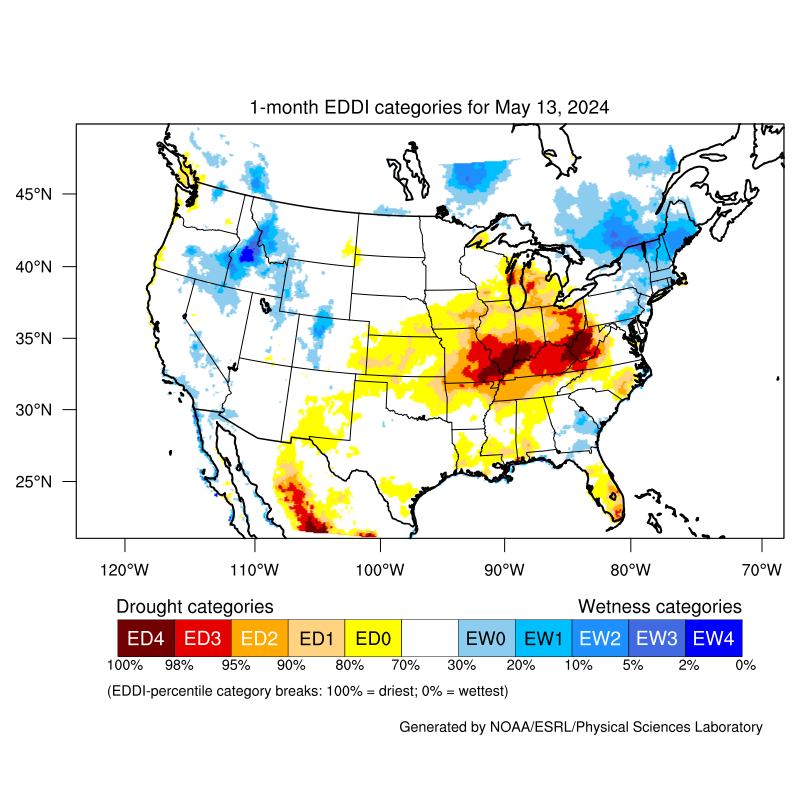

Soil Moisture is a very important part of understanding drought. I uploaded the graphics in pairs this week (which is easier for me and we will see if they are still able to be read. You can click on them and the pair will enlarge.
Soil Moisture is a very important part of understanding drought.
| Surface | Subsurface |
 |  |
The numbers in parentheses show the changes by state. Re the situation with surplus water, the number of states with Topsoil (near surface) surpluses has increased 6 from last week and the number of states with Subsoil (subsurface) surpluses has increased by 3. It is not always easy to know how to relate to a moisture surplus. Is it a positive moisture reserve or is it too wet to work the ground? | |
Re those states with deficiencies, The number of states with Topsoil (near-surface) deficiencies has decreased by 1 from last week and the number of states with Subsoil (deeper) deficiencies has decreased by 2 from last week. It is all part of the pattern of more precipitation where it is wet but not much more where it has been dry. | |
3. Current Forecast for Precipitation and Drought.
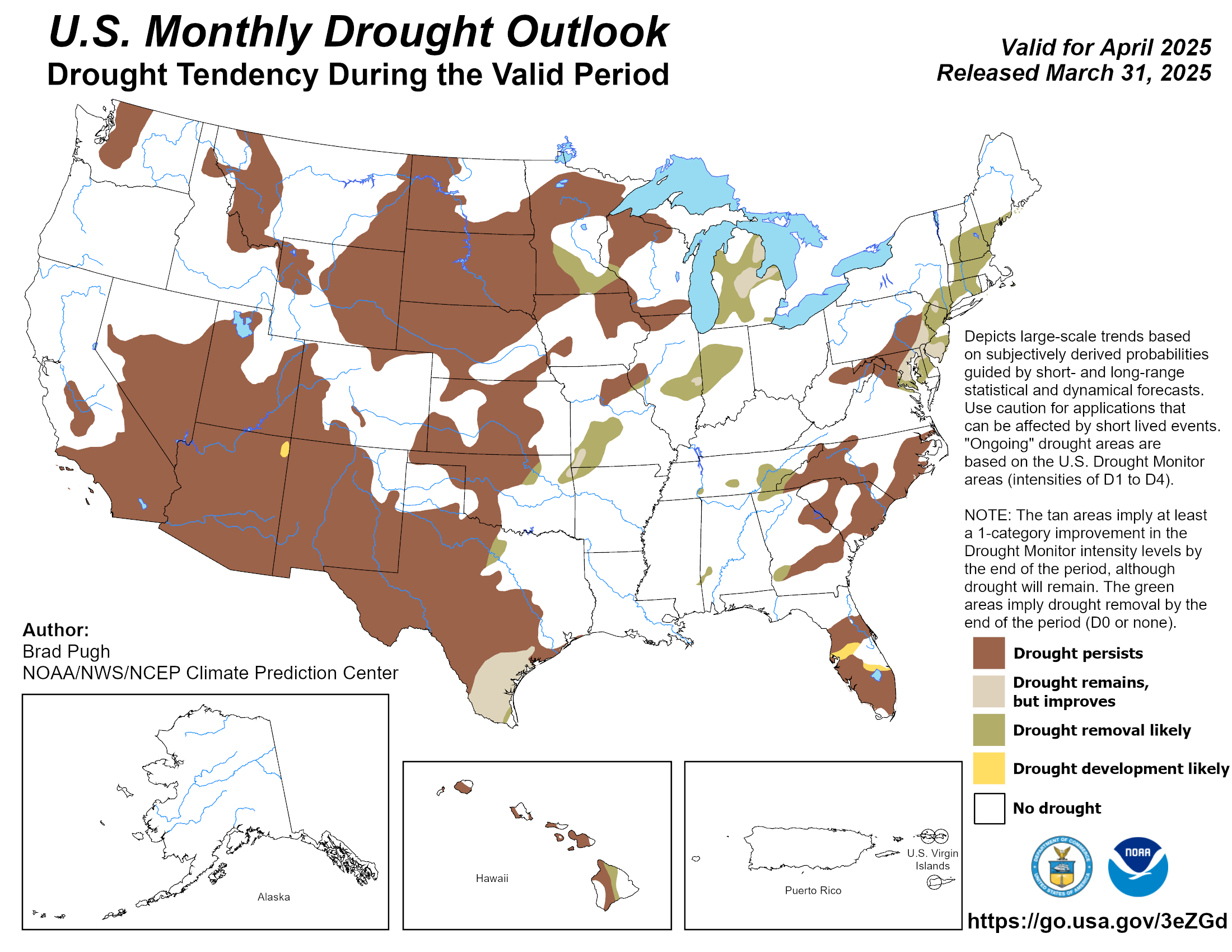
First we show the Month of November Forecast Issued on October 31 and then the Seasonal Forecast through December which was issued on October 18 with the full Seasonal Outlook. These two forecasts are issued by the same agency but to obtain them you need to access two different links here and here. We either show the latest or both in this report. Sometimes we show them in more than one place in this report for the convenience of the reader.
And here is the longer seasonal drought forecast which was issued on October 18, 2018. We discussed this forecast in our 3 – 4 Season forecasts by NOAA and JAMSTEC,
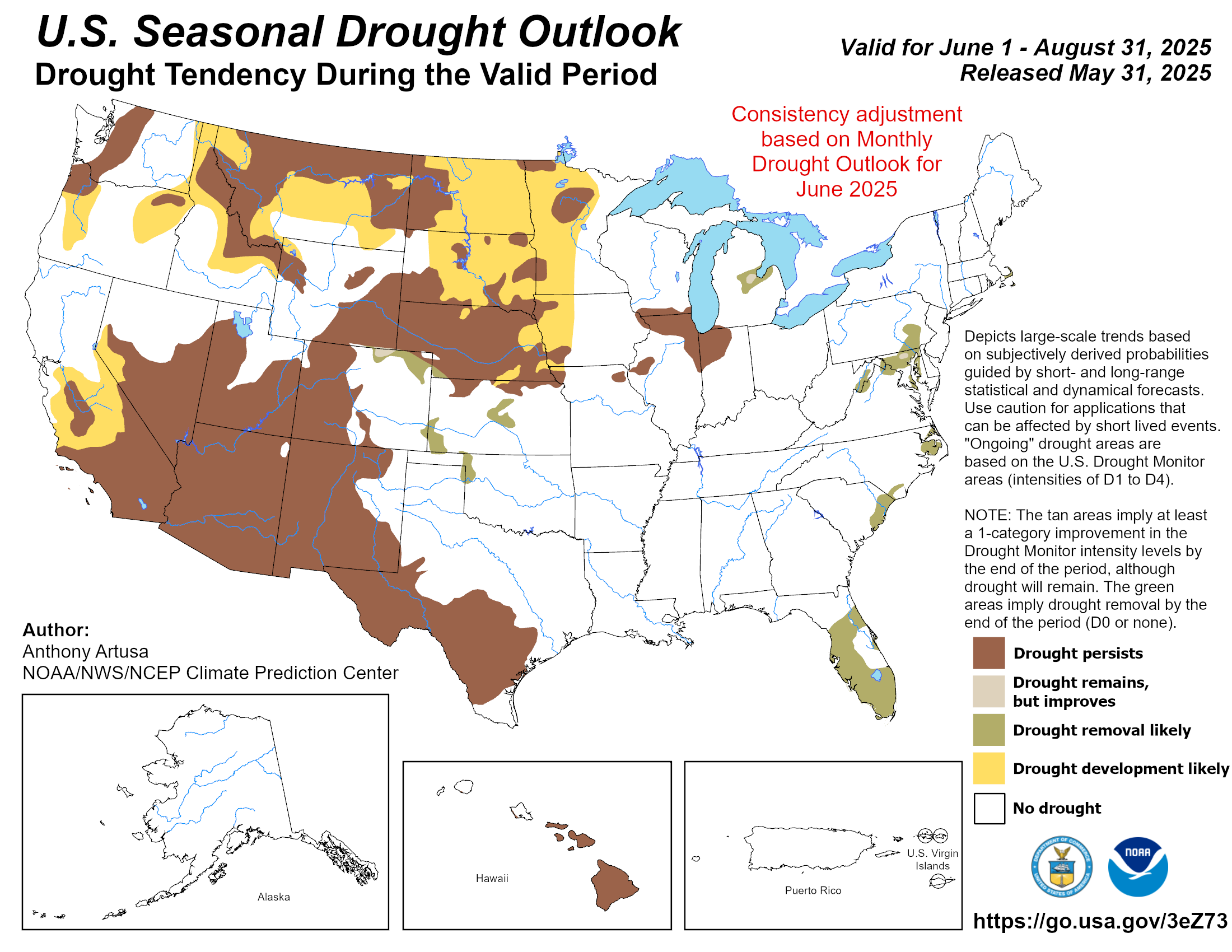
And now the current precipitation forecasts so that we can make our own assessment of the drought forecast. Here I provide the weather forecasts for different periods of time in October which should allow the reader to assess the likelihood of this forecast working out as shown over the next three to four weeks. (Since we publish this week on Thursday, we will update the discussion for the Week 3 – 4 forecast when it is updated on Friday October 19. This is important as the current Day 6 – 14 forecasts and the week-old week 3 – 4 forecast overlap to some extent.
Now let’s look at the forecasts. Because temperature is so important right now re this drought I have switched over to the same format we use on Mondays. When we publish Thursday night, the Week 3 – 4 forecast is a week old but it then updates on Friday and we have now updated the discussion accordingly.
First Temperature
 | 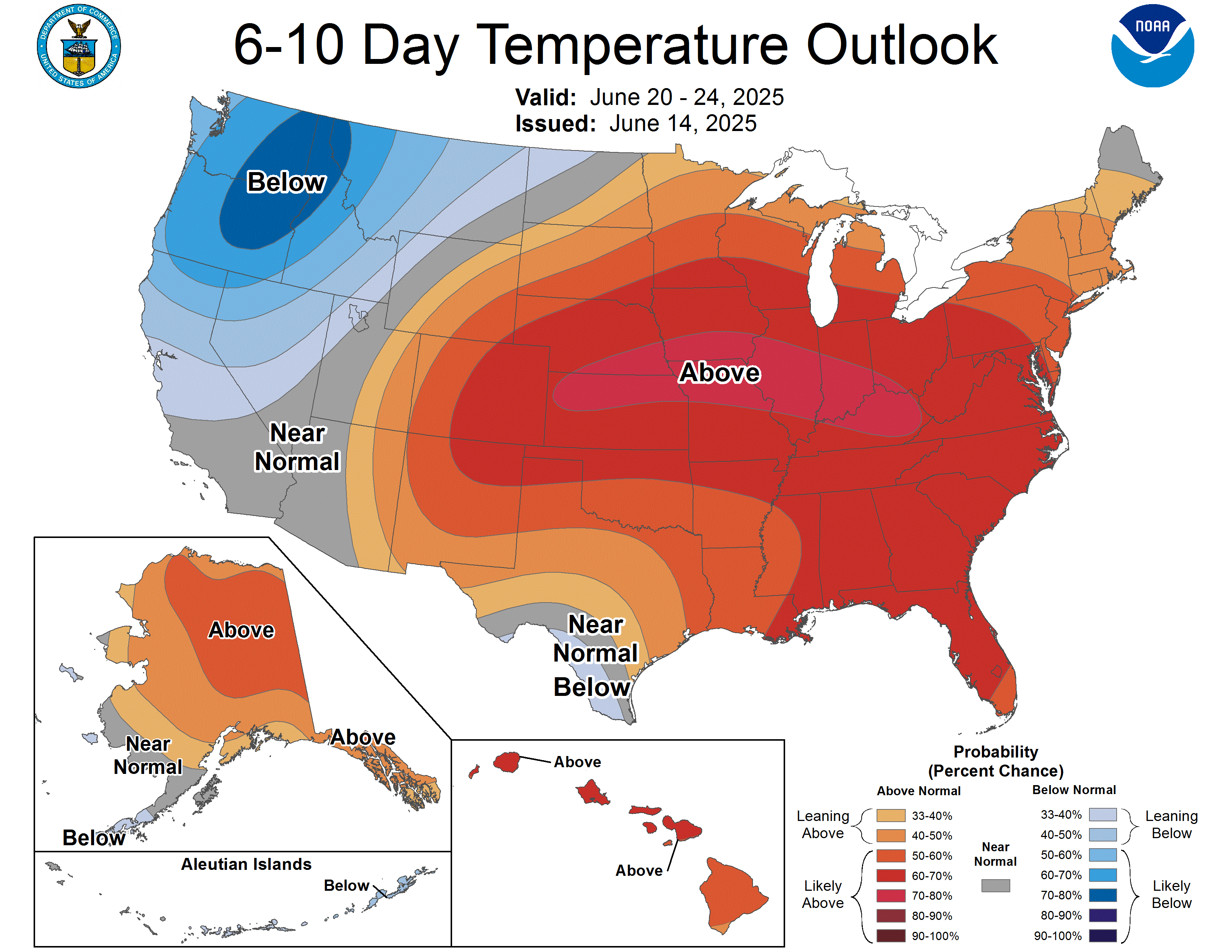 | 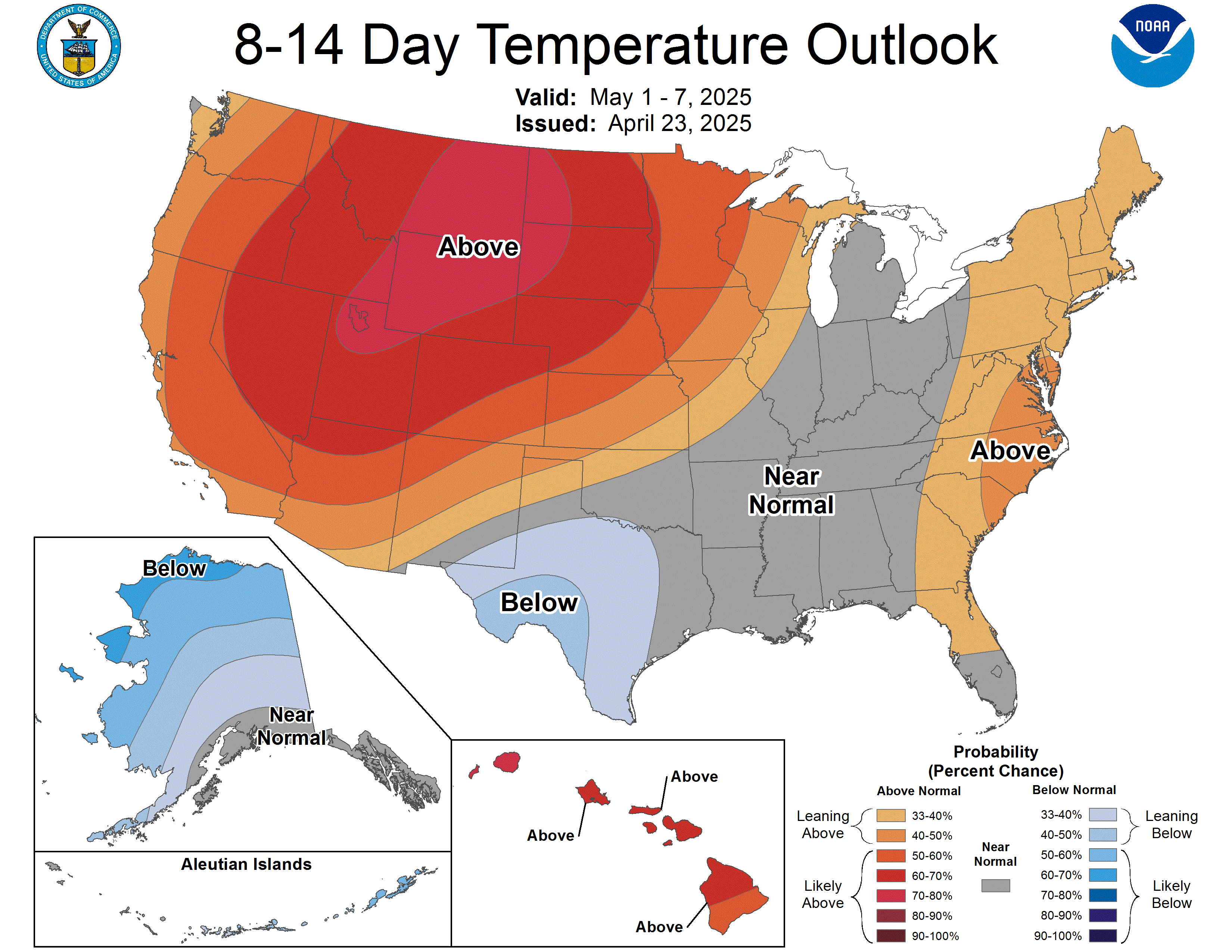 | 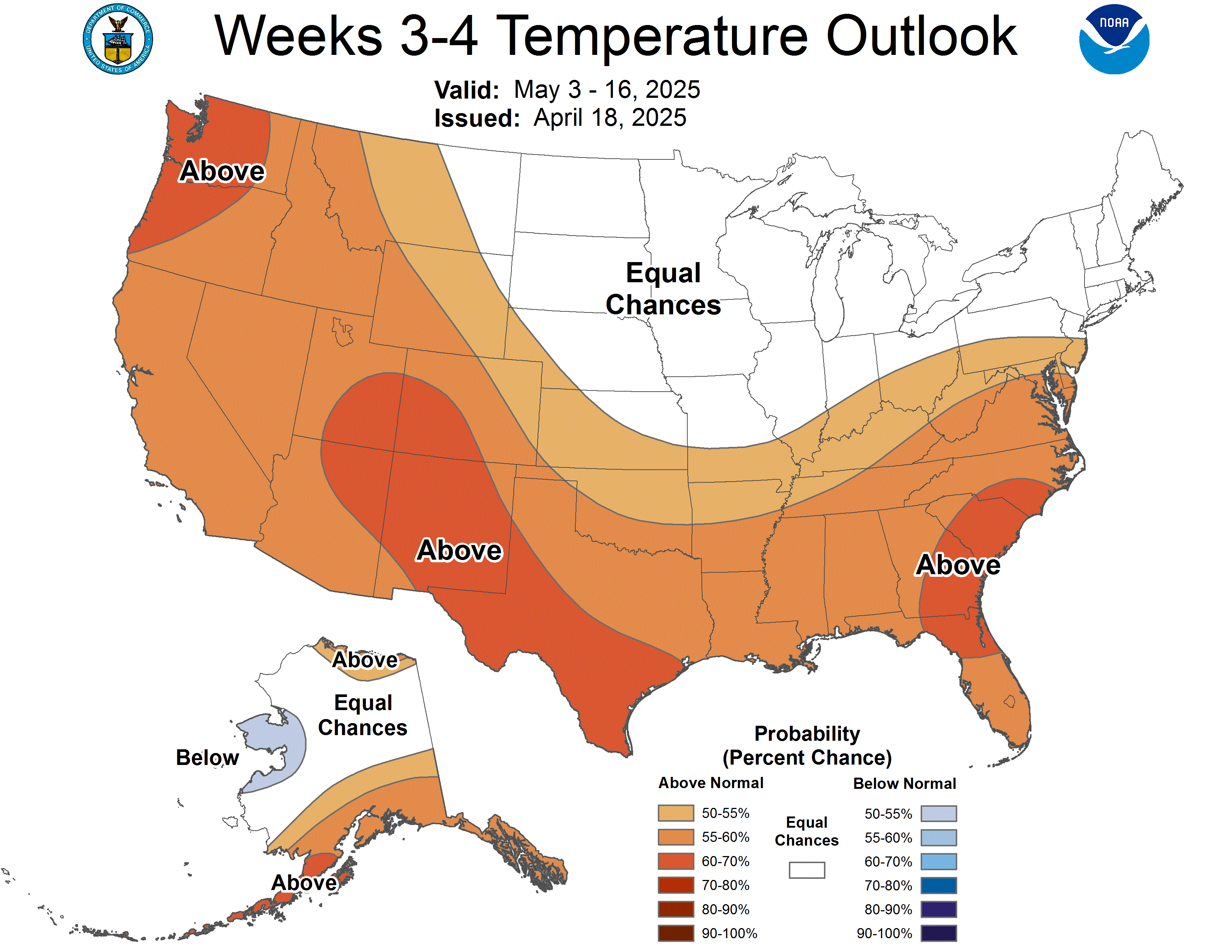 |
| This shows magnitude rather than probability of being higher or lower than Normal and shows the middle day of the five day period. | The cool anomaly seems to be slowly moving east and deamplifying. But the warm west is not the best for the drought situation. | ↑ ← The Week 3 – 4 forecast was updated on Friday November 9, 2018. Not good for drought but this is not the height of summer so the impact is less than during the summer. | |
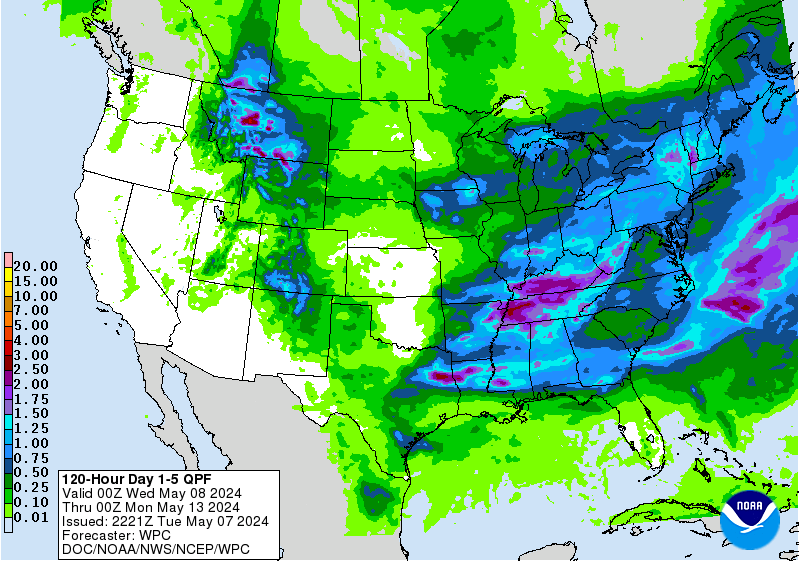 | 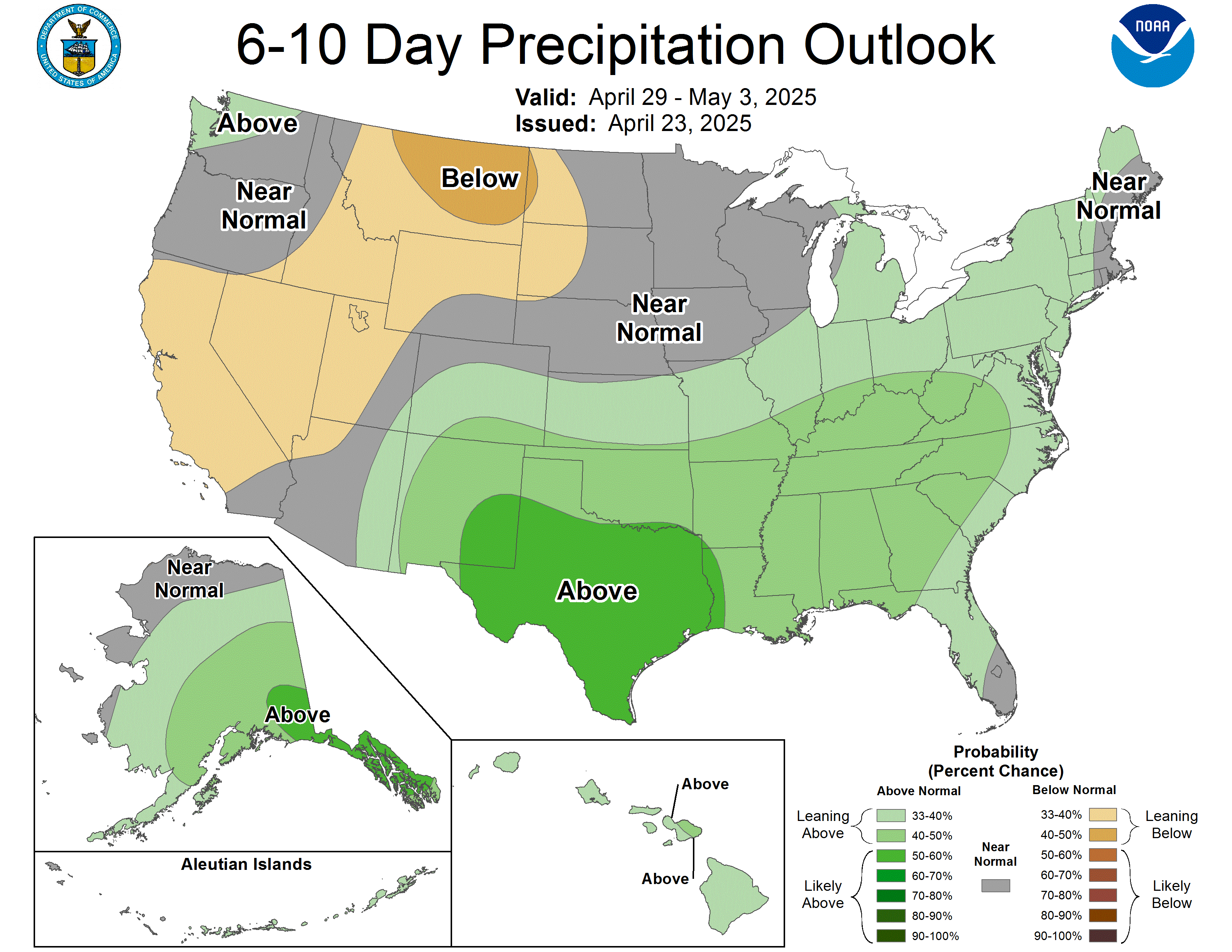 | | 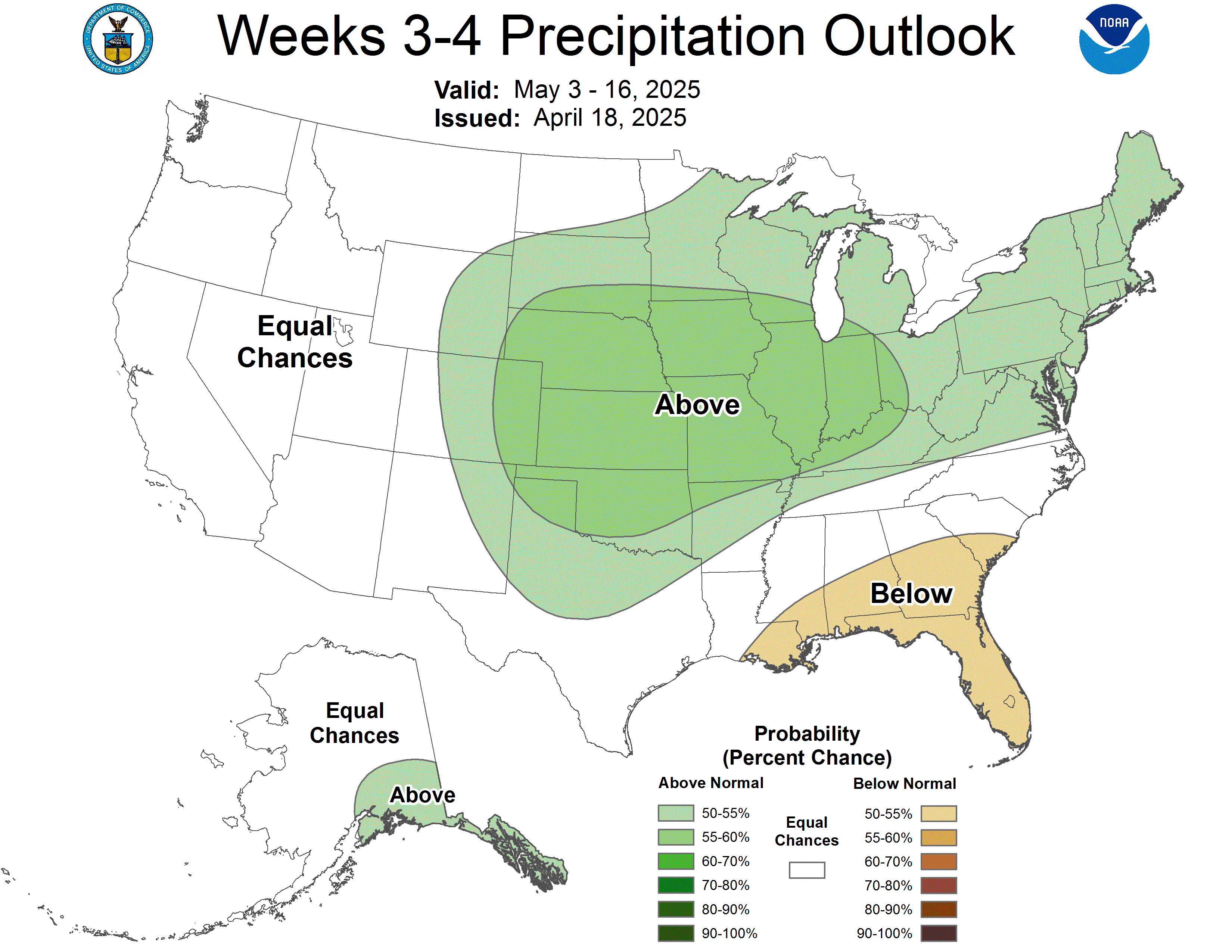 |
The five day QPF is shown above. The units are different than the other maps i.e. in units of precipitation (inches) not probabilities of exceeding or being less than climatology. | The pattern is slowly moving east. It is essentially a drying pattern. It is not helpful with respect to the Western Drought. | ↑ ← The current Week 3 – 4 forecast was updated on Friday November 9, 2018. Perhaps the first sign of El Nino impacts but more likely simply a Pacific Trough impacting California and being more related to the MJO. . | |
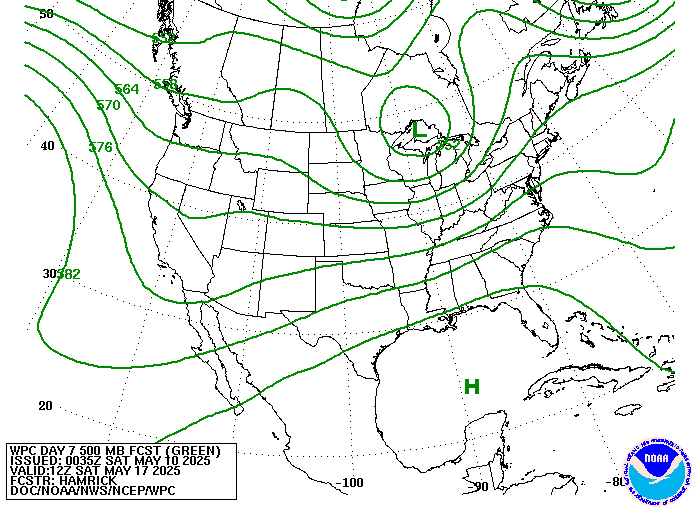
Here is another useful graphic from my weekly report which also updates automatically.
The below is of interest.
4. U.S. Crop Information

The below is repeated from prior weeks and we will continue to show it until USDA updates the information.

And now released this week.

Below are more details and there is more information this week as the planting season advances.
This summarizes the situation which is very much different than the report last week for a number of reasons including we removed the crops that are essentially fully harvested. In some cases there is slight improvement and this is best seen in the detailed tables below. It is getting to be difficult preparing this table separate from the information above and below. The reason for that is that in general there are at this point in time three parameters reported:
1. percent planted
2. percent that has developed to a key point
3. crop condition
Plus there are two reference points: last year and the five year average. So it is harder to assess the six measurements and arrive at a single conclusion for a crop but I have taken my best shot at it. For those with a more serious interest I suggest you review the tables below and the text summary above which is what I have done to populated this table which has not changed since last week.
| Worse than last year and or 5-Yr average | Better than last year or 5-Yr average | In line with recent conditions for this time of the prior year or 5 – Yr Average |
| Cotton*, Sunflowers, 2019 winter wheat, peanuts and Sorghum | Corn, Soybeans, pasture and rangeland | Rice, Sugarbeets, |
* Cotton has had a good year but not as good as last year which was either a record or close to a record.


5. International Crop and Weather Related Information

Sometimes a map is useful. But this map was not updated this week.


This is the map from last week and we will not be showing Mexico again until April of 2019 as their growing season is over.


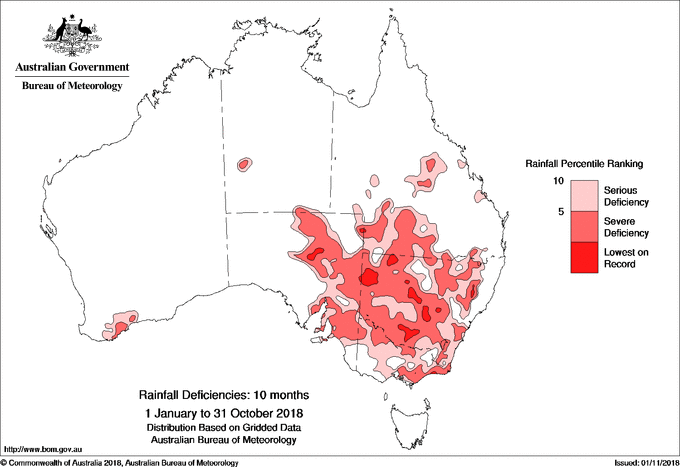
Here is the six-month result of these dry weeks.
6. Prior Month and when available the Current Month-to date Weather (excluding prior week)
Current Week
For reference purposes here is the precipitation information for the prior seven days.

Then we show month to date data. They look very similar right now but both maps auto-update. So they will look different in the days ahead.

And then temperature:

You can generate a wide variety of different graphics here.
7. Science Theme When we Have One.
No Science Theme this week.
8. Additional Reference Information
Reservoir Status
We update these graphics when we receive new ones. They do not auto-update. They tend to change slowly.


This article provides a little background on the problem.
We have added more rivers to the discussion. Above we have reservoirs and they are of course connected by rivers. Both are important and provide insight.


Below is a more complete description of


Sequence of drought occurrence and impacts for commonly accepted drought types. All droughts originate from a deficiency of precipitation or meteorological drought but other types of drought and impacts cascade from this deficiency. (Source: NDMC)
Source: National Drought Mitigation Center, University of Nebraska-Lincoln, U


