


Written by Sig Silber
Updated at 5 pm EDT July 6, 2018 to reflect the updated Week 3 – 4 Forecast
We might have expected some reduction in areas impacted by drought but this did not happen. Instead drought concerns were combined with heat concerns in highly populated areas. We should soon be seeing some improvement in the Southwest part of the most intense drought area due to the Monsoon. But the situation for the plains states looks to remain a problem for some time.

Please share this article – Go to very top of page, right hand side for social media buttons.
Here is our Full Weekly Report.
This report is organized into three parts plus additional reference Information at the end of the report:
- The U.S. Drought Monitor (full report can be accessed here)
- Selected parts of our Weekly Weather and Climate Report (Monday’s full report can be accessed here) which has forecasts for the next 25 days and which auto-updates
- Selections from the Tuesday USDA Weather and Crop Bulletin (full report can be accessed here) supplemented by related information. Other useful sources of information that I regularly utilize are the National Integrated Drought Information System (NIDIS) which can be accesses here and the USDA NRCS Weekly and Weather Climate Update which can be accessed here.
1. U.S. Drought Monitor
The U.S. Drought Monitor is a comprehensive way of understanding the drought situation for the U.S. It is issued every Thursday and reflects the conditions as of the prior Tuesday. Drought is defined as a moisture deficit bad enough to have social, environmental or economic effects. Thus, more factors than recent precipitation are considered and more information on how it is done is found at the end of this report.

Below is the same map with statistics and below that map I have provided a cut-out of the statistics which I think you can click on to enlarge.


 |  |
The graphic below shows the one-week change in drought intensity. Yellow is bad. Green is good.

Now we show the same information by region. The yellow is where the drought has been upgraded.
 |
| Pretty mixed but improvement to the north. |
 |
| Not much change |
 |
| Dry here |
 |
| Overall Deterioration |
 |
| Very little change. |
 |
Very little change here. |
This pair of maps might make it easier to get a general idea of what is happening in the worst part of the drought area.
| Last Week | This Week |
 |  |
Some may find this way of looking at things useful and I hope these graphics are not too small to read. I did not make them so you could click on them individually but you can click on the whole graphic and it may enlarge. But I think you get the picture. It has been a rapid onset and hopefully it’s demise will also be fairly rapid.

Some might find this animation of twelve weeks of change useful;

Here is the discussion which was issued with the Drought Monitor today.
Northeast
Most areas of dryness and drought recorded at least light precipitation, with a few swaths receiving 1 to locally 2 inches; however, these amounts were insufficient to improve conditions significantly, especially with the heat wave that enveloped the region late in the period. The only change introduced was a small expansion of abnormal dryness into a few additional counties in upstate New York.
Southeast
Moderate to heavy rain (one to several inches) made a patchy pattern across the Southeast, typical of summer thunderstorms. Heavy rain was most widespread across Florida while most areas in the central and eastern Carolinas, northwestern Alabama, and northern Mississippi recorded only light rain, if any. Deficient precipitation was noted on a variety of time scales in the central Carolinas, leading to the introduction of abnormally dry conditions. Farther west, enough rain fell to end dryness in northeastern and southwestern Alabama, but dryness persisted over most of Mississippi and some adjacent locales. The D0 area expanded to cover a bit more of southwester Mississippi while D1 in a small part of that region remained unchanged.
South
Heavy rain – 3.5 to locally over 8.0 inches – dowsed much of the dry area in Tennessee, eliminating most of the abnormally dry area, though a few patches remain in central and northern parts of the state. In contrast, most areas in the lower Mississippi Valley and southern Great Plains recorded little or no rainfall, with moderate to isolated heavy amounts limited to parts of central Oklahoma, western Texas, and the Louisiana Bayou. The rains brought regions of improvement (but not broad-scale relief) to western Texas, including the Big Bend. Farther north, a re-assessment of conditions led to some improvement being introduced in the Texas Panhandle (especially northern sections) and eastern parts of the Oklahoma Panhandle and adjacent western Oklahoma. Meanwhile, the dry and hot week prompted substantial deterioration across central and eastern Texas, Louisiana, Arkansas, and (to a lesser extent) eastern Oklahoma. As a result, moderate to severe drought became more widespread, especially in a swath from southern to northeastern Texas. San Antonio, TX reported just over 2 inches of rain for April-June 2018, compared to a normal of over 10.6 inches (third driest such period in 134 years of record). Also, grass fires have become unusually common across the Dallas-Ft. Worth metro area. In southwestern Texas, to the north and northwest of Laredo, a broad area of extreme drought (D3) was introduced, with an area of exceptional drought (D4) introduced in part of this region along the Rio Grande River. Most of the new D3 area recorded only 2 to 4 inches of rain in the last 90 days, and 3-month totals of only 0.5 to 1.5 inches (with widely isolated higher amounts) were recorded in the new D4 region.
Midwest
A few inches of rain wiped out the abnormally dry area in central Iowa, and a re-assessment of earlier rains led to the removal of D0 conditions from central Indiana as well. In contrast, a relatively dry week kept abnormally dry conditions unchanged in east-central Michigan, scattered areas across northern and western Minnesota, and northeastern Illinois. Areas of drought cover southern Iowa and both the northern and southwestern parts of Missouri. Abnormally dry conditions (D0) covered much of the rest of the Show-Me State, but moderate to heavy rains eliminated a large area of D0 in southeastern Missouri. Despite areas of significant rainfall in some other parts of Missouri, no marked changes in dryness or drought were noted, though a small area in north-central Missouri slipped into D2 (extreme drought) conditions.
High Plains
In Colorado and Wyoming, most areas remained unchanged; most of Wyoming remained out of dryness, and conditions worsen progressively moving south, with extreme to exceptional drought covering southern Colorado. Deficient precipitation and enhanced evaporative loss over the past few months led to limited expansion of D0 and D1 in areas near the central part of the border. Farther east, dryness led to some deterioration in Kansas. D3 pushed into part of south-central Kansas while extreme drought expanded into a larger part of northeastern Kansas. In the Dakotas, very heavy rains and flooding late in the period covered a swath across east-central South Dakota, leading to a band of 1- to 2-category improvement, with southern reaches of the old D2 area climbing to D0. This area will have to be assessed next week to get a better sense of how this intense rainfall episode changed the drought situation there. Moderate to heavy rains (but only isolated minor flooding) pelted western North Dakota as well, prompting the removal of abnormal dryness over much of the western part of the state. Small-scale improvements were made in a few other dry areas where rain was heaviest.
West
Outside the withdrawal of D0 from a small area in northeast Montana, where most locations recorded between one and two inches of rain, the Drought Monitor depiction is unchanged from the previous week. Significant rains from the Southwest Monsoon have yet to reach most of Arizona, and only scattered locations across southern and eastern New Mexico recorded over an inch of rain this past week. But a late start to the monsoon is hardly unusual, and conditions do not warrant drought degradation yet.
Alaska, Hawaii, and Puerto Rico
In Puerto Rico, another relatively dry week along the southern tier kept abnormally dry conditions intact, with some expansion part of central Puerto Rico where rainfall deficits have begun to increase. Across Alaska and Hawaii, existing areas of abnormal dryness remained unchanged.
Looking Ahead
For the remainder of this week (through July 8, 2018), moderate precipitation (0.5 to 1.2 inches) is forecast across a broad area in the southeastern Great Plains, the Ohio and lower half of the Mississippi River Valleys, and the Eastern Seaboard. Heavy rain (2 to locally 5 inches) is forecast in southeastern Texas and the southern tier of Louisiana, and amounts could reach 2 inches in eastern Pennsylvania and southwestern Florida. Farther west, moderate to heavy rain (0.5 to locally 2.5 inches) is forecast for parts of the central and northeastern Great Plains, and far northern Mississippi Valley. Rainfall should be light with isolated moderate totals in the rest of the country east of the Rockies while little or no rain is expected from the Rockies to the Pacific Ocean. Average daily minimum temperatures should be above-normal throughout the contiguous states, with the largest departures (6 to 10 degrees F) expected in the southern Rockies, parts of the Great Basin and northern Great Plains, and throughout the Ohio Valley and Northeast. Daily high temperatures will not differ as far from normal, with 5-day anomalies exceeding 3 degrees F more than normal limited to the Northwest, the Intermountain West, most of the Rockies, the Great Lakes, and New England. The subsequent 5-day period (July 9-13, 2018), Odds favor above-normal rainfall in central and southern sections of California, the Intermountain West (including the Great Basin), and the Rockies, with surplus precipitation most likely in northern Arizona. Farther east, wet weather is also favored in the lower Mississippi Valley, most of the Southeast, the southern and eastern Ohio Valley, and the middle Atlantic States. Southern Alaska also has enhanced chances for above-normal precipitation. In contrast, subnormal rainfall is favored from central and southern Texas northward through the Plains, the western Great Lakes, the northern Intermountain West, and the Pacific Northwest. Temperatures are expected to average above normal across most of the contiguous states, with the exceptions of southeastern Arizona, southwestern New Mexico, and part of southern Alaska, where cooler than normal conditions seem more likely.
Here is what happened with precipitation during the most recent week.

Here is a more up to date graphic. It shows percent of normal rather than absolute precipitation and is a bit harder to relate to geography but it is very current.

And here is the information for the full month of June.

At this point it makes sense to track temperature anomalies also

And here is the information for the full month of June

Wildfires are happening.


And we do not want to ignore floods.

And here is the drought forecast issued on June 30, 2018.
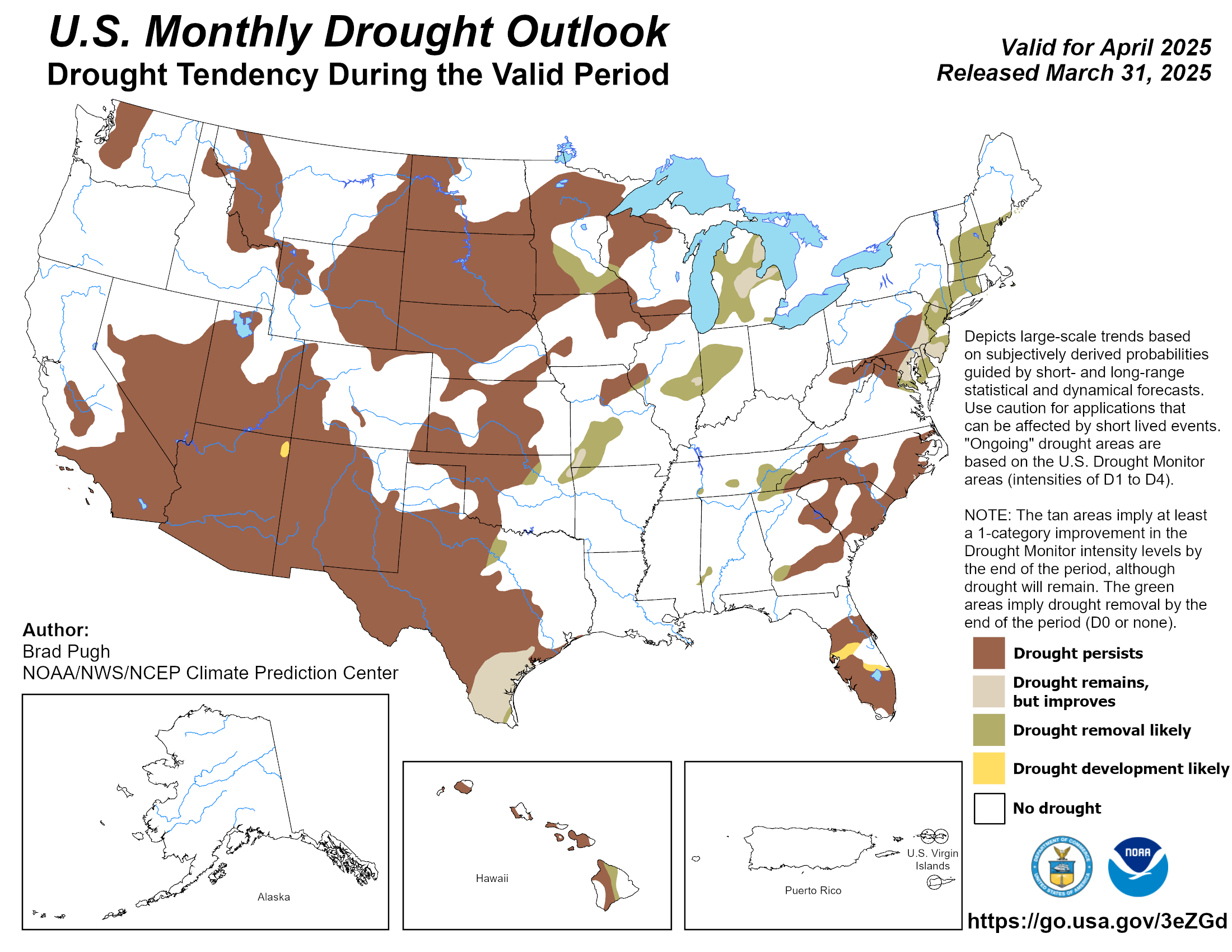
And here is the discussion released with the graphic.
Latest Monthly Assessment – The Monthly Drought Outlook (MDO) for July is based on precipitation and temperature outlooks out through a month in advance, soil moisture outlooks valid for the next two weeks, recently observed drought indicators, and climatology. Drought is favored to persist across the Northeast, with new drought development expected. The Southeast is currently drought-free, and is expected to remain drought-free based on rainfall outlooks at nearly all time scales favoring above normal rainfall. In the Midwest, the expectation of very warm temperatures and low rainfall amounts promotes drought persistence in northern Missouri and southern Iowa, and new drought development throughout much of the remainder of Missouri. Heavy rain (1.5-3.0 inches, locally greater) is forecast just north of that area, across a good portion of the Corn Belt and Upper Mississippi Valley during the first week in July, which will help to offset deterioration for that area during much of July. For the South, most drought areas are favored to persist, with new drought development possible across much of Arkansas, central and eastern Oklahoma, and adjacent parts of northern Texas. Rainfall predictions from WPC and CPC, which span the first half of July, favor improvement and/or removal of drought over Louisiana, extreme southwestern Arkansas, and portions of eastern Texas. The High Plains region may receive enough rain to offset additional deterioration, but drought is still favored to remain. Drought development is favored for southeastern parts of Kansas, which had previously eluded degradation. For the northern half of the West, drought persistence and/or new drought development is anticipated, based largely on regional climatology. The southern half of the West is forecast to see either drought persistence or improvement; the latter is based on CPC’s rainfall outlooks, which favor a fairly robust start to the Southwest Monsoon season. In addition, tropical cyclone activity has ramped up over the eastern Pacific, and there is a significant chance for some of the associated moisture to make its way into the American Southwest. Elsewhere, drought development is anticipated in Hawaii, the Alaska Panhandle, and southern Puerto Rico.
2. Current Forecast for Precipitation. Here I provide the weather forecasts for different periods of time in July which should allow the reader to assess the likelihood of this forecast working out as shown over the next three to four. (Since we published this week on Thursday, we updated the discussion for the Week 3 – 4 forecast when was issued on Friday July 6). This was important as the current Day 6 – 14 forecasts and the week old week 3 – 4 forecast overlap to some extent.
| The five day QPF is shown to the right. The units are different than the other maps i.e. in units of precipitation (inches) not probabilities of exceeding or being less than climatology. | 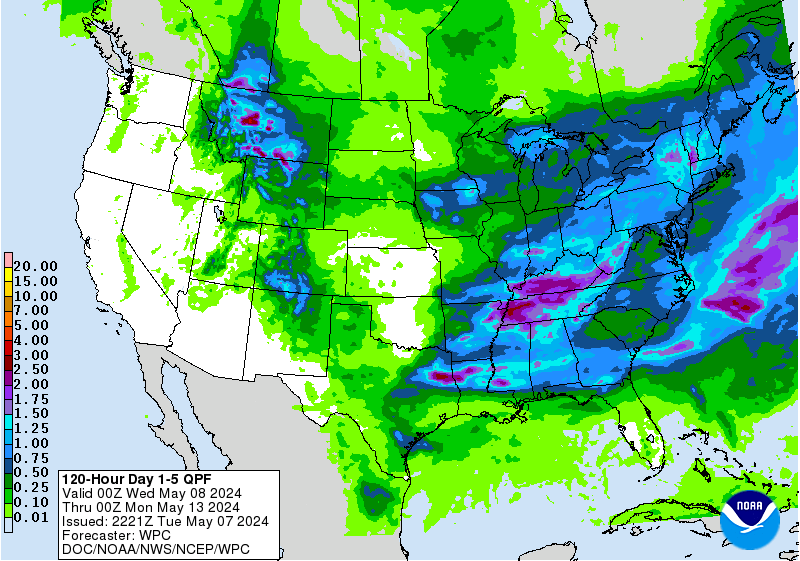 | It is difficult to compare this with the other maps as some places are naturally more wet than others. But it is generally consistent with the 6 – 10 day forecast as one can see how the 6 -10 day might follow the 1 – 5 day. Notice that Texas is mostly dry. | |
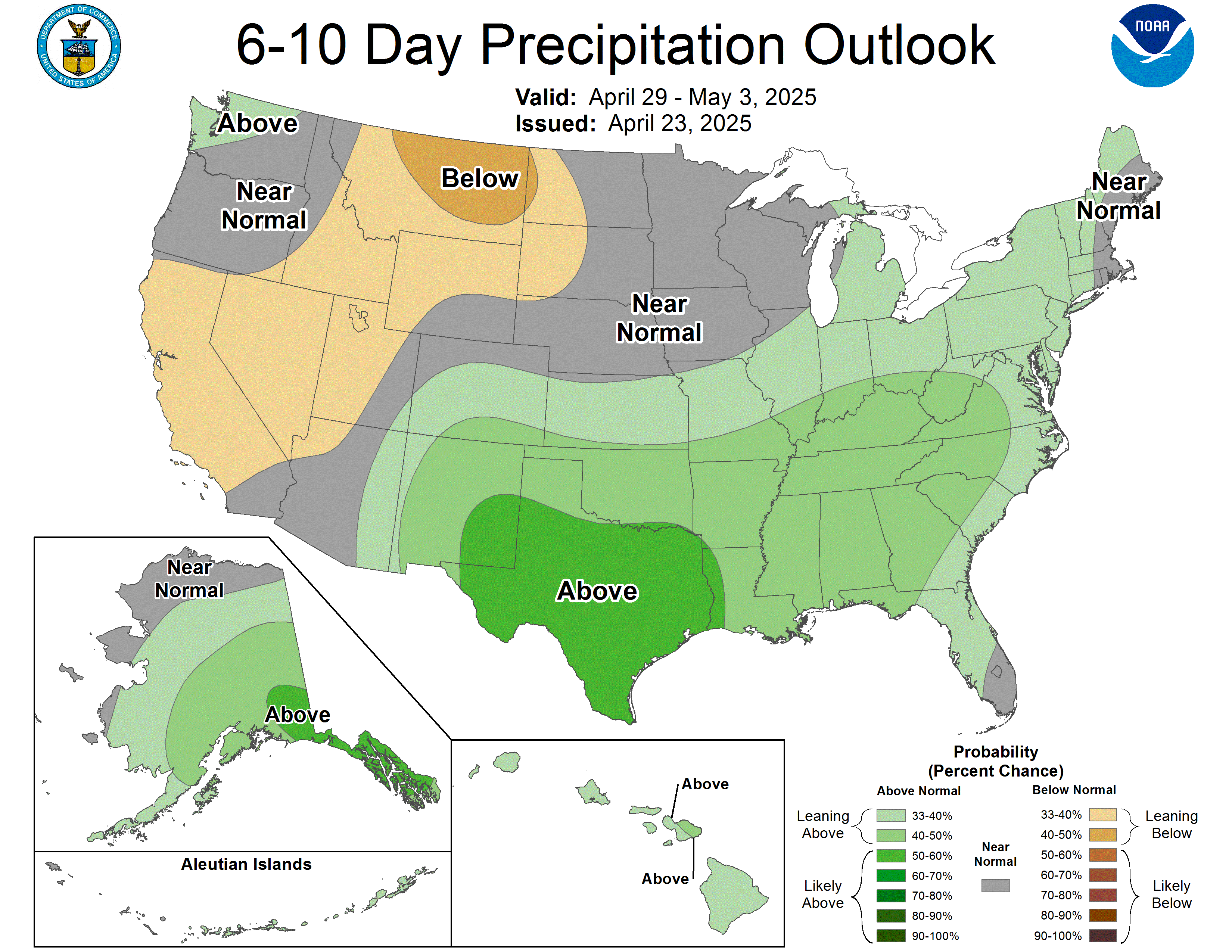 | Transitioning from the 6 to 10 day outlook on the left to the 8 to 14 day outlook on the right. → | 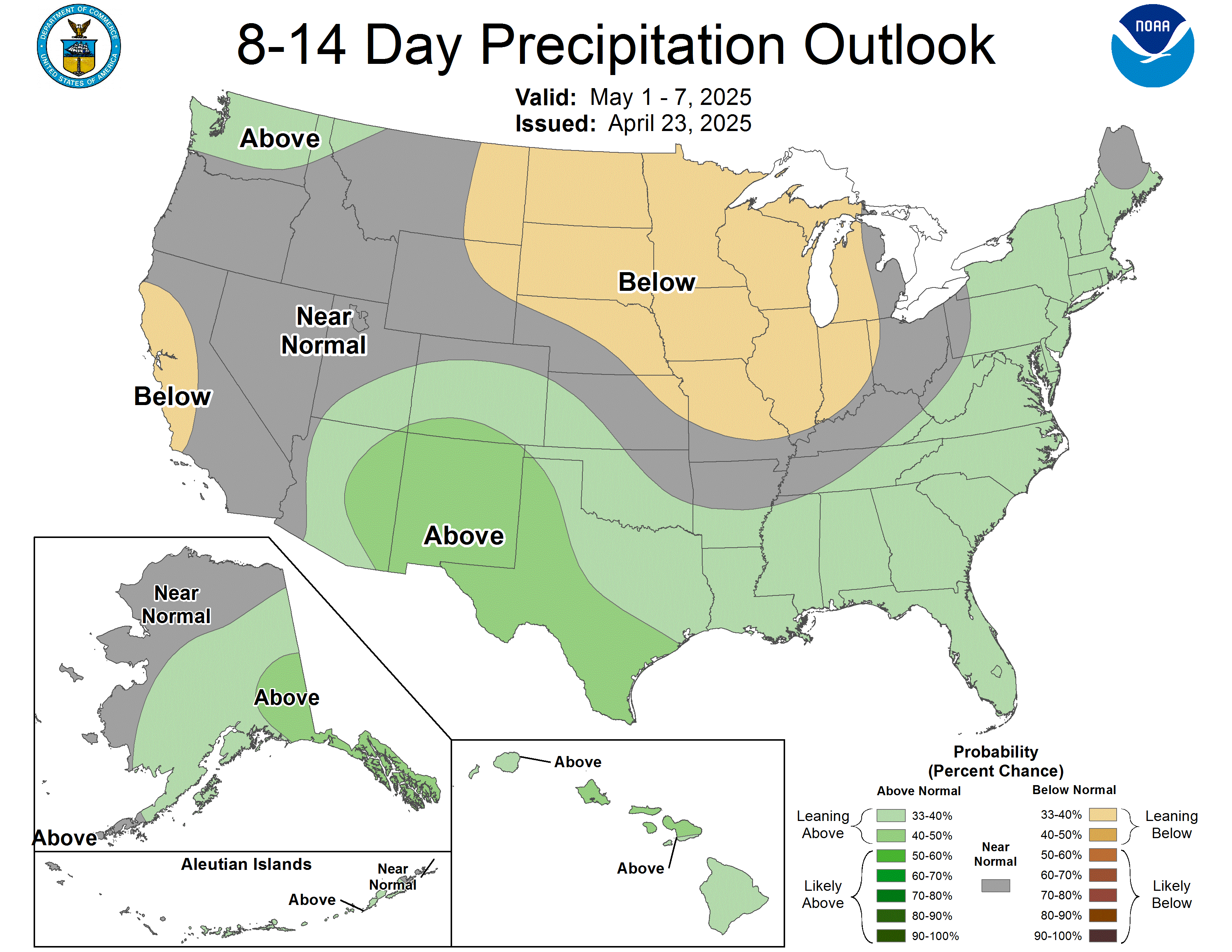 | |
| in Arizona which is one area where the drought has been intense, the forecast is very favorable. But it looks dry in part of the area where the drought is also the worst. | |||
To the right is the week 3 and 4 Experimental Precipitation Forecast which was updated on June 29 at the time we initially pubished and then again on July 6. → | 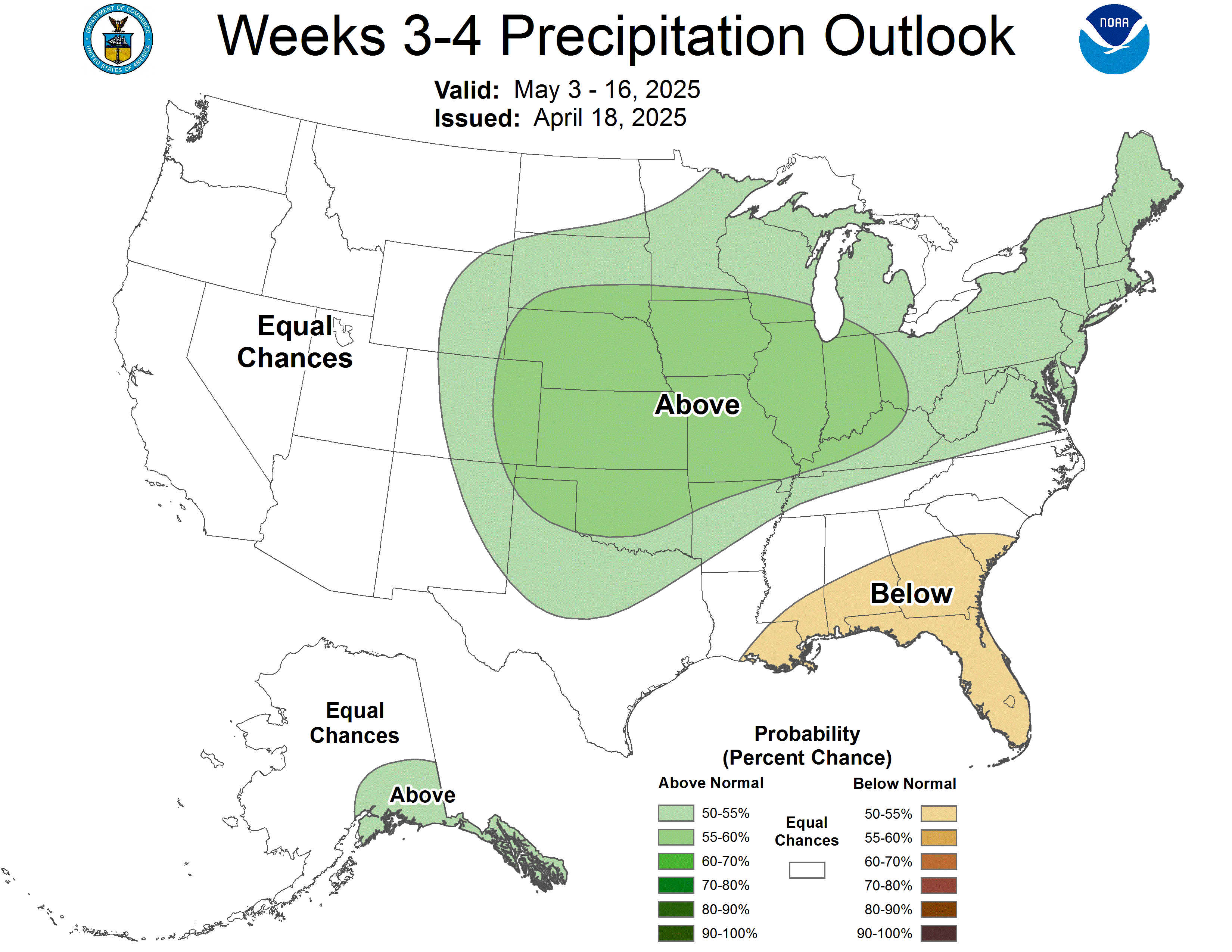 | ↑ ← In generally it would seem that the Week 3 -4 Forecast is feasible. The Week 3 – 4 forecast was updated on July 6. It supports the early Monsoon hypothesis but it does not look good in Weeks 3-4 for Texas and east and north of Texas. So we remain concerned for that area re drought through August 3, 2018 i.e. essentially a month. | |
| I thought it useful to add the Week 3- 4 Operational not Experimental Temperature Forecast | 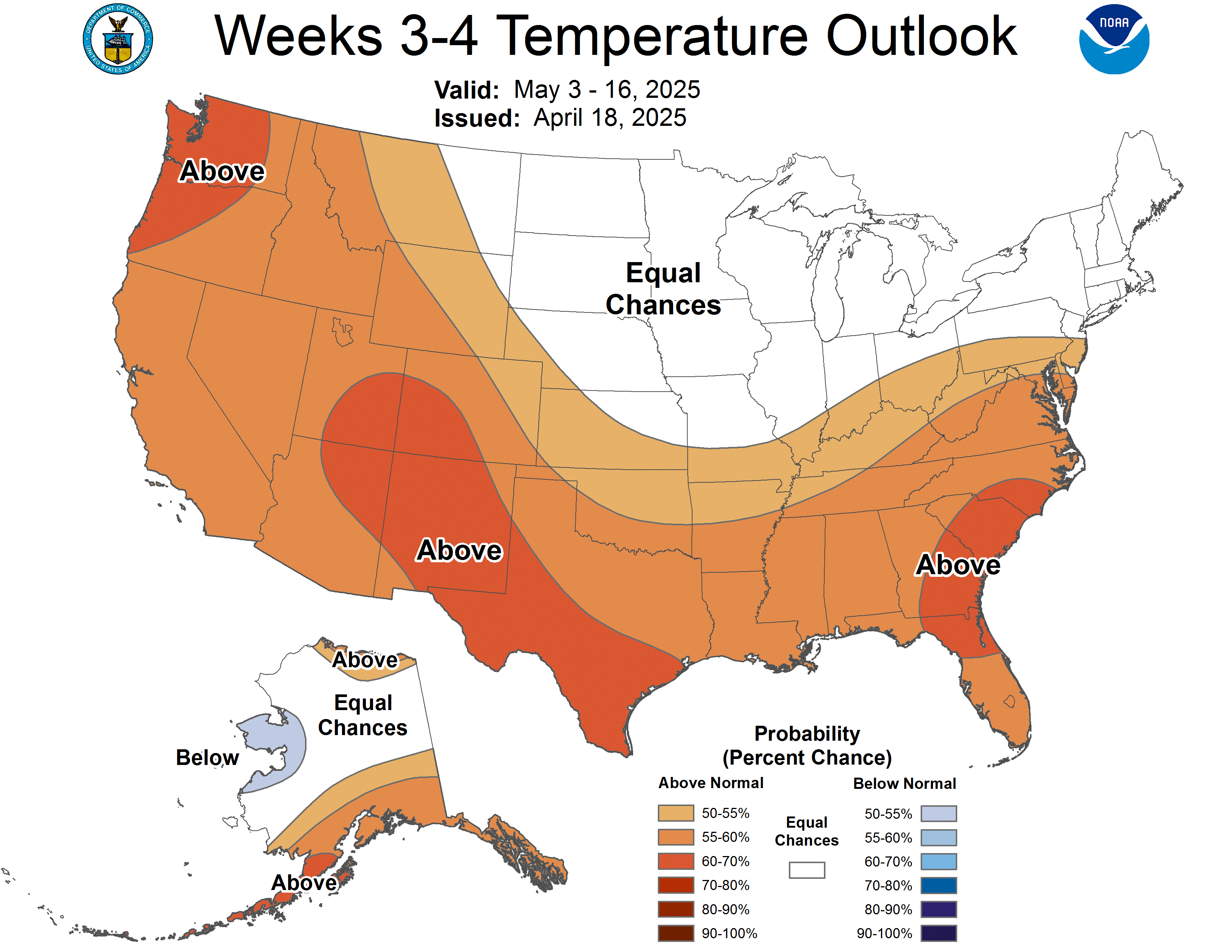 | The week 3 – 4 Temperature Forecast combined with the Experimental Precipitation Forecast suggests real trouble in the Texas and north and east area. | |
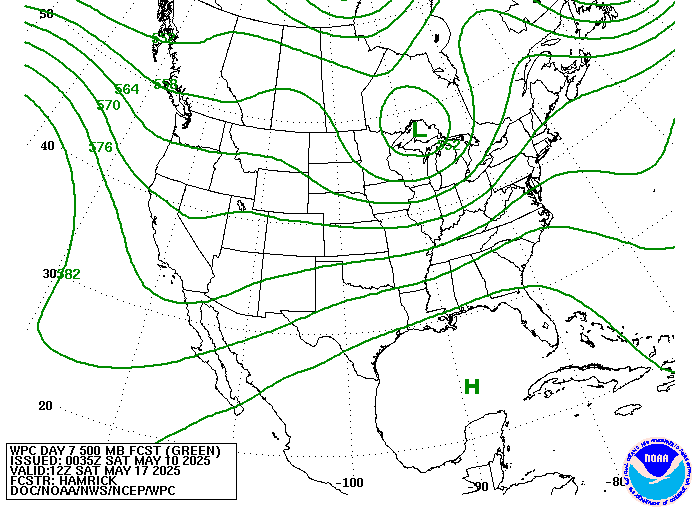
Here is another useful graphic from my weekly report.
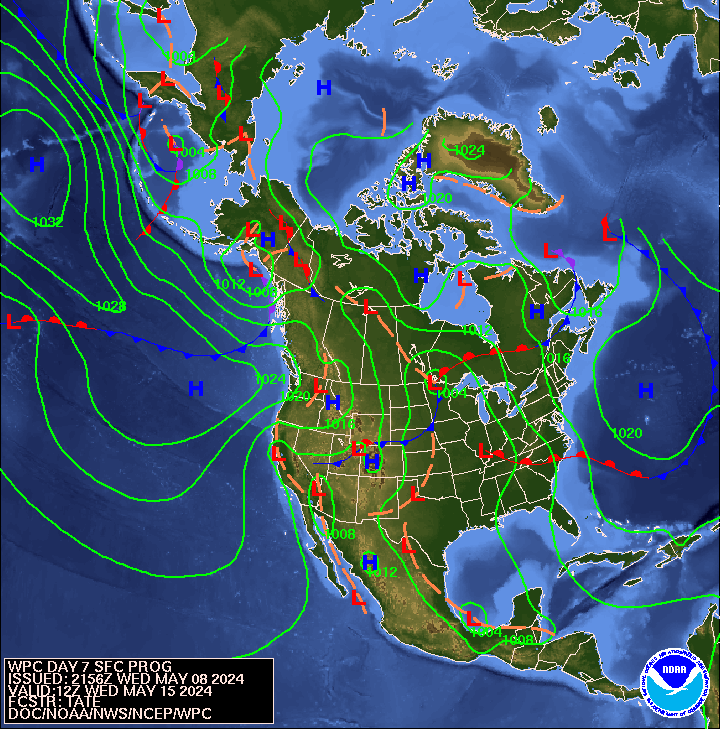
And one more.
3. Selections from the Tuesday USDA Weather and Crop Bulletin (full report can be accessed here) supplemented by related information. (many of the weather related graphics have already been presented)
First we start with the weather information.
The reader may be able to update some of the graphics that I have shown in previous issues of our Drought and Agriculture Report at this link (to the NRCS week weather than climate reports) where you can access both the current and archived information. One can generate an infinite number of graphics. I did not want to clutter this report with graphics that were not selected by NOAA to be in the Drought Report issued Thursday or the Weather and Crop Bulletin issued on Tuesday. But I have provided readers with the link above that will allow you to view as much data as you want. I have in this report included many of the graphics at that link and some others from other sources that I though were particularly useful.
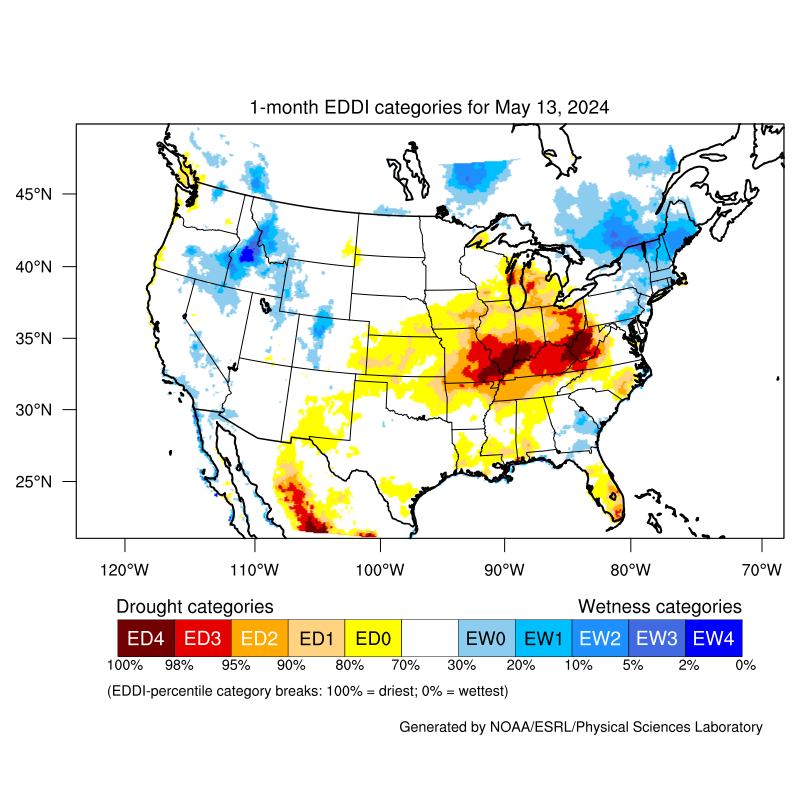
And here is a graphic that pulls a lot of information together. Image provided by the NOAA/ESRL Physical Sciences Division, Boulder, Colorado see website. It shows the demands of the atmosphere for moisture from the ground and is based on temperature, wind, relative humidity and solar radiation. It tells you nothing about how much precipitation you will get but how much you need to retain the same level of soil moisture.

Some weekly views of the situation:


Soil Moisture is a very important part of understanding drought.
| Surface | Subsurface |
 |  |
| The numbers in parentheses show the changes by state. The number of states with surface deficiencies has increased by 1 and the number of states with subsurface deficiencies has not changed. | |
 |  |
| There has been a small decrease in the number of states with a surplus. It is not always easy to know how to relate to a moisture surplus. Is it a positive moisture reserve or is it too wet to work the ground? | |
Now we focus on crop information
The Summary for the U.S.

Below are more details and there is more information this week as the planting season advances.
This summarizes the situation which is not very much different than the report last week. In some cases there is slight improvement and this is best seen in the detailed tables below. It is getting to be difficult preparing this table separate from the information above and below. The reason for that is that in general there are at this point in time three parameters reported:
1. percent planted
2. percent that has developed to a key point
3. crop condition
Plus there are two reference points: last year and the five year average. So it is harder to assess the six measurements and arrive at a single conclusion for a crop but I have taken my best shot at it. For those with a more serious interest I suggest you review the tables below and the text summary above which is what I have done to populated this table which has changed a bit since last week.
| Worse than last year and or 5-Yr average | Better than last year or 5-Yr average | In line with recent conditions for this time of year or 5 – Yr Average |
| Winter Wheat, Peanuts, Sorghum, Cotton, Pasture and Range Conditions | Corn, Barley, Oats, Soybeans, Spring Wheat, | Rice, Sunflowers, |
The information in the table below is summarized in the above discussion but in the table below, it is broken down by State.


Sometimes a map can be helpful to make text come alive.

I am now routinely including the precipitation report for Mexico since storms do not respect borders.


Additional Reference Information
A more complete description of


Sequence of drought occurrence and impacts for commonly accepted drought types. All droughts originate from a deficiency of precipitation or meteorological drought but other types of drought and impacts cascade from this deficiency. (Source: NDMC)
Source: National Drought Mitigation Center, University of Nebraska-Lincoln, U


