


Written by Sig Silber
Relief next week is still in the cards but reduced. The weather forecasts are discouraging beyond the next five days. The forecasts reflect the change in pattern we discussed in our Tuesday Weekly Weather and Climate Report.

Please share this article – Go to very top of page, and the right hand side for social media buttons.
Current Forecast for Precipitation
| The five day QPF is shown to the right. The units are different than the other maps i.e. in units of precipitation (inches) not probabilities of exceeding or being less than climatology. | 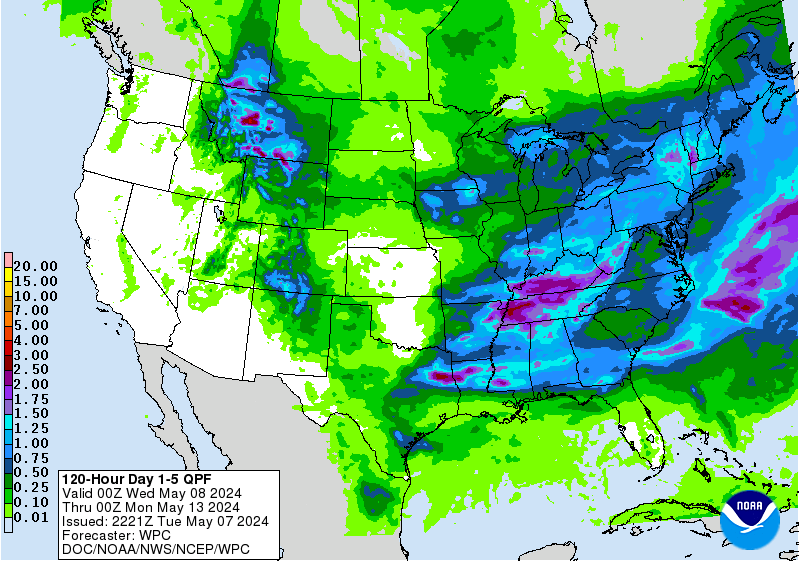 | It is difficult to compare this with the other maps as some places are naturally more wet than others. But it is generally consistent with the 6 – 10 day forecast as one can see how the 6 -10 day might follow the 1 – 5 day. | |
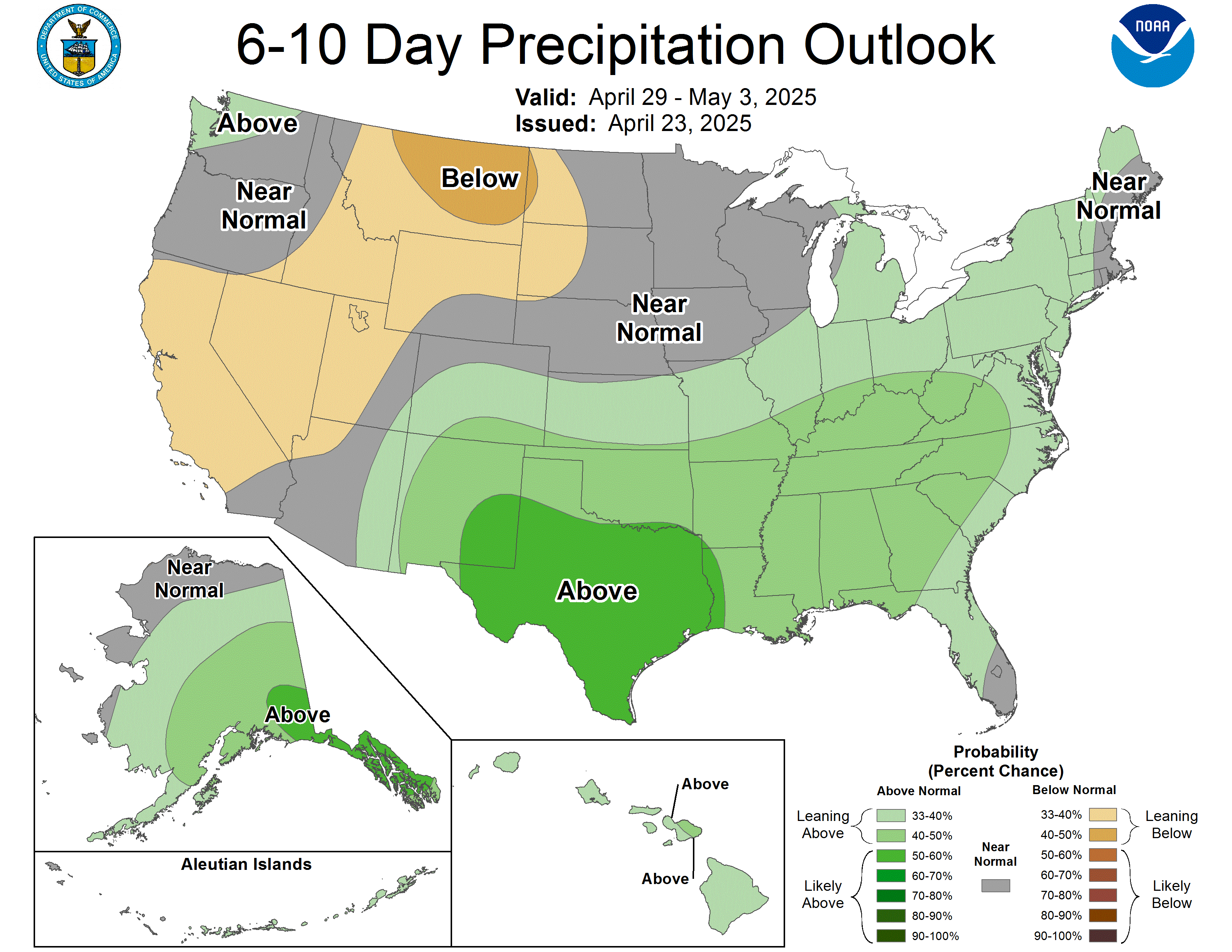 | Transitioning from the 6 to 10 day outlook on the left to the 8 to 14 day outlook on the right. → | 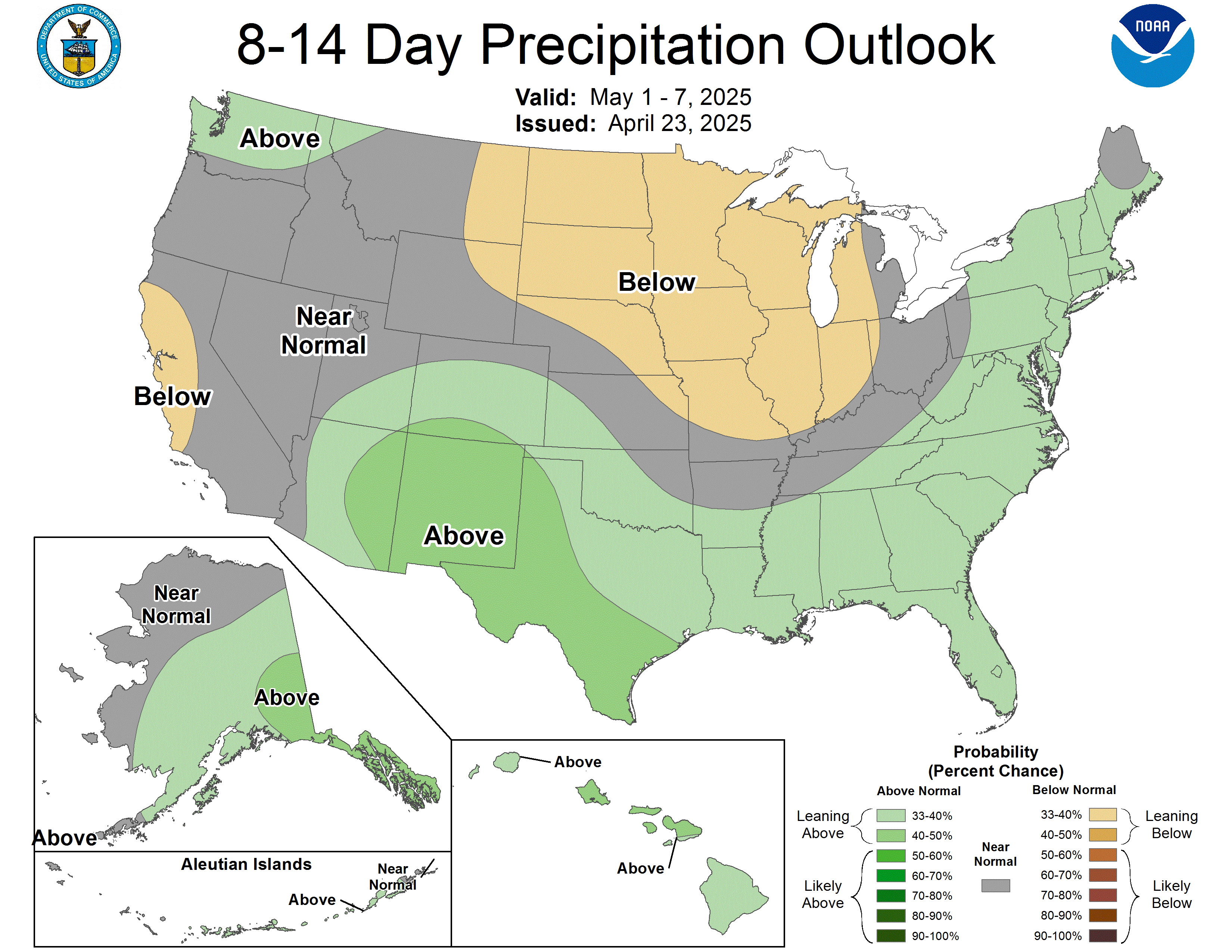 | |
The pattern is slightly progressive west to east. The west coast dry anomaly stays right there for the Southern Tier, but expands east. . | |||
To the right is the week 3 and 4 Experimental Forecast. → Alaska is wet in the Panhandle and that pattern appears to extend into the CONUS Northwest. A large part of the Southern Tier is dry but with less latititudinal extent as one goes east. The Northeast quadrant is wet. | 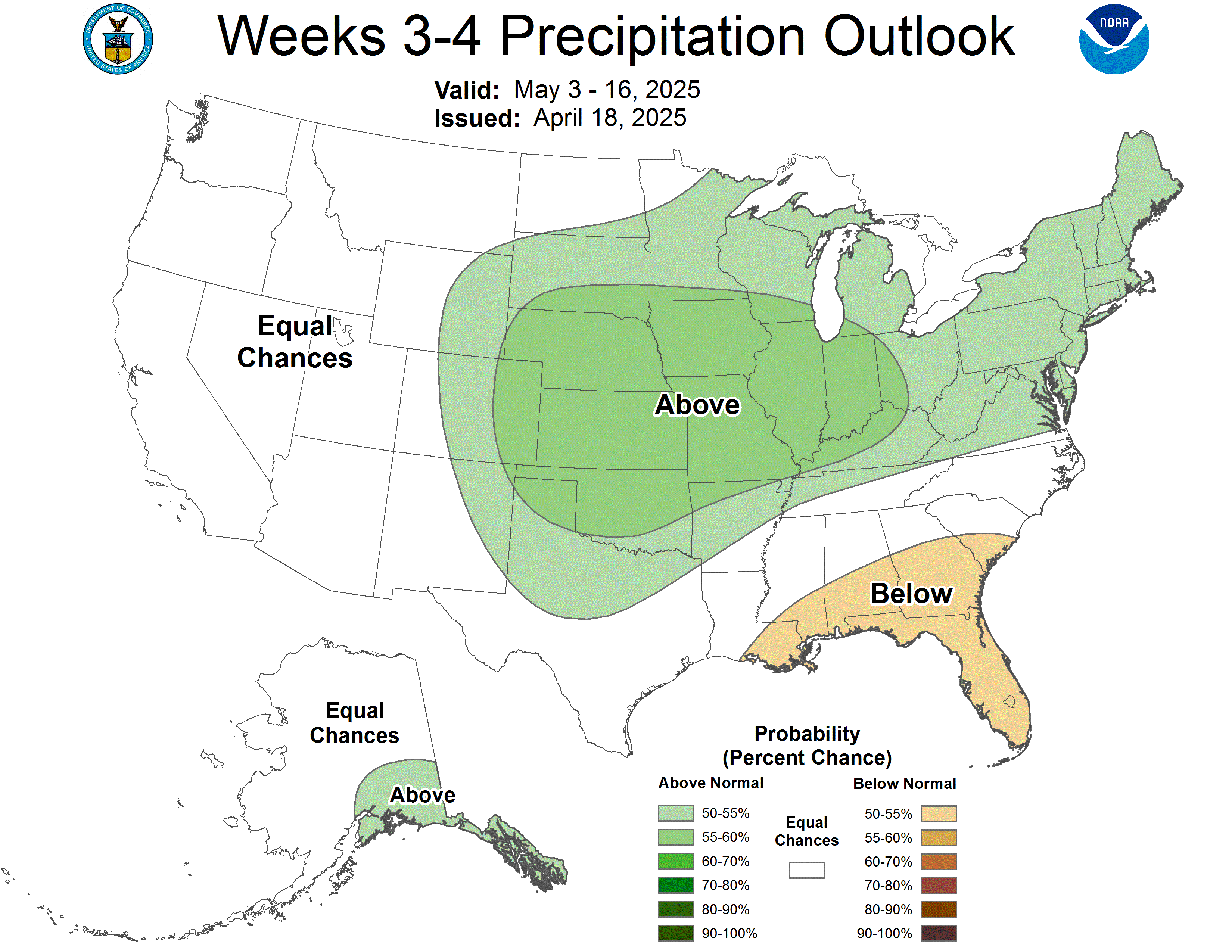 | ↑ ← The transition from the 8 -14 day forecast shown above to the week 3/4 shown to the left seems feasible. | |
It may be useful to look at the change in forecast for the current storm.
| March 22,2018 | Current and this will auto-update. |
 |  |
You have to study this carefully to see the differences and of course it is covering a slighly different five-day period but you can see less impacts in Southern California, Nevada, Utah, Arizona, Colorado, New Mexico and it looks like a somewhat smaller footprint in the major area of anticipated precipitation. You see a difference to the northeast but it is difficult to tell if this is a real change or the difference due to the days covered in the forecast. It may be wetter further east.
Discussion 6 – 14 day and Week 3- 4 both issued today.
6-10 DAY OUTLOOK FOR MAR 29 – APR 02, 2018
TODAY’S ENSEMBLE MEAN SOLUTIONS ARE IN RELATIVELY GOOD AGREEMENT ON THE EXPECTED 500-HPA FLOW PATTERN OVER THE FORECAST DOMAIN. MOST MODEL SOLUTIONS FORECAST A FULL LATITUDE TROUGH OVER CENTRAL NORTH AMERICA, WITH ONE LOBE DIRECTED WESTWARD ACROSS THE VICINITY OF THE ALASKA PANHANDLE. BROAD CYCLONIC CURVATURE IS DEPICTED OVER MOST OF THE CONUS, WITH THE EXCEPTION OF THE SOUTHEAST, WHERE A RIDGE AND ANTICYCLONIC CURVATURE ARE PREDICTED. MOST ENSEMBLE MEANS ALSO FORECAST AN AMPLIFYING RIDGE THAT EXTENDS FROM THE TEMPERATE EASTERN PACIFIC ACROSS THE BERING SEA TO THE ARCTIC OCEAN. THE EXCEPTION IS THE 0Z ECMWF ENSEMBLE MEAN, WHICH PREDICTS A COMPLEX CIRCULATION PATTERN OF SHORTER WAVELENGTHS ACROSS THE ALASKA DOMAIN. TODAY’S MANUAL 500-HPA HEIGHT BLEND IS COMPOSED ENTIRELY OF ENSEMBLE MEAN SOLUTIONS DUE TO CONSIDERATIONS OF RECENT SKILL.
THE LARGE TROUGH PREDICTED OVER CENTRAL NORTH AMERICA LEADS TO ENHANCED CHANCES OF BELOW NORMAL TEMPERATURES OVER MUCH OF THE CONTIGUOUS U.S. BETWEEN THE ROCKIES AND APPALACHIANS. PROBABILITIES OF 90% OR GREATER ARE INDICATED FROM EASTERN MONTANA TO WESTERN MINNESOTA. THE WESTERN LOBE OF THIS TROUGH THAT IS PREDICTED TO OVERSPREAD THE ALASKA PANHANDLE AND VICINITY LEADS TO INCREASED ODDS OF BELOW NORMAL TEMPERATURES FOR THE PANHANDLE AND APPROXIMATELY THE SOUTHEASTERN QUARTER OF THE ALASKA MAINLAND. ABOVE NORMAL TEMPERATURES ARE GENERALLY FAVORED IN AREAS ASSOCIATED WITH RIDGING, ANTICYCLONIC CURVATURE, AND/OR POSITIVE HEIGHT ANOMALIES. THIS INCLUDES WESTERN AND NORTHERN ALASKA, CALIFORNIA, NEVADA, ARIZONA, AND PORTIONS OF NEIGHBORING STATES, FLORIDA AND SOUTHERN GEORGIA, AND NORTHERN MAINE.
ABOVE NORMAL PRECIPITATION IS FAVORED OVER MUCH OF THE NORTH-CENTRAL AND EASTERN CONUS, AND THE NORTH SLOPE OF ALASKA. THIS IS DUE IN LARGE PART TO ANTICIPATED UPSLOPE FLOW/COLD FRONT PASSAGE, A COLD FRONT PRECEDED BY MOIST GULF FLOW AND RESULTANT HEAVY PRECIPITATION, AND STORM ACTIVITY EXPECTED TO PASS OVER THE CREST OF THE BERING SEA RIDGE AND INTO NORTHERN ALASKA, RESPECTIVELY. ODDS OF BELOW NORMAL PRECIPITATION ARE ENHANCED OVER THE SOUTHERN COAST OF ALASKA (PREDICTED DOWNSLOPING OFF THE ALASKA RANGE ASSOCIATED WITH NORTHERLY ANOMALOUS FLOW), MUCH OF THE WESTERN AND SOUTH-CENTRAL CONUS (IN THE WAKE OF THE PASSAGE OF AN EARLIER STORM SYSTEM), AND CENTRAL AND SOUTHERN FLORIDA (RESIDUAL DRYNESS BEFORE THE APPROACH OF THE NEXT COLD FRONT).
FORECAST CONFIDENCE FOR THE 6-10 DAY PERIOD: ABOVE AVERAGE, 4 OUT OF 5, DUE TO GOOD OVERALL AGREEMENT AMONG THE ENSEMBLE MEANS AND TOOLS.
8-14 DAY OUTLOOK FOR MAR 31 – APR 06, 2018
THE WEEK-2 MEAN CIRCULATION FORECAST IS SIMILAR TO THAT PREDICTED FOR THE 6-10 DAY PERIOD, THOUGH DEAMPLIFIED OVER THE CONUS. THE WESTERN LOBE OF THE POLAR VORTEX IS STILL EXPECTED TO EXTEND ACROSS THE ALASKA PANHANDLE AND SOUTHEASTERN MAINLAND ALASKA, AND THE RIDGE OVER THE BERING SEA IS EXPECTED TO REMAIN STRONG. IN FACT, TODAY’S 6-10 DAY AND WEEK-2 MANUAL HEIGHT BLENDS PREDICT HIGHER 500-HPA HEIGHTS IN THE REGION OF THE BERING SEA THAN DO THEIR RESPECTIVE COUNTERPARTS FROM YESTERDAY. TELECONNECTIONS BASED ON A POSITIVE HEIGHT ANOMALY CENTER NEAR 60N/170W FAVOR THE BEST ODDS FOR ANOMALOUSLY COLD TEMPERATURES ACROSS THE NORTHERN PLAINS, UPPER MISSISSIPPI VALLEY, AND UPPER GREAT LAKES REGION. TODAY’S WEEK-2 MANUAL HEIGHT BLEND IS AGAIN BASED ON THE ENSEMBLE MEAN SOLUTIONS.
COMPARED TO TODAY’S 6-10 DAY SURFACE TEMPERATURE OUTLOOK, THE WEEK-2 OUTLOOK PREDICTS AN EASTWARD AND SOUTHERN EXPANSION OF THE ANOMALOUSLY COLD AIR, TO INCLUDE MOST AREAS EAST OF THE ROCKIES. SOME OF THE ANOMALOUSLY COLD AIR IS ALSO EXPECTED TO SHIFT WESTWARD ACROSS NORTHERN IDAHO AND ALL OF WASHINGTON STATE. THE PREDICTED AREA OF FAVORED ABOVE NORMAL TEMPERATURES OVER THE FAR SOUTHEAST IS ANTICIPATED TO RETREAT SOUTHWARD A BIT TO THE FLORIDA PENINSULA. THE RELATIVE WARMTH EXPECTED FOR MANY AREAS WEST OF THE CONTINENTAL DIVIDE IS PREDICTED TO EXPAND IN COVERAGE, AND SPREAD SOUTHEASTWARD INTO MUCH OF WESTERN AND SOUTHERN TEXAS. THE ALASKA TEMPERATURE OUTLOOK REMAINS LARGELY UNCHANGED FROM THE EARLIER 6-10 DAY PERIOD.
THE PRECIPITATION OUTLOOK FOR WEEK-2 DEPICTS A SIMILAR PATTERN TO THAT PREDICTED DURING DAYS 6-10, THOUGH THE PATTERN IS EXPECTED TO BECOME MORE ZONALLY ORIENTED WITH TIME. ONE OF THE LARGER DIFFERENCES IS OVER THE GULF COAST REGION, WHERE PRECIPITATION DURING THE EARLIER 6-10 DAY PERIOD IS FORECAST TO LIFT OUT TOWARDS THE CAROLINAS, ALLOWING DRIER AIR TO MOVE INTO THE MIDDLE AND LOWER MISSISSIPPI VALLEY.
FORECAST CONFIDENCE FOR THE 8-14 DAY PERIOD: NEAR AVERAGE, 3 OUT OF 5, DUE TO FAIR MODEL AND TOOL AGREEMENT.
Week 3-4 Forecast Discussion Valid Sat Apr 07 2018-Fri Apr 20 2018
La Nina conditions are present across the equatorial Pacific Ocean. Equatorial sea surface temperatures (SSTs) are below average across the central and eastern Pacific Ocean. Both the La Nina and the coupled atmospheric response to this cold event weakened considerably in recent weeks, and a transition to ENSO-neutral conditions is predicted in spring. The RMM MJO indices indicate the MJO signal has weakened considerably during the past few weeks, but the CPC velocity potential based index indicates the enhanced convective phase is currently over the eastern Indian Ocean and Maritime Continent. The MJO convective phase is predicted to strengthen over the Western Pacific in the next couple weeks before the Week 3/4 period. While there is a possibility of impacts of the MJO in the Week 3/4 period, there is also MJO related uncertainty. The Week 3/4 temperature and precipitation outlooks rely primarily on dynamical model forecasts from the NCEP CFS, ECMWF and JMA operational ensemble prediction systems, as well as forecasts from the Subseasonal Experiment (SubX), a multi-model ensemble (MME) of experimental ensemble prediction systems. Consideration is also given to the possible evolution of the predicted circulation pattern for Week 2.
Recent dynamical model guidance supporting the Week 3-4 outlook is in good agreement, indicating a trough over central North America, and a ridge over the western Aleutian Islands. The CFS, ECMWF and JMA ensembles show greater agreement in predicting below normal 500-hPa heights over Canada and the north-central CONUS for week 3, while indicating greater uncertainty for week 4. Above normal 500-hPa heights are predicted across most of the eastern CONUS in week 4 by the CFS with below normal heights confined to New England and the Pacific Northwest, while the ECMWF persists below normal heights over most of the Northeast into week 4. The JMA predicts persistent below normal 500-hPa heights over the north-central CONUS. The CFS, JMA and ECMWF predict near to above normal 500-hPa heights over Hawaii during the Week 3/4 period.
Calibrated temperature forecasts from operational models and the SubX MME indicate an enhanced likelihood of above normal temperatures across most of southern CONUS, from California and southern Oregon across the Southwest into Texas, as well as the Gulf Coast and Florida. With a predicted trough over central North America, calibrated dynamical model forecasts indicate that below normal temperatures are most likely from eastern Montana across the Northern Plains, into the central and upper Mississippi Valley and the Great Lakes region, as well as eastward to the Atlantic Coast from Maine to North Carolina. Above normal temperatures are most likely for southwestern areas of Alaska, while below normal temperatures are more likely for eastern interior Alaska.
Precipitation forecasts from operational dynamical models and the SubX MME indicate above median precipitation is most likely ahead of the predicted trough, from the central Mississippi Valley, across the Ohio Valley, into the eastern Great Lakes region, the Northeast, and the Mid-Atlantic. Above median precipitation is also most likely in northern areas of the Pacific Northwest, as well as the Alaska Panhandle, with a prediction of onshore zonal 500-hPa flow over these regions. Below median precipitation is indicated by dynamical model forecasts, from central and southern California across the Southwest into parts of the central and southern Plains, as well as along the Gulf Coast, under near to above normal 500-hPa heights.
Dynamical model guidance from CFS and ECMWF temperature forecasts indicates increased probabilities of above normal temperatures for Hawaii during the Week 3-4 period. The CFS/ECMWF/JMA correlation weighted consolidation indicates above median precipitation over Hawaii.
The U.S. Drought Monitor is a comprehensive way of understand the drought situation for the U.S. It is issued every Thursday and reflects the conditions as of the prior Tuesday. Drought is defined as a moisture deficit bad enough to have social, environmental or economic effects. Thus, more factors than recent precipitation are considered and more information on how it is done is found at the end of this report.


