


Written by Sig Silber
Updated on Dec 26 at 2PM EST with the delayed NOAA Graphics: We seem to be in a steady pattern of a warm west and cool east and slightly wet north and dry south except for along the Gulf Coast. It appears that this pattern will continue for this week and perhaps two more before the overall pattern may change. But for now there will be occasional intrusions of cool air from Canada. La Nina is at its peak but curiously the SOI is not confirming that we are in La Nina Conditions lately and there were four El Nino Analogs associated with today’s 6 to 14 Day Forecast. I am not sure what that means but it bears watching. It may be the MJO in action. All the maps and more details are in the article so keep reading.

Please share this article – Go to very top of page, right hand side for social media buttons.
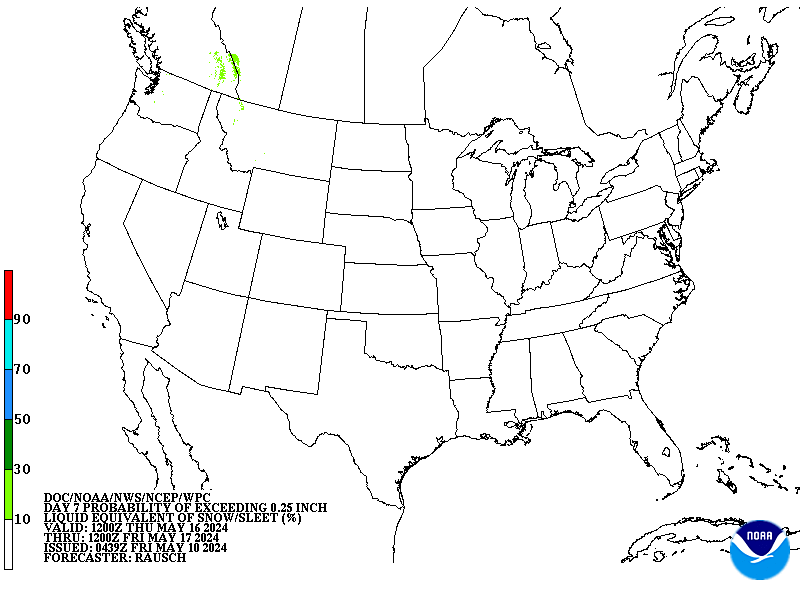
This is the six hour snow forecast.
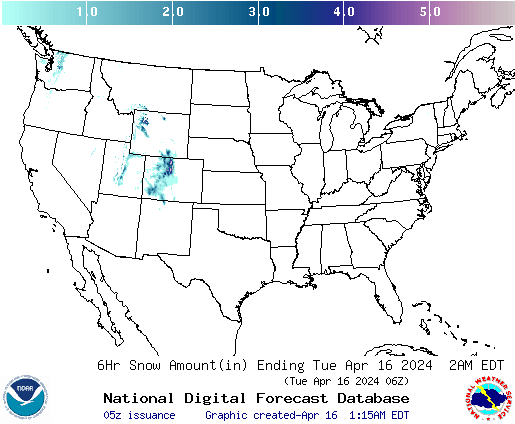
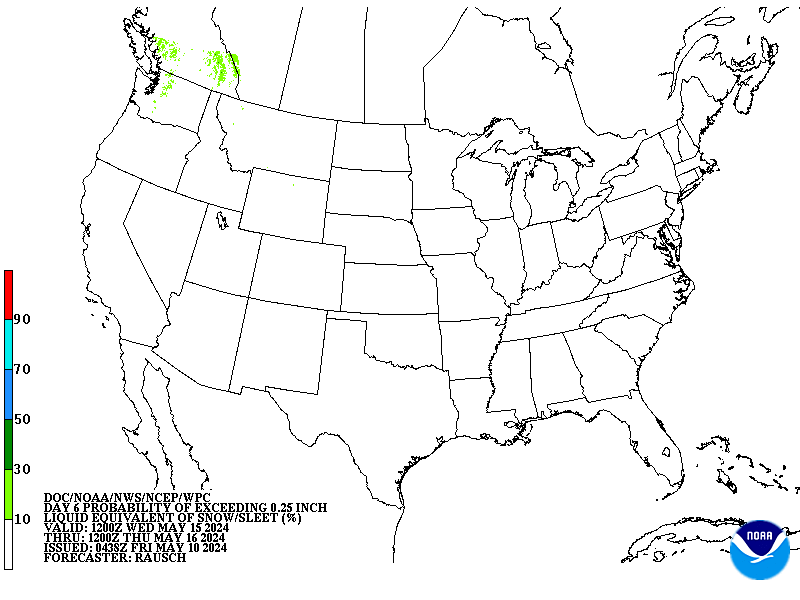
NOAA Snow Forecast looking ahead to Days 4,5 (top Row) ,6 and 7 (bottom row). When you view these graphics you can click on them to enlarge them.
 |  |
 |  |
What is the NPO-WP? Here are some resources….this is good and this is more recent and looks at it on a Worldwide basis. For now we will go with the American Meteorological Society definition.
The North Pacific Oscillation (NPO) is a north–south seesaw in winter sea level pressure over the North Pacific on monthly (and shorter) time scales. It was defined in 1924 by Sir Gilbert Walker as “the opposition between Alaska, representing the area of low pressure, and Honolulu near the margin of the high pressure area, the coefficients in winter and spring being −0.70 and −0.52.”
The tropospheric circulation pattern linked with NPO variability is the west Pacific (WP) teleconnection. NPO/WP variability is linked to meridional displacements of the Asian-Pacific jet and Pacific storm tracks. Intercomparison of sea level pressure, geopotential height, and zonal wind anomaly structure reveals NPO to be a Pacific basin analog of the North Atlantic Oscillation.
NPO/WP variability is influential on North American winter hydroclimate: the positive NPO phase (deeper Aleutian low) results in warming of the North American continent, except for the western United States, and in less (more) precipitation over the Pacific Northwest (southern Great Plains). NPO/WP also impacts marginal sea ice zones, with the western Bering Sea and Sea of Okhotsk ice zones significantly extended during the positive NPO phase.
We have discussed this before in an article that might have been entitled “Beringia” which was mostly about strength and positioning of the Aleutian Low with respect to ENSO. The issue right now is more short-term oriented and we will discuss this more in a future article because of what was said in the Friday 3 – 4 Week forecast.
This pattern projects strongly onto the negative phase of the NPO-WP pattern. The forecast pattern becomes uncertain heading into the Week 3-4 period, with the ECMWF supporting a large pattern change with anomalous troughing developing near Alaska and enhanced westerlies into western North America (and the associated reversal of the NPO-WP to the positive phase).
Some believe that this pattern has more short-term impact on CONUS weather than ENSO. So we will be tracking this.
A. Now we return to our regular approach and focus on Alaska and CONUS (all U.S.. except Hawaii)
I am starting with a summary first for temperature and then for precipitation of small images of the three short-term maps. You can click on these maps to see larger versions. The easiest way to return to this report is by using the “Back Arrow” usually found top left corner of your screen to the left of the URL Box. Larger maps are available later in the article with the discussion and analysis.
For most people, the summary with the small images will be sufficient. Later in the article for those with sufficient interest there is a full description of the factors determining the maps shown here with a detailed analysis of the ENSO situation which so dramatically impacts the forecasts below.
First Temperature
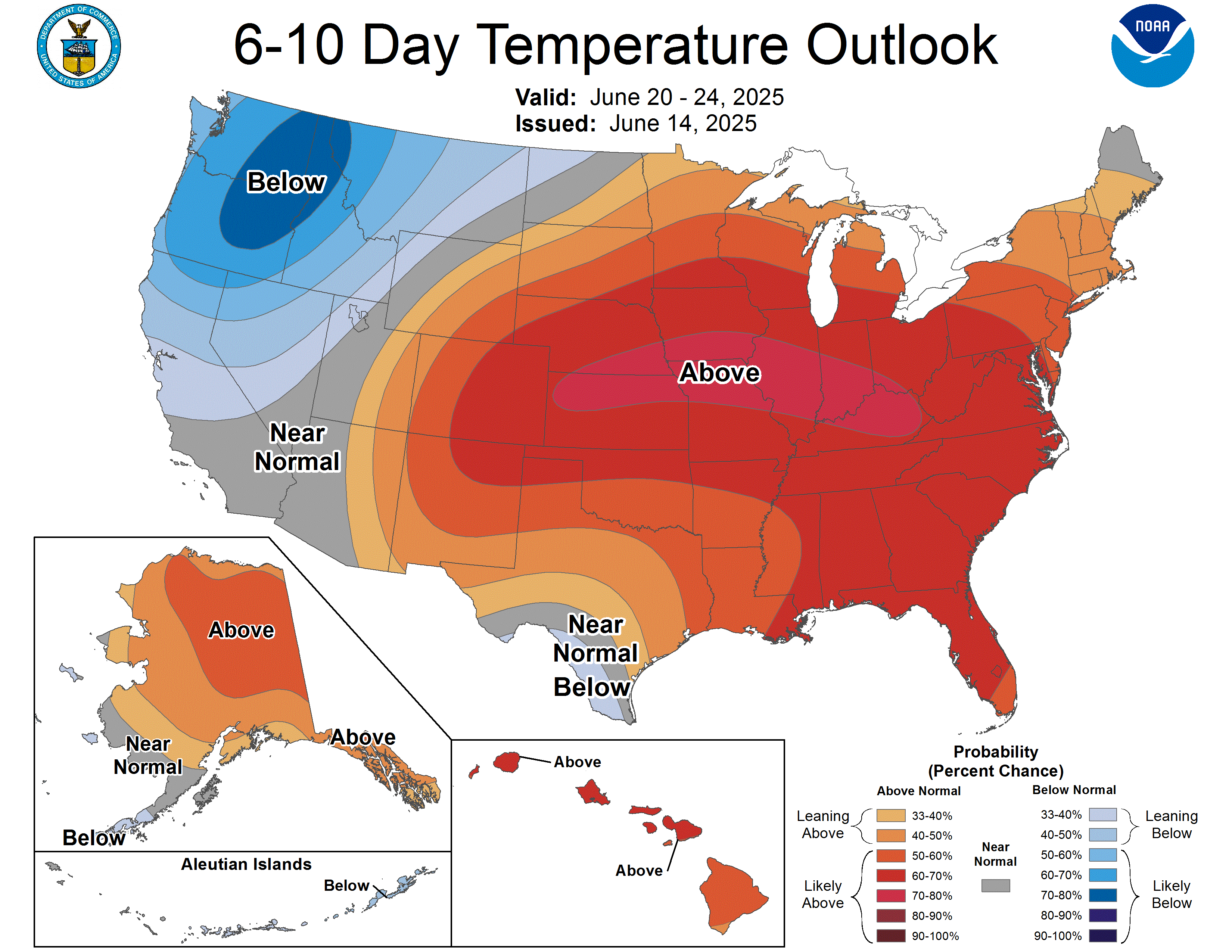 | Transitioning from the 6 to 10 day outlook on the left (also called Week One) to the 8 to 14 day outlook (Week Two) on the right → | 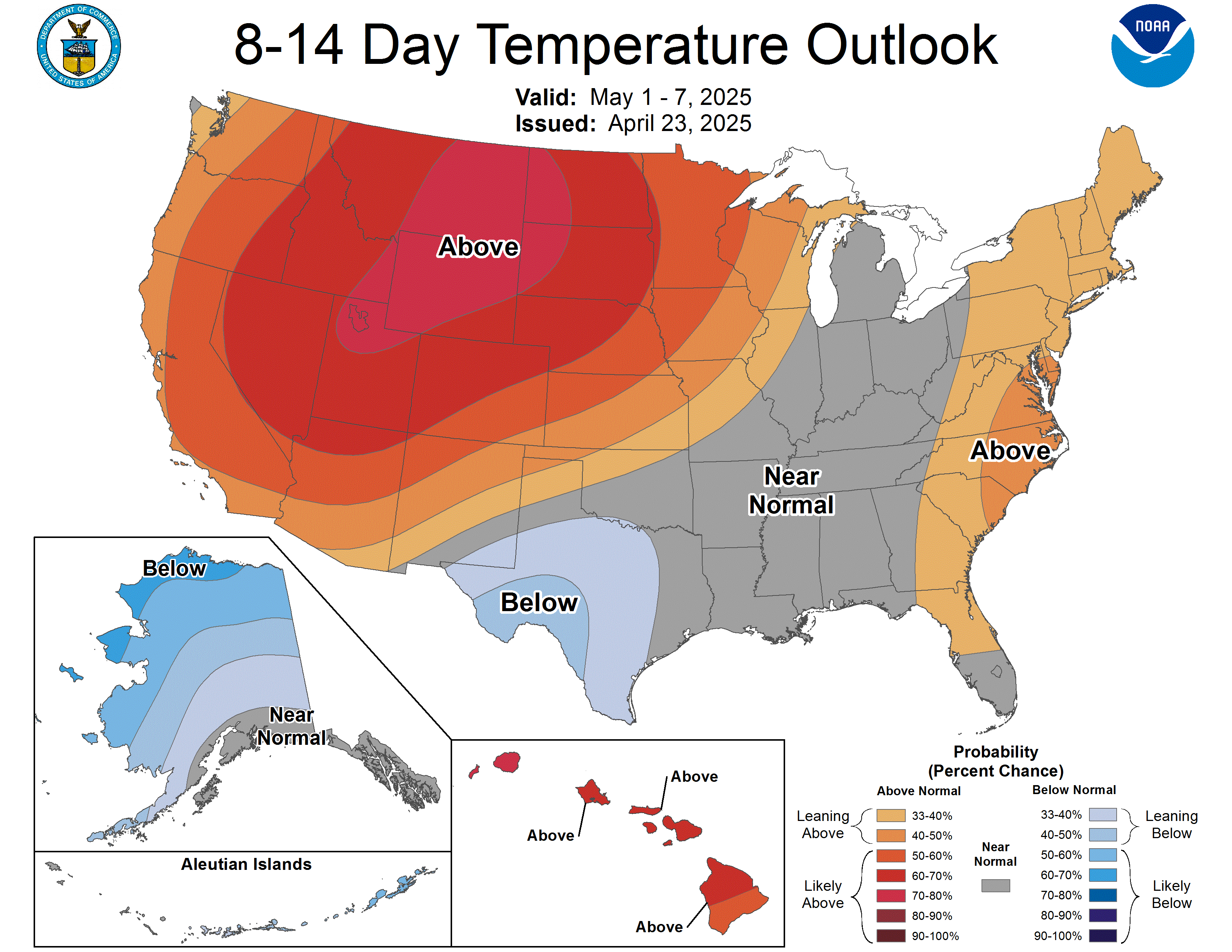 | |
The pattern becomes less amplified in Week Two. | |||
To the right is the week 3 and 4 Forecast. There are now two warm anomalies (Alaska and the the Southern Tier and two cool Northern Tier anomalies. → | 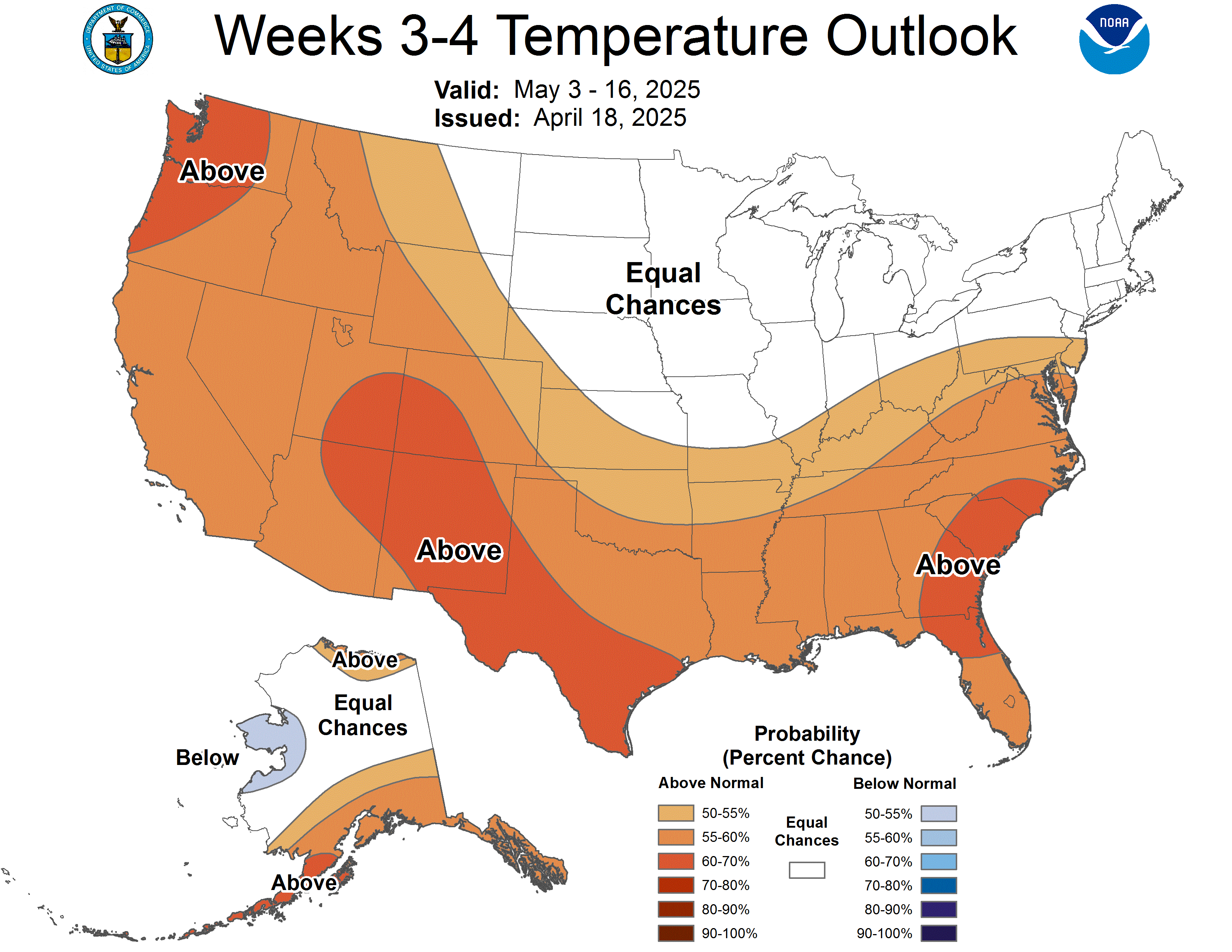 | ↑ ← The transition from the 8 -14 day forecast shown above to the week 3/4 shown to the left seems feasible only if the system becomes more zonal. | |
And then Precipitation
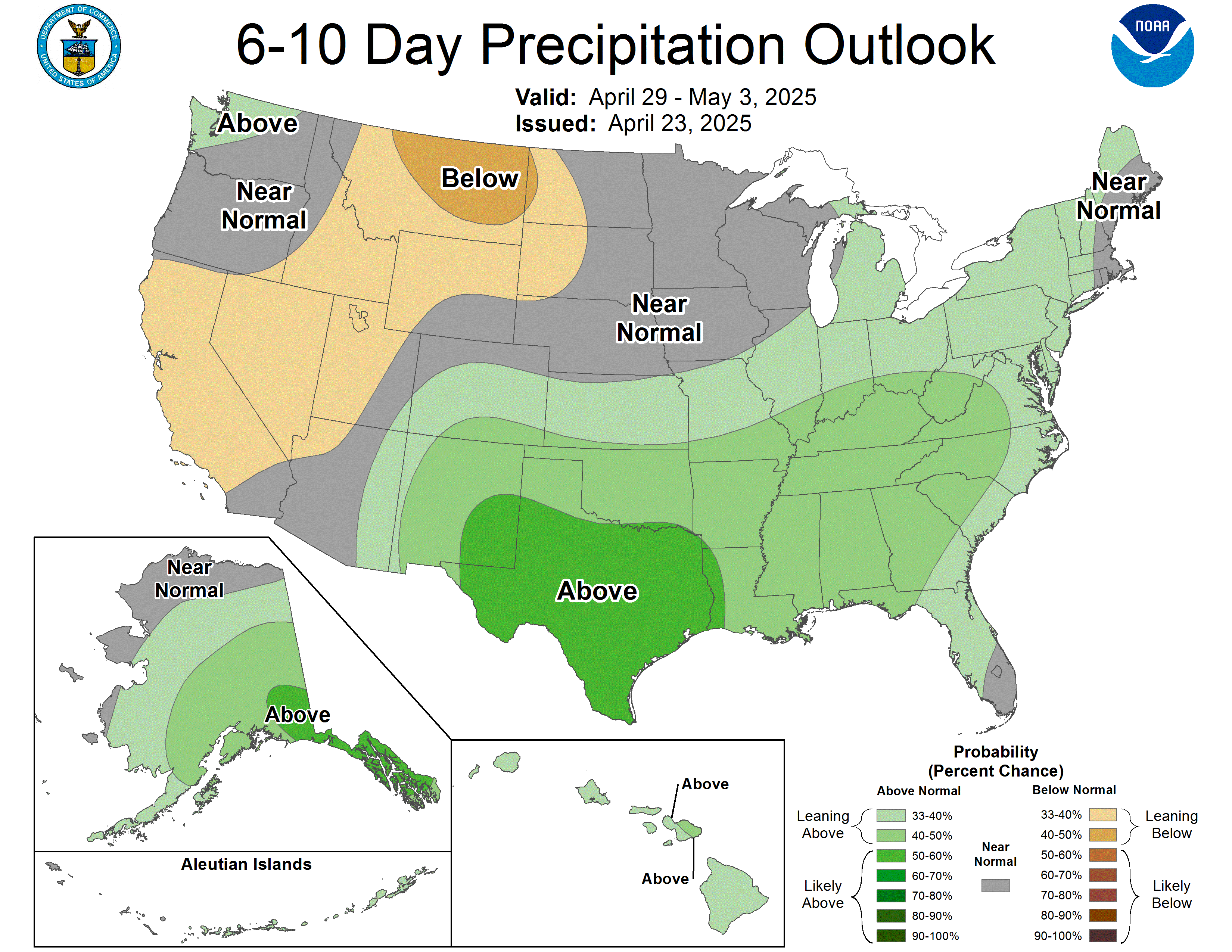 | Transitioning from the 6 to 10 day outlook on the left to the 8 to 14 day outlook on the right. → | 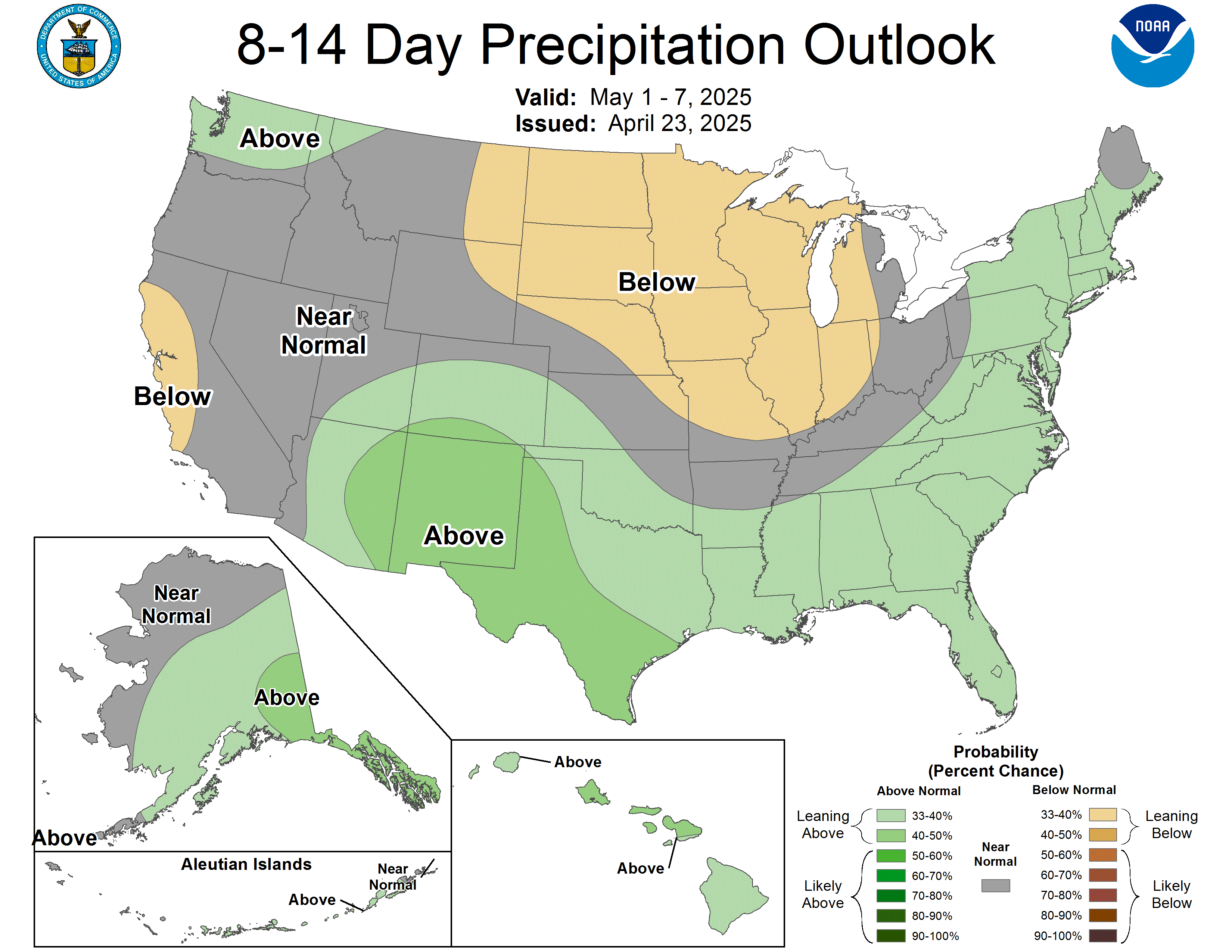 | |
Mostly a continuation of the pattern into the second week (Days 8 – 14). | |||
To the right is the week 3 and 4 Experimental Forecast. → Notice the two Northern Tier wet anomalies one on the West Coast and one on the East Coast and the Alaska and Southern Tier dry anomaly or two anomalies depending on how one looks at it. | 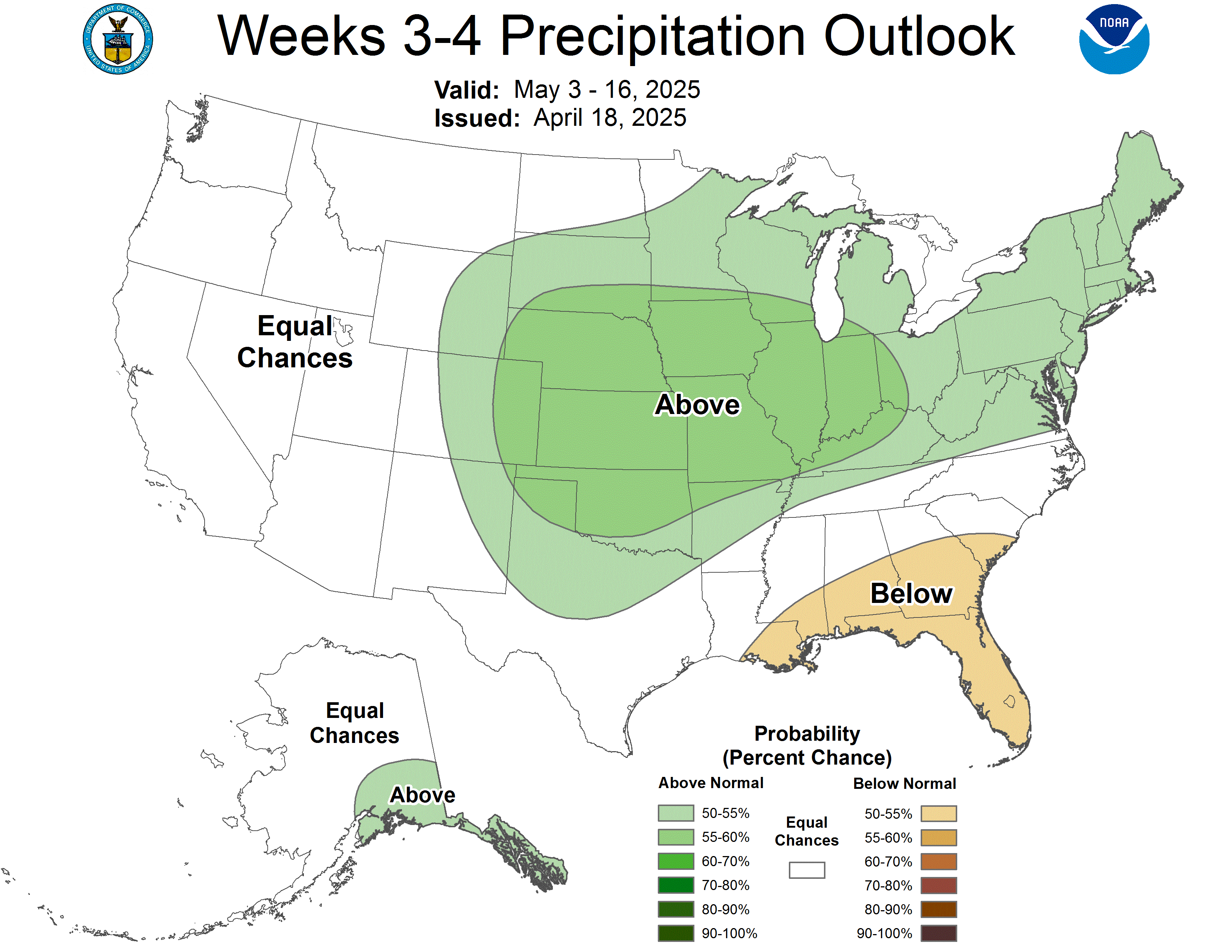 | ↑ ← The transition from the 8 -14 day forecast shown above to the week 3/4 shown to the left seems feasible, | |
Let us focus on the Current (Right Now to 5 Days Out) Weather Situation.
Water Vapor.
This view of the past 24 hours provides a lot of insight as to what is happening.
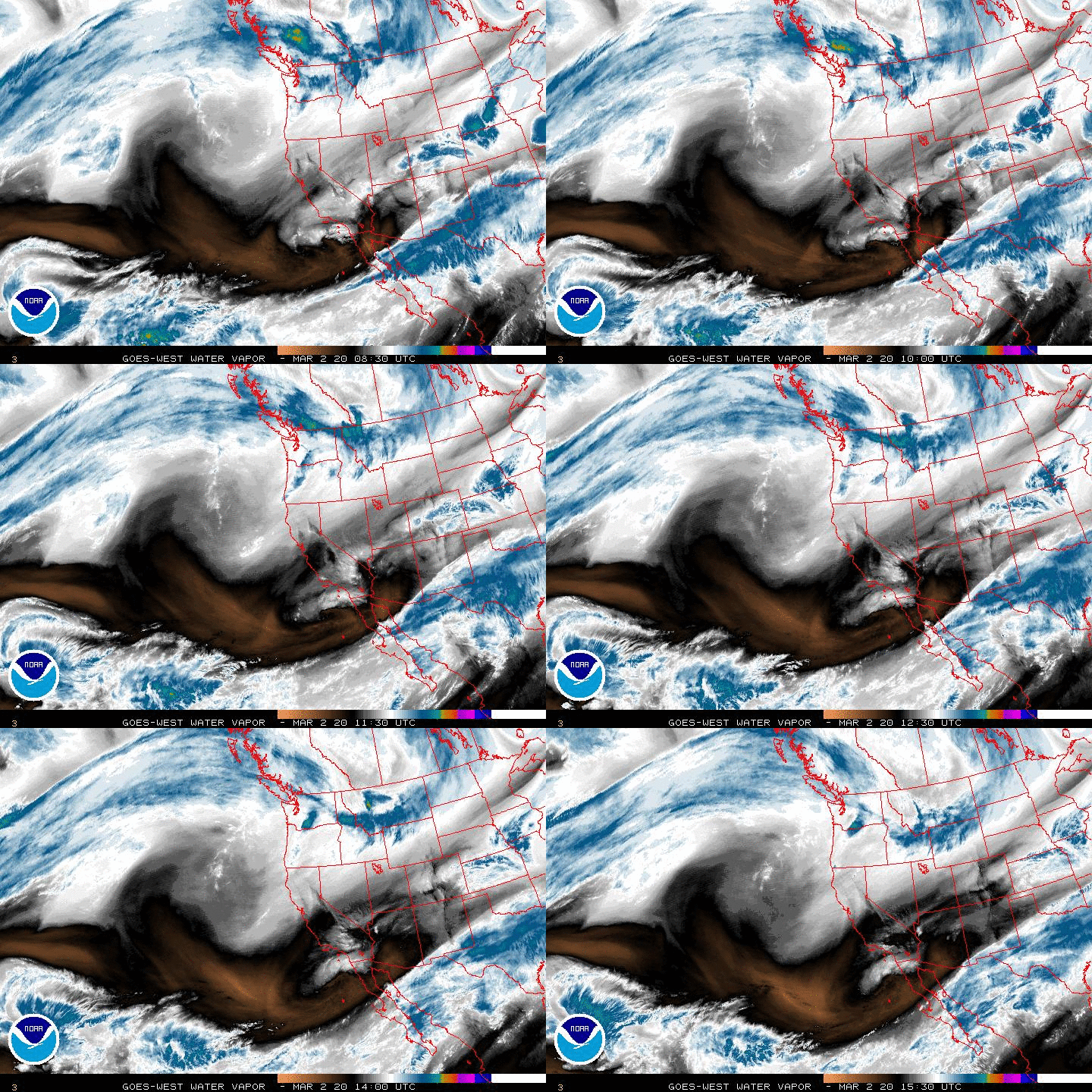
You can see split in the Jet Stream. The stronger part is spinning aimlessly off the Northwest and British Columbia. Remember this is an animation of what has happened not a forecast.
Below is the same graphic as above but without the animation to show the current situation with respect to water vapor imagery for North America. It also covers more of CONUS.

Tonight, Monday evening December 25, 2017, as I am looking at the above graphic, you see some moisture entering the Northwest and a stream of Pacific moisture moving across Mexico and via Texas making into the Great Plains, Midwest and New England.
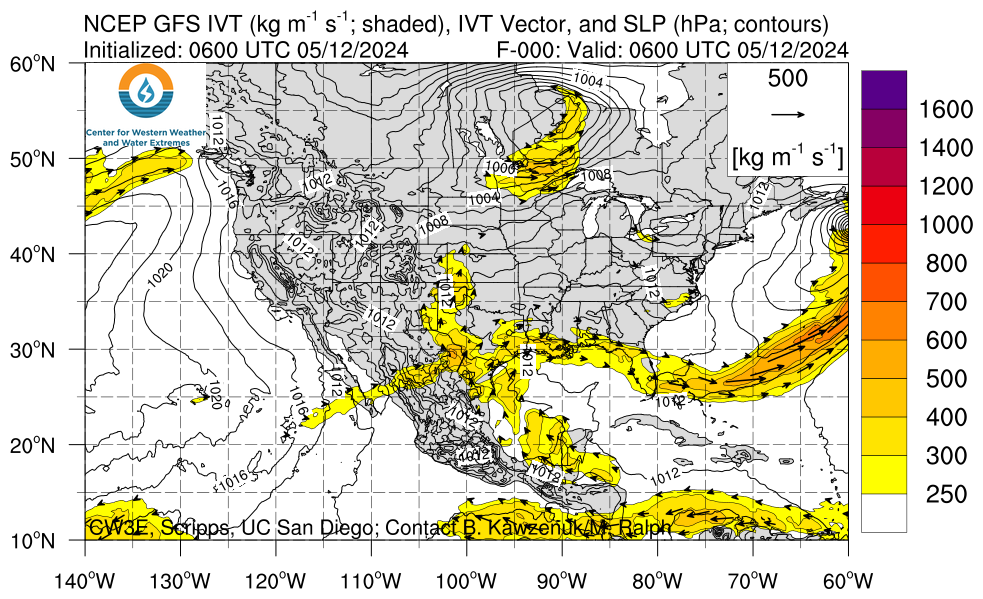
This graphic is about Atmospheric Rivers i.e. thick concentrated movements of water moisture. More explanation on Atmospheric Rivers can be found by clicking here or if you want more theoretical information by clicking here. The idea is that we have now concluded that moisture often moves via narrow but deep channels in the atmosphere (especially when the source of the moisture is over water) rather than being very spread out. This raises the potential for extreme precipitation events. You can convert this graphic into a flexible forecasting tool by clicking here. One can obtain views of different geographical areas by clicking here.
Day One CONUS Forecast | Day Two CONUS Forecast |
|
|
There is snow forecast for the Northern Tier and also further south . Earlier I have provided snow forecasts for day 4 through 7 and a link to earlier days. These graphics update and can be clicked on to enlarge but my brief comments are only applicable to what I see on Monday night prior to publishing. | |


60 Hour Forecast Animation
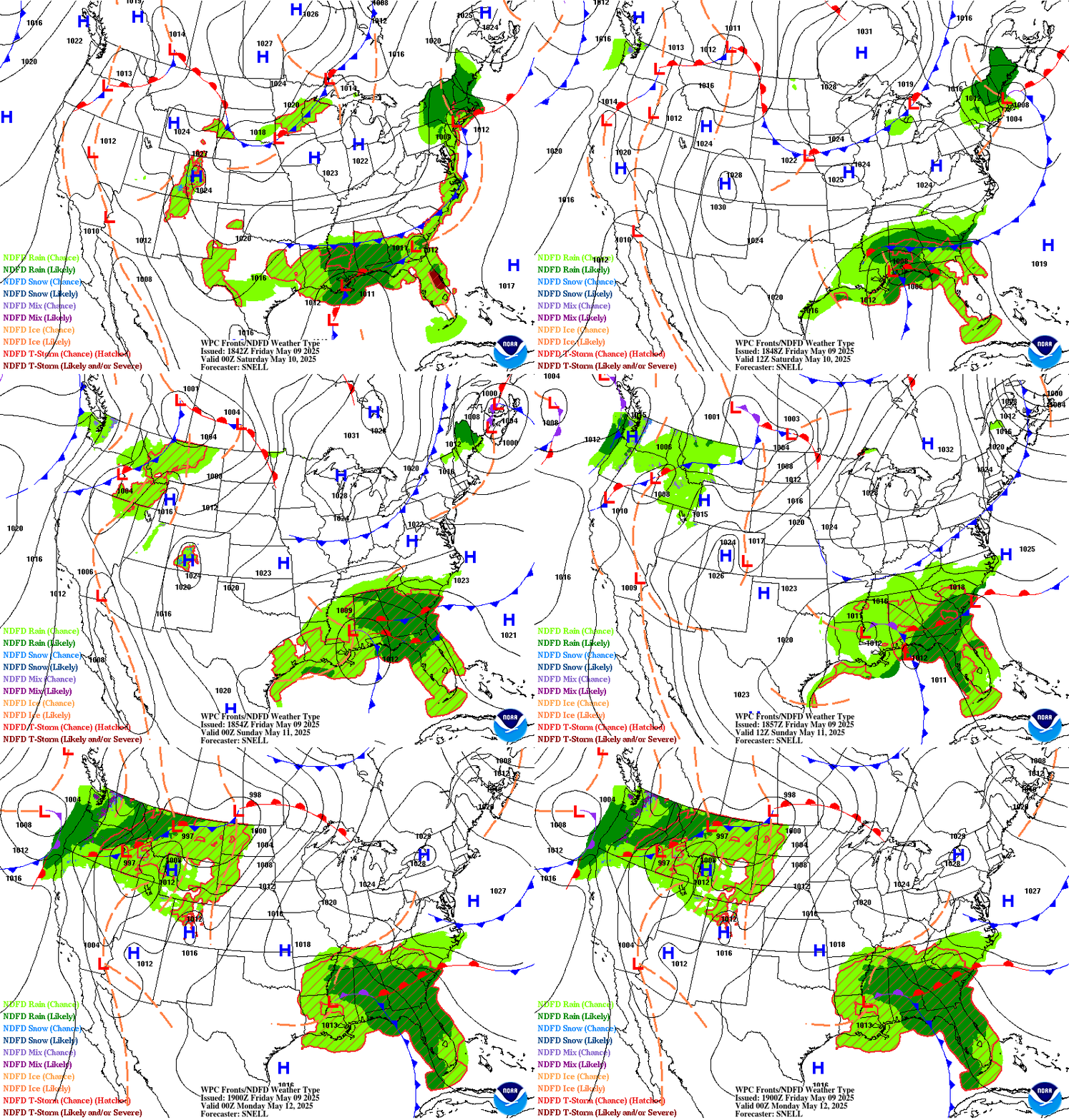
Here is a national animation of weather fronts and precipitation forecasts with four 6-hour projections of the conditions that will apply covering the next 24 hours and a second day of two 12-hour projections the second of which is the forecast for 48 hours out and to the extent it applies for 12 hours, this animation is intended to provide coverage out to 60 hours. Beyond 60 hours, additional maps are available at links provided below. The explanation for the coding used in these maps, i.e. the full legend, can be found here although it includes some symbols that are no longer shown in the graphic because they are implemented by color coding.
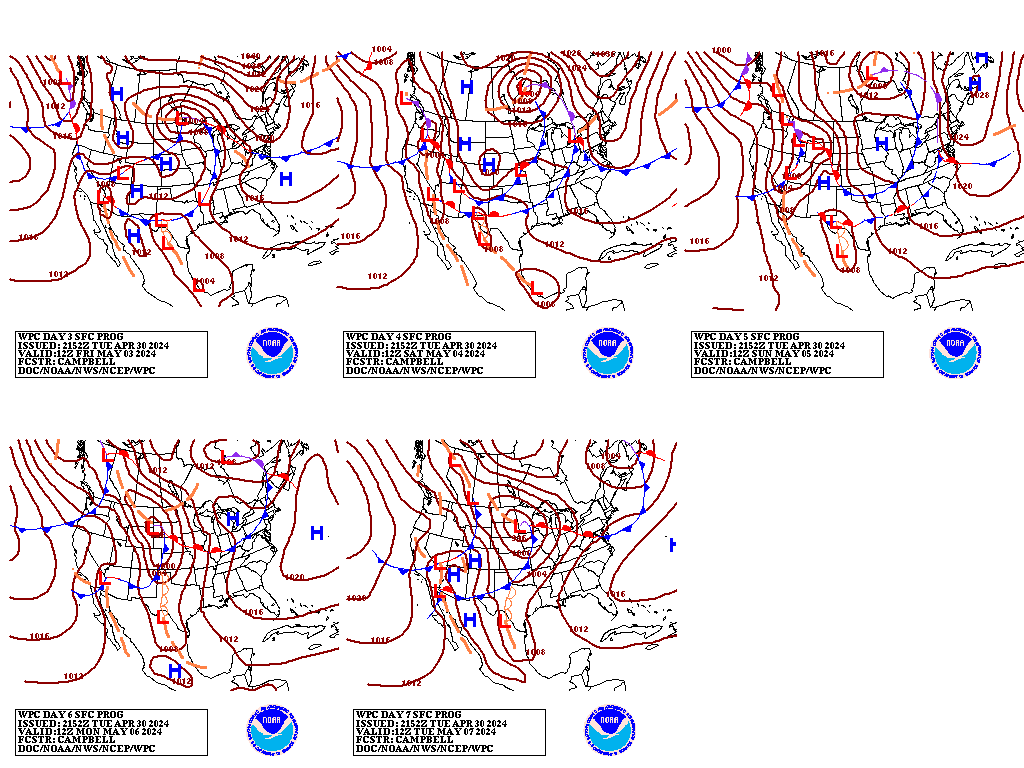
You can enlarge the below daily (days 3 – 7) weather maps for CONUS by clicking on Day 3 or Day 4 or Day 5 or Day 6 or Day 7. These maps auto-update so whenever you click on them they will be forecast maps for the number of days in the future shown.
What is Behind the Forecasts? Let us try to understand what NOAA is looking at when they issue these forecasts.
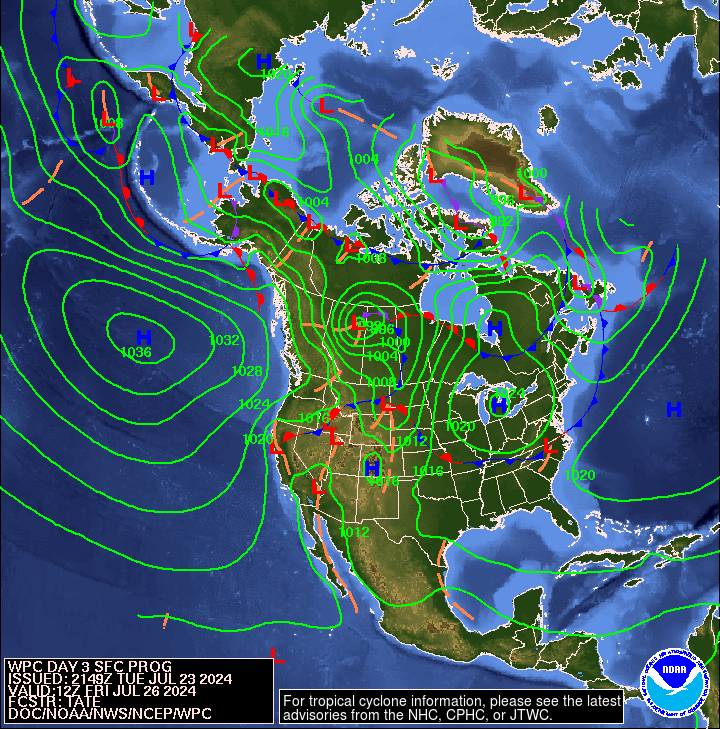
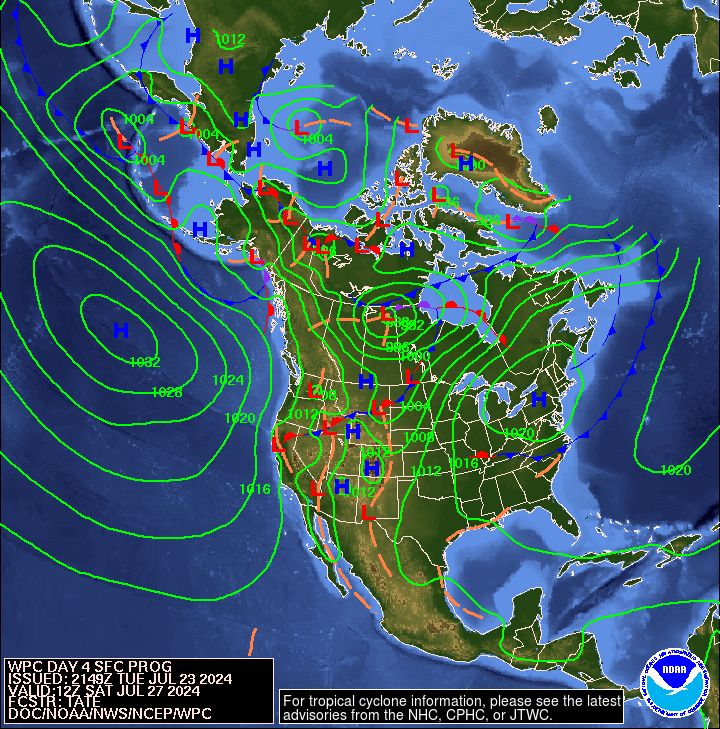
Below is a graphic which highlights the forecasted surface Highs and the Lows re air pressure on Day 7. The Day 3 forecast can be found here. the Day 6 Forecast can be found here. Actually all the small graphics below can be clicked on to enlarge them.
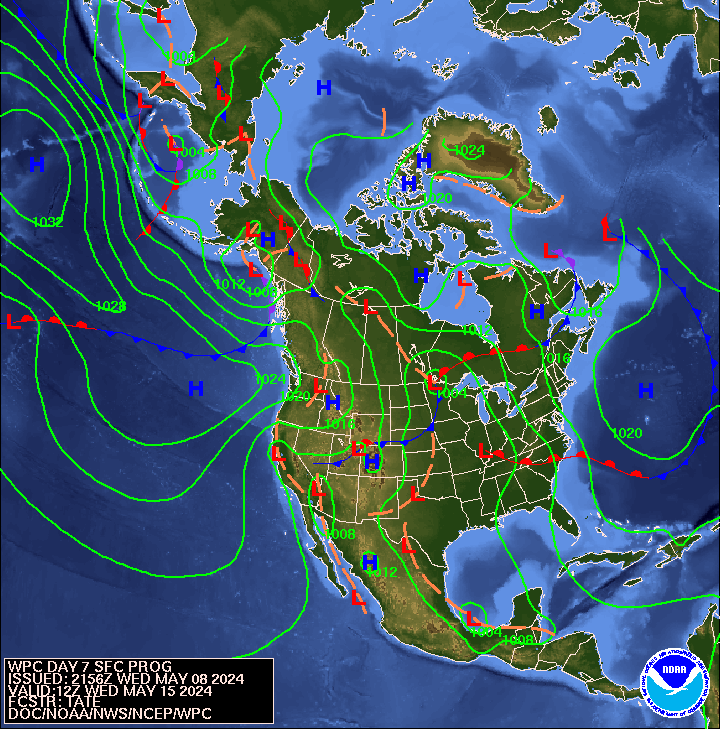
When I look at this Day 7 forecast, there is a large strong Low centered south of the Eastern Aleutians with surface central pressure of 984 hPa. This Low would appear to be well position to pump moisture into the West Coast except that there is a very strong High centered over the Central CONUS with surface central pressure of 1036 hPa. Looking at this graphic it would seem that any significant precipitation would be directed north of CONUS or remain near the West Coast. There is also a large Low off of Newfoundland with surface central pressure of 984 hPa. It can impact New England.
I provided this K – 12 write up that provides a simple explanation on the importance of semipermanent Highs and Lows and another link that discussed possible changes in the patterns of these highs and lows which could be related to a Climate Shift (cycle) in the Pacific or Global Warming. Remember this is a forecast for Day 6. It is not the current situation.
The table below showing the Day 3, Day 4, Day 5, Day 6 and Day 7 of this graphic can be useful in thinking about how the pattern of Highs and Lows is expect to move during the week.
 |  |
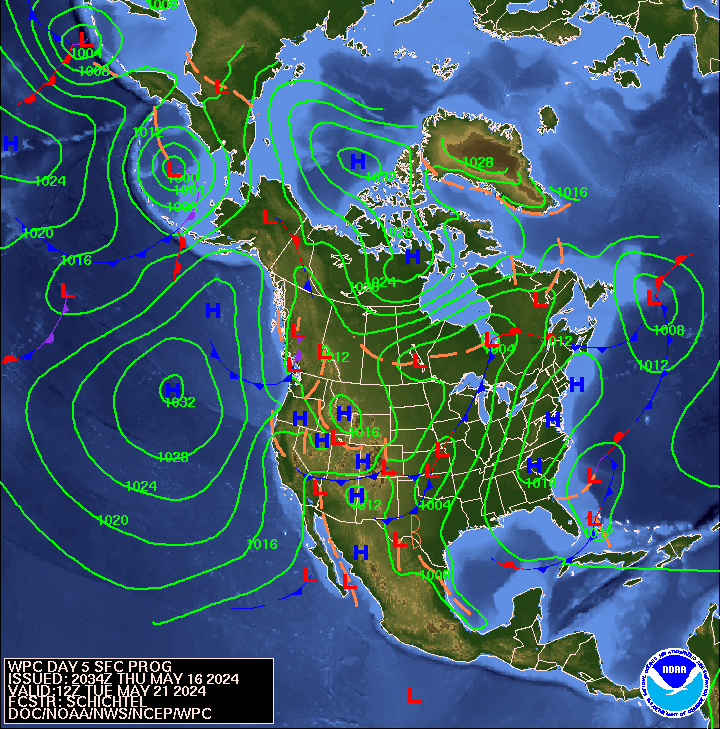 | 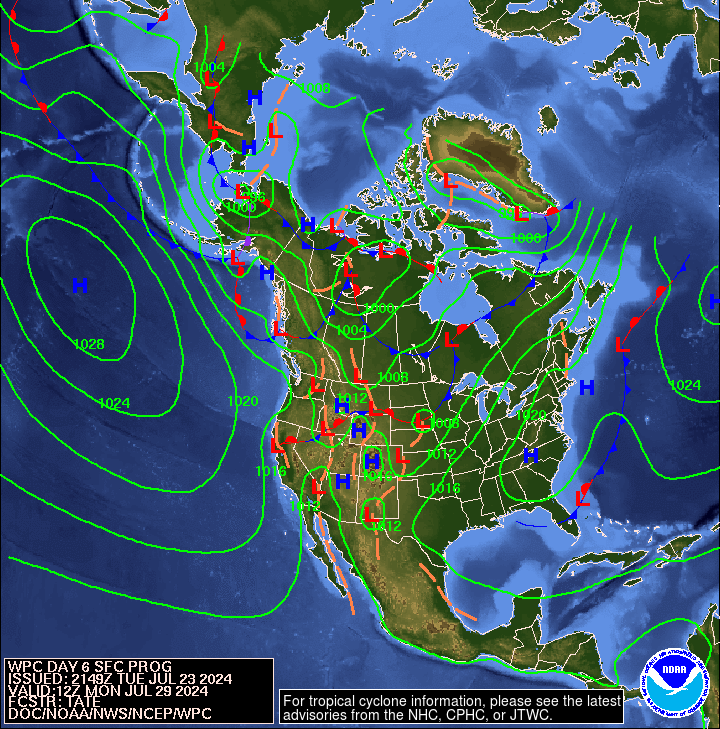 |
From left to right and then down, Days 3 and 4 top row, Days 5 and 6 second row and Day 7 to the right. These are small images but you can if you want click on them and get larger images but even with the small images you can trace the evolution of the pattern. The graphics update but my commentary below does not so it is just a guide for how to read these graphics. | |
There is not much change over the period. Things to look for in general are the position and strength of the Aleutian Low, the Hawaiian High and any troughs especially if they extend far to the south and are over water. | |
Looking at the current activity of the Jet Stream. The below graphics and the above graphics are very related.
Not all weather is controlled by the Jet Stream (which is a high altitude phenomenon) but it does play a major role in steering storm systems especially in the winter The sub-Jet Stream level intensity winds shown by the vectors in this graphic are also very important in understanding the impacts north and south of the Jet Stream which is the higher-speed part of the wind circulation and is shown in gray on this map. In some cases however a Low-Pressure System becomes separated or “cut off” from the Jet Stream. In that case it’s movements may be more difficult to predict until that disturbance is again recaptured by the Jet Stream. This usually is more significant for the lower half of CONUS with the cutoff lows being further south than the Jet Stream. Some basic information on how to interpret the impact of jet streams on weather can be found here and here. I have not provided the ability to click to get larger images as I believe the smaller images shown are easy to read.
| Current | Day 5 |
 |  |
| You can see that early in the week a trough is anticipated to impact Central CONUS and later the pattern becomes more zonal and is further north. | |
Putting the Jet Stream into Motion and Looking Forward a Few Days Also
To see how the pattern is projected to evolve, please click here. In addition to the shaded areas which show an interpretation of the Jet Stream, one can also see the wind vectors (arrows) at the 300 Mb level.
This longer animation shows how the jet stream is crossing the Pacific and when it reaches the U.S. West Coast is going every which way.
When we discuss the jet stream and for other reasons, we often discuss different layers of the atmosphere. These are expressed in terms of the atmospheric pressure above that layer. It is kind of counter-intuitive to me. The below table may help the reader translate air pressure to the usual altitude and temperature one might expect at that level of air pressure. It is just an approximation but useful.

Re the above, H8 is a frequently used abbreviation for the height of the 850 millibar level (which is intended to represent the atmosphere above the Boundary Layer most impacted by surface conditions), H7 is the 700 mb level, H5 is the 500 mb level, H3 is the 300 mb level. So if you see those abbreviations in a weather forecast you will know what they are talking about.
Click here to gain access to a very flexible computer graphic. You can adjust what is being displayed by clicking on “earth” adjusting the parameters and then clicking again on “earth” to remove the menu. Right now it is set up to show the 500 hPa wind patterns which is the main way of looking at synoptic weather patterns. This amazing graphic covers North and South America. It could be included in the Worldwide weather forecast section of this report but it is useful here re understanding the wind circulation patterns.
500 MB Mid-Atmosphere View
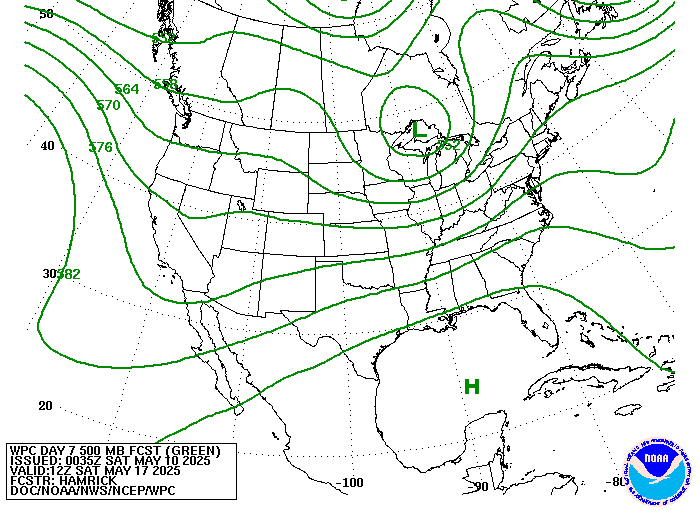
The map below is the mid-atmosphere 7-Day chart rather than the surface highs and lows and weather features. In some cases it provides a clearer less confusing picture as it shows only the major pressure gradients. This graphic auto-updates so when you look at it you will see NOAA’s latest thinking. The speed at which these troughs and ridges travel across the nation will determine the timing of weather impacts. This graphic auto-updates I think every six hours and it changes a lot. Because “Thickness Lines” are shown by those green lines on this graphic, it is a good place to define “Thickness” and its uses. The 540 Level generally signifies equal chances for snow at sea level locations. Thickness of 600 or more suggests very intensely heat and fire danger. Sometimes Meteorologists work with the 500 mb heights which provide somewhat similar readings to the “Thickness” lines but IMO provide slightly less specific information. Thinking about clockwise movements around High Pressure Systems and counter- clockwise movements around Low Pressure Systems provides a lot of information.
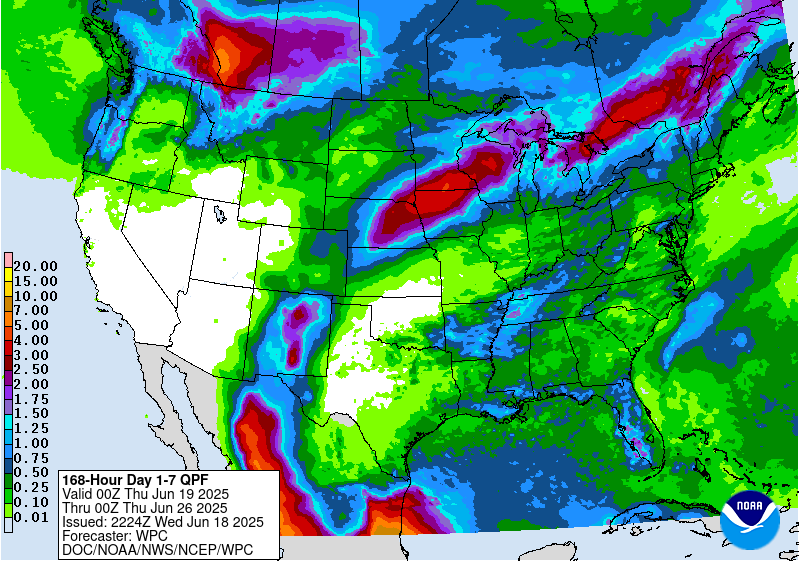
Here is the seven-day cumulative precipitation forecast. More information is available here.
Four- Week Outlook: Looking Beyond Days 1 to 5, What is the Forecast for the Following Three + Weeks?
I use “EC” in my discussions although NOAA sometimes uses “EC” (Equal Chances) and sometimes uses “N” (Normal) to pretty much indicate the same thing although “N” may be more definitive.
First – Temperature
6 – 10 Day Temperature Outlook issued today (Note the NOAA Level of Confidence in the Forecast Released on December 25, 2017 was 4 out of 5
8 – 14 Day Temperature Outlook issued today (Note the NOAA Level of Confidence in the Forecast Released on December 25, 2017 was 3 out of 5).
Looking further out.
Now – Precipitation
6 – 10 Day Precipitation Outlook Issued Today (Note the NOAA Level of Confidence in the Forecast Released on December 25 was 4 out of 5)
8 – 14 Day Precipitation Outlook Issued Today (Note the NOAA Level of Confidence in the Forecast Released on December 25, 2017 was 3 out of 5)
Looking further out.
.
Here is the 6 – 14 Day NOAA discussion released today December 25, 2017 and the Week 3/4 discussion released Friday December 22
6-10 DAY OUTLOOK FOR DEC 31, 2017 – JAN 04, 2018
TODAY’S ENSEMBLE MEAN FORECASTS ARE IN GOOD AGREEMENT ON A PREDICTED AMPLIFIED 500-HPA CIRCULATION PATTERN FOR THE 6-10 DAY PERIOD OVER THE FORECAST DOMAIN. TROUGHS ARE ANTICIPATED OVER THE CENTRAL AND EASTERN CONUS, AND THE BERING SEA, WHILE A RIDGE IS EXPECTED ALONG THE U.S. WEST COAST EXTENDING NORTH/NORTHWESTWARD TO ALASKA. THE ENSEMBLE SPAGHETTI CHARTS INDICATE LOW TO MODERATE SPREAD OVER THE CENTRAL AND EASTERN CONUS, AND MODERATE TO LARGE SPREAD OVER THE WESTERN CONUS AND EASTERN PACIFIC. THE PNA INDEX WHICH RECENTLY HAS BEEN WEAKLY POSITIVE IS FORECAST TO BE WEAKLY POSITIVE AT DAY 7, BE MODERATELY POSITIVE AT DAY 10, AND BE CLOSE TO ZERO BY DAY 14. THE AO INDEX WHICH HAS RECENTLY BEEN POSITIVE IS EXPECTED TO BE NEAR ZERO AT DAY 7, BE WEAKLY POSITIVE AT DAY 10, AND CLOSE TO ZERO AT DAY 14. THERE IS RELATIVELY LARGE SPREAD OF THE FORECAST AO INDEX AMONG ENSEMBLE MEMBERS. TODAY’S 500-HPA BLEND CHART DEPICTS BELOW NORMAL HEIGHTS FOR THE EASTERN TWO-THIRDS OF THE CONUS, THE ALEUTIANS, AND THE WESTERN THIRD OF MAINLAND ALASKA, WHILE ABOVE NORMAL HEIGHTS ARE ANTICIPATED FOR THE WESTERN THIRD OF THE CONUS, THE ALASKA PANHANDLE, AND THE EASTERN TWO-THIRDS OF THE ALASKA MAINLAND.
BELOW NORMAL HEIGHTS TILT THE ODDS TO NEAR TO BELOW NORMAL TEMPERATURES FOR MUCH OF THE THE EASTERN TWO-THIRDS OF THE CONUS, WHILE ABOVE NORMAL HEIGHTS FAVOR NEAR TO ABOVE NORMAL TEMPERATURES FOR THE WESTERN THIRD OF THE NATION. DUE TO THE EXPECTATION OF AN AMPLIFIED CIRCULATION PATTERN, THERE ARE HIGH PROBABILITIES FOR BELOW NORMAL TEMPERATURES NEAR THE GREAT LAKES. ABOVE NORMAL HEIGHTS AND/OR ANOMALOUS SOUTHERLY FLOW ENHANCE PROBABILITIES FOR ABOVE NORMAL TEMPERATURES FOR THE ALEUTIANS AND WESTERN AND CENTRAL MAINLAND ALASKA.
ABOVE NORMAL HEIGHTS AND/OR ANOMALOUS NORTHERLY FLOW FAVOR NEAR TO BELOW NORMAL PRECIPITATION FOR MUCH OF THE CONUS. THE EXCEPTION IS ACROSS THE SOUTHERN TIER OF THE CONUS FROM TEXAS TO FLORIDA WHERE MOISTURE RETURN NEAR A FRONTAL SYSTEM ENHANCES PROBABILITIES FOR ABOVE NORMAL PRECIPITATION. THE TROUGH FORECAST OVER THE BERING SEA TILT THE ODDS TO ABOVE NORMAL PRECIPITATION FOR THE ALEUTIANS AND SOUTHWESTERN MAINLAND ALASKA. ABOVE NORMAL HEIGHTS FAVOR BELOW NORMAL PRECIPITATION FOR PARTS OF EAST-CENTRAL ALASKA.
FORECAST CONFIDENCE FOR THE 6-10 DAY PERIOD: ABOVE AVERAGE, 4 OUT OF 5, DUE TO GOOD MODEL AGREEMENT ON AN AMPLIFIED CIRCULATION PATTERN.
8-14 DAY OUTLOOK FOR JAN 02 – 08 2018
DURING WEEK 2, MODEL FORECASTS PREDICT A SOMEWHAT LESS AMPLIFIED 500-HPA TROUGH OVER THE EASTERN AND CENTRAL U.S. RELATIVE TO THE 6-10 DAY PERIOD. THE ECMWF ENSEMBLE MEAN IS A BIT QUICKER TO RAISE HEIGHTS NEAR THE GREAT LAKES. ENSEMBLE SPREAD REMAINS LOW TO MODERATE OVER MOST OF THE CENTRAL AND EASTERN CONUS, AND IS RELATIVELY LARGE OVER THE WESTERN CONUS AND EASTERN PACIFIC. THE EXPECTED 500-HPA HEIGHT ANOMALY PATTERN FOR WEEK-2 IS VERY SIMILAR TO THAT FORECAST FOR THE 6-10 DAY PERIOD, ALTHOUGH HEIGHTS ARE EXPECTED TO FALL SLIGHTLY OVER PARTS OF THE SOUTHERN PLAINS DURING WEEK-2.
BELOW NORMAL TEMPERATURES REMAIN LIKELY FOR MUCH OF THE CENTRAL AND EASTERN CONUS DUE TO BELOW NORMAL HEIGHTS. NEAR TO ABOVE NORMAL HEIGHTS AND/OR ANOMALOUS SOUTHERLY FLOW ENHANCE PROBABILITIES FOR ABOVE NORMAL TEMPERATURES FOR MOST OF THE WESTERN THIRD OF THE CONUS AND MUCH OF ALASKA.
THE TROUGH OVER THE EASTERN CONUS AND THE EXPECTATION OF A STALLED FRONTAL SYSTEM OVER THE SOUTHEAST CONUS ENHANCE PROBABILITIES FOR ABOVE NORMAL PRECIPITATION FOR THE GULF COAST REGION AND PARTS OF THE SOUTHEAST. ELSEWHERE OVER THE CONUS, ANOMALOUS NORTHERLY FLOW AND/OR ABOVE NORMAL HEIGHTS TILT THE ODDS TO NEAR TO BELOW NORMAL PRECIPITATION. THE TROUGH FORECAST OVER THE BERING SEA FAVORS ABOVE NORMAL PRECIPITATION FOR MUCH OF WESTERN AND CENTRAL MAINLAND ALASKA, THE ALASKA PANHANDLE, AND THE ALEUTIANS.
FORECAST CONFIDENCE FOR THE 8-14 DAY PERIOD: ABOUT AVERAGE, 3 OUT OF 5, DUE TO GOOD MODEL AGREEMENT OFFSET BY THE EXPECTATION OF A DEAMPLIFYING CIRCULATION PATTERN.
Week 3-4 Forecast Discussion Valid Sat Jan 06 2018-Fri Jan 19 2018
The Week 3-4 forecast today shows hints of a large scale pattern change over North America relative to the upcoming two weeks. A blocking pattern over the far northeastern Pacific and Alaska is going to lead to the development of anomalously cold air over Canada that will surge southward at times into the CONUS over the next two weeks. This pattern projects strongly onto the negative phase of the NPO-WP pattern. The forecast pattern becomes uncertain heading into the Week 3-4 period, with the ECMWF supporting a large pattern change with anomalous troughing developing near Alaska and enhanced westerlies into western North America (and the associated reversal of the NPO-WP to the positive phase). The CFS and JMA do not support as drastic a change, but do show more meridionally confined ridging over the North Pacific, something a bit more in line with the expected La Nina footprint. In addition to the low-frequency ENSO state, the MJO remains active with the enhanced phase mainly over the Western Hemisphere. This is not an ideal phase for generating tropical-extratropical teleconnections, and so is of limited use this week. The enhanced phase of the MJO is forecast to emerge over the Indian Ocean by the end of Week-2; this would broadly favor above-normal temperatures over much of east-central North America during Week-4 and beyond.
The various dynamical model solutions are nonetheless in reasonably good agreement with enhanced ridging off the eastern seaboard and anomalous troughing somewhere over western North America. Residual cold air is depicted over parts of the Northeast early in the period, as well as over the northern High Plains. Above-normal temperatures are most likely over the southern tier of the country, while odds favoring above-normal temperatures over Alaska are more modest this week due to the uncertain evolution of the upper-level circulation.
Above-median precipitation is likely over much of the western CONUS from California into the Rocky Mountains, ahead of warm Pacific flow. Above-median precipitation is also most likely for much of the eastern CONUS where the mean frontal zone is forecast to reside. This forecast is supported by the CFS, ECMWF and JMA operational models, as well as nearly all SubX model forecasts. Below-median precipitation is most likely for most of the southern tier of the CONUS extending northward over parts of the Plains. The former is consistent with the model guidance and the low-frequency pattern; the latter is based on the expectation of an increasing westerly component to the low-level circulation pattern. Below-median precipitation is slightly favored over southwestern Alaska where the models exhibit the best agreement favoring anomalous northerly mid-level flow.
The Hawaiian outlook for Week 3-4 is highly uncertain. Sea-surface temperature anomalies are now negative near the western islands, though dynamical forecasts for Week 3-4 favor a slight tilt toward above-normal 2-meter temperatures. Given the latest bias-corrected Week-2 guidance, and the lower-frequency nature of climate variability in the tropics, a slight tilt toward below-normal temperatures is indicated for Lihue, with odds favoring above-normal temperatures increasing to the southeast. The various dynamical model tools favor below-median precipitation for all but the big island, where forecast tools are mixed.
Some might find this analysis which you need to click to read interesting as the organization which prepares it focuses on the Pacific Ocean and looks at things from a very detailed perspective and their analysis provides a lot of information on the history and evolution of ENSO events.
Analogs to the Outlook.
Now let us take a detailed look at the “Analogs” which NOAA provides related to the 5 day period centered on 3 days ago and the 7 day period centered on 4 days ago. “Analog” means that the weather pattern then resembles the recent weather pattern and was used in some way to predict the 6 – 14 day Outlook.
Here are today’s analogs in chronological order although this information is also available with the analog dates listed by the level of correlation. I find the chronological order easier for me to work with. There is a second set of analogs associated with the Outlook but I have not been regularly analyzing this second set of information. The first set which is what I am using today applies to the 5 and 7 day observed pattern prior to today. The second set, which I am not using, relates to the correlation of the forecasted outlook 6 – 10 days out with similar patterns that have occurred in the past during the dates covered by the 6 – 10 Day Outlook. The second set of analogs may also be useful information but they put the first set of analogs in the discussion with the second set available by a link so I am assuming that the first set of analogs is the most meaningful and I find it so.
Centered Day | ENSO Phase | PDO | AMO | Other Comments |
| Dec 5, 1958 | El Nino | +(t) | + | Modoki type 2 |
| Jan 3, 1979 | El Nino | – | – | Modoki Type 1 |
| Jan 4, 1979 | El Nino | – | – | Modoki Type 1 |
| Dec 17, 1983 | La Nina | + | + | |
| Dec 19, 1983 | La Nina | + | – | |
| Dec 13, 1985 (2) | La Nina | + | – | |
| Jan 3, 1988 | La Nina | – | – | |
| Jan 6, 1988 | La Nina | – | – | |
| Jan 1, 1991 | El Nino | – | – | Modoki Type 1 |
(t) = a month where the Ocean Cycle Index has just changed or does change the following month.
The spread among the analogs from December 13 to January 6 is 24 days which is a bit wider than last week. I have not calculated the centroid of this distribution which would be the better way to look at things but the midpoint, which is a lot easier to calculate, is about December 25. These analogs are centered on 3 days and 4 days ago (December 22 or December 23). So the analogs could be considered to be a bit out of sync with respect to weather that we would normally be getting right now being a couple of days late which is consistent with the deamplifying of the cool anomalies for much of CONUS. For more information on Analogs see discussion in the GEI Weather Page Glossary.
Including the duplicates, there are no Neutral Analogs, six La Nina analogs and four El Nino Analogs (why?). The phases of the analogs favor McCabe conditions A and B. McCabe A and B are not consistent with the forecast suggesting that there is some potential for the forecast to vary from the actual in important ways. A possible reason for this is that The Atlantic might be playing a larger than usual role in weather for this time of the year mostly as a blocking pattern.
The seminal work on the impact of the PDO and AMO on U.S. climate can be found here. Water Planners might usefully pay attention to the low-frequency cycles such as the AMO and the PDO as the media tends to focus on the current and short-term forecasts to the exclusion of what we can reasonably anticipate over multi-decadal periods of time. One of the major reasons that I write this weather and climate column is to encourage a more long-term and World view of weather.
| In color | Black and White same graphics |
 |  |
| McCabe Condition | Main Characteristics |
| A | Very Little Drought. Southern Tier and Northern Tier from Dakotas East Wet. Some drought on East Coast. |
| B | More wet than dry but Great Plains and Northeast are dry. |
| C | Northern Tier and Mid-Atlantic Drought |
| D | Southwest Drought extending to the North and also the Great Lakes. This is the most drought-prone combination of Ocean Phases. |
You may have to squint but the drought probabilities are shown on the map and also indicated by the color coding with shades of red indicating higher than 25% of the years are drought years (25% or less of average precipitation for that area) and shades of blue indicating less than 25% of the years are drought years. Thus drought is defined as the condition that occurs 25% of the time and this ties in nicely with each of the four pairs of two phases of the AMO and PDO.
Historical Anomaly Analysis
When I see the same dates showing up often I find it interesting to consult this list.
Recent CONUS Weather
This is provided mainly to see the pattern in the weather that has occurred recently.
| And the 30 Days ending December 16, 2017 | And the 30 Days ending December 23, 2017 |
| 30DayTemperatureandPrecipitationDepartures.png) |
| Actually not much change in the pattern for the last 30 days. It will look different by next week. | Looks like the warm anomaly extended further east. The dry area moderated to the east but got stronger on the West Coast. Next week we will see the impact of the cold air intrusions. |
Remember, these maps are a 30 average so the most distant seven days are removed and the most recent seven days are added. | |
30DayTemperatureandPrecipitationDepartures.png)
Looking Out Beyond Three Months
On Saturday December 23, 2017 we published our monthly Seasonal Outlook Update and you can access that here. Also on Friday December 2 we published the December Update and you can access it here. There will be a new Seasonal Outlook issued by NOAA on December 21 which we will report on December 23.
Reference Forecasts Full Month and Three Months.
Below are the Temperature followed by the Precipitation Outlooks for the month and three months shown in the Legend. These map are issued on the Third Thursday of the Month. The maps for the following month (but not the three-month maps) are updated on the last day of the month. The 6 – 10 day and 8 – 14 Day update daily and the Week 3/4 Map Updates every Friday so usually these are more up to date. Also the three shorter-term maps will generally cover a slightly different time period since they update daily as the month progresses. But these reference maps are sometimes useful if one wants to understand how the current month was originally forecast to play out.
 | To the left is the full month Temperature Outlook. To the right is the three-month Temperature outlook |  | |
 | To the left is the full month Precipitation outlook. To the right is the three-month Precipitation outlook. |  | |
B. Beyond Alaska and CONUS Let’s Look at the World which of Course also includes Alaska and CONUS
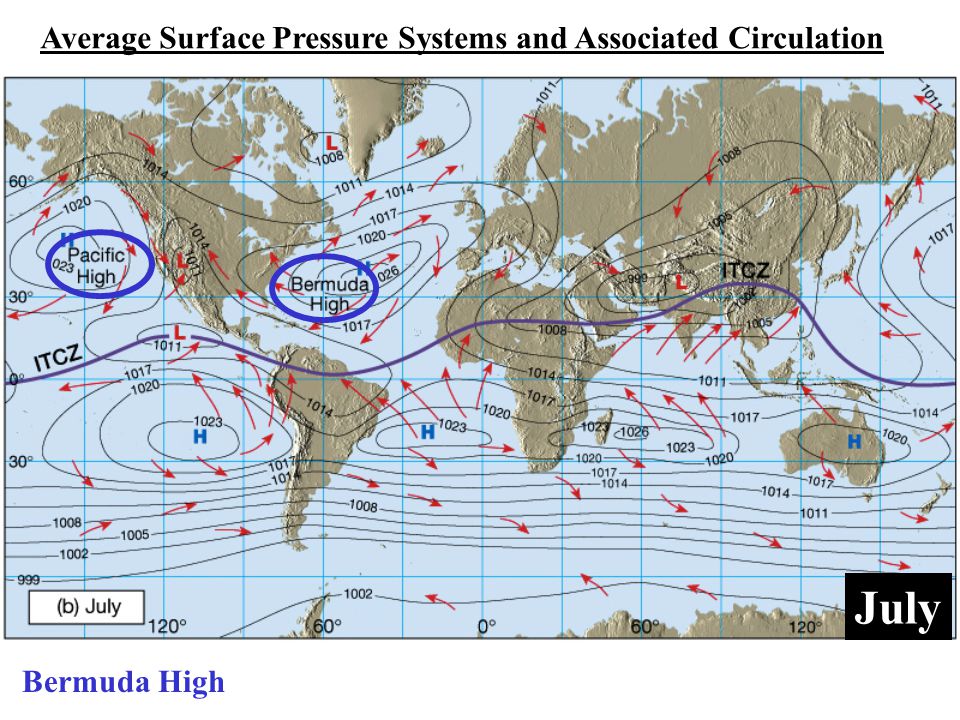
It is Useful to Understand the Semipermanent Pattern that Control our Weather and Consider how These Change from Winter to Summer. These two graphics (click on each one to enlarge) are from a much larger set available from the Weather Channel. They highlight the position of the Bermuda High which they are calling the Azores High in the January graphic and is often called NASH and it has a very big impact on CONUS Southeast weather and also the Southwest. You also see the north/south migration of the Pacific High which also has many names and which is extremely important for CONUS weather and it also shows the change of location of the ITCZ which I think is key to understanding the Indian Monsoon. A lot of things become much clearer when you understand these semi-permanent features some of which have cycles within the year, longer period cycles and may be impacted by Global Warming. We are now moving into late-December and are almost to the set of positions shown above for January. For CONUS, the seasonal repositioning of the Bermuda High and the Pacific High are very significant. Notice the Winter position of the Pacific High.
 |  |
Forecast for Today (you can click on the maps to enlarge them)
| This graphic is anomalies i.e. deviations from normal not the actual temperatures. | This graphic is actuals not anomalies as is the case in the temperature map. |
 |  |
Notice that below the map there is a tabulation of magnitude of the current anomalies by region. Overall it is warm except primarily Canada and northeast Asia | We again see the dry belt stretching from Northern Africa to Eastern Asia but not including Southeast Asia which is wet. |
Additional Maps showing different weather variables can be found here.
Forecast for Day 6 (Currently Set for Day 6 but the reader can change that)
World Weather Forecast produced by the Australian Bureau of Meteorology. Unfortunately I do not know how to extract the control panel and embed it into my report so that you could use the tool within my report. But if you visit it Click Here and you will be able to use the tool to view temperature or many other things for THE WORLD. It can forecast out for a week. Pretty cool. Return to this report by using the “Back Arrow” usually found top left corner of your screen to the left of the URL Box. It may require hitting it a few times depending on how deep you are into the BOM tool. Below are the current worldwide precipitation and temperature forecasts for six days out. They will auto-update and be current for Day 6 whenever you view them. If you want the forecast for a different day Click Here
| Temperature | Precipitation |
|
|
| Please remember this graphic updates every six hours so the diurnal pattern can confuse the reader. |


And now we have experimental forecasts from the U.S. NAEFS Model.
| Temperature | Precipitation |
|
|
| We see a cold Northeastern North American | You definitely see the La Nina pattern for North America. |


Looking Out a Few Months
Here is the precipitation forecast from Queensland Australia:

It is kind of amazing that you can make a worldwide forecast based on just one parameter the SOI and changes in the SOI. Notice the continuance of the underlying driver of the SOI having been consistently positive. CONUS now looks like a north south typical La Nina divide with the northern tier wet. Northwest South America is wet. Southern Africa is wet. Eastern Australia is wet.
JAMSTEC Forecasts
One can always find the latest JAMSTEC maps by clicking this link. You will find additional maps that I do not general cover in my monthly Update Report. Remember if you leave this page to visit links provided in this article, you can return by hitting your “Back Arrow”, usually top left corner of your screen just to the left of the URL box.
Sea Surface Temperature (SST) Departures from Normal for this Time of the Year i.e. Anomalies
My focus here is sea surface temperature anomalies as they are one of the two largest factors determining weather around the World. If we want to have a good feel for future weather we need to look at the oceans as our weather mostly comes from oceans and we need to look at
- Surface temperature anomalies (weather develops from the ocean surface and
- the changes in the temperature anomalies since that may provide clues as to how the surface anomalies will change based on the current trend of changes. This is not that easy to do since the oceans are deep, there are many currents, winds have an impact etc. Two ways that are available to use are to look at the change in the situation today compared ot the average over a period of time and NOAA also produces a graphic of monthly changes. I use both. The first set of graphics is simply looking at the average compared to today and that is below.
| Three Month Average Anomaly | Current Anomaly |
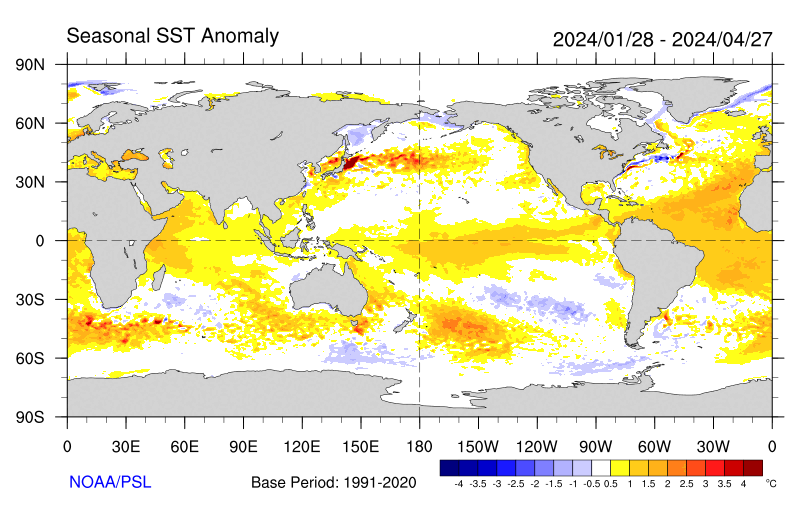 | 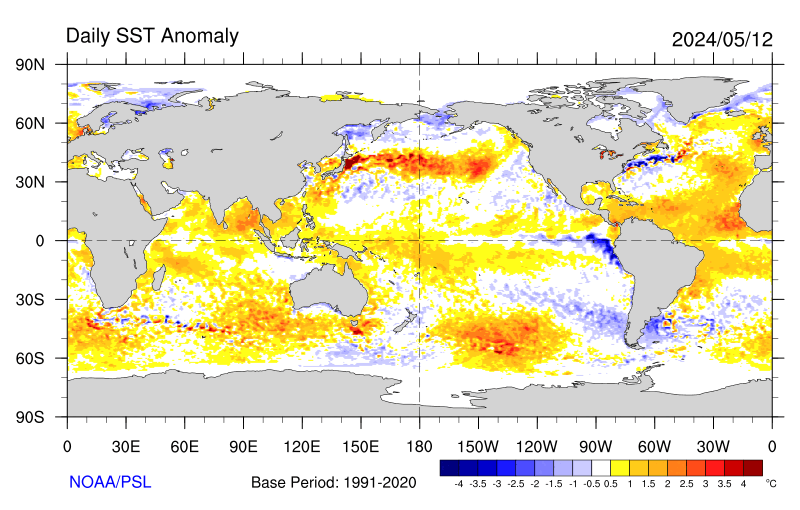 |
| La Nina shows up | La Nina is more intense |
And when we look in more detail at the current Sea Surface anomalies below, we see a lot of them not just along the Equator related to ENSO.
First the categorization of the current daily SST anomalies. | ||||
| Mediterranean, Black Sea and Caspian Sea | Western Pacific | West of North America | North and East of North America | North Atlantic |
| Fairly Neutral | Fairly Neutral as mixed no clear pattern except cool north of Japan southwest of Kamchatka | Mostly Neutral Warm off Sea of Cortez and west of Central America | Warm off Nova Scotia and Newfoundland | Warm north of Scandinavia, |
| Equator | Pacific cool east of 150W | |||
| ||||
| Africa | West of Australia | North, South and East of Australia | West of South America | East of South America |
Warm offshore west of North Africa, Spain and the British Isles. Cool southeast of Africa south of Madagascar Cool off Namibia but away from the coast. | Cool | Warm north Extremely warm southeast all the way to and beyond New Zealand | Cool, cool, cool . | Cool east of 30S but offshore. Mixed off 40S |
Then we look at the change in the anomalies. Here it gets a little tricky as for this graphic red does not mean a warm anomaly but a warming of the anomaly which could mean more warm or less cool and blue does not mean cool but more cool or less warm. TODAY WE DO NOT HAVE THE NOAA CHANGE IN ANOMALIES SO WE ARE GENERATING IT OURSELVES BY LOOKING AT THE MONTHLY AVERAGE AND THE DAILY TO SEE HOW THE DAILY IS DIFFERENT FROM THE MONTHLY AVERAGE. WE WILL NOT PICK UP AS MUCH DETAIL AS NOAA DOES AS WE WILL NOT BE ABLE TO EASILY NOTICE A CHANGE OF INTENSITY IN THE SAME PLACE. | ||||
| Mediterranean, Black Sea and Caspian Sea | Western North Pacific | West of North America | East of North America | North Atlantic |
No real change | Warming south of the static cooling area between Japan and Kamchatka. | Chukchi Sea no longer warming. Cooling south of Aleutians . | Warming in Davis Strait | Warming south of Greenland |
| Equator | Eastern Pacific not as cool from the Dateline to 150W. Cooling for Maritime Continent. | |||
 | ||||
| Africa | West of Australia | North, South and East of Australia | West of South America | East of South America |
No longer warming west of North Africa. Intensification of cooling west of Africa from Gulf of Guinea to and around Cape of Good Hope. | No change | Warming north of Australia Intensification of warming around New Zealand | Cooling does not extend as far west. The warm anomaly offshore may be more extreme. | Slight Cooling 40S to Cape Horn |
This may be a good time to show the recent values to the indices most commonly used to describe the overall spacial pattern of temperatures in the (Northern Hemisphere) Pacific and the (Northern Hemisphere) Atlantic and the Dipole Pattern in the Indian Ocean.
| Most Recent Six Months of Index Values | PDO Click for full list | AMO click for full list. | Indian Ocean Dipole (Values read off graph) | |
| October | -0.68 | +0.39 | -0.3 | |
| November | +0.84 | +0.40 | 0.0 | |
| December | +0.55 | +0.34 | -0.1 | |
| January | +0.10 | +0.23 | 0.0 | |
| February | +0.04 | +0.23 | +0.2 | |
| March | +0.12 | +0.17 | +0.0 | |
| April | +0.52 | +0.29 | +0.2 | |
| May | +0.30 | +0.32 | +0.2 | |
| June | +0.19 | +0.31 | 0.0 | |
| July | -0.54 | +0.31 | 0.0 | |
| August | -0.64 | +0.31 | +0.4 | |
| September | -0.26 | +0.35 | +0.2 | |
| October | -0.64 | +0.44 | 0.0 | |
| November | -0.52 | +0.35 | 0.0 |
Switching gears, below is an analysis of projected tropical hazards and benefits over an approximately two-week period.
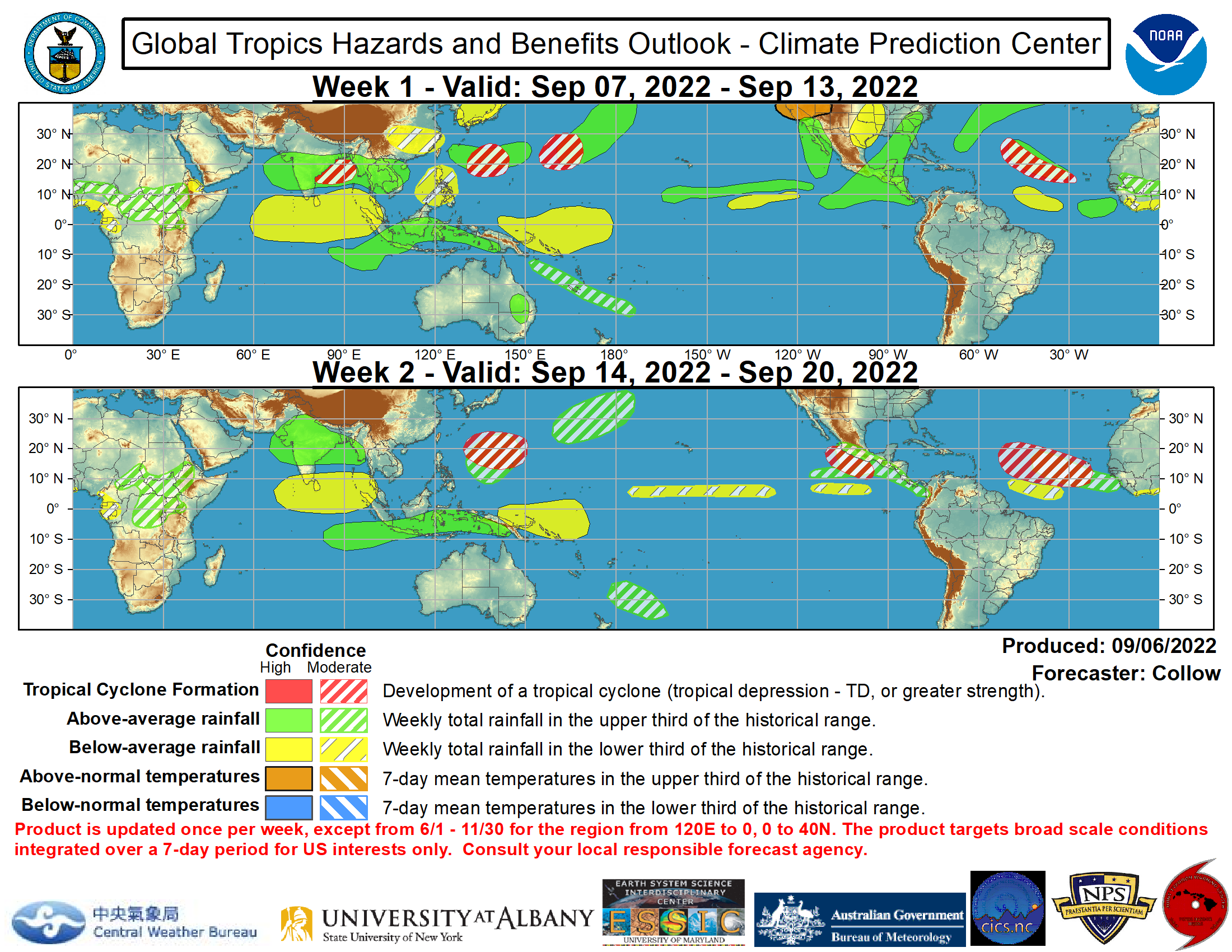
* Moderate Confidence that the indicated anomaly will be in the upper or lower third of the historical range as indicated in the Legend. ** High Confidence that the indicated anomaly will be in the upper or lower third of the historical range as indicated in the Legend.
Tropical Activity Possibly Impacting CONUS.

When there is activity and I have not provided the specific links to the storm of “immediate” interest, one can obtain that information at this link. At this point in time, no (new) tropical events are expected to appear in this graphic during the next 48 hours. If that changes, we will provide an update.
Now let us look at the Western Pacific in Motion.
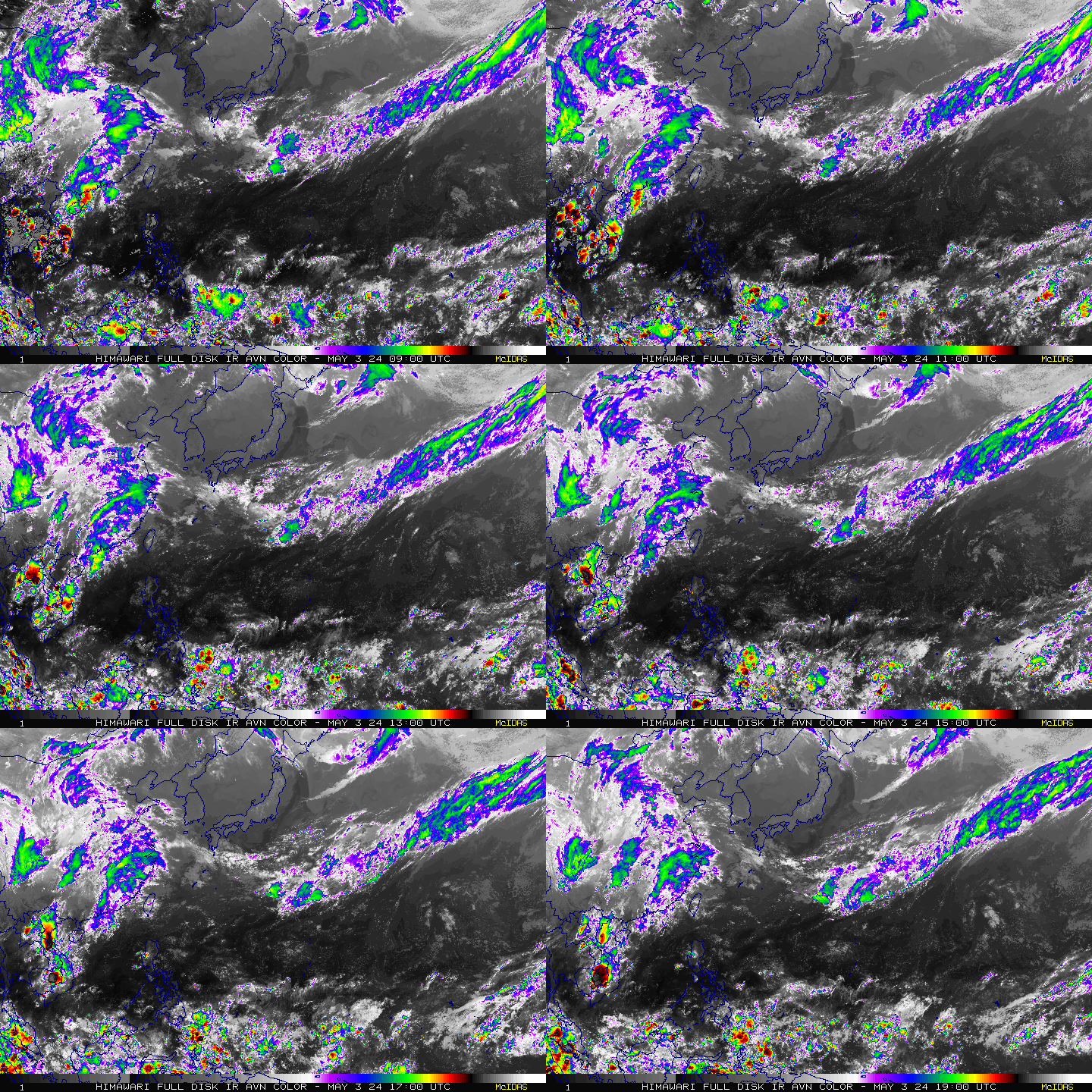
The above graphic which I believe covers the area from the Dateline west to 100E and from the Equator north to 45N normally shows the movement of tropical storms towards Asia in the lower latitudes (Trade Winds) and the return of storms towards CONUS in the mid-latitudes (Prevailing Westerlies). This is recent data not a forecast. But, it ties in with the Week 1 forecast in the graphic just above this graphic. Information on Western Pacific storms can be found by clicking here. This (click here to read) is an unofficial private source but one that is easy to read.
C. Progress of ENSO
A major driver of weather is Surface Ocean Temperatures. Evaporation only occurs from the Surface of Water. So we are very interested in the temperatures of water especially when these temperatures deviate from seasonal norms thus creating an anomaly. The geographical distribution of the anomalies is very important. To a substantial extent, the temperature anomalies along the Equator have disproportionate impact on weather so we study them intensely and that is what the ENSO (El Nino – Southern Oscillation) cycle is all about. Subsurface water can be thought of as the future surface temperatures. They may have only indirect impacts on current weather but they have major impacts on future weather by changing the temperature of the water surface. Winds and Convection (evaporation forming clouds) is weather and is a result of the Phases of ENSO and also a feedback loop that perpetuates the current Phase of ENSO or changes it. That is why we monitor winds and convection along or near the Equator especially the Equator in the Eastern Pacific.
Starting with Surface Conditions.
TAO/TRITON GRAPHIC (a good way of viewing data related to the part of the Equator and the waters close to the Equator in the Eastern Pacific where we monitor to determining the current phase of ENSO. It is probably not necessary in order to follow the discussion below, but here is a link to TAO/TRITON terminology.
And here is the current version of the TAO/TRITON Graphic. The top part shows the actual temperatures, the bottom part shows the anomalies i.e. the deviation from normal.
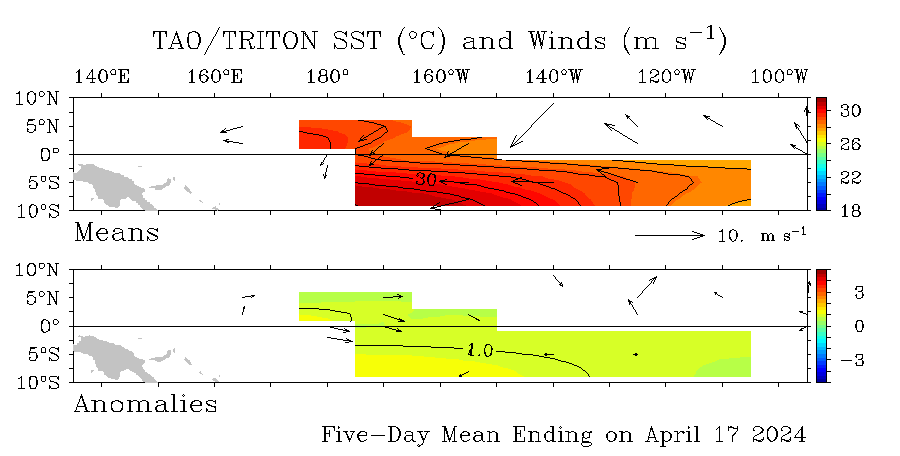
Location Bar for Nino 3.4 Area Above and Below
| ———————————————— | A | B | C | D | E | —————– |
The below table only looks at the Equator (and starting this week I am including large anomalies just off the Equator also) and shows the extent of anomalies along the Equator. The ONI Measurement Area is the 50 degrees of Longitude between 170W and 120W and extends 5 degrees of Latitude North and South of the Equator so the above table is just a guide and a way of tracking the changes. The top rows show El Nino anomalies. The two rows just below that break point contribute to ENSO Neutral.
Subareas of the Anomaly | Westward Extension | Eastward Extension | Degrees of Coverage | Total by ENSO Phase | |
Total | Portion in Nino 3.4 Measurement Area | ||||
| These Rows below show the Extent of El Nino Impact on the Equator | |||||
1C to 1.5C (strong) | NA | NA | 0 | 0 | 0 |
| +0.5C to +1C (marginal) | NA | NA | 0 | 0 | |
| These Rows Below Show the Extent of ENSO Neutral Impacts on the Equator | |||||
| 0.5C or cooler Anomaly (warmish neutral) | 165E | 170E | 5 | 0 | 0 |
| 0C or cooler Anomaly (coolish neutral) | 170E | 170W | 20 | 0 | |
| These Rows Below Show the Extent of La Nina Impacts on the Equator. | |||||
| -0.5C or cooler Anomaly | 170W | 117W | 53 | 50 | 50 |
| -1.0C or cooler Anomaly | 117W | 113W | 4 | 0 | |
| -1.5C or cooler Anomaly | 113W | 108W | 5 | 0 | |
| -2.0C or cooler Anomaly | 108W | 103W | 5 | 0 | |
| -2.5C or cooler Anomaly | 103W | LAND | 8 | 0 | |
| Again this week the entire Equator in the Nino 3.4 Measurement Area registers La Nina values. That is not the case for the full +5N and +5S width of the Nino 3.4 Measurement Area but in this analysis we are just looking at the Equator. There is a cold anomaly near 140 W and we could have factored that in but it would have complicated this table without adding useful information so we did not do that this week. | |||||
My Calculation of the Nino 3.4 Index
I calculate the current value of the Nino 3.4 Index each Monday using a method that I have devised. To refine my calculation, I have divided the 170W to 120W Nino 3.4 measuring area into five subregions (which I have designated from west to east as A through E) with a location bar shown under the TAO/TRITON Graphic). I use a rough estimation approach to integrate what I see below and record that in the table I have constructed. Then I take the average of the anomalies I estimated for each of the five subregions.
So as of Monday December 25, in the afternoon working from the December 24 TAO/TRITON report [Although the TAO/TRITON Graphic appears to update once a day, in reality it updates more frequently.], this is what I calculated.
Calculation of Nino 3.4 from TAO/TRITON Graphic
| Anomaly Segment | Estimated Anomaly | |
| Last Week | This Week | |
| A. 170W to 160W | -0.7 | -0.5 |
| B. 160W to 150W | -0.8 | -0.7 |
| C. 150W to 140W | -1.0 | -1.4 |
| D. 140W to 130W | -1.1 | -1.3 |
| E. 130W to 120W | -1.4 | -1.0 |
| Total | -5.0 | -4.9 |
| Total divided by five i.e. the Daily Nino 3.4 Index | (-5.0)/5 = -1.0 | -(4.9)/5 = -1.0 |
My estimate of the daily Nino 3.4 SST anomaly tonight is -1.0 which is a moderate ENSO La Nina value. NOAA has also reported the weekly Nino 3.4 to be -1.0. Nino 4 is reported the same this week at -0.3. Nino 3 is cooler at -1.3. Nino 1 + 2 which extends from the Equator south rather than being centered on the Equator is reported a bit cooler at -1.4. It was up there close to 3 at one time so this index has been declining quite a bit and also fluctuating quite a bit which is not surprising as it is the area most impacted by the Upwelling off the coast. So it is an indication of the interaction between surface water and rising cool water. Thus it is subject to larger changes. I am only showing the currently issued version of the NINO SST Index Table as the prior values are shown in the small graphics on the right with this graphic. The same data in graphic form but going back a couple of more years can be found here. The full table of values can be found here.
We now have the NOAA graphic but I am leaving this in as it might be informative.
The date shown is the midpoint of the week.
Nino1+2 Nino3 Nino3.4 Nino4
Week SST SSTA SST STA SST SSTA SST SSTA
22NOV 20.6 -1.2 23.9 -1.1 25.9 -0.8 28.5 -0.1
29NOV 20.8 -1.3 23.9 -1.1 25.9 -0.7 28.5 0.0
06DEC 20.8 -1.6 24.1 -1.0 25.7 -0.8 28.2 -0.3
13DEC 21.3 -1.3 24.0 -1.1 25.8 -0.8 28.1 -0.3
20DEC 21.6 -1.4 23.8 -1.4 25.6 -1.0 28.1 -0.3

This graphic brings the Nino 3.4 up to date and is easy to read.

This is probably the best place to AGAIN express the thought that this way of measuring an ENSO event leaves a lot to be desired. Only the surface interacts with the atmosphere and is able to influence weather. The subsurface tells us how long the surface will remain cool (or warm). Anomalies are deviations from “Normal”. NOAA calculates and determines what is “Normal” which changes due to long ocean cycles and Global Warming. So to some extent, the system is “rigged”. Hopefully it is rigged to assist in providing improved weather forecasts. But to assume that any numbers reported can be assumed to be accurate to a high level of precision is foolhardy.
This overlaps with the next topic but I will show it here.

The discussion in this slide says it better than I could. One might compare the current reading to Oct/Nov 2016. We may be at Peak La Nina but it has now only a few months to run and we are starting our La Nina Demise Count Down. But we are not yet ready to predict the end of La Nina readings. Soon I might try to graph the slope of the decline to make a prediction as to when it reaches -0.5C. It would seem easier to do it that way than to run dollars of machine time to run the NOAA models but I am very old fashioned. The problem is the Nino 3.4 index is measured at the surface so I need to get the correlation of the subsurface cool reservoir to the surface Nino 3.4 Measurements. I think that is what the models do but anything a model can do, one can do with a straight edge. That is Sig Silber’s rule. For most purposes the World is linear.
Sea Surface Temperature and Anomalies
It is the ocean surface that interacts with the atmosphere and causes convection and also the warming and cooling of the atmosphere. So we are interested in the actual ocean surface temperatures and the departure from seasonal normal temperatures which is called “departures” or “anomalies”. Since warm water facilitates evaporation which results in cloud convection, the pattern of SST anomalies suggests how the weather pattern east of the anomalies will be different than normal.

A major advantage of the Hovmoeller method of displaying information is that it shows the history so I do not need to show a sequence of snapshots of the conditions at different points in time. This Hovmoeller provides a good way to visually see the evolution of this ENSO event. I have decided to use the prettied-up version that comes out on Mondays rather that the version that auto-updates daily because the SST Departures on the Equator do not change rapidly and the prettied-up version is so much easier to read. The bottom of the Hovmoeller shows the current readings. Remember the +5, -5 degree strip around the Equator that is being reported in this graphic. So it is the surface but not just the Equator.
This next graphic is more focused on the Equator and looks down to 300 meters rather than just being the surface.

The bottom of the Hovmoeller shows the current situation.
Let us look in more detail at the Equatorial Water Temperatures.
We are now going to look at a three-dimensional view of the Equator and move from the surface view and an average of the subsurface heat content to a more detailed view from the surface down This graphic provides both a summary perspective and a history (small images on the right).
.
Anomalies are strange. You can not really tell for sure if the blue area is colder or warmer than the water above or below. All you know is that it is cooler than usual for this time of the year. A later graphic will provide more information. Aside from buoyancy the currents tend to bring water from that depth up to the surface mostly farther east.
Now for a more detailed look. Below is the pair of graphics that I regularly provide. The date shown is the midpoint of a five-day period with that date as the center of the five-day period. The bottom graphic shows the absolute values, the upper graphic shows anomalies compared to what one might expect at this time of the year in the various areas both 130E to 90W Longitude and from the surface down to 450 meters. At different times I have discussed the difference between the actual values and the deviation of the actual values from what is defined as current climatology (which adjusts every ten years except along the Equator where it is adjusted every five years) and how both measures are useful for other purposes.
| There is cold water from the Dateline to Land. At the west end of the cool anomaly it is now not quite 200 meters deep. We now have warm water developing west of the Dateline and crossing the Dateline at depth. It is now intruding into the Eastern Pacific Nino 3.4 Measurement Area but at depth not at the surface. La Nina’s days are numbered but in terms of months not weeks or days. |
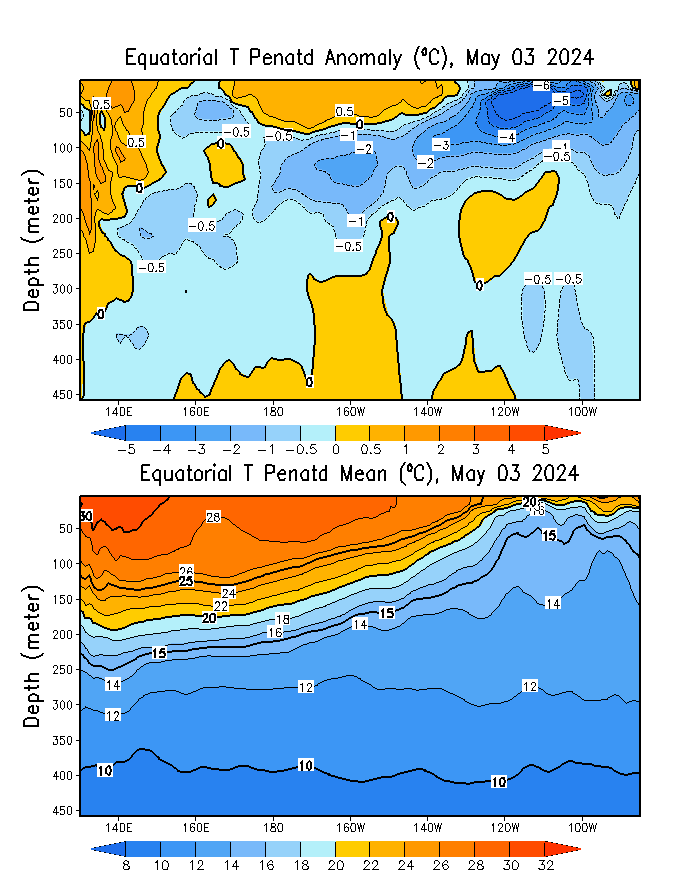 |
| The 28C Isotherm is at 170E, the 27C Isotherm is at the Dateline, the 25C Isotherm is at 150W and the 20C Isotherm has reached the surface at about 110W which is not in the Nino 3.4 Measurement area. |
The flattening of the Isotherm Pattern is an indication of ENSO Neutral just as the steepening of the pattern indicates La Nina or El Nino depending on where the slope shows the warm or cool pool to be. That flattening has occurred and we have gone to a Weak La Nina thermocline.
Tracking the change.
 |  |
Here are the above graphics as a time sequence animation. You may have to click on them to get the animation going.
|
|
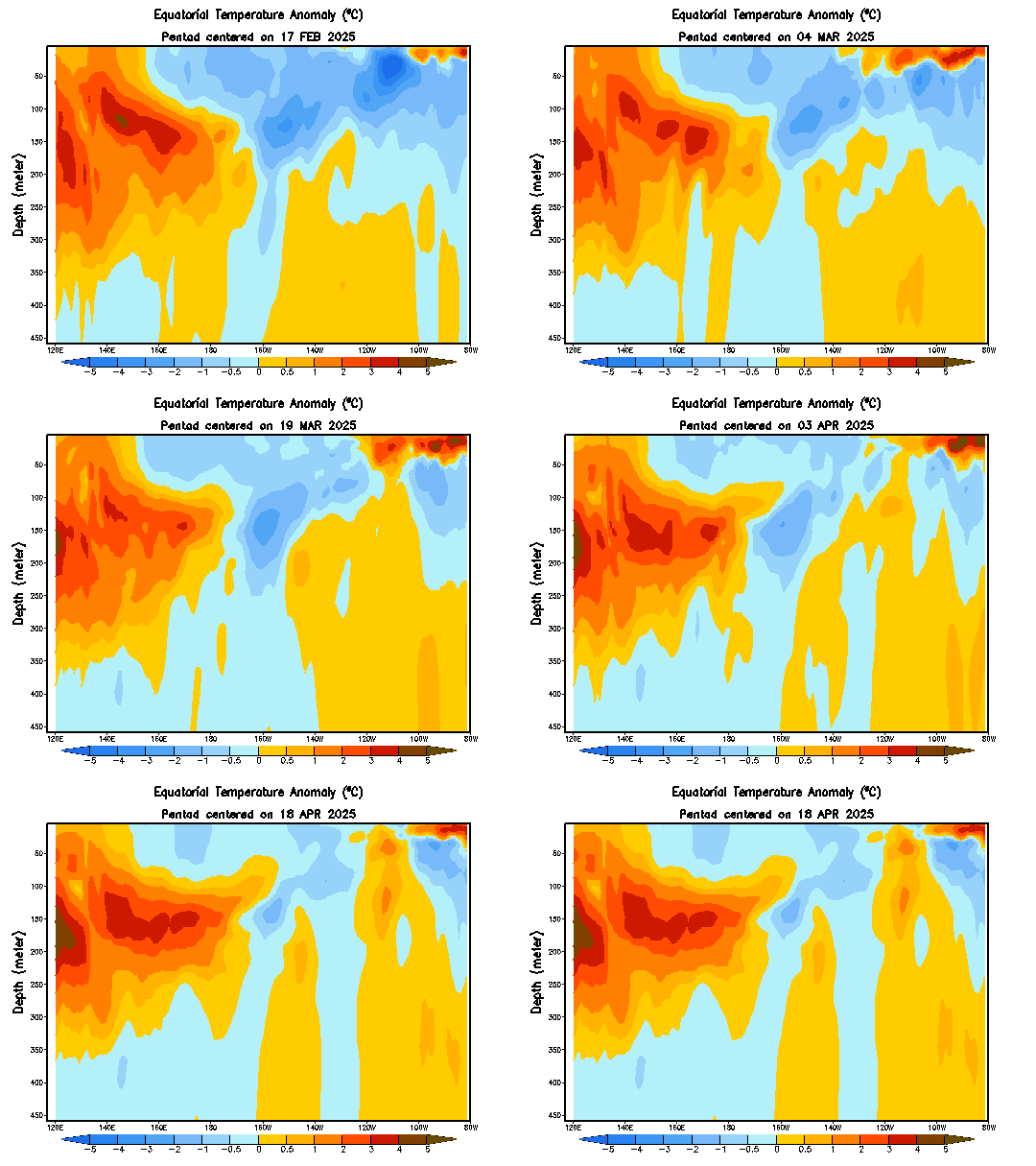
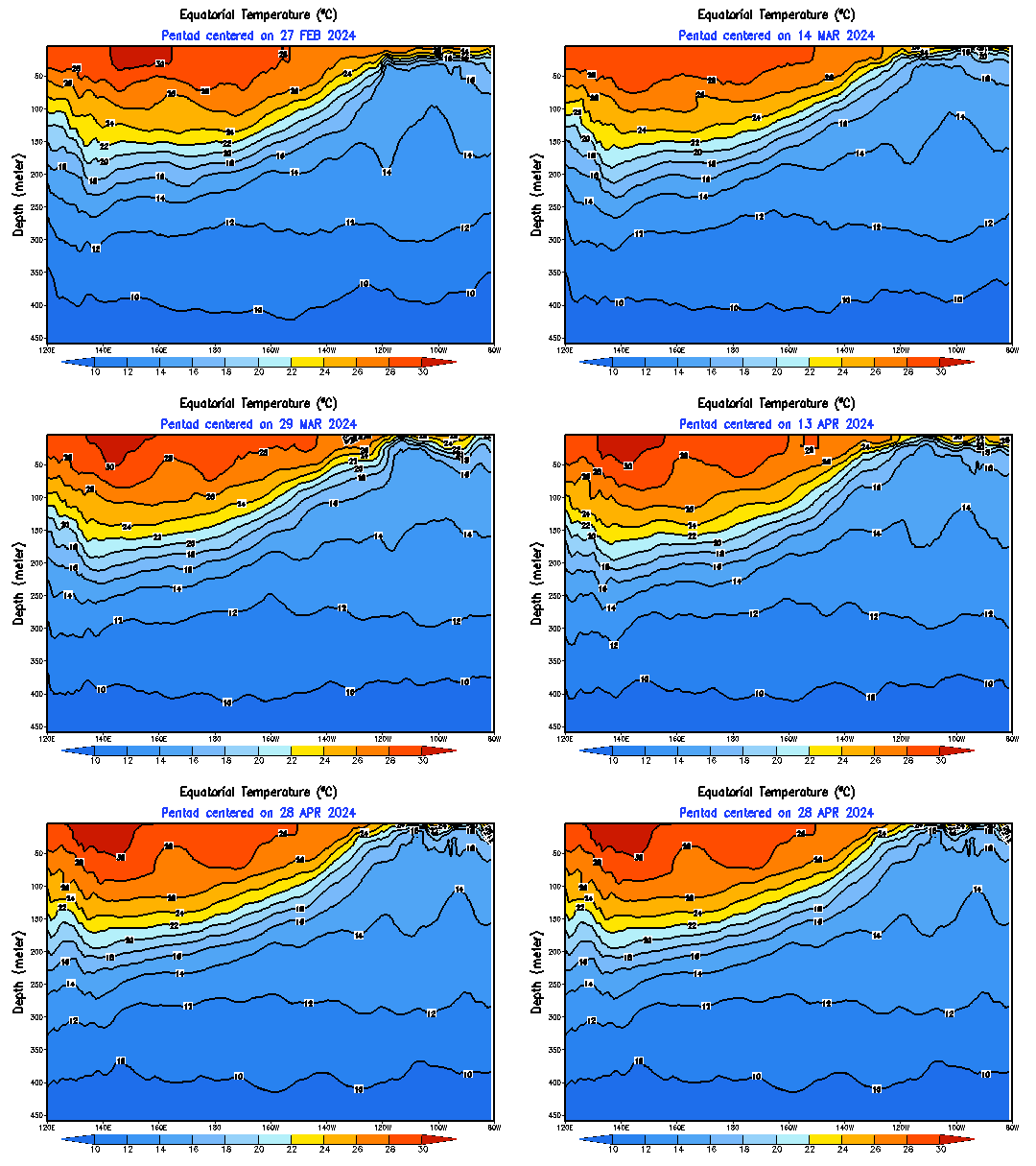
And now Let us look at the Atmosphere.
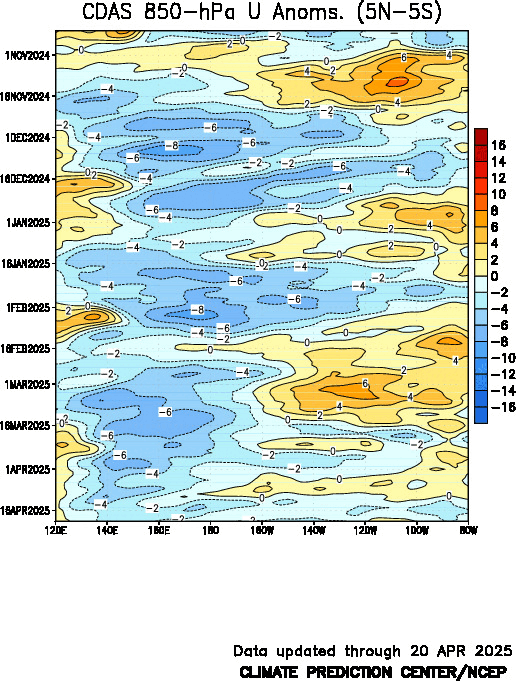
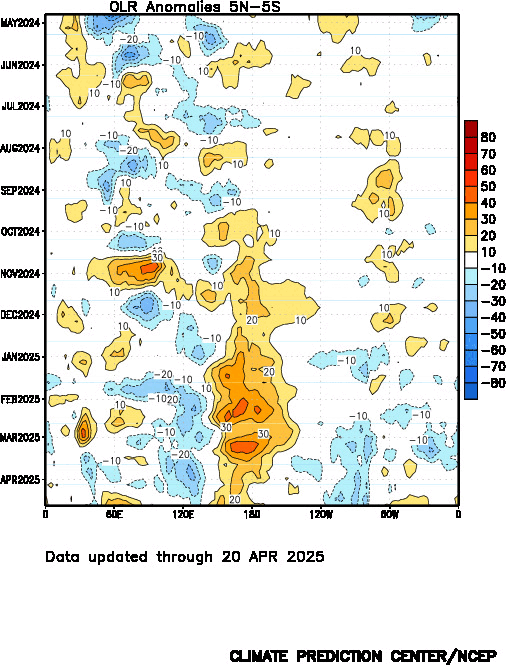
This graphic shows the Low-Level Wind Anomalies near the Equator. The 850 hPa level is above the surface but close to the surface. | And now the Outgoing Long-wave Radiation (OLR) Anomalies which tells us where convection has been taking place. The bottom of a Hovmoeller graphic shows the most recent readings. |
 |
|
| Reds and browns would be suppressed easterlies or enhanced westerlies and are typical of El Nino. We have the opposite. | We see suppressed Outgoing Long Wave Radiation (OLR) at the Dateline i.e (dry) and we see enhanced OLR at 120E ( wet) |
And Now the Air Pressure to Confirm that the Atmosphere is Reacting to the Sea Surface Temperature Pattern. The most Common way to do that is to use an Index called the SOI.
This index provides an easy way to assess the location of and the relative strength of the Convection (Low Pressure) and the Subsidence (High Pressure) near the Equator. Experience shows that the extent to which the Atmospheric Air Pressure at Tahiti exceeds the Atmospheric Pressure at Darwin Australia when normalized is substantially correlated with the Precipitation Pattern of the entire World. At this point there seems to be no need to show the daily preliminary values of the SOI but we can work with the 30 day and 90 day values.
Current SOI Readings
The 30 Day Average on December18 was reported as +0.92 which is clearly NOT a La Nina value. The 90 Day Average was reported at +7.04 which is a marginal La Nina value at best. Looking at both the 30 and 90 day averages is useful and right now both are in agreement with the 90 day lagging the 30 day as one would expect. But the 30 day SOI is no longer confirming that we have La Nina Conditions. |
SOI = 10 X [ Pdiff – Pdiffav ]/ SD(Pdiff) where Pdiff = (average Tahiti MSLP for the month) – (average Darwin MSLP for the month), Pdiffav = long term average of Pdiff for the month in question, and SD(Pdiff) = long term standard deviation of Pdiff for the month in question. So really it is comparing the extent to which Tahiti is more cloudy than Darwin, Australia. During El Nino we expect Darwin Australia to have lower air pressure and more convection than Tahiti (Negative SOI especially lower than -7 correlates with El Nino Conditions). During La Nina we expect the Warm Pool to be further east resulting in Positive SOI values greater than +7).
To some extent it is the change in the SOI that is of most importance. The MJO or Madden Julian Oscillation is an important factor in regulating the SOI and Ocean Equatorial Kelvin Waves and other tropical weather characteristics. More information on the MJO can be found here. Here is another good resource.
Forecasting the Evolution of ENSO
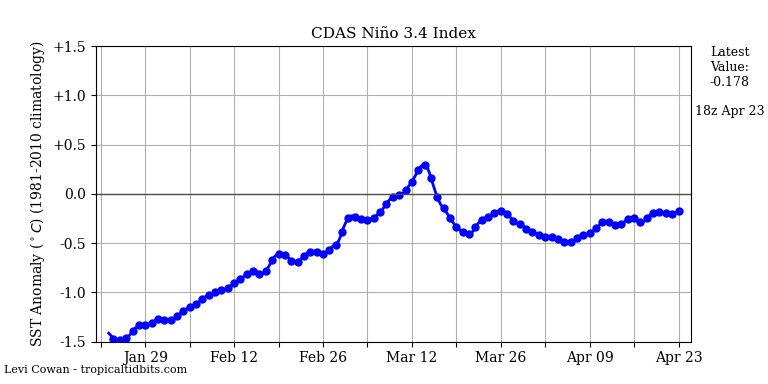
| Here is the primary NOAA model for forecasting the ENSO Cycle. | The CDAS model is a legacy “frozen” NOAA system meaning the software is maintained but not updated. We find it convenient to obtain this graphic from Tropical Tidbits.com |
|
|
| This model is forecasting a La Nina. It probably is the most aggressive model re being so definitive about the ENSO Phase for this Fall and Winter. Click here to see a month by month version of the same model but without some of the correction methodologies applied. It gives us a better picture of the further out months as we are looking at monthly estimates versus three-month averages. | Notice that since mid-October, the Nino 3.4 Index has been in a declining channel. But it looks like that downward trend has stopped and the Index has bottomed and may be rising soon. The CDAS data It is not in conflict with the primary NOAA model but shows daily values rather then smoothing them out like the CFSv2 Model does. |
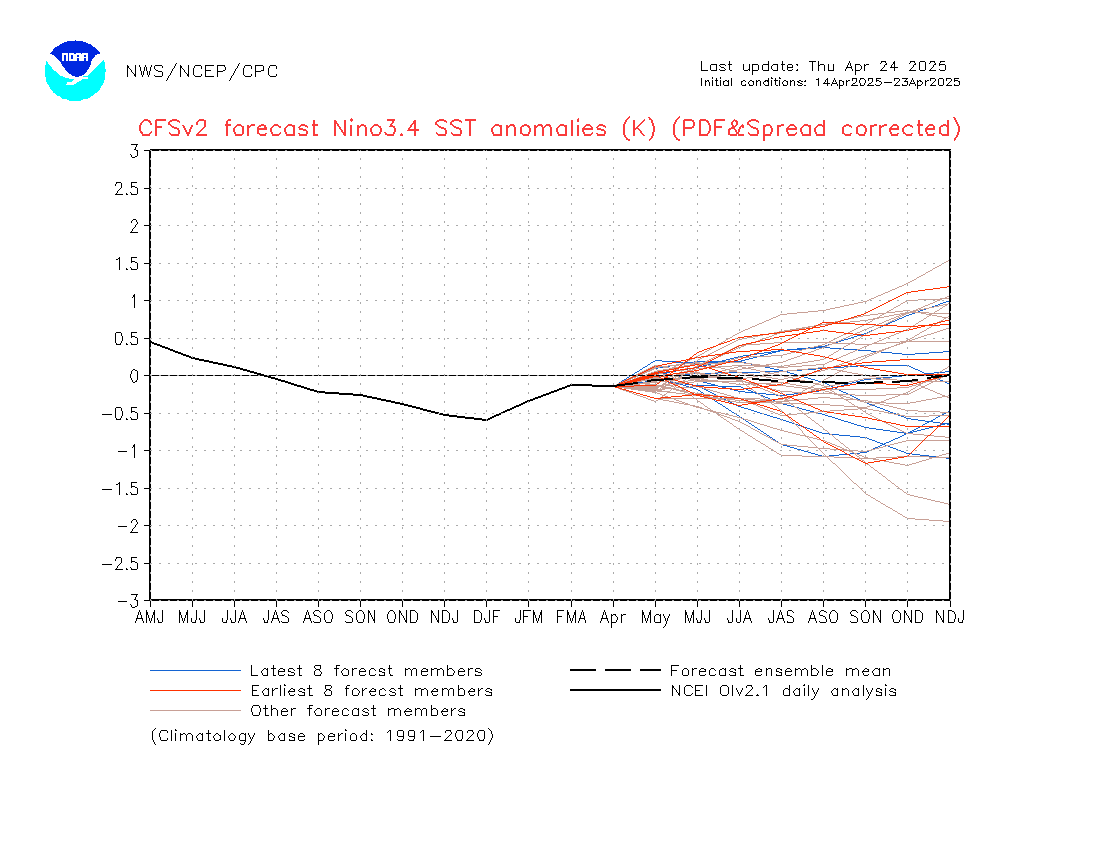
he CFS.v2 is not the only forecast tool used by NOAA. The CPC/IRI Analysis which is produced out of The International Research Institute (IRI) for Climate and Society at Columbia University is also very important to NOAA. Below are the November 9 and November 20 CPC/IRI ENSO Forecasts
First let’s look at the November reports

And now the December Reports

This is the discussion
CPC/IRI ENSO Update Published: December 14, 2017
El Niño/Southern Oscillation (ENSO) Diagnostic Discussion issued jointly by the Climate Prediction Center/NCEP/NWS and the International Research Institute for Climate and Society
ENSO Alert System Status: La Niña Advisory
Synopsis: La Niña is likely (exceeding ~80%) through the Northern Hemisphere winter 2017-18, with a transition to ENSO-neutral most likely during the mid-to-late spring.
La Niña strengthened during the past month, as indicated by an increasingly prominent pattern of below-average sea surface temperatures (SSTs) across the central and eastern equatorial Pacific Ocean (Fig. 1). The latest weekly Niño-3.4 index value was -0.8°C, with the easternmost Niño-3 and Niño-1+2 indices at or below -1.0°C during much of the month (Fig. 2). Sub-surface temperature anomalies weakened slightly during November, but remained significantly negative (Fig. 3) due to the anomalously shallow depth of the thermocline across the central and eastern Pacific (Fig. 4). The atmospheric circulation over the tropical Pacific Ocean also reflected La Niña, with convection suppressed near the International Date Line and enhanced over Indonesia (Fig. 5). The low-level trade winds were stronger than average over the western and central Pacific, with anomalous westerly winds at upper-levels. Overall, the ocean and atmosphere system reflects La Niña.
La Niña is predicted to persist through the Northern Hemisphere winter 2017-18 by nearly all models in the IRI/CPC plume (Fig. 6) and in the North American Multi-Model Ensemble (NMME; Fig. 7). Based on the latest observations and forecast guidance, forecasters favor the peak of a weak-to-moderate La Niña during the winter (3-month Niño-3.4 values between 0.5°C and 1.5°C). In summary, La Niña is likely (exceeding ~80%) through the Northern Hemisphere winter 2017-18, with a transition to ENSO-neutral most likely during the mid-to-late spring (click CPC/IRI consensus forecast for the chance of each outcome for each 3-month period).
La Niña is anticipated to affect temperature and precipitation across the United States during the upcoming months (the 3-month seasonal temperature and precipitation outlooks will be updated on Thursday December 21st). The outlooks generally favor above-average temperatures and below-median precipitation across the southern tier of the United States, and below-average temperatures and above-median precipitation across the northern tier of the United States
This discussion is a consolidated effort of the National Oceanic and Atmospheric Administration (NOAA), NOAA’s National Weather Service, and their funded institutions. Oceanic and atmospheric conditions are updated weekly on the Climate Prediction Center web site (El Niño/La Niña Current Conditions and Expert Discussions). Forecasts are also updated monthly in the Forecast Forum section of CPC’s Climate Diagnostics Bulletin. Additional perspectives and analysis are also available in an ENSO blog.
The next ENSO Diagnostics Discussion is scheduled for 11 January 2018. To receive an e-mail notification when the monthly ENSO Diagnostic Discussions are released, please send an e-mail message to: [email protected].
Forecasts from Other Meteorological Agencies.
Here is the Nino 3.4 report from the Australian BOM (it updates every two weeks)
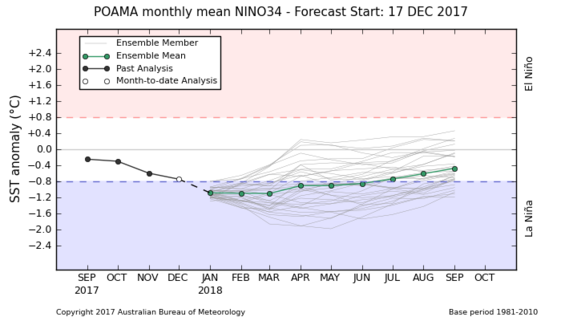
And the ENSO Outlook Discussion Issued on December 19, 2017:
La Niña conditions continue in the tropical Pacific. However, the event is expected to be short-lived, and is likely to end in the southern autumn of 2018.
Latest sea surface temperature observations in the central and eastern tropical Pacific persist at La Niña levels (0.8 °C below average). Waters are also cool beneath the surface. While the Southern Oscillation Index (SOI) has eased in the last few days, the SOI has been consistent with La Niña for several weeks. Cloudiness patterns across the Pacific region also show a clear La Niña signal.
In order for 2017-18 to be classed as a La Niña year, thresholds need to be exceeded for at least three months. [Editor’s Note: The NOAA Criteria is more stringent requiring five consecutive overlapping three month periods which is more or less equivalent to a duration of seven months]. Most climate models surveyed by the Bureau suggest this event is likely to last through the southern summer, and decay in the early southern autumn of 2018. International climate models surveyed by the Bureau indicate that some further cooling of the equatorial Pacific sea surface temperatures is expected over summer. Six of the eight models remain within La Niña thresholds during March 2018.
The Bureau’s model POAMA suggests that sea surface temperatures in the equatorial Pacific will remain within La Niña thresholds throughout summer and autumn. However, only three out of eight international climate models remain at La Niña levels by the end of autumn (May). In order for 2017-18 to be considered an event, La Niña conditions need to persist for at least three months.
La Niña typically brings above average rainfall to eastern Australia during summer, particularly in northern New South Wales and Queensland. However, with a weak event expected, this typically means less influence upon Australian rainfall. La Niña events can also increase the likelihood of prolonged warm spells for southeast Australia.
Here is the most recent JAMSTEC forecast issued on December 1, 2017

And here is the short discussion.
Dec. 22, 2017 Prediction from 1st Dec., 2017
ENSO forecast:
The La Niña-like condition will persist until late winter of next year. Then the tropical Pacific will return to a normal state by summer.
Indian Ocean forecast:
A normal state in the tropical Indian Ocean will persist until spring of next year.
Regional forecast:
On a seasonal scale, most part of the globe will experience a warmer-than-normal condition, while some parts of northern/eastern U.S., northern Brazil, central Africa, and India will experience a colder-than-normal condition in boreal winter. As regards to the seasonally averaged rainfall, a wetter-than-normal condition is predicted for some parts of Philippine, East Australia, and northern Brazil during boreal winter, whereas most parts of Indonesia, West Australia, southern Europe, western U.S, and eastern China will experience a drier condition during boreal winter. Those are partly due to the La Niña-like condition.
In winter, most parts of Japan might experience somewhat warmer- and drier-than-normal conditions.
Indian Ocean IOD (It updates every two weeks)
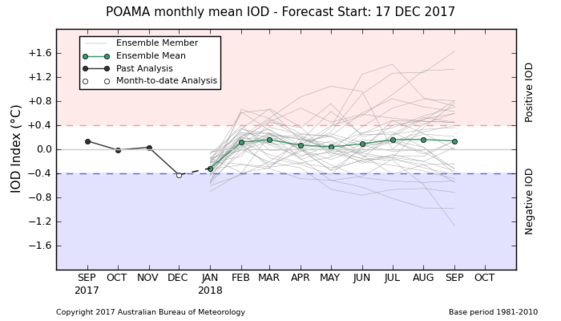
Indian Ocean Dipole Outlook Discussion Issued December 19
The Indian Ocean Dipole (IOD) is neutral. The weekly index value to 17 December was −0.5 °C. All six of the climate models surveyed by the Bureau indicate that the IOD will remain neutral into autumn 2018.
The influence of the IOD on Australian climate is weak during December to April. This is because the monsoon trough shifts south over the tropical Indian Ocean changing wind patterns, which prevents the IOD pattern from being able to form.
The IOD Forecast is indirectly related to ENSO but in a complex way. It is important to understand how and where the IOD is measured.

IOD Positive is the West Area being warmer than the East Area (with of course many adjustments/normalizations). IOD Negative is the East Area being warmer than the West Area. Notice that the Latitudinal extent of the western box is greater than that of the eastern box. This type of index is based on observing how these patterns impact weather and represent the best efforts of meteorological agencies to figure these things out. Global Warming may change the formulas probably slightly over time but it is costly and difficult to redo this sort of work because of long weather cycles.
D. Putting it all Together.
At this time it would seem a La Nina is here for this Winter and Spring with La Nina Conditions already in place. But the situation for next Summer is not yet clear. However, we are getting very close to being able to forecast the end of this La Nina event. But it may only be a temporary end for the Summer and next Fall as it may return for next Winter or Spring. But that is now looking less likely with ENSO Neutral highly likely.
Forecasting Beyond Five Years.
So in terms of long-term forecasting, none of this is very difficult to figure out actually if you are looking at say a five-year or longer forecast.
The research on Ocean Cycles is fairly conclusive and widely available to those who seek it out. I have provided a lot of information on this in prior weeks and all of that information is preserved in Part II of my report in the Section on Low Frequency Cycles 3. Low Frequency Cycles such as PDO, AMO, IOBD, EATS. It includes decade by decade predictions through 2050. Predicting a particular year is far harder.
The odds of a climate shift for the Pacific taking place has significantly increased. It may be in progress. The AMO is pretty much neutral at this point (but more positive i.e. warm than I had expected) so it may need to become a bit more negative for the “McCabe A” pattern to become established. That seems to be slow to happen so I am thinking we need at least a couple more years for that to happen. So our assessment is that the standard time for Climate Shifts in the Pacific are likely to prevail and it most likely will be a gradual process with a speed up in less than five years but more than two years. The next El Nino may be the trigger.
E. Relevant Recent Articles and Reports
Weather in the News
Top Five Warmest November Globally
Weather Research in the News
Nothing to report
Global Warming in the News
F. Table of Contents for Page II of this Report Which Provides a lot of Background Information on Weather and Climate Science
The links below may take you directly to the set of information that you have selected but in some Internet Browsers it may first take you to the top of Page II where there is a TABLE OF CONTENTS and take a few extra seconds to get you to the specific section selected. If you do not feel like waiting, you can click a second time within the TABLE OF CONTENTS to get to the specific part of the webpage that interests you.
1. Very High Frequency (short-term) Cycles PNA, AO,NAO (but the AO and NAO may also have a low frequency component.)
2. Medium Frequency Cycles such as ENSO and IOD
3. Low Frequency Cycles such as PDO, AMO, IOBD, EATS.
4. Computer Models and Methodologies
5. Reserved for a Future Topic (Possibly Predictable Economic Impacts)
G. Table of Contents of Contents for Page III of this Report – Global Warming Which Some Call Climate Change.
The links below may take you directly to the set of information that you have selected but in some Internet Browsers it may first take you to the top of Page III where there is a TABLE OF CONTENTS and take a few extra seconds to get you to the specific section selected. If you do not feel like waiting, you can click a second time within the TABLE OF CONTENTS to get to the specific part of the webpage that interests you.
2. Climate Impacts of Global Warming
3. Economic Impacts of Global Warming
4. Reports from Around the World on Impacts of Global Warming
H. Useful Background Information
The current conditions are measured by determining the deviation of actual sea surface temperatures from seasonal norms (adjusted for Global Warming) in certain parts of the Equatorial Pacific. The below diagram shows those areas where measurements are taken.

NOAA focuses on a combined area which is all of Region Nino 3 and part of Region Nino 4 and it is called Nino 3.4. They focus on that area as they believe it provides the best correlation with future weather for the U.S. primarily the Continental U.S. not including Alaska which is abbreviated as CONUS. The historical approach of measurement of the impact of the sea surface temperature pattern on the atmosphere is called the Southern Oscillation Index (SOI) which is the difference between the atmospheric pressure at Tahiti as compared to Darwin Australia. It was convenient to do this as weather stations already existed at those two locations and it is easier to have weather stations on land than at sea. It has proven to be quite a good measure. The best information on the SOI is produced by Queensland Australia and that information can be found here. SOI is based on Atmospheric pressure as a surrogate for Convection and Subsidence. Another approach made feasible by the use of satellites is to measure precipitation over the areas of interest and this is called the El Nino – Southern Oscillation (ENSO) Precipitation Index (ESPI). We covered that in a weekly Weather and Climate Report which can be found here. Our conclusion was that ESPI did not differentiate well between La Nina and Neutral. And there is now a newer measure not regularly used called the Multivariate ENSO Index (MEI). More information on MEI can be found here. The jury is still out on MEI and it it is not widely used.
The below diagram shows the usual location of the Indo-Pacific Warm Pool. When the warm water shifts to the east we have an El Nino; to the west a La Nina.

Interaction between the MJO and ENSO
This Table is a first attempt at trying to relate the MJO to ENSO
El Nino La Nina MJO Active Phase MJO Inactive Phase Relationship of MJO and ENSO Eastern Pacific Easterlies Western Pacific Westerlies MJO Active Phase MJO Inactive Phase
|
|
|
|
|
|
|
|
|
|
| |
|
|
|
Table needs more work. Is intended to show the interactions. What is more difficult is determining cause and effect. This is a Work in Progress.
History of ENSO Events as measured by the ONI

The new SON reading of -0.7 is the first La Nina Reading. These would have to extend through JFM 2018 for this to be recorded as a La Nina. The chances of this are about 50:50. The full history of the ONI readings can be found here. The MEI index readings can be found here.
Four Quadrant Jet Streak Model Read more here This is very useful for guessing at weather as a trough passes through. It would apply to the states that are at the apex of the trough.
If the centripetal accelerations owing to flow curvature are small, then we can use the “straight” jet streak model. The schematic figure directly below shows a straight jet streak at the base of a trough in the height field. The core of maximum winds defining the jet streak is divided into four quadrants composed of the upstream (entrance) and downstream (exit) regions and the left and right quadrants, which are defined facing downwind.

Isotachs are shaded in blue for a westerly jet streak (single large arrow). Thick red lines denote geopotential height contours. Thick black vectors represent cross-stream (transverse) ageostrophic winds with magnitudes given by arrow length. Vertical cross sections transverse to the flow in the entrance and exit regions of the jet (J) are shown in the bottom panels along A-A’ and B-B’, respectively. Convergence and divergence at the jet level are denoted by “CON” and “DIV”. “COLD” and “WARM” refer to the air masses defined by the green isentropes.
[Editor’s Note: There are many undefined words in the above so here are some brief definitions. Isotachs are lines of equal wind speed. Convergence is when there is an inflow of air which tends to force the air higher with cooling and cloud formation. Divergence is when there is an outflow of air which tends to result in air sinking which causes drying and warming, Confluence is when two streams of air come together. Diffluence is when part of a stream of air splits off.]


