Written by Sig Silber
This Article has been updated. You can access the updated Article at: Who is Next After Puerto Rico? – 21Sep2017
6:15 PM EDT Sept 20, 2017: LATEST FROM NHC: “…CATASTROPHIC FLASH FLOODING OCCURRING OVER PORTIONS OF PUERTO RICO… …CONDITIONS NOW DETERIORATING OVER EASTERN DOMINICAN REPUBLIC…” “It may take some time for Maria’s structure to reorganize itself now that it is back over water. Although the intensity models are not all that enthusiastic about strengthening, the environment looks conducive for intensification, and the NHC forecast lies at the upper bound of the guidance, closest to the HWRF solution. It would not be surprising, however, if Maria eventually strengthens more than shown here.” “The overall guidance envelope has shifted a bit eastward on this cycle. The new NHC forecast is therefore nudged a little east of the previous forecast toward the various consensus aids.”

Please share this article – Go to very top of page, right hand side for social media buttons.
Damage Reports from the recent impacts of Hurricane Maria start to trickle in. Here is one. And here is an impact assessment and analysis. Our coverage on impacts will expand as more information becomes available.
This is an active period in the tropics so we are starting with the overview of the situation in both the Pacific and the Atlantic even though right now only the Pacific presents major threats. Those potentially impacted by any of these storms should consult their local sources of information. The Public Advisories and other information that is available from the NOAA National Hurricane Center can be found here. Information from the Weather Prediction Center can be found here.
First the Atlantic

More Detail
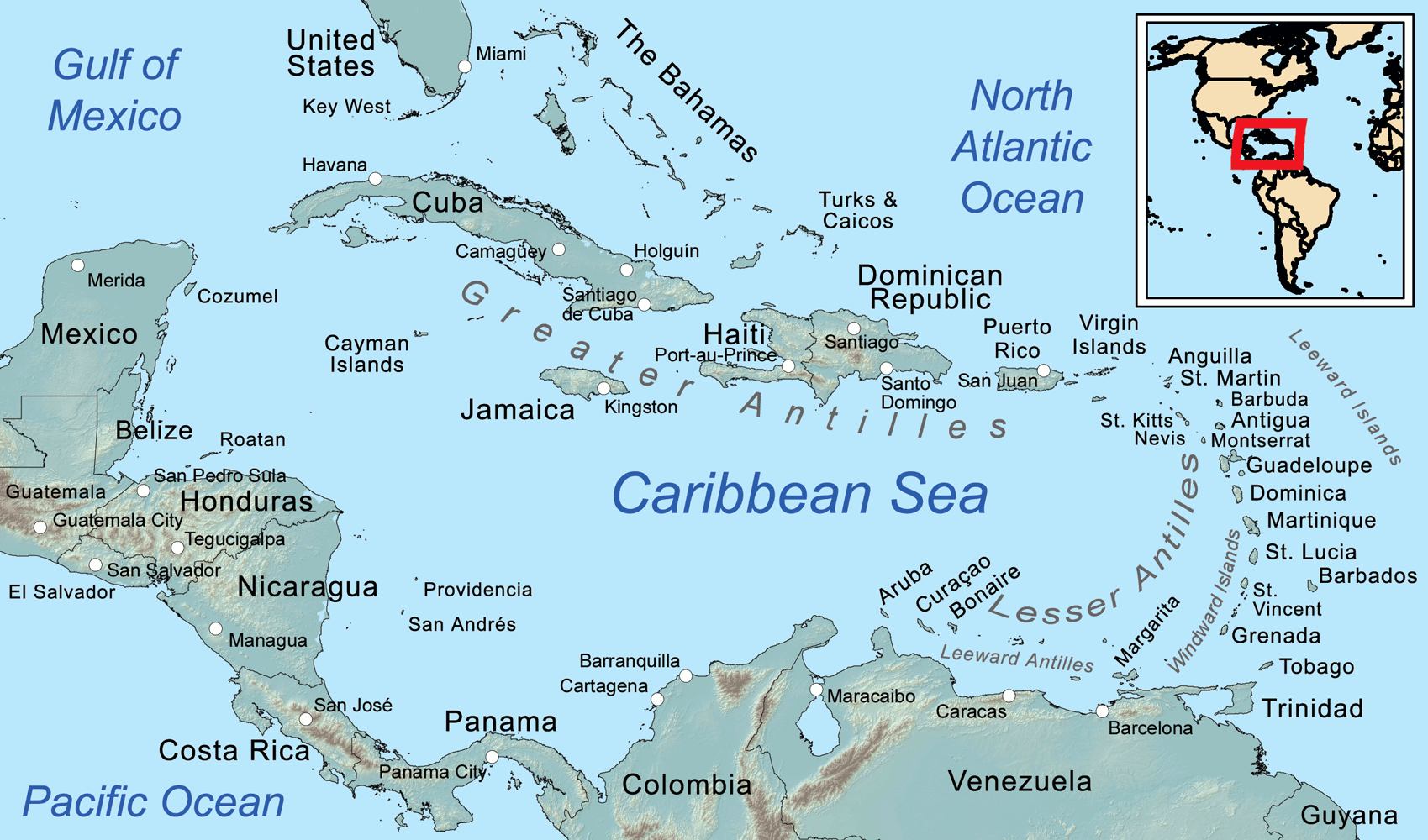
And now the Pacific.

We start our Report with Hurricane Maria. The”M” Designation means a very powerful storm: Category 3 or higher.


And the Discussion
Hurricane Maria Discussion Number 19 NWS National Hurricane Center Miami FL 500 PM AST Wed Sep 20 2017
An Air Force Reserve reconnaissance aircraft found that Maria’s center moved off the northwestern coast of Puerto Rico just before 1800 UTC, but the hurricane appears to have taken quite a hit from the high mountains of the island. The aircraft measured a maximum flight-level wind of 106 kt to the east of the center and SFMR surface winds as high as 91 kt. The initial intensity is therefore set to 95 kt. The central pressure has also risen considerably, and the latest report from the airplane is 957 mb.
Maria may have taken a temporary jog west-northwestward across Puerto Rico, likely due to topographic effects, but the longer-term motion remains northwestward, or 305/10 kt. Maria should maintain a northwestward motion for the next 36 hours while it remains on the southwestern periphery of a mid-level high over the western Atlantic. After 36 hours, Maria is expected to turn northward between the high and a broad trough extending from Tropical Storm Jose southwestward into the Gulf of Mexico. The updated track guidance remains in excellent agreement on this scenario, and the overall guidance envelope has shifted a bit eastward on this cycle. The new NHC forecast is therefore nudged a little east of the previous forecast toward the various consensus aids.
It may take some time for Maria’s structure to reorganize itself now that it is back over water. Although the intensity models are not all that enthusiastic about strengthening, the environment looks conducive for intensification, and the NHC forecast lies at the upper bound of the guidance, closest to the HWRF solution. It would not be surprising, however, if Maria eventually strengthens more than shown here. Some weakening is expected by days 4 and 5 due to increased shear, as well as Maria possibly moving over the cold wake of Tropical Storm Jose to the east of the Carolinas.
We would like to thank the crew of the latest Air Force Reserve mission for their incredible service today. After beginning their mission this morning before the center first moved onshore, the crew went above and beyond, returning to Curacao to refuel, and then heading back to Puerto Rico to catch Maria’s center when it first moved back off the coast. The data collected by the crew was incredibly important for us to analyze Maria’s intensity and structure after moving across the island, and we are grateful for their effort.
KEY MESSAGES:
1. Maria’s core is moving away from the northwestern coast of Puerto Rico, and strong winds and storm surge flooding should subside through early Thursday. However, heavy rainfall is expected to continue, and catastrophic flash flooding is occurring on the island, especially in areas of mountainous terrain. Everyone in Puerto Rico should continue to follow advice from local officials to avoid these life-threatening flooding conditions.
2. A Hurricane Warning is in effect for the northern coast of the Dominican Republic, the Turks and Caicos Islands, and the southeastern Bahamas, where Maria is expected to bring dangerous wind, storm surge, and heavy rainfall.
FORECAST POSITIONS AND MAX WINDS
INIT 20/2100Z 18.8N 67.3W 95 KT 110 MPH
12H 21/0600Z 19.5N 68.2W 95 KT 110 MPH
24H 21/1800Z 20.5N 69.3W 100 KT 115 MPH
36H 22/0600Z 21.6N 70.3W 105 KT 120 MPH
48H 22/1800Z 22.9N 71.1W 105 KT 120 MPH
72H 23/1800Z 25.8N 72.2W 100 KT 115 MPH
96H 24/1800Z 29.0N 72.5W 90 KT 105 MPH
120H 25/1800Z 31.5N 72.0W 80 KT 90 MPH
HURRICANE MARIA FORECAST/ADVISORY NUMBER 19 NWS NATIONAL HURRICANE CENTER MIAMI FL 2100 UTC WED SEP 20 2017
CHANGES IN WATCHES AND WARNINGS WITH THIS ADVISORY…
THE HURRICANE WARNING FOR THE U.S. VIRGIN ISLANDS HAS BEEN DISCONTINUED.
THE GOVERNMENT OF ANTIGUA AND BARBUDA HAS DISCONTINUED THE HURRICANE WARNING FOR THE BRITISH VIRGIN ISLANDS.
SUMMARY OF WATCHES AND WARNINGS IN EFFECT…
A HURRICANE WARNING IS IN EFFECT FOR…
* PUERTO RICO… CULEBRA… AND VIEQUES
* DOMINICAN REPUBLIC FROM CABO ENGANO TO PUERTO PLATA
* TURKS AND CAICOS ISLANDS AND THE SOUTHEASTERN BAHAMAS
A TROPICAL STORM WARNING IS IN EFFECT FOR…
* DOMINICAN REPUBLIC WEST OF PUERTO PLATA TO THE NORTHERN BORDER OF
THE DOMINICAN REPUBLIC AND HAITI
* DOMINICAN REPUBLIC WEST OF CABO ENGANO TO PUNTA PALENQUE
A HURRICANE WATCH IS IN EFFECT FOR…
* DOMINICAN REPUBLIC FROM ISLA SAONA TO CABO ENGANO
Here is the current Track Map for Jose.


Jose Discussion
Tropical Storm Jose Discussion Number 62 NWS National Hurricane Center Miami FL 500 PM AST Wed Sep 20 2017
Jose has generally changed little since the previous advisory. Geostationary and microwave satellite data show that the storm is still producing well-defined convective bands on the north side of the circulation. Some of these outer bands are approaching the southern New England coastline. The initial wind speed is held at 60 kt based on the earlier aircraft data. This estimate is also in fair agreement with an ASCAT pass from earlier today, which also showed that Jose has a very large wind field. Another Air Force reconnaissance aircraft is scheduled to investigate this system later this evening, and should provide a better assessment of Jose’s intensity.
The tropical storm is moving northeastward at 7 kt steered by a trough over eastern Canada. This trough should cause Jose to move east-northeastward at a slower pace tonight. Thereafter, the trough is expected to bypass the storm, leaving Jose in very weak steering currents. As a result, Jose is forecast to drift westward beginning Thursday night and continue in that direction through the weekend. The models have trended a little to the west at the end of the forecast period, and the NHC track forecast has followed suit.
Jose is currently moving along the edge of the Gulf Stream, and is expected to remain over this oceanic environment for a few more days. These relatively cool waters, a progressively drier airmass, and an expected increase in wind shear should cause a gradual weakening trend during the next several days. The models are in good agreement on this scenario, and the NHC intensity forecast is largely an update of the previous one.
KEY MESSAGES:
1. While the center of Jose is forecast to remain offshore of the U.S. east coast, the large cyclone is expected to cause some direct impacts in portions of New England during the next day or two, and a tropical storm warning remains in effect for Cape Cod, Block Island, Martha’s Vineyard, and Nantucket.
2. Minor to moderate coastal flooding is possible from Delaware to southern New England during the next several days. Please see products issued by local National Weather Service forecast offices.
3. Swells generated by Jose are affecting Bermuda and much of the U.S. east coast and will likely cause dangerous surf and rip current conditions for the next several days in these areas.
4. Jose is expected to produce additional rainfall accumulations of 1 to 2 inches over Martha’s Vineyard and Cape Cod, and 2 to 4 inches in Nantucket as it passes offshore. This rainfall could cause isolated flash flooding.
FORECAST POSITIONS AND MAX WINDS
INIT 20/2100Z 39.2N 69.1W 60 KT 70 MPH
12H 21/0600Z 39.6N 68.1W 55 KT 65 MPH
24H 21/1800Z 39.6N 67.9W 50 KT 60 MPH
36H 22/0600Z 39.6N 68.3W 45 KT 50 MPH
48H 22/1800Z 39.5N 69.2W 40 KT 45 MPH…POST-TROPICAL
72H 23/1800Z 39.3N 70.0W 35 KT 40 MPH…POST-TROPICAL
96H 24/1800Z 39.3N 70.3W 30 KT 35 MPH…POST-TROP/REMNT LOW
120H 25/1800Z 39.4N 71.2W 25 KT 30 MPH…POST-TROP/REMNT LOW
TROPICAL STORM JOSE FORECAST/ADVISORY NUMBER 62 NWS NATIONAL HURRICANE CENTER MIAMI FL 2100 UTC WED SEP 20 2017
CHANGES IN WATCHES AND WARNINGS WITH THIS ADVISORY…
NONE.
SUMMARY OF WATCHES AND WARNINGS IN EFFECT…
A TROPICAL STORM WARNING IS IN EFFECT FOR…
* WOODS HOLE TO SAGAMORE BEACH…INCLUDING CAPE COD
* BLOCK ISLAND
* MARTHA’S VINEYARD
* NANTUCKET
General Weather Situation
We believe that it is easier to understand what is going on with individual storms if they are put into the context of the overall weather situation.
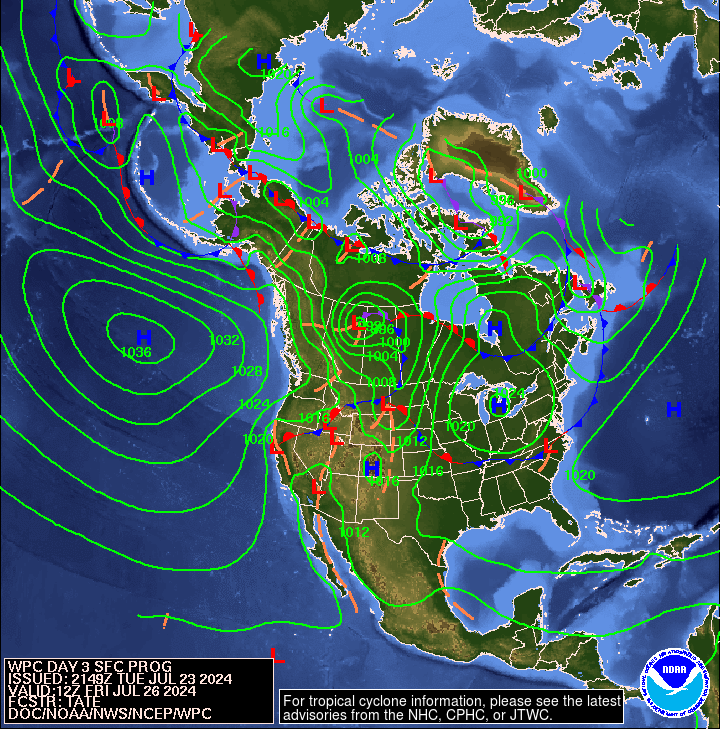
Some of the graphics below show the two storms of most interest.


Additional Graphics
This is a national animation of weather fronts and precipitation forecasts with four 6-hour projections of the conditions that will apply covering the next 24 hours and a second day of two 12-hour projections the second of which is the forecast for 48 hours out and to the extent it applies for 12 hours, this animation is intended to provide coverage out to 60 hours. This graphic is very relevant as one can see both storms of most interest in this graphic. .