


Written by Sig Silber
Note: This article has been updated – Go to Tracking Irma while also Assessing Harvey Impacts – 06Sep2017
2PM EDT Sept 5: Now Cat 5! – May Enter Caribbean;Â Because of the intensity of the Hurricane Season so far, possibly related to the developing La Nina conditions and stronger than usual Easterlies, we have created this article to provide ongoing coverage of the storms that threaten, are impacting, or have recently impacted CONUS (U.S. excluding Alaska and Hawaii) or neighboring nations. This article is updated every evening or more frequently when the situation is changing rapidly. We are now showing the date and time of the most recent update.

Irma is now considered to be a threat to CONUS. Learn about the categories of Hurricanes Saffir-Simpson Hurricane Wind Scale here
Part A will be the current weather forecasts as they involve Irma. This analysis will also address all other severe weather impacting CONUS and perhaps the Islands that may be at risk from Irma.
Part BÂ will be the physical and human impacts of Harvey and Irma if it comes to that which seems increasingly likely.
Please share this article – Go to very top of page, right hand side for social media buttons.
Part A. Here we focus on the Meteorological Aspects of the Storms impacting or potentially impacting CONUS. We attempt to keep this information up to date. We will update this information frequently and one can also access some of this information directly from NOAA here if it has Hurricane status or potential or here if it has been downgraded to a Tropical Storm. It is our goal to provide in this continually updated report the information that readers will find most useful. But those links have additional information.
For some purposes, you might want to consult our Monday Weather and Climate report as that report has additional information on the overall weather situation. You can always find the location of all of our reports by clicking here.
Let’s Focus on Irma.
Latest Reported Track Forecast

Latest Irma Discussion
Hurricane Irma Discussion Number 26 NWS National Hurricane Center Miami FL 1100 AM AST Tue Sep 05 2017
Irma is an extremely impressive hurricane in both infrared and visible satellite images. Experimental GOES-16 one-minute visible satellite pictures show a distinct 25-30 n mi wide eye with several mesovortices rotating within with eye. The aircraft have not sampled the northeastern eyewall where the strongest winds were measured shortly before 1200 UTC this morning, but the Air Force plane will be entering the eye in that quadrant momentarily. A peak SFMR wind of 154 kt was reported, with a few others of 149-150 kt. Based on these data the initial intensity is set at 155 kt for this advisory. This makes Irma the strongest hurricane in the Atlantic basin outside of the Caribbean Sea and Gulf of Mexico in the NHC records.
Irma is expected to remain within low vertical wind shear, a moist mid-level atmosphere, and high upper-ocean heat content as it moves west-northwestward during the next several days. These conditions should allow the hurricane to remain very intense throughout much of the forecast period, however, fluctuations in intensity are likely to occur as eyewall replacement cycles take place. The NHC intensity forecast is near the upper-end of the guidance and assumes little overall interaction of Irma with the islands of the Greater Antilles.
Irma continues to move westward at about 12 kt, and a strong subtropical ridge centered over the central Atlantic should steer Irma generally westward today. The ridge is expected to remain in place over the western Atlantic during the next several days and Irma is forecast to move west-northwestward throughout the most of remainder of the forecast period. Around day 5, a shortwave trough dropping southward over the central United States is expected to begin eroding the western portion of the ridge, allowing a Irma to gain some latitude. The new NHC track forecast is close to the HFIP corrected consensus model and is very similar to the previous forecast.
Since Irma is a large hurricane, users are reminded to not focus on the exact forecast track since tropical-storm and hurricane-force winds and life-threatening storm surge extend far from the center. Residents in the Leeward Islands should complete their preparations very soon as the weather will begin to deteriorate over the easternmost Leeward Islands later this afternoon.
KEY MESSAGES:
1. Irma is a potentially catastrophic category 5 hurricane and will bring life-threatening wind, storm surge, and rainfall hazards to portions of the northeastern Leeward Islands beginning later today and the Virgin Islands and Puerto Rico beginning tomorrow. Preparations should be rushed to completion before the arrival of tropical-storm force winds later today in the Leeward Islands and tomorrow morning in Virgin Islands and Puerto Rico.
2. Hurricane watches have been issued for portions of the Dominican Republic and Haiti, the southeastern Bahamas and Turks and Caicos, and Irma could bring dangerous wind, storm surge, and rainfall to those areas on Thursday and Friday.
3. Irma could directly affect the remainder of the Bahamas and Cuba as an extremely dangerous major hurricane later this week. Residents in these areas should monitor the progress of Irma and listen to advice given by officials.
4. The chance of direct impacts from Irma later this week and this weekend is increasing in the Florida Keys and portions of the Florida Peninsula. However, it is too soon to specify the timing and magnitude of the impacts. Elsewhere, it is too early to determine what direct impacts Irma might have on the continental United States. Everyone in hurricane-prone areas should ensure that they have their hurricane plan in place.
FORECAST POSITIONS AND MAX WINDS
INITÂ 05/1500Z 16.8NÂ 58.4WÂ 155 KT 180 MPH
12HÂ 06/0000Z 17.2NÂ 60.3WÂ 155 KT 180 MPH
24HÂ 06/1200Z 18.1NÂ 63.0WÂ 150 KT 175 MPH
36HÂ 07/0000Z 19.1NÂ 65.9WÂ 145 KT 165 MPH
48HÂ 07/1200Z 20.1NÂ 68.7WÂ 140 KT 160 MPH
72HÂ 08/1200Z 21.4NÂ 74.0WÂ 135 KT 155 MPH
96HÂ 09/1200Z 22.7NÂ 78.3WÂ 130 KT 150 MPH
120HÂ 10/1200Z 24.4NÂ 81.2WÂ 125 KT 145 MPH
Those impacted should consult their local sources of information. The Public Advisories and other information that is available from the NOAA National Hurricane Center can be found here.
And right behind it: Jose

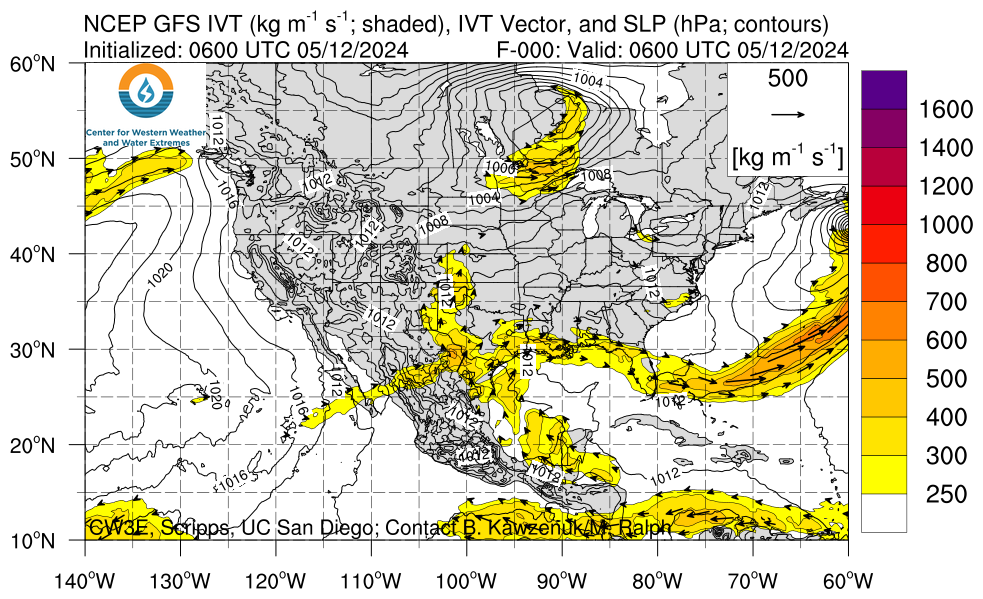
Current Conditions and Short-Term Forecast. The Above Information was Provided by the National Hurricane Center. Now I Present information from Other Parts of NOAA.Â
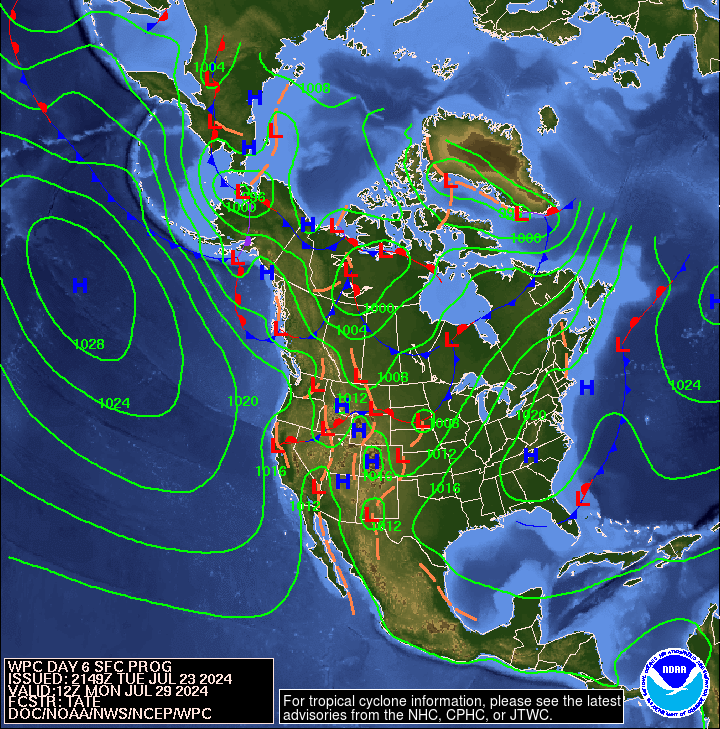
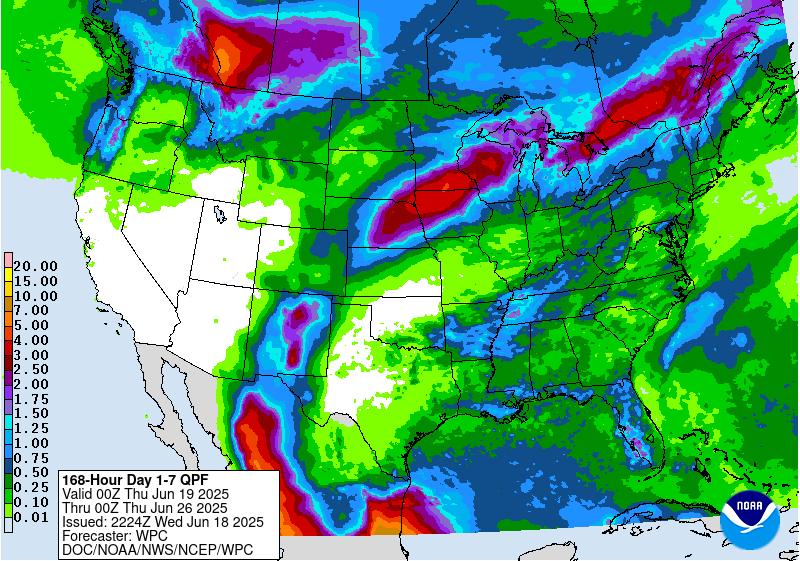
Additional Graphics
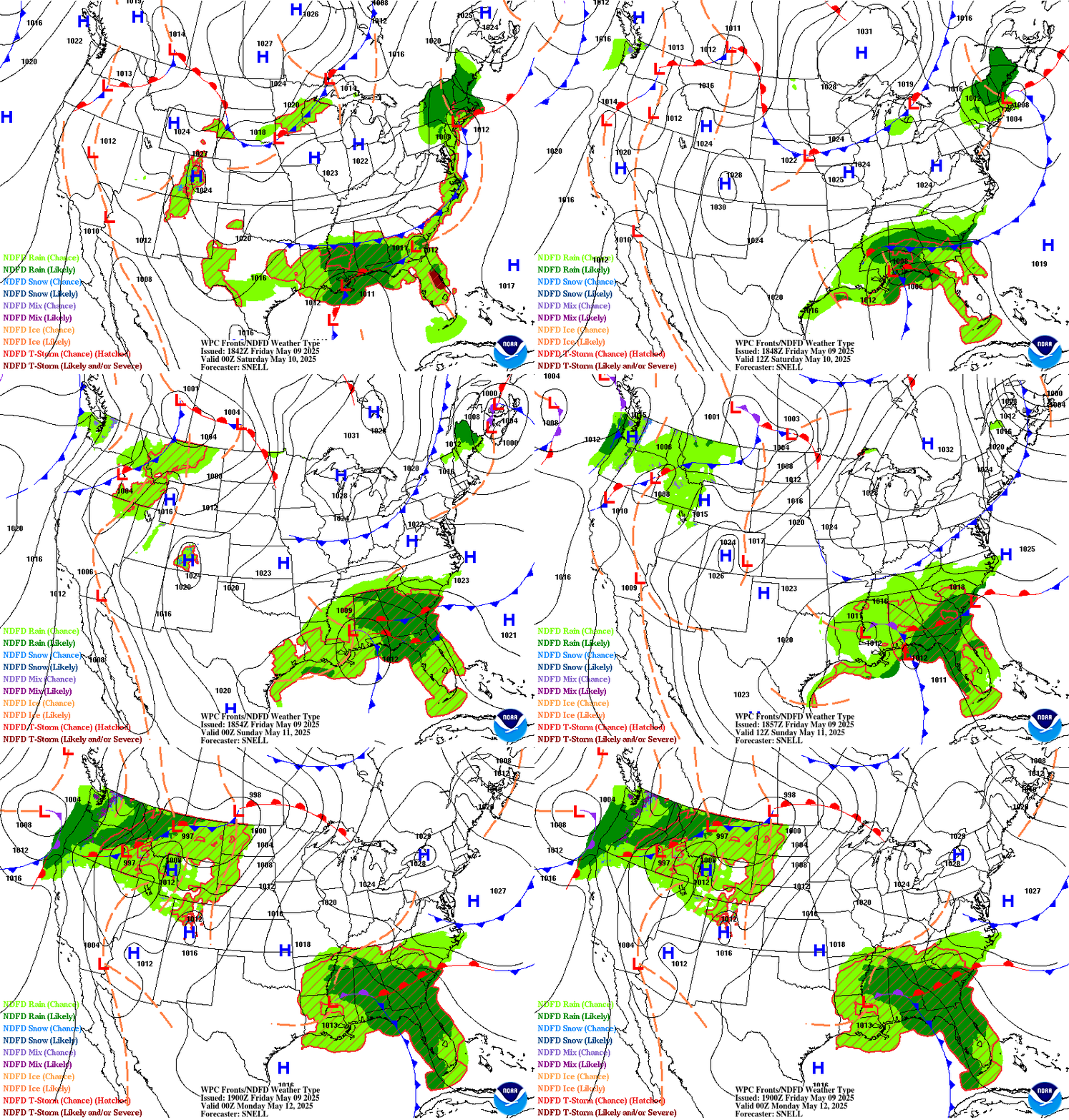
This is a national animation of weather fronts and precipitation forecasts with four 6-hour projections of the conditions that will apply covering the next 24 hours and a second day of two 12-hour projections the second of which is the forecast for 48 hours out and to the extent it applies for 12 hours, this animation is intended to provide coverage out to 60 hours. This graphic will be more relevant in a few days.
 
Â
Part B. The Human and Economic Impacts of Recent Storms
B1. Harvey Meteorological Summary (For Analysis Purposes Mainly)
Final NOAA Harvey Advisory.
POST-TROPICAL CYCLONE HARVEY ADVISORY NUMBER 53 NWS WEATHER PREDICTION CENTER COLLEGE PARK MD 1100 AM EDT SAT SEP 02 2017
POST-TROPICAL CYCLONE HARVEY CONTINUES TO WEAKEN…
SUMMARY OF 1100 AM EDT…1500 UTC…INFORMATION
LOCATION…38.1N 84.9W ABOUT 20 MILES…30 KM…WNW OF LEXINGTON KENTUCKY ABOUT 60 MILES…100 KM…ENE OF FORT KNOX KENTUCKY MAXIMUM SUSTAINED WINDS…15 MPH…25 KM/H PRESENT MOVEMENT…NE OR 045 DEGREES AT 5 MPH…8 KM/H MINIMUM CENTRAL PRESSURE…1013 MB…29.92 INCHES
WATCHES AND WARNINGS
FLOOD WARNINGS AND ADVISORIES ARE ONGOING SCATTERED THROUGHOUT EASTERN TEXAS…THE LOWER MISSISSIPPI VALLEY…TENNESSEE VALLEY…AND THE LOWER OHIO VALLEY.
DISCUSSION AND 48-HOUR OUTLOOK
AT 1100 AM EDT…1500 UTC…THE CENTER OF POST-TROPICAL CYCLONE HARVEY WAS LOCATED NEAR LATITUDE 38.1 NORTH…AND LONGITUDE 84.9 WEST. HARVEY CONTINUES TO WEAKEN AND IS EXPECTED TO DISSIPATE OVER THE MID-UPPER OHIO VALLEY BY TONIGHT ALONG WITH ANY LINGERING HEAVY RAIN AND RUNOFF THREAT DIRECTLY RELATED TO THE CIRCULATION. HOWEVER, A SEPARATE AREA OF LOW PRESSURE DEVELOPING OVER THE MID-ATLANTIC REGION AHEAD OF HARVEY WILL INTERACT WITH ITS REMNANT MOISTURE PLUME TO PRODUCE AS MUCH AS 1 TO 2 INCHES OF RAIN OVER THE NORTHEAST THROUGH SUNDAY.
HAZARDS AFFECTING LAND
RAINFALL…RESIDUAL FLOODING WILL CONTINUE IN AND AROUND HOUSTON, BEAUMONT/PORT ARTHUR/ORANGE, AND EASTWARD AROUND THE LOUISIANA BORDER THROUGH THE WEEKEND. DO NOT ATTEMPT TO TRAVEL IN THE AFFECTED AREA IF YOU ARE IN A SAFE PLACE. DO NOT DRIVE INTO FLOODED ROADWAYS.
NEXT ADVISORY
THIS IS THE LAST PUBLIC ADVISORY ISSUED BY THE WEATHER PREDICTION CENTER FOR THIS SYSTEM. PLEASE REFER TO YOUR LOCAL NATIONAL WEATHER SERVICE OFFICE FOR FURTHER INFORMATION ON THIS STORM.
FORECAST POSITIONS
INITIAL 02/1500Z 38.1N 84.9W
12HR VT 03/0000Z 39.8N 82.3W…POST-TROP/EXTRATROP
24HR VT 03/1200Z…DISSIPATED
Harvey Final Reported Precipitation Totals as of 11AM EDT September 2, 2017. There is no longer a separate site that I know of that provides update totals and they will no longer be in the WPC Updates so most likely this will be the final update of this information. We may add local updates if significant.
And then Additional States were Impacted.
 |  |
 |
Â
New States being Impacted
 |
|  |

Â
Second Set of States Impacted (This data is as reported on Thursday 10 PM August 31.
 |  |  |
Â
Initial States Impacted (These totals are no longer being updated so they were correct as of 10 AM CDT Wednesday August 30).
 |  |
Â
Below is the last reported Track. There are no further updates of the track but you can tell the track by other graphics that I have included. Also the track is describe in the discussion which is up to date. We are now at the end of the reported track so this graphic is mostly of historical significance now.

Interesting way to view the precipitation pattern in the Houston area.
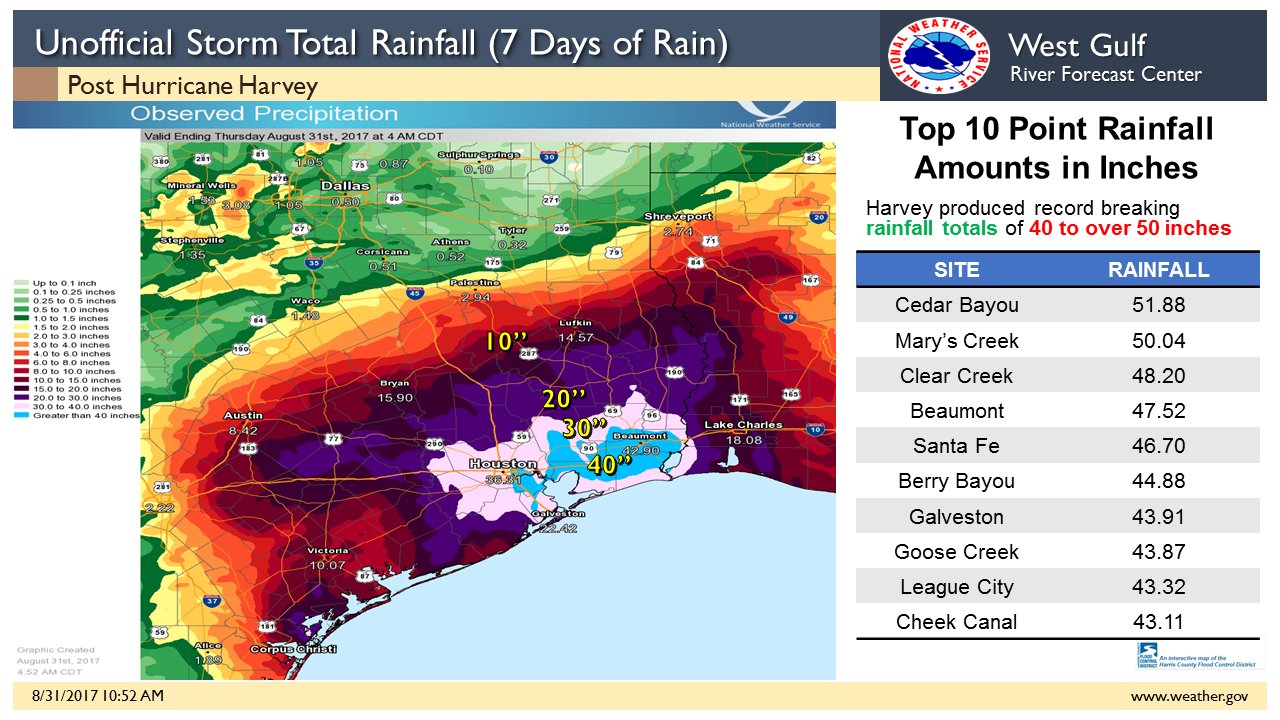
B2: Harvey Impacts
Economic Impacts.
The usual impacts of a disaster are first very negative and later very positive and essentially reflect Keynesian Economics. Unfortunately the first phase comes first and it can be very heartbreaking. One clue to how this might work out is provided by this excellent article.
More Than 50 Percent Of Properties In Houston At High And Moderate Risk Of Flood Are Not In Designated Flood Zones
First Report on number of homes damaged. Source: Market Watch
About 100,000 homes were damaged by Hurricane Harvey, President Donald Trump’s Homeland Security Adviser Tom Bossert told reporters on Thursday. Speaking at the White House, Bossert said the administration would soon ask Congress for an initial round of emergency funding to aid relief efforts. He said a second request would be made after getting more information.
Total Residential Insured And Uninsured Flood Loss For Hurricane Harvey Between $25 Billion And $37 Billion Approximately 70 Percent Of Flood Damage Is Uninsured
Oil Refinery Impacts
At the Beaumont-Port Arthur Airport, 26.03†of rain fell on Tuesday, which is more than double Beaumont’s previous calendar-day record of 12.76″ on May 19, 1923, in records going back to 1901. Between 10 pm last night and 1 am this morning, 11.86†fell. So far on Wednesday, 4.71†has been reported (as of 11 am CDT), bringing their 5-day storm total rainfall to a staggering 47.98â€. The intense rains caused extreme flash flooding that inundated all of Port Arthur, according to Mayor Freeman, who showed a video this morning of the inside of his flooded house on his Facebook page. Port Arthur is the site of the nation’s largest oil refinery, which was forced to shut down due to the floods. The nation’s second-largest refinery, in Baytown, TX, was also forced to shut down yesterday, due to flooding-induced roof damage. In all, at least 12 refineries are currently offline due to Harvey. Source: Weather Underground Category 6 Click to Read Full Article
From this Geopolitical Futures article

The following is from our initial assessment Saturday afternoon. We will attempt to provide an organized assessment rather than streaming news reports as they come it. There is so much reporting that streaming these reports would mostly duplicate the traditional news services. So we will attempt to consolidate the information and provide a somewhat comprehensive analysis.Â
Concern about Facilities that Depend on Cooling.
Arkema: No way to prevent explosion at flooded Texas chemical plant Click to read more
Well it seems the report unfortunately was timely as this chemical plant has had explosions. You may be able to read about it here (you may hit a paywall not sure).
This is what we reported Saturday afternoon. There are many pictures showing flooding and other damage that we could show now.
Some of the graphics are very disturbing. But first we want to put this storm into perspective. This graphic was sent in by the NWS in Jackson Kentucky but was probably originally prepared by PBS.
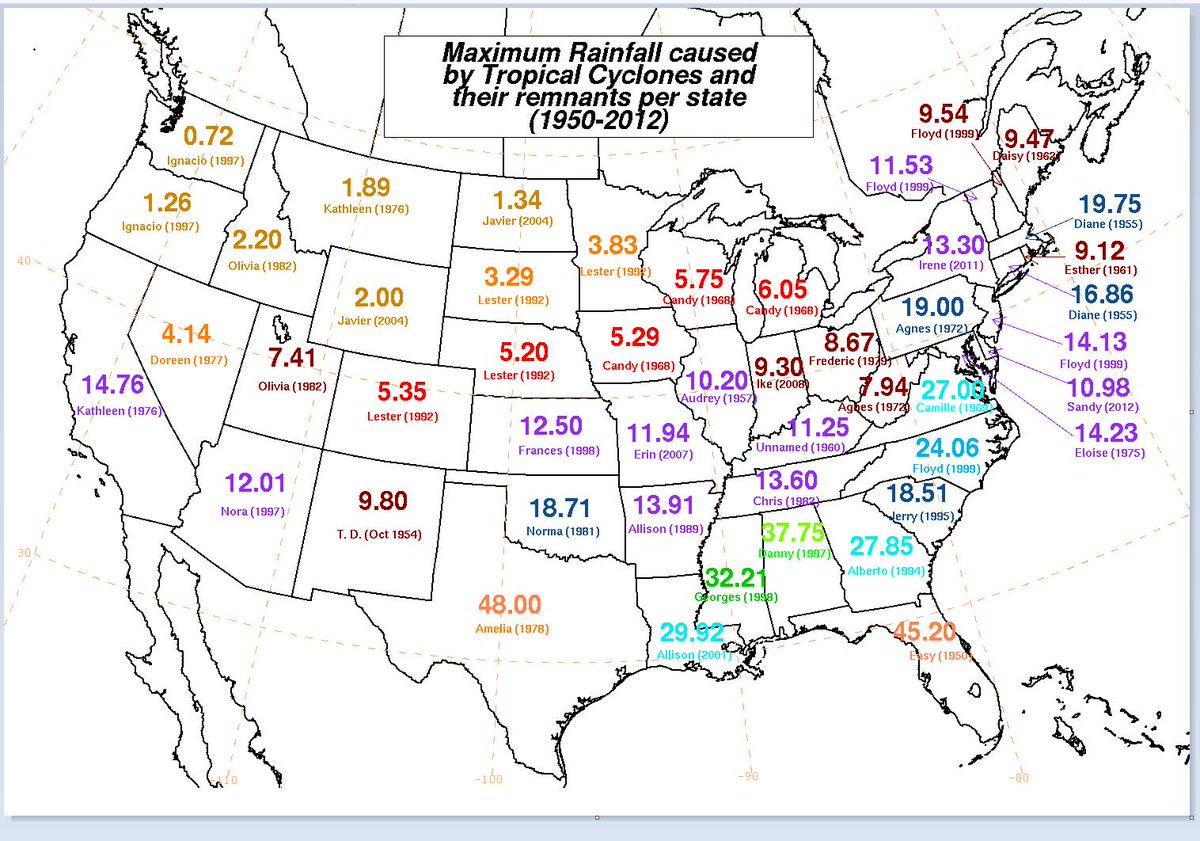
It shows that very wet events are not unknown to Texas so we hope they are prepared to deal with this one.
This is a photo shown on the Blog Category 6; Image Credit is Joe Raedle/Getty Images.
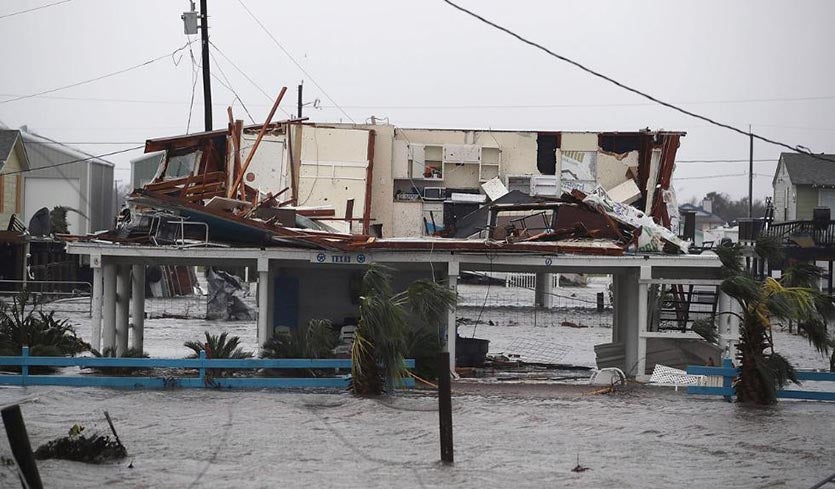
Rockport is about 40 miles Northeast of Corpus Christi and presumably exposed to the strongest winds which are often in the NE quadrant of the storm. Harvey’s winds declined rapidly so we should expect that wind damage now will be restricted to tornadoes which can be very deadly. The main story here will be the flooding.
Another Rockport photo
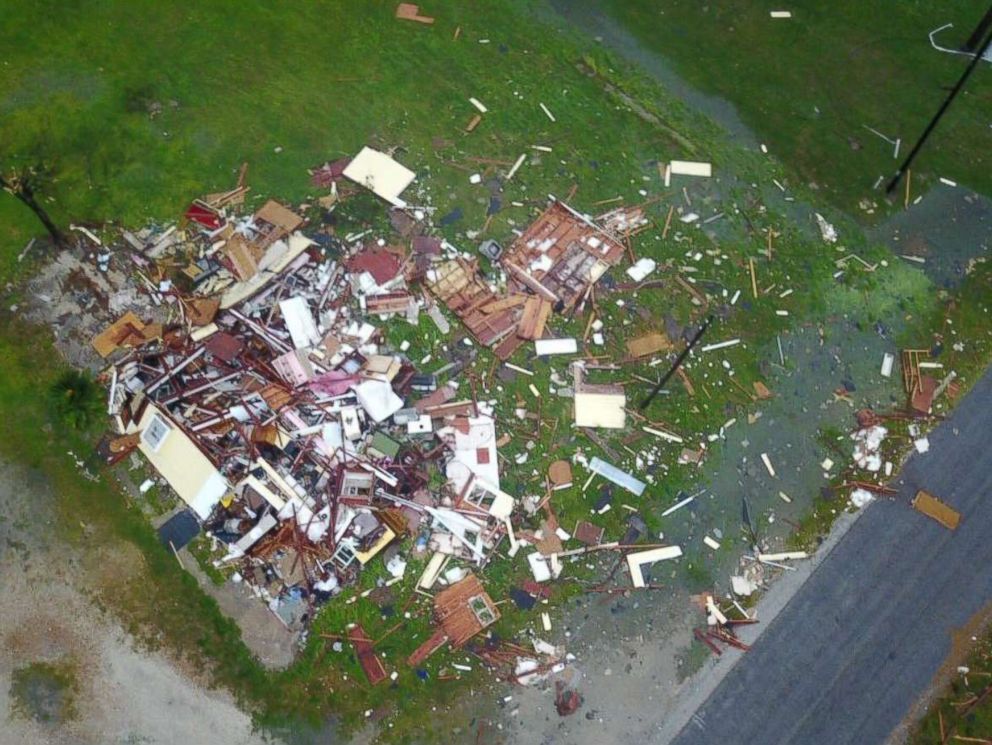
More photo coverage of Rockport can be found here. For some reason the photo credit that is on the photo in the article does not show up when I display the photo separately. It is Brian Emfinger/LSM
We should expect that damage reports may come in slowly since may areas have been evacuated and the media may not be allowed in until the areas are deemed to be save from down power lines etc.
Tornadoes will cause a lot of damage. Right now they seem to be happening in the Cypress Area Northwest of Houston while in Houston flooding has been significant.
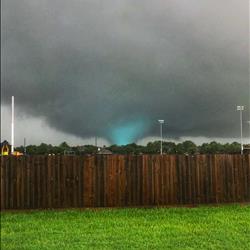
Source: Houston News KHOU
Same source for photos below: KHOU with the first photo credited to Kyra Respress.
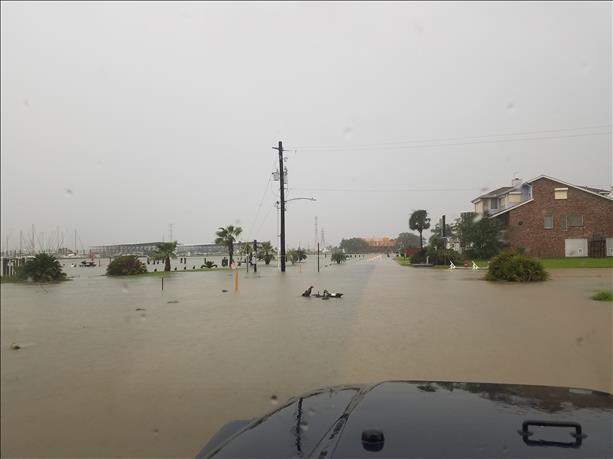
and one more.
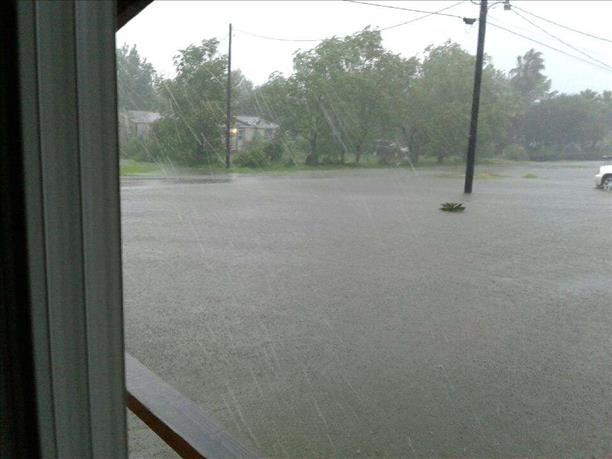
So far the reports of injured and deaths are amazingly low. That might change.
This is an excellent report from the Daily Mail in the UK – Lots of photos.
What Happens Next
It is important to understand that natural disasters often occur over a period of time, not instantaneously.
A good example is the rising of rivers which then overflow their banks and cause damage many hours and even days after the advent of a widespread storm. It takes time for this to happen and with Harvey we have a storm that is likely to provide the time for such subsequent events. Below, from NOAA, is a forecast for the San Bernard River. It is already at flood stage. Not sure how the river can rise to 35 feet once the level is so high that it can no longer be confined by the river banks but the graphic may be intended to show the severe level that is predicted. (If the normal level is x feet below the average river bank height, then all land within 35-x feet in elevation above normal water level will be flooded.)


