


Written by Steven Hansen
The Federal Reserve’s meeting statement included no rate change (as it is already at zero), and the meeting statement was mostly unchanged from the previous meeting.

Analyst Opinion of the FOMC Meeting Minutes
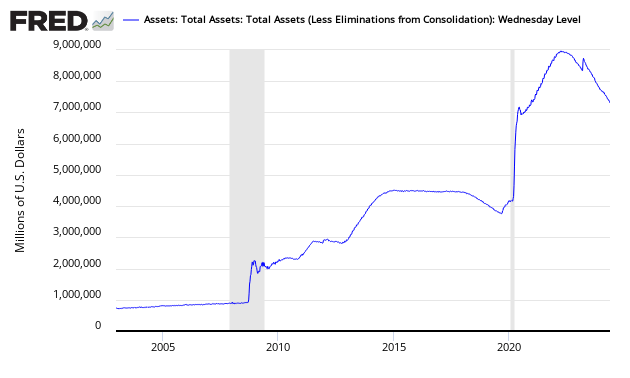
There was no dissent from by FOMC members this month. The key change in these minutes was quantifying the amounts of Treasury Securities it will purchase.
Outside the minutes:
- Federal Reserve announces the extension of its temporary U.S. dollar liquidity swap lines and the temporary repurchase agreement facility for foreign and international monetary authorities (FIMA repo facility) through September 30, 2021 [see release below]
- The FOMC released their economic projections [also shown after the minutes]
- New York Fed’s Statement Regarding Treasury Securities, Agency Mortgage-Backed Securities, and Agency Commercial Mortgage-Backed Securities Operations [also shown after the minutes]
The Meeting Minutes
Econoday consensus forecast was for no change to the Federal Funds rate.
05 November Statement | 16 December Statement |
|---|---|
The Federal Reserve is committed to using its full range of tools to support the U.S. economy in this challenging time, thereby promoting its maximum employment and price stability goals. | The Federal Reserve is committed to using its full range of tools to support the U.S. economy in this challenging time, thereby promoting its maximum employment and price stability goals. |
| The COVID-19 pandemic is causing tremendous human and economic hardship across the United States and around the world. Economic activity and employment have continued to recover but remain well below their levels at the beginning of the year. Weaker demand and earlier declines in oil prices have been holding down consumer price inflation. Overall financial conditions remain accommodative, in part reflecting policy measures to support the economy and the flow of credit to U.S. households and businesses. | The COVID-19 pandemic is causing tremendous human and economic hardship across the United States and around the world. Economic activity and employment have continued to recover but remain well below their levels at the beginning of the year. Weaker demand and earlier declines in oil prices have been holding down consumer price inflation. Overall financial conditions remain accommodative, in part reflecting policy measures to support the economy and the flow of credit to U.S. households and businesses. |
| The path of the economy will depend significantly on the course of the virus. The ongoing public health crisis will continue to weigh on economic activity, employment, and inflation in the near term, and poses considerable risks to the economic outlook over the medium term. | The path of the economy will depend significantly on the course of the virus. The ongoing public health crisis will continue to weigh on economic activity, employment, and inflation in the near term, and poses considerable risks to the economic outlook over the medium term. |
The Committee seeks to achieve maximum employment and inflation at the rate of 2 percent over the longer run. With inflation running persistently below this longer-run goal, the Committee will aim to achieve inflation moderately above 2 percent for some time so that inflation averages 2 percent over time and longer-term inflation expectations remain well anchored at 2 percent. The Committee expects to maintain an accommodative stance of monetary policy until these outcomes are achieved. The Committee decided to keep the target range for the federal funds rate at 0 to 1/4 percent and expects it will be appropriate to maintain this target range until labor market conditions have reached levels consistent with the Committee’s assessments of maximum employment and inflation has risen to 2 percent and is on track to moderately exceed 2 percent for some time. In addition, over coming months the Federal Reserve will increase its holdings of Treasury securities and agency mortgage-backed securities at least at the current pace to sustain smooth market functioning and help foster accommodative financial conditions, thereby supporting the flow of credit to households and businesses. | The Committee seeks to achieve maximum employment and inflation at the rate of 2 percent over the longer run. With inflation running persistently below this longer-run goal, the Committee will aim to achieve inflation moderately above 2 percent for some time so that inflation averages 2 percent over time and longer-term inflation expectations remain well anchored at 2 percent. The Committee expects to maintain an accommodative stance of monetary policy until these outcomes are achieved. The Committee decided to keep the target range for the federal funds rate at 0 to 1/4 percent and expects it will be appropriate to maintain this target range until labor market conditions have reached levels consistent with the Committee’s assessments of maximum employment and inflation has risen to 2 percent and is on track to moderately exceed 2 percent for some time. In addition, the Federal Reserve will continue to increase its holdings of Treasury securities by at least $80 billion per month and of agency mortgage-backed securities by at least $40 billion per month until substantial further progress has been made toward the Committee’s maximum employment and price stability goals. These asset purchases help foster smooth market functioning and accommodative financial conditions, thereby supporting the flow of credit to households and businesses. |
| In assessing the appropriate stance of monetary policy, the Committee will continue to monitor the implications of incoming information for the economic outlook. The Committee would be prepared to adjust the stance of monetary policy as appropriate if risks emerge that could impede the attainment of the Committee’s goals. The Committee’s assessments will take into account a wide range of information, including readings on public health, labor market conditions, inflation pressures and inflation expectations, and financial and international developments. | In assessing the appropriate stance of monetary policy, the Committee will continue to monitor the implications of incoming information for the economic outlook. The Committee would be prepared to adjust the stance of monetary policy as appropriate if risks emerge that could impede the attainment of the Committee’s goals. The Committee’s assessments will take into account a wide range of information, including readings on public health, labor market conditions, inflation pressures and inflation expectations, and financial and international developments. |
Voting for the monetary policy action were Jerome H. Powell, Chair; John C. Williams, Vice Chair; Michelle W. Bowman; Lael Brainard; Richard H. Clarida; Mary C. Daly; Patrick Harker; Robert S. Kaplan; Loretta J. Mester; and Randal K. Quarles. Ms. Daly voted as an alternate member at this meeting. | Voting for the monetary policy action were Jerome H. Powell, Chair; John C. Williams, Vice Chair; Michelle W. Bowman; Lael Brainard; Richard H. Clarida; Patrick Harker; Robert S. Kaplan; Neel Kashkari; Loretta J. Mester; and Randal K. Quarles |
Federal Reserve announces the extension of its temporary U.S. dollar liquidity swap lines and the temporary repurchase agreement facility for foreign and international monetary authorities (FIMA repo facility) through September 30, 2021
The Federal Reserve on Wednesday announced the extension of its temporary U.S. dollar liquidity swap lines and the temporary repurchase agreement facility for foreign and international monetary authorities (FIMA repo facility) through September 30, 2021. These facilities were temporarily established in March 2020 to ease strains in global dollar funding markets resulting from the COVID-19 shock and mitigate the effect of such strains on the supply of credit to households and businesses, both domestically and abroad. Extensions to both facilities through March 2021 were announced on July 29, 2020. A further extension of these facilities will help sustain recent improvements in global U.S. dollar funding markets by serving as an important liquidity backstop. In addition, the FIMA repo facility will help continue to support the smooth functioning of the U.S. Treasury market by providing an alternative temporary source of U.S. dollars other than sales of securities in the open market.
The extension of the temporary swap lines applies to all nine central banks previously announced on March 19 and extended in July. These swap lines allow the provision of U.S. dollar liquidity in amounts up to $60 billion each for the Reserve Bank of Australia, the Banco Central do Brasil, the Bank of Korea, the Banco de Mexico, the Monetary Authority of Singapore, and the Sveriges Riksbank (Sweden) and $30 billion each for the Danmarks Nationalbank (Denmark), the Norges Bank (Norway), and the Reserve Bank of New Zealand.
The FIMA repo facility will continue as originally announced on March 31 and similarly extended in July. Its further extension will allow approved FIMA account holders to continue to temporarily exchange their U.S. Treasury securities held with the Federal Reserve for U.S. dollars, which can then be made available to institutions in their jurisdictions.
Effective December 17, 2020, the Federal Open Market Committee (FOMC) directed the Open Market Trading Desk (the Desk) at the Federal Reserve Bank of New York to continue to increase the System Open Market Account (SOMA) holdings of Treasury securities by $80 billion per month and of agency mortgage-backed securities (MBS) by $40 billion per month. Consistent with this directive, the Desk’s Treasury and agency MBS purchases will continue at their current pace and composition, and the existing purchase schedules for these securities, released on December 11, 2020, will remain in effect. The FOMC also directed the Desk to increase holdings of Treasury securities and agency MBS by additional amounts and purchase agency commercial mortgage-backed securities (CMBS) as needed to sustain smooth functioning of markets for these securities.
The Desk’s purchases of Treasury securities will continue to be conducted across a range of maturities and security types in a manner consistent with current practice. The Desk will also continue to roll over at auction all principal payments from SOMA holdings of maturing Treasury securities. For information on purchase amounts and schedules, see Treasury Securities Operational Details.
Similarly, the Desk’s purchases of agency MBS will continue to generally be concentrated in recently produced coupons in 30-year and 15-year fixed rate agency MBS in the To-Be-Announced market. The Desk will also continue to reinvest principal payments from agency MBS and agency debt in agency MBS. For information on purchase amounts and schedules, see Agency MBS Operation Schedule.
In addition, the Desk’s purchases of agency CMBS will continue to be secured primarily by multifamily home mortgages that are guaranteed fully as to principal and interest by Fannie Mae, Freddie Mac, and Ginnie Mae and that the Desk has determined are suitable for purchase. The amounts purchased will depend on the reasonableness of the prices offered, and agency CMBS principal payments will not be reinvested. For information on purchase amounts and schedules, see Agency CMBS Operation Schedule.
December 16, 2020: FOMC Projections materials
In conjunction with the Federal Open Market Committee (FOMC) meeting held on December 15-16, 2020, meeting participants submitted their projections of the most likely outcomes for real gross domestic product (GDP) growth, the unemployment rate, and inflation for each year from 2020 to 2023 and over the longer run. Each participant’s projections were based on information available at the time of the meeting, together with her or his assessment of appropriate monetary policy—including a path for the federal funds rate and its longer-run value—and assumptions about other factors likely to affect economic outcomes. The longer-run projections represent each participant’s assessment of the value to which each variable would be expected to converge, over time, under appropriate monetary policy and in the absence of further shocks to the economy. “Appropriate monetary policy” is defined as the future path of policy that each participant deems most likely to foster outcomes for economic activity and inflation that best satisfy his or her individual interpretation of the statutory mandate to promote maximum employment and price stability.
Beginning with the December 2020 FOMC meeting, all Summary of Economic Projections charts and tables previously released with the minutes of a meeting will be released following the conclusion of an FOMC meeting. That is, the release of the distribution of participants’ projections (Figures 3.A. through 3.E.), participants’ assessments of uncertainty and risks associated with the projections (Figures 4.A. though 4.C. and Figure 5), and Table 2 and associated box, which describe projection error ranges, have been accelerated by three weeks. Two new exhibits, Figures 4.D. and 4.E., have been added to further enhance the information provided on uncertainty and risks by showing how FOMC participants’ assessments of uncertainties and risks have evolved over time.
Table 1. Economic projections of Federal Reserve Board members and Federal Reserve Bank presidents, under their individual assumptions of projected appropriate monetary policy, December 2020
Percent
| Variable | Median 1 | Central Tendency 2 | Range 3 | ||||||||||||
|---|---|---|---|---|---|---|---|---|---|---|---|---|---|---|---|
| 2020 | 2021 | 2022 | 2023 | Longer run | 2020 | 2021 | 2022 | 2023 | Longer run | 2020 | 2021 | 2022 | 2023 | Longer run | |
| Change in real GDP | -2.4 | 4.2 | 3.2 | 2.4 | 1.8 | -2.5–2.2 | 3.7-5.0 | 3.0-3.5 | 2.2-2.7 | 1.7-2.0 | -3.3–1.0 | 0.5-5.5 | 2.5-4.0 | 2.0-3.5 | 1.6-2.2 |
| September projection | -3.7 | 4.0 | 3.0 | 2.5 | 1.9 | -4.0–3.0 | 3.6-4.7 | 2.5-3.3 | 2.4-3.0 | 1.7-2.0 | -5.5-1.0 | 0.0-5.5 | 2.0-4.5 | 2.0-4.0 | 1.6-2.2 |
| Unemployment rate | 6.7 | 5.0 | 4.2 | 3.7 | 4.1 | 6.7-6.8 | 4.7-5.4 | 3.8-4.6 | 3.5-4.3 | 3.9-4.3 | 6.6-6.9 | 4.0-6.8 | 3.5-5.8 | 3.3-5.0 | 3.5-4.5 |
| September projection | 7.6 | 5.5 | 4.6 | 4.0 | 4.1 | 7.0-8.0 | 5.0-6.2 | 4.0-5.0 | 3.5-4.4 | 3.9-4.3 | 6.5-8.0 | 4.0-8.0 | 3.5-7.5 | 3.5-6.0 | 3.5-4.7 |
| PCE inflation | 1.2 | 1.8 | 1.9 | 2.0 | 2.0 | 1.2 | 1.7-1.9 | 1.8-2.0 | 1.9-2.1 | 2.0 | 1.1-1.4 | 1.2-2.3 | 1.5-2.2 | 1.7-2.2 | 2.0 |
| September projection | 1.2 | 1.7 | 1.8 | 2.0 | 2.0 | 1.1-1.3 | 1.6-1.9 | 1.7-1.9 | 1.9-2.0 | 2.0 | 1.0-1.5 | 1.3-2.4 | 1.5-2.2 | 1.7-2.1 | 2.0 |
| Core PCE inflation 4 | 1.4 | 1.8 | 1.9 | 2.0 | 1.4 | 1.7-1.8 | 1.8-2.0 | 1.9-2.1 | 1.3-1.5 | 1.5-2.3 | 1.6-2.2 | 1.7-2.2 | |||
| September projection | 1.5 | 1.7 | 1.8 | 2.0 | 1.3-1.5 | 1.6-1.8 | 1.7-1.9 | 1.9-2.0 | 1.2-1.6 | 1.5-2.4 | 1.6-2.2 | 1.7-2.1 | |||
| Memo: Projected appropriate policy path | |||||||||||||||
| Federal funds rate | 0.1 | 0.1 | 0.1 | 0.1 | 2.5 | 0.1 | 0.1 | 0.1 | 0.1-0.4 | 2.3-2.5 | 0.1 | 0.1 | 0.1-0.4 | 0.1-1.1 | 2.0-3.0 |
| September projection | 0.1 | 0.1 | 0.1 | 0.1 | 2.5 | 0.1 | 0.1 | 0.1 | 0.1-0.4 | 2.3-2.5 | 0.1 | 0.1 | 0.1-0.6 | 0.1-1.4 | 2.0-3.0 |
Note: Projections of change in real gross domestic product (GDP) and projections for both measures of inflation are percent changes from the fourth quarter of the previous year to the fourth quarter of the year indicated. PCE inflation and core PCE inflation are the percentage rates of change in, respectively, the price index for personal consumption expenditures (PCE) and the price index for PCE excluding food and energy. Projections for the unemployment rate are for the average civilian unemployment rate in the fourth quarter of the year indicated. Each participant’s projections are based on his or her assessment of appropriate monetary policy. Longer-run projections represent each participant’s assessment of the rate to which each variable would be expected to converge under appropriate monetary policy and in the absence of further shocks to the economy. The projections for the federal funds rate are the value of the midpoint of the projected appropriate target range for the federal funds rate or the projected appropriate target level for the federal funds rate at the end of the specified calendar year or over the longer run. The September projections were made in conjunction with the meeting of the Federal Open Market Committee on September 15-16, 2020. One participant did not submit longer-run projections for the change in real GDP, the unemployment rate, or the federal funds rate in conjunction with the September 15-16, 2020, meeting, and one participant did not submit such projections in conjunction with the December 15-16, 2020, meeting.
1. For each period, the median is the middle projection when the projections are arranged from lowest to highest. When the number of projections is even, the median is the average of the two middle projections.
2. The central tendency excludes the three highest and three lowest projections for each variable in each year.
3. The range for a variable in a given year includes all participants’ projections, from lowest to highest, for that variable in that year.
4. Longer-run projections for core PCE inflation are not collected.
Figure 1. Medians, central tendencies, and ranges of economic projections, 2020-23 and over the longer run
Change in real GDP
| 2015 | 2016 | 2017 | 2018 | 2019 | 2020 | 2021 | 2022 | 2023 | Longer run | |
|---|---|---|---|---|---|---|---|---|---|---|
| Actual | 2.2 | 2.1 | 2.7 | 2.5 | 2.3 | – | – | – | – | – |
| Upper End of Range | – | – | – | – | – | -1.0 | 5.5 | 4.0 | 3.5 | 2.2 |
| Upper End of Central Tendency | – | – | – | – | – | -2.2 | 5.0 | 3.5 | 2.7 | 2.0 |
| Median | – | – | – | – | – | -2.4 | 4.2 | 3.2 | 2.4 | 1.8 |
| Lower End of Central Tendency | – | – | – | – | – | -2.5 | 3.7 | 3.0 | 2.2 | 1.7 |
| Lower End of Range | – | – | – | – | – | -3.3 | .5 | 2.5 | 2.0 | 1.6 |
Unemployment rate
Percent
| 2015 | 2016 | 2017 | 2018 | 2019 | 2020 | 2021 | 2022 | 2023 | Longer run | |
|---|---|---|---|---|---|---|---|---|---|---|
| Actual | 5.0 | 4.8 | 4.1 | 3.8 | 3.5 | – | – | – | – | – |
| Upper End of Range | – | – | – | – | – | 6.9 | 6.8 | 5.8 | 5.0 | 4.5 |
| Upper End of Central Tendency | – | – | – | – | – | 6.8 | 5.4 | 4.6 | 4.3 | 4.3 |
| Median | – | – | – | – | – | 6.7 | 5.0 | 4.2 | 3.7 | 4.1 |
| Lower End of Central Tendency | – | – | – | – | – | 6.7 | 4.7 | 3.8 | 3.5 | 3.9 |
| Lower End of Range | – | – | – | – | – | 6.6 | 4.0 | 3.5 | 3.3 | 3.5 |
PCE inflation
Percent
| 2015 | 2016 | 2017 | 2018 | 2019 | 2020 | 2021 | 2022 | 2023 | Longer run | |
|---|---|---|---|---|---|---|---|---|---|---|
| Actual | .2 | 1.6 | 1.8 | 2.0 | 1.5 | – | – | – | – | – |
| Upper End of Range | – | – | – | – | – | 1.4 | 2.3 | 2.2 | 2.2 | 2.0 |
| Upper End of Central Tendency | – | – | – | – | – | 1.2 | 1.9 | 2.0 | 2.1 | 2.0 |
| Median | – | – | – | – | – | 1.2 | 1.8 | 1.9 | 2.0 | 2.0 |
| Lower End of Central Tendency | – | – | – | – | – | 1.2 | 1.7 | 1.8 | 1.9 | 2.0 |
| Lower End of Range | – | – | – | – | – | 1.1 | 1.2 | 1.5 | 1.7 | 2.0 |
Source: All minutes and statement index/calendar for the Federal Reserve
include(“/home/aleta/public_html/files/ad_openx.htm”); ?>


