


from The Conversation
— this post authored by Colin Alexander, Nottingham Trent University
The lifting of most COVID legal restrictions on July 19 has been dubbed “freedom day” by some politicians and journalists.

Please share this article – Go to very top of page, right hand side, for social media buttons.
Though not an official designation, this popularisation of this moment with such a saying closely follows two of my ten “golden rules” of propaganda that I’ve developed in my years studying the practice. First, appeal to the instincts rather than the reason of the audience, and second, build around a slogan. Then repeat, repeat, repeat.
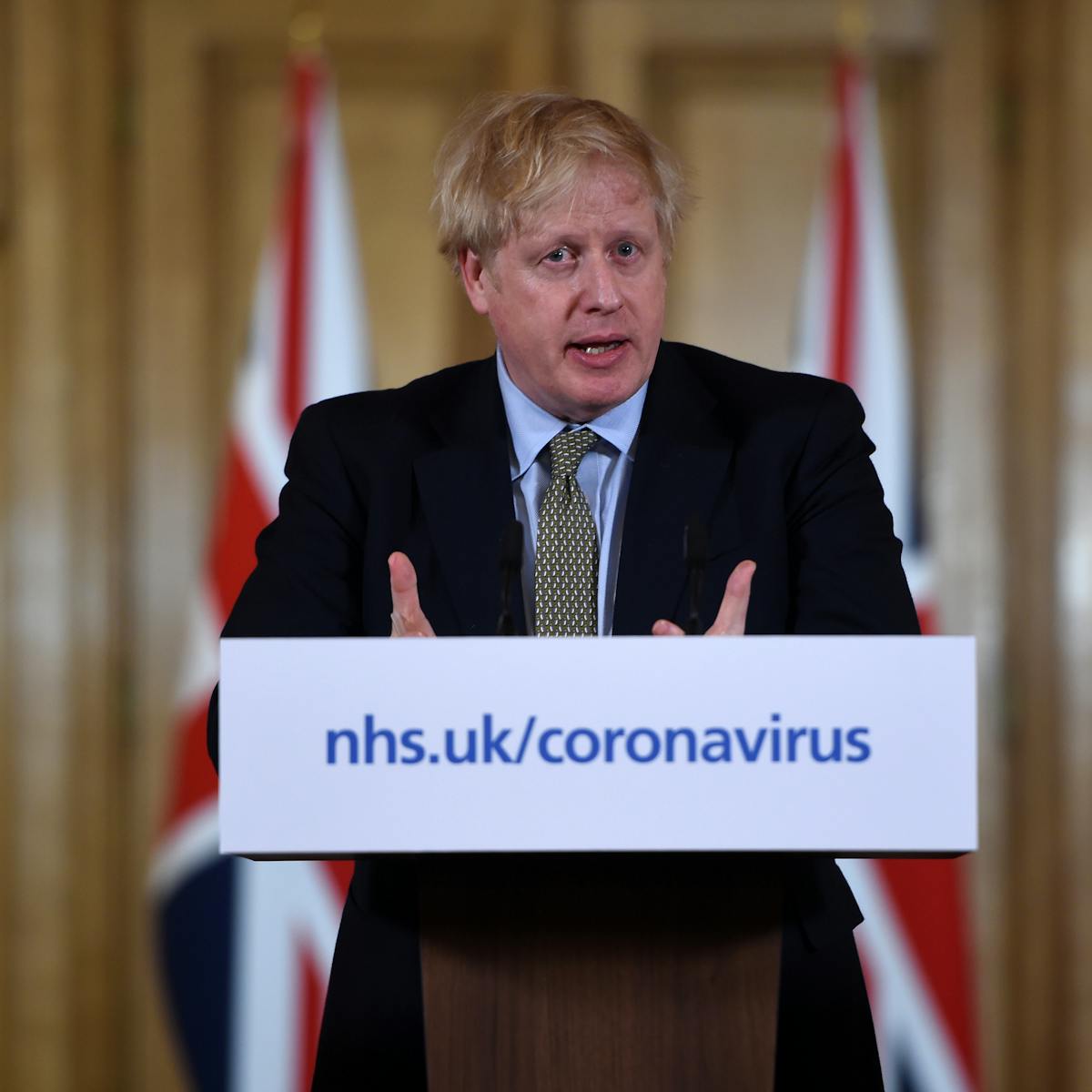
Eddie Mulholland/Daily Telegraph/EPA-EFE
To this end, the media’s regular use of the phrase reflects its compliance with – and encouragement of – the government’s pandemic communications strategy. It is one of these phrases that you cannot quite place where it first emerged but which quickly seeps into public discussion to the point that we all know what it means.
Throughout the pandemic, the British government has used a wartime propaganda playbook to deliver public communications about COVID and the purported solutions to it. In these terms, we are now heading for the end of the “combat” phase of the government’s propaganda delivery and the beginning of the post-pandemic – or post-war – phase.
In this sense, “freedom day” could be compared to VE Day (Victory in Europe Day, May 8 1945) and ought to be regarded as the latest in a long line of rhetorical associations with the second world war that have been encouraged over the last 16 months.
References to blitz spirit, the militarisation of language around and heroisation of the NHS and the attention on second world war veteran Tom Moore as the flagship of British determination and sacrifice are just a few of the ways this history has manifested in COVID Britain.
Concepts like “freedom” and “liberty” have been invoked by propagandists since the 16th-century Protestant Reformation and subsequent Enlightenment period. They emerged as influential writers – Thomas Paine, John Stuart Mill and Isaiah Berlin, to name a few – began to philosophise about the rights of the individual.
To this end, the popular use of “freedom” to describe the end of pandemic restrictions forms part of a populist audience seduction strategy, using emotional rather than rational rhetoric. The media’s purpose in using the phrase then is to appear to be on the side of the public. As Harold Lasswell, one of the founding fathers of communications studies, wrote in 1927: the best propaganda is that which is the “champion of our dreams”.
The philosopher Patrick Nowell-Smith discussed the seductiveness of the propaganda of “freedom” in his 1954 work Ethics, noting its association with hedonism and its “deliciousness” within the human mind. He caveats that hedonism is not always about “gluttony and self-centredness” and is not always “carnal”.
From the propagandist’s point of view though, “freedom” is an effective rhetorical tool because it means whatever the target audience wants it to mean. Its utility is that the term is vague but that it resonates with ease when uttered.
Understanding propaganda
One of the most common misconceptions around propaganda is that it always involves the communication of falsehoods to a mass audience and attempts to “brainwash” – evoking shades of North Korea or the Nazis. In the common mind, propaganda is synonymous with the use of dark arts to encourage a target audience to engage in behaviours or to think in ways that they would otherwise not. Undoubtedly, some propaganda does do this.
Propaganda is more complex than this and can also involve truth-telling, however selective or self-interested.
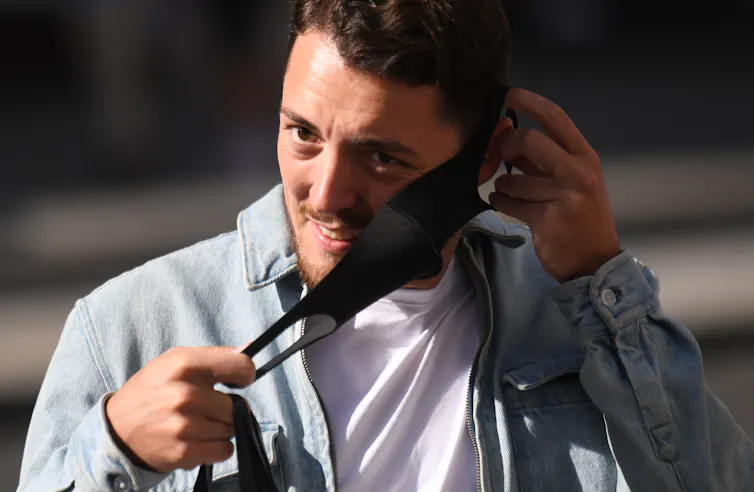
The masks come off: from July 19, there will be no legal requirement in England to wear a face covering. Neil Hall/EPA-EFE
Today, propaganda is all around us. It is undertaken by governments, state institutions, corporations trying to sell us things, media organisations, charities and powerful individuals in advance of their own interests – just look at any billionaire philanthropist “doing good” while paying next to zero tax.
Individual citizens have obtained the means to broadcast for ourselves, particularly via social media platforms, and we too have become propagandists. “Influencer” is just a more acceptable way of saying “propagandist.”
“Freedom day” is not a lie, because restrictions will be lifted. However, the popularisation of it as such (rather than “most restrictions lifted day,” for example), is part of a strategy (endorsed by government and mainstream media alike) that has wanted the British public to think, act, associate and feel in certain ways since the pandemic began.
Indeed, the best, or most effective, propaganda is that which creates emotional bonds between the target audience and certain people, products, events or concepts. “Freedom day” has been so-called because the powerful want us to think in certain ways about this day, and to exclude or overlook other aspects of the pandemic that it deems undesirable.
To overwhelm the public’s conscience (or to subtly railroad it while making it seem like choices are available) is one of the highest art forms in propaganda. We see this perhaps most clearly within public discussion of the vaccine programme wherein government and media have sought to marginalise more critical views of it.
Calling it “freedom day” attempts to nullify the public by encouraging us not to scrutinise government and media performance as we should. It reflects an attempt to move the discussion from science, sociology and public health to patriotism and emancipation.
Colin Alexander, Lecturer in Political Communications, Nottingham Trent University
This article is republished from The Conversation under a Creative Commons license. Read the original article.
The masks come off: from July 19, there will be no legal requirement in England to wear a face covering. Neil Hall/EPA-EFE


