


from The Conversation
— this post authored by Renee Collini, Mississippi State University
As sea level rises, it can be easy to miss the subtlety of higher water. It’s much harder to overlook saltwater more frequently flooding streets, impeding daily life and making existing problems worse.

Please share this article – Go to very top of page, right hand side, for social media buttons.
The frequency of high-tide flooding along the U.S. coasts has doubled since 2000, and it’s expected to increase five to 15 times more in the next 30 years, the National Oceanic and Atmospheric Administration warns in a new report released July 14, 2021.
I work with coastal communities in the northern Gulf of Mexico that are facing the risks of rising seas as they try to avoid preventable damages and costs, such as infrastructure failures and falling property values. Information like the NOAA report is critical to helping these communities succeed.
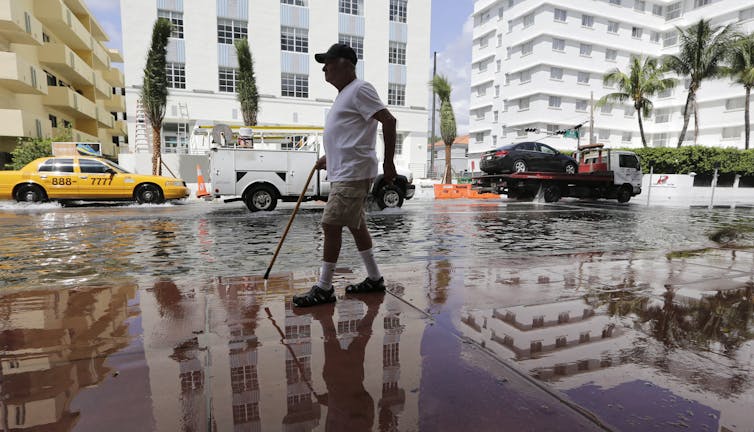
High-tide flooding has become a frequent problem in the Miami area. AP Photo/Lynne Sladky
Last year, the U.S. averaged four days of high-tide flooding, but that number doesn’t tell the whole story – regionally, several areas saw far more. There were record-breaking numbers of high-tide flooding days in 2020 along the Gulf of Mexico and southeast Atlantic coasts. The city of Bay St. Louis, Mississippi, jumped from three days of high-tide flooding in 2000 to 22 days in 2020.
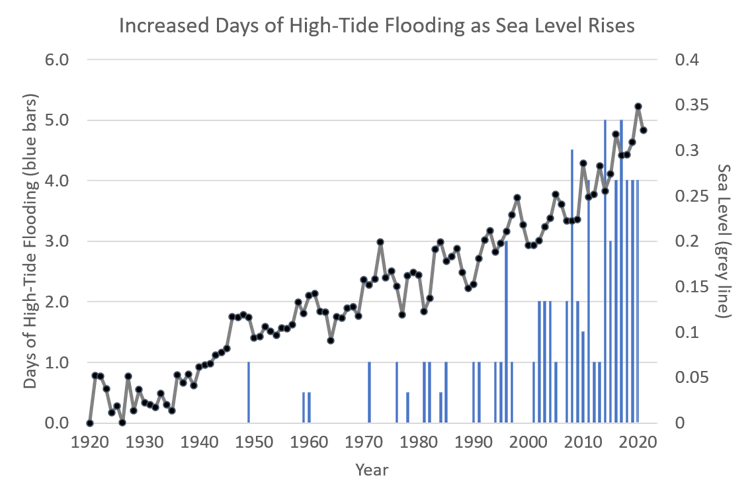
High-tide flooding days have been rising. Renee Collini; NOAA High Tide Flooding Outlook, CC BY-ND
NOAA’s annual high-tide flooding report projects a national median of three to seven days of high-tide flooding this year, again with differences expected regionally. The western Gulf Coast, including Texas and Louisiana, is expected to see the most tidal flooding days, ranging between seven and 15 days. The northeast Atlantic is projected to have six to 11 days of high-tide flooding. The Pacific Coast is projected to be lower than the other regions.
Calling it ‘nuisance’ flooding overlooks damage
High-tide flooding impedes the use of roads and increases wear and tear on stormwater and wastewater systems. The impact can seem minor, but as the frequency increases, these seemingly inconvenient flood days can have long-lasting impacts.
Already, areas at risk from sea level rise have seen decreases in property values, particularly where cities and homeowners haven’t taken steps to increase flood resilience. Insurance premiums are beginning to increase to reflect actual risk, and bond ratings are increasingly being tied to the resilience efforts of communities.
Flooded roadways can create dangerous situations where first responders struggle to safely reach those in need. Businesses get fewer visitors and feel the loss in depressed revenues. The more often this happens, the more it ripples through coastal economies. It can affect tax revenues and erode community ties.
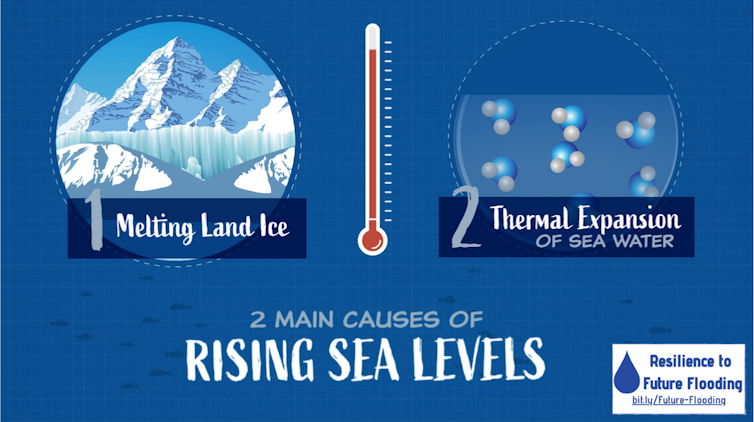
Globally, sea level has been rising by about one-eighth of an inch every year, and that rate is accelerating. It’s caused by both land ice melting as global temperatures rise and by thermal expansion in the oceans; the volume of water increases as it warms. Mississippi-Alabama Sea Grant Consortium, CC BY-ND
Sea level rise disproportionately impacts poorer, marginalized communities, and the impact of high-tide flooding has been no exception. People living in some of the most underserved coastal communities are facing increases in their insurance premiums because of the flood and storm risks, sometimes with more than 90% of the insurance policies in a single ZIP code projected to increase.
Ways to reduce the threat of high-tide flooding
NOAA’s projections provide valuable foresight that can help local governments, property owners and other coastal stakeholders to act before the water rises.
Communities can upgrade their infrastructure, such as raising roadways and installing backflow preventers in stormwater systems, and modify building standards such as increasing freeboard, the distance required between the first floor and base flood level, or designating base flood elevations outside of current FEMA flood zones to help prepare communities to withstand higher seas. Communities can also work with nature to preserve and restore coastal habitats that provide natural flood protection such as marshes and barrier islands.
Pensacola, Florida, is one example of a city being proactive. It recently completed a sea level rise vulnerability analysis to determine where high-tide flooding will begin to strain infrastructure, low-income neighborhoods, economic hot spots and critical facilities. The city was able to recommend where to prioritize action and what kind of action will be necessary to keep high-tide flooding from being costly or as damaging.

The message from the new report is clear: High-tide flooding and other more severe types of flooding have already increased with sea level rise and are expected to accelerate in the coming years. Communities have an opportunity to act now to reduce the impacts.
Residents in any coastal community can reach out to their local governments to encourage forward thinking. For more information on how to get involved in coastal resilience, almost all coastal and Great Lakes states have a coastal resilience specialist within their Sea Grant programs. Each regional NOAA Office for Coastal Management can offer guidance on how to get involved, as well.
[Like what you’ve read? Want more? Sign up for The Conversation’s daily newsletter.]
Renee Collini, Coastal Climate Resilience Specialist, Mississippi State University
This article is republished from The Conversation under a Creative Commons license. Read the original article.


