


from The Conversation
— this post authored by Paige Marta Skiba, Vanderbilt University; Dalie Jimenez, University of California, Irvine; Michelle McKinnon Miller, Loyola Marymount University; Pamela Foohey, Indiana University, and Sara Sternberg Greene, Duke University
As more Americans lose all or part of their incomes and struggle with mounting debts, another crisis looms: a wave of personal bankruptcies.

Please share this article – Go to very top of page, right hand side, for social media buttons.
Bankruptcy can discharge or erase many types of debts and stop foreclosures, repossessions and wage garnishments. But our research shows the bankruptcy system is difficult to navigate even in normal times, particularly for minorities, the elderly and those in rural areas.
COVID-19 is exacerbating the existing challenges of accessing bankruptcy at a time when these vulnerable groups – who are bearing the brunt of both the economic and health impact of the coronavirus pandemic – may need its protections the most.
If Americans think about turning to bankruptcy for help, they will likely find a system that is ill-prepared for their arrival.
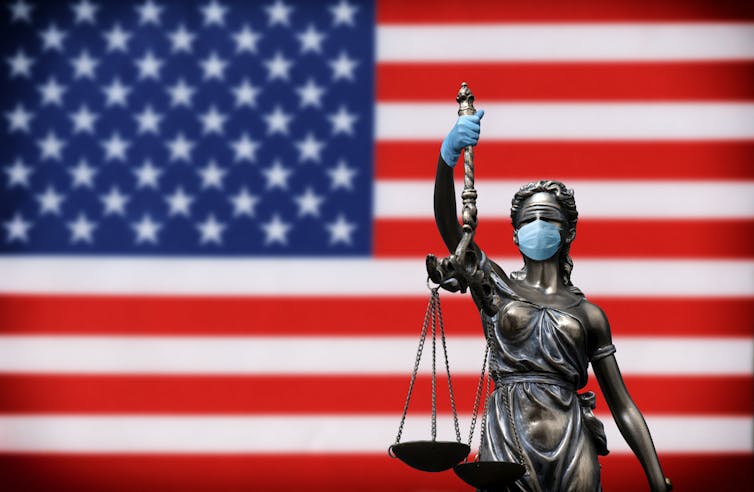
The courts are sheltering in place too. 101cats/Getty Images
It’s a hard road
There are many benefits to filing bankruptcy.
For example, it can allow households to avoid home foreclosure, evictions and car repossession. The “automatic stay” triggered at the start of the process immediately halts all debt collection efforts, garnishments and property seizures. And the process ends with a discharge of most unsecured debts, which sets people on a course to regain some financial stability.
The process helps the average household erase approximately US$50,000 in unsecured debt – such as payday loans and credit card and medical bills.
We know from our empirical research, however, that filing for bankruptcy comes with costs. In a Chapter 7 case, known as a liquidation when a debtor’s property is sold and distributed to creditors, households may be required to surrender some of their assets. The post-bankruptcy path to financial stability is often bumpy.
In a Chapter 13 reorganization case, households must commit to making monthly payments equal to their disposable income for three to five years. But the majority of people, unfortunately, are unable to keep up with their payments for that long and do not end up eliminating their debts.
Monetary costs can also be substantial. Attorney fees average $1,225 to $3,450. Court fees are over $300. And of course, there are also other downsides, such as social stigma, negative credit and lower future earnings.
Pent-up demand
Nonetheless, struggling Americans may find bankruptcy one of few viable options to address their worsening money problems, particularly as the pandemic shows no signs of ending soon.
Yet, as a consequence of nationwide shelter-in-place orders, consumer bankruptcy filings have declined significantly in recent weeks.
In the last 10 days of March, when states began issuing such orders, we found that Chapter 13 filings fell 45% compared with the last 10 days of March 2019, based on a docket search on Bloomberg Law. Filings in all of April – when most states were under lockdown – plunged 60%, while Chapter 7 filings were down 40%.

This suggests that there’s pent-up demand for bankruptcy protection – in terms of what we’d normally expect – on top of the impact from the coronavirus recession.
The current limited physical access of many bankruptcy courts presents additional problems, especially to already vulnerable groups. There is significant variation in how courts are handling the situation, but most require access to technology. This means that ethnic and racial minorities, seniors and people living in rural areas face systemic barriers to filing because of their more limited access to transportation and technology.
Self-represented filers, who navigate bankruptcy alone to avoid the hefty attorneys’ fees, face additional challenges and make up approximately 9% of bankruptcy cases. These filers typically have lower income and fewer assets – and thus are less able to afford the benefits of having an attorney – and are more likely to be black.
In some districts, only attorneys can file electronically, so people handling the process themselves must mail in their petition or find some other way of getting it to the courts, such as via physical drop boxes.
But such methods still assume access to technology. A computer, the internet and a printer are needed to access and print the petition. Libraries and other institutions that traditionally provide technology access for those who do not have it are, for the most part, closed.
Some courts are allowing initial email submission of the petition from those without attorneys, but petitioners are still required to follow up by sending original documents via the mail or drop boxes. Access to a computer, the internet and a printer remains necessary.
Finally many states require “wet signatures” on bankruptcy petitions. That is, people have to sign their names in ink, as opposed to using an electronic signature. To smooth filings while courts are physically closed, several states have waived this requirement for those using an attorney.
But even then, access issues still abound. People must first send their attorney the vast array of documents needed for filing – typically amounting to dozens of pages. Filers still need to be able to copy, scan and email documents. For those without computer access, they have to mail original documents, a somewhat risky proposition when important papers could get delayed, stolen or lost.
A bad time to file
In other words, the middle of a pandemic is not the best time to file for bankruptcy.
But with limited debt forbearances, over 30 million out of work and insufficient employment aid, we expect to see a great deal more distress – both financial and otherwise – in the coming months.
And without more aid to individuals soon, U.S. bankruptcy courts will likely face a tsunami of filings, not only from average Americans but companies as well. This will clog up the system, which is why many experts are calling on Congress to shore up bankruptcy courts with more judges and funding.
But a first priority should be shoring up individuals, for whom bankruptcy is seen as a last resort. If more aid isn’t forthcoming, the bankruptcy system may be too overwhelmed to handle even that.
[The Conversation’s newsletter explains what’s going on with the coronavirus pandemic. Subscribe now.]
Paige Marta Skiba, Economist, Professor of Law, Vanderbilt University; Dalié Jiménez, Professor of Law, University of California, Irvine; Michelle McKinnon Miller, Associate Professor of Economics, Loyola Marymount University; Pamela Foohey, Associate Professor of Law, Indiana University, and Sara Sternberg Greene, Professor of Law, Duke University
This article is republished from The Conversation under a Creative Commons license. Read the original article.


