


from The Conversation
— this post authored by Adrian Bardon, Wake Forest University
Something is rotten in the state of American political life. The U.S. (among other nations) is increasingly characterized by highly polarized, informationally insulated ideological communities occupying their own factual universes.

Please share this article – Go to very top of page, right hand side, for social media buttons.
Within the conservative political blogosphere, global warming is either a hoax or so uncertain as to be unworthy of response. Within other geographic or online communities, vaccines, fluoridated water and genetically modified foods are known to be dangerous. Right-wing media outlets paint a detailed picture of how Donald Trump is the victim of a fabricated conspiracy.
None of that is correct, though. The reality of human-caused global warming is settled science. The alleged link between vaccines and autism has been debunked as conclusively as anything in the history of epidemiology. It’s easy to find authoritative refutations of Donald Trump’s self-exculpatory claims regarding Ukraine and many other issues.
Yet many well-educated people sincerely deny evidence-based conclusions on these matters.
In theory, resolving factual disputes should be relatively easy: Just present evidence of a strong expert consensus. This approach succeeds most of the time, when the issue is, say, the atomic weight of hydrogen.
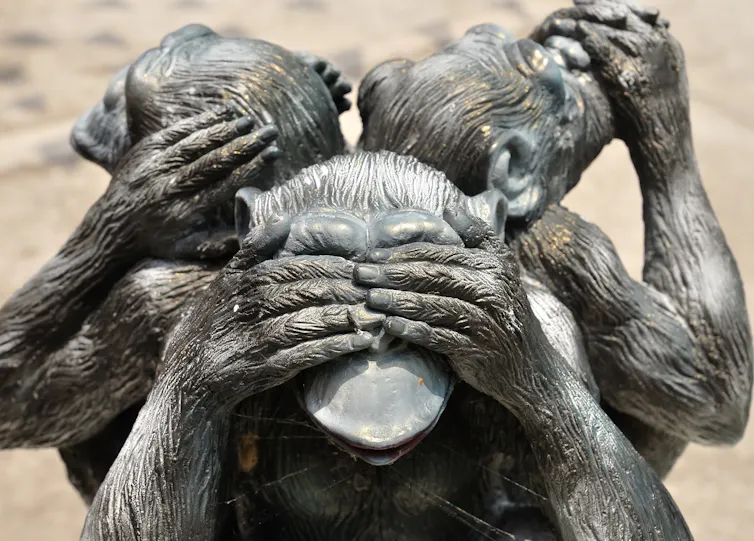
What’s behind this natural tendency? Zhou Eka/Shutterstock.com
But things don’t work that way when the scientific consensus presents a picture that threatens someone’s ideological worldview. In practice, it turns out that one’s political, religious or ethnic identity quite effectively predicts one’s willingness to accept expertise on any given politicized issue.
“Motivated reasoning” is what social scientists call the process of deciding what evidence to accept based on the conclusion one prefers. As I explain in my book, “The Truth About Denial,” this very human tendency applies to all kinds of facts about the physical world, economic history and current events.
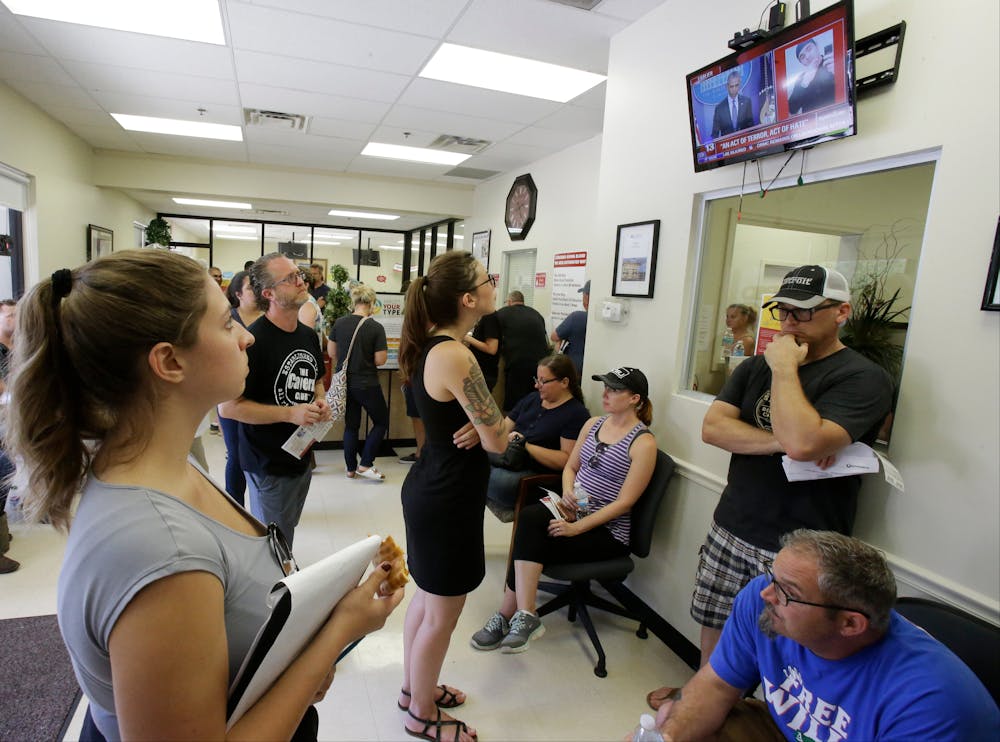
The same facts will sound different to people depending on what they already believe. AP Photo/John Raoux
Denial doesn’t stem from ignorance
The interdisciplinary study of this phenomenon has exploded over just the last six or seven years. One thing has become clear: The failure of various groups to acknowledge the truth about, say, climate change, is not explained by a lack of information about the scientific consensus on the subject.
Instead, what strongly predicts denial of expertise on many controversial topics is simply one’s political persuasion.
A 2015 metastudy showed that ideological polarization over the reality of climate change actually increases with respondents’ knowledge of politics, science and/or energy policy. The chances that a conservative is a climate change denier is significantly higher if he or she is college-educated. Conservatives scoring highest on tests for cognitive sophistication or quantitative reasoning skills are most susceptible to motivated reasoning about climate science.
This is not just a problem for conservatives. As researcher Dan Kahan has demonstrated, liberals are less likely to accept expert consensus on the possibility of safe storage of nuclear waste, or on the effects of concealed-carry gun laws.
Denial is natural
Our ancestors evolved in small groups, where cooperation and persuasion had at least as much to do with reproductive success as holding accurate factual beliefs about the world. Assimilation into one’s tribe required assimilation into the group’s ideological belief system. An instinctive bias in favor of one’s “in-group” and its worldview is deeply ingrained in human psychology.
A human being’s very sense of self is intimately tied up with his or her identity group’s status and beliefs. Unsurprisingly, then, people respond automatically and defensively to information that threatens their ideological worldview. We respond with rationalization and selective assessment of evidence – that is, we engage in “confirmation bias,” giving credit to expert testimony we like and find reasons to reject the rest.
Political scientists Charles Taber and Milton Lodge experimentally confirmed the existence of this automatic response. They found that partisan subjects, when presented with photos of politicians, produce an affective “like/dislike” response that precedes any sort of conscious, factual assessment as to who is pictured.
In ideologically charged situations, one’s prejudices end up affecting one’s factual beliefs. Insofar as you define yourself in terms of your cultural affiliations, information that threatens your belief system – say, information about the negative effects of industrial production on the environment – can threaten your sense of identity itself. If it’s part of your ideological community’s worldview that unnatural things are unhealthful, factual information about a scientific consensus on vaccine or GM food safety feels like a personal attack.
Unwelcome information can also threaten in other ways. “System justification” theorists like psychologist John Jost have shown how situations that represent a threat to established systems trigger inflexible thinking and a desire for closure. For example, as Jost and colleagues extensively review, populations experiencing economic distress or external threat have often turned to authoritarian, hierarchicalist leaders promising security and stability.
Everyone sees the world through one partisan lens or another, based on their identity and beliefs. Vladyslav Starozhylov/Shutterstock.com
Denial is everywhere
This kind of affect-laden, motivated thinking explains a wide range of examples of an extreme, evidence-resistant rejection of historical fact and scientific consensus.
Have tax cuts been shown to pay for themselves in terms of economic growth? Do communities with high numbers of immigrants have higher rates of violent crime? Did Russia interfere in the 2016 U.S. presidential election? Predictably, expert opinion regarding such matters is treated by partisan media as though evidence is itself inherently partisan.
Denialist phenomena are many and varied, but the story behind them is, ultimately, quite simple. Human cognition is inseparable from the unconscious emotional responses that go with it. Under the right conditions, universal human traits like in-group favoritism, existential anxiety and a desire for stability and control combine into a toxic, system-justifying identity politics.
When group interests, creeds, or dogmas are threatened by unwelcome factual information, biased thinking becomes denial. And unfortunately these facts about human nature can be manipulated for political ends.
This picture is a bit grim, because it suggests that facts alone have limited power to resolve politicized issues like climate change or immigration policy. But properly understanding the phenomenon of denial is surely a crucial first step to addressing it.
[ Deep knowledge, daily. Sign up for The Conversation’s newsletter. ]
Adrian Bardon, Professor of Philosophy, Wake Forest University
This article is republished from The Conversation under a Creative Commons license. Read the original article.


