


from The Conversation
–this post authored by Sarah Waldeck, Loyola University Chicago
The nation’s wealthiest private colleges and universities have a new expense.
Thanks to a provision in the tax reform package that President Donald Trump signed in late 2017, these schools are paying a 1.4% tax on their net investment income. This highly targeted tax only applies to schools with endowments worth at least US$500,000 per tuition-paying student.

Please share this article – Go to very top of page, right hand side, for social media buttons.
One aspect of this new legislation surprised me, even though I’m an expert on the growth of university endowments and potential government responses to this trend. In my view, the structure of the tax implicitly warns elite schools that they need to do a better job of serving low-income students.
Mega-endowments
Endowments fund student financial aid, academic programs, research and overall university operations. Schools build endowments by soliciting money or other financial assets from donors and then investing those assets to grow principal and create income for future expenditures.
The vast majority of colleges and universities have modest endowments of no more than $50 million, but some schools have what I call “mega-endowments” that are far larger than what is necessary to support institutional operations.
The Internal Revenue Service estimates that up to 40 schools may have endowments large enough to owe the tax.
Based on the latest available data, from 2018, this surely will include Harvard, with a $39 billion endowment. The tax will also no doubt hit Yale, with its $29 billion endowment and Stanford, with $26.5 billion.
With an endowment as large as Harvard’s, for example, the school would have to enroll more than 76,000 students before it fell beneath the taxing trigger. But it has a total of only about 20,000 students enrolled in its undergraduate and graduate programs.
Some of the other schools that will likely owe the new tax are less prominent, but have large endowments relative to student body size. For instance, Amherst, a private college in Massachusetts with a nearly $2.4 billion endowment and about 1,800 students, will surely face this new obligation. Grinnell, a private college in Iowa with an almost $2 billion endowment and roughly 1,700 students, is also likely to pay.
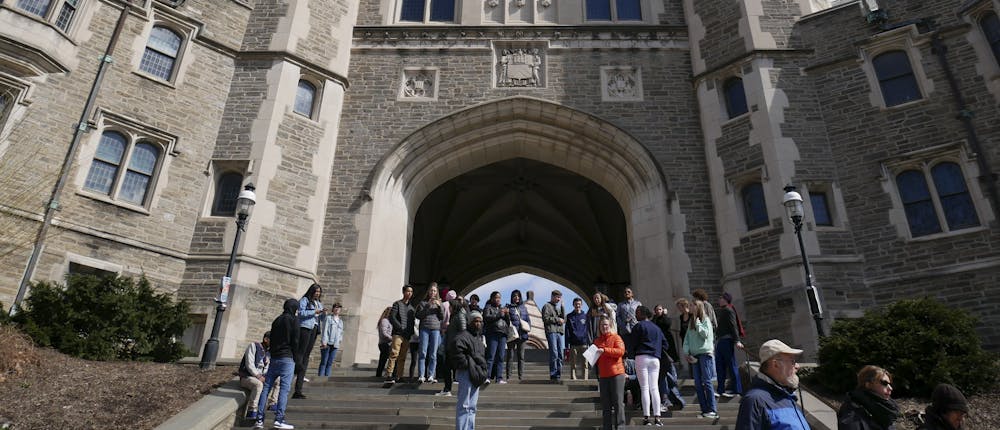
Princeton’s endowment is among the nation’s biggest. AP Photo/Seth Wenig
Proposed regulations
Within the next few months the complete list of schools that have to pay the tax will become a matter of public record.
The upcoming months will also provide a better sense of what counts as investment income. This will certainly include income produced by a school’s endowment, but may include more.
In July, the IRS issued proposed regulations that would also include other sources of income, such as interest on student loans and rents from school-owned housing.
The IRS is currently taking comments on these proposed regulations. It will issue final regulations after the comment period closes on Oct. 1.
Prior to this latest round of tax reforms, the income of all nonprofit colleges and universities was exempt from any federal tax so long as the income was derived from activities related to an educational purpose, such as instruction and research.
Why tax these endowments
To help offset the costs of overseeing the nonprofit sector, the government has long made foundations pay either a 1% or 2% tax on their net investment income. The new rules for taxing the richest colleges and universities’ net investment income are akin to how the government taxes private foundations.
But Congress did not make clear why it decided to levy a tax on the net investment income of the wealthiest colleges and universities.
Undoubtedly, Congress wanted to find revenue to offset the cost of assorted tax cuts. But its Joint Committee on Taxation has projected that the tax on investment income will generate only $200 million per year – hardly a book-balancing sum when the budget deficit is pushing $1 trillion.
Most of the schools that will pay the tax are in liberal strongholds. People like former President George W. Bush adviser N. Gregory Mankiw have suggested that a Republican-controlled Congress may have wanted to tax the elite colleges and universities that it perceives as overwhelmingly liberal.
But an exemption from tax on investment income is only one of the many governmental subsidies that private colleges and universities receive. They enjoy a range of other preferential treatment – all because government believes that higher education does a lot of good. In my view, the new tax sends a message to wealthy schools about what is expected in return for these subsidies.
Immunity for Berea College
Perhaps the key to deciphering the message lies in the phrase “tuition-paying student.” There was bipartisan agreement that this language needed to be included so that Berea College in Kentucky would not be taxed. Berea has an endowment of about $700,000 per student, well above the taxing trigger Congress set.
What’s so special about this small college? Its core mission is to serve “students of academic promise with limited financial means.” Berea charges no tuition and admits only academically promising, lower-income students – primarily from Appalachia.
The college fits precisely at the intersection of education and the American dream: It prepares poor students to compete in the marketplace and thereby helps them climb the economic ladder.
Many of the schools that will pay the 1.4% tax on net investment income are in the group of institutions that admit students without considering their ability to pay tuition and meet 100% of a student’s demonstrated financial need. Harvard, Princeton and more than a dozen other wealthy colleges and universities point to these policies when defending the size of their endowments. They argue that their institutional wealth helps make these policies possible.
But research has demonstrated that elite colleges and universities are not nearly as good as they should be at getting poor students to apply. These schools also fail to create environments in which students with limited means feel that they belong, sometimes hindering academic success.
When Congress protected Berea, I believe it sent a signal. The real message behind this new measure is that the surest way for colleges and universities to hang onto their tax breaks is to figure out how to better serve poor students.
[ Like what you’ve read? Want more? Sign up for The Conversation’s daily newsletter. ]
Sarah Waldeck, Distinguished Professor of Law, Loyola University Chicago
This article is republished from The Conversation under a Creative Commons license. Read the original article.


