


from The Conversation
— this post authored by Peg Murray-Evans, University of York
The Commonwealth nations are meeting in London at a crucial time for the host nation. With just one year until the UK begins its departure from the European Union, new agreements need to be struck and important arrangements made.

While Brexit is not on the formal agenda at the Commonwealth Heads of Government Meeting, it’s no coincidence that the UK has chosen to host the summit for the first time in 20 years at this precise moment. For prominent Leave campaigners, the Commonwealth was a key symbol of the economic opportunities that lay outside the EU. They claimed that the EU was limiting the UK’s ability to trade with countries outside the bloc, and predicted great deals with some of the country’s 52 Commonwealth partners, spanning the globe from North America to Africa and on to Asia.
So hosting the CHOGM provides a UK government embroiled in the process of Brexit with a perfectly timed opportunity. It can use this moment to seek to reinforce a positive message about the potential alliances that await “Global Britain” outside the EU.
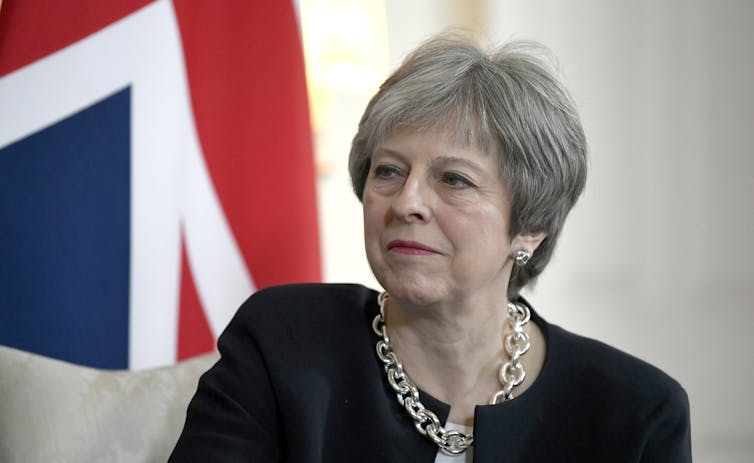
May is on the look out for new partners. EPA
To match the symbolic importance of the Commonwealth to the UK government’s wider vision for its place in the world, the meeting has an ambitious and optimistic agenda. It aims to tackle matters of sustainability, democracy, security and prosperity, although there are some doubts about the organisation’s capacity for addressing issues of such magnitude.
Meanwhile much of the UK’s interest in the Commonwealth relates to securing free trade agreements with priority partners after Brexit. Its key targets for trade deals include Canada, New Zealand, Australia and India. The meeting will allow further informal talks with these countries, although the gains from any eventual agreements are likely to be small given the large distances and low levels of existing trade between the partners.
A fly in the ointment
The UK’s focus on the symbolism of Commonwealth summitry and the economic opportunities associated with boosting trade with larger and more developed Commonwealth economies, however, obscures an arguably more pressing issue that arises as a result of Brexit. There is significant disquiet among some Commonwealth nations about the impact of the UK’s proposed exit from the European single market and customs union on developing Commonwealth countries in Africa, the Caribbean and Pacific.
These countries currently receive duty and quota free access to the UK market via EU trade preferences or Economic Partnership Agreements. As a result of this existing privileged relationship they are amongst the Commonwealth members that are most dependent on trade with the UK.
The UK government has committed to replicating existing EU trade arrangements for developing countries. However, there are numerous technical and political complexities involved in that.
The Commonwealth countries with the highest levels of export dependence on the UK are Botswana, Belize, Seychelles, Mauritius and Saint Lucia. All would face a loss of market access as a result of Brexit unless arrangements are made to replicate their existing Economic Partnership Agreements.
In a number of Commonwealth developing countries, particular sectors or industries have important historic and continuing links to the UK market. These include bananas from Saint Lucia, sugar from Fiji and Belize, vegetables from Kenya and beef from Botswana. Any new barriers to trade between the EU and UK could also disrupt supply chains involving Commonwealth countries unless specific measures are put in place. This could affect countries like South Africa, which rely on existing trade agreements with the EU for their involvement in industries such as vehicle manufacturing.
These problems can be resolved, but they require timely engagement from the UK, EU and the relevant developing countries. Together, they need to make sure that there is no disruption to existing trade relationships at the point of Brexit.
On top of this, UK development NGOs have argued that the UK can do better than simply replicating the EU’s existing trade arrangements for developing countries, which are controversial in their own right. This, however, will be an opportunity missed unless the UK government dedicates significant attention to the issue sooner rather than later.
 Talks with other Commonwealth nations are indeed an chance to boost the UK’s global image and to investigate post-Brexit trade options. But the UK tends to focus on a select group of larger Commonwealth economies while giving less priority to smaller developing countries for whom Brexit represents a possible threat. It needs to use opportunities such as the CHOGM to engage in detailed technical discussions with its Commonwealth partners about how to ensure – as a minimum – that vulnerable developing economies do not lose out as a result of the decision to leave the EU.
Peg Murray-Evans, Research Associate, Department of Politics, University of York
This article was originally published on The Conversation. Read the original article.


