


Written by Jeff Miller, A Dash of Insight
— this post authored by Mark D. Hines
Our previous article asked the question: How Long Was Your Learning Curve? We considered the practice and time it takes to become a successful trader, noting success doesn’t happen overnight – and sometimes it never happens. A glance at your news feed will show that the key points remain relevant.

Please share this article – Go to very top of page, right hand side, for social media buttons.
This Week: Do You Keep a Shopping List Ready?
Traders and investors have very few things in common, but one of them (aside from the profit motive) is there are dip-buyers and momentum-riders in both camps. In recent weeks, a variety of market leaders have experienced significant sell-offs (e.g. Facebook, Amazon, Netflix, and others), and these events have created both frustration and excitement for market participants. But how do you know when a sell-off is an opportunity or a red flag?
We gave some perspective recently in this article: How to Exploit an Inefficient Market, whereby we reviewed the sell-offs in both Facebook and Nvidia (note: we really like the artificial intelligence stocks, such as Nvidia – despite the inevitable temporary setbacks). Further, Dr. Brett Steenbarger recently shared invaluable insights in this article on what helps traders identify “good” risk/reward opportunities (hint: leverage your strengths as a trader).
Due to the recent market choppiness, many momentum traders, in particular, are feeling out of sync with the market. For example, in this article, Adam Grimes explains he’s had discussions with many traders over just the last week where he sees a common theme:
Many people are very frustrated with this market. Many people feel very much out of sync with the swings, and I heard from more than one person “it’s like I’m doing everything at exactly the wrong time.”
As another example, two of our momentum-based trading models (Felix and Athena) have been generating strong returns over the last year, but have been “frustrated” over the last two-weeks.
Model Performance:
Per reader feedback, we’re continuing to share the performance of our trading models.
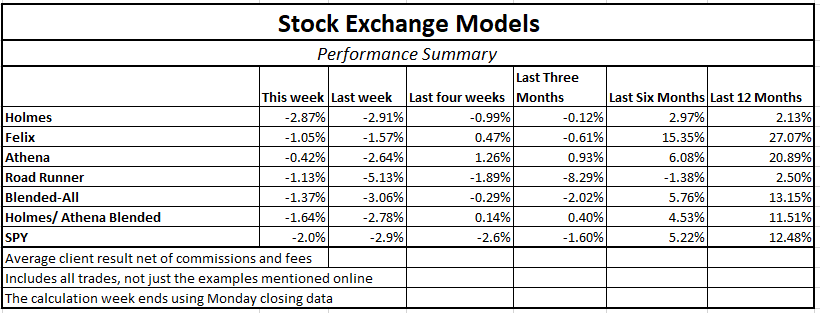
We find that blending a trend-following / momentum model (Athena) with a mean reversion / dip-buying model (Holmes) provides two strategies, effective in their own right, that are not correlated with each other or with the overall market. By combining the two, we can get more diversity, lower risk, and a smoother string of returns.
And for these reasons, I am changing the “Trade with Jeff” offer at Seeking Alpha to include a 50-50 split between Holmes and Athena. Current participants have already agreed to this. Since our costs on Athena are lower, we have also lowered the fees for the combination.
If you have been thinking about giving it a try, click through at the bottom of this post for more information. Also, readers are invited to write to main at newarc dot com for our free, brief description of how we created the Stock Exchange models.
Expert Picks From The Models:
This week’s Stock Exchange is being edited by Blue Harbinger; (Blue Harbinger is a source for independent investment ideas).
Holmes: This week I like Weibo Corp (WB). Are you familiar with this company?

Blue Harbinger: Yes. It’s basically a social media platform in China. And its share price has increase about 10x in the last two years. Its market cap is now up to over $26 billion USD. Why do you like this stock, Holmes?
Holmes: As you know, I like to buy on the dip. And as you can see in the following chart, Weibo has pulled back nicely.
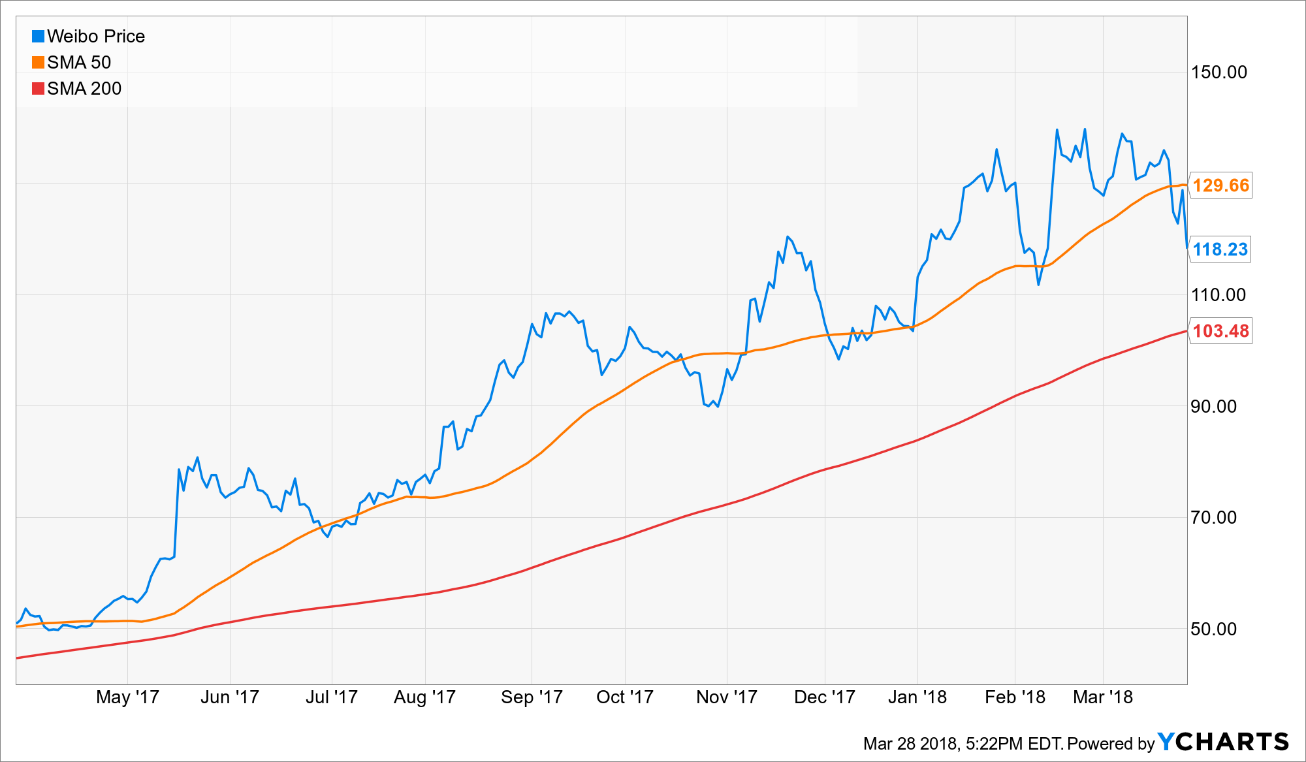
BH: Interesting pick, Holmes. That chart actually looks a little more like something Road Runner would buy instead of you because it’s had such strong momentum over the last year, but I certainly see this dip you’re talking about. Are you aware that this company beat estimates on both the top and bottom line last quarter, and the company is guiding Q1 estimates well above consensus Street estimates? Here is a look at the Fast Graph, if you are interested.

Holmes: Thanks for that information, but as I remind you almost every week, my typical holding period is only 6-weeks. I’ll be out of this trade before Q1 earnings is announced. I bought the dip, and I’m holding for some mean reversion.
BH: Well, the shares (they’re actually an ADR) were up nearly 4% yesterday, the last day of the quarter, so I’m sure you appreciate that. I’m going to add this one to my watch list, and I am going to check back in with you on it in about 6-weeks.
Holmes: Ok. Thank you. How about you, Road Runner – any trades this week?
Road Runner: Yes. This week I bought Hertz (HTZ). What do you think about that?
BH: I think Weibo looks more like a Road Runner stock, than Hertz, but I digress. I know you have your objective model-based process in place. But why do you like Hertz, Road Runner?
RR: I like to purchase stocks when they are in the lower end of a rising channel. Here is a look at the setup for Hertz.
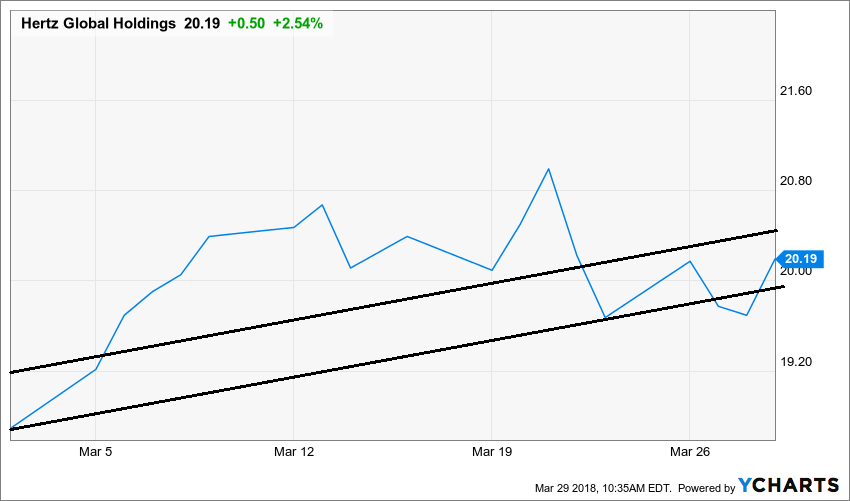
BH: Honestly, I’m not sure what to make of Hertz, Road Runner. One day it’s an airport car rental company, the next day someone is telling me they’re going to turn into a driverless ride sharing service. I know they seem to miss earnings expectations more than they meet or exceed them, and the company’s revenues don’t seem to be growing much in recent years. Here is a look at the Fast Graph.
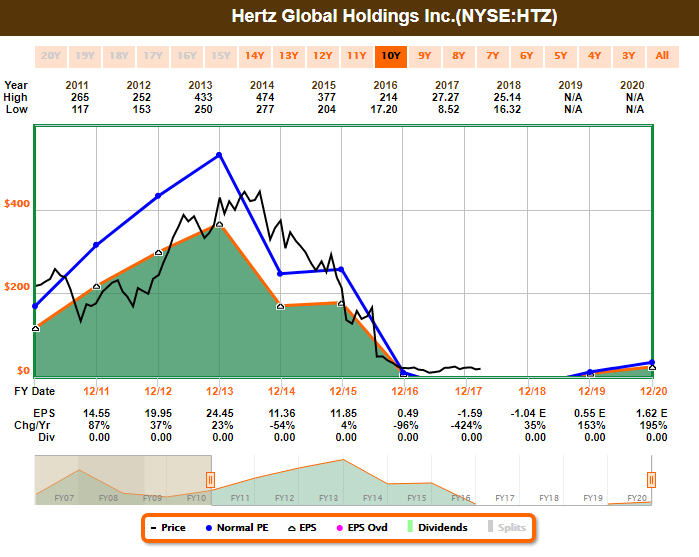
RR: Sometimes that long-term uncertainty that you seem to be conveying creates exactly the type of environment where traders can thrive. I typically hold for about 4-weeks, and this one looks attractive.
BH: Thanks, RoadRunner. I’ll keep an eye on Hertz. How about you, Athena – any trades this week?
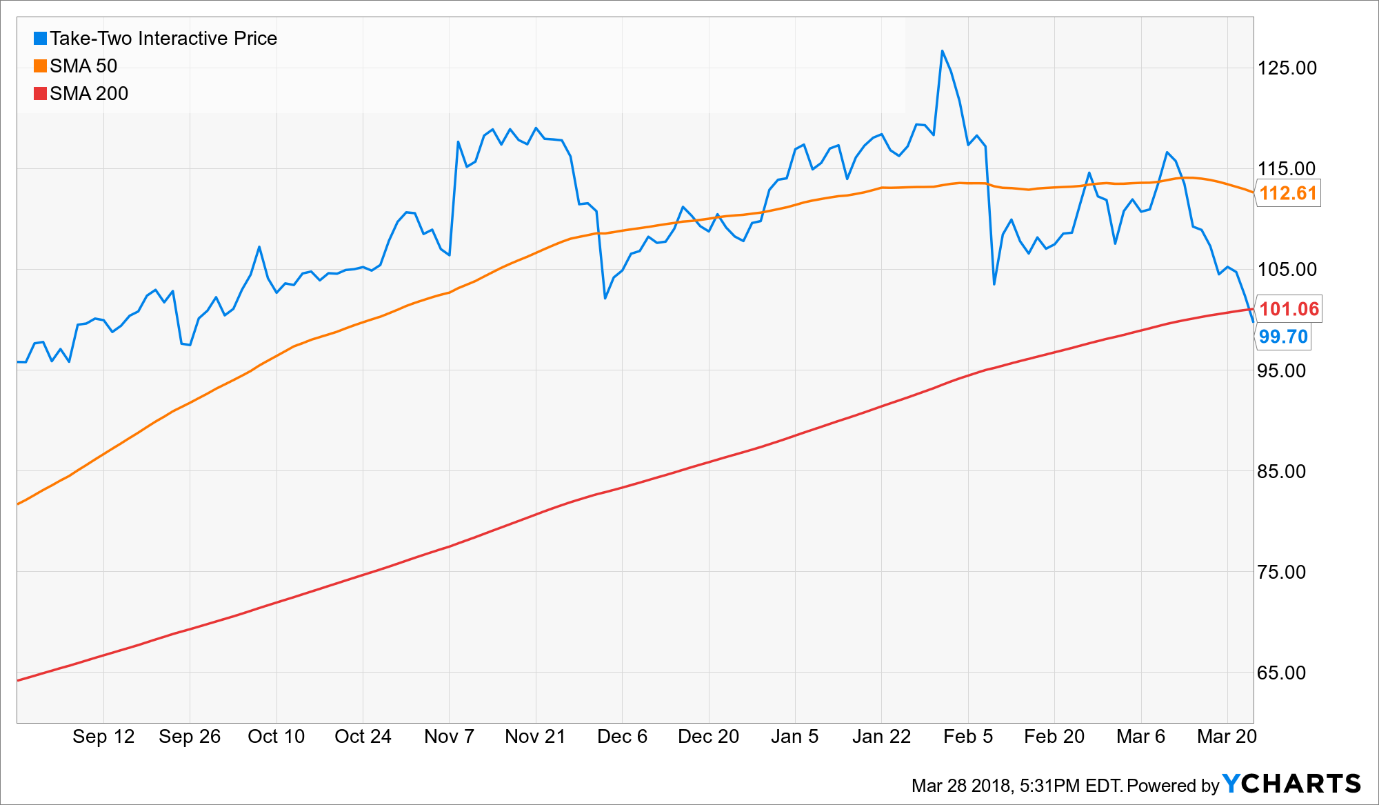
Athena: Yes. This week I sold Take Two Interactive (TTWO). If you recall, I purchased the shares back on 8/28/17 for $95, and I just sold them this week on 3/23/18 for $103. Here is a look at the buy and sell charts.

BH: Okay – interesting. Remind us what you look for in a trade?
Athena: I am a momentum trader. I typically hold for about 17-weeks, and I use price targets and some dynamic stop order procedures. What do you think of the trade?
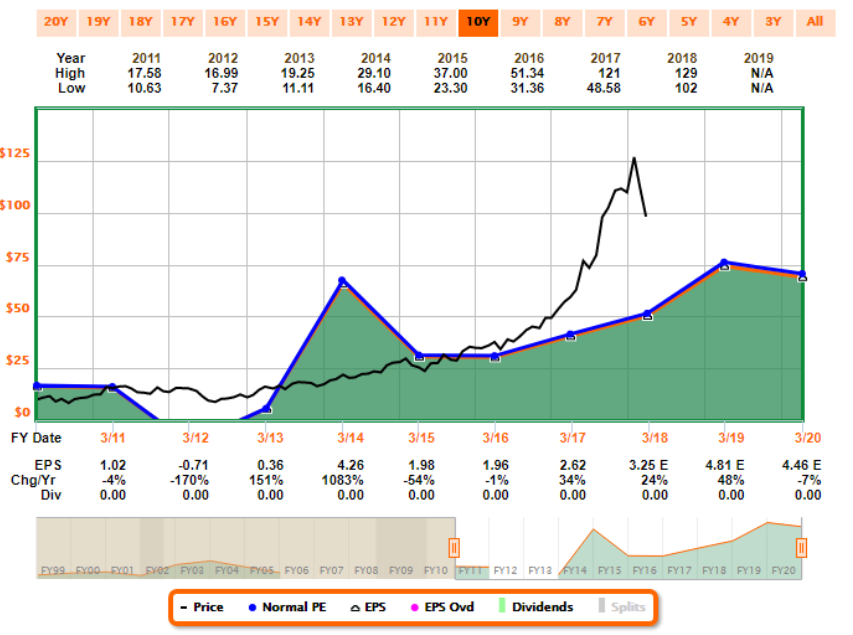
BH: Looks like you made some money, Athena. Nice job. TakeTwo recently missed revenue estimates when it announce earnings last month, but it also raised guidance. Here is a look at the FastGraph.
Athena: Thanks for that info. How about you Felix – any trades this week?
Felix – No trades this week, but I did run the S&P 500 stocks through my model, and the top 20 rankings are included in the following list.

BH: Thanks, Felix. And wow – I see lots of popular momentum names on your list… Micron, Netflix, Nvidia, General Electric, Amazon. And they all look like momentum play, except for maybe GE.
Felix: Correct. I like momentum, however my typical holding period is longer than the other models. I typically hold for around 66 weeks.
BH: Interesting, and thank you for sharing. How about you, Oscar – what have you got to share this week?
Oscar: I ran the comprehensive ETF universe through my model, and the top 20 are shown in the following ranking.

BH: I really appreciate these rankings – especially because you share these ETF ideas. Your typical holding period is 6-weeks, correct?
Oscar: Correct. And I usually just rotate to a new sector ETF after that time period.
Conclusion:
When the market sells off, it can be helpful to have your shopping list ready (especially if the subsequent rebound is swift). Specifically, a shopping list can help you quickly decide which names are worth considering, and which are to be avoided. Our trading models constantly monitor many hundreds of individual stocks (i.e. their shopping lists), but only buy when specific near-term technical conditions are met. The models can more efficiently sift through a lot of data than humans can. Plus, we find that a blended approach between multiple model-based strategies can provide more diversity, lower risk, and a smoother string of returns.
Background On The Stock Exchange:
Each week, Felix and Oscar host a poker game for some of their friends. Since they are all traders, they love to discuss their best current ideas before the game starts. They like to call this their “Stock Exchange.” (Check out Background on the Stock Exchange for more background). Their methods are excellent, as you know if you have been following the series. Since the time frames and risk profiles differ, so do the stock ideas. You get to be a fly on the wall from my report. I am usually the only human present and the only one using any fundamental analysis.
The result? Several expert ideas each week from traders, and a brief comment on the fundamentals from the human investor. The models are named to make it easy to remember their trading personalities.

Getting Updates:
Readers are welcome to suggest individual stocks and/or ETFs to be added to our model lists. We keep a running list of all securities our readers recommend, and we share the results within this weekly “Stock Exchange” series when feasible. Send your ideas to “etf at newarc dot com.” Also, we will share additional information about the models, including test data, with those interested in investing. Suggestions and comments about this weekly “Stock Exchange” report are welcome.
Trade Alongside Jeff Miller: Learn More.


