


Written by Lance Roberts, Clarity Financial
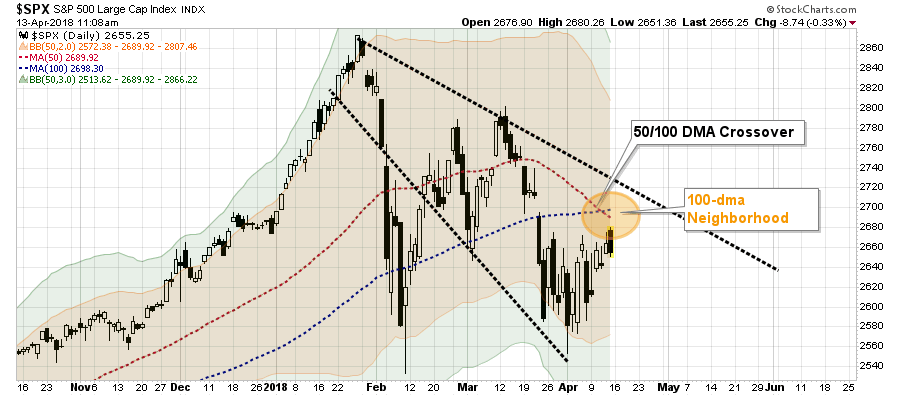
I have noted previously the “mistake” that many investors make is identifying a very “specific” price target to take action. For example, in the chart above, the 100-dma, our previous target, currently resides at roughly at 2698. The mistake often made is to only take action if that specific target is met. More often than not, investors wind up disappointed. As Maxwell Smart used to say: “Missed it by that much.”

Please share this article – Go to very top of page, right hand side, for social media buttons.
For us, technical analysis is a critical component of the overall portfolio management process and carries just as much weight as the fundamental process. As I have often stated:
“Fundamentals tell us WHAT to buy or sell, Technicals tell us WHEN to do it.”
In our methodology and process, technical price points are “neighborhoods” rather than “specific houses.” While a buy/sell target is always identified BEFORE a transaction is made, we will execute when we get into the general “neighborhood.”
Given the recent rally, and overbought conditions, we are using this rally to follow our basic portfolio management rules. As the market approaches the “neighborhood” of the 100-dma we are:
- Selling laggards and raising cash.
- Rebalancing remaining long-equity exposure to comply with portfolio target weightings
- Rebalancing the total allocation model to comply with target exposure levels. (See 401k plan manager below)
As a reminder here are the basic rules to follow.
Step 1) Clean Up Your Portfolio
- Tighten up stop-loss levels to current support levels for each position.
- Take profits in positions that have outperformed during the rally.
- Sell laggards and losers (those that lagged the rally, will lead the decline)
- Raise cash and rebalance portfolios to target weightings.
Step 2) Compare Your Portfolio Allocation To Your Model Allocation.
- Determine areas where exposure needs to be increased or decreased (bonds, cash, equities)
- Determine how many shares need to be bought or sold to rebalance allocation requirements.
- Determine cash requirements for hedging purposes
- Re-examine portfolio to rebalance allocations to adjust for relevant market risk.
- Determine target price levels for each position.
- Determine “stop loss” levels for each position being maintained.
Step 3) Be Ready To Execute
This is just how we do it. However, there ar many ways to manage risk, and portfolios, which are all fine. What separates success and failure is
1) having a strategy to begin with, and;
2) the discipline to adhere to it.
Tomorrow I will continue this discussion.


