


Written by Lance Roberts, Clarity Financial
I know, lots of charts, but “bear” with me. (pun intended)

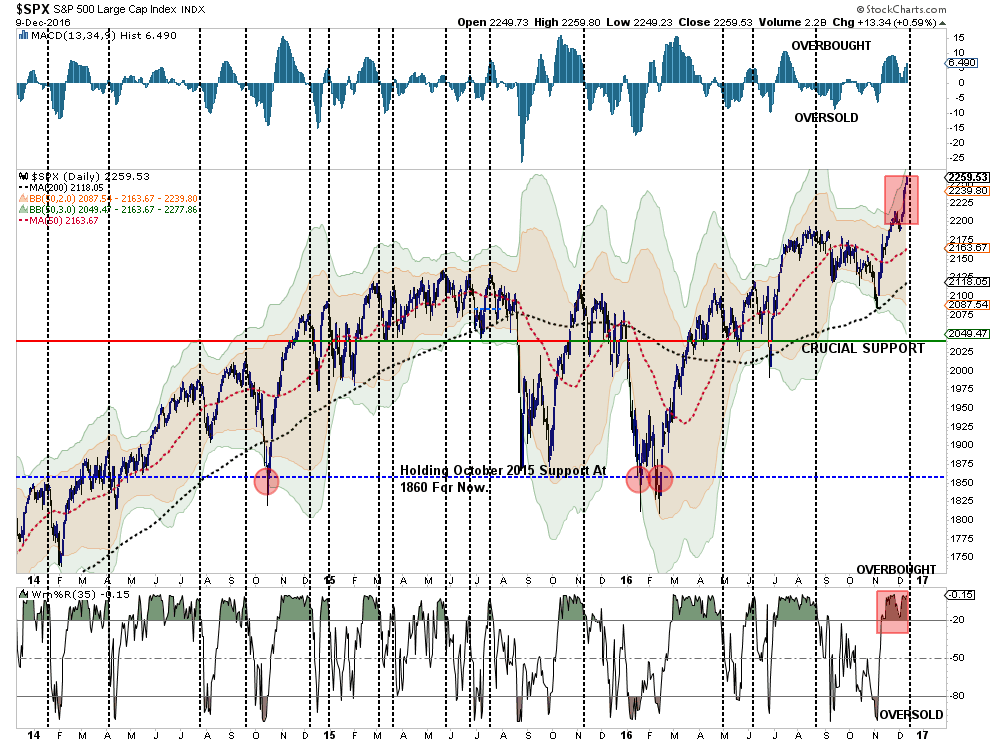
As shown below, the market is currently pushing well into 3-standard deviations above the 50-day moving average. As discussed above, such extensions are rare and do not historically last very long.
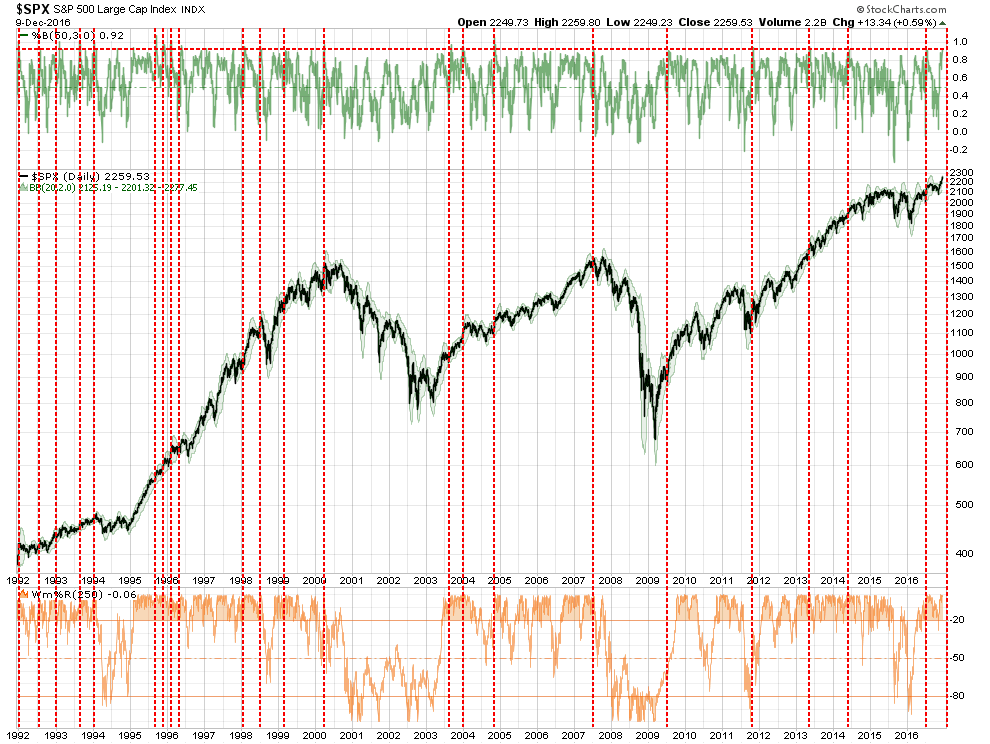
As shown at the top of the next chart, the market is currently at 92% of a full 3-standard deviation extreme. The horizontal dashed red line shows all the previous times the market hit such extreme levels going back to 1992. Short and intermediate-term corrections are common along with more major crashes.
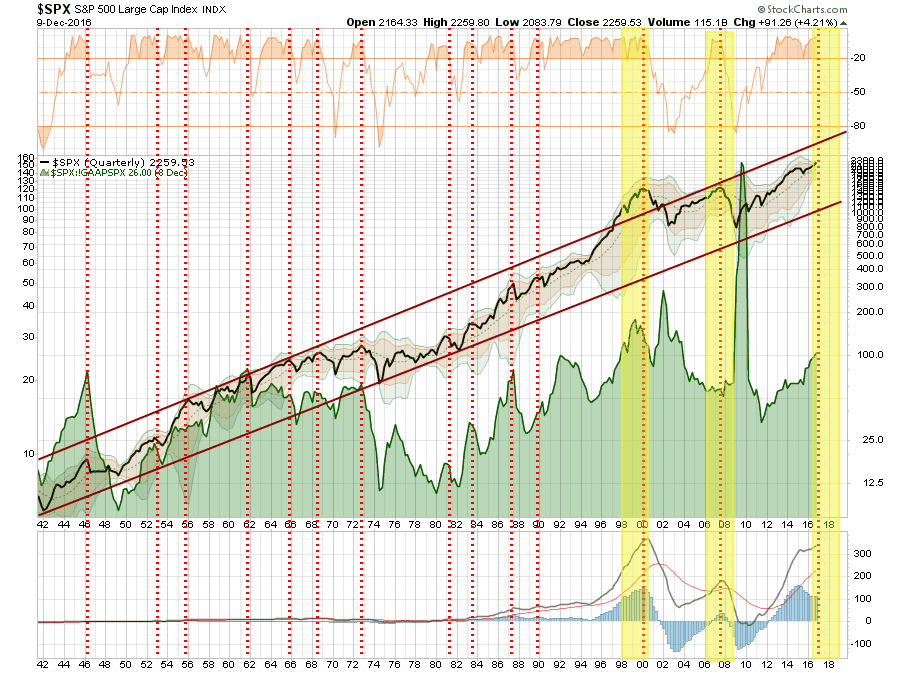
This last chart shows a longer-term picture of quarterly data back to 1942. With valuations high and the markets extremely overbought, as shown by the vertical red dashed lines, corrections have been common. The highlighted areas show where extreme deviations have collided with really bad outcomes….like now.
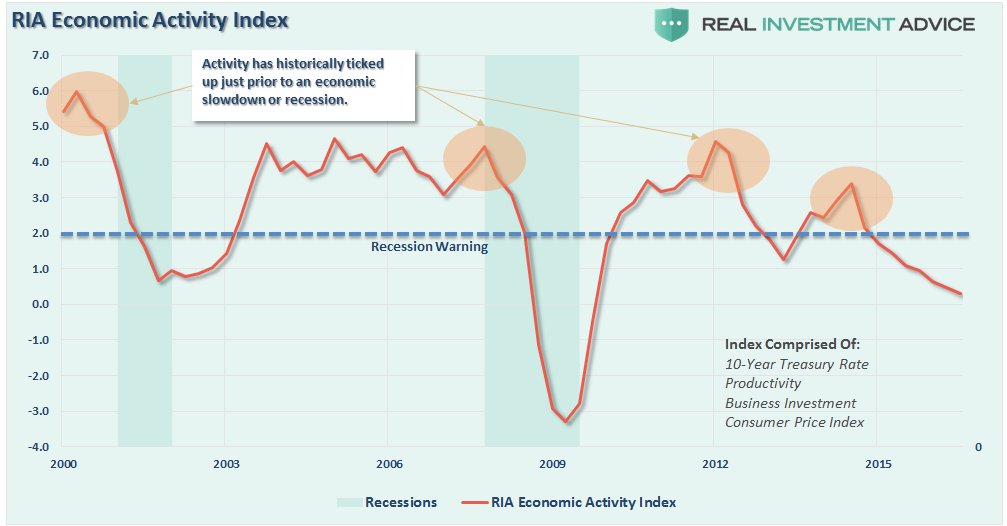
Here is the point. Despite the rampant optimism running through “Main Street” and “Wall Street” since the election there is little changed economically speaking. The economy remains weak, labor costs have surged, monetary policy has tightened, and a stronger dollar negatively impacts corporate earnings. Wages haven’t increased much for the average worker and employment is still trending lower.
In fact looking at the primary indicators of things that affect the production side of the economic equation, things don’t look so good.
However, the markets rally on expectations. Therefore, here is the question you must answer:
“After a 200% increase from the financial crisis lows, trillions of dollars injected into the financial markets and the economy, and 8-years of economic growth – exactly what is not already priced into the financial markets?”
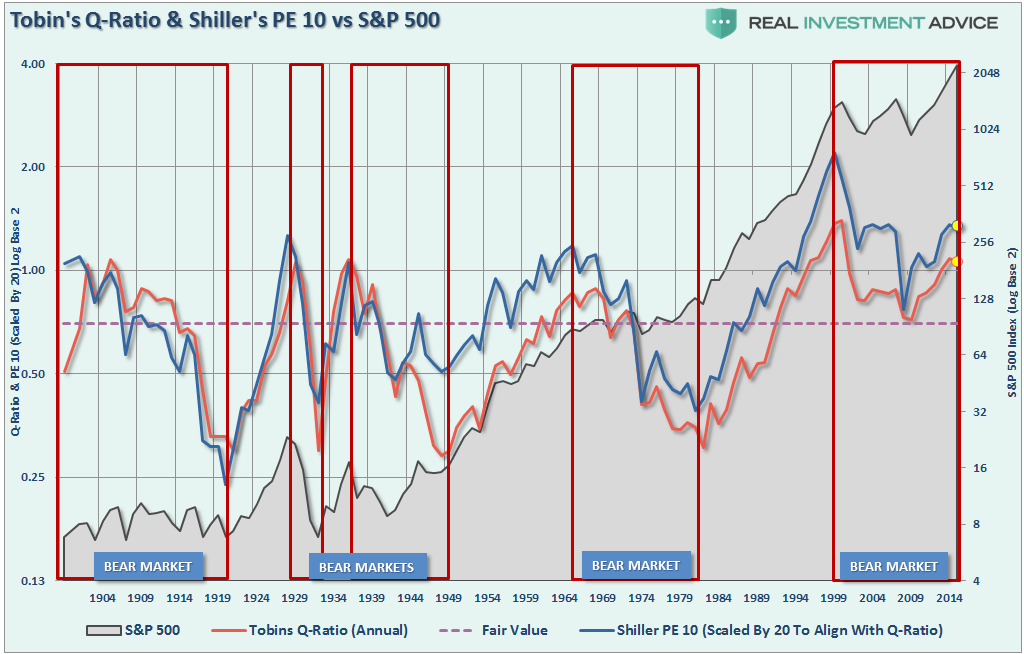
Valuations are also a problem (both P/E and Tobin Q-ratios) with investors currently on the wrong side of the equation.
For those long energy-related equities, this is likely a good time to take in profits and rebalance exposure during short-term corrections.
However, the bigger picture is that while long-exposure remains recommended currently, it is also critically important not become overly complacent. Just because the lights are still on and the music “still a pumpin'”, smarter investors tend to quietly exit before the cops show up.
Just don’t forget to turn off the lights if you are the last to leave.


