


from The Conversation
— this post authored by Jeremy Rossman, University of Kent
As case numbers of COVID-19 continue to rise around the world, we are starting to see an increasing number of reports of neurological symptoms. Some studies report that over a third of patients show neurological symptoms.

Please share this article – Go to very top of page, right hand side, for social media buttons.
In the vast majority of cases, COVID-19 is a respiratory infection that causes fever, aches, tiredness, sore throat, cough and, in more severe cases, shortness of breath and respiratory distress. Yet we now understand that COVID-19 can also infect cells outside of the respiratory tract and cause a wide range of symptoms from gastrointestinal disease (diarrhoea and nausea) to heart damage and blood clotting disorders. It appears that we have to add neurological symptoms to this list, too.
Several recent studies have identified the presence of neurological symptoms in COVID-19 cases. Some of these studies are case reports where symptoms are observed in individuals. Several reports have described COVID-19 patients suffering from Guillain – Barré syndrome. Guillain – Barré syndrome is a neurological disorder where the immune system responds to an infection and ends up mistakenly attacking nerve cells, resulting in muscle weakness and eventually paralysis.
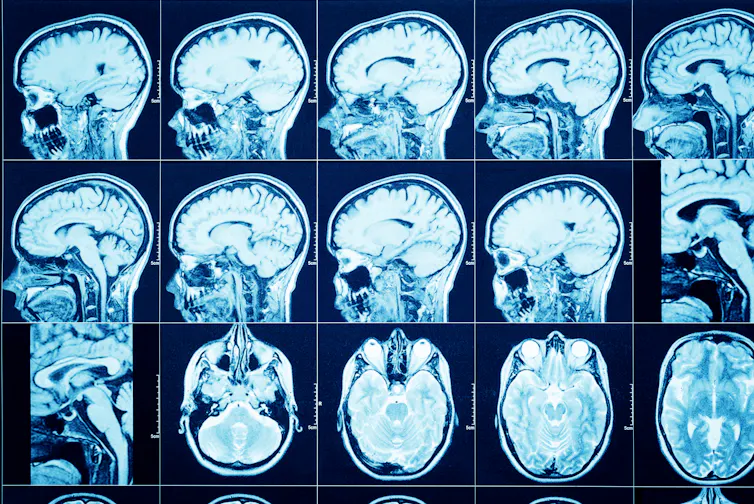
Other cases studies have described severe COVID-19 encephalitis (brain inflammation and swelling) and stroke in healthy young people with otherwise mild COVID-19 symptoms.
Larger studies from China and France have also investigated the prevalence of neurological disorders in COVID-19 patients. These studies have shown that 36% of patients have neurological symptoms. Many of these symptoms were mild and include things like headache or dizziness that could be caused by a robust immune response. Other more specific and severe symptoms were also seen and include loss of smell or taste, muscle weakness, stroke, seizure and hallucinations.

Some people lose their sense of smell. Elipetit/Shutterstock
These symptoms are seen more often in severe cases, with estimates ranging from 46% to 84% of severe cases showing neurological symptoms. Changes in consciousness, such as disorientation, inattention and movement disorders, were also seen in severe cases and found to persist after recovery.
Crossing the blood-brain barrier
SARS-CoV-2, the coronavirus that causes COVID-19, may cause neurological disorders by directly infecting the brain or as a result of the strong activation of the immune system.
Recent studies have found the novel coronavirus in the brains of fatal cases of COVID-19. It has also been suggested that infection of olfactory neurons in the nose may enable the virus to spread from the respiratory tract to the brain.
Cells in the human brain express the ACE2 protein on their surface. ACE2 is a protein involved in blood pressure regulation and is the receptor the virus uses to enter and infect cells. ACE2 is also found on endothelial cells that line blood vessels. Infection of endothelial cells may allow the virus to pass from the respiratory tract to the blood and then across the blood-brain barrier into the brain. Once in the brain, replication of the virus may cause neurological disorders.
SARS-CoV-2 infection also results in a very strong response by the immune system. This immune response may directly cause neurological disorders in the form of Guillain – Barré syndrome. But brain inflammation might also indirectly cause neurological damage, such as through brain swelling. And it’s associated with – though doesn’t necessarily cause – neurodegenerative diseases such as Alzheimer’s and Parkinson’s.
Not unique, but still worrying
SARS-CoV-2 is not unique in being a respiratory virus that can also infect the brain. Influenza, measles and respiratory syncytial viruses can all infect the brain or central nervous system and cause neurological disease.
Other coronaviruses have also been found to infect the brain and cause neurological disorders. The related seasonal coronavirus, HCoV-OC43, typically causes very mild respiratory symptoms but can also cause encephalitis in humans. Similarly, the coronavirus that causes Mers and the 2003 Sars virus can cause severe neurological disorders.
Respiratory viruses getting into the brain is thankfully a rare occurrence. But with millions of COVID-19 infections worldwide, there is the risk of significant neurological disease, especially in severe cases.
It is important to be aware of the possibility of neurological manifestations of COVID-19, both during acute illness as well as the possibility of long-term effects. This also highlights the continued importance of preventing viral transmission and identifying those who are, and have been, infected.
Jeremy Rossman, Honorary Senior Lecturer in Virology and President of Research-Aid Networks, University of Kent
This article is republished from The Conversation under a Creative Commons license. Read the original article.


