


from The Conversation
— this post authored by Sarah Vordenberg, and Brian J. Zikmund-Fisher, University of Michigan
It’s been nearly a month since the U.S. government began urging older Americans to stay home to avoid exposure to the new coronavirus. That means many older adults may be running out of their usual 30-day supplies of medication.

Please share this article – Go to very top of page, right hand side, for social media buttons.
As the pandemic continues to spread, they increasingly face a difficult challenge: how to get the medications they need without putting themselves at risk.
As health services researchers at the University of Michigan, we recently conducted a national survey to see how Americans over age 65 were responding to that dilemma. The results should be a call to action, both for older adults and for those who care about them.
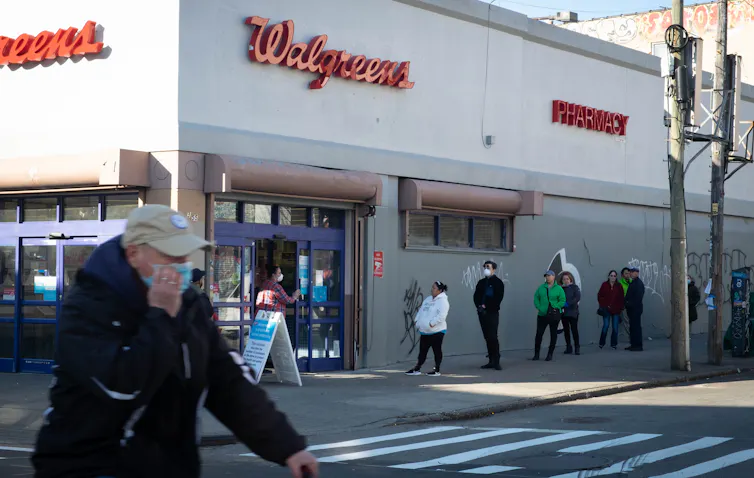
A new survey finds that, when it comes to medication, many older adults plan to keep going to the pharmacy as they always have. Braulio Jatar/Echoes Wire/Barcroft Media via Getty Images
A national survey shines light on risky choices
The Centers for Disease Control and Prevention recommends that older adults and anyone with chronic health conditions keep several weeks of medication on hand. However, our research found that most older adults had not followed this recommendation.
We surveyed over 1,400 adults ages 65 and older across the United States in late March and asked them questions about what they thought was the right thing to do about medications amid the coronavirus pandemic.
This was a high-risk group. In addition to being over 65, which itself is a risk factor for serious illness from COVID-19, more than 75% of participants also reported health conditions like heart disease or diabetes that further increase their risk of serious complications if they get COVID-19. The online survey, not yet published, has a margin of error of 3%.
As we anticipated, most older adults thought that COVID-19 was very serious.
However, only about 12% of the older adults who reported typically taking prescription medications also said they had tried to obtain more than their usual supply.
More than half indicated that they planned to keep going to the pharmacy to get refills as they normally would, despite the risk of coming in contact with someone infected with the coronavirus.
Even more concerning, the respondents who had multiple chronic health conditions were just as likely to say they would physically go to the pharmacy themselves as those who did not have additional risk factors. Those facing the greatest health risks if they were to get COVID-19 were behaving similarly as those at much lower risk.
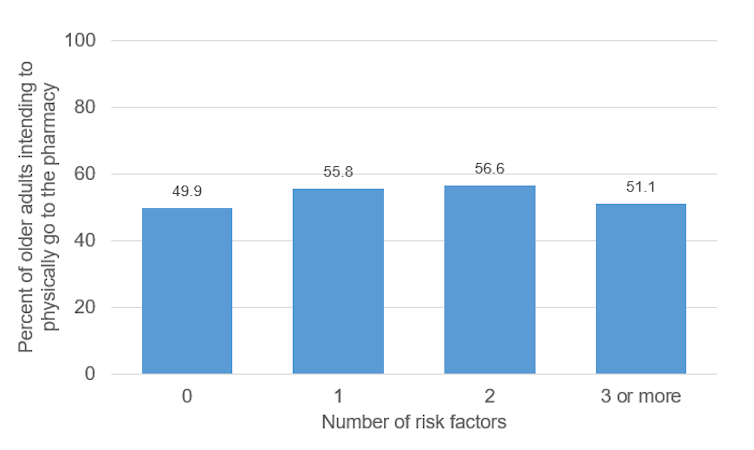
A large percentage of the older adults surveyed said they still planned to go to the pharmacy, even if they have risk factors for serious illness from COVID-19, such as diabetes or heart disease.
Running out of medications is also a problem
While it is always important for older adults to take their medications, it is critical right now.
Older adults who ration or stop necessary medications are at increased risk for being hospitalized, which increases their chances of getting COVID-19. Furthermore, given the shortfall of hospital resources, there is a risk in some areas that a hospital bed might not be available.
If older adults go into a store to pick up their medications, they are also at an increased risk of being exposed to the coronavirus. Those who become ill with COVID-19 are more likely to be hospitalized and die from it than younger patients, and those who have chronic conditions are even more at risk.
How to safely obtain your medications
Recognizing the risks, some states are taking measures to make it easier for people to get their medications.
For example, pharmacists in Georgia can now dispense 90 days of a non-controlled medication if the prescriber cannot be reached. Michigan’s governor signed an executive order allowing pharmacists to dispense emergency refills of up to 60 days for non-controlled medications and to substitute a different medication that works the same way in the event of a critical shortage.
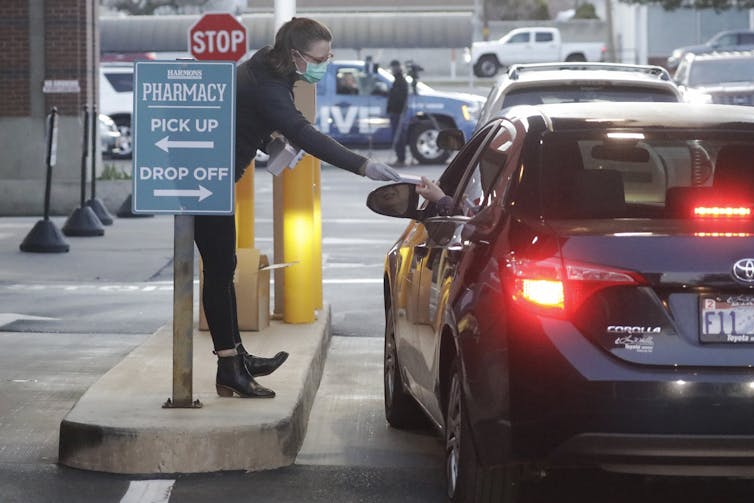
Many pharmacies offer a drive-up option or curbside delivery to reduce customers’ exposure to others. AP/Rick Bowmer
Pharmacies are also increasingly providing services to help patients obtain the medications they need. And there are tactics people can use to can help avoid exposure.
First, consider whether you can avoid going to the pharmacy entirely:
Request that your medications be delivered or shipped to your home. Several national chain pharmacies are offering this option, including CVS Pharmacy, Walgreens and Walmart.
Consider asking a family member or friend who is not at high risk for serious complications from COVID-19 to pick up your medications for you.
Most importantly, stay home if you have symptoms of COVID-19 or if you know that you have been directly exposed to COVID-19. Going to the pharmacy under those circumstances puts other people and the staff at risk.
Second, if you do need to go to the pharmacy, try to limit your potential exposure to other people:
Use the drive-through window so that you can stay physically distant from other people.
Some pharmacies, such as Kinney Drugs and Wegmans, are offering curbside pickup. A staff member will bring your medications to your car.
Request medication refills before you go to the pharmacy to avoid waiting in the store. Sign up to receive a text message or telephone call when your medications are ready to pick up.
Third, limit how many times you need to go to the pharmacy:
Consolidate your trips to the pharmacy by enrolling in a program that allows you to pick up all of your medications once a month. For example, Kroger and Rite Aid provide this service.
Ask if you can receive 60 or 90 days of medication, instead of 30 days. Depending on your state laws, the pharmacist may need to contact the prescriber to obtain approval.
Safely refilling prescription medications during the COVID-19 pandemic takes some planning. But, doing so helps protect older adults from unnecessary risks while ensuring they get the medications they need to stay healthy and out of the hospital.
[You’re too busy to read everything. We get it. That’s why we’ve got a weekly newsletter. Sign up for good Sunday reading. ]
Sarah Vordenberg, Clinical Associate Professor of Pharmacy, University of Michigan and Brian J. Zikmund-Fisher, Associate Professor of Health Behavior and Health Education, Associate Director of the Center for Bioethics and Social Sciences in Medicine, University of Michigan
This article is republished from The Conversation under a Creative Commons license. Read the original article.


