


from The Conversation
— this post authored by Caren Morrison, Georgia State University
The Justice Department won’t file federal charges against the New York City police officer who put Eric Garner into the chokehold that led to his death. With the statute of limitations having run out, the case, legally, is closed.

Please share this article – Go to very top of page, right hand side, for social media buttons.
The decision, announced almost exactly five years after Garner was pronounced dead following a confrontation with police officers in Staten Island on July 17, 2014, has sparked renewed objections from his relatives, activists and politicians.
Every officer involved has remained on the force, and no criminal charges have been filed. Daniel Pantaleo, the officer caught on video with his arm around Garner’s neck, was assigned to desk duty, but has stayed on the department’s payroll and even received an increase in his overtime pay.
Garner’s death was brutal, but as a former federal prosecutor and a criminal procedure professor who studies how prosecutors handle police violence cases, the lack of federal charges doesn’t surprise me.
According to criminal justice professor Philip Stinson, local prosecutors are often reluctant to prosecute the officers they work with to investigate cases. Reporting by the Marshall Project suggests they may not want to anger the police unions they often count on for political support. And existing law gives the police the benefit of the doubt in most situations. Based on my research, it seems that this is just how the justice system works.
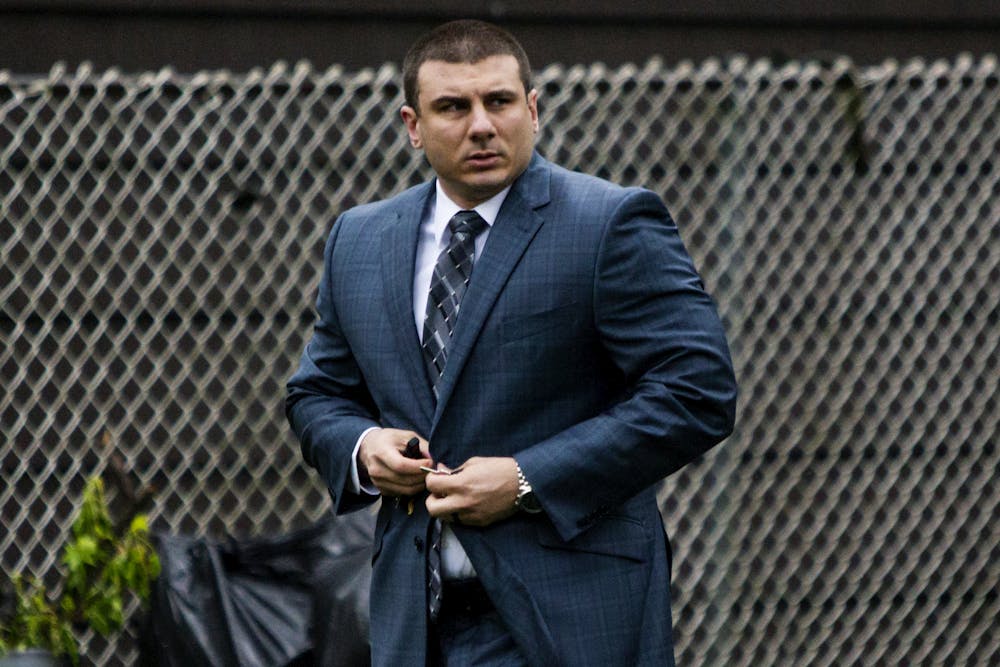
New York City police officer Daniel Pantaleo allegedly used a banned chokehold in the July 2014 death of Eric Garner. AP Photo/Eduardo Munoz Alvarez
Obstacles to prosecution
The case’s basic details are not contested. Pantaleo, who is white, was among a group of officers who approached Eric Garner, who was black, during a routine arrest for selling untaxed, loose cigarettes.
The encounter, which a bystander shot using his phone and the city’s medical examiner ruled a homicide, soon turned contentious. It culminated with Pantaleo taking Garner down to the pavement with his arm wrapped around his neck. Pantaleo is seen shortly afterward on the video pressing down on Garner’s head as other officers crowded around him.
A few months after Garner’s death, the Staten Island district attorney announced that he had presented the case to the grand jury, but did not obtain an indictment.
A public outcry ensued. Garner’s dying words, “I can’t breathe,” became a rallying cry at #BlackLivesMatter protests.
But the fact is that it is extremely difficult to bring charges against on-duty cops for excessive force.
The Supreme Court ruled in 1989 that in police use-of-force cases, allowance must be made
“for the fact that police officers are often forced to make split-second judgments – in circumstances that are tense, uncertain, and rapidly evolving – about the amount of force that is necessary in a particular situation.”
Ever since, few juries have found police officers guilty of using excessive force. Since 2005, only 35 officers have been found guilty of charges related to killing civilians.
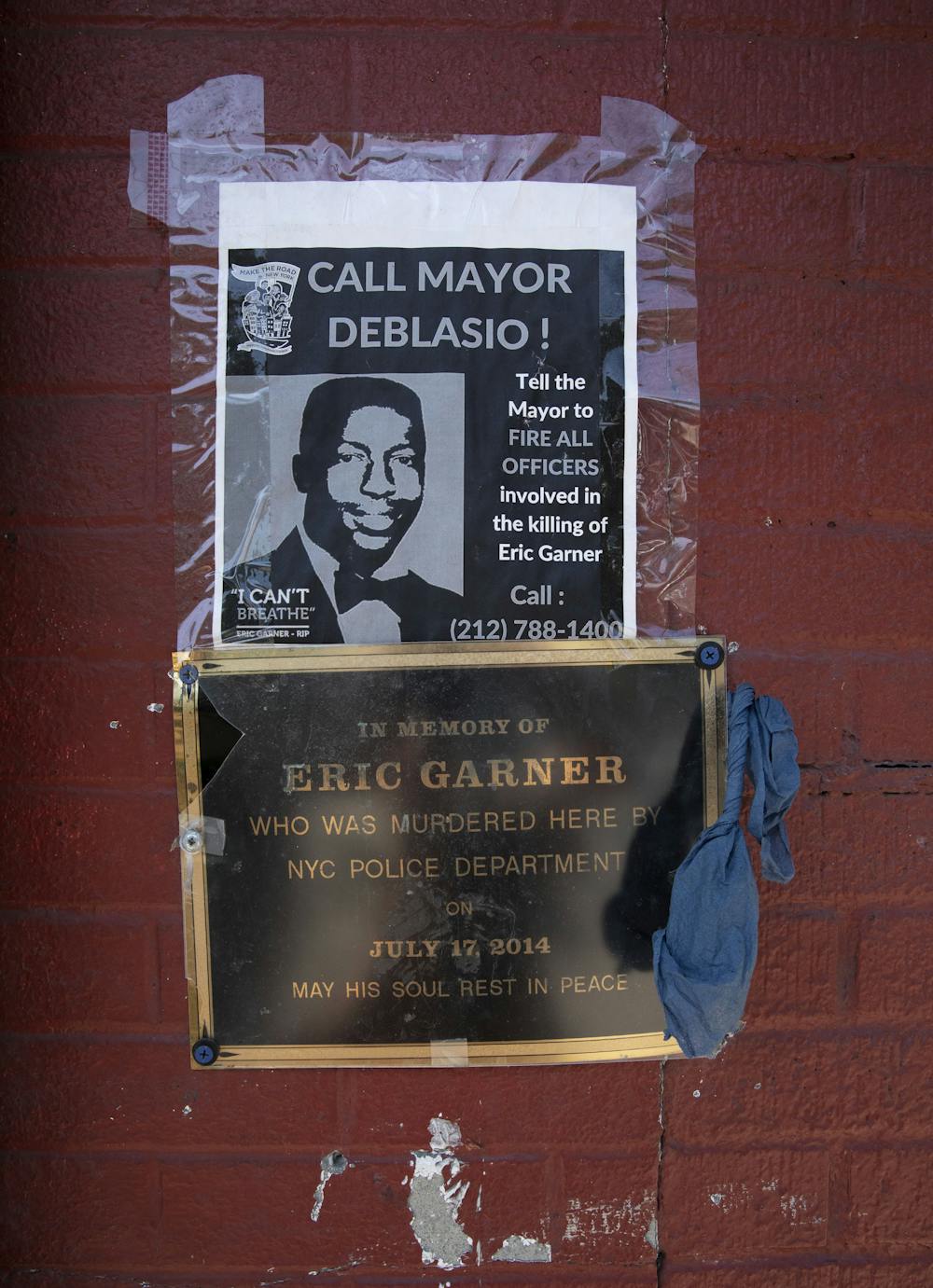
A sign and plaque near where Eric Garner had a deadly encounter with the police in the Staten Island borough of New York City. AP Photo/Mark Lennihan
Federal civil rights
Because of the Constitution’s protection against double jeopardy, which prevents anyone from being charged twice for the same crime, people aren’t usually prosecuted more than once for a single incident. But because U.S. law considers the states and the federal government to be legally independent jurisdictions, the Justice Department can indict an officer who has previously been charged under state law, even if he was acquitted.
When excessive force prosecutions against police officers don’t result in a conviction at the state level, the local U.S. attorney’s office may indict the officers for violating a person’s civil rights. This happened most notably in 1991 in the case of Rodney King, the black motorist who was beaten by Los Angeles police officers, and recently after the South Carolina mistrial of police officer Michael Slager, for shooting Walter Scott, another unarmed black man, in the back.
But the type of proof needed to bring a federal civil rights case is much more demanding than for a state criminal case. While there are numerous state charges that might be brought against an officer who causes the death of a civilian, from murder to manslaughter to reckless endangerment to assault, there is only one route for a civil rights case.
In those cases, prosecutors must prove that officers used excessive force against a person, generally defined as force that was clearly unreasonable in the circumstances. In addition, they have to prove that the officer’s actions were “willful.”
And willfulness is “the highest standard of intent imposed by law,” as the U.S. Attorney in Brooklyn, Richard P. Donoghue, said in his public statement about Pantaleo.
“An officer’s mistake, fear, misperception or even poor judgment does not constitute willful conduct under federal criminal civil rights law.”
A narrow path
Many news outlets reported that the decision to close the Garner case happened once U.S. Attorney General William Barr ordered the case dropped, overruling the Civil Rights Division in his own department.
Activists have questioned Barr’s civil rights record, noting that while serving as President George H.W. Bush’s attorney general, Barr released a report titled “The Case for More Incarceration.” Barr’s predecessor, Jeff Sessions, quashed the Justice Department’s attempts to reform policing.
Still, I’m not sure the outcome would have been different with someone else in the White House.
In fact, disagreements on whether the case could be successfully prosecuted in federal court also snarled proceedings during the Obama administration. And there was only ever a narrow path to prosecution.
When Donoghue gave a detailed explanation for his decision, he took an unusual step. Most of the time, when officers don’t get charged, the reasons are shrouded in secrecy. Instead, Donoghue gave a painstaking explanation of the ambiguities in the video, the conflicting medical expert reports, and the reasons he believed the high standard of intent could not be proved beyond a reasonable doubt.
I once served in the United States Attorney’s Office for the Eastern District of New York, which Donoghue now runs. I hate the fact that many people will never feel that justice was done in Eric Garner’s tragic and avoidable death.
Yet I’m not sure that I could have reached a different conclusion myself.
Caren Morrison, Associate Professor of Law, Georgia State University
This article is republished from The Conversation under a Creative Commons license. Read the original article.


