


from The Conversation
— this post authored by Hans J. G. Hassell, Florida State University
Seven Democratic presidential candidates gathered on national television early in the 1988 campaign to debate each other.

Please share this article – Go to very top of page, right hand side, for social media buttons.
The field of candidates, derided by Republicans as the “Seven Dwarfs,” pales in comparison to the 24 Democratic candidates who have – at last count – declared their candidacy for president.
The seven Democrats on the stage in 1988 represented an unprecedented number of candidates vying in a presidential primary. Now, 17 of the 24 declared Democratic presidential candidates have currently met the standards set by the Democratic National Committee to qualify for participation in this election cycle’s debates.
And in 2016 the GOP used two debate stages to accommodate the 17 declared candidates.
I study political parties and their role in electoral politics. And I believe the rise in the number of presidential candidates in recent years results from divisions within the party coalitions and from easier access to vital campaign resources – money and media – that were not present in previous election cycles.
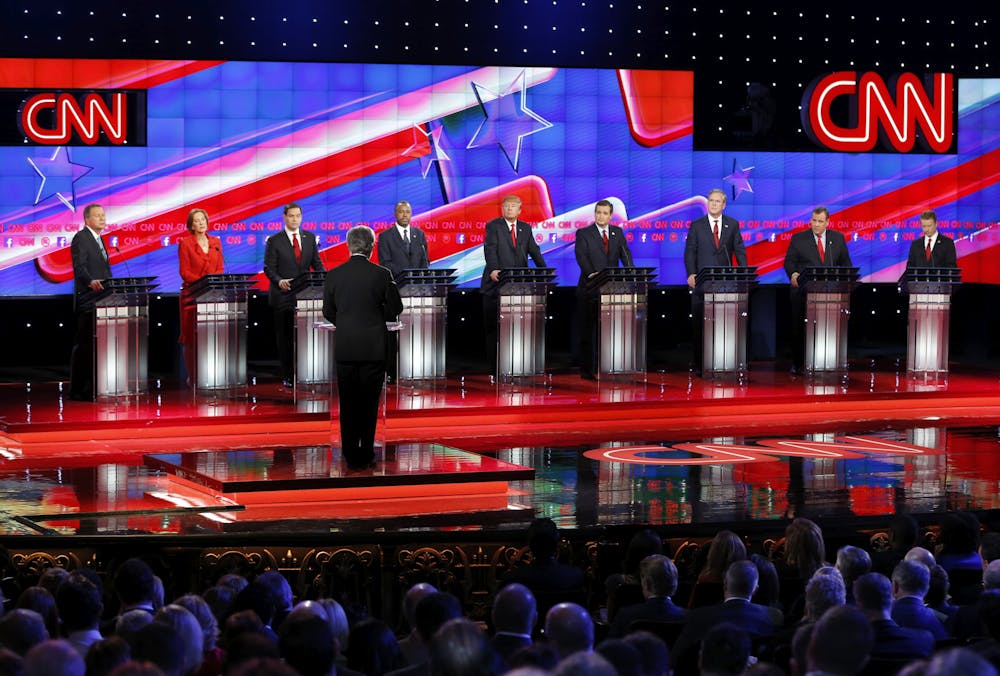
Nine of the 17 Republican presidential candidates on stage with debate moderator Wolf Blitzer during the fifth Republican presidential debate on CNN, Dec. 15, 2015, in Las Vegas. AP/John Locher
The old way
Political parties are not monolithic organizations. Parties consist of a network of groups with different policy interests who work together.
For example, within the Democratic Party there are labor organizations, environmentalists and civil rights groups, each with different priorities. Each group would ideally prefer a candidate who will champion their ideas and strongly support their policy preferences.
But a primary filled with many candidates who attack one another risks harming the eventual nominee’s standing with voters.
Likewise, these divisive primaries may cause supporters of a candidate who fails to win the nomination to withhold their support of the nominee.
So to avoid the problems created by a divisive primary, these groups must coordinate behind a single candidate who may not be everyone’s – or anyone’s – first choice.
This requires the groups within the party to compromise, subordinating their group’s interests in favor of a win for the party.
In previous election cycles, where the average number of candidates who declared their candidacy and campaigned actively through the first primaries and caucuses was much smaller, these groups have worked together effectively to stand behind one candidate.
Money, media and staff
As my research shows, unified parties are able to discourage candidates from running or encourage them to drop out.
They do this by making it difficult for the candidates they don’t prefer to acquire the vital electoral resources that are necessary to win the nomination: media coverage, campaign funds and quality campaign staff.
Donors, staff and the media take cues from party elites about which candidates are the party’s choice. They are less likely to support, work for or cover those lacking the party’s support.
Reforms to the presidential nomination process in the early 1970s took choosing a nominee out of smoke-filled back rooms. But parties have continued to influence the outcome through their control of the money and other campaign resources necessary to win the nomination.
While these resources are available in abundance within the party network, they were previously harder to find outside of that network. In previous years, candidates who realized it would be hard to amass the necessary resources through party support ultimately declined to run or dropped out quickly, resulting in much smaller presidential fields.
Declining party influence
In recent years, things have changed.
Parties may still have the ability to push a candidate through the nomination when they are united. But I believe party unification and power over electoral resources has also declined in these four areas:
1. Media control
In the past, candidates were reliant on the media to publicize their candidacy and get their message to voters. Party leaders and elites consistently have better connections with the media establishment and use those connections to promote preferred candidates.
But today’s media environment allows candidates to bring their message directly to voters. Social media bypasses reporters and editors and those who have connections to them so more candidates have easier access to this key campaign resource.
2. Candidate ambitions
Before, running for president was almost entirely about advancing one’s political career. As Paul Tsongas, the former senator and presidential candidate, once said, “When you get to the Senate, half the people around you are running for president. You see them and you think you are just as good as they are…So you start to think about running yourself.”
Now, a run for higher office can be a means to other opportunities outside of politics. Republican Sen. Rick Santorum, a presidential candidate in 2016 and 2012, became a pundit on CNN. Another candidate, the GOP’s 2008 vice presidential nominee Sarah Palin, ended up with a show on cable news.
While parties still pressure candidates to withdraw, candidates may be less responsive than in the past. That’s because they care less about the desires of party elites since they may not be as interested in a career in party politics.
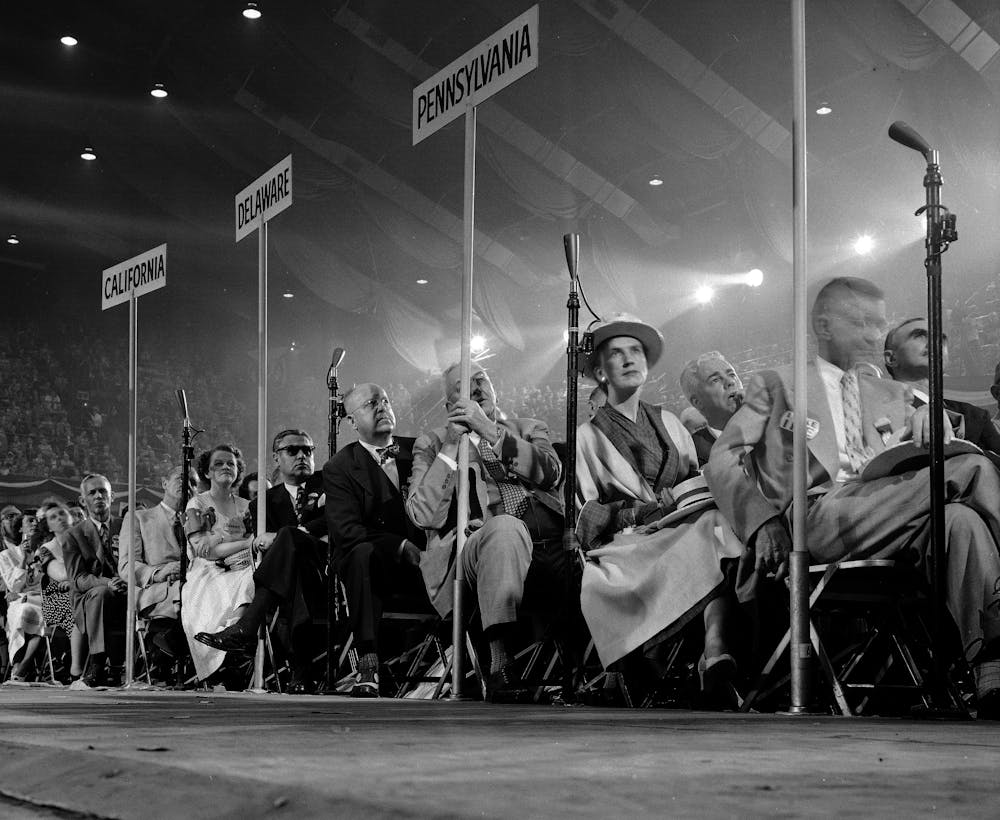
Until recently, parties played a large role in choosing presidential nominees. Here, delegates to the Republican National Convention in Chicago, July 8, 1952. AP//William Smith
3. Fundraising
Changes in campaign finance have also helped candidates find sufficient money outside of the party network to launch their campaign.
The rise of super PACs and other independent political entities has allowed candidates to gain access to large sums of money from a small number of donors. Campaign finance rules previously encouraged candidates to rely on a larger base of wealthy donors – many of whom took cues from party elites.
At the same time, the internet and social media have also expanded the role of small donors who are not traditionally involved in party politics. Small dollar donations have taken a more important role in campaign funding.
4. Party disunity
Lastly, party coalitions have also become more divided.
Divisions within the Republican Party coalition became more evident during the Tea Party movement. Similar ideological divisions have emerged in the last two election cycles between Democratic Party leaders and the more liberal wing of the Democratic Party. The rise of differences and divisions within the parties makes it harder for the groups within the party network to coordinate on a single candidate.
Here to stay
While the number of candidates running for president in 2020 may be unprecedented, a crowded debate stage is unlikely to be a strange sight in the future.
The divisions within parties and the availability of money and media coverage outside of the traditional party network mean that potential candidates will continue to see – and take – opportunities where previously they did not.
Hans J. G. Hassell, Assistant Professor of Political Science, Florida State University
This article is republished from The Conversation under a Creative Commons license. Read the original article.


