Written by Econintersect
Early Bird Headlines 07 Aug 2018
Econintersect: Here are some of the headlines we found to help you start your day. For more headlines see our afternoon feature for GEI members, What We Read Today, published Monday, Wednesday and Friday, which has many more headlines and a number of article discussions to keep you abreast of what we have found interesting.

Please share this article – Go to very top of page, right hand side for social media buttons.
Special Notice: There will be no Early Bird published for Wednesday, Thursday and Friday this week due to staff travel.
​Global
- Asian stocks mostly climb after recent trade uncertainty (CNBC) Asian stocks climbed on Tuesday, with markets in the region mostly finishing higher after U.S.-China trade jitters weighed on sentiment in the last session. The dollar index last traded at 95.186, compared to the 95.3 handle seen earlier. Spot Brent crude oil futures were $74.17 per barrel at 0710 GMT, up $0.42 cents (0.6%) from their last close. U.S. West Texas Intermediate (WTI) crude futures were up $0.30, or 0.4%, at $69.31 barrel. Spot gold was up 0.4% at $1,210.99 an ounce at 0814 GMT, after earlier hitting $1,213.81.

- Scientists Have Uncovered a Disturbing Climate Change Precedent (The Atlantic) During the rise of mammals, Earth’s temperatures spiked in a scary way that the planet may experience again soon. That ancient atmosphere had around 1,000 parts per million (ppm) of carbon dioxide. If this number sounds familiar, 1,000 ppm of CO2 is around what humanity is on pace to reach by the end of this century. That should be mildly concerning.
The most striking feature of this early age of mammals is that it was almost unbelievably hot, so hot that around 50 million years ago there were crocodiles, palm trees, and sand tiger sharks in the Arctic Circle. On the other side of the blue-green orb, in waters that today would surround Antarctica, sea-surface temperatures might have topped an unthinkable 86 degrees Fahrenheit, with near-tropical forests on Antarctica itself. There were perhaps even sprawling, febrile dead zones spanning the tropics, too hot even for animal or plant life of any sort.
- Losing Earth: The Decade We Almost Stopped Climate Change (The New York Times) Humans almost saved the planet from climate change 30 years ago. This is the story of how we failed: a tragedy in 2 acts.
- Domino-effect of climate events could push Earth into a ‘hothouse’ state (The Guardian) A domino-like cascade of melting ice, warming seas, shifting currents and dying forests could tilt the Earth into a “hothouse” state beyond which human efforts to reduce emissions will be increasingly futile, a group of leading climate scientists has warned.
This grim prospect is sketched out in a journal paper that considers the combined consequences of 10 climate change processes, including the release of methane trapped in Siberian permafrost and the impact of melting ice in Greenland on the Antarctic.

U.S.
- Manafort ex-business partner Rick Gates testifies they committed crimes together (The Guardian) The witness, who is cooperating with prosecutors, claimed he assisted Paul Manafort in filing false tax returns. Once Manafort’s deputy in a lucrative political consulting business, Gates is expected to be the government’s star witness at his former boss’s high profile trial for bank fraud and tax evasion.
It is the first criminal case stemming from charges brought by the special counsel Robert Mueller’s investigation into Russia’s assault on the 2016 presidential election. Gates pleaded guilty in February to conspiring against the US and lying to investigators; he agreed to cooperate with prosecutors under a deal that could lead to a reduced sentence.
- A sprawling blaze in Northern California grew on Monday into the largest wildfire ever recorded in the state, a day after U.S. President Donald Trump declared a state of emergency, highlighting the ferociousness of this year’s fire season.
- It is one of 17 major wildfires burning across California that prompted Trump to declare a “major disaster” in the state on Sunday, ordering federal funding to be made available to help recovery efforts.
- Trump picks fight with California over wildfires (The Hill) President Trump is solidifying his opposition to California’s environmental policies, saying they are to blame for the state’s historic wildfires. Trump initiated the spat on Sunday when he tweeted that the fires “are being magnified & made so much worse by the bad environmental laws,” which cause water to be “diverted into the Pacific Ocean,” and prevent trees from being cleared.
Experts say Trump is giving voice to Republican opposition to the state’s progressive environmental policies by taking issue with state measures designed to protect fish in the Sacramento-San Joaquin River Delta by allowing water to flow through the delta and the San Francisco Bay, then out to the ocean.
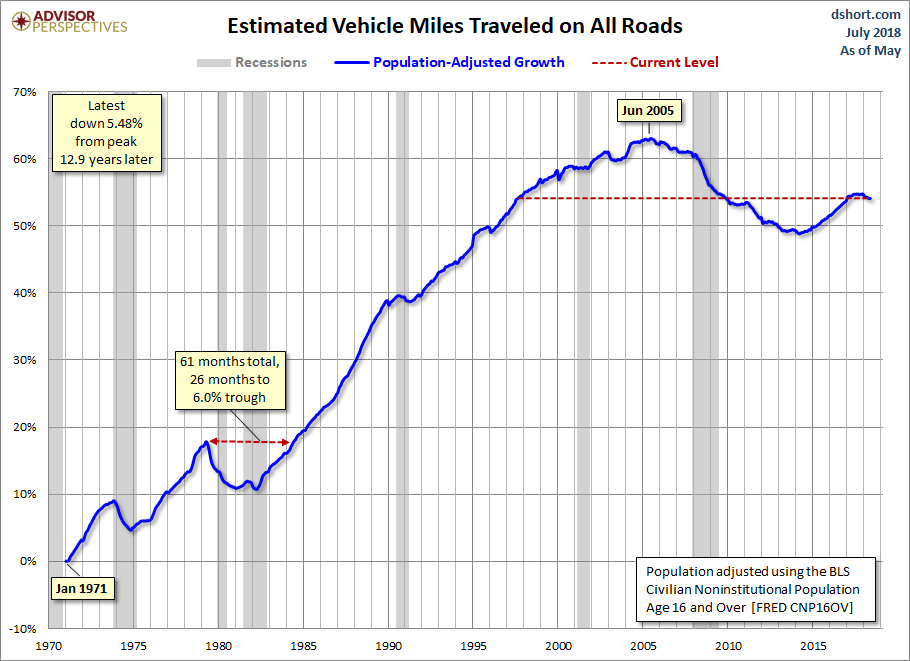
- Vehicle Miles Traveled: Another Look at Our Evolving Behavior (Advisor Perspectives, dshort.com) On a per capita basis, mileage driven shows a significant change in the driving habits of Americans over the last 13 years.
- Shifting U.S. Economy (BLS) The U.S. economy is shifting, at least as far as emoloyment is concerned, from a goods producing economy to a service economy. This probably represents a greater penetration of automation in goods production rather than a decrease in goods output.

- Trade Deficits (Twitter) Not exactly correct but close enough.

Iran
- Iran’s Rouhani shuns Trump call for talks on eve of sanctions (euro news) Iran’s President Hassan Rouhani has dismissed a US call for talks ahead of economic sanctions being reimposed on Tuesday, following Washington’s withdrawal from the 2015 nuclear agreement. See also What will change after US sanctions on Iran come into force?. Sanctions will be reimposed on Iran’s ability to purchase US dollars as well as its trade in gold and other key metals. It will take effect from 00:01 EDT (06:01 CEST) on Tuesday. Rouhani said in a speech broadcast live on state television:
“We are always in favour of diplomacy and talks… But talks need honesty.”
Russia
- How the GRU spy agency targets the west, from cyberspace to Salisbury (The Guardian) The GRU, or main intelligence directorate, of the Russian army, has been accused of spearheading several of Russia’s most notorious operations in recent years. They include the 2014 seizure of Crimea using undercover soldiers called “little green men”, the hacking theft of emails from the Democratic National Committee and Hillary Clinton, and even the planning of a failed coup in Montenegro.
A British security source told the Guardian on Monday that the nerve agent attack on the former double agent Sergei Skripal was also ordered by the intelligence agency. The British government is poised to submit an extradition request to Moscow for two Russians suspected of carrying out the Salisbury attack that left one person dead and three injured, including Skripal and his daughter.
India
- New Stock Market High (Twitter)

Japan
- Japanese workers’ inflation-adjusted real wages rose in June at the fastest pace in more than 21 years, fueled by an increase in summer bonuses, government data showed.
- The data should be encouraging to the Bank of Japan as it struggles to accelerate inflation to its 2 percent target despite more than five years of massive monetary stimulus.
China
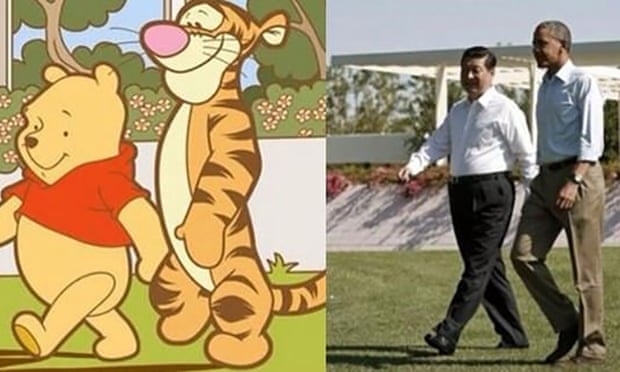
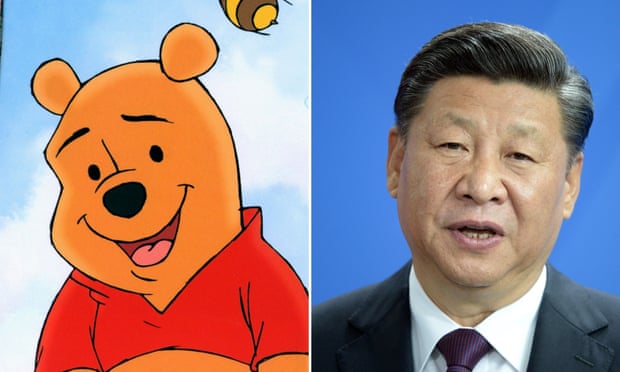
- China bans Winnie the Pooh film after comparisons to President Xi (The Guardian) Chinese censors have banned the release of Christopher Robin, a new film adaptation of AA Milne’s beloved story about Winnie the Pooh, according to the Hollywood Reporter. The Winnie the Pooh character has become a lighthearted way for people across China to mock their president, Xi Jinping, but it seems the government doesn’t find the joke very funny.