


Written by Econintersect
Early Bird Headlines 25 July 2018
Econintersect: Here are some of the headlines we found to help you start your day. For more headlines see our afternoon feature for GEI members, What We Read Today, published Monday, Wednesday and Friday, which has many more headlines and a number of article discussions to keep you abreast of what we have found interesting.

Please share this article – Go to very top of page, right hand side for social media buttons.
​Global
- Asian stocks close mixed as recent China bounce wavers (CNBC) Asian markets closed mixed on Wednesday, with benchmarks in Japan and Hong Kong tracking higher after Wall Street mostly advanced on the back of strong corporate results overnight. The dollar index slipped slightly to 94.486. Brent crude was up $0.54 cents (0.7%) at $73.98 a barrel by 0318 GMT. U.S. West Texas Intermediate rose $0.24, or 0.4%, to $68.76. Spot gold was 0.2% higher at $1,226.13 an ounce at 0051 GMT.

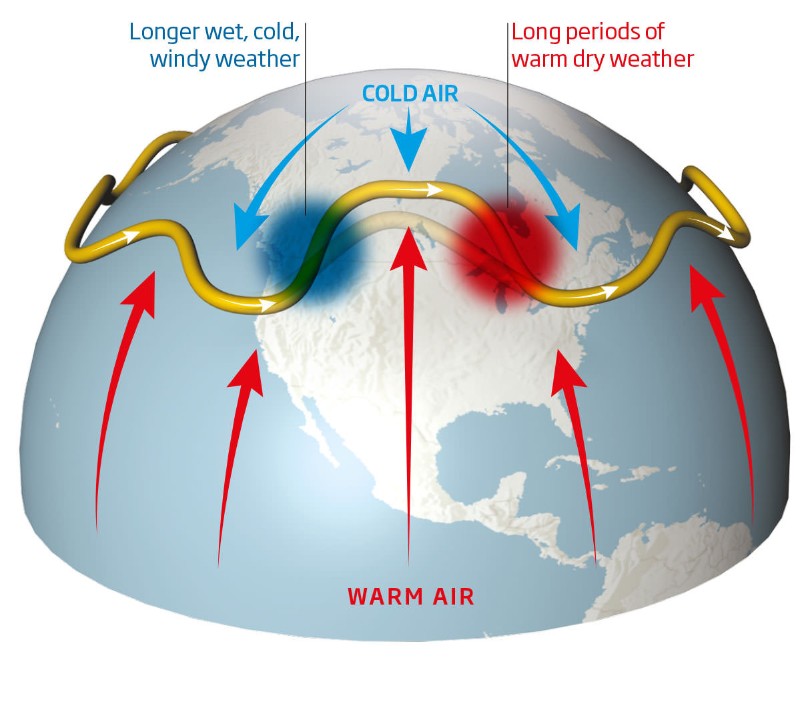
- Warming Arctic could be behind heatwave sweeping northern hemisphere (New Scientist) This heatwave across much of the northern hemisphere could continue for weeks, and possibly even months. And accelerated warming in the Arctic compared to the rest of the planet could be a key contributor. The heatwaves have killed dozens in Japan and Korea, triggered wildfires in California and Sweden, and led to prolonged dry weather in the UK and across northern Europe, raising temperatures beyond 30°C in Scandinavian sectors of the Arctic Circle. In Greece, the deadliest wildfires in more than a decade have claimed at least 74 lives. All this is the result of a static jet stream. See Crazy weather traced to Arctic’s impact on jet stream.
- Escalating trade tensions, and tariffs from U.S. President Donald Trump’s administration, could give BRICS countries fresh purpose to push forward their trade agendas.
- Divergent trade policies between members, however, could be a problem.
- The bloc – which consists of Brazil, Russia, India, China and South Africa – has struggled to establish a unified voice on the international stage.
U.S.
- Facebook pledges tough U.S. election security efforts as critical memo surfaces (Reuters) Facebook officials on Tuesday said the company is using a range of techniques including artificial intelligence to counter Russian operatives or others who use deceptive tactics and false information to manipulate public opinion.
- Trump-backed candidate wins Georgia governor nomination (The Hill) Georgia Secretary of State Brian Kemp (R) completed his surprise comeback on Tuesday, claiming the Republican nomination for governor after winning late endorsements from President Trump and Vice President Mike Pence. Kemp, serving his second term as secretary of State, bested Lt. Gov. Casey Cagle (R) in a low-turnout runoff two months after Cagle finished first in the primary. See also 2 women win Georgia Dem runoffs, extending streak for female candidates.
- Attorney General Jeff Sessions says ‘lock her up’ at high school leadership event (ABC News) Attorney General Jeff Sessions said “lock her up” at a high school leadership event on Tuesday – amid a refrain of calls to jail former Secretary of State Hillary Clinton that was often shouted at Trump presidential campaign rallies during the 2016 elections.
- Who is more corrupt, Hillary Clinton or Donald Trump? (Quora) You have to read it. I won’t give away the ending.
- Trump wants $12 billion in aid to U.S. farmers suffering from trade war (Reuters) The Trump administration on Tuesday said it will use a Great Depression-era program to pay up to $12 billion to help U.S. farmers weather a growing trade war with China, the European Union and others that the president began. See next two items.
- Fighting a Trade War (Twitter)

- Whirlpool shares plunge 14.5%, post worst day since 1987 as tariffs wreak havoc with costs and suppliers (CNBC) Remember when the president acted on Whirlpool’s request to protect their products? Fast forward a few months and we find that fighing war (trade ot otherwise) is not a linear process.
- The U.S. based washing machine giant who was once in favor of stricter trade controls for its own industry.
- Whirpool shares plummeted Tuesday after executives blamed rising steel and aluminum costs for diminished quarterly earnings.
- Washing machines are one example of how tariffs can have unexpected and adverse effects on the domestic companies the policies attempt to protect.
- Trump Just Attacked the Very Idea of Objective Reality: ‘What You’re Seeing and What You’re Reading Is Not What’s Happening’ (AlterNet) The president is trying to implement a 1984 Orwellian culture in the U.S.
Since President Donald Trump’s legacy in office is filled with broken promises and dismal failures, he and his defenders are working to create an alternative reality for his supporters to believe in where administration policy is a resounding success.
Trump made this strategy explicit Tuesday (as Kellyanne Conway once did when she coined the phrase “alternative facts”) in his speech at the VFW in Kansas City.
“This country is doing better than it ever has before, economically,” Trump said, touting his plan to slap tariffs on foreign goods.
He added: “It’s all working out. Just remember: what you’re seeing and what you’re reading is not what’s happening.”
It was a startling admission: Trump doesn’t want people to believe the very things they’re seeing.
- Estimated Increases in 2019 Premiums by Congressional District Due to ACA Sabotage (Center for American Progress) Over the past two years, the Trump administration has worked tirelessly to sabotage the Affordable Care Act (ACA). The U.S. Congress’ repeal of the individual mandate penalty and the Trump administration’s actions to expand the availability of skimpy short-term plans are raising premiums for middle-class families. In its latest attack on the individual market for health insurance, the Trump administration also slashed funding for enrollment assistance by 72% and halted payments for risk adjustment, the federal program that discourages plans from avoiding sicker enrollees.
Last year, President Donald Trump’s decision to end cost-sharing assistance payments resulted in staggering increases in 2018 marketplace premiums, and these more recent attempts to destabilize the individual market will result in even higher rates for 2019. Although tax credits rise with premiums and therefore insulate lower-income individuals from higher costs, many middle-income families who buy insurance on their own will see 2019 premiums thousands of dollars higher than they would be if the Trump administration allowed the ACA to work as intended. Based on rate information to date, the Center for American Progress estimates that an unsubsidized 40-year-old will pay an extra $970 in marketplace premiums on average in 2019 because of the end of the mandate and the expansion of short-term plans.
- The Trump Parody Account that Really Fools People (Twitter) #MIGA @realDenaldTrump has 26.5k fillowers and keeps fooling some of the millions who are not following him. Two tweets and one reply below:

 EU
EU
- The focus will be on the ECB‘s assessments of these risks at its meeting Thursday, with investors concerned of the acute risk of a trade war escalation.
- New economic data published Tuesday showed somewhat lower readings of business activity in the region.
- The purchasing managers’ index posted a surprise drop in the services sector but a better reading for the manufacturing industries.
UK
- Norovirus: a summer outbreak could lead to a winter crisis (The Conversation) If the current outbreak of diarrhoea and vomiting in Britain this summer is due to Novovirus, it could be the prelude to a severe outbreak this winter, the season when the virus is normally active. Because it is extremely communicable and virulent, the over-strained NHS may have difficulty coping. See Why is the norovirus such a huge problem for the NHS?
Syria
- Dozens dead in attacks on Syria’s Sweida city, villages: health authority (Reuters) Multiple attacks killed at least 38 people and wounded 37 others in Sweida and villages northeast of the Syrian city, the head of the health authority told state-run Ikhbariyah TV. A suicide bomber blew himself up near a marketplace in the city early on Wednesday, as Islamic State militants mounted attacks on several villages to the northeast. State media said authorities were hunting down militants in the city.
Russia
- A Theory of Trump Kompromat (The New Yorker) There is no need to assume that Trump was a formal agent of Russian intelligence to make sense of Trump’s solicitousness toward Putin. Keith Darden, an international-relations professor at American University, has studied the Russian use of kompromat – compromising material – and told me that he thinks it is likely that the President believes the Russians have something on him. “He’s never said a bad word about Putin,” Darden said. “He’s exercised a degree of self-control with respect to Russia that he doesn’t with anything else.” Darden said that this is evidence that Trump isn’t uniformly reckless in his words:
“He is capable of being strategic. He knows there are limits, there are bounds on what he can say and do with respect to Russia.”
Trump has made a lot of money doing deals with businesspeople from the former Soviet Union, and at least some of these deals bear many of the warning signs of money laundering and other financial crimes. Deals in Toronto, Panama, New York, and Miami involved money from sources in the former Soviet Union who hid their identities through shell companies and exhibited other indications of money laundering. In the years before he became a political figure, Trump acted with impunity, conducting minimal corporate due diligence and working with people whom few other American businesspeople would consider fit partners. During that period, he may have felt protected by the fact that U.S. law-enforcement officials rarely investigate or prosecute Americans who engage in financial crimes overseas.
- This Crimean filmmaker’s hunger strike highlights all that is wrong with modern Russia (The Conversation) This article draws a parallel between suppression of dissent in today’s Russia with the Stalin purges of the 1930s.
Japan
- Radioactive Traces from the Fukushima Nuclear Disaster Found in California Wine (Live Science) Following the 2011 Fukushima nuclear power plant accident, radioactive waste leaked into surrounding areas and contaminated waters and food. Seven years later, traces of the disaster were found half a world away – in California’s wine.
A group of French nuclear physicists tested 18 bottles of California’s rosé and cabernet sauvignon produced in 2009 and onward and found that the wines produced after the disaster had increased levels of a man-made radioactive particle. Cabernet sauvignon, for example, had double the amount.
- Tracking Japan’s Tsunami Debris (Infographic) (Live Science) This is from 2012:


