


from The Conversation
— this post authored by Lyndsay Christie, University of Bath
Salmon farming is facing a huge challenge in the form of a tiny pest. The parasitic sea louse is infecting salmon stocks worldwide, causing devastating losses for salmon farmers and increased prices for shoppers. But scientists are working hard to tackle this global problem, with a combination of new ways to biologically and mechanically remove the lice and to make the salmon more resilient to infection.

Please share this article – Go to very top of page, right hand side, for social media buttons.
Sea lice are small parasites about the size of a finger nail, which attach to the head and body of the salmon. The lice feed off the salmon, eventually killing them or at least making them unsuitable for human consumption. Sea lice infections have been recorded in salmon farms for decades. But in the last few years infection rates have rocketed due to more intensive farming practices, with more fish being kept in smaller areas.
The economic cost of sea lice infection has hit salmon farmers hard, with an estimated 7% drop in production from 2016 to 2017. This has directly impacted consumers as the wholesale price of salmon increased by 50% in the same time period, with many shops passing on the cost to shoppers. If this pattern continues, the cost of salmon will keep increasing and demand for salmon will exceed supply.
The crisis has prompted researchers from universities and the fish farming industry to develop new ways to prevent and treat sea lice infection. One natural solution is to add “cleaner fish” to fish farms, which live alongside the salmon and eat the sea lice straight off their bodies. The species commonly used are Wrasse and Lumpfish, as they naturally graze on the sea lice.
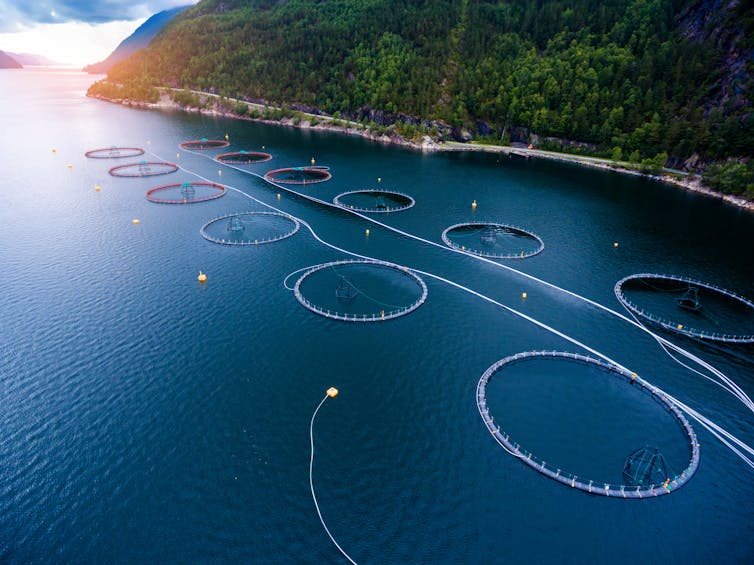
Salmon farms are infested. Shutterstock
The industry expects to need 50m cleaner fish annually by 2020, 10m in the UK alone, to cope with increasing sea lice numbers. To satisfy this demand, a healthy supply of farmed cleaner fish is needed to reduce the pressure on wild fish stocks. The largest salmon producer in Scotland, Marine Harvest, has restored a redundant bass hatchery to create a cleaner fish rearing facility and has plans to build another unit. This will go a long way towards meeting demands, but further research is needed to optimise the breeding and rearing of farmed cleaner fish.
Researchers are trying to produce healthier cleaner fish, to maximise their lifespan and minimise their chances of spreading infection to the salmon. For example, scientists at the University of Stirling are working on vaccines to provide protection from common fish diseases such as furunculosis, which causes lesions, internal haemorrhaging and eventually death.
Another effective approach is to manually remove sea lice from the bodies of the salmon by passing them through a machine known as a thermolicer, which exposes them to warm water to kill the lice. But there is concern that mechanical thermolicers can cause undue stress and damage to fish. In 2016, 95,000 salmon were killed after being treated in this way.
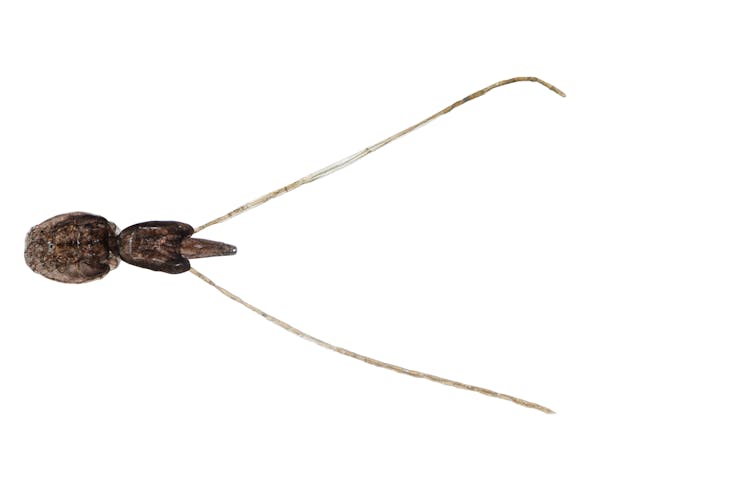
A sea louse. Shutterstock
Recently, a Norwegian company called Flatsetsund Engineering produced a new delicer, capable of removing up to 95% of sea lice. This delicer performs better than other models as once the lice are removed from the salmon they are captured and contained. This prevents the sea lice from returning to the water and infecting more fish. But the delicer itself may still pose a risk to the salmon.
The Scottish Aquaculture Innovation Centre is investing in the development of ultrasound systems that can be used underwater to remove the sea lice. Sound waves would travel through the water detaching the lice from the body of the salmon without harming the fish or the environment.
Sea-lice vaccines
Other routes researchers are investigating involve stopping salmon becoming infected with sea lice in the first place. There is the potential for a sea lice vaccine that, in theory, would expose the fish to a safe formulation of sea lice material so they could develop an immune response.
This approach has worked for other animal parasites, such as cattle ticks. In this case, the vaccine causes the cow to produce protective antibodies in its blood that disrupts the tick’s functions when it tries to feed. Unfortunately, this method is proving difficult to replicate in salmon and no such sea lice vaccines are yet available.
There is also ongoing research into anti-sea lice medication that can be mixed with the salmon food. It is absorbed by the body and then reaches the sites of sea lice infection. This can be effective but because a lot of food is not eaten the medicine can persist in the environment having a negative impact on other species. There is also a risk that the lice will become used to the treatment and develop ways of overcoming its harmful effects, leading to resistance.
 Hopefully a combination of these approaches will enable the salmon industry to tackle the sea lice problem and reverse the decline in fish production. This will mean increased investment and hard work to stay one step ahead. New advances in this area are crucial if we want to maintain a sustainable supply of healthy farmed salmon.
Lyndsay Christie, PhD Student in Microbial Genomics, University of Bath
This article was originally published on The Conversation. Read the original article.


