


Written by Econintersect
Early Bird Headlines 15 February 2018
Econintersect: Here are some of the headlines we found to help you start your day. For more headlines see our afternoon feature for GEI members, What We Read Today, published Monday, Wednesday and Friday, which has many more headlines and a number of article discussions to keep you abreast of what we have found interesting.

Please share this article – Go to very top of page, right hand side for social media buttons.
​Global
- Asian stocks advance following sharp US gains; yen firms (CNBC) Asian stocks advanced on Thursday, taking cues from the rally on Wall Street following the release of stronger-than-expected U.S. inflation data overnight. The dollar index slipped to trade at 88.939 by 9:32 a.m. HK/SIN. U.S. crude futures rose 0.59% to trade at $60.96 per barrel after settling more than 2 percent higher overnight. Brent crude futures rose 0.42% to trade at $64.63. Spot gold inched up 0.1% to $1,351.96 an ounce, as of 0202 GMT, but remained below $1,355.50 touched on Wednesday, its highest since Jan. 26.

- These Are the World’s Most Miserable Economies (Bloomberg) Rising prices are more of a threat to the global economy this year than joblessness, according to Bloomberg’s Misery Index, which sums inflation and unemployment outlooks for 66 economies.
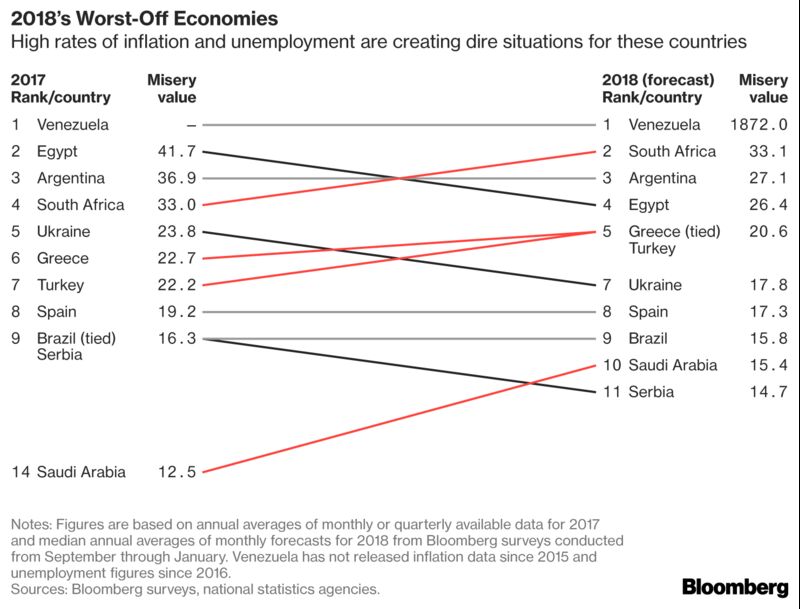
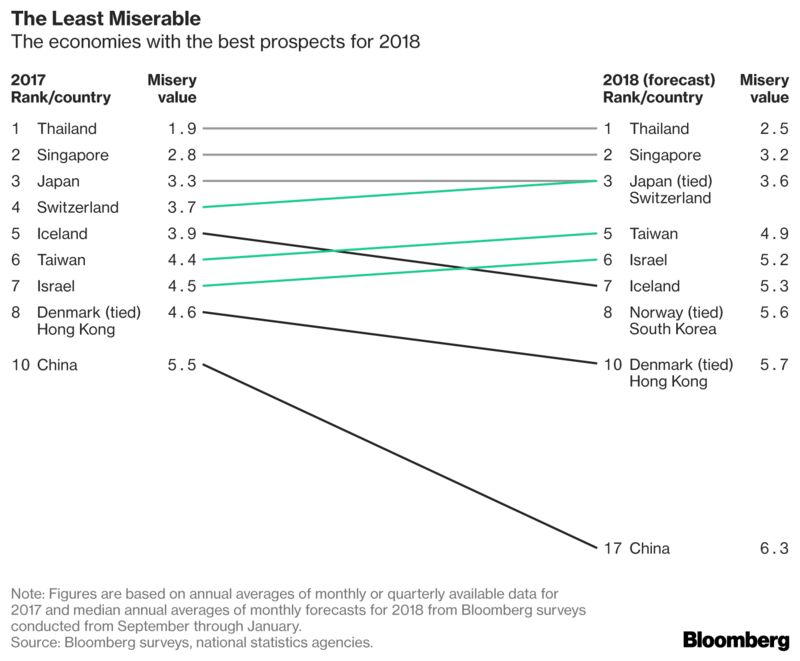
- New Oil Projects Surged in 2017 (The Daily Shot) Upstream oil projects have picked up momentum.

U.S.
- Bharara trolls WH: Every member of Mueller’s team has a permanent security clearance (The Hill) Former US Attorney Preet Bharara trolled the White House in a tweet Wednesday after it was reported that more than a hundred of President Trump’s staffers worked without permanent security clearances as recently as November:

- Trump bragged about a General Motors plant relocation that he made up (Think Progress) During a meeting about trade with lawmakers at the White House on Tuesday, President Trump took personal credit for General Motors’ decision relocate a plant from South Korea back to the United States. Great news except that GM doesn’t know what he is talking about. Apparently the president just made the story up.
- Immigration fight down to the wire (The Hill) Senators are struggling to break through a legislative stalemate on immigration, with centrists making a frantic push to find a deal that can win enough support to pass by the end of the week. The centrist senators on Wednesday said that they had finished the contours of an agreement that would protect “Dreamers” in exchange for more spending on border security.
- Trump Team to Rescind Methane Rule (Naked Capitalism) Jerri-Lynn Scfield maintains that President Trump has been exceptionally ‘successful’ in dismantling environmental protection regulations and, because he has stacked the federal courts with ‘his people’, many of the challenges to his changes will not be sustained.
- Gunman Kills at Least 17 People at Florida High School (Bloomberg) A former student opened fire with a semi-automatic rifle at a Florida high school Wednesday, killing at least 17 people and sending hundreds of students fleeing into the streets in the nation’s deadliest school shooting since a gunman attacked an elementary school in Newtown, Connecticut.
- 18 school shootings in 45 days – Florida massacre is one of many tragedies in 2018 (CNBC) Actually, this is an inaccurate headline. There have been approximately 30 school days in 2018, number varying depending on local schedules.
- Gun Control Opinion (Pew Research Center) Public Opinion on gun control in the U.S. is split about 50:50. This has changed over the past 18 years, down from about 2/3 favoring more gun control in 2000.

- U.S. Investment Has Been Low Over Last Decade (Federal Reserve Bank of St. Louis)

Japan
- Japan’s December machinery orders fall at fastest in three years, cast doubt on capex (Reuters) The 11.9% decline in new machinery orders in December, the largest fall since May 2014, was more than the median estimate of a 2.3% fall and followed a 5.7% increase in November.
South Korea
- For the sake of the games, South Korea needs to show hosting an Olympics can be economically viable (CNBC) There’s a lot riding on this year’s Winter Olympics: South Korea has to show that hosting can be economically viable, or the games would lose their sheen further. Hosting the Olympics has become an expensive venture, and a number of hosts – Brazil’s Rio de Janeiro and Russia’s Sochi, for example – went into debt after overshooting their budgets.

China
- China’s new Arctic Policy was outlined by its first official white paper, released on Jan. 26.
- China, which self-identified as a “Near-Arctic State,” sought to establish exactly how it believes the region should be governed and utilized.
- That’s raised fears about a Chinese takeover of the region, but experts cautioned that a geopolitical standoff over the Arctic isn’t necessarily coming.
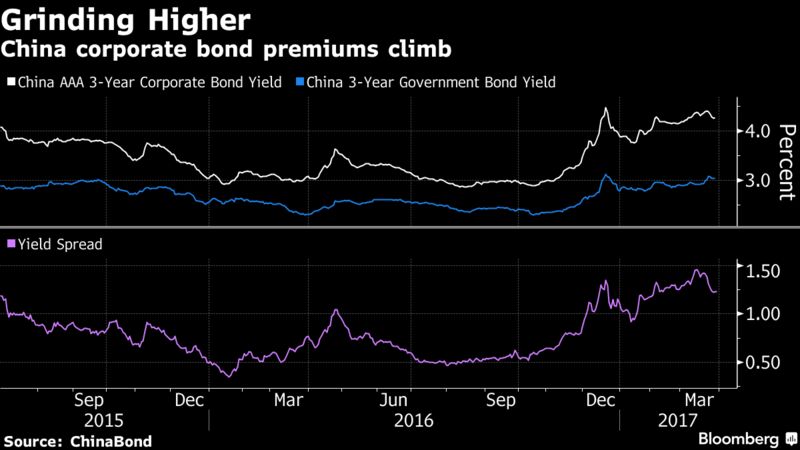
- Chinese Need to Learn to Save Again (Bloomberg) For years, economists and policymakers have hailed the propensity of Chinese to save. Among other things, they’ve pointed to low household debt as reason not to fear a financial crash in the world’s second-biggest economy. Now, though, one of China’s greatest economic strengths is becoming a crucial weakness. Over the past two weeks, as they’ve held their annual work meetings, China’s various financial regulatory bodies have raised fears that Chinese households may be overleveraged. See also China Has Its Worst-Ever Start to a Year For Defaults. (Corporate debt)
- Consumption Has Not Been Accelerating in China (The Daily Shot) The avowed shift of the Chinese economy away from investment and toward more consumption is not apparent in the data. Investment is at least holding its own and may be gaining GDP share.

Mexico
- Mexican Consumer Confidence Wanes as Credit Defaults Rise (Moody’s) Weakening consumer confidence suggests a deterioration of households’ economic situation over the next 12 months. Credit delinqencies are rising at the same time:
An increase in consumer delinquencies will exacerbate the credit pressures on banks from the 2017 increase in delinquencies, when nonperforming consumer loans (NPLs) rose 29 basis points to 4.5% of the consumer book as of December, twice the average for the total loan portfolio. Further, during 2017, last-12-month consumer write-offs rose to about 10% of the consumer book, or some 120 basis points since the beginning of the year, also suggesting a deterioration in that segment. Personal loans and credit cards drove the increase in consumer NPLs, with related impairments in personal loans increasing 91 basis points and credit card impairments increasing 40 basis points during 2017


