


from The Conversation
— this post authored by Nicholas Fuller, University of Sydney
Complementary medicine has received a lot of attention in the past couple of weeks. First, a study focused on potential safety concerns about taking herbal products. Second, ABC’s Four Corners looked at the need for better regulation of product claims, and questioned the credibility of the pharmacy industry for endorsing and selling these products.

Both of these are particularly relevant, considering complementary and alternative medicines are widely used by different populations and by more than half of all people. People like complementary medicines often because they find such natural alternatives to be more in line with their values and beliefs, and desire to lead a more “natural” life.
However, in many instances complementary medicines have no added benefit when compared to placebo, or weak evidence. These include dietary supplements such as vitamin C and echinacea for the common cold, and weight-loss supplements.
On the other hand, there is evidence for complementary medicines in preventing or managing a range of conditions. Some examples include improvement in mental health conditions, managing menopausal symptoms, and for healthy outcomes during pregnancy.
How complementary meds end up on our shelves
In contrast to pharmaceuticals (otherwise known as conventional “Western” medicines), government typically does not subsidise complementary medicines. Therefore, the cost burden is shifted to consumers. While this is good news for government budgets, consumers need to have confidence the products they’re spending their money on are safe and effective.
All herbal medicines (these are products derived from plant sources and fall under the complementary medicines umbrella) must be listed on the Australian Registry of Therapeutic Goods before they are made available for sale. This gives them an AUST-L number. However, this still relies on the manufacturer’s honesty with respect to its effectiveness.
This stands in stark contrast to pharmaceuticals. These have high up-front development costs, go through rigorous registration processes and have no guarantee of approval. Once pharmaceuticals are approved they are given an AUST-R number, which is different to the AUST-L number.
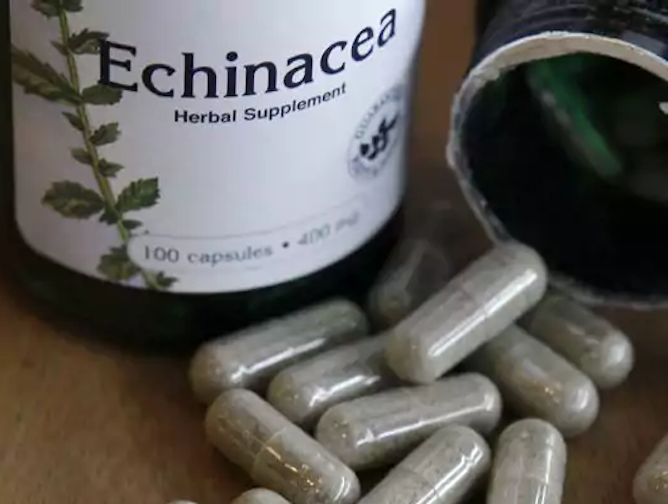
Echinacea for colds has been found to have limited effectiveness. Elaine Thompson/AP
Natural or herbal medicines do not face the same regulatory scrutiny as pharmaceutical drugs because of their origin from “natural” sources.
However, as the recent piece in the Medical Journal of Australia points out, some products (particularly traditional Chinese medicines) often inaccurately list ingredients and may contain undeclared products (including DNA from endangered animals such as the snow leopard) or toxic and pharmaceutical contaminants.
Similar findings have been reported previously for traditional Chinese medicines.
If a complementary medicine product does not have an AUST-L number you should not buy it: you are putting yourself at risk.
Not all bad eggs
It’s often the poor compliance of a few companies tarnishing the industry as a whole. One example is “Hydroxycut”. Not only has the product been banned in the US several times, it has put consumers’ health in serious jeopardy.
Other dietary supplements have led to questions being asked of the industry due to case reports of liver damage from taking products containing, for example, green tea extract. It’s the concoction of different ingredients in these supplements that often makes it difficult to pinpoint the exact root of concern. Therefore, tighter regulation of the industry is needed.
But many companies are meeting regulatory requirements and performing good-quality research to support their product claims. One recent example is an extract from the green – lipped mussel for those with attention deficit hyperactivity disorder (ADHD) or learning difficulties. This supplement showed some benefits in reducing hyperactivity and inattention, and improving memory in children and adolescents. Similar studies with other products are under way.
Regulatory reform is needed to protect those companies performing good-quality research from other companies “piggy-backing” off this evidence for their similarly marketed product, perhaps with the same or similar ingredients. The Therapeutic Goods Administration should require manufacturers to have independent testing performed on their products before marketing to ensure the ingredients listed on the packet are accurate.
However, this still doesn’t stop people purchasing complementary medicine over the internet, despite clear warnings against this.
We need to encourage and better incentivise research and development of complementary medicines. And we need to give adequate resources to a relevant body capable of more closely regulating the listing of complementary medicines to ensure patient safety.
Until this happens, make sure you only purchase supplements with an AUST-L number to ensure it’s safe – and do some research into the efficacy to ensure you’re not wasting your money.
 Nicholas Fuller, Research Fellow, Clinical Trials Development & Analysis, University of Sydney
This article was originally published on The Conversation. Read the original article.


