


Written by Econintersect
Early Bird Headlines 27 December 2016
Econintersect: Here are some of the headlines we found to help you start your day. For more headlines see our afternoon feature for GEI members, What We Read Today, which has many more headlines and a number of article discussions to keep you abreast of what we have found interesting.

Global
Asia markets mixed; Toshiba board meeting eyed after shares fall 11.6% (CNBC) Asian shares were mixed on Tuesday amid low-volume holiday trading, despite strong growth in China’s industrial profits in November. Investors also awaited a board meeting for Japan’s Toshiba after shares dropped sharply. U.S. crude futures were up 0.17% at $53.11 a barrel during Asian trade on Tuesday, while Brent futures slipped 0.11% at $55.10.

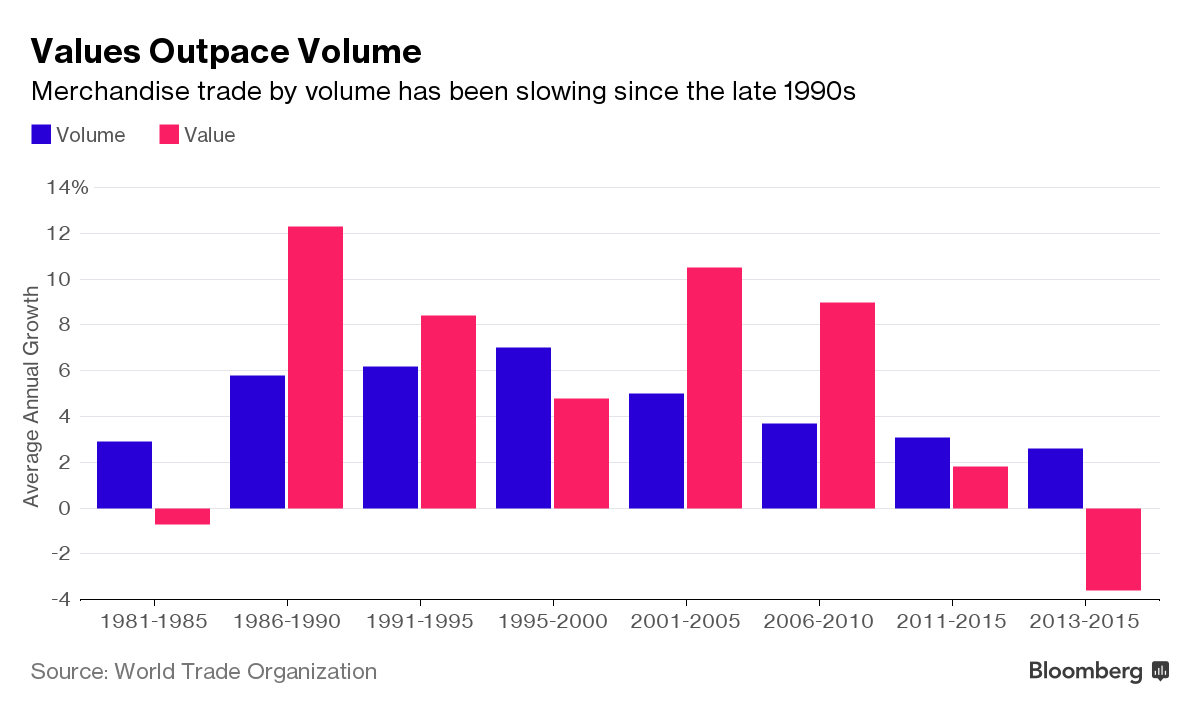
Outrage Over the Economy Doesn’t Explain Surging Global Populism (Bloomberg) The governing elite don’t have a clue about what is going on. It might be years before policy makers absorb the significance of the economic and political forces now playing out, let alone craft a case for globalization that secures broad appeal. The concerns of people from the U.S. Midwest to Greece, where a populist, anti-austerity government has been in power for almost two years, are only partially rooted in a sense of abandonment in a global economy. There’s a deeper discontent with the way they are governed that a fiscal stimulus program, import tariffs or a stock-market rally won’t quickly soothe. And while many look with a skeptical eye toward globalization as a problem, it may be that waning globalization is adding to the problem. World trade volume growth has been slowing for almost 20 years and now value seems to be following volume down the slope.
Cheetahs heading towards extinction as population crashes (BBC News) There are just 7,100 of the world’s fastest mammals now left in the wild. Cheetahs are in trouble because they range far beyond protected areas and are coming increasingly into conflict with humans. More than half the world’s surviving cheetahs live in one population that ranges across six countries in southern Africa. Cheetahs in Asia have been essentially wiped out. A group estimated to number fewer than 50 individuals clings on in Iran.
U.S.
Dollar dips vs yen after U.S. yields pull away from highs (Reuters, CNBC) The dollar dipped against the yen on Monday, edging lower down after U.S. Treasury yields dipped on mixed economic data. Trading was subdued with many key markets shut on Monday for the Christmas holidays. The greenback was down 0.2% at 117.300 yen. The euro was steady at $1.0457. Currencies took stock of the U.S. debt market, which saw the benchmark 10-year note yield end lower on Friday. The yield pulled back from 27-month peaks scaled mid-month following Friday’s release of U.S. economic indicators that included strong housing and consumer confidence data but also numbers that pointed to slower household income.
They’re Back: Foreign Central Banks Quietly Unleash A Treasury Buying Spree (TalkMarkets) Something unexpected happened in the last month: after a year and a half of one-way selling (see first graph below), the Treasury holdings in the Fed’s custody account have jumped by $60 billion in the past month (see second graph below).


Court Rules Climate Scientist Can Pursue Defamation Claims Against Critics (EcoWatch) Leading climate scientist Michael Mann will see his defamation lawsuit against writers who called him the “Jerry Sandusky of climate science“, amongst other accusations, move forward thanks to an appeals court ruling on Thursday (a three-judge panel for the DC Court of Appeals). Mann is the director of the Earth System Science Center at Pennsylvania State University and is well-known for his iconic “hockey stick” graph of modern global temperature rise. He is routinely criticized and even threatened for his research linking climate change to human activities such as the burning of fossil fuels.
Questions hang over Trump plan on infrastructure (The Hill) Doubts are growing that President-elect Donald Trump will be able to push through a massive infrastructure package in his first 100 days, as he had once promised. He faces likely pushback from conservatives, and he will also have to weigh many other competing priorities. When radio host Hugh Hewitt asked incoming White House Chief of Staff Reince Priebus about a stimulus package that could be used to rebuild the nation’s roads and bridges, Priebus said that the administration would likely focus on tax reform and ObamaCare in the first nine months of the year. In a November interview with The New York Times, Trump said that infrastructure won’t be the “core” of his first few years, but that he is interested in a large infrastructure bill.
Trump Shocks – and Needs – the Establishment (Bloomberg) The president-elect’s success will depend on his ability to sell GOP conservatives in Congress on his spending plans. From this article:
Joseph LaVorgna, Deutsche Bank chief U.S. economist, predicted in a note to clients on Dec. 19 that Trump will try to build some political capital by cutting individual taxes first, then moving on to easy sells to Republicans, such as repealing Obamacare with a delay, dismantling Dodd-Frank, cutting corporate taxes, repatriating foreign profits, and subsidizing a bit of infrastructure investment. Trump may leave more contentious issues including negotiating a replacement for Obamacare and rewriting trade deals for after the 2018 midterm elections, LaVorgna predicted. On trade, he wrote, “the negotiated alterations might be relatively minor.” That sounds like business as almost usual. Trump has already changed the nation’s political culture, but it will take more than theatrics to fundamentally change the way the U.S. economy operates.
Turkey
Cafeteria Manager Jailed for Insulting Turkey’s Erdogan, Lawyer Says (The New York Times) Turkish authorities have arrested the cafeteria manager of the opposition Cumhuriyet newspaper for insulting the president after he said he would not serve tea to Tayyip Erdogan, one of the manager’s lawyers told Reuters on Monday. Senol Buran, who runs the cafeteria at the Istanbul office of Cumhuriyet, was taken into custody after police raided his home late on Saturday, lawyer Ozgur Urfa said. The newspaper is among the few still critical of the government. Insulting the president is a crime punishable by up to four years in prison in Turkey.
Iraq
A Bigger Problem Than ISIS? (The New Yorker) According to a U.S. Army Corps of Engineers assessment, “Mosul Dam is the most dangerous dam in the world.” And the Mosul Dam is failing. A breach would cause a colossal wave that could kill as many as a million and a half people.
Afghanistan
How Peace Between Afghanistan and the Taliban Foundered (The New York Times) For the first time, Norweigan diplomat Alf Arne Ramslien is laying out some of the behind-the-scenes moments of triumph and setback in the three years that he helped lead Norway’s efforts to broker peace in Afghanistan. The Norwegian peace track overlapped with efforts by other countries to bring the Taliban to the table, including the United States and Saudi Arabia, and for years seemed to be making the most progress toward bringing the Taliban and Afghan officials together. But it all eventually fell apart under the weight of military and intelligence maneuvering and of distrust among a host of countries that were taking a hand in Afghan affairs. Mr. Ramslien maintains that Pakistan, in particular, has been a central obstacle to any negotiated peace with the Taliban.
India
Success of Gwadar Port is not a threat to India: Chinese experts (The Times of India) India should not see the success of Gwadar port in Pakistan as a military challenge, Chinese experts said soon after the first Chinese ship arrived at the China financed port on Friday. The move would open up a new cargo route for Chinese goods destined for the Middle East and Africa. The port, which was built in 2008, is being further developed as part of the $46 billion China Pakistan Economic Corridor, which will pass through the disputed Pakistan-Occupied-Kashmir. Indian experts feel that CPEC would enhance the military capabilities of both China and Pakistan, and make it possible for them to access the Arabian Sea in a more organized manner. But China is trying to reassure India. Hu Shishang, director of the government run Institute of South and South East Asian and Oceanic Studies told TNN:
“The port will offer a new choice of route for Chinese cargo, that is true. But it should not be seen as a strategic project meant to counterbalance India or anyone.”

Nepal
Nepal-China military drill worries India (The Times of India) Nepal’s proposed joint military exercise with China has triggered unease in India. Nepal’s ambassador to India sought to play down the significance of the exercise. The relationship with India is not going change because of any such exercise, he said
Japan
The Bank Of Japan Was The Top Buyer Of Japanese Stocks In 2016 (TalkMarkets) According to data through Thursday, the value of the BOJ’s ETF purchases this year has topped 4.3 trillion yen ($36.5 billion), up 40% from 2015. Last year, the central bank bought more than 3 trillion yen worth of ETFs. The data was released by the BOJ and compiled by the Tokyo Stock Exchange. Should it continue at this rate, in a few years, the BOJ will have nationalized the entire market: as of this moment it own approximately 2.5% of the market cap of the entire Topix according to the Financial Times chart below.

Taiwan
Taiwan warns of increasing threat as Chinese warships conduct drill (Reuters) Taiwan warned on Tuesday that “the threat of our enemies is growing day by day“, as Chinese warships led by the country’s sole aircraft carrier sailed towards the island province of Hainan through the South China Sea on a routine drill. The drill comes amid renewed tension over Taiwan, which Beijing claims as its own, following U.S. President-elect Donald Trump’s telephone call with the island’s president that upset Beijing.


