Written by Econintersect
Early Bird Headlines 25 November 2016
Econintersect: Here are some of the headlines we found to help you start your day. For more headlines see our afternoon feature for GEI members, What We Read Today, which has many more headlines and a number of article discussions to keep you abreast of what we have found interesting.

Global
Most Asia markets end week on a positive note; Nikkei gains amid weaker yen (CNBC) Asia markets were positive on Friday, amid a lack of cues from U.S. markets, which were shut Thursday for the Thanksgiving holiday. “There’s a lot of repositioning,” in the wake of Donald Trump’s surprise election win on November 8, Herald Van Der Linde, head of equity strategy for Asia Pacific, at HSBC, told CNBC’s “Squawk Box” on Friday.

For OPEC’s Rivals, Success Lies in Oil Market Far, Far Away (Bloomberg) As OPEC, largely Middle East oil producers, struggle to try to limit production, another problem has arisen. Shipments to Asia from locations farther than the Middle East are turning more attractive because of a deepening market structure known as contango, where near-term supplies are cheaper than those for future months. Sellers benefit from this because the value of a cargo rises as it makes the longer journey to its destination. For buyers, abundant output across the Atlantic Basin has made North American and European oil cheaper relative to crude from OPEC nations such as the U.A.E and Qatar.
Some day soon, it may not matter what Donald Trump or Xi Jinping say about trade (CNBC) The future of trade may be more in the hands of the people than government leaders expect. U.S. President-elect Donald Trump represents the latest effort by a major economy to bring jobs back home, especially in manufacturing. But analysts and executives see growth coming from a different kind of trade, one driven by technology and which should continue regardless of what politicians from the global powers are saying.
U.S.
Report: Russian propaganda efforts propelled fake election news (The Hill) A sophisticated Russian propaganda effort helped fuel the spread of fake news during the election cycle, The Washington Post reported Thursday. Two groups of independent researchers found that Russia employed thousands of botnets, human internet “trolls” and networks of Web sites and social media accounts to inject false content into online political talk and amplify posts from right-wing sites. A report from PropOrNot, provided to the WaPo, identifies more than 200 websites that routinely pushed Russian propaganda to at least 15 million Americans, and found that false stories pushed on Facebook were viewed more than 213 million times. Some stories originated from RT and Sputnik, state-funded Russian information services that are more akin to traditional news sites but sometimes include false or misleading articles. According to Clint Watts, a fellow at the Foreign Policy Research Institute who co-authored a report about Russian propaganda:
“They want to essentially erode faith in the U.S. government or U.S. government interests. This was their standard mode during the Cold War. The problem is that this was hard to do before social media.”
UK
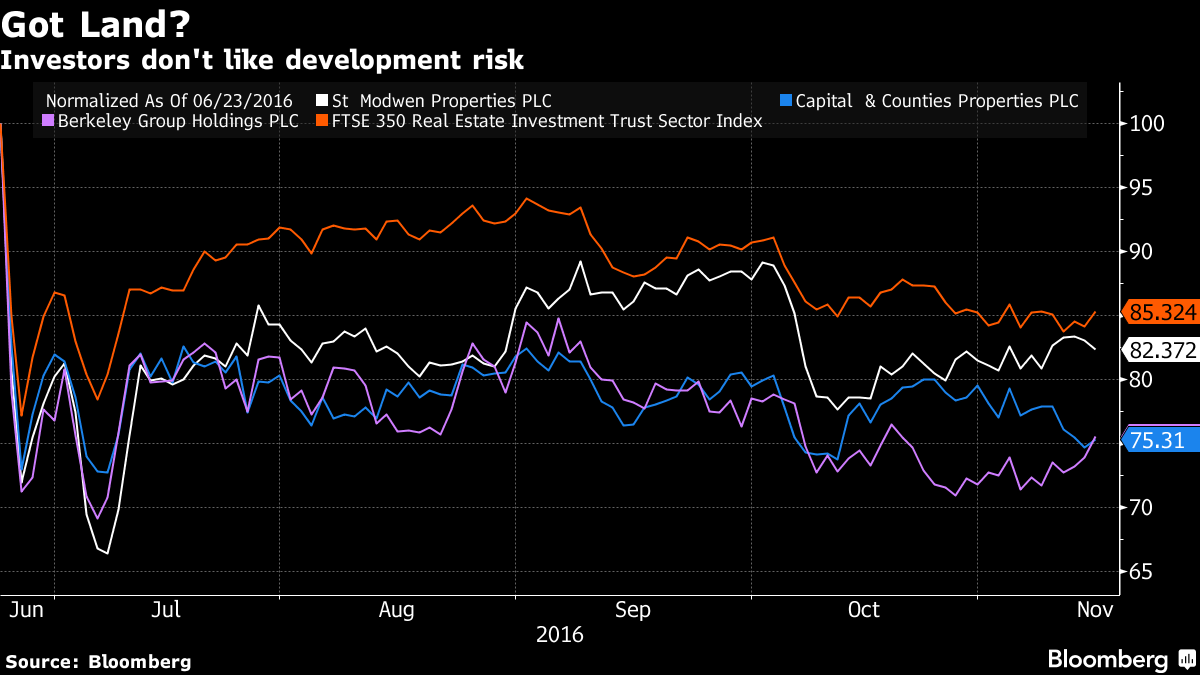
London Property Prices Falling Faster Than You Think, NAMA Warns (Bloomberg) U.K. real estate prices may be dropping at a much faster pace than official reports indicate, according to the Irish agency that manages property loans acquired from bailed-out banks. Reports since Britain’s vote to leave the European Union point to the value of land in central London declining by more than 10% in the past year, while house prices are 11% below their 2014 peak, said Frank Daly, chairman of Ireland’s National Asset Management Agency, known as NAMA.
Syria
Exclusive Interview: King Abdullah II of Jordan (abc.net.au) Hat tip to Sig Silber. This article is the full transcript of a 21-minute interview which focused on Syria and prospects for changes in that country’s civil war under a Trump administration. The video is also available at the top of the article.
Who is behind an air strike that killed three Turkish soldiers in Al-Bab Syria (The Saker) A year after the downing of a Russian jet over Syria, another false flag attack. This time against Turkish servicemen. There’s still very little known about this incident. However, according to the Turkish General staff, today at 03:30 in the morning, an attack allegedly by the Syrian air force in al-Bab killed three Turkish soldiers and injured 10 people. No harsh words against Russia or Syria came from the Turkish official as of now. However, Western-funded Turkish tabloids like “CNN Turk“, are running ahead of the official response of the General staff, actively circulating an “opinion,” according to which, the attack on the Turkish military coincides with the anniversary of the downed plane and it makes it not accidental, but the result of a planned act of retaliation by the Syrian armed forces of al-Assad against Turkey’s armed forces for shooting down a Russian plane.
Pakistan
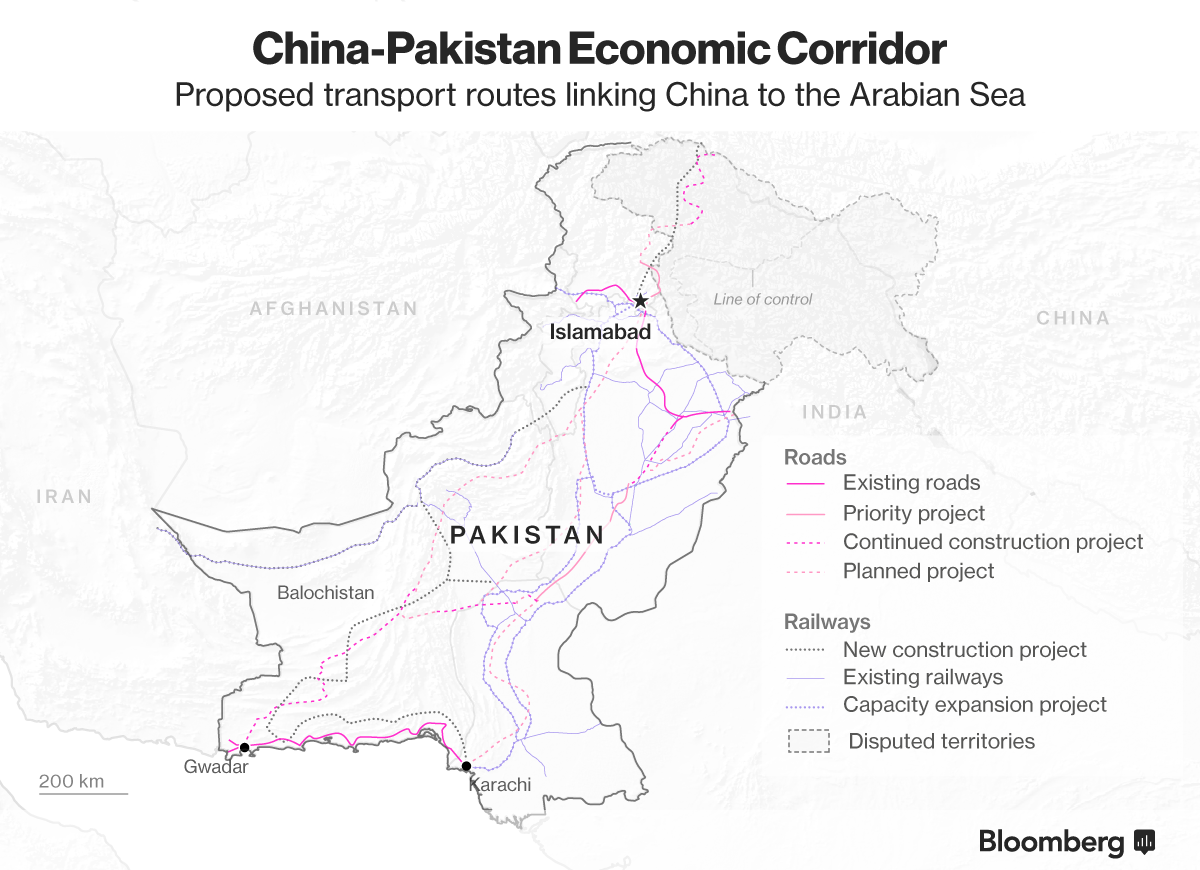
China About to Start $35 Billion of Silk Road Plan in Pakistan (Bloomberg) More than three-quarters of $46 billion of planned Chinese-led investment in Pakistan will be implemented by next year as part of the world’s second-largest economy’s flagship Silk Road plan.
Japan
Japan PM says Russian missile deployment on disputed isles ‘regrettable’ (Reuters) Japanese Prime Minister Shinzo Abe said on Friday Russia’s deployment of missile systems on islands in the western Pacific isles that are also claimed by Tokyo was “regrettable“. His comments came less than a month before Russian President Vladimir Putin is to visit Japan for talks aimed at progress on the decades-old territorial row. Moscow has already said it hoped the deployment would not damage efforts to settle the dispute. Russian media reported on Tuesday that Bastion and Bal anti-ship missile systems were now in operation on the islands, part of an archipelago in the Pacific Ocean over which Russia and Japan have staked rival claims for 70 years.
China
Why Trump might not be so bad for China and Asia (CNN) Contrary to the fears of many China’s watchers who are put off by Trump, there are several reasons a Trump presidency might actually help US-China relations, lowering the risk of military tensions and buttressing US business interests. Because Trump is less concerned about diplomatic niceties, and doesn’t appear to have an underlying strict foreign policy ideology, he can and should lobby for an end to protectionism in China. While Beijing seems to regard President Obama as a pushover, they won’t be able to ignore a threatening and volatile Trump who fights for a fairer playing field for US firms.
U.S. Naval Patrols Threaten Sovereignty, Chinese Think Tank Warns (Bloomberg) American military vessels and aircraft carried out more than 700 patrols in the South China Sea region during 2015, making China the U.S.’s No. 1 surveillance target, according to a report by China’s only state-backed institution dedicated to research of the waters. The patrols pose a threat to China’s sovereignty and security interests, said the report by the National Institute for South China Sea Studies, which is headquartered in Hainan island. The document, the first of its kind released by China, warned that continued targeted operations by U.S. patrols would lead to militarization of the waters. See also Trump will pursue ‘regional hegemony’ in South China Sea: Chinese academics (Reuters)
Canada
Chinese Media Is Now Warning Canada’s Housing Crash Will Be Worse Than The US (Better Dwelling) While Canadian media has been pointing out how Chinese buyers are driving up real estate prices, the Chinese media has been dissecting our economy, government, and warning Chinese buyers of the dangers of owning Canadian real estate.
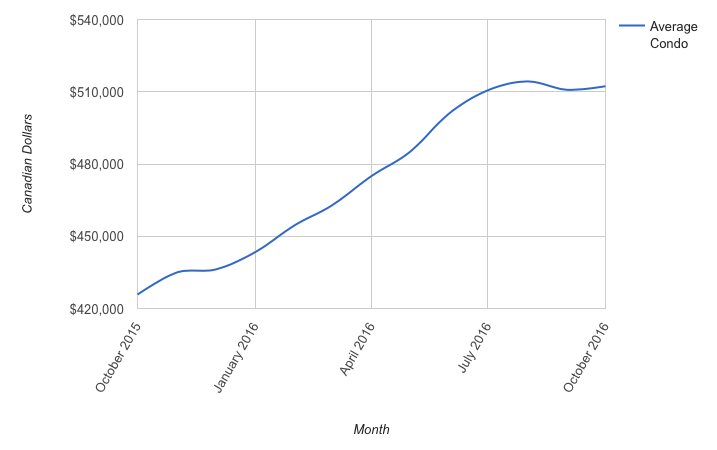
Vancouver Condo Absorption 18% Lower Than Last Year (Better Dwelling) Single family homes in Vancouver continued to feel some down pressure, but the condo market appears to be stabilizing. The latest numbers from the Real Estate Board of Greater Vancouver (REBGV) show that prices moved higher, sales dropped, and available inventory is being consumed at a strong pace for the industry. Prices for condos in Vancouver are still on the way up, despite the rest of the market lagging. The benchmark average for a condo in October was $512,300 – a 0.3% increase from the month before, and a 20.5% increase from the same month last year. Not the booming market of yesteryear, but performing better than the average Vancouver home. Single family detached units are actually declining.