

econintersect.com
  • 토토사이트
    • 카지노사이트
    • 도박사이트
    • 룰렛 사이트
    • 라이브카지노
    • 바카라사이트
    • 안전카지노
  • 경제
  • 파이낸스
  • 정치
  • 투자
No Result
View All Result
  • 토토사이트
    • 카지노사이트
    • 도박사이트
    • 룰렛 사이트
    • 라이브카지노
    • 바카라사이트
    • 안전카지노
  • 경제
  • 파이낸스
  • 정치
  • 투자
No Result
View All Result
econintersect.com
No Result
View All Result
Home Uncategorized

The Myth Of The Resilient Consumer

admin by admin
9월 6, 2021
in Uncategorized
0
0
SHARES
0
VIEWS

from Lakshman Achuthan, Co-Founder and Chief Operations Officer of ECRI

The premise of incomes powering a consumer-driven pickup in U.S. economic growth is demonstrably false. And for people renting their homes the squeeze is even greater.

One clue is the extent of the increase in health care spending in recent years. Renters’ expenditures on health care as a percentage of after-tax income – after hovering around 4¾% for over a quarter century through 2011 – rose to 6.1% in 2013 before easing a bit in 2014 (top line). Homeowners also saw an analogous rise in health care spending as a percentage of after-tax income (not shown).
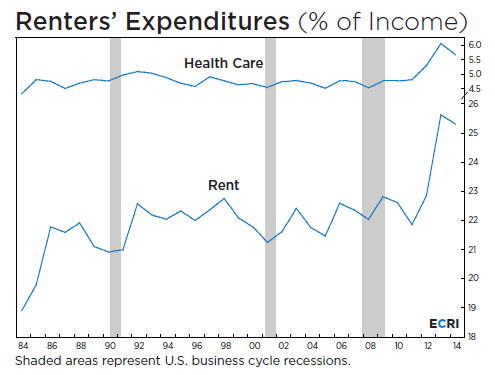
Similarly, spending on rent as a percentage of after-tax income – after staying fairly stable around 22% for over a quarter-century through 2012 – soared well above 25% in 2013 before slipping slightly (bottom line).

It follows that, on average in 2013-14, renters spent an extra 4½% of their after-tax incomes on rent and health care combined than in the previous quarter-century or so. Judging by the surge in consumer spending for health care, as well as the steady uptrend in rental inflation, renters’ share of spending on health care and rent would have risen even higher during 2015.

Rent and health care expenses are essentially non discretionary expenditures. Spending more on these items by an extra 5% or so of after-tax incomes puts a serious dent in discretionary spending budgets. This holds especially true given the double-digit declines in real average household income for the lion’s share of households since the turn of the century (USCO Essentials, October 2015).

In the context of this structural squeeze on family budgets, the current cyclical downturn in consumer spending growth is unwelcome news for anyone relying on the U.S. consumer to power economic growth in 2016.

In any event, it should be evident that the case for a full-blown Fed rate hike cycle cannot reasonably rest on the presumption of robust consumer spending, notwithstanding the decline in the unemployment rate to what the Fed considers “full employment.”

Previous Post

First Quarter 2016 Survey of Professional Forecasters Again Lower Growth over the Next Three Years

Next Post

America’s 20 Billion Dollar Day Of Love

Related Posts

Scammers Steal $300K Using Fake Blur Airdrop Websites
Uncategorized

FBI Warns Investors Of Crypto-Stealing Play-to-Earn Games

by admin
Maersk Almost Completing Russia Exit After The Sale Of Logistics Sites
Uncategorized

Maersk Almost Completing Russia Exit After The Sale Of Logistics Sites

by admin
Why Is ‘Staking’ At The Center Of Crypto’s Latest Regulation Scuffle
Uncategorized

Why Is ‘Staking’ At The Center Of Crypto’s Latest Regulation Scuffle

by admin
Mexico's Pemex Dismantled Resources Worth $342M From Two Top Fields
Uncategorized

Mexico’s Pemex Dismantled Resources Worth $342M From Two Top Fields

by admin
Oil Giant Schlumberger Rebrands Itself As SLB For Low-Carbon Future
Uncategorized

Oil Giant Schlumberger Rebrands Itself As SLB For Low-Carbon Future

by admin
Next Post

Guessing At Employment Growth - ADP Vs. BLS

답글 남기기 응답 취소

이메일 주소는 공개되지 않습니다. 필수 필드는 *로 표시됩니다

Browse by Category

  • Business
  • Econ Intersect News
  • Economics
  • Finance
  • Politics
  • Uncategorized

Browse by Tags

adoption altcoins bank banking banks Binance Bitcoin Bitcoin market blockchain BTC BTC price business China crypto crypto adoption cryptocurrency crypto exchange crypto market crypto regulation decentralized finance DeFi Elon Musk ETH Ethereum Europe Federal Reserve finance FTX inflation investment market analysis Metaverse NFT nonfungible tokens oil market price analysis recession regulation Russia stock market technology Tesla the UK the US Twitter

Categories

  • Business
  • Econ Intersect News
  • Economics
  • Finance
  • Politics
  • Uncategorized

© Copyright 2024 EconIntersect

No Result
View All Result
  • 토토사이트
    • 카지노사이트
    • 도박사이트
    • 룰렛 사이트
    • 라이브카지노
    • 바카라사이트
    • 안전카지노
  • 경제
  • 파이낸스
  • 정치
  • 투자

© Copyright 2024 EconIntersect