


by Charles Hugh Smith, Of Two Minds
When borrowing becomes prohibitive (or impossible) and raising taxes no longer generates more revenues, state and local governments will have to cut expenditures.

Strangely enough, every easily foreseeable financial crisis is presented in the mainstream media as one that “nobody saw coming.” No doubt the crisis visible in these three charts will also fall into the “nobody saw it coming” category.
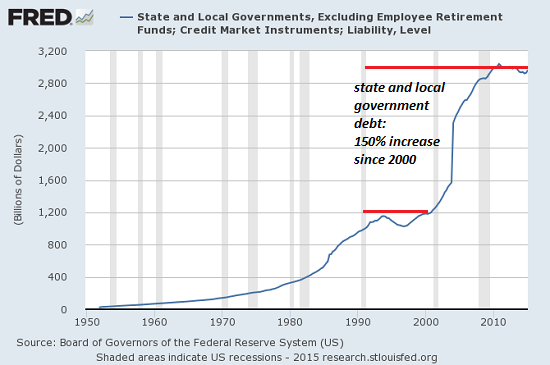
Take a look at this chart of state and local government debt. As we noted yesterday, nominal GDP rose about 77% since 2000. So state and local debt rose at double the rate of GDP. That is the definition of an unsustainable trend.
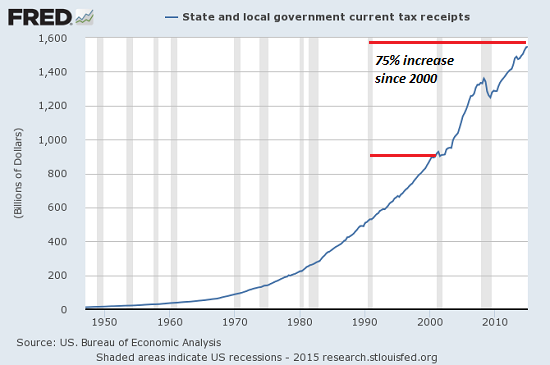
As noted earlier in the week, state and local taxes have soared 75%. While this would be no big deal if wages and salaries had risen by 75% in the same time frame, but earnings have barely kept pace with inflation (38% since 2000).
So state and local taxes have risen at a rate twice that of wages/salaries. State and local governments can keep raising taxes, but where’s the money going to come from?
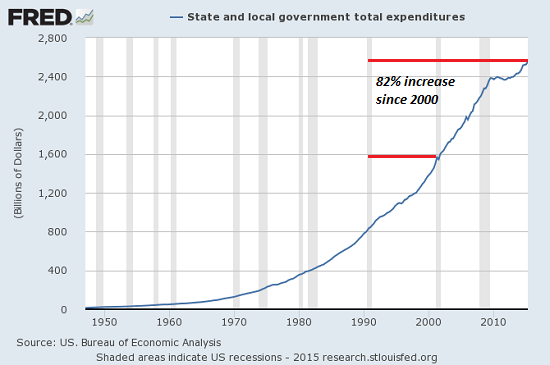
State and local government expenditures have risen faster than inflation or GDP.
Here is the context that matters: household income. This is median real income, i.e. adjusted for inflation.
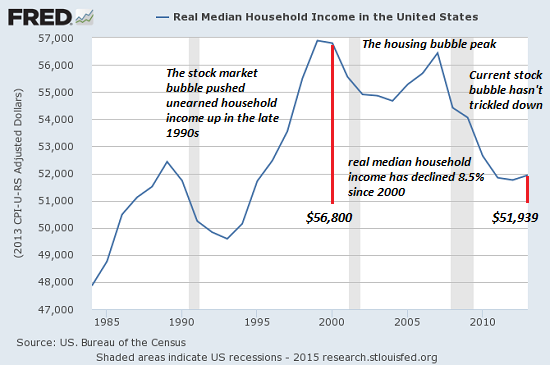
Wages and salaries are barely keeping up with inflation, real household incomes are down 8.5% since 2000 and state and local government taxes and spending are rising at twice the rate of inflation–where does this lead to?
- The bond market may choke if state and local governments try to “borrow our way to prosperity” as they did in the 2000s.
- If state and local taxes keep soaring while wages stagnate and household income declines, households will have less cash to spend on consumption.
- Declining consumer spending = recession.
- In recessions, sales and income taxes decline as households spending drops. This will crimp state and local tax revenues.
- This sets up an unvirtuous cycle: state and local governments will have to raise taxes to maintain their trend of higher spending. Higher taxes reduce household spending, which reduces income and sales tax revenues. In response, state and local governments raise taxes again. This further suppresses disposable income and consumption. In other words, raising taxes offers diminishing returns.
At some point, local government revenues will decline despite tax increases and the bond market will raise the premium on local government debt in response to the rising risks.
When borrowing become prohibitive (or impossible) and raising taxes no longer generates more revenues, state and local governments will have to cut expenditures. Given their many contractual obligations, these cuts will slice very quickly into sinews and bone.
If this doesn’t strike you a crisis, please check back in a few years. It is easily foreseeable, but very inconvenient. As a result, it too will be a crisis that “nobody saw coming.”
NOTE: Contributions/subscriptions are acknowledged in the order received. Your name and email remain confidential and will not be given to any other individual, company or agency.


