econintersect.com
  • 토토사이트
    • 카지노사이트
    • 도박사이트
    • 룰렛 사이트
    • 라이브카지노
    • 바카라사이트
    • 안전카지노
  • 경제
  • 파이낸스
  • 정치
  • 투자
No Result
View All Result
  • 토토사이트
    • 카지노사이트
    • 도박사이트
    • 룰렛 사이트
    • 라이브카지노
    • 바카라사이트
    • 안전카지노
  • 경제
  • 파이낸스
  • 정치
  • 투자
No Result
View All Result
econintersect.com
No Result
View All Result

Department of Defense’s Real Base Budget Grew at an Annual Rate of 1.9% from 2000 to 2014

admin by admin
11월 22, 2014
in 미분류
0
0
SHARES
0
VIEWS

from the Congressional Budget Office

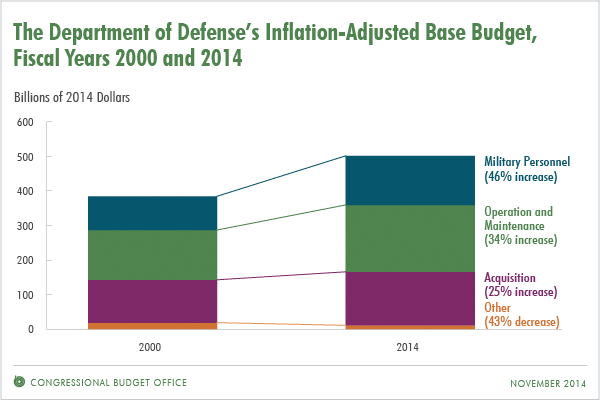
The Department of Defense’s (DoD’s) base budget grew from $384 billion to $502 billion between fiscal years 2000 and 2014 in inflation-adjusted (real) terms—an increase of 31 percent and an annual average growth rate of 1.9 percent (see figure below). Several factors contributed to that growth. The largest rate of growth was in the costs for military personnel, which increased by 46 percent over the period.


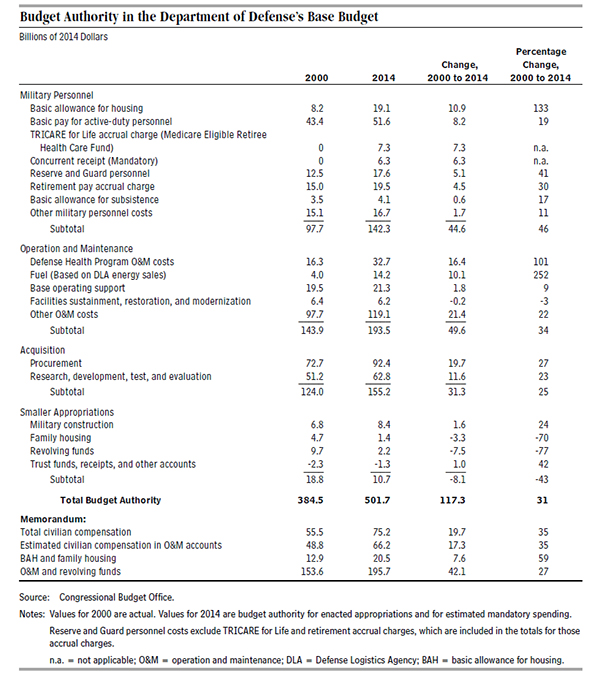
The costs for operation and maintenance (O&M) increased by 34 percent, and the costs for acquisition increased by 25 percent. About two-thirds of the $117 billion real increase in the budget went for the following activities: procurement; O&M costs for the Defense Health Program; research, development, test, and evaluation; the basic allowance for housing; fuel; and basic pay for active-duty military personnel (see table below).

For this analysis, CBO examined DoD’s base budget, which excludes supplemental and emergency funding for overseas contingency operations (those conducted in Afghanistan and Iraq and other countries). DoD’s base budget includes both discretionary funding (controlled by annual appropriation acts) and mandatory funding (generally determined by eligibility rules, benefit formulas, and other parameters that are set in current law). All costs are expressed in 2014 dollars of budget authority, adjusted for the effects of inflation over the 15-year period using the gross domestic product price index; unless otherwise noted, all growth rates are measured in those real terms. CBO’s analysis is based on data from DoD. In addition, CBO relied on analyses described in several of its publications.

Figure 1: DoD’s Inflation-Adjusted Base Budget, FY00 and FY14 [click to enlarge]

Table 1: Budget Authority in the DoD’s Base Budget

[click to enlarge]


Previous Post

Infographic of the Day: Evolution of Robots in Film

Next Post

Debt, Jobs, or Housing: What’s Keeping Millennials at Home?

Related Posts

Bitcoin Is Finally Trading Perfectly Like 'Digital Gold'
Economics

Bitcoin Is Finally Trading Perfectly Like ‘Digital Gold’

by admin
Namibia Will Regulate And Not Ban Crypto With New Law
Finance

Namibia Will Regulate And Not Ban Crypto With New Law

by admin
6,746 ETH Valued At $12M Was Just Burned
Economics

6,746 ETH Valued At $12M Was Just Burned

by admin
Bitcoin Is Steady Above $29,000 Awaiting US NFP Figures
Economics

Bitcoin: What Next After Consolidation Ends?

by admin
US Government Offloads Another 8,200 Bitcoin – On-chain Data
Economics

US Government Offloads Another 8,200 Bitcoin – On-chain Data

by admin
Next Post

Debt, Jobs, or Housing: What's Keeping Millennials at Home?

답글 남기기 응답 취소

이메일 주소는 공개되지 않습니다. 필수 필드는 *로 표시됩니다

Browse by Category

  • Business
  • Econ Intersect News
  • Economics
  • Finance
  • Politics
  • Uncategorized

Browse by Tags

adoption altcoins bank banking banks Binance Bitcoin Bitcoin market blockchain BTC BTC price business China crypto crypto adoption cryptocurrency crypto exchange crypto market crypto regulation decentralized finance DeFi Elon Musk ETH Ethereum Europe Federal Reserve finance FTX inflation investment market analysis Metaverse NFT nonfungible tokens oil market price analysis recession regulation Russia stock market technology Tesla the UK the US Twitter

Categories

  • Business
  • Econ Intersect News
  • Economics
  • Finance
  • Politics
  • Uncategorized

© Copyright 2024 EconIntersect

No Result
View All Result
  • 토토사이트
    • 카지노사이트
    • 도박사이트
    • 룰렛 사이트
    • 라이브카지노
    • 바카라사이트
    • 안전카지노
  • 경제
  • 파이낸스
  • 정치
  • 투자

© Copyright 2024 EconIntersect