


from The Conversation
— this postr authored by Kevin Johnson, University of California, Davis
The Trump administration is trying to terminate the Flores settlement, a legal agreement that determines how immigrant children are treated in U.S. immigration detention.

Please share this article – Go to very top of page, right hand side, for social media buttons.
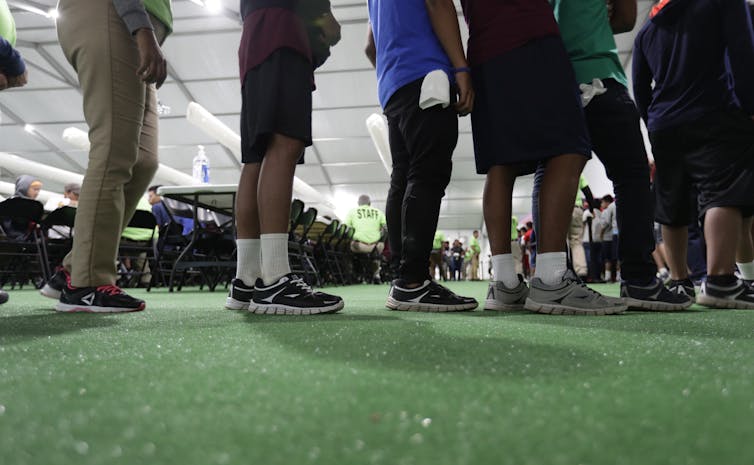
Immigrants line up in the dining hall at the U.S. government’s newest holding center for migrant children in Carrizo Springs, Texas. AP/Eric Gay
The 1997 settlement established basic standards for the treatment of unaccompanied minors who were in the custody of federal authorities for violating immigration laws.
It requires the federal government to place children with a close relative or family friend “without unnecessary delay,” rather than detaining them, and to keep immigrant children who are in custody in the “least restrictive conditions” possible. Generally speaking, this has meant migrant children can be kept in federal immigrant detention for only 20 days.
But a new regulation, originally proposed by the Trump administration in 2018 and finalized on Aug. 21, would remove the requirements of the Flores settlement.
Case took years
In the 1980s, the Reagan administration aggressively used detention of Central Americans as a device to deter migration from that region, where violent civil wars had caused tens of thousands to flee.
Central Americans arrested at the U.S.-Mexico border were held in custody – including many who sought asylum in the U.S. because they feared persecution if returned home.
Immigrant rights groups filed a series of lawsuits challenging various aspects of the detention policies, including denying migrants access to counsel, taking steps to encourage them to “consent” to deportation and detaining them in isolated locations far from families and attorneys.
One suit was filed by the American Civil Liberties Union in 1985 on behalf of Jenny Lisette Flores, a 15-year-old from El Salvador. She had fled violence in her home country to live with an aunt who was in the U.S.
But Flores was detained by federal authorities at the U.S. border for not having proper documentation permitting her to stay in the U.S.
The American Civil Liberties Union charged that holding Flores indefinitely violated the U.S. Constitution and immigration laws. The Flores case slowly made its way to the U.S. Supreme Court.
In its 1993 ruling in the case, the court held that a regulation allowing the government to release a migrant child to a close family member or legal guardian in the United States was legal.
But the primary legacy of the case was the subsequent settlement, to which both the Clinton administration and the plaintiffs agreed in 1997.
The Flores settlement is a landmark agreement in no small part because Central Americans continue to flee violence in their homelands and the U.S. government has responded with mass detention of immigrant children.
Although the settlement was agreeable to the Clinton administration, the Trump administration strongly desires to detain families, including children, for periods longer than permitted by the Flores settlement – in fact, indefinitely.
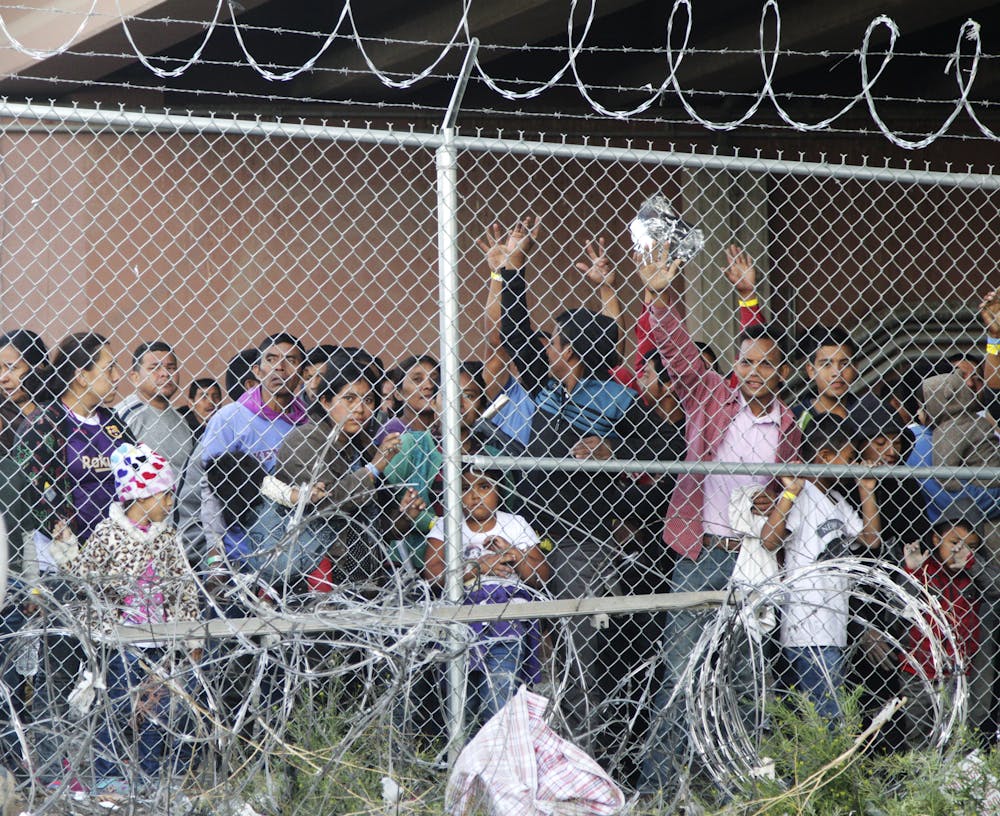
Central American migrants in March 2019 waited for food in a pen erected by U.S. Customs and Border Protection in El Paso, Texas. AP/Cedar Attanasio
Longtime contentious issue
Litigation over enforcement of the Flores settlement has exploded during the Trump administration, which has detained migrant children in poor conditions along the U.S.-Mexico border since soon after taking office.
The lawsuits include a court case brought by immigrants’ rights and civil liberties groups in response to what they called the “imminent threat to the health and welfare” of migrant children in detention. U.S. border officials should have “promptly released children to their relatives and provided safe and sanitary detention conditions for all children in its custody,” said an attorney representing the groups that brought the action.
Similarly, in the summer of 2018, based on the Flores settlement, a federal court barred immigration authorities from giving children psychotropic drugs without consent of parents or legal guardians.
Conditions apparently have not improved in detention centers across the country. Several children have died while in custody since January, and public outcry over the conditions of detention for the migrants have led to numerous court fights.
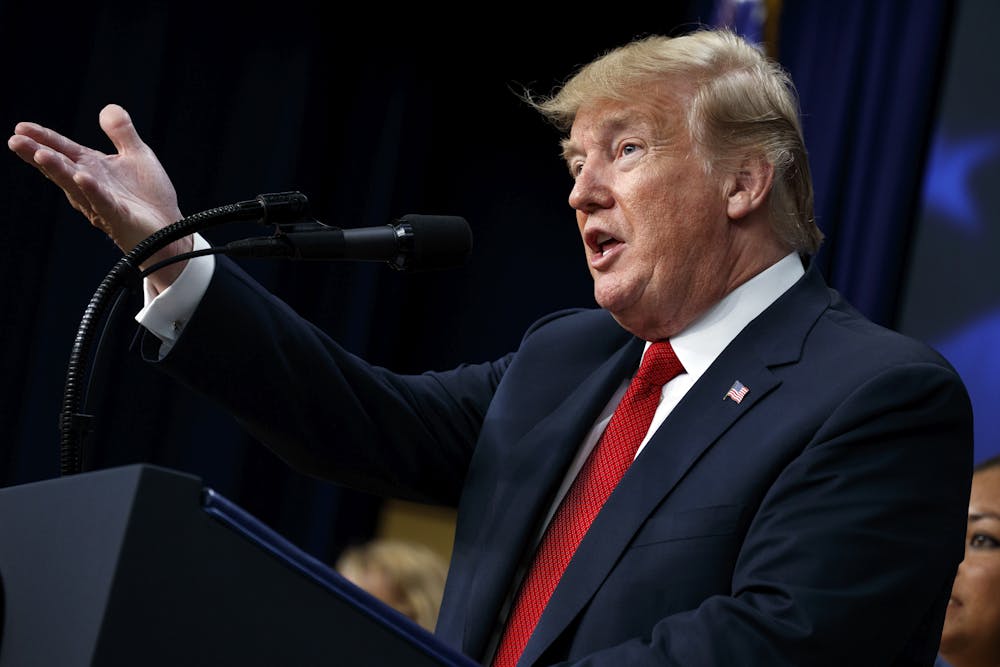
President Trump’s attempts to restrict immigration have resulted in several rulings requiring the government to treat immigrant children better. AP/Evan Vucci
During recent litigation seeking to enforce the Flores settlement, the Department of Justice made headlines for its defense of the detention conditions of migrant children. The judges of the court of appeals were incredulous at the government’s claim that soap and a toothbrush were not necessarily required for detained migrant children. Not surprisingly, the court flatly rejected the government’s claim.
Last year, the Trump administration requested to amend the settlement to allow it to indefinitely detain migrant children.
The courts consistently have denied these requests and have continued to monitor the detention of migrant children, as the Flores settlement requires them to do.
Importantly, the new rule will allow the Department of Homeland Security and Health and Human Services to respond to significant changes that have occurred since the Flores settlement agreement has been in place, including dramatic increases in the numbers of unaccompanied children and family units crossing into the United States.
The rule is slated to take effect on Oct. 23. But immigration and civil liberties advocates have vowed to challenge the rule in court, which will put the proposed change in front of U.S. District Judge Dolly M. Gee. Gee is the judge who denied the administration’s request last year to extend family detentions.
This is an updated version of an article originally published on Aug. 2, 2018 and revised on June 27, 2019.
Kevin Johnson, Dean and Professor of Public Interest Law and Chicana/o Studies, University of California, Davis
This article is republished from The Conversation under a Creative Commons license. Read the original article.


